

The country stands out as an unspoilt gem, ideal for those seeking authentic experiences away from the traditional tourist circuits.
From Luanda, the vibrant capital where modernity blends with the rhythms of kizomba and kuduro, to the landscapes of Malanje or the dunes of the Namibe desert, Angola offers an African experience yet to be discovered.
Africa remains synonymous with adventure and discovery, and few destinations embody that spirit better than Angola. Located in the south-west of the continent and blessed with over 1,600 kilometres of Atlantic coastline, the country surprises visitors with its extraordinary diversity. From the tropical rainforests of the north to the endless dunes of the Namibe desert, passing through mountains, valleys and savannahs teeming with life. A mosaic of unique landscapes where nature sets the pace and lifestyle. Under the slogan ‘Visit Angola – The Rhythm of Life’, the seventh largest country on the African continent presents itself as a vibrant and energetic destination that combines authenticity, modernity and a strong commitment to sustainability.
Angola across seven key regions
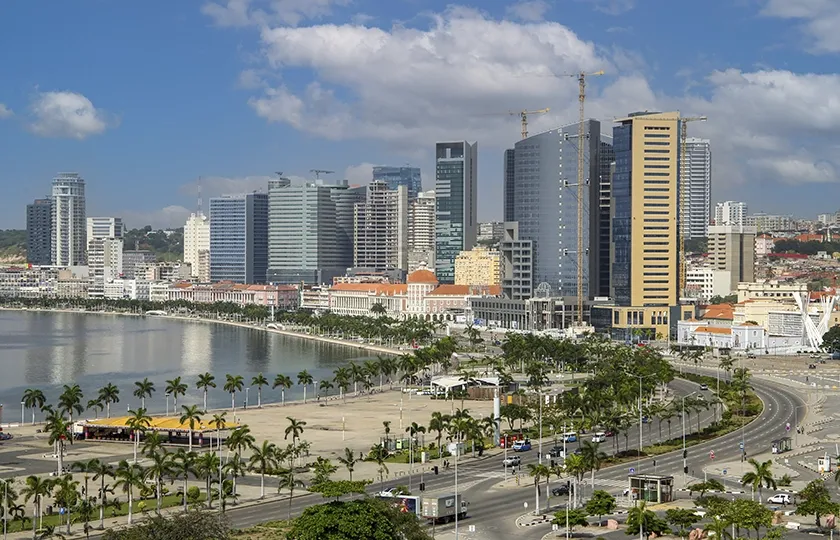
Luanda, the capital, is the gateway to the country and the perfect starting point for discovering the essence of Angola. Modern and cosmopolitan, the city combines colonial architecture and seafront avenues. The rhythms of kizomba, semba and kuduro can be heard in its clubs and terraces, while visitors can discover local crafts and cuisine in its traditional markets, such as Benfica.
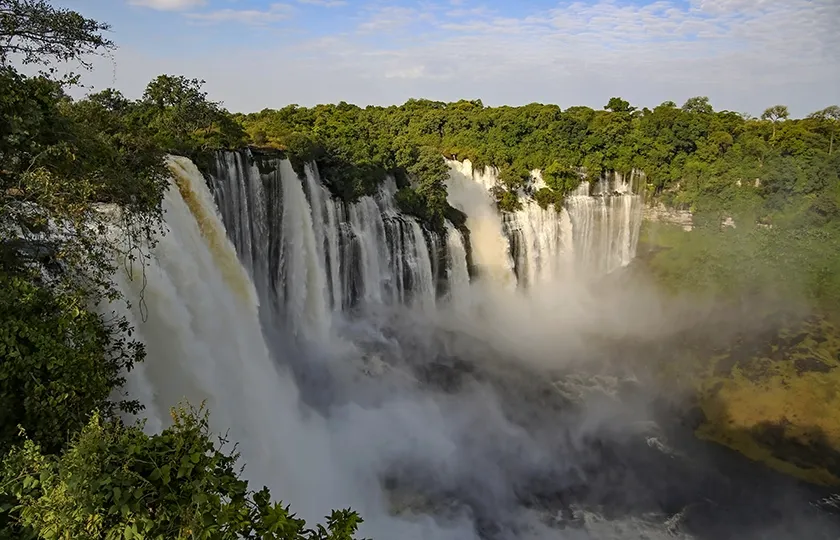
To the north, Malanje stands out for its lush nature and agricultural importance. This region is home to the Kalandula Falls, the second largest in Africa – colloquially known as ‘Victoria Falls’ little sister’ – and the enigmatic Pedras Negras de Pungo Andongo, enormous rock formations shrouded in legend. Malanje is also a land of history and living traditions, where the people maintain a way of life closely linked to the land, as it is one of the most fertile regions in the country. Here, coffee, maize and sugar cane are the main crops grown. Furthermore, Malanje preserves a rich cultural heritage that remains alive in its traditional villages and in the customs of its people.
In the southwest, Namibe offers one of Africa’s most unique landscapes: a desert that meets the Atlantic Ocean. Unique beaches, such as Praia do Sol, its dunes, cliffs and the mythical Welwitschia mirabilis plant, capable of living for over a thousand years, make this region an almost mystical place. The nearby Iona Nature Reserve, Angola’s oldest and largest protected area, is home to antelopes, oryx and ostriches. Combining colonial architecture with a thriving fishing industry, the capital, Namibe, serves as a gateway to the region’s natural wonders.
The province of Benguela, on the Atlantic coast, impresses with its beaches, picturesque landscapes and rich history. The capital, also Benguela, combines colonial architecture with a vibrant lifestyle. Visitors can discover the golden sands of Praia Morena, Benguela Cathedral and the Benguela Museum, which displays historical artefacts, archaeological finds and traditional art from the area. In addition, the region has nature reserves, as well as traditional markets, such as the Municipal Market, where local products and handicrafts are sold. Not far away is Lobito, known for its palm-lined beaches, such as Praia da Restinga, which is perfect for water sports and long walks. The historic Benguela Railway line, which once connected Central Africa to the Atlantic, also begins here.
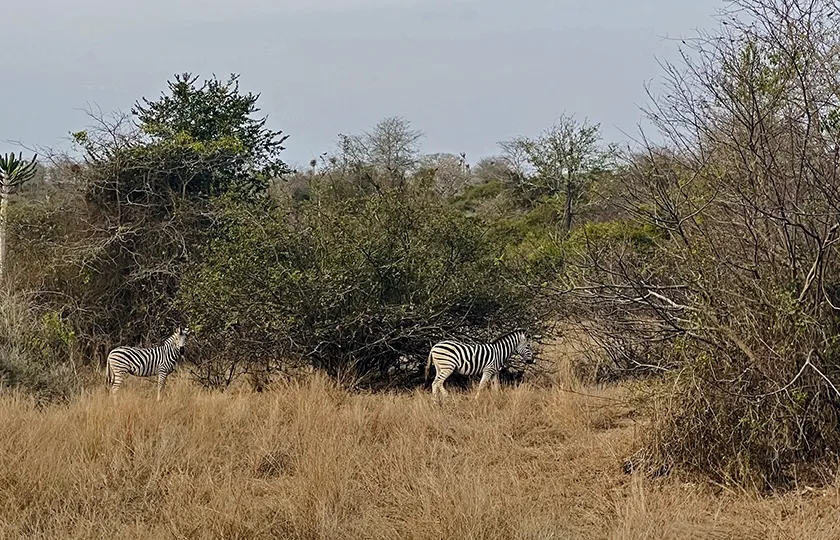
The province of Huíla, in southern Angola, is notable for its mountainous landscapes, high plateaus and cooler climate compared to other regions of the country. The city of Lubango, located 1,700 metres above sea level in the middle of the Serra da Chela mountain range, is particularly impressive. In the Lubango Nature Reserve, visitors can observe antelopes, zebras, and numerous species of birds.
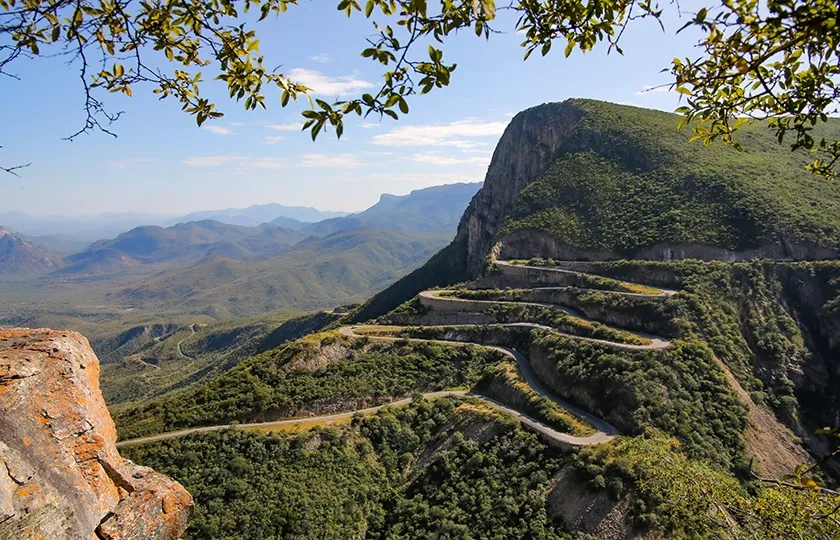
Another must-see in the region is the Serra da Leba, one of the most beautiful mountainous landscapes in Angola. The journey itself is an experience: the Serra da Leba Pass road, with its zigzag curves winding along the hillsides, offers breathtaking views of the valley. This route, which connects Lubango with the coastal province of Namibe, is considered one of the most photographed road trips in the country.
Cuando Cubango, in south-eastern Angola, is characterised by unspoilt nature, vast savannahs and numerous rivers, including the Cuando River and the Okavango River, which originates in this province. Its capital, Mukogwa, acts as a gateway to a region that is a true paradise for nature lovers: elephants, lions, antelopes and a wide variety of birds live here in the wild. Furthermore, When Cubango is home to several of the country’s more than one hundred ethnic groups, including the Mbunda and Chokwe, renowned for their mastery of carpentry and traditional dances. There are also Ovimbundu communities and some San groups, who preserve the traditions of hunter-gatherers. Together, these towns offer an authentic glimpse into Angola’s cultural richness and ethnic diversity.
Cabinda, located in northern Angola, is a geographical enclave separated from the rest of the country by a narrow corridor belonging to the Democratic Republic of Congo, and also borders the Republic of Congo. This province is notable for its lush tropical rainforests, including the Mayombe Forest, one of the most biodiverse on the continent and home to species such as the western lowland gorilla. Its capital, also called Cabinda, is located on the Atlantic coast and boasts idyllic beaches, such as the popular Praia de Cabinda.
A festival of rhythms: music and dance as a way of life
The Portuguese colonial heritage, visible in forts, churches and coastal towns, blends with a deeply rooted African identity, which finds its ultimate expression in music, the soul of Angola. From the sensuality of kizomba, which has conquered dance floors around the world, to the energy of kuduro, a symbol of urban youth, the country beats to the rhythm of its music. Semba, considered the predecessor of Brazilian samba, continues to be the soundtrack of popular celebrations and festivals.
The Luanda Carnival, with its dance troupes and mix of samba and African rhythms, is one of the major cultural events of the year. Each edition of the Festisumbe International Music Festival confirms that Angola not only preserves its traditions, but constantly reinvents them.
Angolan cuisine: influences from three continents
Angolan cuisine also stands out for its blend of influences: African, Portuguese and Brazilian flavours, reflecting its history and cultural diversity. Funje, a soft dough made from cassava or corn that accompanies stews and meats, is always present on tables throughout the country. On the coast, fresh fish and seafood take centre stage: cacusso (local tilapia), crayfish and lobster are prepared with local herbs and spices. Traditional dishes include cabidela, a chicken stew with vinegar and blood, and catatos, fried caterpillars with garlic. The markets of Luanda, Benguela, and Lubango are the best places to sample these specialities alongside tropical fruits, local sweets, and the ever-present Angolan coffee.
Angola is, in short, a country full of energy, contrasts and authenticity. Its endless landscapes, hospitable people and deep connection with nature make it one of the great adventures of the African continent. From the Atlantic coast to the mountains of the interior, from its rhythms to its cuisine, every corner of the country invites you to discover an Africa that still retains its essence.
Safaris in Angola
And for those for whom Africa is inextricably linked to safaris, the trip through Angola finds its grand finale in Quiçama National Park, the country’s first park recently declared a UNESCO Biosphere Reserve. The reserve covers more than 3.3 million hectares (≈33,160 km²), stretching across the provinces of Luanda, Icolo e Bengo and Cuanza-Sul, and is home to elephants, giraffes, zebras and antelopes.Another safari option is to sail down the Kwanza River. There, visitors can spot crocodiles, hippos and a wid
e variety of birds before continuing on to the Namibe Desert, with its endless dunes and ancient Welwitschia mirabilis, a plant capable of living for a thousand years.
‘Angola represents a new vision of African tourism: sustainable, diverse and deeply human,’ says Márcio de Jesus Lopes Daniel, Minister of Tourism of the Republic of Angola. “We want travellers to discover a country that has retained its soul, its rhythm and its authenticity, and to let themselves be carried away by the energy that makes Angola a unique destination on the continent.”
About ANGOLA
Angola is one of the last great adventures to be discovered on the planet: a hidden gem in south-west Africa that surprises visitors with its unspoilt nature, cultural diversity and extraordinary landscape. The continent’s seventh largest country offers landscapes ranging from tropical rainforests to endless deserts, marked both by the legacy of the Kingdom of Kongo and the influence of Portuguese colonial history.
Its capital, Luanda, is the gateway to the Atlantic and a true melting pot of African, Portuguese and indigenous influences, where music, dance and cosmopolitan energy beat strongly. Under the slogan ‘Visit Angola – The Rhythm of Life’, the country presents itself as an authentic destination for explorers and lovers of nature and culture who seek to discover a different, genuine and rhythm-filled Africa.
Source: KLEBER GROUP