
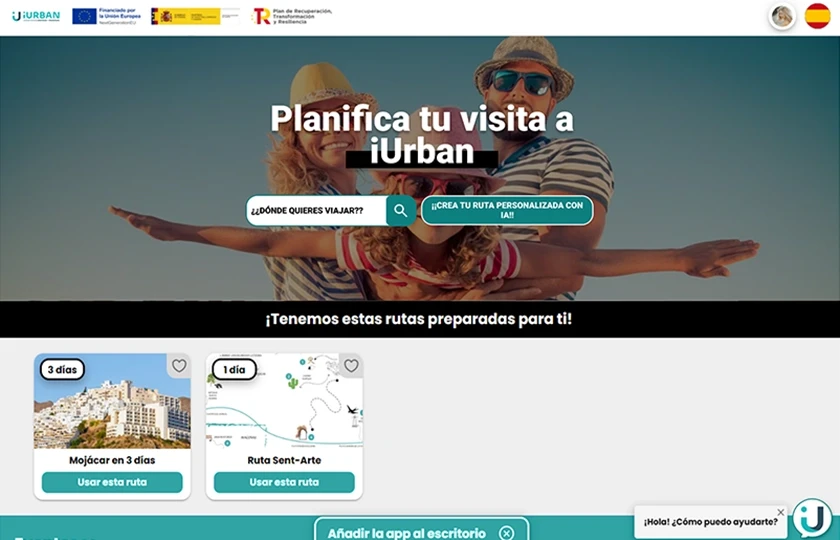
Cicerone is a pioneering artificial intelligence, born in Spain, designed to redistribute tourist flows, revitalise municipalities at risk of depopulation and compete – for the first time – with Google, OTAs and large models such as ChatGPT and Gemini.
Today, 80% of travellers are concentrated in just 10% of the world’s destinations. This dynamic exacerbates overtourism in large cities while accelerating the economic decline of thousands of municipalities at risk of depopulation. In Spain, 3,928 localities have low population density and 42% of the territory is in a critical demographic situation.
This is the context in which Cicerone was born, the Spanish platform from I Urban that is presented as the first ‘destination AI’ designed to enable cities, regions and territories to control their own digital narrative and redistribute visitors in a sustainable manner. Its goal: to compete with Google, OTAs and large models such as ChatGPT, which, by always recommending the same places, reinforce mass tourism. Cicerone is not a Civitatis-type website offering experiences, but rather works with destinations so that, from its website, offices can use the best AI to give visibility to those local gems that do not appear on Google, offering official content without bias, without commercial purposes, in 95 languages, and for everyone, thanks to training in 400 accessibility parameters.
Does AI exacerbate overcrowding or can it correct it?
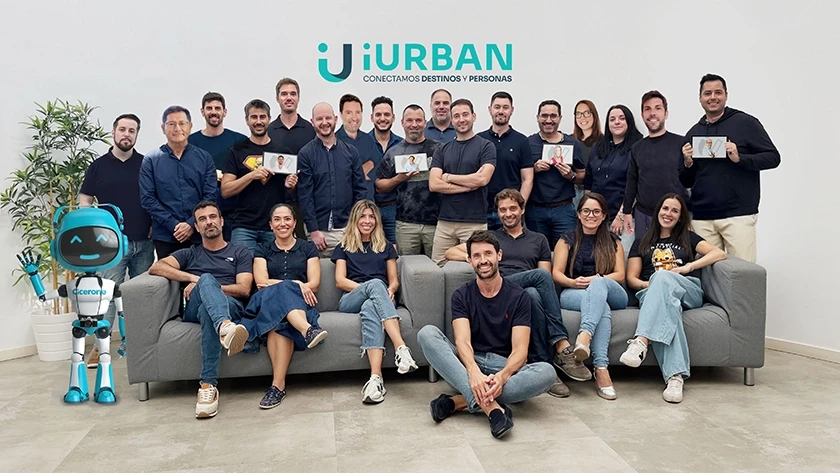
It depends on who controls it. If models are trained without destination-specific data, they reproduce the same ‘must-sees’. But if a city trains its own AI with local data – carrying capacity, mobility, heritage, agenda, visitor sentiment – it can offer balanced tourism with greater value. This is I Urban’s approach in more than 100 town councils, county councils, associations of municipalities and communities in seven countries.
What does I Urban do?
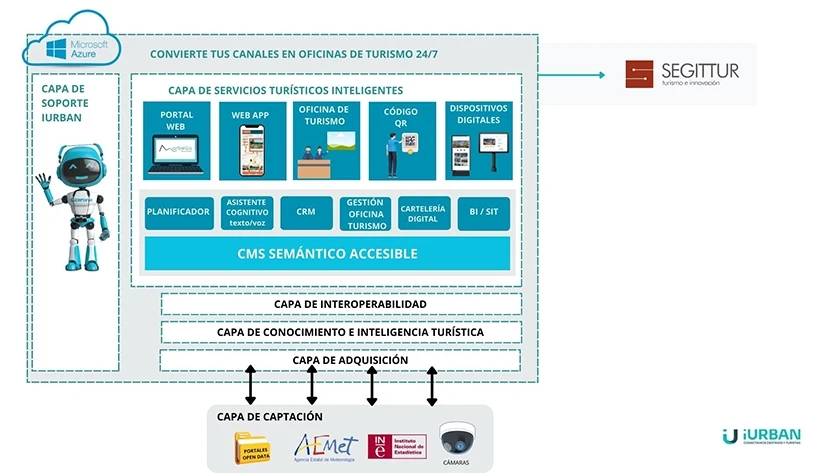
- Unifies territorial data: integrates sources such as municipal websites, mobility, expenditure, sensors, surveys, and cultural resources.
- It trains with its own objectives: to deseasonalise, diversify routes, increase the average ticket price, or protect sensitive areas.
- Generate hyperlocal experiences: dynamic itineraries with updated schedules, gastronomy, local testimonials, and real-time information.
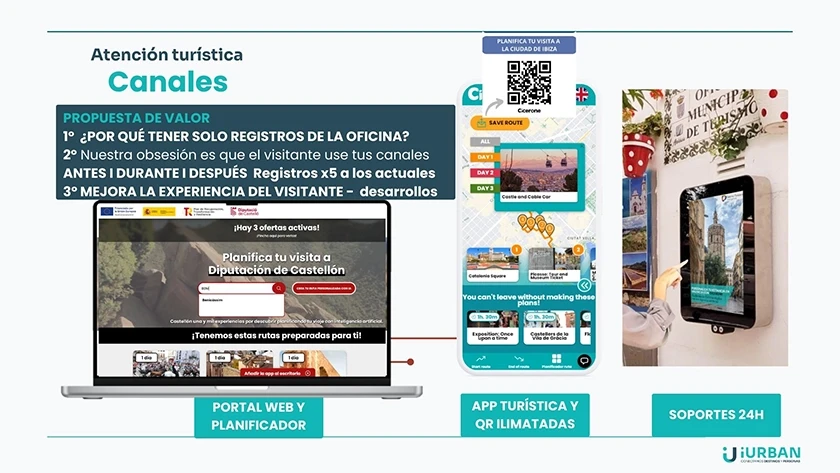
- It is deployed across all channels: website, apps, totems, chatbots, WhatsApp, digital signage, and tourist offices.
- Provide feedback to Google and LLMs: publish structured content so that major search engines can pick up on the official narrative of the destination.
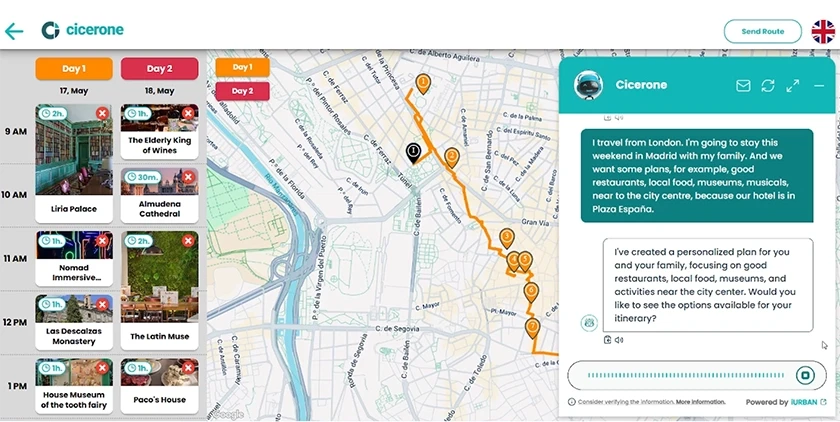
An internationally validated model
Cities and organisations such as Madrid, the Provincial Council of Castellón, Ibiza and 100 other destinations are already implementing data-driven strategies to disperse visitors. I Urban takes this approach one step further: a comprehensive generative AI platform, controlled by the territory itself and scalable to any municipality.
An opportunity for 6,827 Spanish municipalities
Most municipalities with fewer than 5,000 inhabitants have a rich natural and cultural heritage, but lack visibility in the major global algorithms. When well managed, tourism can create jobs, monetise existing resources, attract young people to stay in the area and stimulate circular economies without requiring large investments.
Cicerone turns these invisible resources into sustainable and personalised tourism proposals, allowing small towns to get on the map without relying on seasonal campaigns or peaks created by influencers.
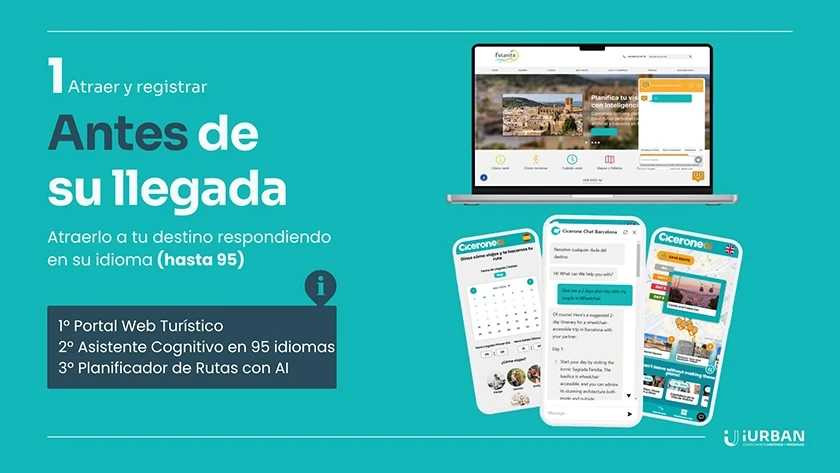
Influence yes, but with strategy
The tool covers what is lacking in many tourism initiatives: planning, carrying capacity, mobility, and real-time analysis. On that basis, influencers go from being catalysts for massification to becoming strategic ambassadors.
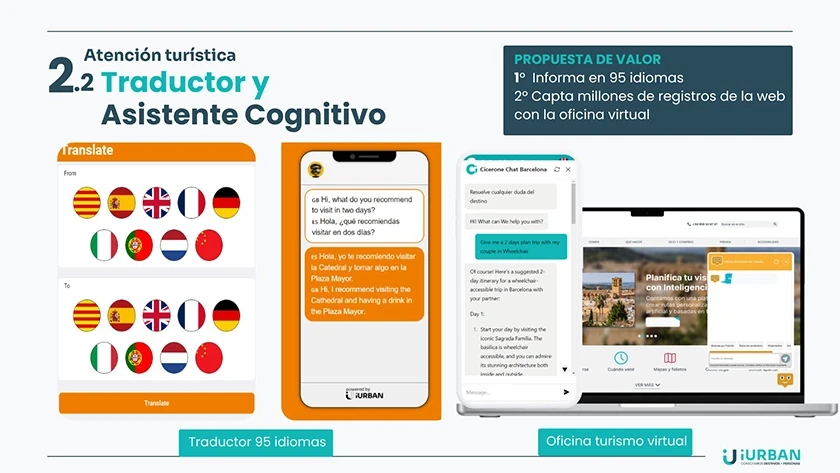
AI to help destinations regain control
I Urban is presented as the first comprehensive generative AI solution for tourism, created to combat overtourism, revitalise depopulated areas of Spain, and give each region back control over its data and digital identity. A tool designed to ensure that no municipality is left off the map and that the new era of artificial intelligence is not defined by global algorithms, but by the destinations themselves.
Source: TRAVEL MEDIA HUB