

- The Museo Picasso Málaga will be open continuously from 10 a.m. to 6 p.m. during the December bank holiday weekend, including the 6th and 8th (national holidays), in order to facilitate visits by residents and visitors to the city.
- The ticket office will remain open until thirty minutes before the Museum closes.
- These holidays are a great opportunity to explore the Pablo Picasso: Structures of Invention. The Unity of a Work galleries, visit the new temporary exhibition Picasso Memory and Desire, and bid farewell to the Farah Atassi. Genius Loci exhibition, which closes on Sunday 14 December.
- As usual, on Sunday afternoon the Museum will once again offer free admission during its last two hours of opening.
During this first weekend in December, the museum will be open every day at its usual rates from 10 a.m. to 6 p.m. (last admission at 5.30 p.m.), so that anyone who is in the city during these public and non-public holidays can visit the art gallery. In addition, on Sunday 7 December, as every Sunday, admission will be free during the last two hours of opening, on this occasion from 4 pm onwards.
Visitors to the MPM will be able to visit the rooms of the Palacio de Buenavista that house Pablo Picasso: Structures of Invention. The unity of a work. Thanks to close collaboration between the Museum and the Almine and Bernard Ruiz-Picasso Foundation (FABA), the galleries display nearly 150 works that reveal the personality of Pablo Picasso (1881–1973) and his extraordinary ability to create the innovative structures that made him one of the most influential artists of modern times.
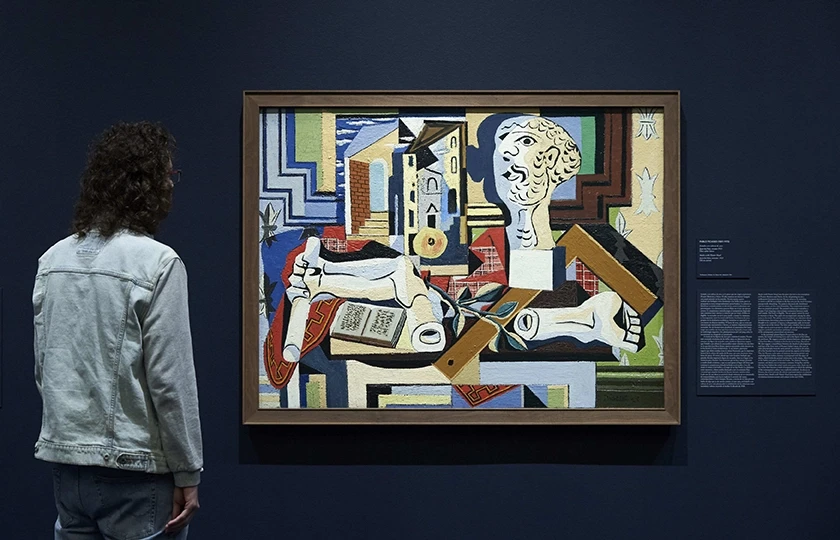
For the past couple of weeks, the Museum has been hosting Picasso Memory and Desire, an exhibition that, based on the oil painting Study with Plaster Head that Pablo Picasso created in 1925, explores the complex relationship between images and the drifts of the modern subject through the work of Picasso and his contemporaries. The exhibition brings together more than one hundred works by key figures in 20th-century art, such as Giorgio de Chirico, Fernand Léger, Jean Cocteau, Man Ray and René Magritte, as well as Salvador Dalí and Federico García Lorca’s interpretations of Picasso’s aforementioned work. The exhibition, curated by Eugenio Carmona, Professor of Art History at the University of Malaga, and sponsored by the Unicaja Foundation, reveals a revealing dialogue between memory and desire, historical time and modernity, and how subjectivity transforms cultural symbols.
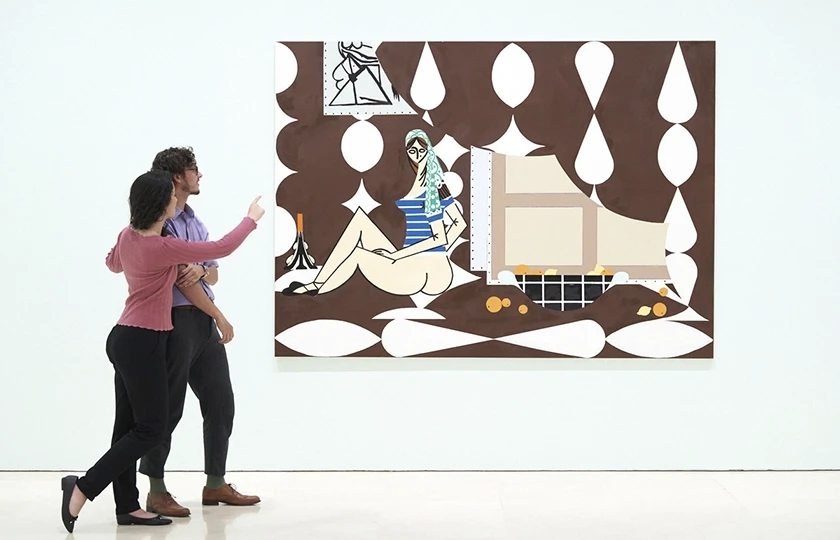
In addition, these are the last few days to visit the exhibition Farah Atassi. Genius Loci, featuring some twenty works created between 2015 and 2025 by Belgian artist Farah Atassi, one of the most promising figures in European contemporary art. With work deeply influenced by geometric forms and the interplay of space, Atassi engages in dialogue with the great masters of modern art, such as Pablo Picasso, going beyond the reinterpretation of the Cubist tradition and exploring the expressive possibilities of space in painting. These holidays are a good opportunity to say goodbye, as it closes next Sunday, 14 December.
In addition to the exhibition halls, visitors can also enjoy the beauty of the Buenavista Palace, home to the MPM, a magnificent example of 16th-century Andalusian architecture that blends Renaissance and Mudejar elements. Beneath the ground lies an archaeological site containing Phoenician and Roman remains, as well as rooms from the old Renaissance palace that offer visitors a glimpse into the history of Malaga. Anyone wishing to learn more about Picasso as an engraver can do so in the Picasso and Engraving section, designed to explore the graphic work of the Malaga-born artist. Another point of interest is Picasso. Lifeline, a visual chronology that combines the artist’s life and his work exhibited at the MPM, which can be found in the inner courtyard, with key moments in the artist’s life, from his birth to his death.
Source: Communication PICASSO MUSEUM MÁLAGA