

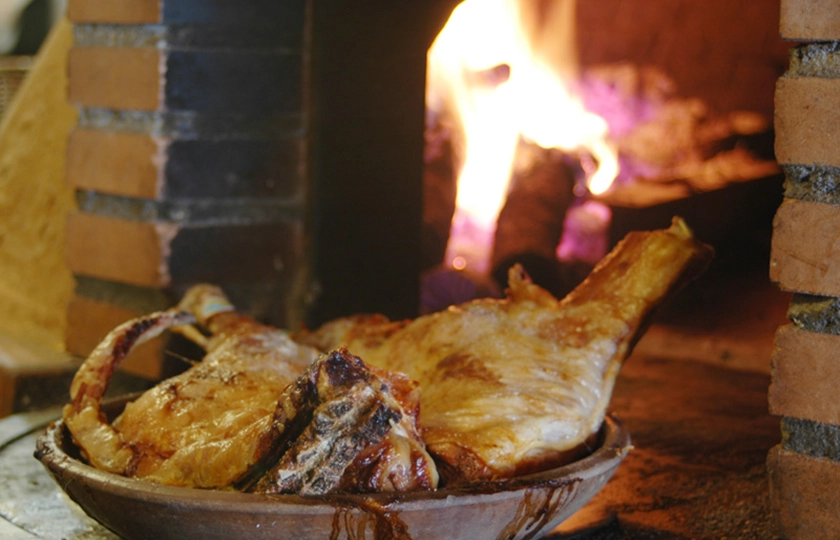
- Until 6 April, the town is adding a culinary offering to its programme, combining traditional grills, wines from the Ribera del Duero and the ‘Torrija’ and ‘Limonada’ trails.
In Aranda de Duero, Holy Week, declared a Festival of Regional Tourist Interest in 2005, is one of the highlights of the local calendar. In addition to the religious and cultural programme taking place throughout the historic centre, there is a culinary offering closely linked to this period, transforming the visit into an experience where tradition, produce and surroundings blend together naturally.
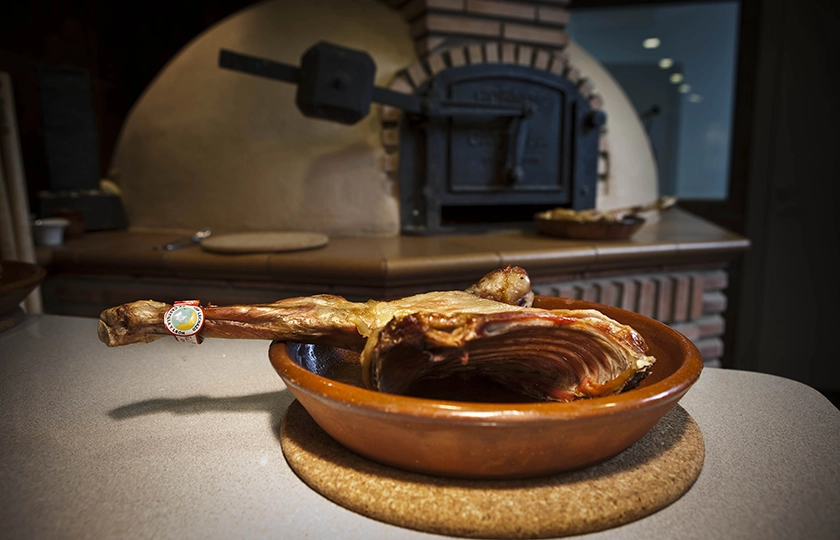
Wood-fired roast suckling lamb is the star of Aranda’s cuisine and one of the destination’s main attractions. Prepared in a clay pot and using a method that has barely changed over time, this dish is in particularly high demand at the town’s rotisseries during this period. Alongside it, other specialities such as Aranda black pudding, Castilian soup, Aranda-style conger eel and Aranda cake round off an offering that defines the local culinary identity.
The experience is rounded off with wines from the Ribera del Duero Designation of Origin, which are inseparable from the town’s culinary culture. Their presence on bars and tables reinforces an approach in which cuisine and the local area are understood as a single entity.
Seasonal cuisine associated with Holy Week
This traditional foundation is complemented by the seasonal cuisine typical of Holy Week, with dishes and preparations that highlight the seasonal nature of the menu. Cod, the traditional Lenten stew, and sweets such as aniseed doughnuts, dried apricots and fried milk are all part of the usual offering in bars and restaurants, highlighting the seasonal nature of the cuisine at this time of year.
This range of dishes allows us to understand gastronomy as an integral part of the celebration itself, present during the transitional moments between events and processions, when the city’s activity revolves around the table.
Gastronomic tours around the city
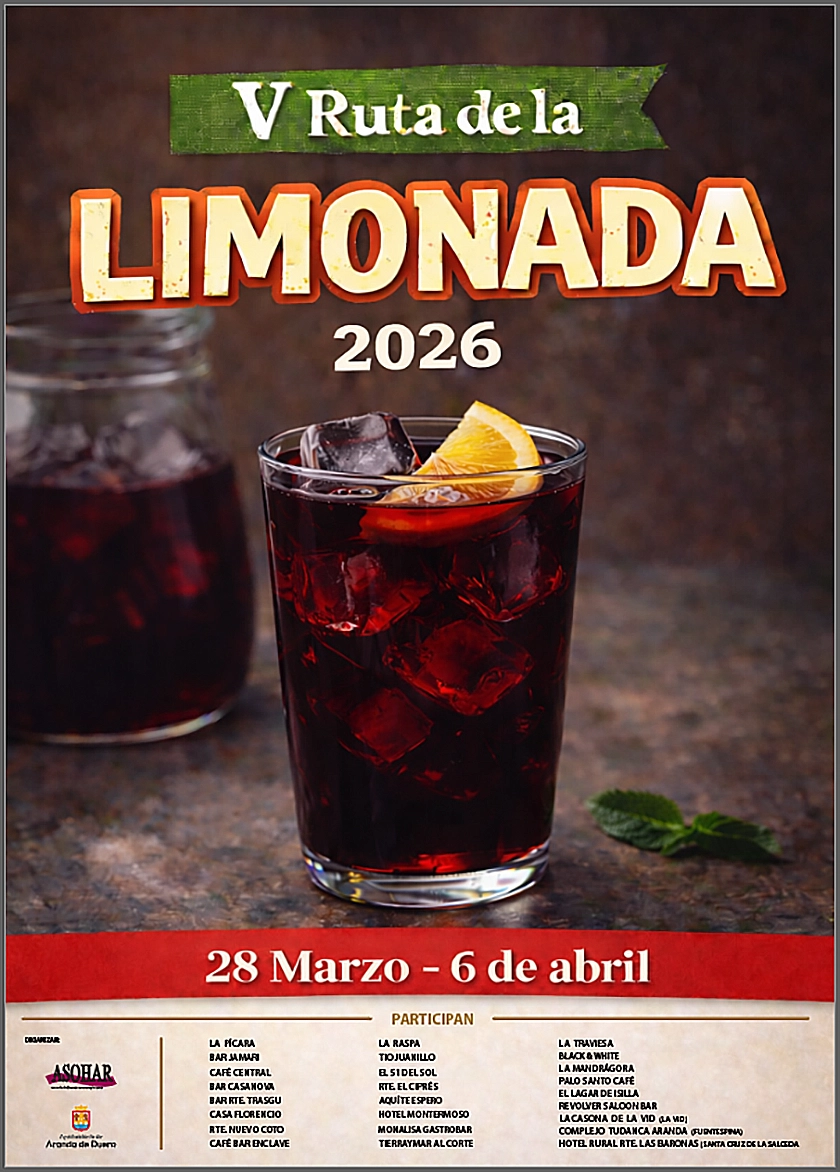
At the same time, the city is promoting two of its most iconic events: the Torrija Route and the Lemonade Route, which are celebrating their fifth edition from 28 March to 6 April and in which numerous catering establishments are taking part. Both initiatives allow visitors to explore the city centre through its flavours, integrating the gastronomic experience into the very itinerary of the celebrations.

The torrija, one of the most iconic sweets of Holy Week, is presented in a variety of versions, ranging from the traditional recipe to more contemporary reinterpretations. For its part, limonada (a drink made from wine) has established itself as a staple accompaniment during these days, particularly in the moments before and after the processions, when the action moves to the streets and squares.
From the grill to the wine cellar
The culinary experience is rounded off by the wine culture, which finds one of its most unique expressions in Aranda de Duero’s underground wine cellars. With kilometres of tunnels dug beneath the historic centre between the 12th and 18th centuries, these spaces offer a glimpse into the local winemaking tradition and an understanding of the origins of the wines of the Ribera del Duero.
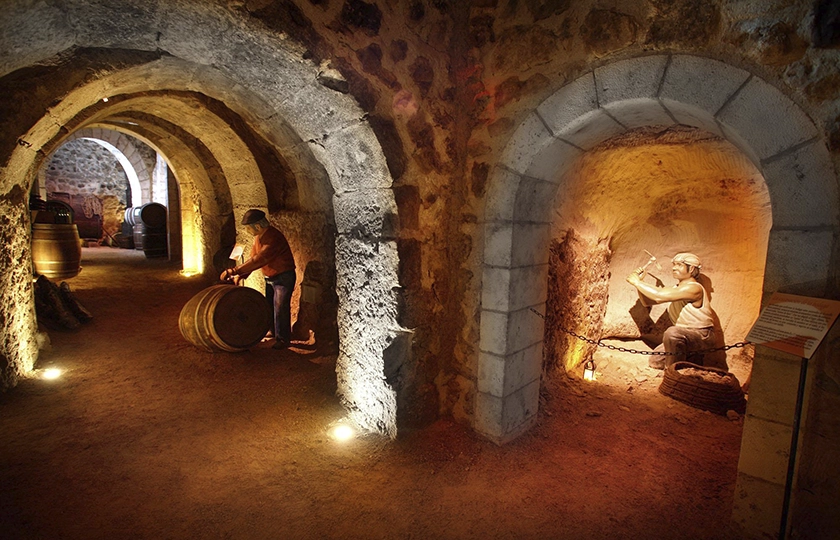
In this way, Holy Week in Aranda de Duero is also shaped by gastronomy, in an experience where tradition, produce and context come together in a journey that takes you from the procession to the grill and from the street to the wine cellar.
Source: COMUNICACIÓN IBEROAMERICANA