

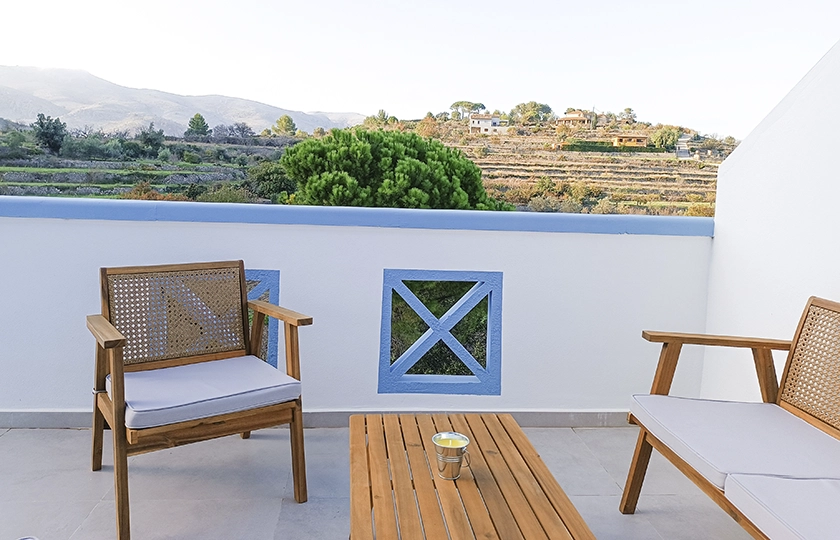
- The eclipse is shaping up to be one of the major tourist highlights of the decade in Spain and a significant boost for rural tourism.
- International travellers are driving demand outside the major cities. Interest is growing in rural destinations with clear, unobstructed skies where the eclipse can be enjoyed.
- Almost three-quarters of searches carried out during the week of the eclipse come from families and groups of more than three people, confirming that this is a shared, multi-generational experience.
- Bookings in the eclipse villages of Aragon, La Rioja, Navarre, Castile-La Mancha and Castile and León have increased tenfold.
The total solar eclipse that will cross Spain on 12 August is shaping up to be one of the highlights of the decade and a major boost for rural tourism. New data1 published by Airbnb reveals growing interest among international travellers in securing views in destinations with clear skies, most of which are far from major cities and surrounded by nature. Bookings in non-urban destinations along the path of the eclipse — and for those same dates — have tripled2.
1Survey conducted by Opinium for Airbnb, with a representative sample of 2,000 adults in Spain; 2,000 adults in the UK, Germany, Italy and France; and 1,000 adults in Portugal, the Netherlands and Belgium. The survey was carried out between 23 January and 2 February 2026.
2Year-on-year growth in bookings in non-urban or low-density areas for stays between 10 and 16 August 2026. Airbnb internal data as at 31 December 2025. Increase of 210%.
It is in non-urban areas where the total eclipse will be visible that the increase in bookings is most noticeable: villages in these areas of Aragon, Navarre, La Rioja, Castile-La Mancha and Castile and León are recording up to ten times more bookings than in the same period in 2025, whilst in other more established autonomous communities, such as Galicia, Asturias and the Basque Country, bookings in villages along the eclipse path have increased more than fourfold3.
3Year-on-year growth in listings in non-urban or low-density areas for bookings made between 10 and 16 August 2026, by Autonomous Community. Airbnb internal data as at 31 December 2025.
According to a survey conducted by Opinium4 for Airbnb, in key source markets for Spain—such as France, the United Kingdom, Germany, Italy, the Netherlands and Belgium—more than half of adults say it is worth travelling to see a solar eclipse, and many consider this phenomenon a compelling reason to explore rural Spain. Given that a significant part of the eclipse route passes through towns with limited or non-existent traditional hotel infrastructure5, Airbnb hosts play a key role in expanding the range of accommodation available and ensuring that high-value international demand flows directly into smaller communities.
4Survey conducted by Opinium on behalf of Airbnb, with a representative sample of 2,000 adults in Spain; 2,000 adults in the United Kingdom, Germany, Italy and France; and 1,000 adults in Portugal, the Netherlands and Belgium. The survey was carried out between 23 January and 2 February 2026.
5AFI report, using data from official sources.
Guests from the US and Europe lead international searches
Spaniards don’t want to miss this unique event on home soil and are the most keen to search on Airbnb for accommodation in the eclipse locations. However, demand in Europe and the United States is accelerating6. Travellers from France, the United Kingdom and the United States account for more than half of international accommodation searches for this route, whilst Germany, Italy, the Netherlands and Belgium account for a third of those searches from outside Spain.
6Countries of origin of guests with the highest number of Airbnb accommodation searches for stays throughout the entire route. Searches carried out up to the fourth quarter of 2025 for check-ins between 10 August 2026 and 10 August 2026.
European travellers7 staying in areas along the eclipse path are expected to spend an average of €680 per trip, including accommodation, food and drink, shopping at local businesses, eclipse-related experiences and rural tourism activities — an average of €100 more than Spanish travellers.
7Survey conducted by Opinium on behalf of Airbnb, with a representative sample of 2,000 adults in Spain; 2,000 adults in the United Kingdom, Germany, Italy and France; and 1,000 adults in Portugal, the Netherlands and Belgium. The survey was carried out between 23 January and 2 February 2026.
This figure highlights the significant economic potential that this demand can generate in these destinations and reinforces the findings of a recent AFI report, based on official data sources, which revealed that international visitors spend almost three times as much as domestic travellers during their stays in short-term rentals in Spain’s smaller towns.
Aragón, Castilla-La Mancha and the Valencian Community lead the way in travel interest
Travellers continue to turn to Airbnb in search of accommodation options, and the regions with the biggest increase in searches on the platform for stays during the eclipse are8:
- Aragón: over 450% increase in searches
- Castilla-La Mancha: an increase of almost 420%.
- Valencia: over 250% increase
- Navarre: an increase of almost 230%.
- Cantabria: over 140% increase
Given this growing interest in travelling to enjoy the eclipse, we have compiled a list of some of the best places to stay to experience this astronomical phenomenon. These options stand out for their prime locations, unobstructed views and the experiences they offer for gazing at the sky in a unique setting.
8Comparison between searches carried out in the fourth quarter of 2025 for stays between 10 and 16 August 2026 and searches carried out in the fourth quarter of 2024 for stays between 10 and 16 August 2025.
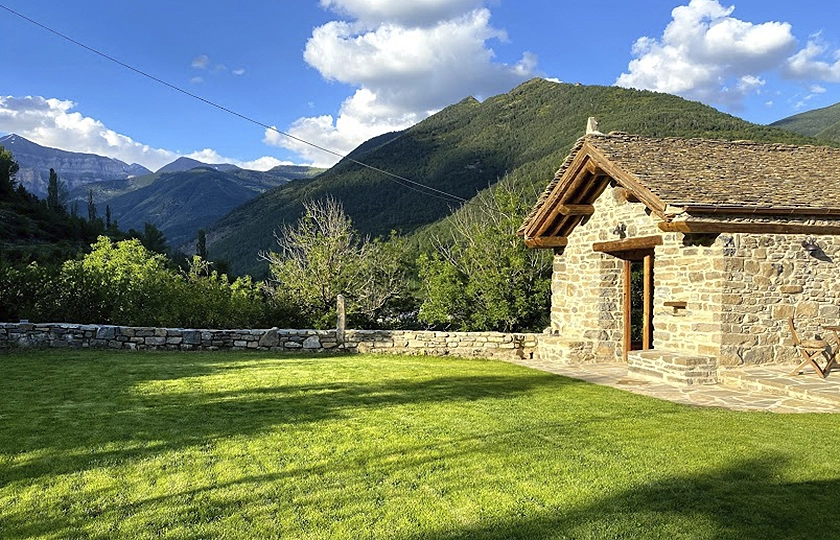
La Era de Oto (Aragón)
A cosy farmhouse in Oto, at the entrance to the Ordesa y Monte Perdido National Park, in the heart of the Huesca Pyrenees. This small mountain village is renowned for its spectacular natural surroundings, open landscapes and exceptionally clear skies. La Era de Oto is a peaceful retreat in the heart of nature, perfect for watching the eclipse from its porch beneath the clear skies of the Pyrenees.
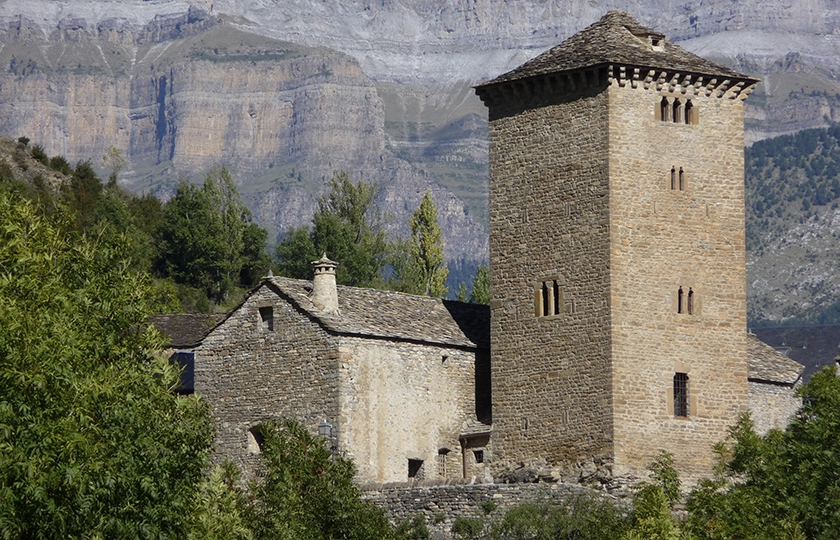
La Torre de Oto (Aragón)
A 15th-century castle with a unique charm in the heart of the Aragonese Pyrenees. Surrounded by nature and steeped in history, the Torre de Oto is an ideal destination for families, adventurers and history buffs, perfect for watching the eclipse from the top of the tower against the backdrop of the Pyrenean landscape.
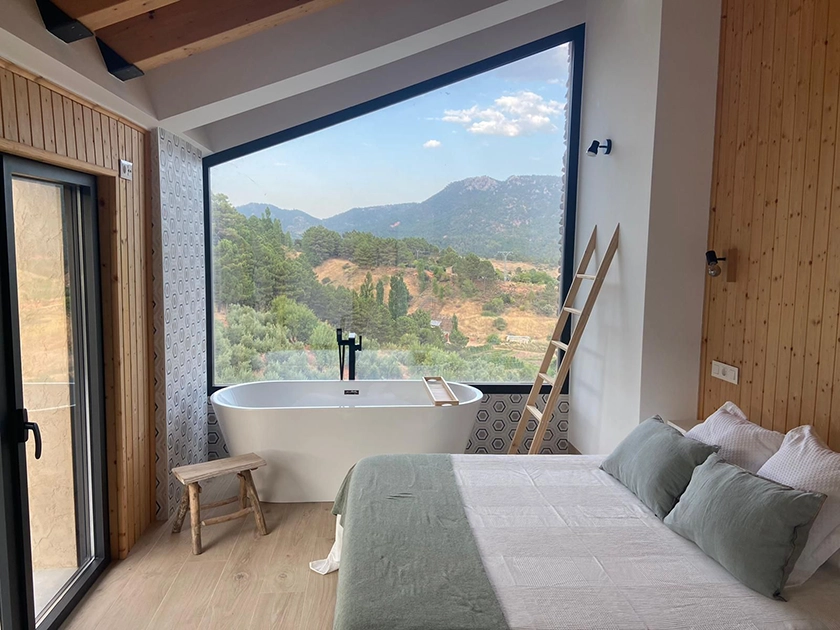
Piedra de la Torre Country House (Castilla-La Mancha)
Located in Riópar, a picturesque village in the Albacete mountains known for its mountain scenery and rivers, it is the perfect place to watch the eclipse from its large windows, even from the comfort of your bed. What’s more, the Piedra de la Torre Country House is just 15 minutes from the source of the River Mundo, a unique setting in which to enjoy the clear, starry sky.
Old farmhouse (Castilla-La Mancha)
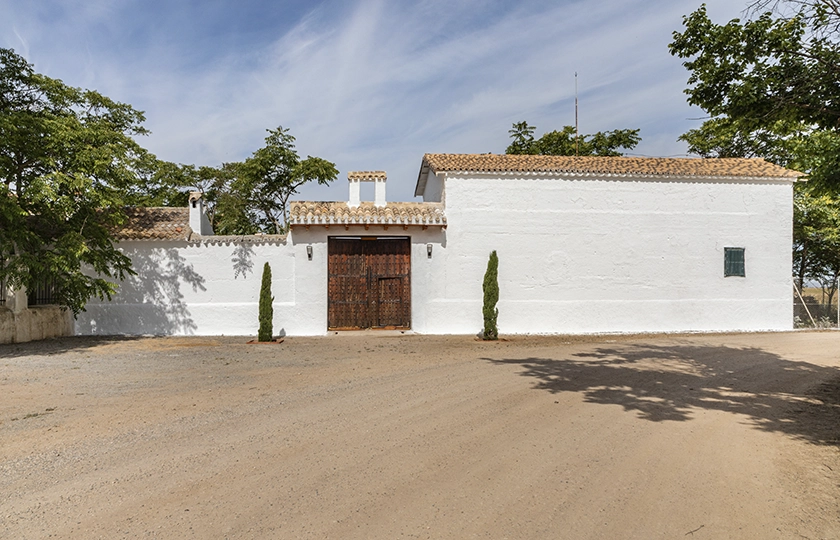
Situated on the Don Quixote Route, between Alcázar de San Juan and Argamasilla de Alba, La Regidora is a renovated early 20th-century country house that retains all the charm of the original building. Built on a single level, it features 7 bedrooms as well as a large traditional La Mancha courtyard with a barbecue, a tree-lined garden and a swimming pool. An ideal place to relax and enjoy the eclipse in peaceful surroundings steeped in history.
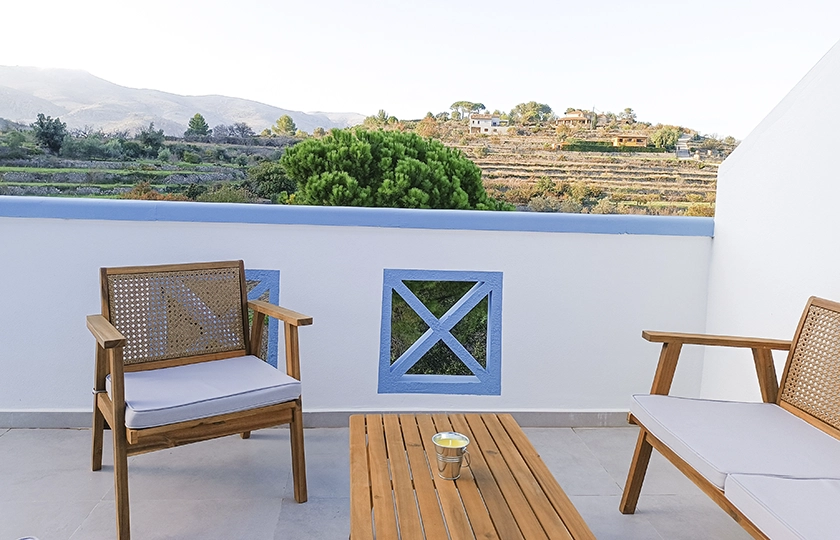
Mediterránea Country House (Comunidad Valenciana)
Located in Benimaurell, a village in the Vall de Laguar known for its mountain scenery and proximity to the Mediterranean Sea, this Mediterranean-style holiday home features three floors packed with comfort. Furthermore, from its two terraces, Mediterránea Contry House offers views of both the mountains and the sea – two perfect backdrops for watching the eclipse and choosing where to enjoy the experience according to your preferences: amidst the blue of the Mediterranean or the mountains of the Vall de Laguar.
Apartament in Old Gallipienzo (Navarra)
Located in Gallipienzo, this property offers stunning views of the Foz Verde gorge on the River Aragón and the Caparreta nature reserve. Apartament featuring a balcony, terrace and attic rooms with incredible views of a unique natural setting.
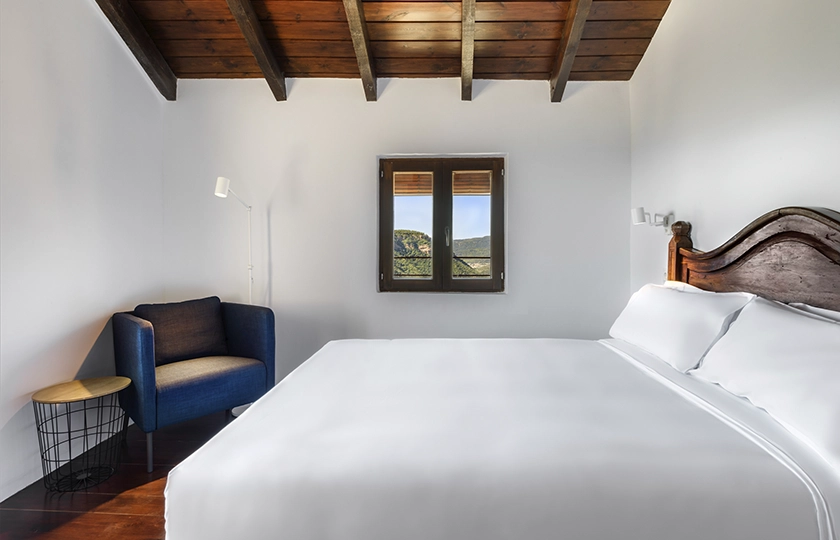
Ibarbeg Country House (Navarre)
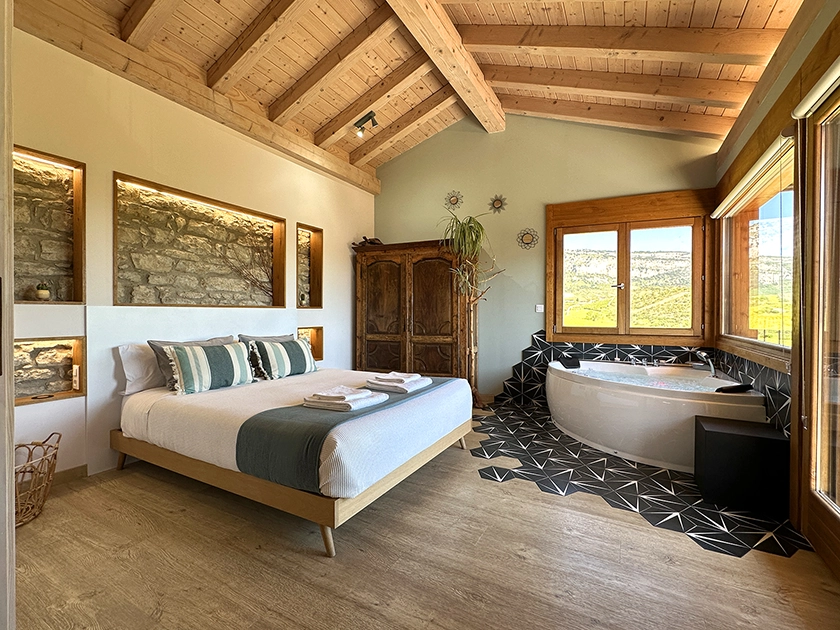
In Bidaurreta, a small village of just 180 inhabitants, very close to Pamplona, lies this village house, which has been beautifully restored to combine modern comfort with rural charm. It features a spacious bedroom with a jacuzzi, a kitchen-diner with a fireplace, a bathroom and spectacular views of the Etxauri Valley, as well as a balcony and access to a courtyard and garden. It is perfect for unwinding and enjoying nature, as well as an ideal spot for watching the eclipse.
Villa Brenagudina (Cantabria)
This authentic Pasiega cottage is located in La Sota, a rural setting surrounded by mountains and nature in Cantabria. With over 100 m² spread over two floors and a spacious porch, it features two bedrooms and a living room with views. It also has an indoor heated swimming pool with large windows, allowing you to relax whilst admiring the landscape from the water.
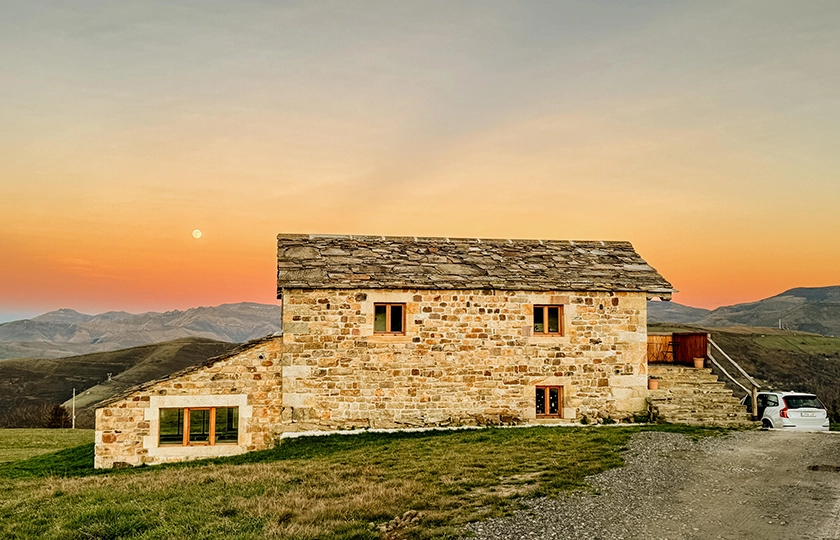
A cabin in the countryside (Cantabria)
A glass-walled cabin in the woods, featuring sheer blinds that allow you to enjoy natural light whilst maintaining privacy, a private veranda and an en-suite bathroom. Getting there is an experience in itself: a path surrounded by natural woodland leads to the cabin, offering an intimate retreat from which to watch the eclipse.
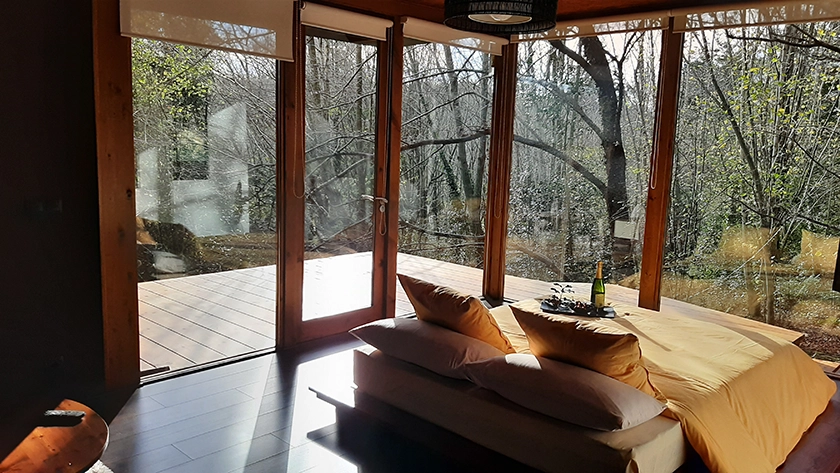
Small villages, clearer skies
The towns and villages along this route are emerging as top destinations for those seeking lesser-known spots and better visibility. The towns with fewer than 3,000 inhabitants that are seeing the sharpest rises in search volumes9 are:
- Valtierra (Navarre)
- Puertomingalvo (Aragon)
- Tales (Valencia)
- Almatret (Catalonia)
- Atienza (Castile-La Mancha)
- Torroja del Priorat (Catalonia)
- Terriente (Aragon)
- Valderrobres (Aragon)
- Algar de Palancia (Valencia)
9Comparison between searches carried out in the fourth quarter of 2025 for records dated between 10 and 16 August 2026 and searches carried out in the fourth quarter of 2024 for records dated between 10 and 16 August 2025.
A special occasion for families and millennials
Trips to view the solar eclipse are, above all, family-oriented and experience-focused. Almost three-quarters (74%) of searches for the week of the eclipse come from families and groups of three or more people10, highlighting how the event is establishing itself as a shared, multi-generational experience. Couples account for 20% of searches, whilst solo travellers account for just 7%. Millennials show the greatest interest in stays in eclipse zones11 and the average age of travellers planning to travel is 41. This generation continues to prioritise experiences that combine nature and quality time with family or friends.
10Percentage of solo travellers, couples, families and groups of more than three people who searched on Airbnb for accommodation located along the path where the total solar eclipse will be visible in its entirety. Searches carried out in the first quarter of 2025 for stays between 10 August 2026 and 10 August 2026.
11Average age of guests who searched on Airbnb for accommodation located along the path where the total solar eclipse will be visible in its entirety. Searches conducted in the fourth quarter of 2025 for stays between 10 and 16 August 2026.
Spanish travellers
Almost three-quarters12 of Spaniards see the eclipse as a unique opportunity to explore rural destinations, and around two-thirds would travel specifically to enjoy clearer skies. According to the Opinium survey13, the main motivations for Spanish travellers to visit these areas are: to experience a unique natural phenomenon (43%), to travel with friends or family (32%) and to explore rural areas they would not otherwise visit (29%).
During the eclipse, Spaniards14 plan to take photos or videos (43%), share the experience on social media (23%), spend money at local businesses (34%) and attend local events related to the eclipse (19%).
12Survey conducted by Opinium for Airbnb, with a representative sample of 2,000 adults in Spain; 2,000 adults in the United Kingdom, Germany, Italy and France; and 1,000 adults in Portugal, the Netherlands and Belgium. Fieldwork was carried out between 23 January and 2 February 2026.
13Survey conducted by Opinium for Airbnb, with a representative sample of 2,000 adults in Spain; 2,000 adults in the UK, Germany, Italy and France; and 1,000 adults in Portugal, the Netherlands and Belgium. Fieldwork was carried out between 23 January and 2 February 2026.
14Survey conducted by Opinium for Airbnb, with a representative sample of 2,000 adults in Spain; 2,000 adults in the UK, Germany, Italy and France; and 1,000 adults in Portugal, the Netherlands and Belgium. Fieldwork was carried out between 23 January and 2 February 2016.
Jaime Rodríguez de Santiago, Managing Director of Airbnb Marketing Services, SL, added: “Just a few months ago, we announced a shift in trends, with more people seeking authentic experiences, nature and destinations away from busy urban centres. This trend is now gathering pace, and events such as solar eclipses are drawing global attention to rural communities in Spain. Our commitment to rural areas reflects how we support these destinations and local hosts, ensuring that the benefits of tourism go directly to residents and small businesses, helping to revitalise rural areas and create sustainable economic opportunities.”
To ensure this opportunity has a lasting positive impact, Airbnb has announced a partnership with the Starlight Foundation to help educate guests, hosts and destinations on how to safely enjoy this natural wonder and provide guidance on preserving clear skies as part of the local heritage.
“An eclipse is more than a fleeting celestial event: it is an opportunity to reconnect people with the value of our skies. In Spain, we will experience a unique astronomical sequence, known as the ‘Iberian trio’, which will make the peninsula the epicentre of solar observation over the next three years. With Airbnb’s support, we have launched a specific course designed to equip hosts with the knowledge and tools needed to transform this extraordinary moment into a responsible, educational and truly memorable experience for their guests. By preparing communities to welcome visitors, we can help create lasting value for local destinations. Dark skies are not only a scientific treasure, but also a cultural and environmental legacy that rural communities are uniquely placed to safeguard,” says Antonia Varela, director of the Starlight Foundation.
About Airbnb
Airbnb was founded in 2007, when two of its founders hosted three travellers in their flat in San Francisco. It has grown significantly since then and now has over 5 million hosts who have welcomed more than 2 billion guests in almost every country in the world. Every day, hosts offer unique stays, experiences and services that allow travellers to get to know other communities in a more authentic way.
Source: ROMAN Reputation Matters