

Spain is accelerating the transformation of its tourism model with European funds, but the debate no longer revolves solely around how much is being invested, but rather how to transform a destination without stripping it of its identity.
The country ended 2025 with 96.8 million international tourists and €134.712 billion in tourism expenditure, both all-time highs, whilst the Government continues to roll out the Tourism Sector Modernisation and Competitiveness Plan, with a budget of €3.4 billion, as well as the specific line for digital platforms and solutions under the DTI Network, with €96.3 million and a deadline for implementation of 30 June 2026.
The scale of the challenge is also evident from another figure: an analysis by McKinsey & Company, based on satellite data, suggests that 80% of travellers visit only 10% of the world’s tourist destinations. This growing concentration explains the tension currently experienced by many regions: destinations under intense tourist pressure, where it is becoming increasingly difficult to strike a balance between visitors and residents; and places with lower visitor numbers that risk gradually fading away, losing shops, bars, stories and everyday life.
At both extremes, the risk is the same: losing what makes a place unique. Not because of the physical disappearance of the destination, but because of the erosion of its customs, its stories, its local businesses and its intangible heritage. For iUrban, therein lies the key to the new smart tourism: not using technology to homogenise, but to protect diversity.
15 projects in 11 regions in just two months
By the end of February 2026, iUrban had completed 15 projects across 11 autonomous communities: Andalusia, Galicia, Catalonia, the Canary Islands, Navarre, the Valencian Community, Castile and León, La Rioja, Castile-La Mancha, the Region of Murcia and Asturias.
Among the most notable initiatives are:
- Torremolinos (Andalusia), with a digitalised tourist information kiosk on the La Carihuela Promenade, as part of the Torremolinos Smart Paradise PSTD.
- Carballiño (Galicia), with the digitalisation of municipal tourist information.
- Huelva Provincial Council (Andalusia), with the development of software, modules, a website and integration with a CMS for municipalities within the Sierra de Aracena and Picos de Aroche PSTD.
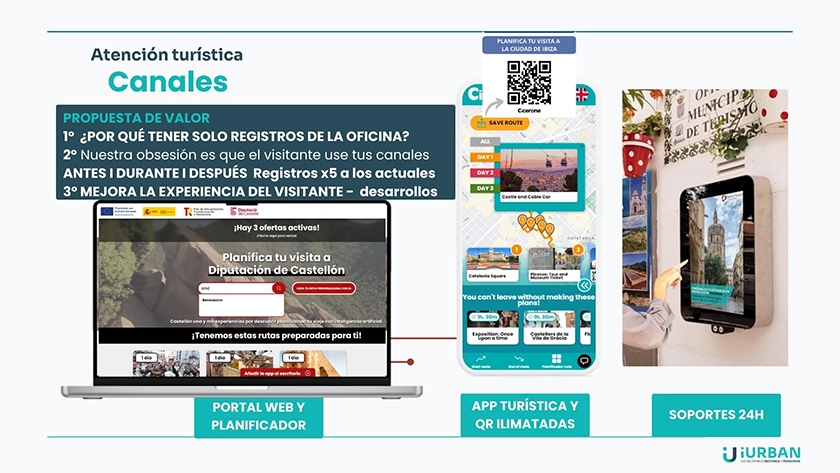
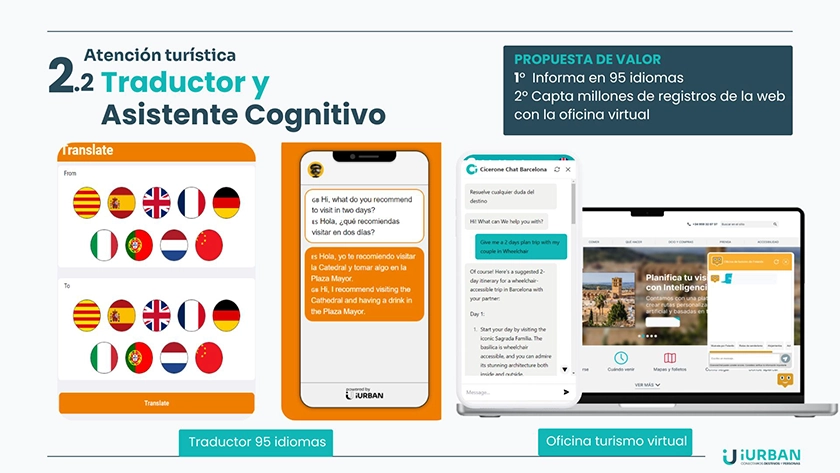
- Pineda de Mar (Catalonia), with a destination platform featuring generative AI connected to an outdoor touchscreen at the tourist office.
- Pájara (Canary Islands), with the digitisation of tourism infrastructure.
- NASERTIC/Camino de Santiago de Navarra, with information devices to digitise tourist offices.
- Provincial Council of Alicante/Costa Blanca Interior (Valencian Community), with an app and online solution to enhance the visitor experience at Xorret de Catí.
- Burgos, with a Smart Tourism Integration project.
- Association of Municipalities of Ábalos, Briones, San Vicente de la Sonsierra and San Asensio (La Rioja), with a smart tourism platform and smart signage.
- Montes Toledanos (Castile-La Mancha), with services for the destination’s digital transition.
- Benavente, with a smart digital tourist destination project.
- Los Alcázares and San Pedro del Pinatar (Region of Murcia), with virtual tourist office solutions and a smart destination platform.
- Ribadedeva (Asturias), with a local tourism digitisation initiative.
- Sierra del Segura (Castile-La Mancha), with improvements to the network of tourist information offices.
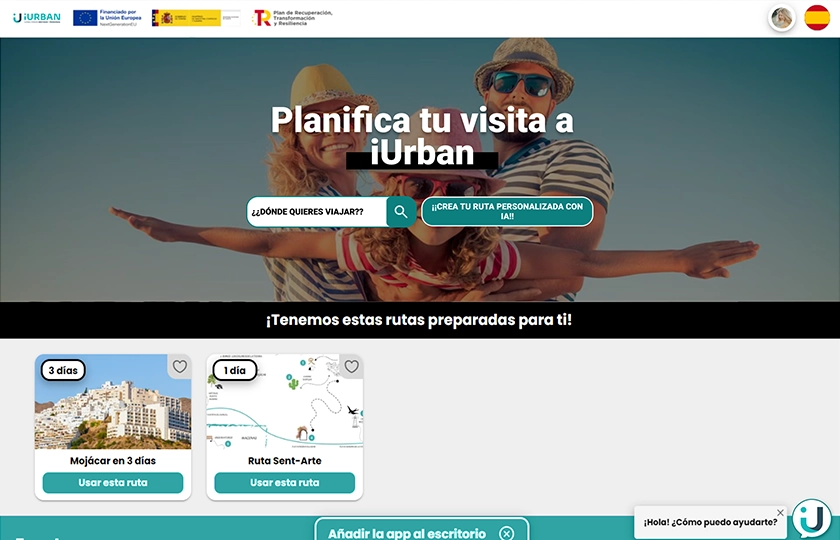
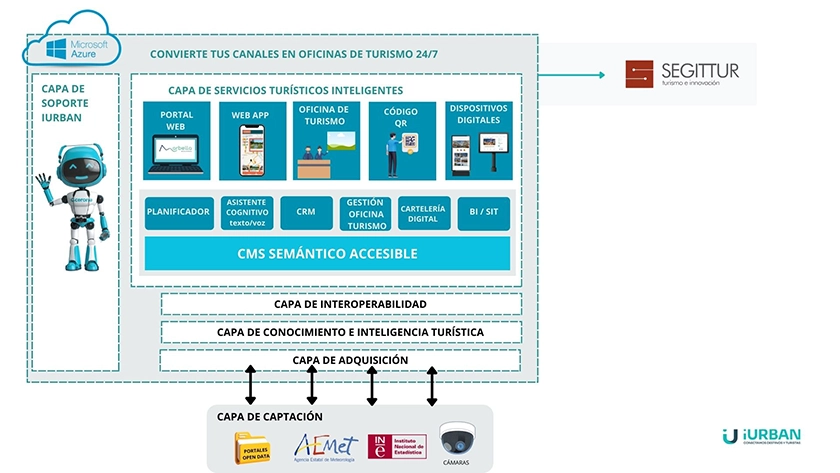
According to the company’s data, iUrban now has over 300 clients across seven countries, supported by its Cicerone platform, an AI designed to collect, structure and make accessible the local knowledge that destinations wish to preserve and share.
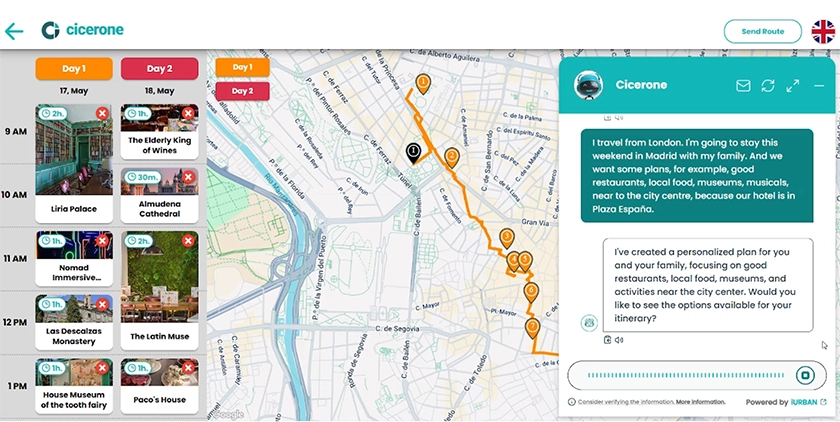
Technology to ensure the destination’s appeal is not diluted
The pace of the market is largely driven by the implementation of the extraordinary regionalised Tourism Sustainability Strategies (PSTDs) in 2021, 2022 and 2023, which mobilised €615 million, €719.77 million and €478 million respectively: a total of €1,812.77 million in public investment over just three financial years.
Furthermore, various regulatory guidelines linked to the Tourism Sustainability Strategy in Destinations establish a minimum of 10% investment in each priority area, including Priority Area 3 on digital transition. Taking this figure as a conservative estimate, the minimum potential volume associated with digitalisation in these extraordinary PSTDs would stand at around 181 million euros.
“If you stroll through bustling streets like Larios in Málaga or the historic centres of Seville and see global brands, that doesn’t mean the destination has lost its identity. The identity remains with the people: in those who tell you how fishing used to be done, which festival was celebrated in a neighbourhood, or which spot the locals frequent. Google tells you how to get there; Cicerone wants to help you understand why it’s worth staying,” says Andrés Martínez Vidal, CEO and co-founder of iUrban.
The company argues that useful tourism AI is not the kind that answers “a bit of everything”, but rather the kind that works with content verified by the destination itself: validated public information, real-time timetables, documented heritage, cultural events, local businesses and testimonials from those who live in the area.
“We don’t believe in AI that replaces the destination; we believe in AI that helps the destination speak with its own voice,” adds Martínez Vidal. “When a local council or regional authority hires us, they aren’t just asking for a chatbot, a website or a digital sign. They’re asking for a tool to better showcase their place, making it more accessible, more useful and more true to what it really is.”
About iUrban
iUrban is a Spanish tech startup specialising in the digital transformation of tourist destinations through the use of artificial intelligence. With over 300 destinations across 7 countries, it is making travel more accessible.
To do this, it removes all kinds of barriers: from language to a lack of accessible information. Furthermore, it offers real and useful data that goes beyond the tourists who visit the tourist office. It helps them understand who they are, what they are looking for and how they move through all stages of their journey, enabling them to make informed decisions.
Its Cicerone platform is the first ‘destination AI’ designed to enable cities, regions and territories to control their own digital narrative and redistribute visitors in a sustainable manner, thereby combating overtourism. Awarded by the UN in Riyadh in 2025, it has tripled its destinations and revenue in 2025.
Source: TRAVEL MEDIA HUB