Peru’s northern coast, bathed by the Pacific Ocean, features deserts, valleys and carob forests where huacas (sacred sites) and museums reveal the grandeur of pre-Inca cultures such as the Moche, Chimú and Sicán. This region is home to some of the country’s most outstanding archaeological sites, set within landscapes that retain their ancestral character.
Specifically, the Moche Route runs through the regions of La Libertad and Lambayeque. Along the route, visitors can learn about the ceremonial life, beliefs and organisation of civilisations that flourished between the 1st and 15th centuries, and gain an understanding of their historical evolution and influence on the South American country.
La Libertad: Trujillo, Huanchaco and the legacy of the Moche and Chimú
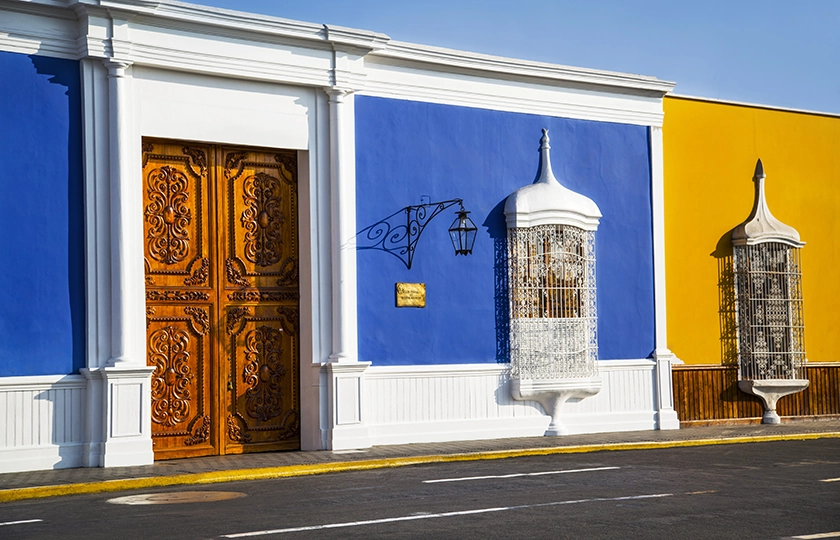
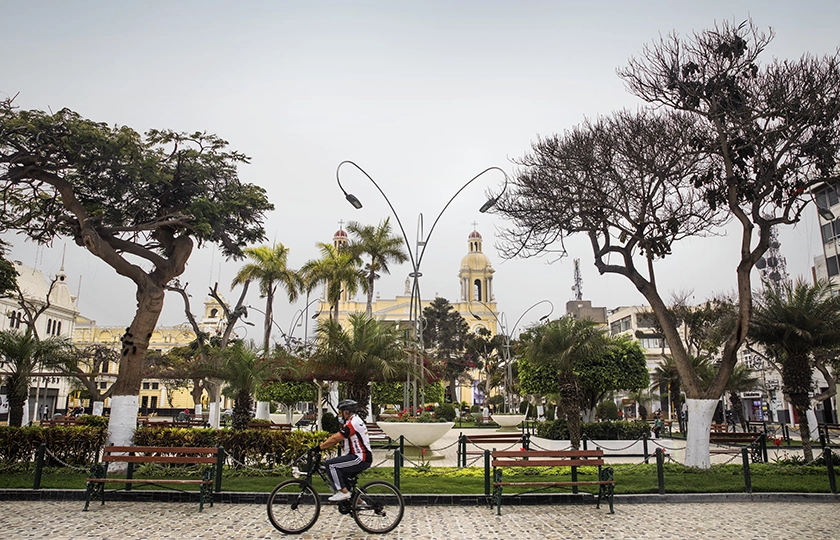
An essential stop on the Moche Route is Trujillo, known as the “City of Eternal Spring,” just over an hour from Lima by plane. Its historic center, with colorful mansions, wrought-iron balconies, and the famous yellow cathedral, reflects the region’s colonial architecture and cultural richness, making it the ideal starting point for immersing yourself in the history of northern Peru.
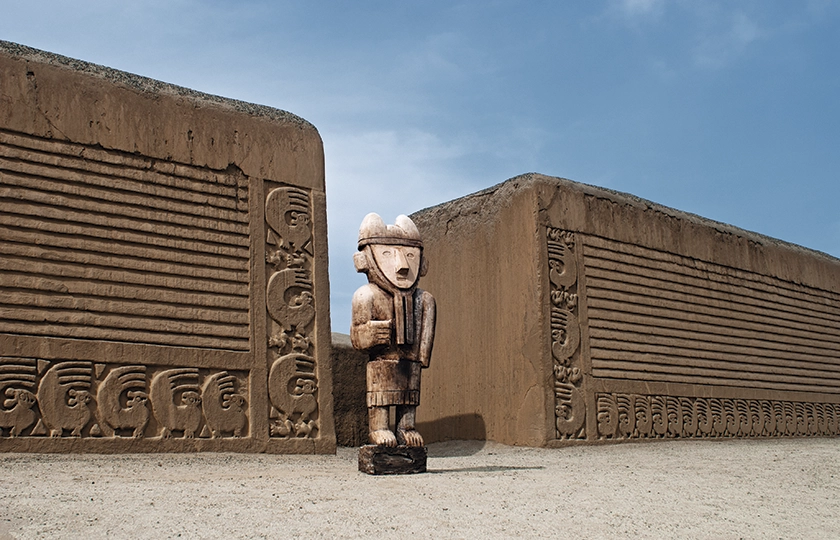
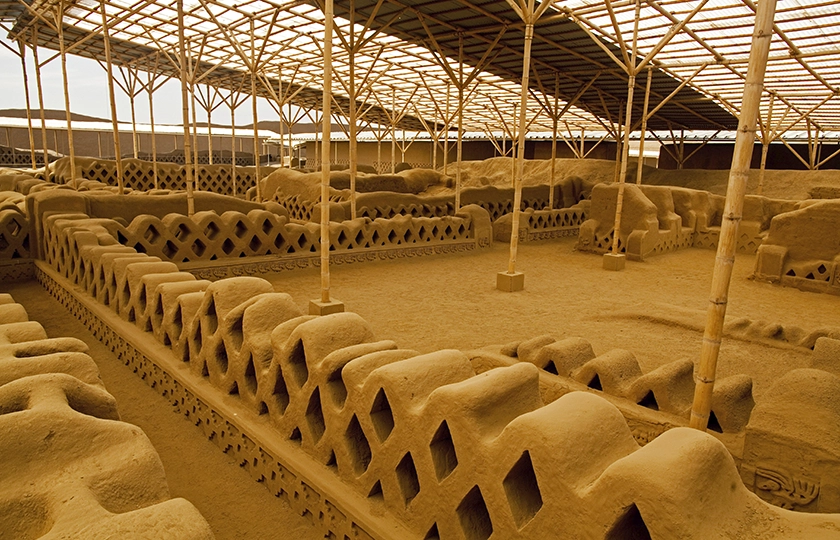
Just a few minutes from the city lies Chan Chan, the world’s largest pre-Hispanic adobe city and the heart of Chimú culture. Its separate palaces, walls up to 13 meters high, and friezes depicting maritime life and religious iconography reveal the urban planning and social sophistication of this civilization, whose legacy was recognized as a UNESCO World Heritage Site in 1986.
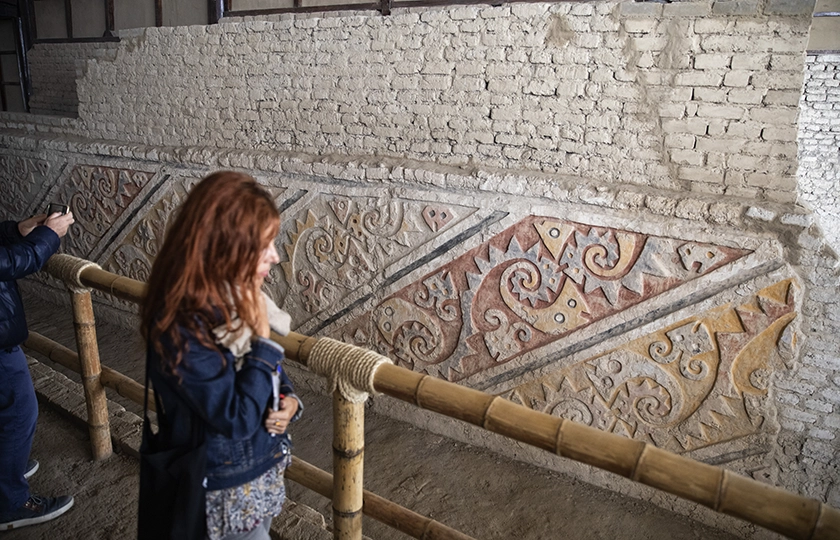
Just a few kilometers from the city of Trujillo lies the Huacas de Moche Archaeological Complex, home to the Huacas del Sol and de la Luna, which offer a glimpse into the power of the Moche civilization. Their polychrome murals and sacred spaces provide a window into the ceremonial and artistic world of the Moche.
To the northwest, toward Lambayeque, the El Brujo Archaeological Complex holds the story of the Lady of Cao, the first female ruler of this culture. This discovery, along with the mummified remains and murals in the on-site museum, allows visitors to experience history from an archaeological perspective and understand how women actively participated in pre-Hispanic power structures.
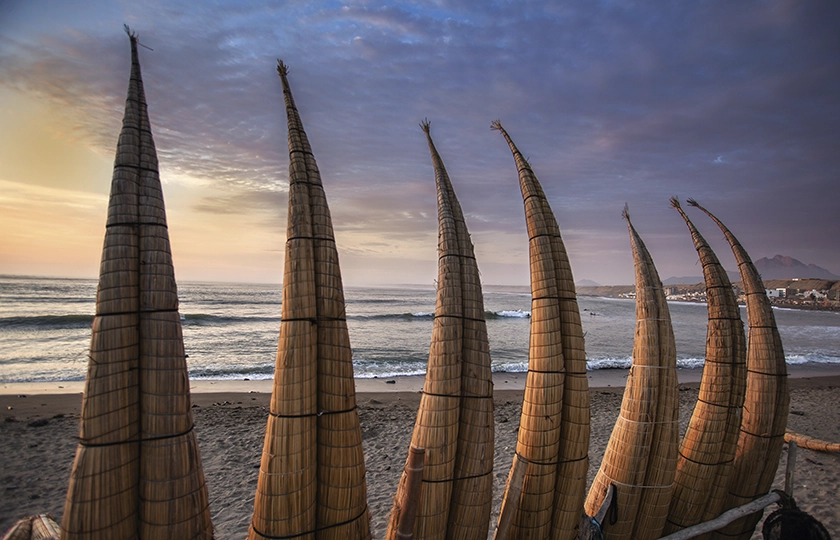
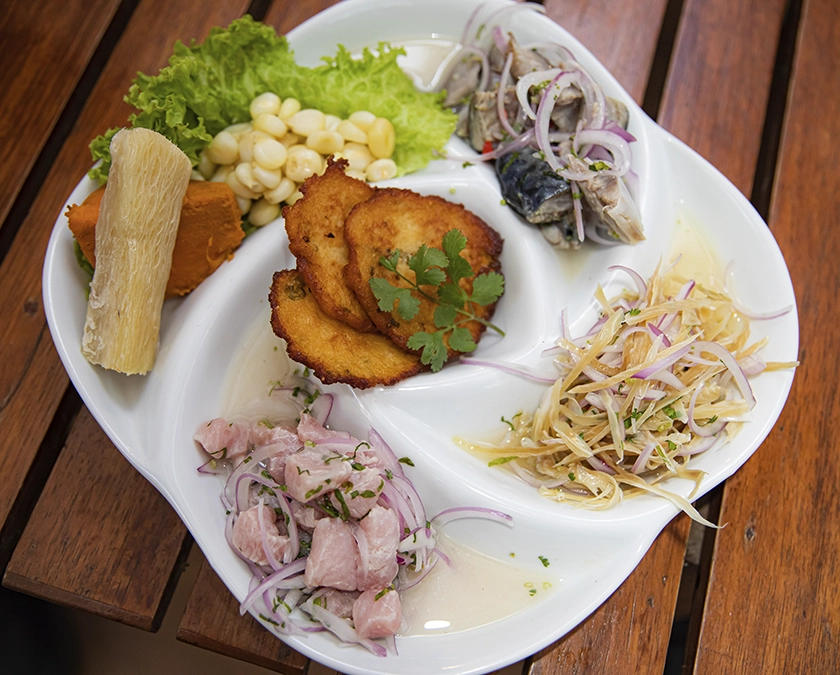
Finally, the seaside resort of Huanchaco preserves living traditions such as the “caballitos de totora”—boats made of totora (a type of reed)—which have been in use since pre-Columbian times. Thanks to these boats, the Moche became skilled fishermen capable of catching enough fish and shellfish, which form the basis of ceviche. This iconic dish dates back more than 2,000 years, making it not only a culinary delicacy but also a cultural legacy that has endured through the centuries.
Lambayeque: The Kingdom of the Lord of Sipán, Amid Pyramids and Natural Treasures
After leaving La Libertad, the Moche Route takes visitors into the Lambayeque region. Its capital, Chiclayo, known as the ‘Capital of Friendship’, is the gateway to the area’s main cultural and archaeological attractions.
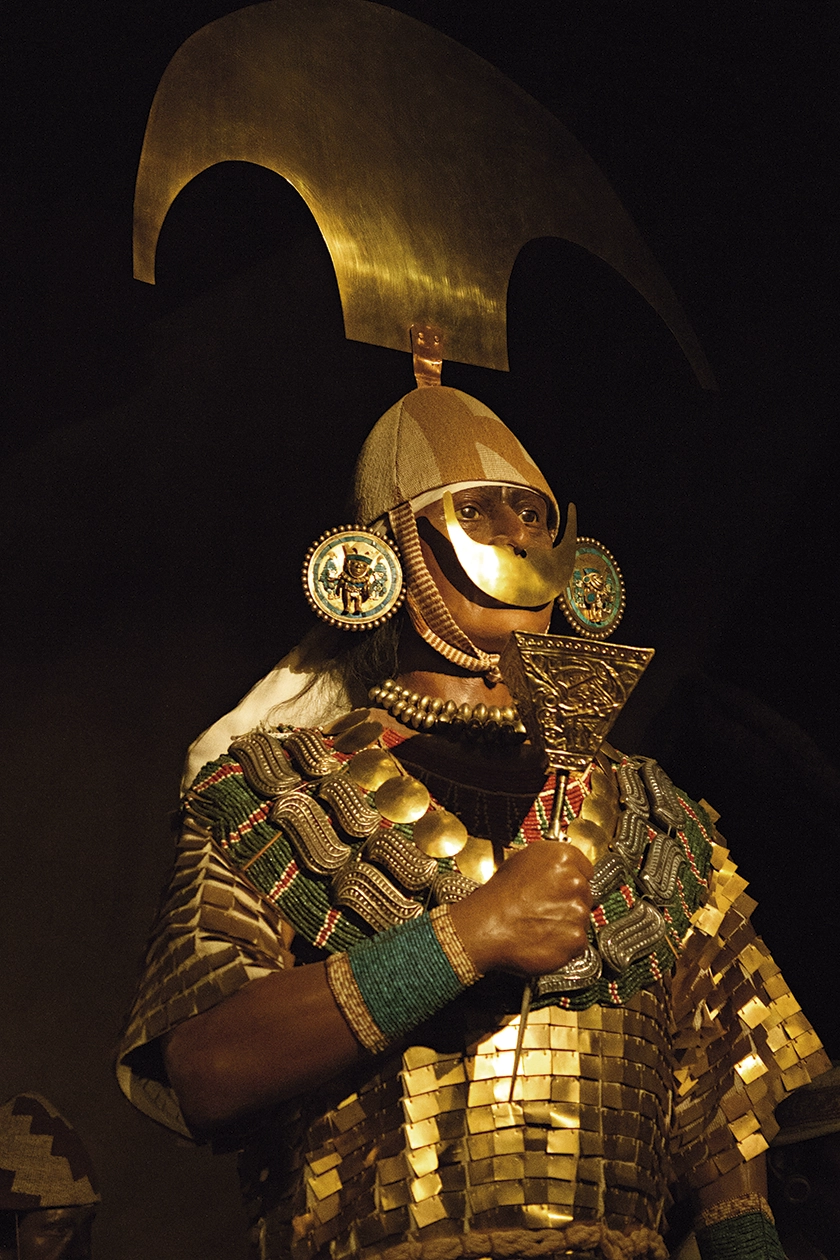
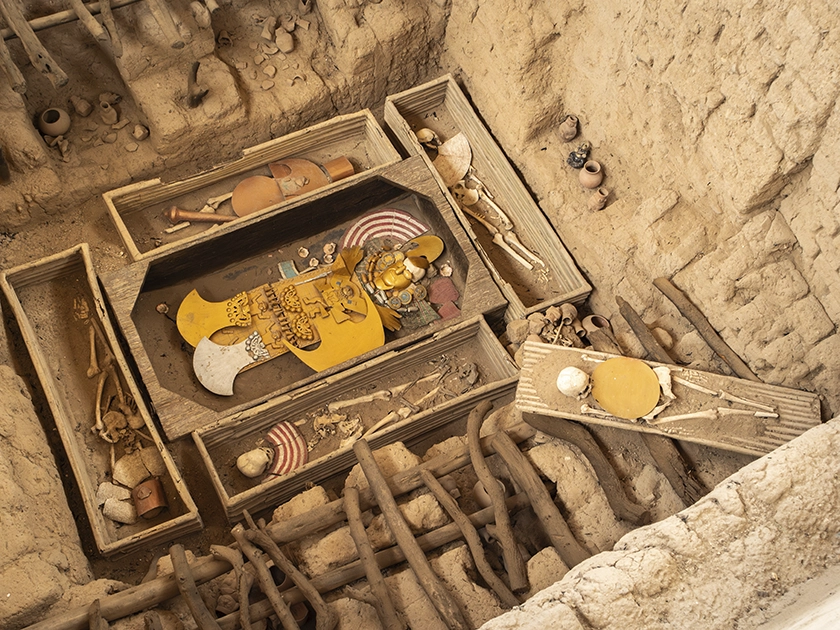
One of these is Huaca Rajada, where the tomb of the Lord of Sipán was discovered in 1987, considered one of the most important archaeological finds in the Americas. The Royal Tombs of Sipán Museum displays the original grave goods of the Mochica ruler, including gold, silver and ceramic ornaments. The experience allows visitors to immerse themselves in the archaeology of a historic people and understand the sophistication of their political and ceremonial systems.
The tour continues to the Túcume Pyramid Valley, a complex of 26 adobe pyramids dating back to 700 AD, which were used as temples, residential palaces and administrative centres. This complex reflects the advanced urban planning and the connection these cultures had with their natural environment. According to legend, the founder of the valley was Naylamp, a mythical figure from the Sicán civilisation, who consolidated regional power before the arrival of the Chimú and the Incas.
For nature lovers, the Bosque de Pómac Historical Sanctuary is an unmissable stop. Spanning over 5,800 hectares, it is home to the world’s largest carob forest, alongside endemic species and pre-Hispanic pyramids hidden amongst the vegetation. Walking and cycling trails, birdwatching and picnics with panoramic views of the sanctuary allow visitors to connect with the area’s biodiversity whilst appreciating the harmony between cultural heritage and nature.
Lambayeque is also renowned for its cuisine, with dishes that reflect a perfect fusion of local ingredients and traditional techniques. ‘Cabrito a la norteña’, a stew of kid goat seasoned with spices; ‘arroz con pato’, prepared with stout and coriander; ‘chiringuito’, a ceviche made from dried guitarfish; and ‘tortilla de raya’ are all emblematic of the regional cuisine. The combination of local flavours and the freshness of the produce make these dishes an authentic experience of the region’s rich culinary heritage.
About PROMPERÚ
The Commission for the Promotion of Peru for Exports and Tourism (PROMPERÚ) is an agency under the Ministry of Foreign Trade and Tourism of Peru and is responsible for formulating, approving, implementing and evaluating strategies and plans to promote Peru’s image in the areas of tourism, exports and foreign direct investment in the country.
Source: NEWLINK Group