

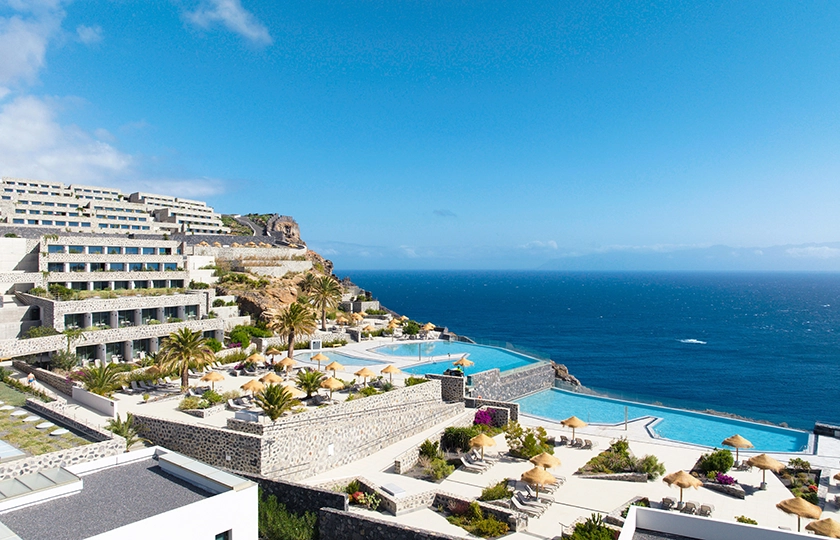
- Built on the site of a former farm, the hotel captures the essence of La Gomera’s historic terraces to create a project that blends seamlessly into the landscape.
- The renovation, which won an award from CaixaBank, combines sustainable architecture, over 2,000 solar panels and stunning views of the Atlantic and Mount Teide.
The terraces are an integral part of La Gomera’s identity. These agricultural terraces, built over generations to make the most of the island’s steep slopes, have shaped its landscape and way of life for centuries. Today, that legacy has become the architectural inspiration for Bancal Hotel & Spa, a hotel project that transforms a former tomato plantation into a space where nature, sustainability and design coexist in perfect harmony.
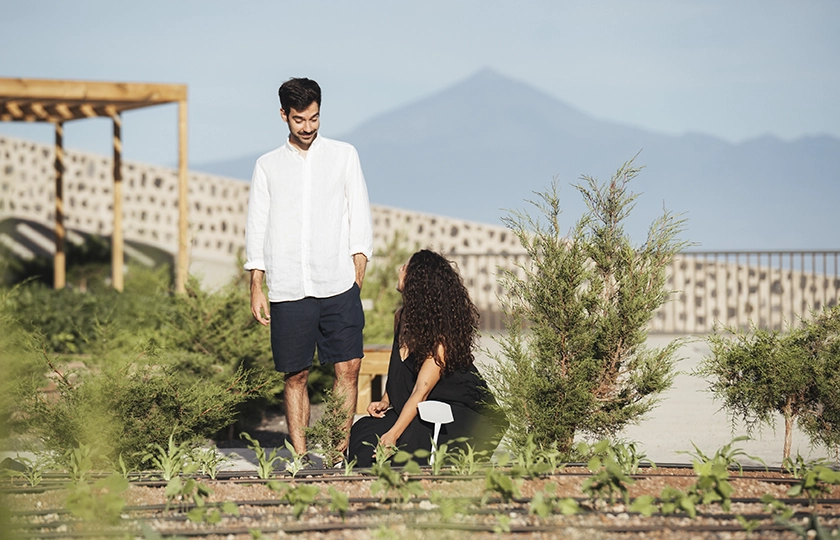
The hotel’s very name pays homage to these traditional structures. Far from altering the original topography of the land, the project has respected the existing terraced layout, integrating the various buildings into the hillside and allowing each level to enjoy privileged views of the Atlantic Ocean, Tenerife and Mount Teide.
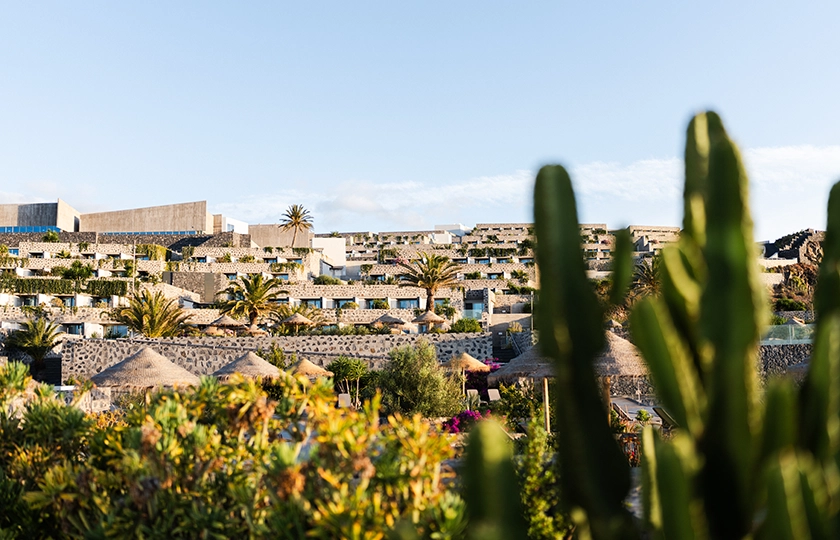
The result is architecture that engages with the landscape and blends into it. The paths, terraces and dry stone walls, crafted from local basalt, evoke the island’s agricultural history and recapture the essence of the ancient crops. Walking through the hotel is, in a way, following the same paths that La Gomera’s farmers walked for decades.
Following the comprehensive refurbishment of a complex that remained unfinished for years, Bancal Hotel & Spa has succeeded in breathing new life into this privileged setting through a concept that bridges tradition and modernity. “Our aim was never to impose a hotel on the landscape, but to create a hotel that emerged from it,” explains David Aguiar, CEO of Bancal Hotel & Spa. “The terraces tell the story of La Gomera and of those who have lived here for generations. We wanted to preserve that essence and reinterpret it through architecture that respects the environment,” adds Aguiar.
This approach was recognised in 2024 with the CaixaBank Award for Best Refurbishment of a Hotel with Over 100 Rooms, an accolade that highlighted the restoration of a space whose history has been preserved and enhanced through a sensitive architectural intervention that is integrated into the local landscape.
Architecture and sustainability: one and the same concept
Sustainability is one of the cornerstones of Bancal Hotel & Spa. The hotel runs entirely on electricity and features over 2,000 solar panels that generate a significant proportion of the energy it consumes. Furthermore, it is committed to water-reuse systems, water-efficient landscaping adapted to the local climate, and close collaboration with local producers and suppliers.
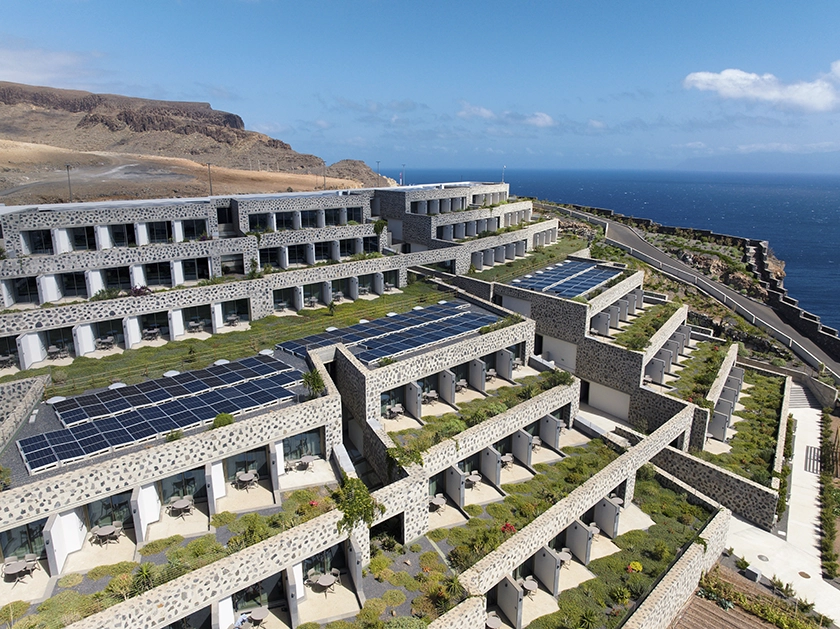
Vegetation also plays an essential role in the project. The terraces have been landscaped with native, low-water-use species, reinforcing the complex’s integration into the natural landscape of La Gomera. This commitment was recognised in 2025 with the 7th Hotel CSR Award in the Environmental category, awarded by the Intermundial Foundation, Tourism& Law and the Spanish Confederation of Hotels and Tourist Accommodation (CEHAT), for its project on landscape integration and the restoration of biodiversity on the island, based on revegetation with native flora, an environmentally sensitive design and the implementation of measures to reduce water and energy consumption. Looking ahead to 2026, the hotel will continue to advance its environmental strategy with new initiatives aimed at reducing energy and water consumption, as well as further reducing its carbon footprint.
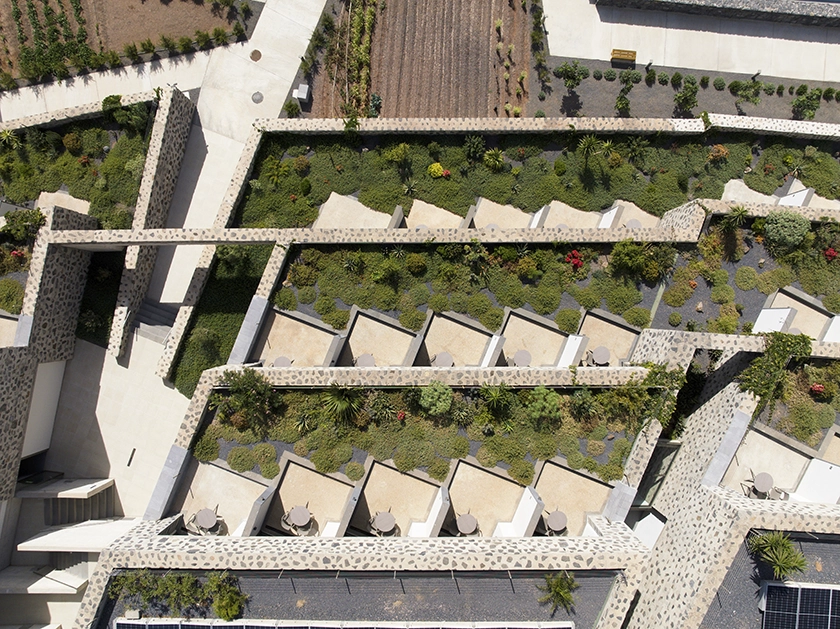
Located on the Atlantic coast and a short distance from Garajonay National Park, a UNESCO World Heritage Site, Bancal Hotel & Spa has become a prime example of how contemporary architecture can draw inspiration from local traditions to offer an authentic, sustainable tourist experience that is fully connected to the destination.
About BANCAL HOTEL & SPA
Perched on a cliff overlooking the Atlantic, near San Sebastián de La Gomera, Bancal Hotel & Spa opened its doors in July 2024 and has established itself as one of the most sustainable hotel projects in the Canary Islands. Inspired by the island’s historic terraces, the hotel combines contemporary architecture, local building traditions and a deep connection with the natural environment. It features 276 rooms and suites, nine restaurants and bars, the AUALA Wellness & Spa—offering hydrotherapy, halotherapy and personalised treatments—and a wide range of activities linked to nature and local culture. Sustainability is an essential part of its philosophy, based on the use of renewable energy, the reuse of resources, support for the local economy and the preservation of La Gomera’s landscape heritage.
Key facts
- 276 rooms and suites
- 9 restaurants and bars
- AUALA Wellness & Spa with hydrotherapy and halotherapy
- Prime location overlooking the Atlantic with views of Tenerife and Mount Teide
- 5 km from San Sebastián de La Gomera
- Architecture inspired by the traditional terraced fields of La Gomera
- Renovation of a former tomato plantation
- CaixaBank 2024 Award for Best Refurbishment of a Hotel with Over 100 Rooms
- Over 2,000 photovoltaic modules
- 100% electrified complex
- Close to Garajonay National Park, a UNESCO World Heritage Site
- Authentic experiences of nature, wellbeing and local culture
Source: COMUNICACIÓN IBEROAMERICANA