
- Toyota Woven City opens its doors in Japan, where technology, people and infrastructure come together to redefine how humanity moves. Woven City’s AI Vision Engine, a leading Visual Language Model, alongside other advanced AI technologies, is being showcased for application across various sectors.
- Woven by Toyota is driving the Kakezan initiative to multiply innovation and turn co-creation into real impact, serving as a hub for the development of new mobility products and services.
- Four new companies are joining Woven City as Inventors.
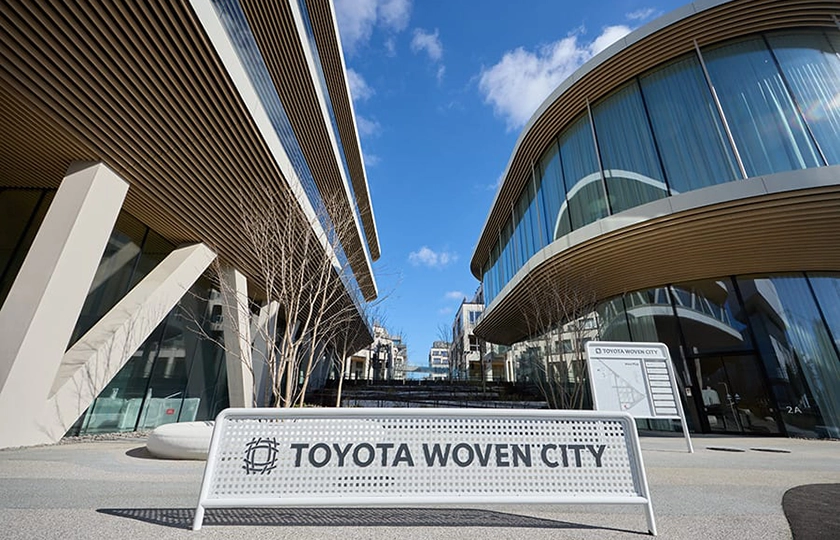
Toyota Woven City has opened its doors, and the first international media outlets have been able to see inside it as a real-world setting where technology, people and infrastructure come together to redefine how humanity moves. The story dates back a long way to Toyota’s founding days.
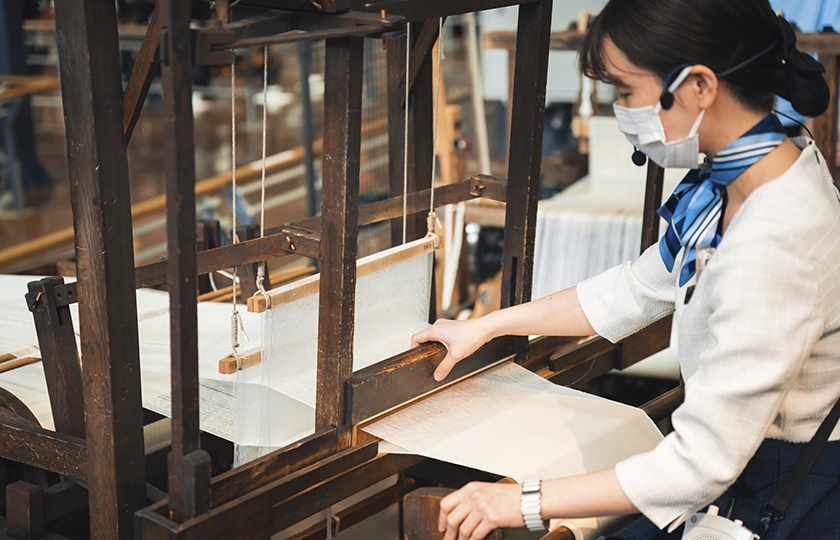
Almost a century ago, Sakichi Toyoda sold the patents for his automatic looms to invest the money in a different dream: building cars. It was an act of faith in innovation, a radical gamble on the future, and more than 100 years later, that spirit of founding determination remains alive and well at Toyota with the launch of Woven City – a city built from scratch at the foot of Mount Fuji where the next chapter in the future of human mobility is literally being woven.
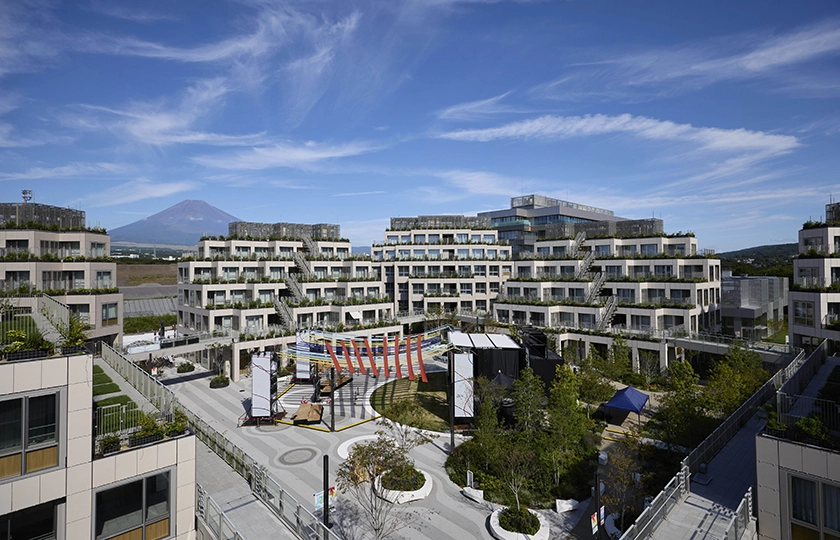
Toyota Motor Corporation (TMC) and Woven by Toyota, Inc. (WbyT) have unveiled technologies designed to accelerate innovation and drive ‘Kakezan’ in Toyota Woven City, which was officially opened in September 2025. Kakezan, which means ‘multiplication’ in Japanese, is WbyT’s approach to creating solutions with greater impact for society. It brings together diverse strengths from different sectors, including Toyota’s expertise in mass production, WbyT’s expertise in software development, and the unique capabilities of the Inventors and partners.
First came the looms; then, the city that weaves itself
The name “Woven” is no coincidence; it means ‘woven’, and is the common thread linking Toyota’s textile origins with its most ambitious vision. It was the money they received from the sale of the loom patents that enabled them to invest in car manufacturing. ‘Woven’ not only refers to those origins, but also signifies a shift – namely, moving away from thinking solely about manufacturing cars to considering mobility in a much broader, more ambitious sense.
The evolution from vehicle manufacturer to orchestrator of mobility ecosystems is the story being written today in Woven City, built precisely on the site of the former Higashi-Fuji plant, which closed in 2020 – a space that for decades manufactured cars and now houses the city of the future.
A living laboratory for designing the city of tomorrow through innovation and in collaboration with local residents
Woven City is neither a technology showroom nor a theme park, but rather “Toyota’s new mobility test bed”. It is the place where innovations are developed, tested and validated under real-world conditions, with real people living and working there. Its residents are known as the Weavers: active testers who, through their everyday lives, help shape the technologies of tomorrow.
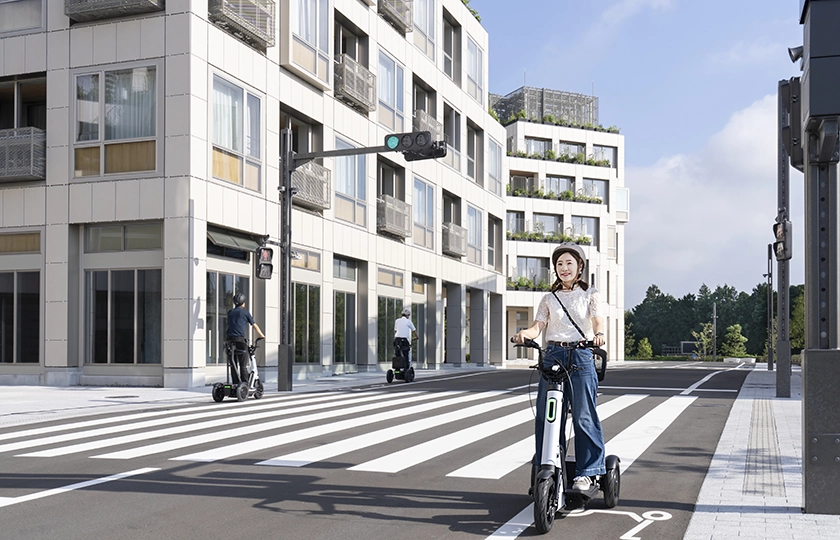
Working alongside them are the Inventors: companies, start-ups and research centres from around the world which, drawing on Toyota’s capabilities and expertise, develop products and services in a unique environment where feedback is immediate, real and human.
Phase one of Woven City was officially launched in September 2025 and there are already 100 people in 50 households taking part, with this number expected to rise to around 300 over time. To date, more than 20 Inventors have joined Woven City: 12 from companies within the Toyota Group and 12 from external partners.
Toyota’s vision: zero accidents; mobility for all
The idea behind Woven City is, more than a technological one, a human objective: to create “a safe and reliable mobility society for future generations”. A vision which, in Toyota’s philosophy, cannot be achieved by thinking solely in terms of vehicles, but requires the simultaneous integration of three elements: people, mobility and infrastructure. Only when all three work together in harmony is it possible to move towards Toyota’s most ambitious goal: a world with zero road accidents.
This philosophy – the very same one that has made Toyota the world’s most reliable manufacturer for decades – is now being applied on an urban scale.
What’s being developed today at Woven City?
Among the projects currently under investigation, the following stand out:
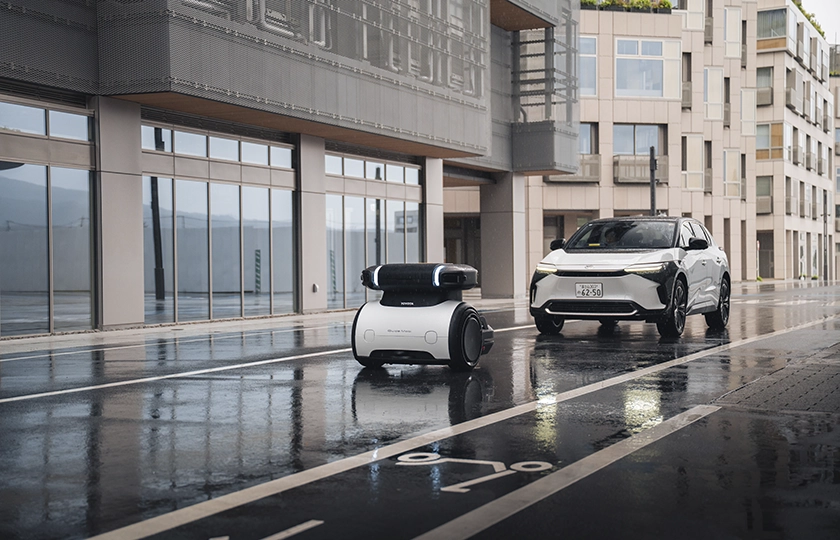
- Guide Mobi, the autonomous mobility robot that guides people around the city – a living demonstration of how technology can complement, rather than replace, human movement.
- HSR (Human Support Robot), Toyota’s domestic assistance robot that illustrates the concept of ‘teamwork’ between humans and machines in residential settings.
- C+walk T: a three-wheeled electric scooter that redefines personal mobility in urban environments, now available for Weavers to test.
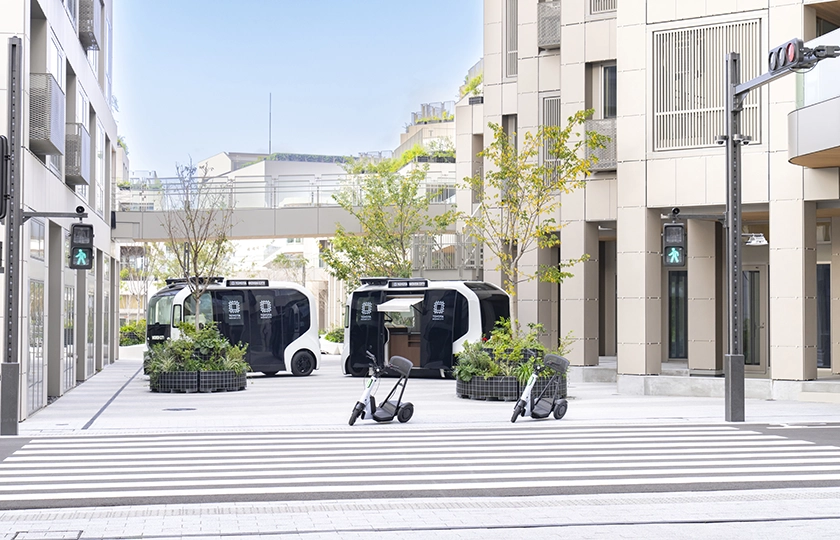
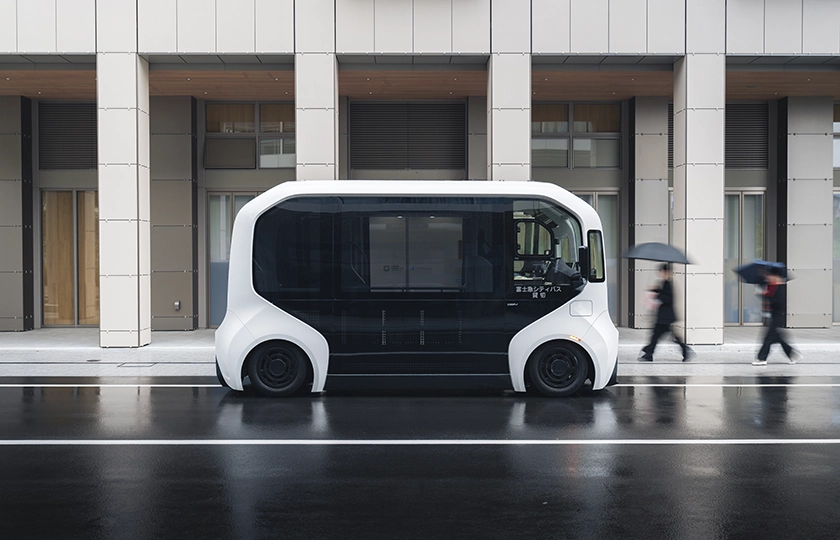
- e-Palette, the multi-purpose autonomous vehicle that Toyota envisions as a workspace, leisure space or retail space on the move – a symbol of how travel time can become quality time.
- Autonomous delivery robot, a prototype currently in the testing phase that navigates independently through Woven City to deliver goods to residents.
- Joby eVTOL, the electric vertical take-off and landing aircraft with which Toyota and Joby Aviation are exploring urban air transport as a natural extension of the mobility ecosystem.
- Kakezan Invention Hub, the space where Inventors present their prototypes to the Weavers, receive direct feedback and accelerate the development process. Kaizen brought to life in a physical space.
- Ueshima Coffee is the café in Woven City where consumer behaviour, purchasing patterns and preferences are studied to improve products and services based on real-world data.
- Personalised Functional Space, a project developed in collaboration with Daikin to create environments that automatically adapt to the mood and behaviour of their occupants, with an active demonstration of the ‘Pollen-less Space’ concept: spaces capable of reducing the entry of pollen particles by up to 95 per cent, addressing a public health issue that affects millions of people.
The AI Vision Engine and the Integrated ANZEN System bring Kakezan to life
WbyT is rolling out advanced, in-house developed AI models across Woven City to support the co-creation of products and services that improve people’s lives, guided by the belief that AI should complement human intuition and capabilities rather than replace them.
The Woven City AI Vision Engine (AI Vision Engine), a large-scale foundational AI model that enables the city to understand and respond to real-world conditions in real time, is an example of this effort. By integrating visual, behavioural and environmental data from sources such as CCTV cameras, mobility systems and user inputs, it identifies patterns, detects potential risks and enables coordinated action amongst connected systems to enhance safety. The model ranks amongst the world’s leading Visual Language Models*1.
The technology supports a variety of real-world applications. In Woven City, it is currently being used in a proof-of-concept project with UCC Japan Co., Ltd., one of the city’s Founders. Toyota and WbyT plan to expand its deployment beyond Woven City.
Woven City’s Integrated ANZEN System (Integrated ANZEN System) enhances the capabilities of the AI Vision Engine by combining it with other AI technologies, including Woven City’s Behavioural AI and Woven City’s Driving Synchronisation Assistant. Woven City Behavioural AI interprets and predicts patterns of human behaviour, whilst the Woven City Driving Synchronisation Assistant provides driving assistance based on the driver’s needs and environmental conditions. By analysing camera data from vehicles and traffic lights, the system can understand movement, anticipate behaviour and provide this information to pedestrians and drivers to promote peace of mind both on and off the road. Together, these technologies enable people, mobility technologies and infrastructure to operate as a single, coordinated system, thereby enhancing safety.
Furthermore, Toyota and WbyT also unveiled the Woven City Infra Hub, an integrated data platform that consolidates data from across the city, and the Woven City Data Fabric, a data management framework that facilitates data usage whilst respecting individual preferences and privacy.
Note*1: According to the MVBench Leaderboard, a benchmark for evaluating video-based AI understanding and analysis.
The Inventor Garage begins operations as a new development centre
To further support innovation amongst inventors, the Inventor Garage began operations in April and serves as a comprehensive development centre. It features co-creation spaces where inventors can build prototypes, testing areas where inventions can be validated, and accommodation and communal spaces designed to help inventors focus on development and network with residents (Weavers). Throughout the site, Toyota and Toyota Motor East Japan (TMEJ) offer extensive technical and engineering expertise.
The Inventor Garage is located on the site of the former stamping facilities at TMEJ’s Higashi-Fuji plant, which supported the production of passenger vehicles for over 50 years. The site keeps the monozukuri*2 spirit of the original plant alive, whilst symbolising Woven City’s connection between legacy and innovation, completing a three-stage development cycle unique to Woven City:
- The Inventor Garage: agile development and prototyping of products and services
- The Inventor Field: controlled validation in a dedicated test environment
- Phase 1 Residential Area: real-world testing in a real-life environment, currently home to approximately 100 resident Weavers
By moving through these three environments, new mobility products and services can progress from concept to reality whilst ensuring safety at every stage.
Note*2: Monozukuri, which means ‘the art of making things’ in Japanese, refers to Toyota’s craftsmanship and its dedication to continuously creating better products for people.
Toyota: the same thread, a broader fabric
From Sakichi Toyoda’s early looms to the robots now travelling the streets of Woven City, Toyota has remained true to one constant: the conviction that technology must serve people. The hybrid system, the commitment to hydrogen, autonomous driving, robotics, eVTOLs – each initiative has been a new thread in the same fabric. Woven City is, in that sense, the most complete expression of what Toyota has always been: a company that does not simply manufacture products, but builds futures.
Four new Inventors join Woven City
The AI Robot Association (AIRoA), DAIICHIKOSHO CO., LTD., Joby Aviation, Inc. and Toyota Financial Services Corporation have joined Woven City as the latest Woven City Inventors. This brings the total number of Inventors to 24.
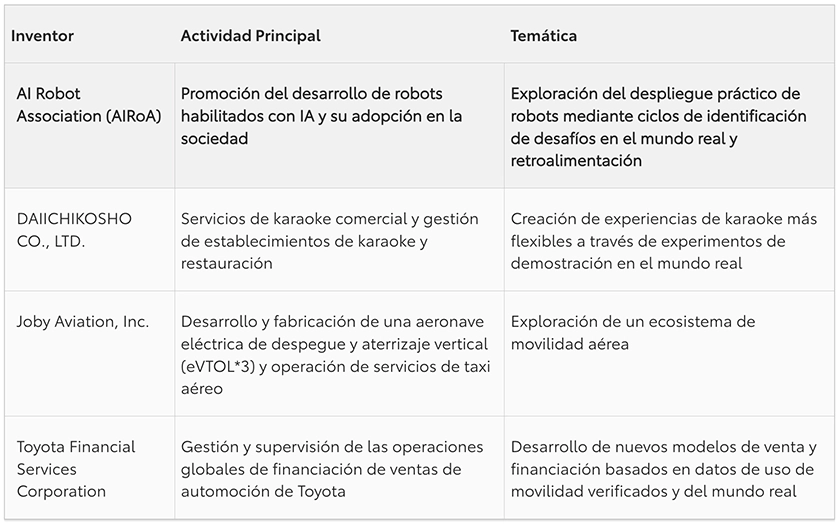
Note*3: eVTOL stands for electric vertical take-off and landing aircraft.
Toyota President Akio Toyoda also continues to contribute to innovation efforts in Woven City as part of its community of Inventors. In his capacity as the city’s “Master Weaver”, his most recent contribution has been the development of Akio Toyoda AI. The AI model reflects his unique approach to leadership and decision-making, and is designed to promote the adoption of AI and foster purpose-driven collaboration across the Toyota Group.
Toyota Spain
Toyota, with its Toyota and Lexus brands, is a world leader in the sale of electrified models, having sold more than 25 million electrified cars worldwide and more than half a million units in Spain since 1997. Toyota’s electrification roadmap, with its sights set on a CO2-free society, began more than 25 years ago with the advent of hybrid technology, and we have been working towards that goal ever since. This demonstrates the brand’s commitment to helping achieve sustainable mobility by reducing greenhouse gas emissions (CO₂) to help combat climate change, and by reducing emissions of polluting gases (NOx and particulates) that directly affect people’s health. In fact, NOx emissions are 95 per cent below the limit set by current legislation; for example, in the Corolla Touring Sports, nitrogen oxide emissions are just 6 mg/km, compared with the expected limit of 60 mg/km for Euro 6 petrol cars and 80 mg/km for Euro 6 diesel cars. Taking action to tackle climate change is an urgent global issue, and the promotion of sustainable, low-carbon energy has long been a key objective. That is why the company is taking a further step to address environmental challenges, placing hydrogen-based technologies at the forefront and striving to make hydrogen the primary energy source for tomorrow’s society. A future society in which there will not only be zero emissions, but where we will go even further, connecting people, buildings and vehicles within a single ecosystem, which will give rise to a better society, centred on mobility for all – a form of mobility that goes beyond cars and is about overcoming challenges and making dreams a reality.
Toyota Spain (TES) distributes, markets and provides after-sales service for Toyota and Lexus vehicles from its headquarters in Alcobendas (Madrid), supported by a network of 74 Toyota dealerships, operating across 160 Toyota sales outlets and 177 Toyota service centres. Vehicles are distributed from the Sagunto Logistics Centre (Valencia) and spare parts from the Central Warehouse in Illescas (Toledo). In addition, Toyota Spain has a Training Centre in Alcobendas (Madrid). In the 2025 financial year, Toyota’s sales in Spain reached 105,424 registered units, whilst Lexus sales stood at 9,200 units.
Source: TOYOTA SPAIN Press Office