

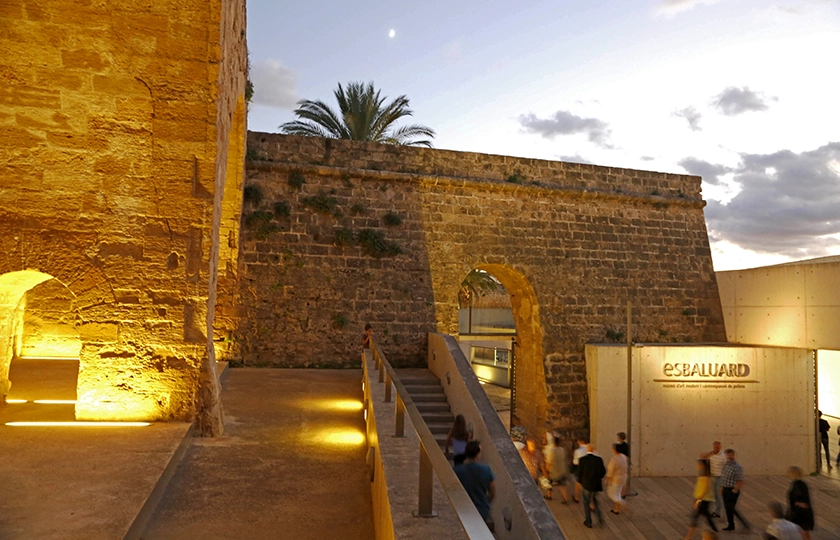
Where the stone of the ancient Renaissance wall meets contemporary architecture, Palma has created one of Spain’s most unique examples of a museum that does not impose its presence, but rather shares it with the city around it.
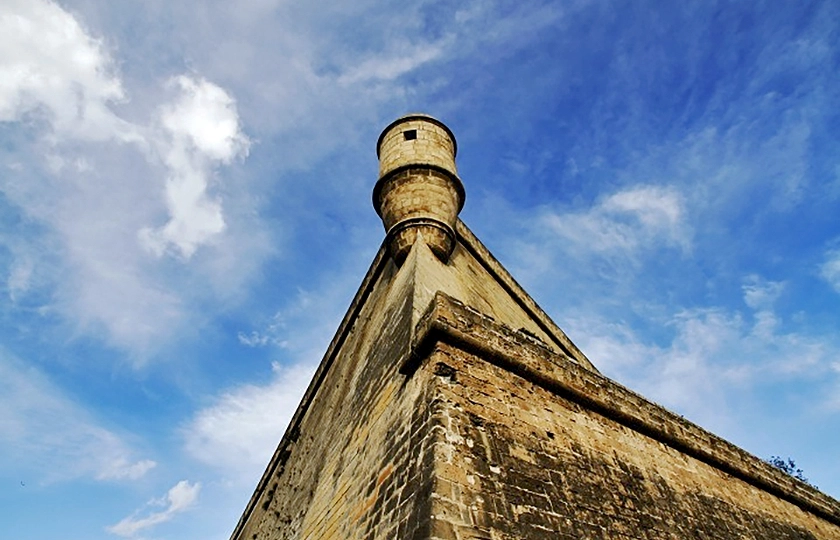
Situated on the perimeter of the Sant Pere bastion, which forms part of the Renaissance walled enclosure that surrounded the city of Palma until the early 20th century, Es Baluard is a cultural landmark in the Mediterranean, whose architecture blends history and modernity.
The Palma Museum of Contemporary Art houses not only an outstanding permanent collection but also hosts activities and temporary exhibitions that explore and challenge contemporary art, inviting visitors to reflect on creative processes and the challenges of the present; all within a space open to dialogue between the past and the present.
19th century to the present day, reflecting the diversity of approaches and practices that define our times. Through various media and artistic languages, the collection offers a critical perspective on the cultural and social dynamics of the present.
Es Baluard brings together works by figures as influential in modern and contemporary art as Joan Miró and Pablo Picasso, alongside other artists who have shaped the evolution of Balearic and Spanish art in recent decades, such as Miquel Barceló and Antoni Tàpies. Far from being a collection detached from its surroundings, much of its exhibition programme is conceived in direct relation to the building that houses it: art is not exhibited in spite of the wall, but in dialogue with it.
A courtyard, a terrace, a city
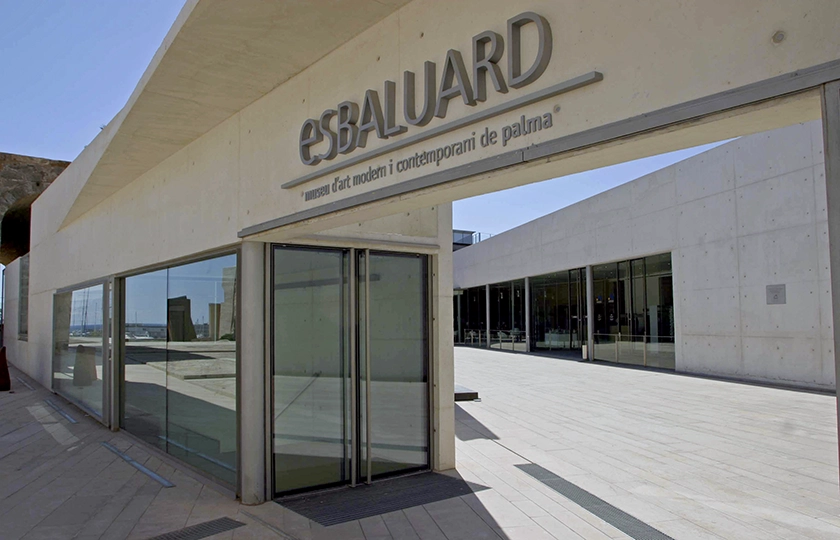
The heart of Es Baluard lies not in an exhibition gallery, but in the open air. The museum’s central courtyard serves as a meeting place connecting the building’s various areas; surrounded by historic and contemporary architecture, it hosts cultural activities open to the public.
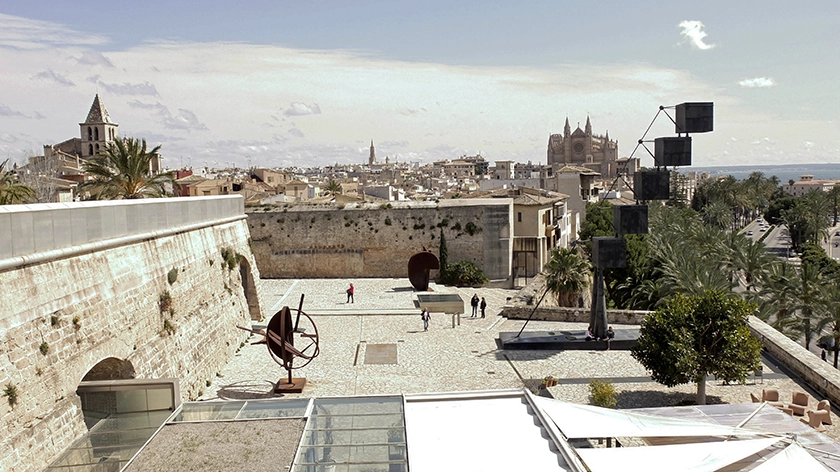
Beyond its exhibition galleries, the museum invites visitors on a physical journey through the city’s own history. The terrace offers one of the finest views in Palma, overlooking Mallorca Cathedral, the seafront promenade and the old neighbourhood of Puig de Sant Pere. This is a unique space that invites visitors to pause for a moment, and which has its own restaurant, reinforcing the idea of a museum designed to be experienced, not just walked through.
Among its most distinctive features is an element that few visitors expect to find in a contemporary art museum: the ‘aljub’. This is an old freshwater cistern measuring over 353 square metres, which originally supplied the entire Puig de Sant Pere neighbourhood and the ships arriving at the port, and which today hosts exhibitions by international artists, interdisciplinary activities or serves as a multi-purpose space.
Furthermore, Es Baluard develops inclusive projects and initiatives tailored to different groups, incorporates easy-to-read guides into its collection exhibitions and offers personalised tours for groups with specific needs, as well as educational programmes that welcome thousands of schoolchildren every year, consolidating its role as a cultural facility for the city and not merely as a tourist destination.
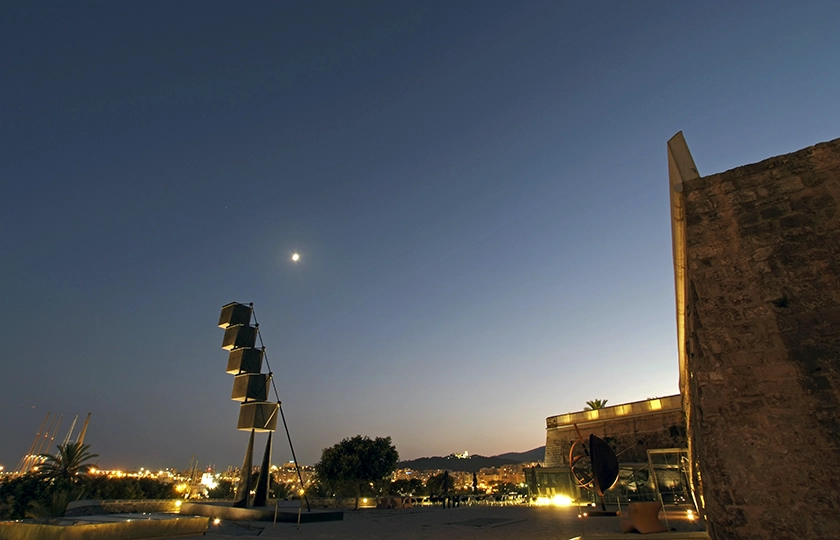
Few Spanish cities can boast of having so naturally resolved the coexistence of a protected historic monument and a leading contemporary art centre. Es Baluard does not stand in opposition to the city wall, nor does the wall become a mere backdrop to the museum; both elements—the defensive and the artistic, the old and the new—need and complement one another.
sThe city walls, the sea and the city coexist here on the same plane, without any hierarchy, demonstrating that the best way to protect heritage is not always to leave it untouched behind glass, but to find a new purpose for it.
Source: ALFABÉTIKO Comunicación