

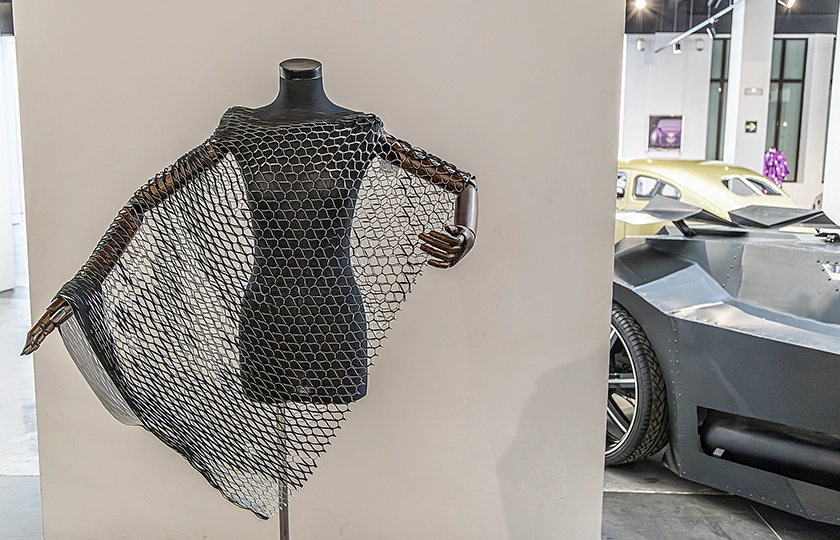
From choosing the mannequin to caring for the fabrics, preserving a historical dress involves much more than simply keeping it in good condition.
Founded by the Phoenicians in the 8th century BC, Málaga is one of the oldest cities in Europe.
This beautiful city, situated on the shores of the Mediterranean, has been designated a Historic Site due to the significant legacy left by various civilisations over the centuries. The Phoenicians, Romans and Arabs left us a generous legacy, examples of which include the Roman theatre, built in the early 1st century during the reign of Emperor Augustus, and the Muslim Alcazaba, constructed on the ruins of an ancient Phoenician settlement, amongst others.
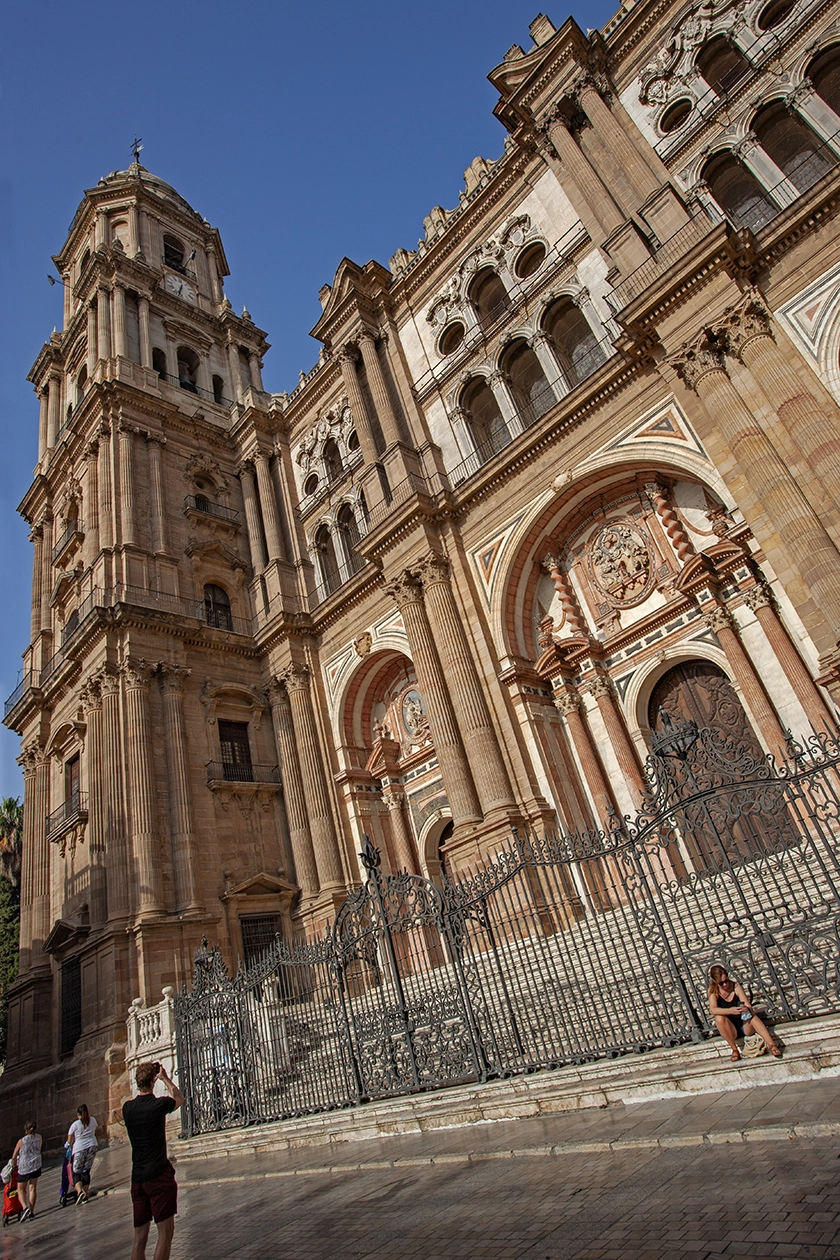
The arrival of Christianity led to the construction of the Cathedral of the Incarnation, which is mainly Renaissance in style but features Baroque elements. Known as ‘la Manquita’ because it is missing one of its towers, inside it houses interesting treasures such as the choir, the Gothic altarpiece in the Chapel of Saint Barbara, the 16th-century tombs in the Chapel of St Francis, the Mannerist paintings by the Italian artist César Arbasia, located in the Capilla Mayor or the Chapel of the Incarnation, designed by Ventura Rodríguez and carved from agate stone, which houses a neoclassical altarpiece dating from 1785 and the tombs of Bishops Bernardo Manrique and Molina Lario.
But Málaga has many more attractions that draw thousands of visitors who, as well as enjoying its architectural heritage, seek inspiration on its beaches, always accompanied by some delicious “espetos”; anchovies, fried “pescaito”, noodle casserole, gazpacho and gazpacheulo, crumbs, Malaga-style salad, white garlic, the Antequera “porra“… We could spend days on end talking about all its delights. He also mentioned their sweet wines, Málaga rum and brandy.
And also in its wide range of museums. Here we come across a unique venue: the Museo del Automóvil y la Moda de Málaga. Housed in the former tobacco factory building, construction began in 1923, but it was not until 1932 that it became operational, providing a boost to the city’s growth. This cultural project is the brainchild of the Portuguese Magalhaes family and features a private collection of classic cars, started by the current owner’s grandfather, which are displayed alongside haute couture dresses. Those interested in staging the exhibition in Spain found a venue in Málaga, where it opened its doors on 16 September 2016.
This fascinating collection, which stylishly blends fashion with motor vehicles, invites us to discover processes that are invisible to the visitor’s eye but are of unquestionable importance; this is certainly true of the conservation of the exhibits on display.
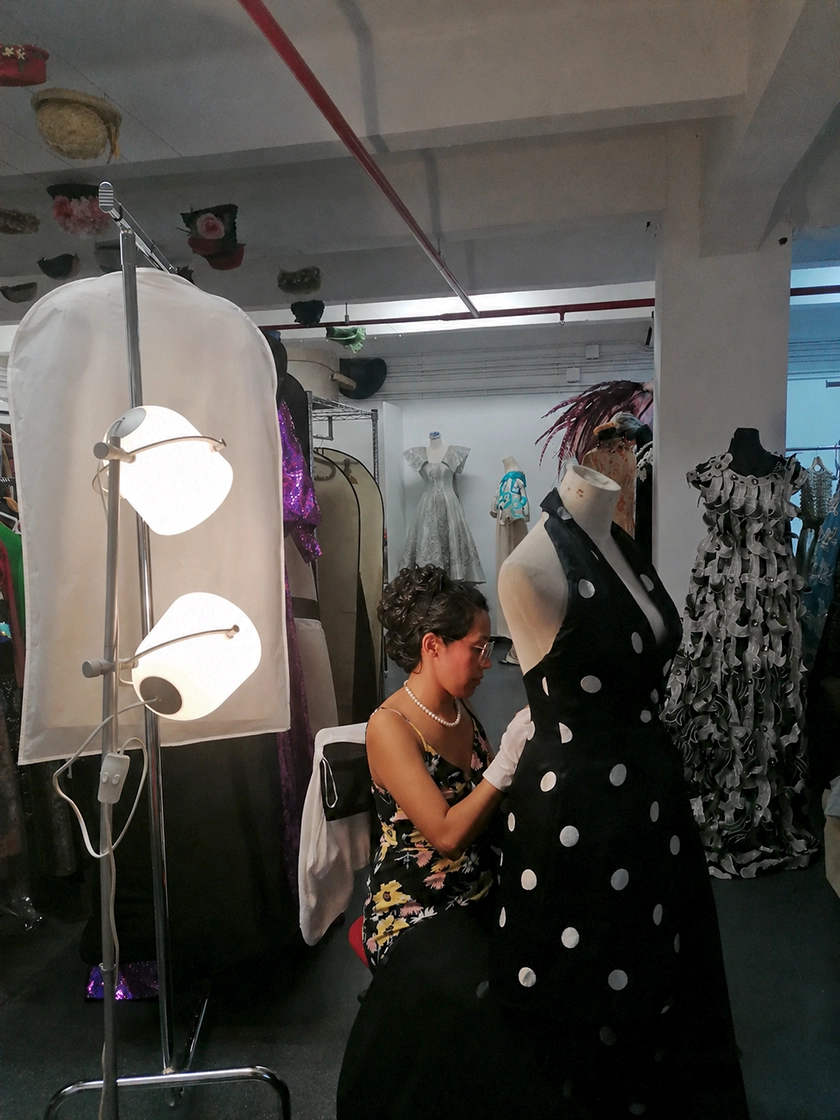
How is a haute couture dress preserved for decades?
When a visitor views a haute couture dress in a museum, their attention is usually drawn to the design, the embroidery, the volume of the silhouette, the richness of the fabrics, or the designer’s signature. However, behind each piece on display lies a specialized, much less visible process: its conservation.
At the Málaga Automobile and Fashion Museum, caring for a historic haute couture collection involves studying each garment, understanding its materials, and adapting its display to the specific needs of each piece. The goal is not to stop the passage of time, but to slow its effects and ensure that these designs can continue to tell their story for generations to come
No two pieces are alike. Although two dresses may share the same fabric or belong to a similar era, their age, construction, state of preservation, and combination of materials can make their needs completely different.
Silks, velvets, laces, feathers, sequins or metallic embroidery react differently to the passage of time and require specific care.
“Each piece has specific conservation needs. Even when it is the same material, its age, its construction and how it is combined with other elements must be taken into account,” explains Rocío Aguirre, head of the Fashion department at the museum .
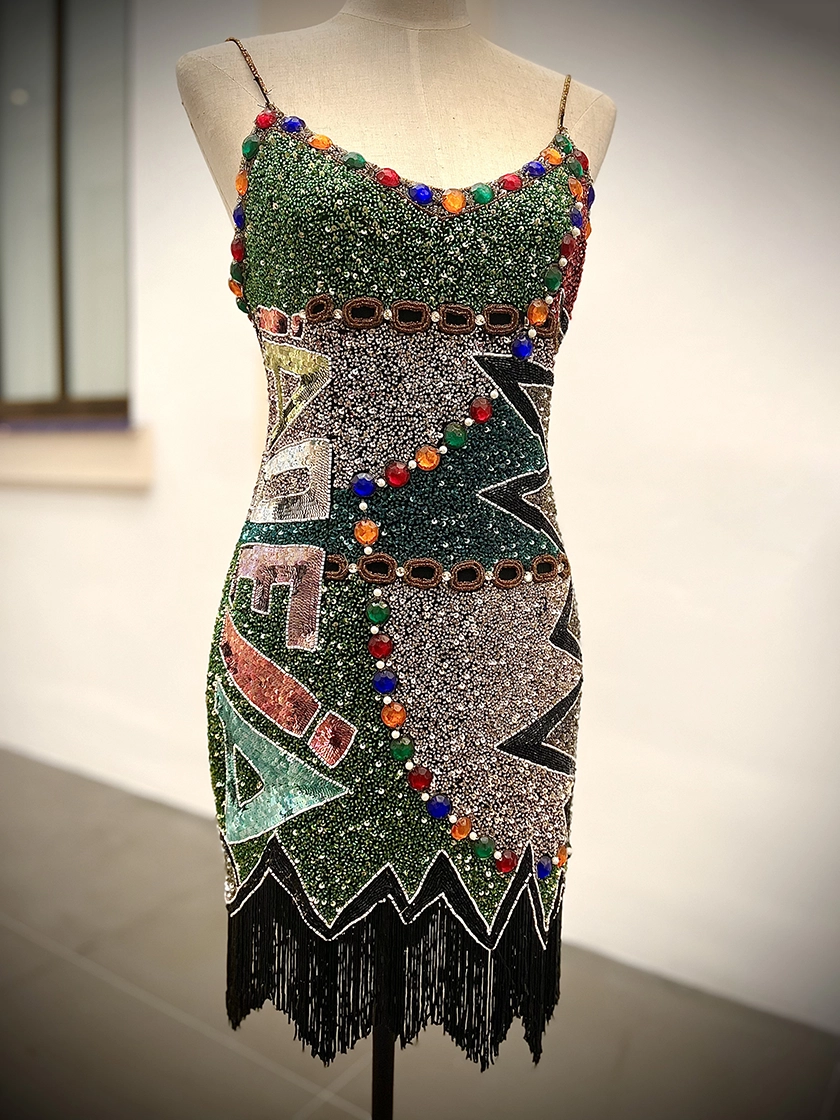
A good example is sequins, which can be made from very different materials, such as gelatin, acetate, or vinyl plastic. Furthermore, preserving them is not the same when they are applied to silk as when they are part of a garment made of polyester. Each combination requires careful consideration of how they should be treated.
The mannequin also retains the piece
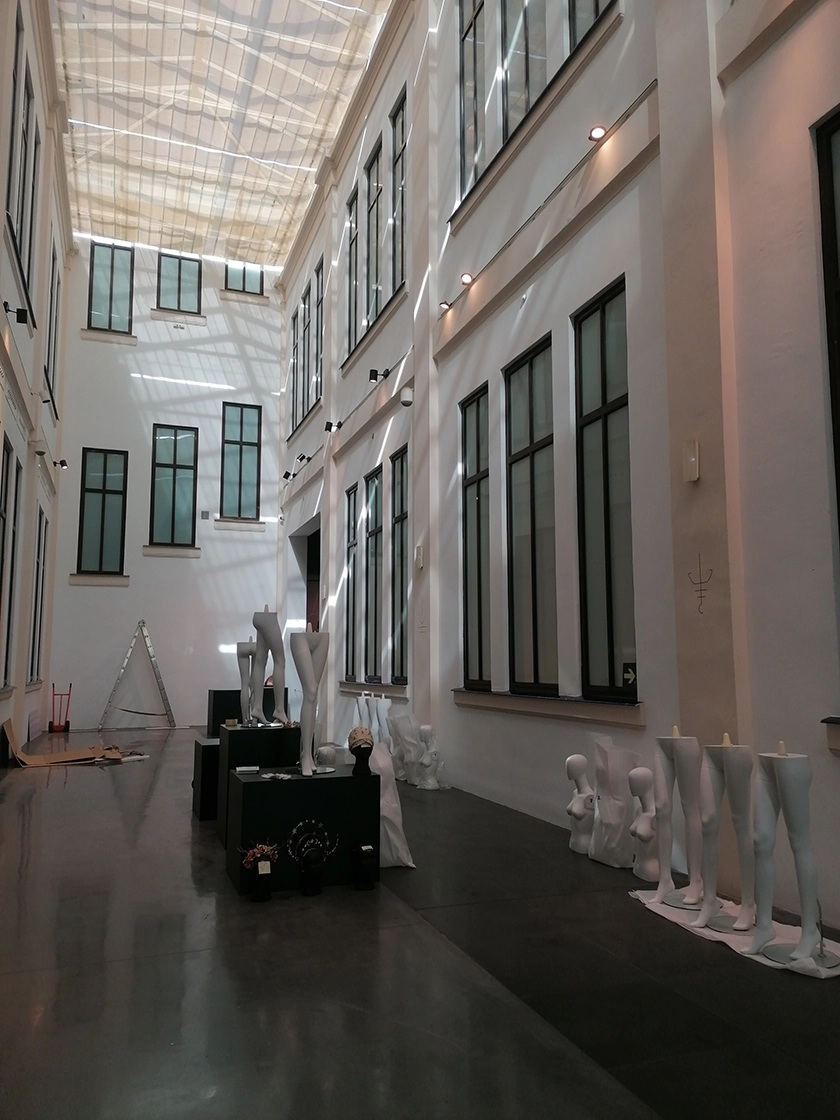
One of the least known aspects for the public is the importance of the mannequin on which a dress is presented.
At first glance, it may seem like a purely display element. However, its function goes far beyond simply showing off the garment: it must provide the right support to reproduce its silhouette and avoid unnecessary stress on the fabric.
The first step is to select a mannequin whose size and proportions are as suitable as possible for the garment. This task can be particularly complex when dealing with historical dresses, as the female silhouette has evolved considerably throughout the 20th century.
“Body proportions have changed with trends, aesthetic standards, and the fashions of each era. That’s why a contemporary mannequin doesn’t always accurately reproduce the silhouette for which a dress was designed decades ago,” says Rocío Aguirre.
Once the support has been chosen, the Fashion team can make different adaptations using padding, petticoats and other elements that allow the original shape of the garment to be reproduced and, at the same time, provide the necessary support.
What the visitor perceives as an aesthetic issue is, in reality, an important conservation decision.
Preserving doesn't simply mean cleaning
Preserving a haute couture piece is not just about keeping it clean.
Before undertaking any intervention, it is necessary to carefully inspect seams, linings, embroidery, appliqués, and decorative elements to detect any potential damage. Each component may react differently to aging, and therefore, any intervention must be tailored to the specific characteristics of the piece.
Sometimes, the best decision is not to intervene .
When a piece does not require direct intervention, ensuring adequate exposure and handling conditions can be the best way to slow down the natural deterioration of its materials.
The movement of the pieces also requires planning. A change of exhibition, a new installation, or a relocation involves studying beforehand how to handle, prepare, and transport the dress to minimize any risk.
A collection designed for the future
Preserving a historic haute couture collection means working with future generations in mind.
Materials age naturally, and the passage of time cannot be stopped. However, with proper monitoring and appropriate conservation conditions, it is possible to slow down its effects and preserve the characteristics that make each garment a testament to its era.
The Málaga Automobile and Fashion Museum ‘s fashion collection brings together creations from some of the biggest names in international fashion history. Behind every label, every fabric, and every design lies specialized work that remains hidden from the visitor’s view.
Because before becoming an exhibit, each dress needs to be studied, prepared, and cared for .
That is the invisible work that allows haute couture, decades after its creation, to remain present in the museum’s halls and continue telling its story.