

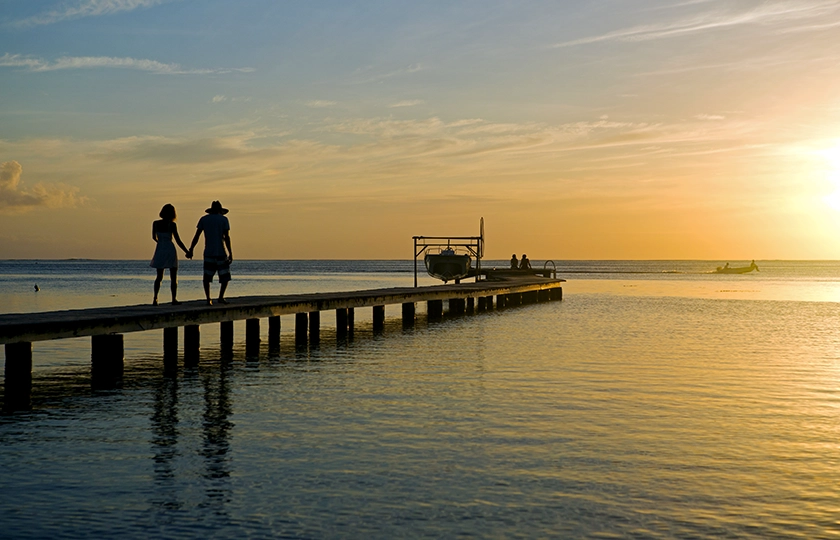
The Islands of Tahiti are so much more than just a postcard. Behind their iconic turquoise lagoons lies a territory comprising 118 islands spread across five archipelagos, where every landscape, every culture and every experience tells a different story.
To speak of The Islands of Tahiti is to think, almost automatically, of an overwater bungalow, a turquoise lagoon and a hammock suspended overlooking the ocean. It is an iconic image – well-deserved and deeply aspirational. However, it is also incomplete. For beneath the name ‘The Islands of Tahiti’ lies a vast territory comprising 118 islands and atolls spread across five archipelagos, each with its own distinct character, radically different landscapes and a unique way of experiencing French Polynesia.
The true richness of the destination lies precisely in this diversity. In just one or two hours’ domestic flight, it is possible to travel from jungle-covered volcanic mountains to almost endless atolls, from rugged cliffs to remote islands where tourism has barely made its mark. What unites these five worlds is not the landscape, but the Mana – the life force which, according to Polynesian tradition, permeates every corner of the archipelago and can be felt in the natural world, the culture and the hospitality of its inhabitants.
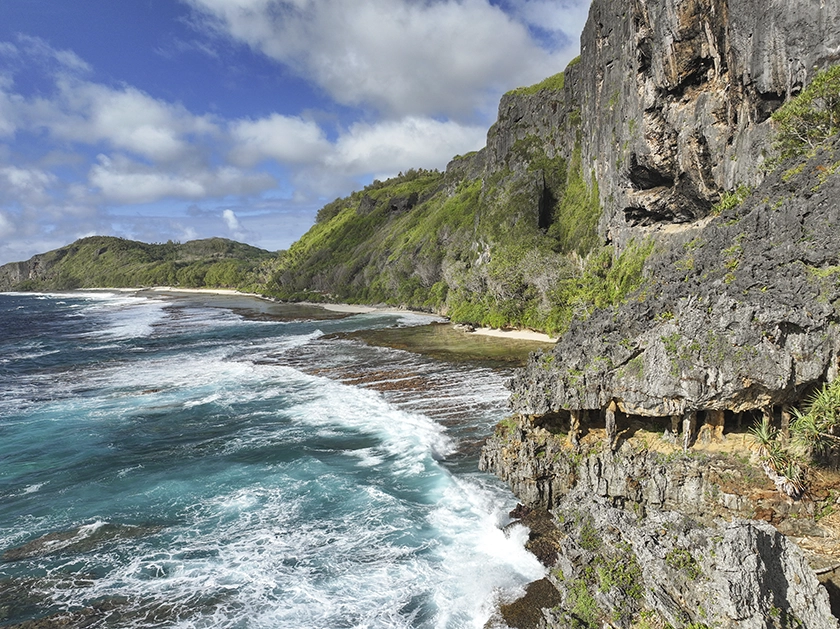
The Society Islands: the most iconic side of Tahiti
The Society Islands are the gateway to the destination and the setting for the images that have been seen around the world. Here lie Tahiti, the main island and home to the vibrant capital, Papeete; Moorea, with its spectacular mountains rising out of the ocean; and the legendary Bora Bora, dominated by Mount Otemanu and considered one of the most beautiful landscapes on the planet.
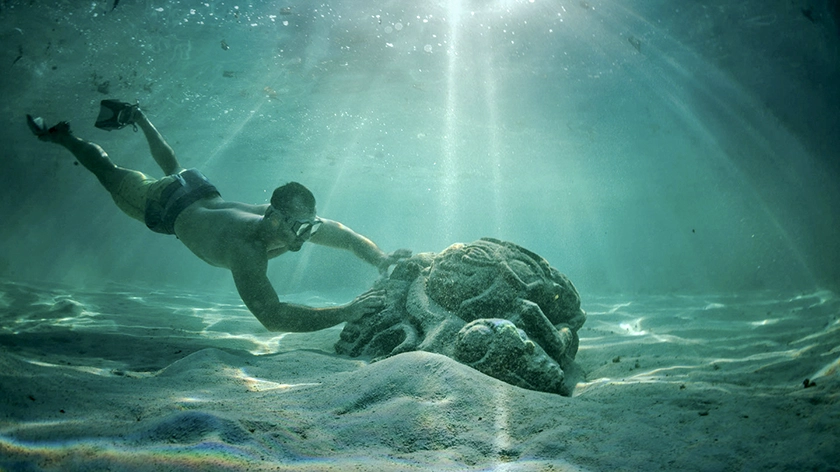
But this archipelago is also home to one of the most significant sites in Polynesian history. On Raiatea lies the marae of Taputapuātea, a UNESCO World Heritage Site and an ancient spiritual centre from which the great expeditions set out to populate the vast Polynesian triangle stretching from Hawaii to Rapa Nui and New Zealand.
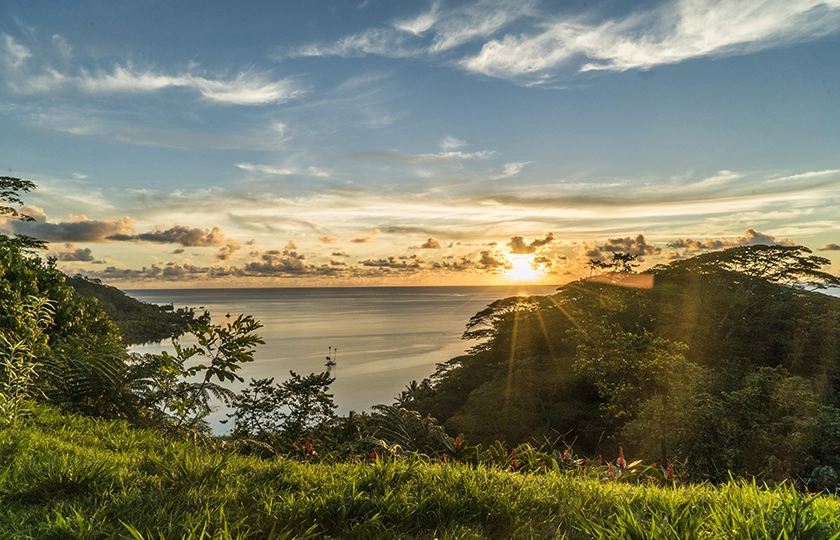
It is the perfect choice for those seeking an introduction to Polynesian culture, wishing to enjoy crystal-clear lagoons and combine the natural environment with some of the world’s most exclusive accommodation options.
The Tuamotu Islands: where the ocean takes centre stage
Whilst the Society Islands look towards the mountains, the Tuamotu Islands face entirely out to sea. Their 76 atolls form the largest coral chain on the planet, making the blue waters the true highlight of the journey.
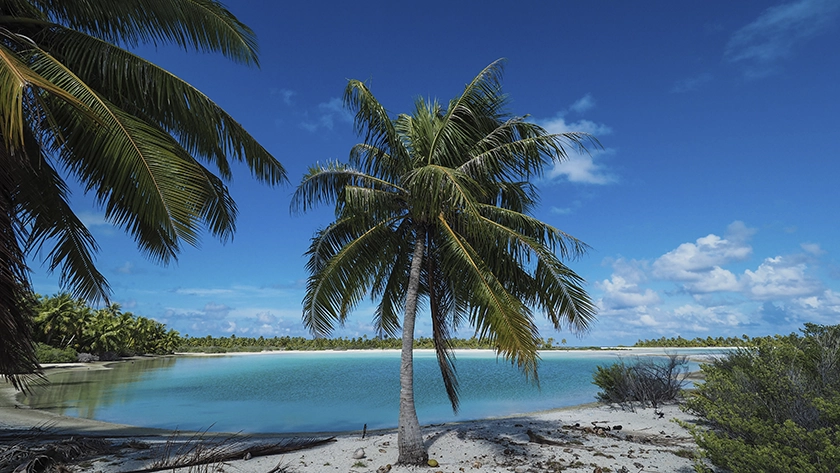
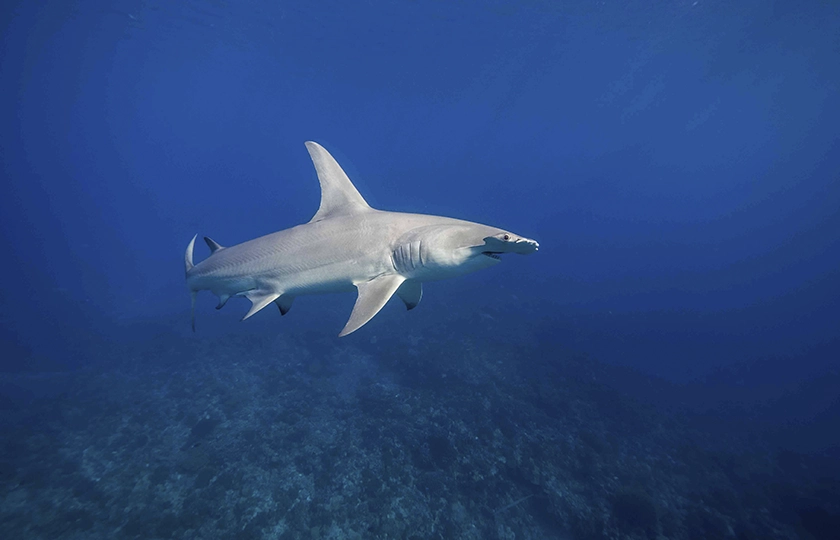
Rangiroa and Fakarava are among the world’s best diving destinations. At the Tiputa Pass, the currents bring together dolphins, sharks and large pelagic species, whilst Fakarava, a UNESCO Biosphere Reserve, is famous for its spectacular ‘wall of grey sharks’. Those who prefer to explore the ocean from the surface will find pink-sand beaches on Tikehau or the tranquil natural pools of Mataiva, ideal for families.
This archipelago is also the birthplace of the famous Tahitian black pearl, one of the destination’s defining features.
The Marquesas Islands: the wildest side of Polynesia
A 1.500 kilómetros de Tahití, las Islas Marquesas ofrecen un paisaje completamente distinto. Aquí el Pacífico rompe directamente contra impresionantes acantilados, creando un escenario dramático y casi prehistórico donde la naturaleza conserva toda su fuerza.
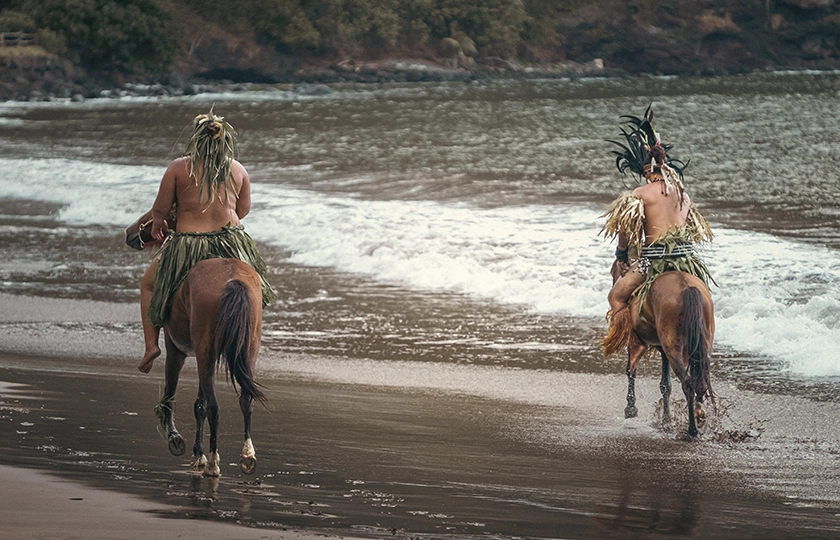
Nuku Hiva astonishes with the spectacular Vaipo waterfall, whilst Hiva Oa is home to some of the largest stone tikis in all of Polynesia. It is no coincidence that artists such as Paul Gauguin and Jacques Brel chose this remote corner to spend their final years.
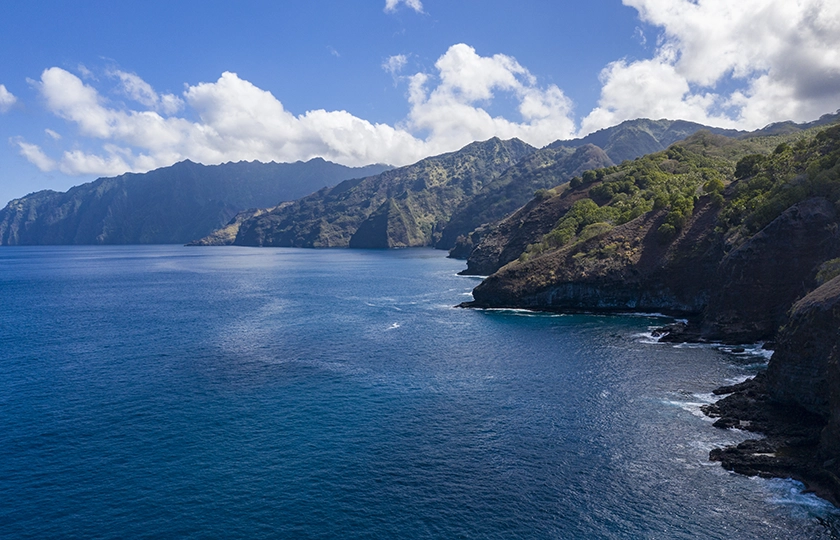
Recognised by UNESCO in 2024, the Marquesas are the ideal destination for travellers seeking hiking, archaeology, Polynesian art and authentic experiences far from the beaten track. It is also the route taken by the legendary mixed-cargo ship Aranui, a voyage that combines the transport of goods with passengers and allows travellers to discover some of the most isolated islands in the Pacific.
The Gambier Islands: the best-kept secret
The Gambier Islands represent the least-known side of The Islands of Tahiti. Located a four-hour flight from Tahiti and off the beaten track, they remain one of the least-visited archipelagos in French Polynesia.
Mangareva, Taravai, Aukena and Akamaru share the same ocean lagoon and surprise visitors with an unexpected heritage: churches and chapels built from coral stone, set amongst lush green mountains and virtually deserted beaches.
As well as being the birthplace of the Polynesian black pearl, their pearl farms continue to produce some of the most prestigious pearls in the Pacific, in a setting where time seems to pass at a different pace.
The Austral Islands: whale season
The Austral Islands are the southernmost archipelago in the region and also one of the most authentic. Their tranquil villages, the traditional crafts made by the māmās from pandanus leaves, and their fertile landscapes offer a different side to Polynesia, characterised by close contact with the local community.
Between July and October – with August being one of the most special times of the year – Rurutu becomes one of the great sanctuaries for humpback whales. Every season, these giants of the ocean come into its crystal-clear waters to give birth and raise their calves. Under strict conservation protocols, it is one of the few places in the world where it is possible to enjoy the extraordinary experience of swimming alongside them.
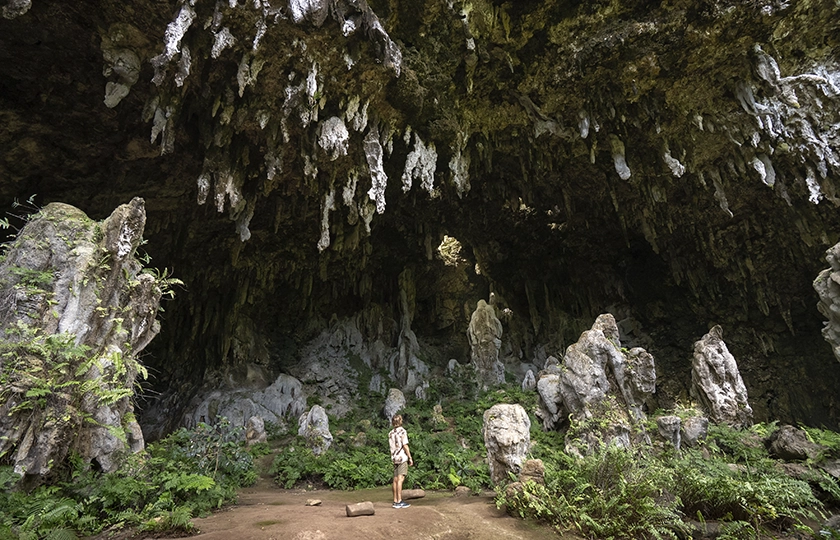
Added to this unique experience are the caves of Ana A’eo and Taupe’e, the viewpoints on Mount Manureva and lush natural surroundings that make the Austral Islands the perfect choice for those seeking a different kind of holiday, especially during the European summer.
Because discovering The Islands of Tahiti is not just about choosing an island, but about understanding that the destination offers five distinct ways to experience Polynesia. Five landscapes, five rhythms and five experiences that share the same essence: the Mana, that energy which, according to local tradition, can only be understood when experienced first-hand.
About THE ISLANDS OF TAHITI
Surrounded by the crystal-clear waters of the South Pacific, the Islands of Tahiti dazzle with their natural beauty, their carefully preserved ancestral culture and a truly unique way of life. This iconic destination is renowned worldwide for its white sandy beaches, turquoise lagoons and dreamlike landscapes, ranging from coral atolls to imposing, vegetation-covered volcanic peaks.
The range of accommodation is as diverse as the archipelago itself: from exclusive resorts with overwater bungalows to private villas, small family-run hotels, holiday rentals and experiences aboard catamarans, yachts or cruise ships.
But what truly unites the 118 islands and atolls of French Polynesia is Mana. Mana is the heart of the Polynesian universe. It is the life force and spirit that flows through everything, arising from life, love, sharing, beauty, kindness and the things that blend harmoniously in our universe. It is the reason why you will feel cherished in the Islands of Tahiti.
Source: COMUNICACIÓN IBEROAMERICANA