

‘Magnificent’ is the word that best describes this palace, commissioned by Charles Emmanuel I of Savoy as a residence for the court, which had recently been moved from the capital, Chambéry. The commission was awarded in 1584 to the soldier, military engineer and architect Ascanio Vitozzi.
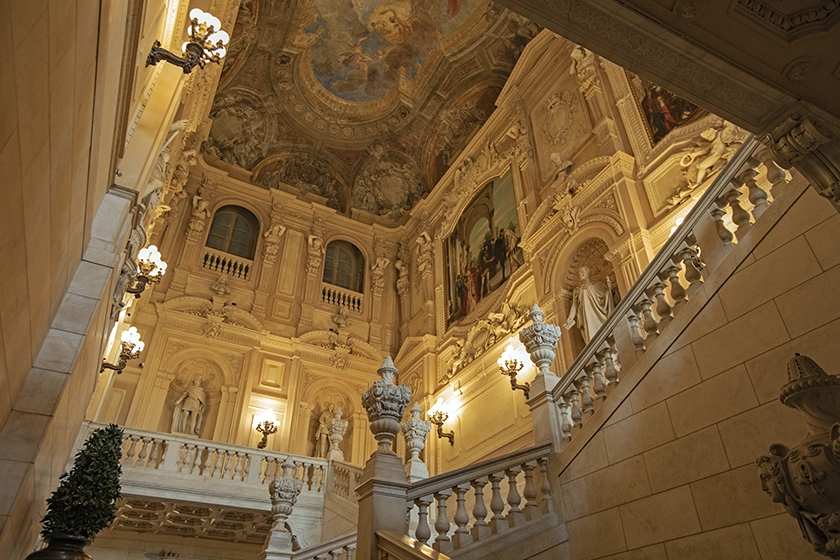
As the geographical, strategic and political centre of the Savoyard capital, the Royal Palace has undergone various transformations over the years from an architectural point of view. Perhaps the most significant of these were carried out by the court’s chief architect, Filippo Juvarra, who was responsible for renovating the access to the second floor with the staircase known as the ‘scissor staircase’, and by Guarino Guarini, who was commissioned to build the Chapel of the Holy Shroud in the apse of the cathedral, to which the House of Savoy had direct access. Nowadays, this privilege has been extended to everyone, and tourists can also travel along this royal route thanks to an internal connection. With the unification of Italy in 1861, the capital was moved first to Florence and subsequently to Rome, and the palace ceased to serve as the royal court, a role it had held since its inception.
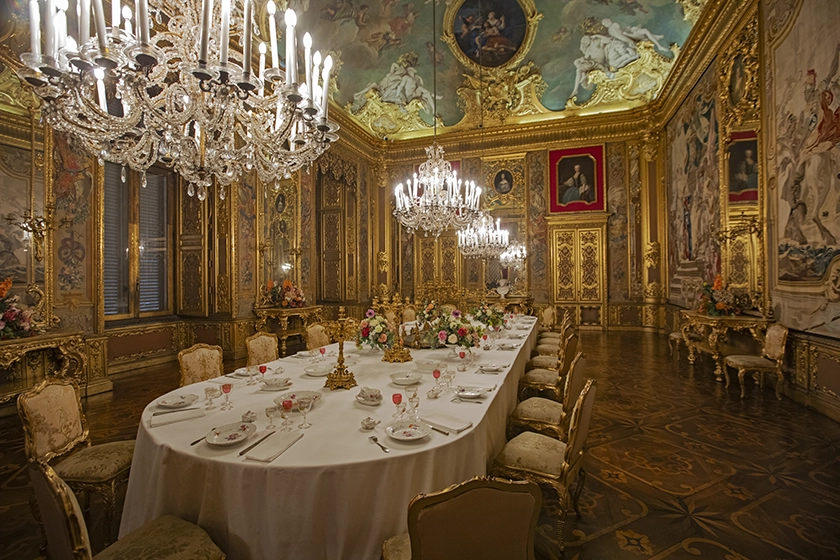
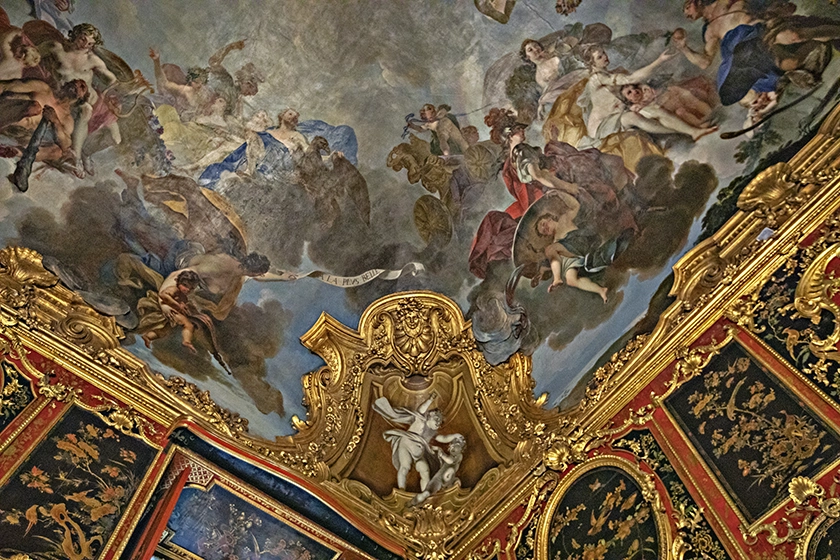
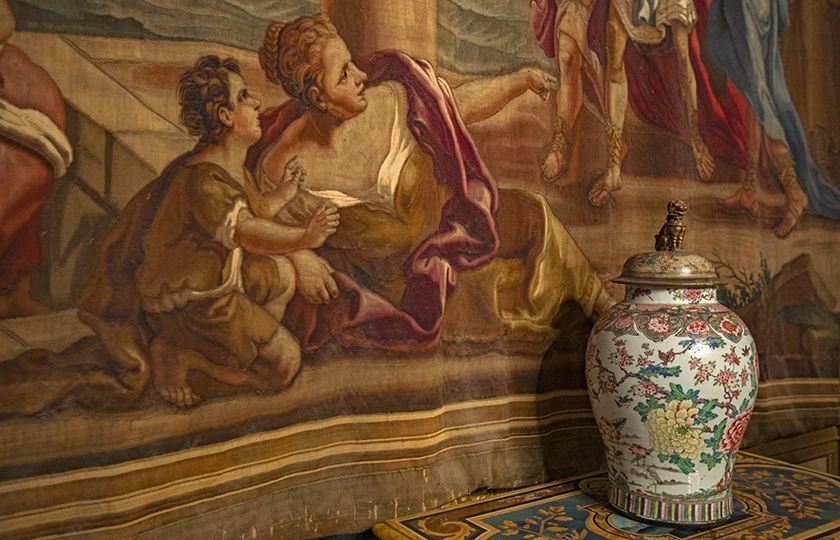
Royal chambers adorned with sumptuous gilded wooden ceilings and commemorative paintings depicting allegorical scenes; tapestries commissioned from the workshops in Beauvais and the Manufacture Royale des Gobelins in France; painted, carved and gilded vaults; rooms beautifully embellished with stucco, mirrors and Chinese lacquer… various decorative renovations have enhanced the palace over the years.
The Royal Palace of Turin, one of the most opulent and sumptuous historic palaces, houses the Royal Museums, comprising the Royal Palace with the Armoury and the Chapel of the Holy Shroud, the Galleria Sabauda, the Museum of Antiquities with the Archaeological Gallery and the Roman Theatre, the Royal Gardens, the Royal Library and the Chiablese Rooms.
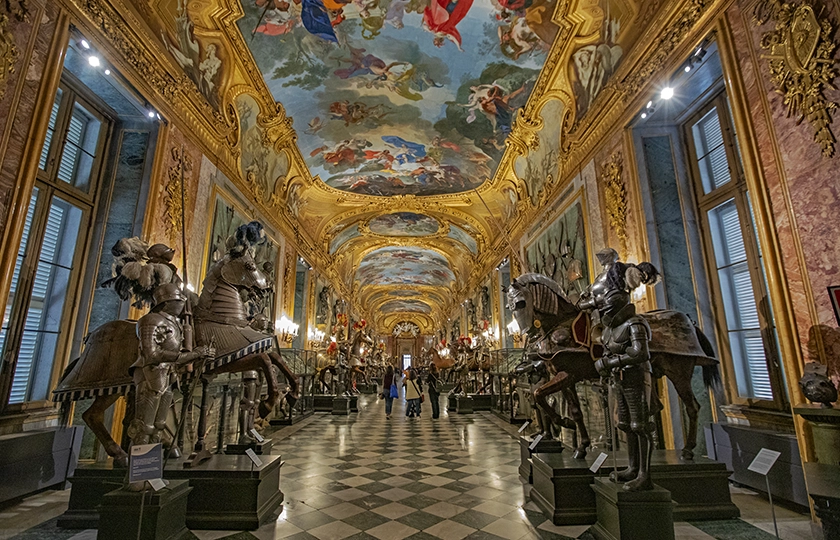
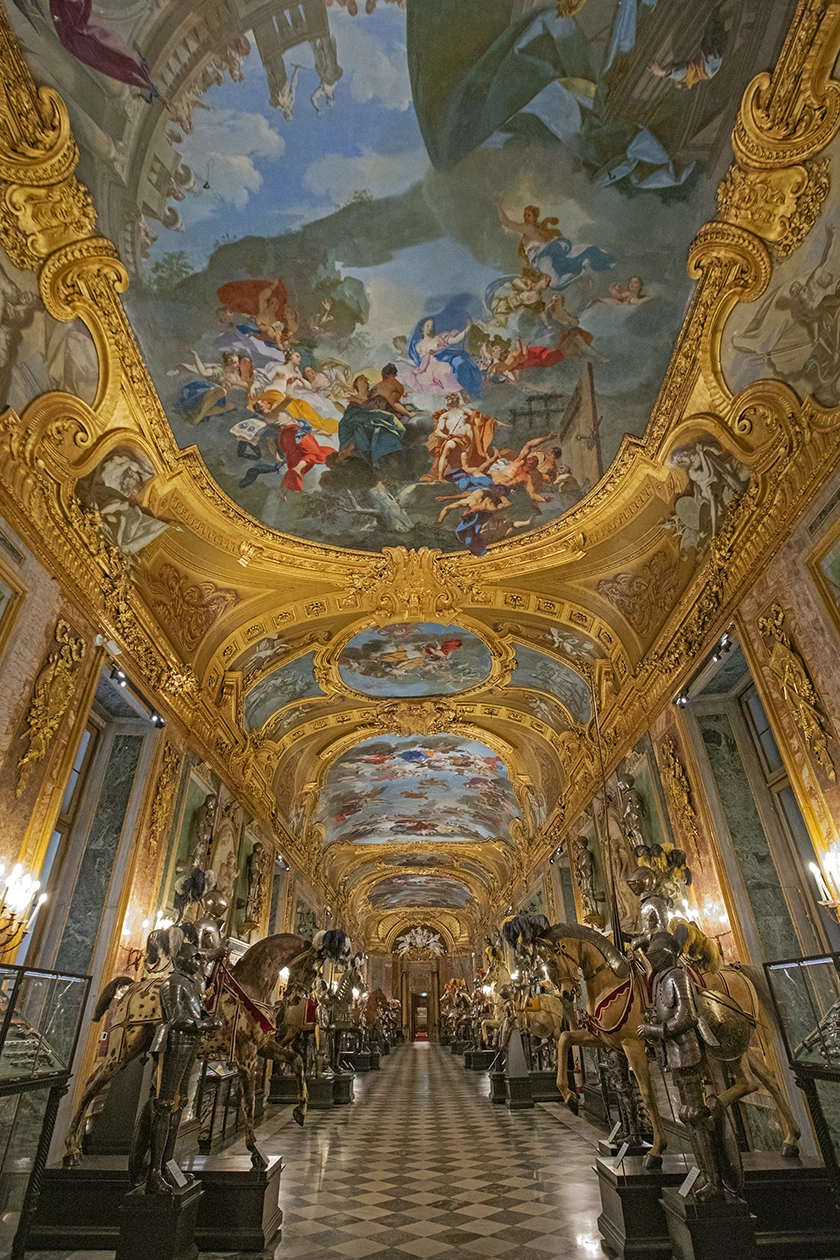
The Armoury or Arsenal dates back to 1837 and was founded by Charles Albert. Located in the Queen’s Gallery, it is beautifully decorated by the court painter Claudio Francesco Beaumont. This magnificent and historic exhibition space was enriched by works from the armouries of Turin and Genoa, by antiquities, and by prestigious collections acquired on the antiques market, such as that of Alessandro Sanquirico (1833) from Milan and that of Martinengo della Fabbrica (1839) from Brescia.
Subsequently, in 1842, the museum was extended into the Rotunda to house further collections, such as the collection of Oriental weapons. More than five thousand artefacts spanning from prehistory to the early 20th century, including the Royal Medals Room with over sixty thousand items, amongst which are ancient and modern coins, medals and stamps, making it one of the most astonishing and fascinating parts of the Royal Museums.
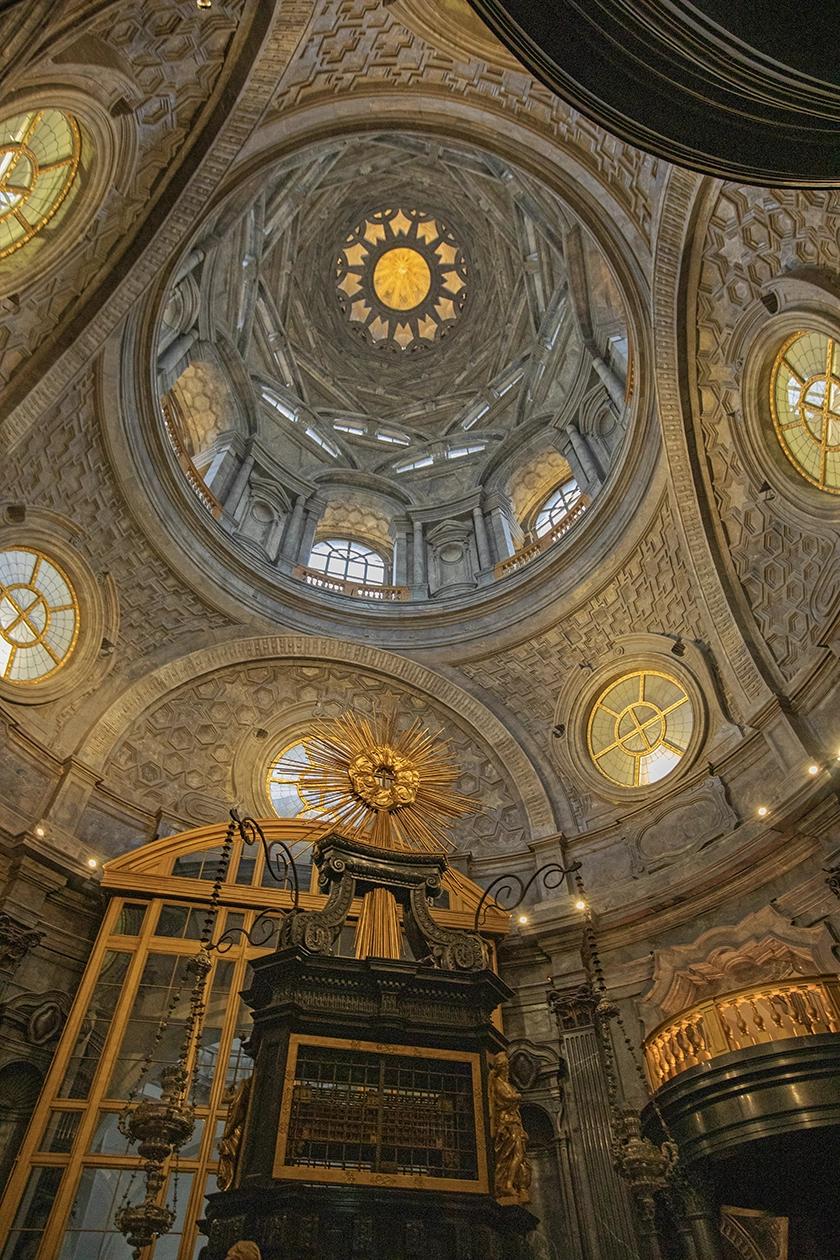
Another must-see attraction is the Chapel of the Holy Shroud. Built to house the linen cloth on which is imprinted the image that Christians identify as Christ, work on the building began in 1607, spearheaded by the architect Guarini, a Theatine priest, mathematician and one of the leading figures of the European Baroque. The end result is a structure which, at the time, defied all known architectural conventions. Owned by the House of Savoy since 1453, the relic is currently housed in a special reliquary at the end of the cathedral’s left-hand side aisle.
Paintings also play a prominent role in the Royal Museum thanks to the Sabauda Gallery. Founded by King Charles Albert in 1832 with paintings belonging to the Dukes and Kings of Savoy and others from the Durazzo palace in Genoa, over the years it was further enriched by significant acquisitions, particularly works by Italian and Flemish Renaissance masters, and in 1930 by the collection of the industrialist Riccardo Gualino. The Sabauda Gallery currently exhibits over eight hundred works by such renowned artists as Sandro Botticelli, Beato Angelico, Mantegna, Veronese, Gentileschi, Guido Reni and Duccio, as well as Bernardo Bellotto’s famous views of Turin.
The acquisition campaigns led by Emanuele Filiberto and his son Carlo Emanuele I between the 16th and 17th centuries marked the beginnings of the Museum of Antiquities and the Archaeological Gallery. Important sculptures, reliefs and remains of the ancient Augusta Taurinorum discovered during the demolition work carried out in the city centre in 1723; archaeological research and the work of diplomats and international foreign ministries in the 19th century, together with donations and acquisitions during the 20th and 21st centuries, contributed to the growth of the collection, all these initiatives contributed to the enrichment of the archaeological collections of the Royal Museums.
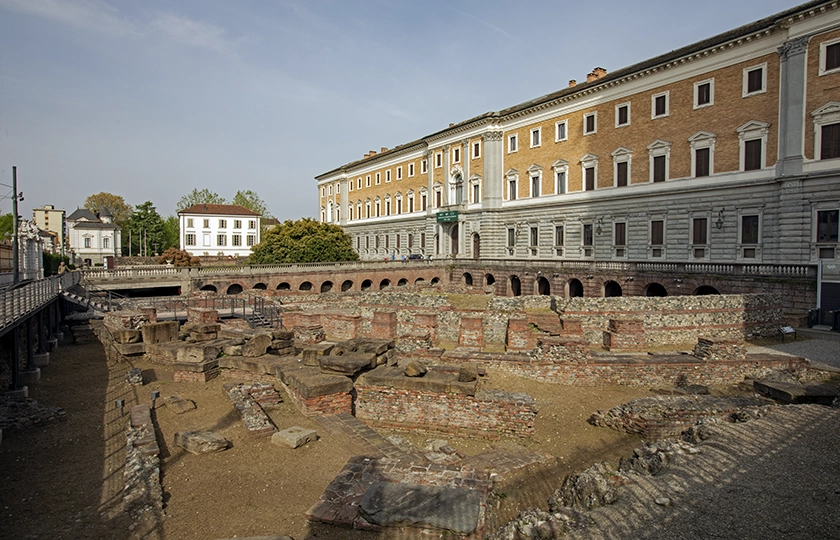
The Roman Theatre of Augusta Taurinorum was built in the 1st century AD and remained in use until the 3rd century. This is the only structure in the Roman city where the various phases of construction can be seen; in this case, three. Situated next to the Royal Palace, after centuries of neglect it was restored in 1899 on the initiative of King Umberto I.
The Royal Gardens, a green space of extraordinary architectural and environmental value covering approximately seven hectares, comprise the Ducal Garden, the Green Bastion – a small pavilion overlooking the 19th-century Boscheto, which houses the installation ‘Pietre Preziose’ by the artist Giulio Paolini – and, finally, the Oriental Gardens, featuring the Fountain of the Tritons and the Nereids, created around 1757 by the sculptor Simone Martinez.
More than two hundred thousand volumes, antique maps, engravings and illuminated manuscripts make up the outstanding collection of the Royal Library. But it was in 1839, with the acquisition of Giovanni Volpato’s collection, that the collection was expanded to include a valuable selection of drawings by great Italian and foreign masters, notably thirteen sheets autographed by Leonardo da Vinci, and was subsequently enriched with the famous ‘Codex on the Flight of Birds’. This significant increase led to the construction of a new building, which opened in 1842 and was designed by the court architect Pelagio Palagi, featuring a monumental interior layout spread over two levels.
Located outside the Royal Palace, but adjoining it, the Chiablese Palace houses the Chiablese Rooms. Construction began in the 16th century, and it was in 1753 that King Carlo Emanuele III bequeathed it to his second son, Benedetto Maurizio, Duke of Chiablese. The court’s chief architect, Benedetto Alfieri, was tasked with renovating the palace to create one of the city’s most elegant residences. Alfieri reorganised the layout to make the building more functional; he designed the new façade facing the cathedral, as well as a gallery connecting it to the Royal Palace. The decoration was entrusted to the finest artists, both local and those who had come from Rome and Naples, who adorned the walls with carved panelling and brought the vaults to life with Rococo-style stucco work. Paintings by Turin’s most important artists were hung above the doors, whilst the furniture was commissioned from the master cabinetmaker, Pietro Piffetti, who, amongst other marvellous pieces, created the spectacular piece of furniture on display in the Alcoba Room.
The Royal Museums have two shops, one near the ticket office and the other on the first floor of the Manica Nuova, next to the Savoy Gallery. In addition to a souvenir to take home with you, you’ll find publications relating to the collections and temporary exhibitions, as well as to the history and artistic heritage of the Royal Palace.
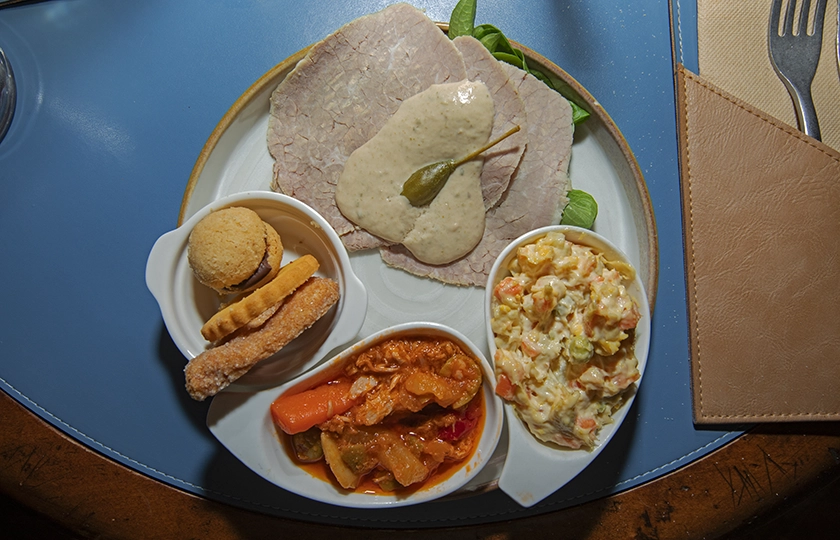
Educational, fun and comfortable too, that’s what a visit to the Royal Palace is like. At the Café Real, situated in the former service rooms of the Frutteria – a place dedicated to the preservation of fine porcelain since the 18th century – you can enjoy a peaceful break whilst savouring a delicious lunch in a unique and elegant setting, surrounded by items from the Savoy collections.
If you’re visiting with babies or pets, you’ll find facilities to cater for them too. The Royal Museums have separate areas – small, quiet and private rooms – set aside for breastfeeding and caring for babies. And for pets, they offer the BauAdvisor service, which can be booked via the website https://www.bauadvisor.it/.
https://museireali.beniculturali.it/en/
You may be interested in: https://revistagotravel.com/en/turin-gift-savoy-en/