

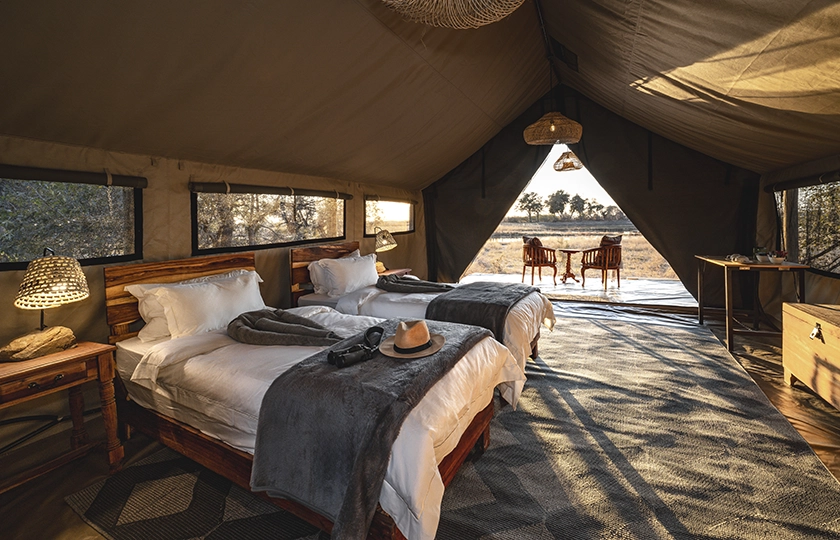
Following a soft opening in June and its official opening in the summer of 2026, Luengue-Luiana’s first expedition safari camp – now fully operational – offers visitors the chance to explore one of Angola’s most remote and untamed regions, which forms part of the vast Kavango-Zambezi transboundary ecosystem.
For decades, Luengue-Luiana National Park remained virtually off the international tourist map. Situated in the south-eastern corner of Angola, in a region historically known as the ‘Terras do Fim do Mundo’ (the Lands at the End of the World), its isolation, lack of infrastructure and vast distances kept it well away even from the main safari routes of southern Africa.
The opening of Luiana Plains Expedition Camp, which held its soft opening in June and officially opened its doors in August 2026, has marked a turning point. For the first time, travellers can venture into this remote region as part of an organised tour and spend several days exploring a landscape of savannahs, forests, wetlands and major river corridors virtually unknown to international tourism.
This is particularly appealing at this time of year; September and October are among the best months to discover Angola and its natural landscapes, coinciding with the dry season, when access conditions are at their best and wildlife tends to congregate around rivers and waterholes.
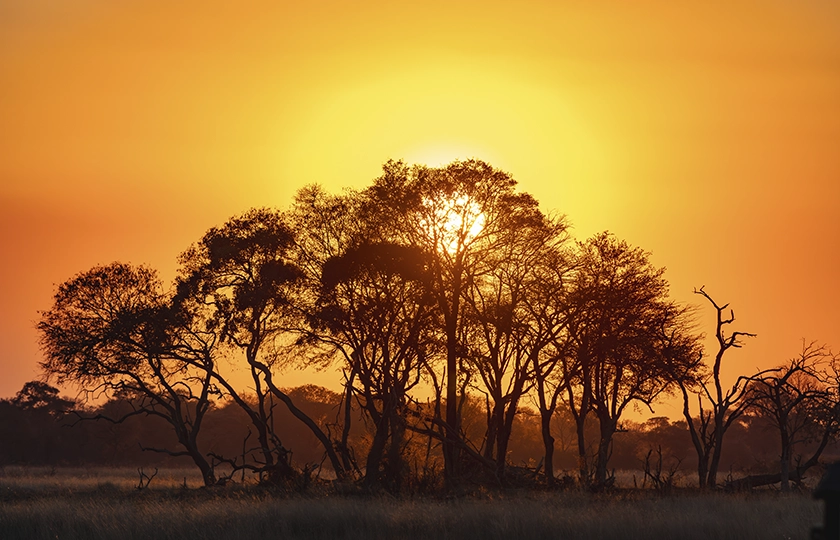
More than a safari, an expedition
The Luengue-Luiana National Park, in the province of Cuando (south-east Angola), is in a very different league to the major African safari destinations. Whilst parks such as the Serengeti or Kruger, or regions such as the Okavango Delta, have decades of tourism development behind them, with extensive accommodation networks and well-established routes, travelling here still retains a distinct expedition-like character.
There are no clusters of lodges or queues of vehicles waiting for a wildlife sighting. Journeys require planning, the distances are vast, and the pace of each day is determined, to a large extent, by nature itself.
“In an increasingly crowded world, being able to discover such a vast expanse of nature with hardly any other tourists around is a true privilege. Here, exploration takes precedence over predictability”, explains Simone Micheletti, co-founder of Luiana Plains Safaris.
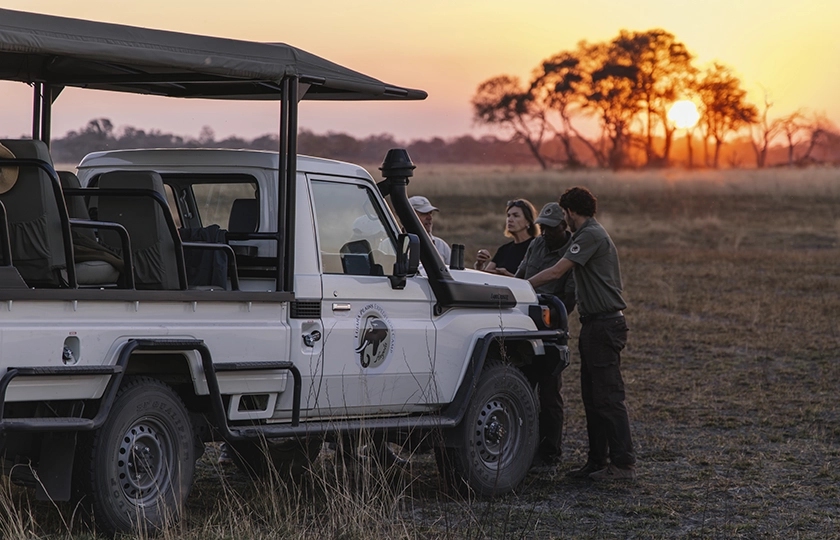
Angola within the vast Kavango-Zambezi ecosystem
Luengue-Luiana forms part of the Kavango-Zambezi Transfrontier Conservation Area (KAZA), a vast conservation area linking territories in Angola, Botswana, Namibia, Zambia and Zimbabwe, allowing wildlife to move between the different countries along historic migratory corridors.
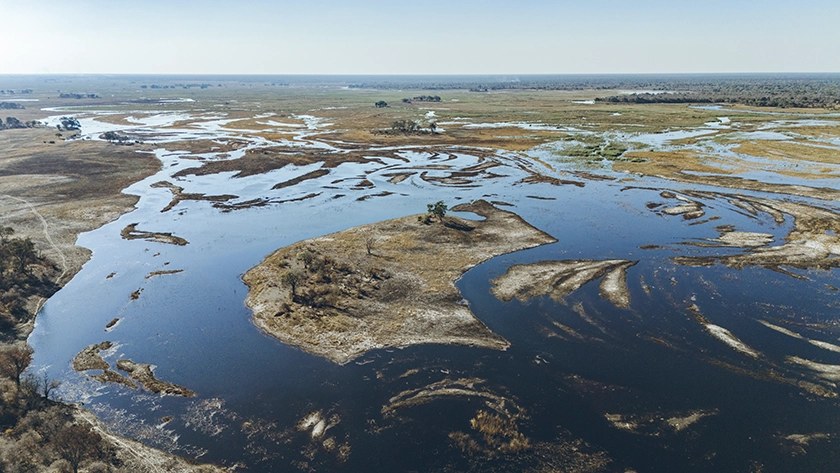
In the Angolan section, the landscape is constantly changing. Miombo and mopane forests alternate with sandy areas of the Kalahari, open savannahs, wetlands and seasonal plains, criss-crossed by rivers that create veritable green corridors right in the middle of the landscape.
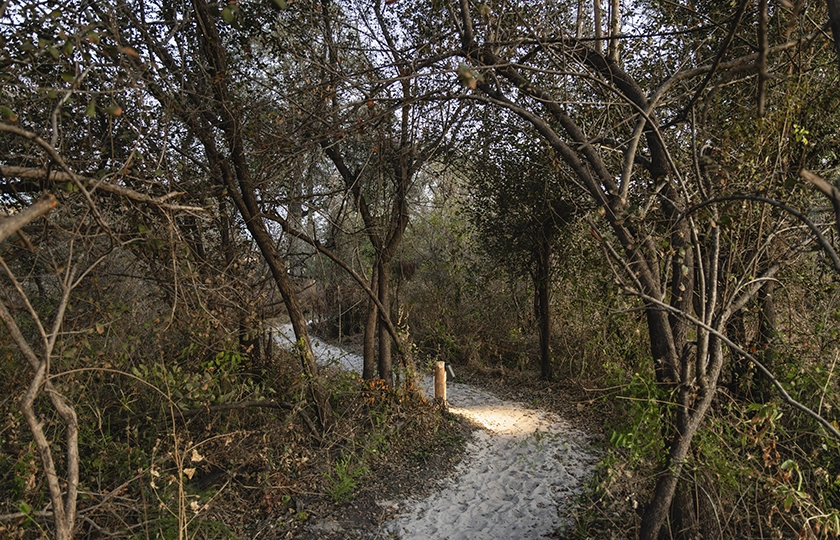
This mosaic of ecosystems is home to elephants, buffalo and various species of predators, including lions, leopards and African wild dogs, as well as antelopes such as the sable, roan and sitatunga.
After decades of isolation, the region is also undergoing a process of ecological recovery. It is precisely this largely unspoilt character that is one of the key elements setting this experience apart.
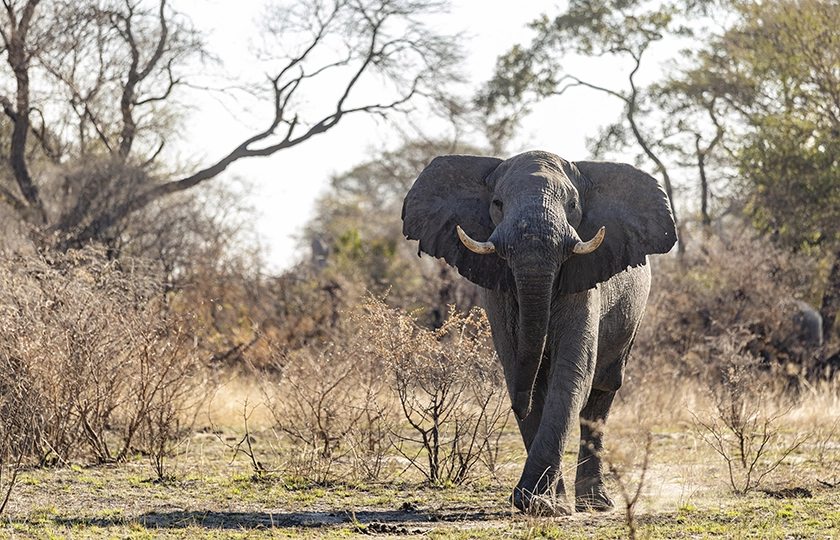
The wildlife is not as accustomed to the presence of vehicles as in other parks on the continent, and sightings do not follow a pre-set itinerary. Every outing involves exploring, following tracks and adapting to what is happening in the environment.
“The first visitors shared a very similar feeling: that of being aware of the privilege of finding themselves in a virtually untouched environment. There is a real opportunity to explore a river bend or follow the tracks of a pride of lions in places where travellers have scarcely set foot,” adds Micheletti.
Luiana Plains Expedition Camp, a base in the heart of nature
The opening of Luiana Plains Expedition Camp has created the first organised tourist base from which to explore this area of Luengue-Luiana.
Designed as a low-impact expedition camp, with an off-grid infrastructure powered by solar energy, the project comprises a total of 15 tents. Currently, 10 guest suites and two additional tents for guides are operational, whilst plans are in place to add three new units to reach the camp’s full capacity.
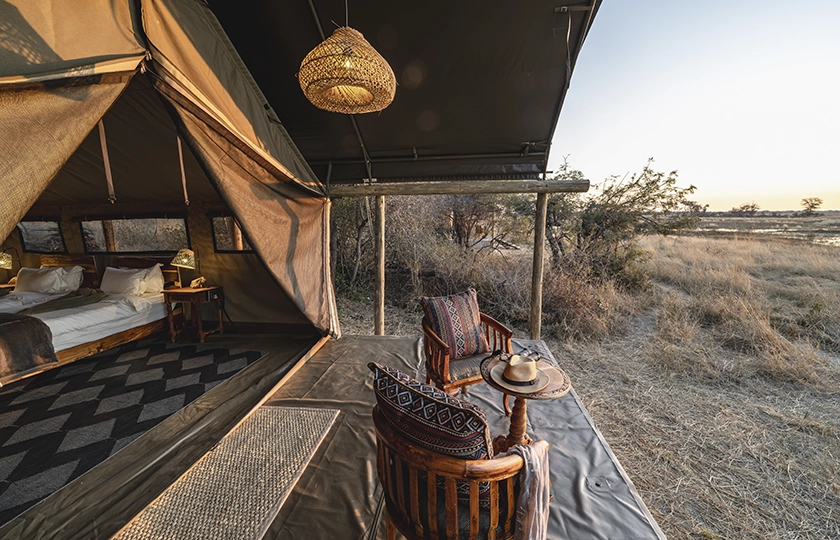
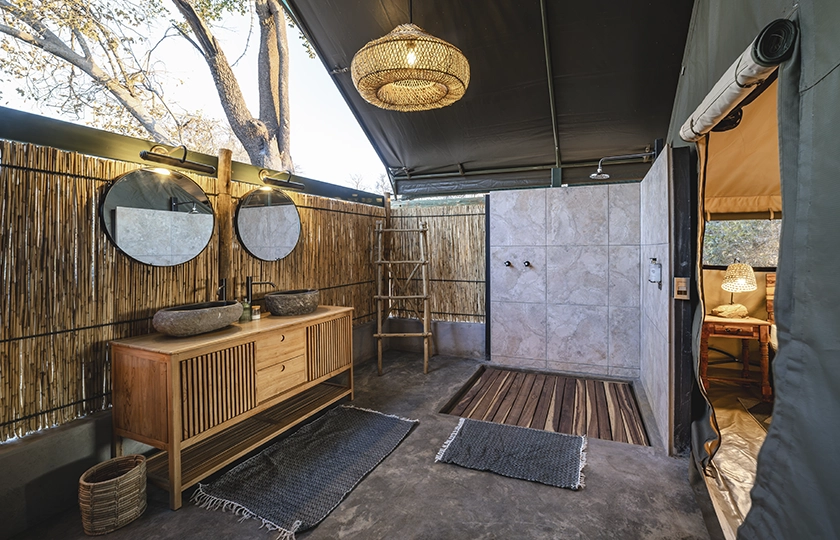
The tents feature en-suite bathrooms, hot water, fans and charging points, whilst the communal areas include a lounge, dining room and bar.
Beyond the accommodation itself, its significance lies in making it possible to stay in an extremely remote area by centralising the necessary services, including transport, catering, guides and activities.
From the camp, day and night safaris in 4×4 vehicles, boat trips, birdwatching and guided walks are organised, showcasing different aspects of the area. Land tours allow guests to explore forests and savannahs in search of large mammals, whilst boat trips bring travellers closer to river ecosystems and species such as hippos, crocodiles and numerous waterbirds. Walking routes, meanwhile, shift the focus to tracks, vegetation, insects and other details of the ecosystem that are difficult to spot from a vehicle.
Rather than replicating the model of a traditional lodge, the camp aims to preserve the destination’s expedition-style character. As such, the experience is particularly geared towards experienced travellers, photographers, nature lovers and those interested in conservation and areas still off the beaten track. The camp welcomes guests aged 12 and over.
Getting there is part of the experience
Luengue-Luiana’s very location makes the journey itself part of the adventure.
The park can be reached from within Angola via Mavinga, but it can also be incorporated into itineraries through southern Africa via some of the main entry points to the KAZA region.
For travellers coming from Namibia, Botswana or Zimbabwe, Victoria Falls, Kasane and the Zambezi region of Namibia provide a link to Luengue-Luiana, allowing them to combine well-established safari destinations with one of the continent’s most recent additions to the tourist map.
From Namibia, access is via the Kongola area and the Suswe/Bico crossing. As this is not a conventional public border crossing, access must be arranged in advance with Luiana Plains Safaris, which handles the necessary formalities and organises the final transfer to the camp in 4×4 vehicles. This final leg of the journey cannot be undertaken independently.
Given the nature of the journey, Luengue-Luiana is not a destination designed for a quick visit. A stay of at least three nights – and preferably four or five – allows visitors to explore different habitats and alternate activities without the transfers detracting from the experience.
For Micheletti, developing a destination practically from scratch is necessarily a gradual process: “The most established African destinations have spent decades developing their infrastructure and logistics. Angola is making a great effort to welcome international visitors, but building a destination from scratch takes time. For the more adventurous traveller, experiencing it in these early stages offers an authenticity that is increasingly hard to find.”
In Luengue-Luiana, this feeling is particularly evident: a region historically known as the ‘Lands at the End of the World’ is beginning to open up to travellers willing to discover one of Angola’s least-known facets.
Further information at: https://luianaplains.com/
About ANGOLA
Angola is one of the last great adventures yet to be discovered on the planet: a hidden gem in south-west Africa that astonishes with its unspoilt nature, cultural diversity and extraordinary scenic beauty. The continent’s seventh-largest country offers landscapes ranging from tropical rainforests to endless deserts, shaped both by the legacy of the Kingdom of Kongo and the influence of Portugal’s colonial history. Its capital, Luanda, is the gateway to the Atlantic and a true melting pot of African, Portuguese and indigenous influences, where music, dance and cosmopolitan energy pulsate with vigour. Under the slogan “Visit Angola – The Rhythm of Life”, the country presents itself as an authentic destination for explorers and lovers of nature and culture seeking to discover a different, genuine Africa, full of rhythm.
Source: KLEBER GROUP