To the north of the Duero lies a mountainous region eroded by a climate that makes no concessions, yet one that has failed to break human resolve. A crossroads of cultures since time immemorial, today we hear the echoes of a past with its own distinct identity.
For almost three centuries, a river shaped the history of two peoples: the Christian and the Muslim. Controlling the border marked out by the River Duero in the Middle Ages – setting aside the conflicts and interests of the time – provided a framework for coexistence between the two cultures, the legacy of which has gone on to enrich the history, art, traditions and customs of many regions.
This is particularly evident in the north-eastern part of the province of Soria, but on this journey the focus extends beyond that specific period in time.
Taking the Duero River’s flow through the capital of Soria as our starting point, we’ll set off for the Tierras Altas region, where the landscape takes on a different character, revealing its true essence through its most authentic features.
From then until now, many cultures and ways of life have passed through this land, which lies between the plateau and the northern regions, and traces of them all remain, including those of the all-powerful Mesta.
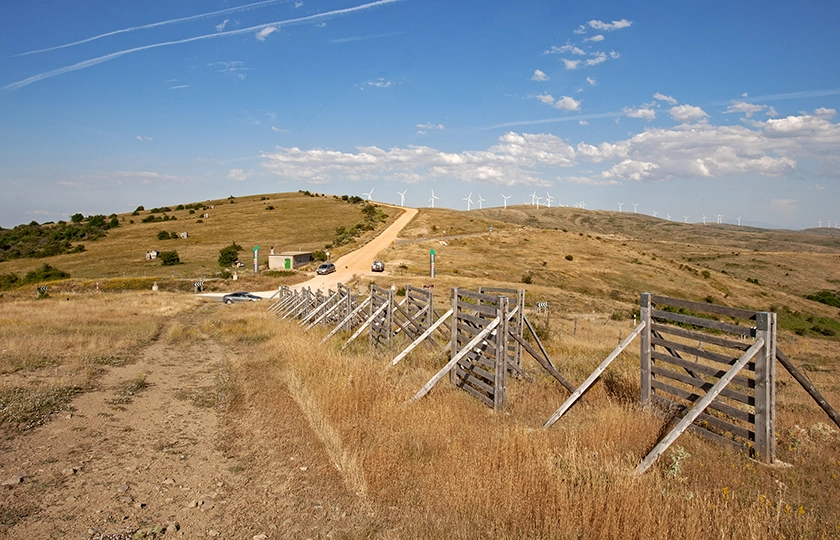
For centuries, transhumance has shaped the traditional way of life in the Highlands. There is archaeological evidence that livestock farming and pastoralism were already practised during the Iron Age by the Celtiberian peoples, but it was with the arrival of the Berber tribes and their customs that transhumance became established as a common practice in this part of Soria, leading even to the adoption of some of their terms associated with herding, such as ‘zagal’ or ‘alforja’, amongst many others.
The Reconquista brought about many socio-economic changes with the incorporation of vast areas of pastureland in the south; local herders’ assemblies were established, and in 1273 King Alfonso X founded the Honrado Concejo de la Mesta de Pastores de Castilla, a body tasked with regulating the ever-complicated relations between farmers and livestock breeders, as well as promoting the Merino breed, whose origins appear to lie in the cross-breeding of a native breed with one brought from North Africa.
The excellent quality of the wool fuelled unprecedented economic growth between the 16th and 18th centuries, when Soria had a flock of over three hundred thousand Merino sheep and was one of the leading exporters to the Netherlands and England.
This brief historical overview will form part of the narrative of a journey we will undertake along one of the branches of the Cañada Real Soriana Oriental, starting from the very banks of the River Duero.
A path to power and wealth
Set against a backdrop with a certain dreamlike quality, Soria –the ‘city of poets’ that captivated the brilliant Antonio Machado and provided a home for Gustavo Adolfo Bécquer and Gerardo Diego– is rich in heritage and history, which it proudly displays in its streets and squares.
But before we venture into the town – through which the Cañada Real once passed – the river’s beautiful natural setting invites us to take in two of its key cultural landmarks.
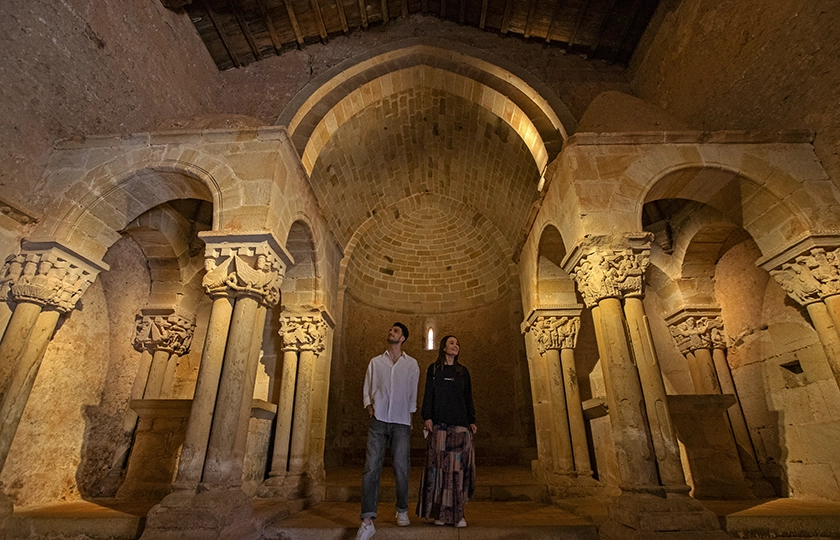
The monastery of San Juan de Duero is a Romanesque gem that is unique in Spain. Built between the 12th and 13th centuries by the Order of the Hospitallers of San Juan de Arce, it is remarkable for its sublime blend of Romanesque, Mudejar and Arabic styles, in a display of mediaeval imagination to which the poet Gerardo Diego dedicated one of his poems.
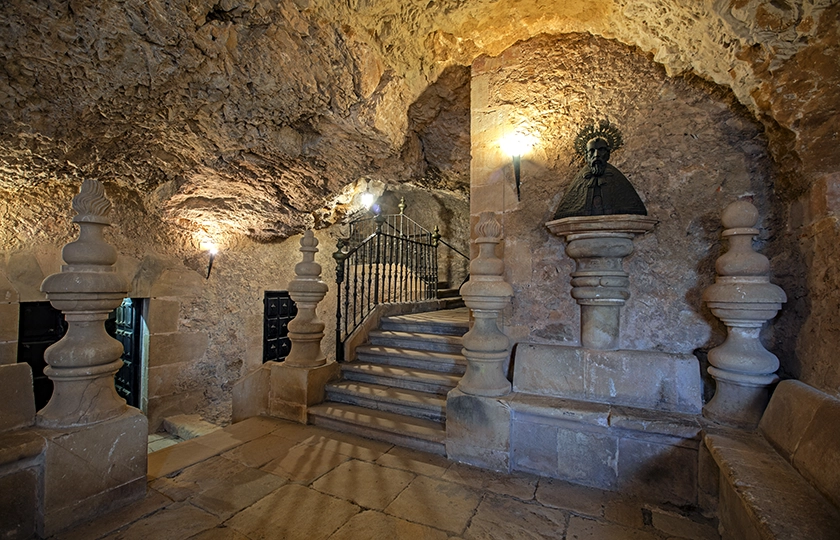
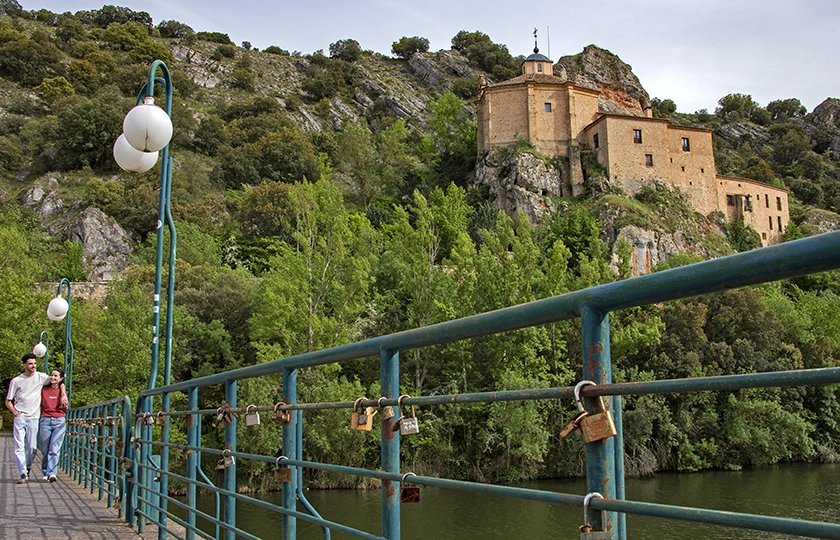
Downstream, on the left bank, the hermitage of San Saturio defies the laws of gravity above the still waters of the Duero. Built in the 17th century in the Baroque style, commissioned and funded by the local people on the site of the saint’s former hermitage, it houses exhibition rooms, a magnificent sacristy with a Gothic carving of Christ, and a beautiful church with murals.
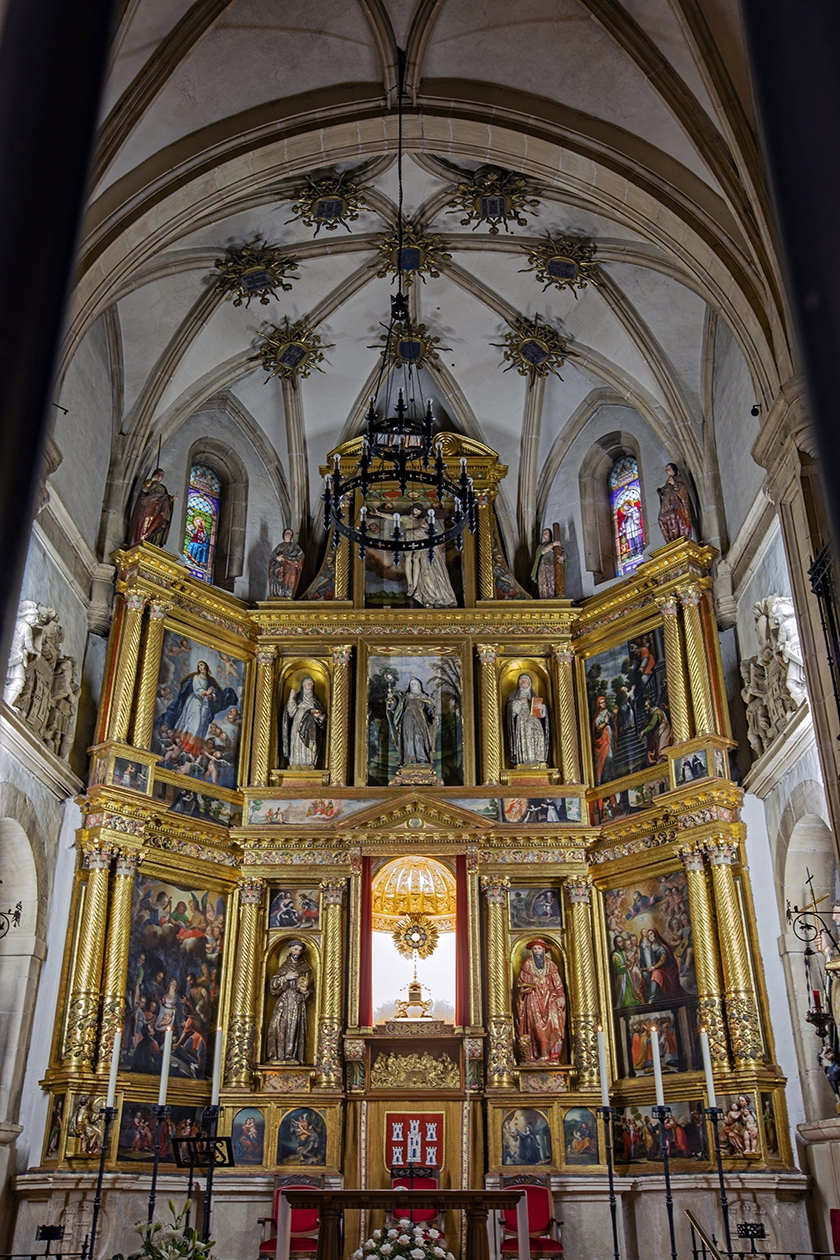
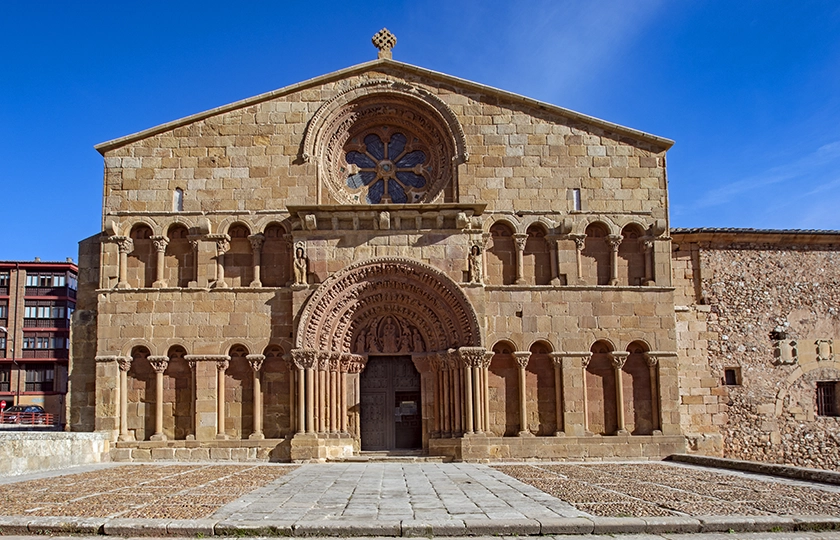
Soria’s medieval past lives on in the streets of the historic centre, as well as in its city walls, its castle and in beautiful Romanesque churches such as the Church of Santo Domingo, San Juan de Rabaneda and the Co-Cathedral of San Pedro; but it is particularly evident in certain Renaissance palaces, such as that of the Counts of Gómara, built in the 16th century by the governor and powerful cattle rancher Francisco López del Río y Salcedo. A striking example of the immense wealth that the livestock-owning oligarchy of Soria came to amass through the wool trade and their control of the transhumant herds.
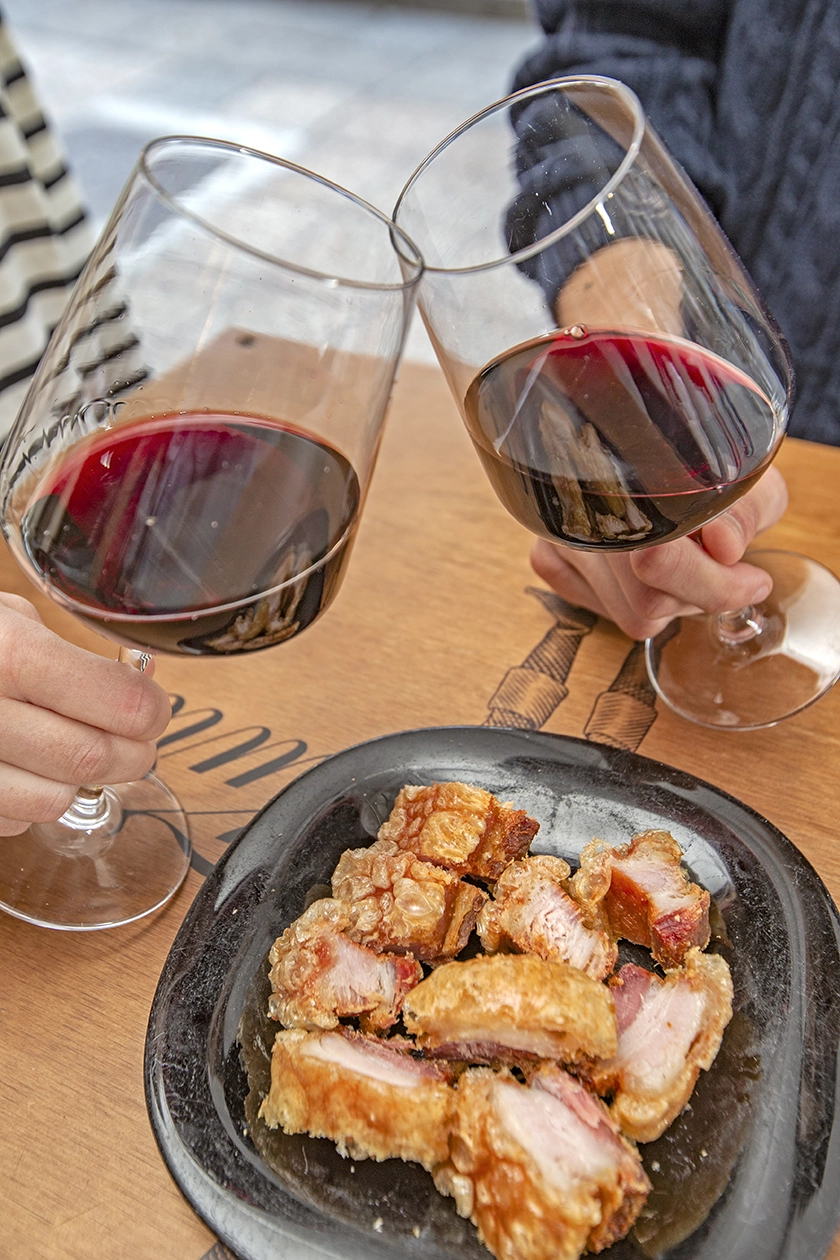
That tradition is also reflected in the local cuisine. Soria boasts a unique and delicious culinary tradition. Its famous “torreznos” and truffles have gained international renown, whilst traditional kitchens serve up the typical migas al pastor and succulent lamb stews.
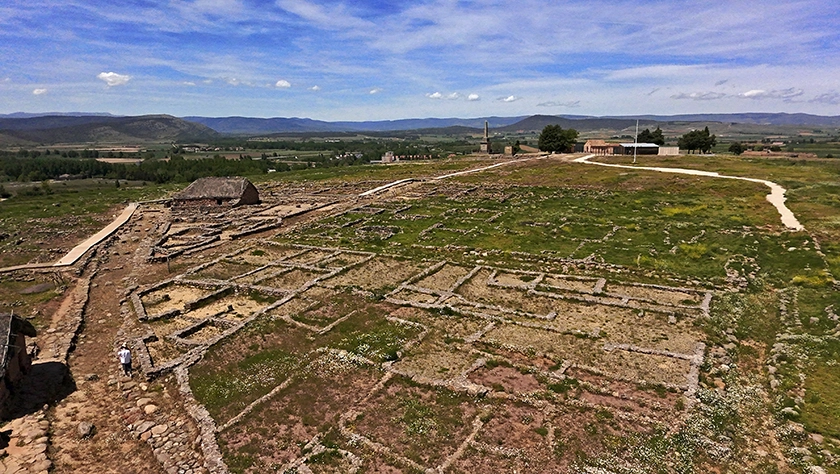
Following the trail of the Merino sheep, the “cañada” leads into what was once the legendary Numancia. The year 133 BC is an important date in the history of the Iberian Peninsula. After fifteen months of siege and two wars of conquest lasting more than two decades, the Roman armies entered Numantia, ‘the terror of the Republic’, the stronghold of the Arevaci resistance and the flagship city of Celtiberian culture. To capture the city, Rome had to organise a siege involving seven encampments, calling upon the republic’s most famous general, Publius Cornelius Scipio ‘the African’ – the conqueror of Carthage – to lead the assault.
The siege, which left the population starving and exhausted – a situation also dramatised by Cervantes – ended with the Romanisation of the area and the reconstruction of the town according to Roman models: straight streets lined with larger, rectangular houses coexisted, however, with indigenous ways of life and architecture. All of this can be seen today both in the archaeological remains and in the educational reconstructions, both of which make Numancia one of the region’s most notable archaeological sites. Among the most striking remains are the city walls, with their monumental gates, a large Roman mansion with a peristyle, the indigenous houses and the cisterns built to ensure a steady supply of water.
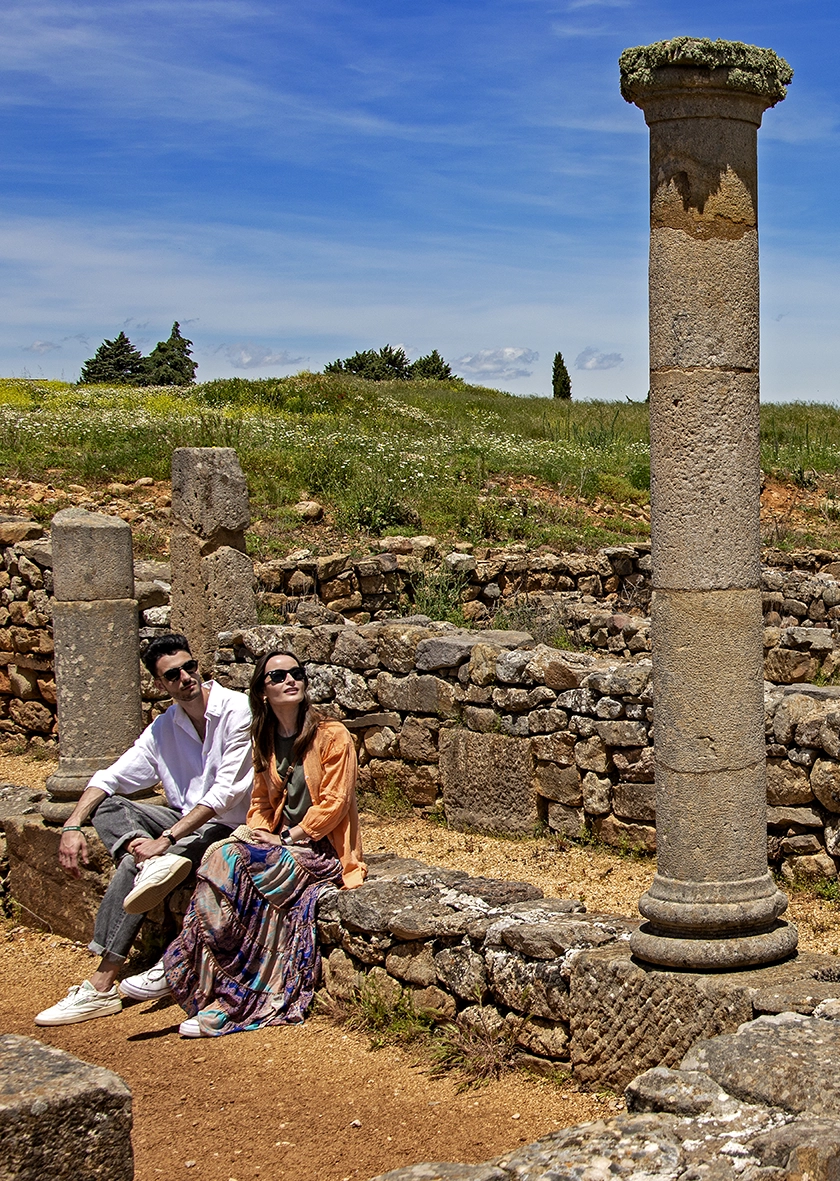
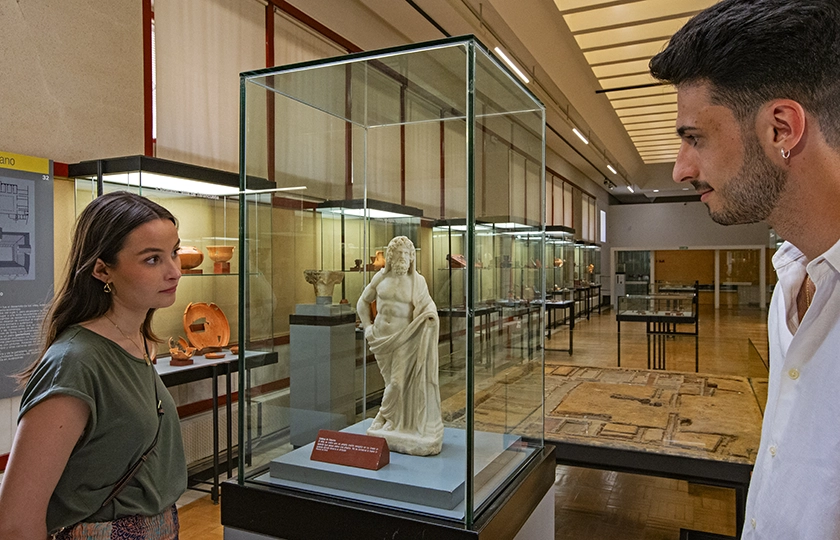
The site features a support room and the Garray Archaeological Exhibition Hall, where the history of the siege and the two opposing sides is brought to life very effectively. Meanwhile, the Numantino Museum – which is, in fact, the Provincial Museum of Soria – retains both its traditional name and the most significant artefacts of this culture.
With the horizon cut off to the north by the peaks of the Iberian System – or the Idubedian Mountains, as they were known in classical antiquity by Strabo, Pliny the Elder and Ptolemy – the journey continues through an undulating landscape of pastures dotted with beech, oak and holm-oak woods, like survivors of the ancient forest that once covered these lands. Yet within this natural landscape, altered by human logging to create pastureland, a natural haven of great ecological value has survived to the present day.
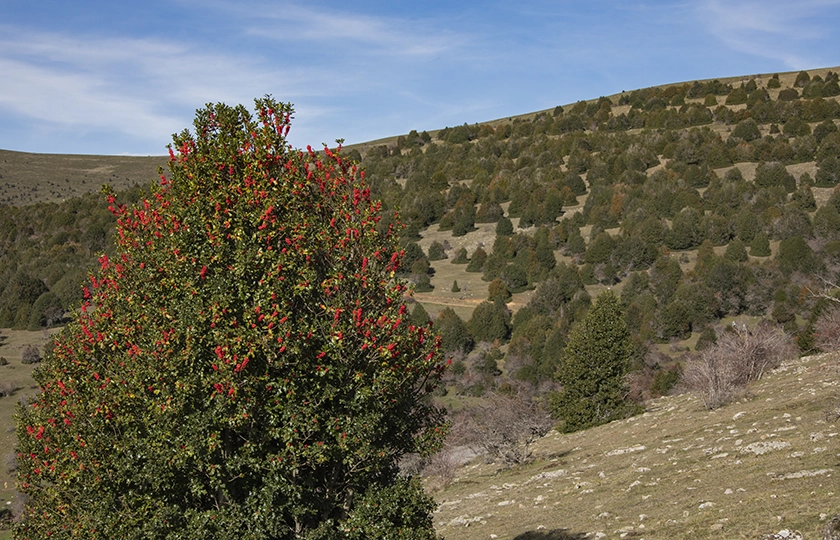
Very close to the village of Arévalo de la Sierra lies the Acebal de Garagüeta Nature Reserve, a magical place of great natural beauty. In autumn, this place is transformed into a fairy tale when the green leaves are adorned with red berries. As well as its seasonal splendour, the largest holly tree on the Iberian Peninsula upholds the tradition of using holly for Christmas decorations, whilst at the same time adhering to sustainable forest management practices. This charming spot boasts a unique landscape where light filters through dense canopies of holly, with various species such as elder, maple and climbing plants growing side by side, creating a tapestry of natural wonders.
The wildlife in Garagüeta is diverse and varied, ranging from amphibians to majestic deer, foxes, wild boar, rabbits and birds of prey such as the griffon vulture and the golden eagle.
The landscape is a living testament to the close relationship between humankind and the earth. The forests that have been transformed into pastures serve as a reminder of how livestock farming has been the driving force behind these impressive holm oak forests, and its legacy lives on in the beauty that surrounds us.
To gain a better understanding of the environmental value of this natural area, it is worth visiting the Nature Reserve’s Park Centre in the town of Arévalo de la Sierra. En este centro de referencia se proporciona mucha información en lo que a flora, fauna y geomorfología se refiere, así como de otros interesantes acebales próximos como el de la Dehesa de Oncala y de su importancia histórica y presente en estas sierras desde la prehistoria. This visitor centre provides a wealth of information on the flora, fauna and geomorphology of the area, as well as on other interesting nearby holly grove forests, such as the Dehesa de Oncala, and their historical and current significance in these mountain ranges since prehistoric times.
At an altitude of over 1,400 metres stands the Oncala Pass, a strategic crossing for herds, where the tranquillity and panoramic views are truly unforgettable. At its foot, the village of Oncala was one of the key centres of transhumance, a legacy that lives on in its traditional architecture – adapted to pastoral life – and in the Shepherds’ Museum. Housed in the former schoolmistress’s home, it is a space that pays a moving tribute to the shepherds who, for centuries, guided flocks of Merino sheep between the north of Soria and the south of Spain.
It is also surprising that such a small village, nestled amongst the remote mountains of Soria, should have such a unique exhibition space. The Museum of Flemish Tapestries houses an extraordinary collection of eight 17th-century tapestries woven in Brussels – perhaps using Merino wool from Soria – featuring designs by Rubens himself.
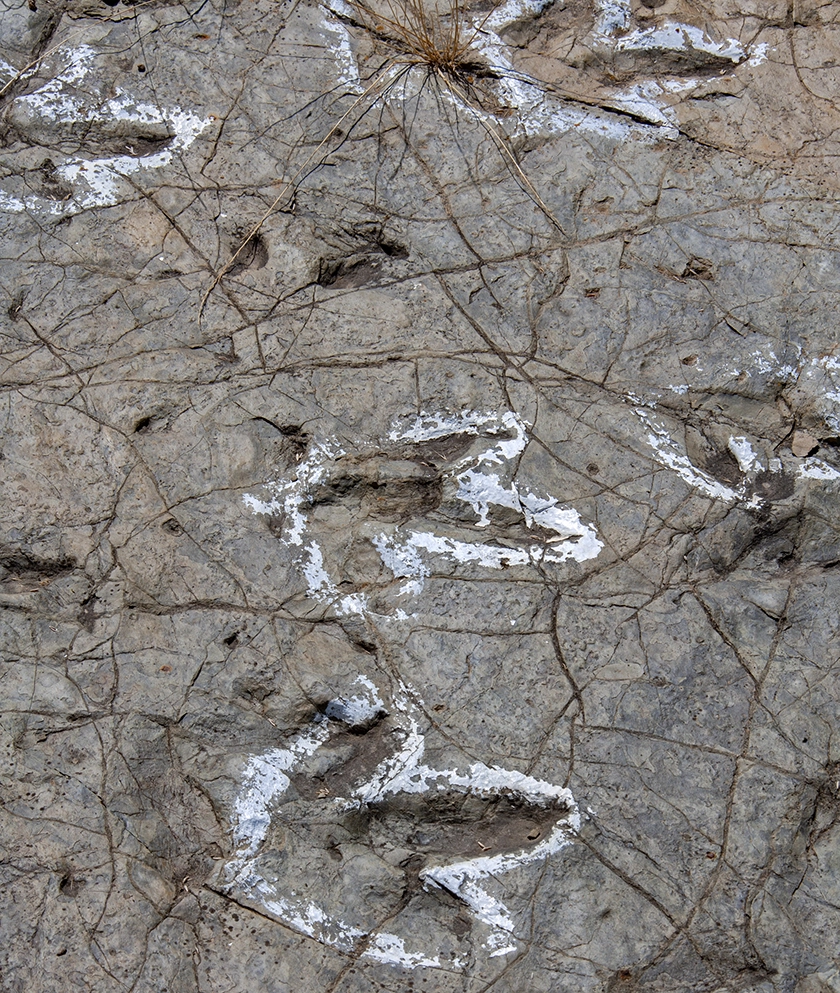
At this point in our journey, we are given the chance to take a leap back in time by millions of years. The Ichnite Trail in Soria offers a window into space and time of great cultural significance. The dinosaurs that inhabited north-eastern Soria lived mainly during the Lower Cretaceous period – that is, 145 million years ago – with some weighing as much as 20 tonnes. The four routes that have been designed are organised by the Villar del Río Palaeontology Centre, but there are two interesting archaeological sites along our itinerary. In the village of Ventosa de San Pedro lies the San Roque ichnite site, where, in addition to the footprints, there is a replica of an iguanodon. A little further south, in the village of Matasejún, lies the Las Adoberas footprint site, whose tracks clearly reveal the type of dinosaur that inhabited this area, where there was probably once a lake.
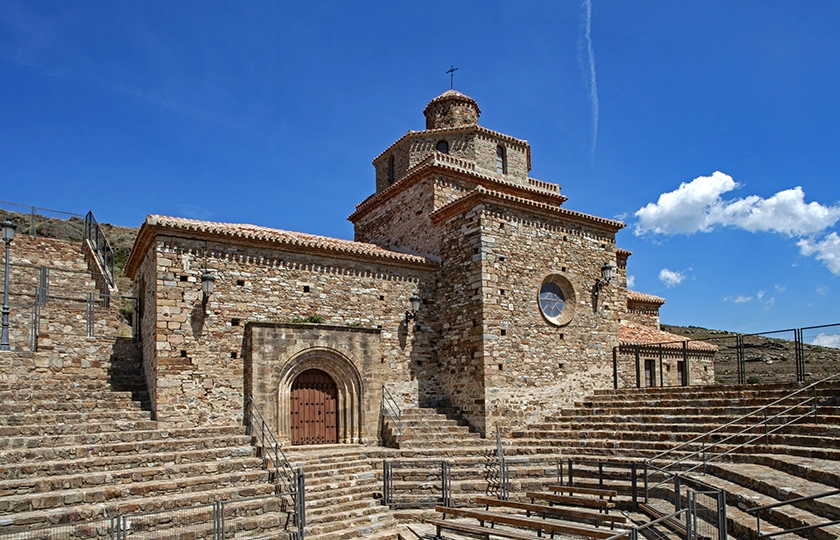
Running parallel to the River Linares as it flows towards La Rioja, San Pedro Manrique is another of those villages whose history is linked to the repopulation of the Middle Ages and transhumance. Its strategic location in the valley linking Castile with Aragon justified the construction of its castle – which is now in a state of serious disrepair – as well as a Templar monastery a short distance away.
Its traditional architecture is of particular interest, the result of its commercial activity as the nerve centre of the area, as well as the economic boom that took place in the 18th century with the establishment of flour mills, fulling mills and textile workshops.
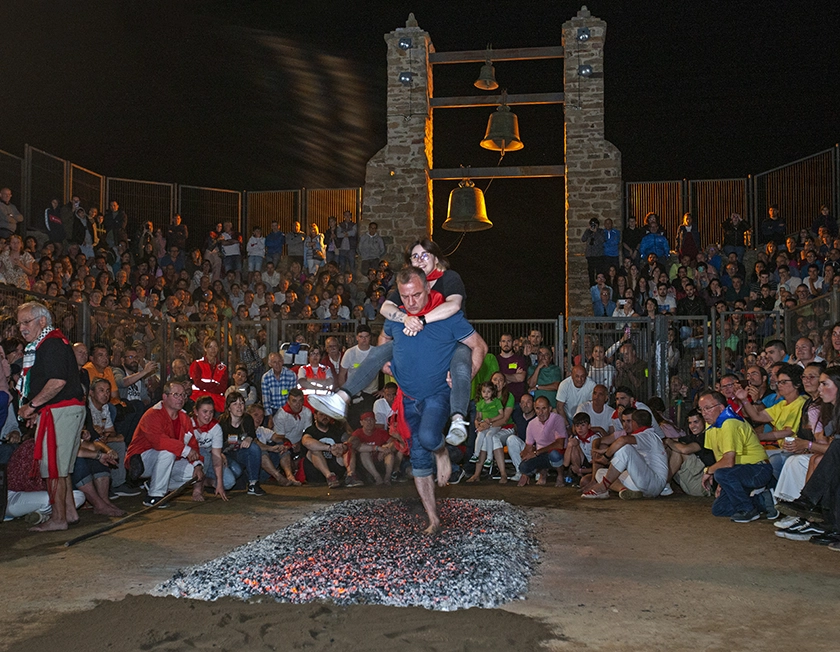
But if there is one thing that has made San Pedro Manrique famous far and wide, it is ‘El Paso del Fuego’ (The Fire Walk), which has been designated a Festival of National Tourist Interest. It may well be a ritual of Celtiberian origin linked to the summer solstice, which is celebrated every year on the night of St John’s Day.
The ‘El Paso del Fuego’ (The Fire Walk), is much more than just a performance; it is an act steeped in symbolism. At midnight, the young people of the village, known as ‘paseadores’, walk boldly across the embers without getting burnt — it’s all down to technique —, reviving the ancient ritual that tests faith and courage, brings purification and good luck, and strengthens the bond with the community.
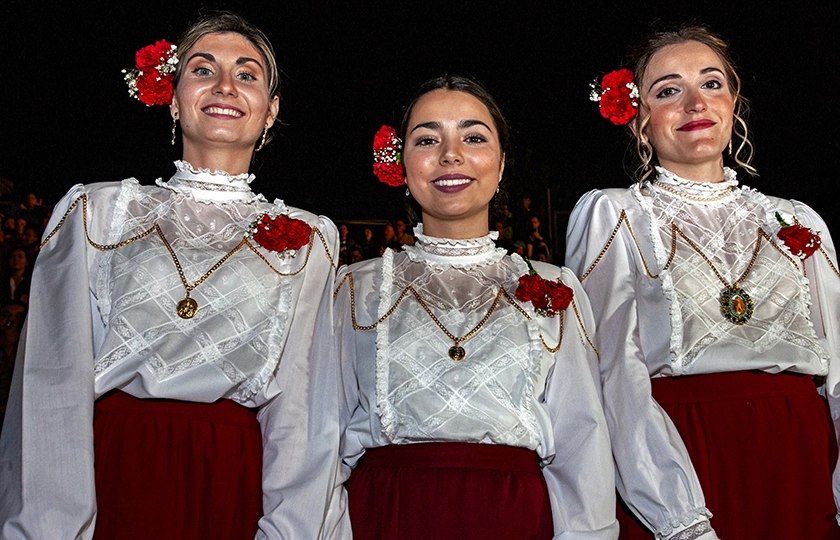
The festivities continue the following day with the Fiesta de las Móndigas. It also has ancient origins and its purpose is to honour three local women, known as the Móndigas, who symbolise fertility and abundance; to this end, they are dressed in traditional costumes and adorned with flowers.
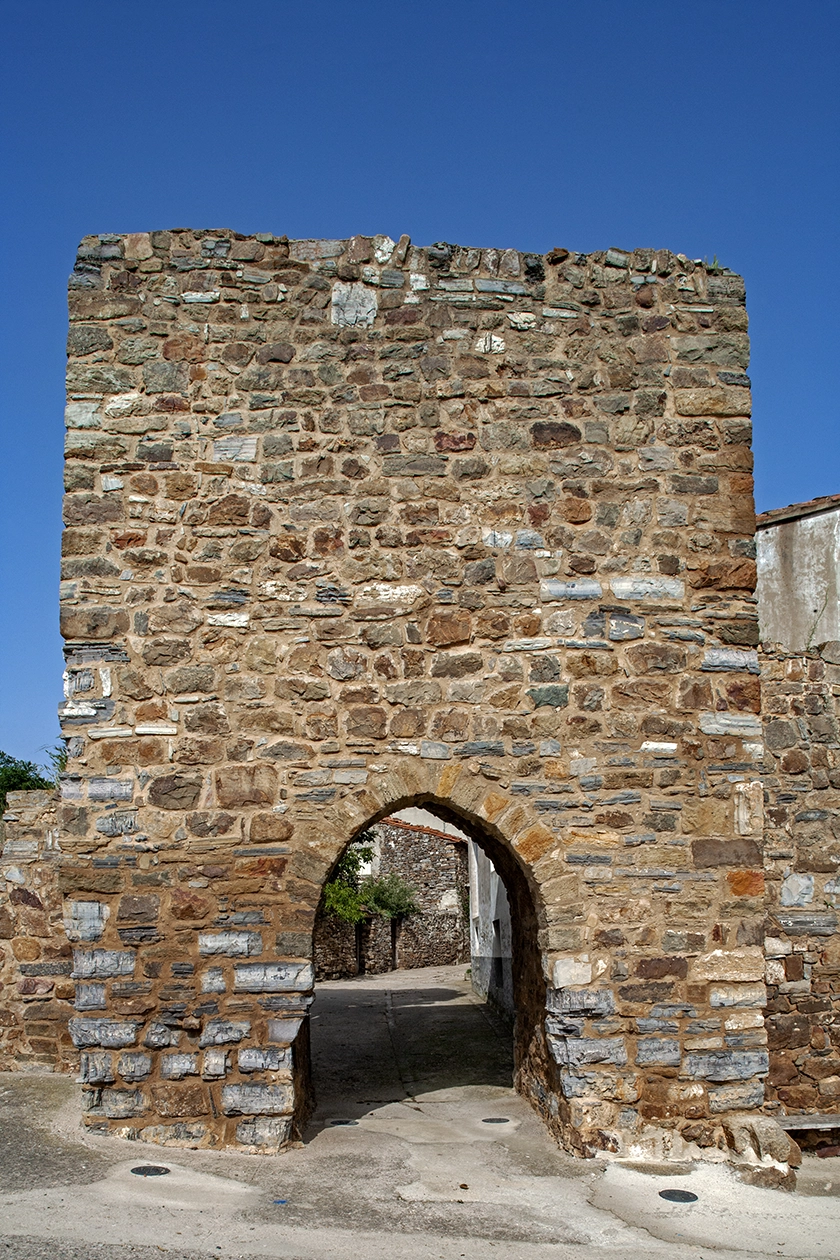
We passed through a landscape of steep-sided valleys and riverside woods alongside the River Cidacos to reach the village of Yanguas, whose name means ‘gate’ in Latin. A very fitting name, given that it was strategically situated in the Cidacos Gorge and served as an essential passageway for armies, traders and transhumant herds.
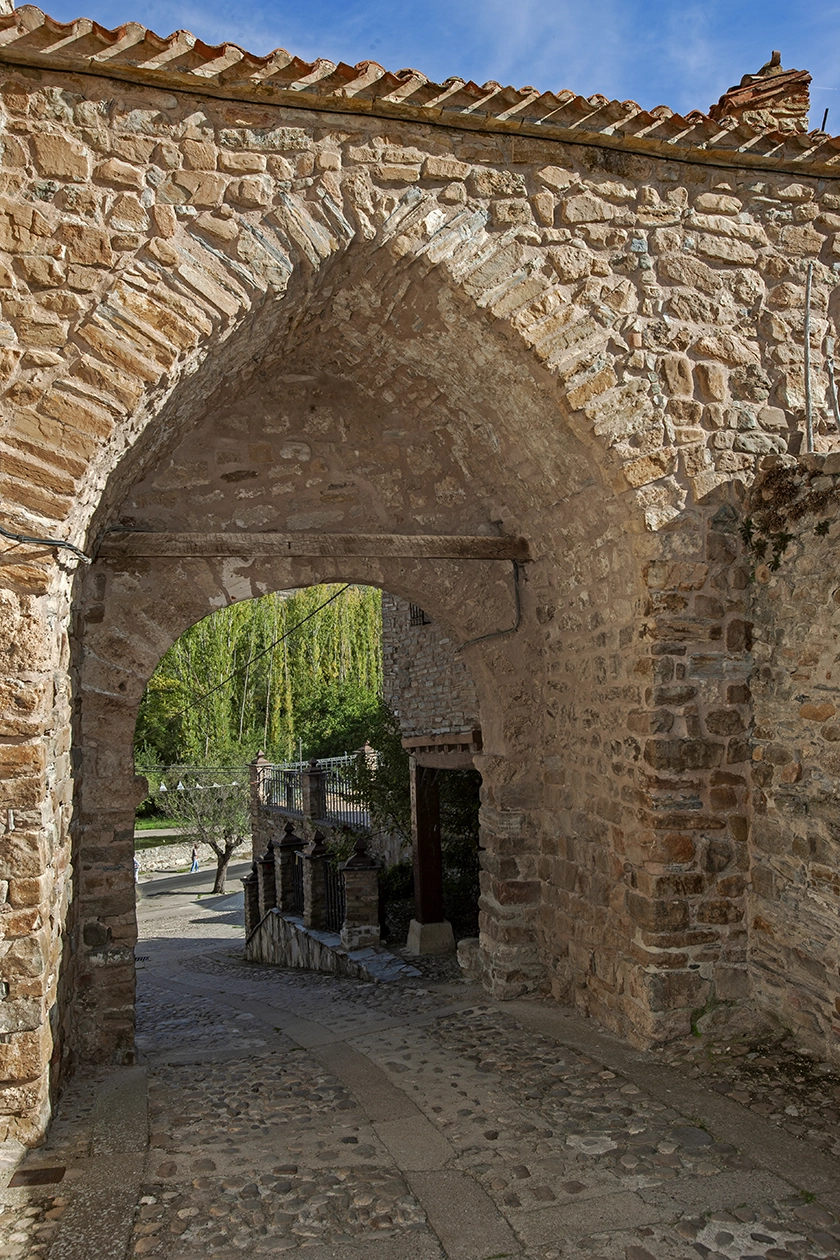
Designated a Site of Cultural Interest in the ‘Historic Site’ category in 1993 due to the significance of its mediaeval past and its well-preserved townscape, the magic of this place can be felt in its steep streets, its arcaded squares and its houses bearing coats of arms, which bear witness to the splendour of bygone days.
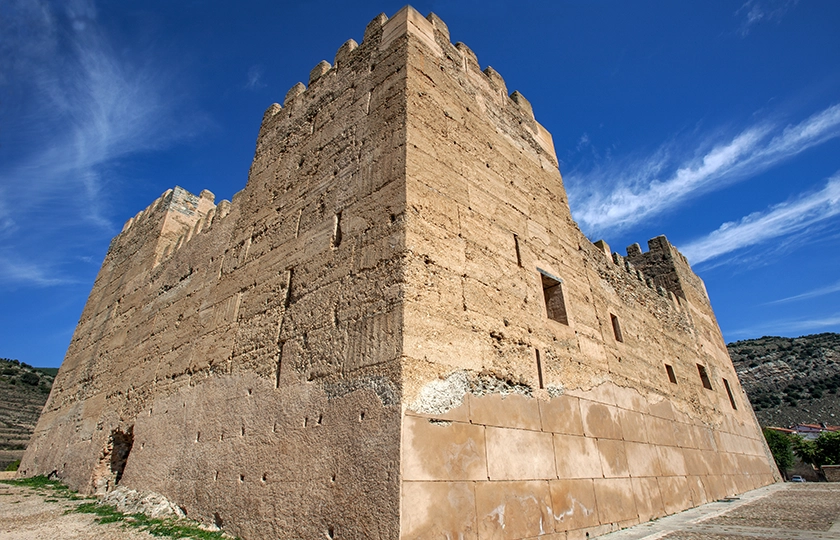
Its location on the border explains the presence of an imposing Mudejar-style castle and the remains of ancient walls, although its origins date back to prehistoric times, as evidenced by the artefacts belonging to the Celtiberian tribe of the Pelendones, who were primarily engaged in sheep farming. Romanisation also reached these lands, as evidenced by the many funerary stelae found bearing Latin inscriptions.
In 1134, it became part of the Crown of Castile once and for all.
Shortly afterwards, the town was granted a charter by King Alfonso X the Wise, which, amongst other privileges, exempted the people of Yanguas from paying tolls, thus marking the beginning of Yanguas’s tradition as a centre for the mule-trading trade, which was reflected in the town’s prosperity.
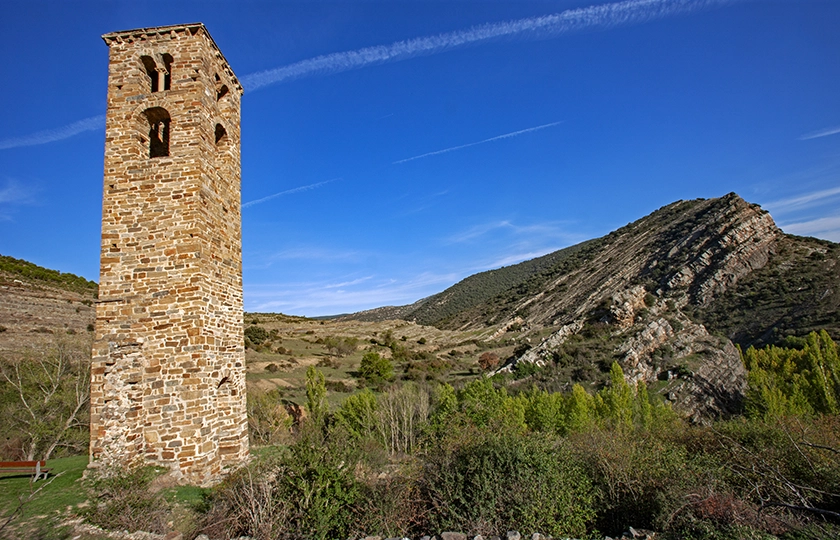
As well as the fortress – which served defensive purposes and was a symbol of power in its day – Yanguas boasts other interesting monuments, such as the late-Gothic church of San Lorenzo and the unique Tower of San Miguel.
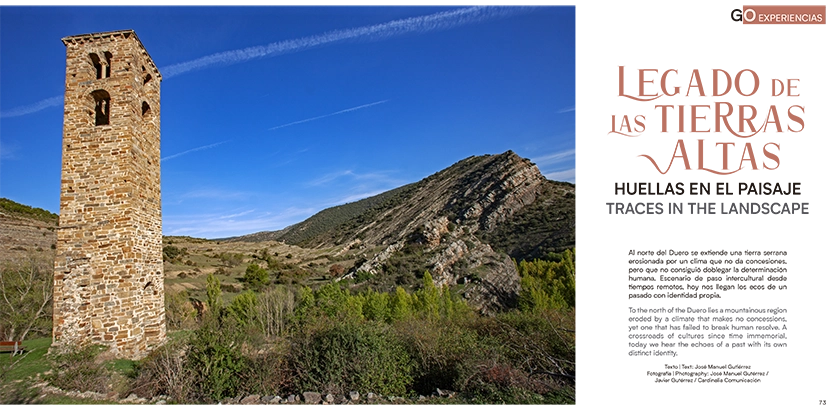
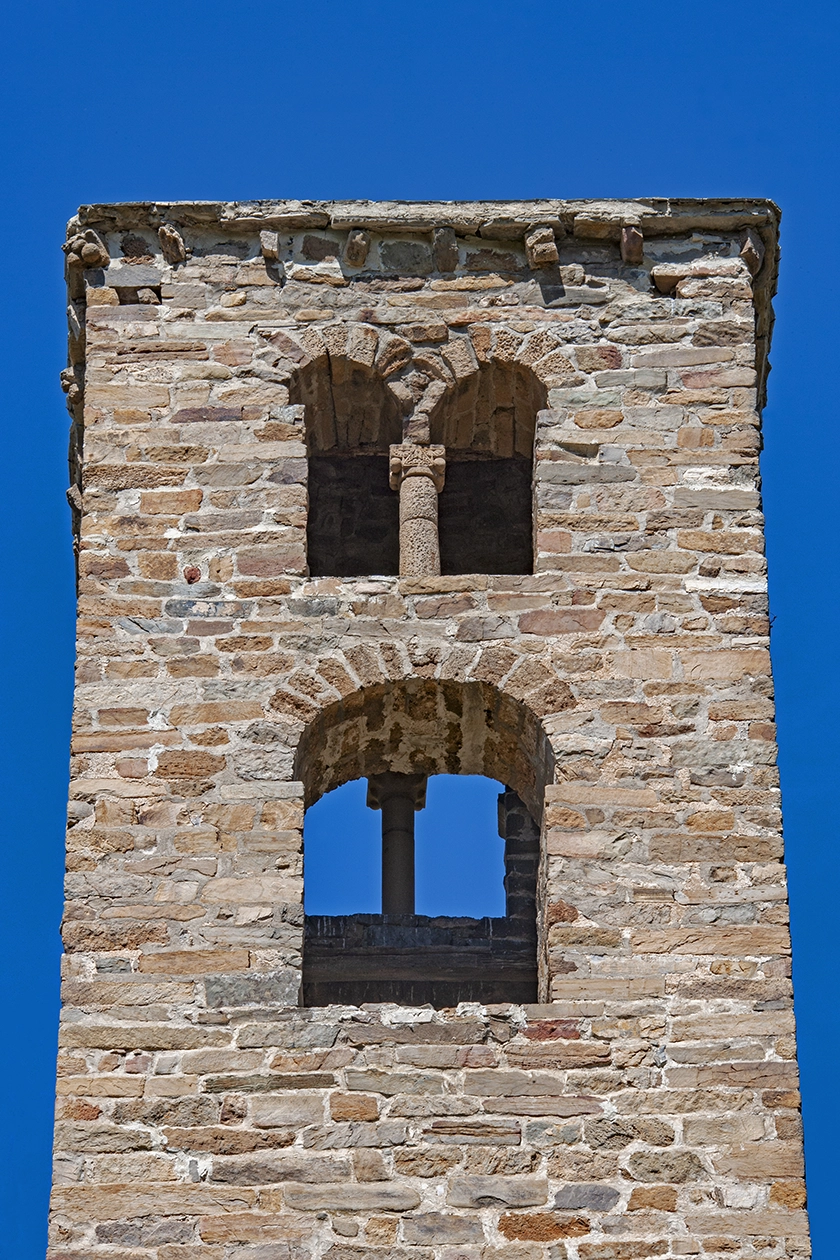
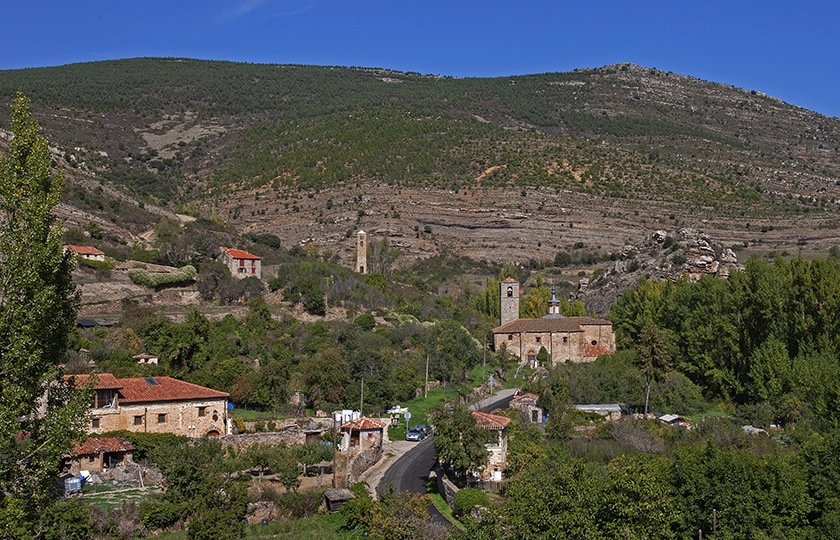
Seen from a distance, it is reminiscent of the Romanesque towers of the Catalan Pyrenees, slender and solitary amidst the natural landscape, but in reality it belonged to a 12th-century church that no longer exists.
This brings to an end a journey through a region that may seem unassuming but which is home to an exceptional historical and cultural heritage.