

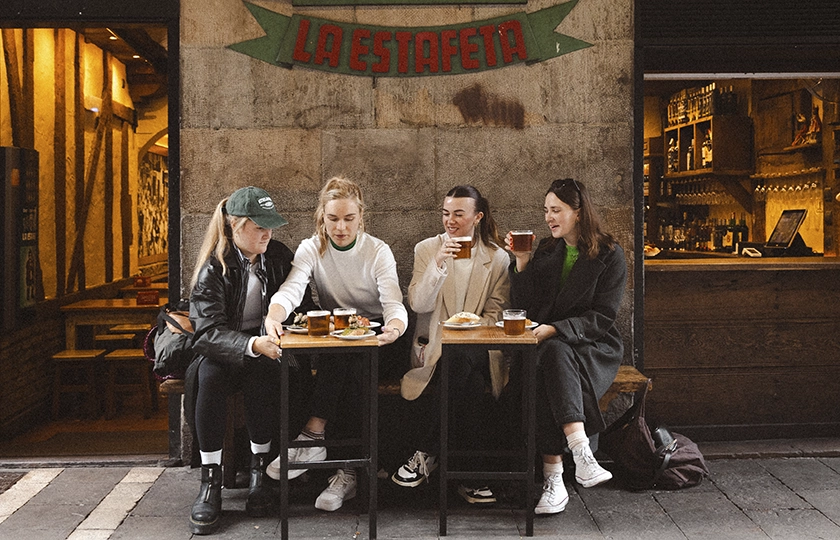
- From chistorra and pochas to vegetables from the market garden or a fine ribeye steak, Pamplona invites you to discover its identity through a cuisine deeply rooted in the local area and seasonal produce.
- Cuisine and Basque pelota are the two pillars of identity that best reflect the soul of Pamplona. Both combine the physical exertion of the frontón, local produce and the pleasure of gathering round a good meal.
- During the ‘Pelota en mano’ culinary competition, held in November, pelota takes centre stage in the city’s bars.
Cuisine is one of the best ways to get to know Pamplona’s identity. Local and seasonal produce, recipes passed down from generation to generation, and a larder characterised by Navarran vegetables, meats, cheeses and other flavours closely linked to the region make any visit to the capital an opportunity to discover Pamplona through its food as well.
And there’s no shortage of ways to do so. In Pamplona, Navarrese cuisine is showcased across a wide range of establishments and formats: from bar counters where pintxos are an inseparable part of the city’s social life to asadores, where the embers take centre stage; from traditional cider houses to the ‘Restaurantes del Reyno’, which reinterpret Navarrese produce and recipes through a more elaborate culinary approach. A diverse offering, yet with a common thread: respect for the raw ingredients, local produce and a culinary tradition deeply rooted in the region.
This link between gastronomy and tradition also extends far beyond the dining table. In Pamplona, it coexists with other cultural expressions deeply rooted in Navarre, such as Basque pelota. The pelota court is part of that shared identity, and attending a match offers a glimpse into one of the region’s most iconic sporting traditions. It’s an experience that doesn’t necessarily end with the final point: after the game, the conversation can continue over a drink and some pintxos.
It is precisely this connection between pelota and gastronomy that will be particularly evident from 6 to 15 November with the ‘Pelota en Mano’ competition, in which the city’s restaurants and bars can take part by creating a pintxo – whether classic or avant-garde – inspired by this sport. Entries must be shaped like a pelota and include, amongst their main ingredients, products linked to Basque-Navarrese cuisine.
During this period, locals and visitors alike will be able to visit the participating establishments. This route symbolically takes the pelota from the fronton to the bars of Pamplona, demonstrating just how closely gastronomy, sport and tradition are intertwined in the city’s identity.
Thus, a day in Pamplona can begin by soaking up the atmosphere and excitement of a pelota court and continue at a bar, in a cider house or at a restaurant table. Different settings in which to discover a shared identity through some of Navarre’s most characteristic flavours.
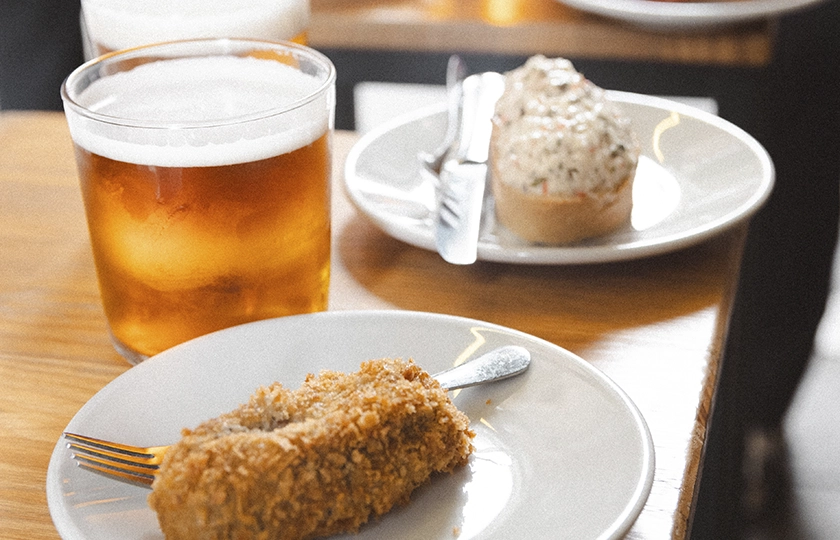
One season, one produce
If anything defines Navarran cuisine, it is its close connection with the seasons. The proximity of exceptional local produce and the central role it plays in the region’s recipes mean that menus, bars and markets also change in step with the calendar.
With the arrival of autumn, some of the season’s star ingredients make their appearance. It is the season for wild mushrooms and fungi, which make their way from the forests of Navarre to the kitchens of the capital, but also for one of the most recognisable produce from the vegetable gardens: the piquillo pepper, with the Piquillo de Lodosa Designation of Origin. Known for their intense red colour, their versatility means they can be found as the star of a pintxo, as a starter or accompanying meat and fish.
As the cold sets in, vegetables such as cardoon, cabbage and borage take centre stage – produce that forms part of some of the most traditional dishes in Navarran cuisine. These are joined during the winter months by other gastronomic treasures such as the truffle. A natural cycle that is reflected in dishes where vegetables can take centre stage – as is the case with Navarrese-style cardoon – or accompany heartier dishes such as lamb in chilli sauce or roast suckling pig.
This emphasis on seasonality is also reflected in the city’s bars and gastronomic programme, where tours and events dedicated to different produce are organised throughout the year. It is a way of inviting both Pamplona’s residents and visitors to rediscover Navarrese cuisine in tune with the rhythm of each season.
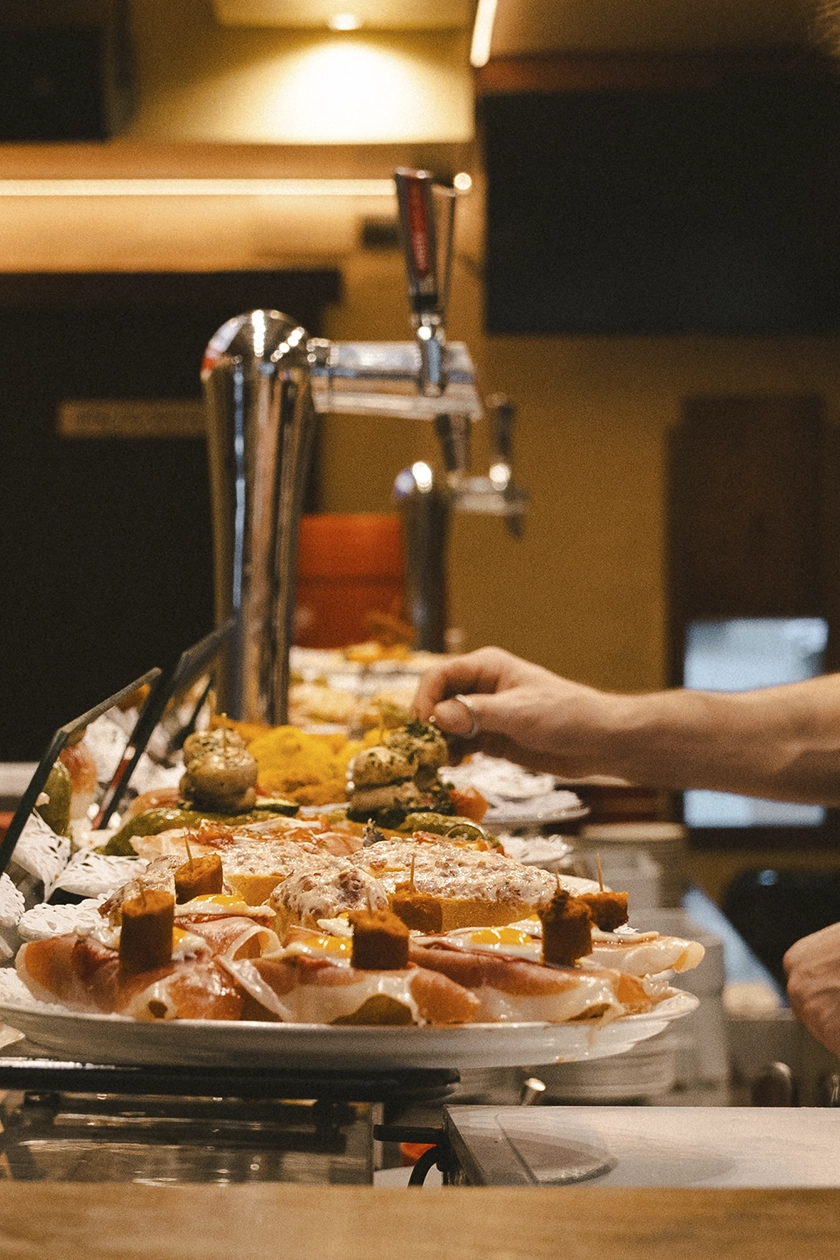
Local drinks
The gastronomic experience of Pamplona cannot be fully appreciated without looking at what’s in your glass. The wines of the Navarra Designation of Origin (D.O.), particularly renowned for their rosés, are one of the finest accompaniments to local cuisine and also reflect the diversity of a region where Mediterranean, continental and Atlantic climatic influences converge.
And when the cold weather sets in, another tradition takes centre stage: cider. Cider bars offer a dining experience that is as much about gastronomy as it is about socialising, around shared tables and menus that often feature dishes such as chistorra, cod or a good ribeye steak.
Pamplona, a city best understood through its traditions
Discovering Pamplona means getting to know a city where gastronomy, sport and culture form part of a single identity. The same tradition experienced at the frontón continues in its markets, at a bar laden with pintxos, around the embers of a grill, in a cider house or at a table where Navarran produce takes centre stage.
Because getting to know Pamplona also means getting to know its rituals: attending a match, strolling through its streets, stopping at a bar and then sitting down to a meal. Distinct experiences which, taken together, paint a much more complete picture of the capital of Navarre and of a way of life in which gastronomy always holds a special place.
Further information: visitpamplonairuna.com