

Tourism has once again proven to be one of the great pillars of the Spanish economy.
According to the latest forecasts from the World Travel & Tourism Council, the WTTC, the sector’s contribution to the national economy will exceed 269 billion euros in 2026. The figure represents growth of 4.1% over the previous year and improves on the organisation’s own initial estimate, which until now had put that increase at 3.7%.
The upward revision is no minor detail. It reflects the strength of a model that, far from showing signs of fatigue, continues to gain momentum in a complex international environment. Moreover, the pace expected for Spanish tourism outstrips the growth forecast for the country’s economy as a whole, estimated at 2.7%. It also comfortably exceeds the sector average in Europe, which will stand at around 3.1%, and that of tourism worldwide, which is expected to reach roughly 2.5%.
These forecasts build on 2025, which already delivered historic results. Last year, tourism contributed 259 billion euros to the Spanish economy, the equivalent of 15.3% of gross domestic product. Its weight in the labour market is equally decisive, as it supported 3.2 million jobs. In other words, roughly one in every seven jobs in the country is linked, directly or indirectly, to travel and tourism. One of the most striking figures in the review is international visitor spending. In 2025 it reached a record 115.8 billion euros, the highest in the whole of Europe. On top of this came the arrival of 96.8 million international tourists, a volume that confirms Spain as the second most visited destination in the world.
The global scale of this phenomenon is also evident in market share. Spain accounts for 6.5% of all international visitor spending on the planet and 15.6% of that in Europe. These percentages speak of a country able to attract highly diverse audiences and to retain its appeal in the face of ever-fiercer competition.
The recovery since the most difficult years of the pandemic has been particularly remarkable. International visitor spending in 2025 stood 21% above the levels recorded in 2019. Meanwhile, the European average barely managed to exceed those pre-crisis figures by 2.3%. The gap shows the extent to which the Spanish sector has succeeded in reinventing itself and regaining travellers’ trust.
However, the WTTC cautions that success cannot be measured solely in arrivals and revenue. The organisation stresses the need to keep making progress on sustainability and responsible destination management so that growth remains compatible with the wellbeing of local communities and the preservation of the environment. Innovation and talent development are also among the priorities identified for facing the coming years with confidence.
At the international level, the council has identified eight global priorities for the sector. Among them are seamless travel, greater investment, improved connectivity and the adoption of artificial intelligence as a tool to transform both the traveller experience and business efficiency.
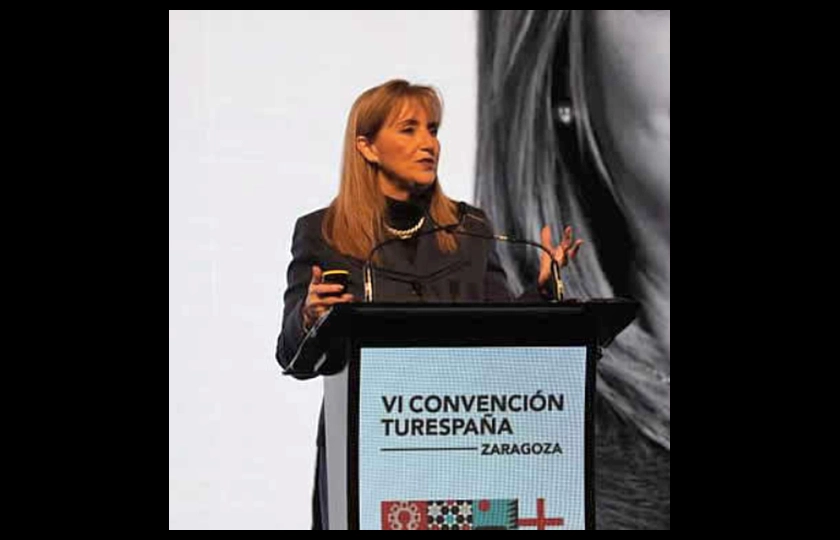
These reflections were shared by Gloria Guevara, President and CEO of the WTTC, at the 6th Turespaña Convention. Speaking at the event, Guevara championed the transformative potential of tourism, stating that travel and tourism can become a powerful engine of economic growth, investment and job creation.
Spain’s role in this field also received recognition of its own. The Minister of Industry and Tourism, Jordi Hereu, was presented with the WTTC Global Champion Award at the organisation’s 26th Global Summit, held in Malta. The award highlights the country’s leadership in promoting a competitive, forward-looking tourism sector.
With these figures on the table, Spanish tourism approaches 2026 with optimism and with a clear challenge ahead. The goal is to keep growing but to do so in a balanced and responsible way that benefits society as a whole.
Source: TOURISM AND SOCIETY THINK TANK