

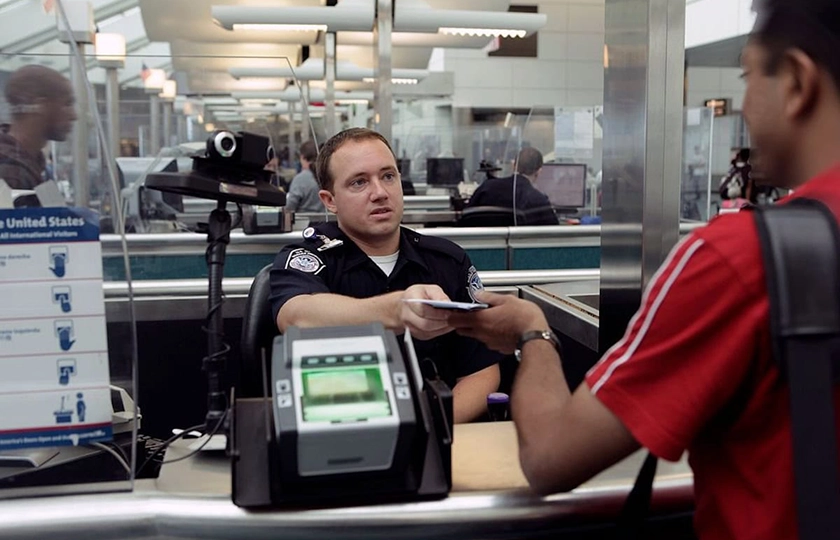
There is a form of abuse that the victim learns to regard as normal. They get up at the crack of dawn, drive to a consulate, pay in dollars for the privilege of being questioned, meekly answer questions that presume their guilt, and when they are finally stamped with a visa, they feel — and this is the worst part — gratitude.
Gratitude for being allowed to go and spend their money in a country which, with increasing clarity, has told them in every possible way that it does not want them there. That scene, repeated millions of times a year by Mexicans, deserves a question we almost never ask ourselves in earnest: why do we keep doing this?
This goes beyond Trump’s racism. Travelling to the United States to be mistreated takes longer than he does
Let’s make this clear from the outset, because it’s easy to misinterpret: this is not about Donald Trump’s xenophobic rhetoric, Stephen Miller’s systematic cruelty, or the spectacle of Marco Rubio, from the State Department, implementing a policy of contempt for the migrant history that is his own — perhaps the most revealing gesture of all, that of the son of an exile who shuts the door through which his father entered. Those names come and go. What endures, what should concern us, is what lies beneath them. Because travelling is also a political act, and when one travels to a place, one gives that place one’s money, one’s time and, without realising it, one’s endorsement.
The fact that should shatter our complacency is not to be found in the rhetoric of those in power but in the most recent election results. On 3 November 2026, the United States experienced a ‘blue wave’. The Democrats swept to victory and regained control of the House – their best result since 1992 – and the Senate, in what was interpreted as a resounding rebuke of Trumpism. It sounds hopeful until one reads why people voted.
The hidden reality of the polls
The Associated Press polls are unequivocal: what swayed the vote was the economy – inflation, tariffs, food prices. Nearly six in ten voters said they were very concerned about the cost of food; two-thirds believed that Trump’s policies had worsened their financial situation. And what of the cruelty towards migrants, the raids, the deportations? These barely featured as a motivation for voting. Read carefully what that means: people did not punish those in power for being inhumane; they punished them for being too expensive. They did not vote against deportations; they voted because they could not make ends meet. The demand was not “stop trampling on my neighbour”, but “make sure I can afford my weekly shop”. Cruelty was not the problem to be rectified: it was, at most, tolerable collateral damage as long as they could make it through to the next payday.
And in case there was any doubt that the rejection was not directed at xenophobia, there is the small print from that very same election day. Whilst the Democrats were celebrating their ‘blue wave’, six states—Alaska, Arizona, Arkansas, Kansas, South Dakota and West Virginia—passed, with broad support, amendments to “ensure that only citizens vote”. The detail: voting without being a citizen has already been prohibited by federal law since 1996. These measures do not address any real problem; they are, in essence, a symbolic exorcism against an invented spectre—that of the “invasion” and the “replacement” of white people. Even in the election that supposedly rejected Trump, the majority of those states felt the need to enshrine in writing something that the law already guaranteed, simply to tell the outsider, ‘You do not belong here.’ The “I don’t want people who aren’t from here” sentiment did not disappear with the blue wave; it remained, lurking, on the ballot paper.
That is the picture a Latin American traveller should have in mind
It is not just a handful of fanatics in power; it is a country which, even when it votes against them, does so for financial gain rather than out of decency, and which, incidentally, reaffirms its distrust of outsiders at the ballot box. Racism has ceased to be an aberration of the upper echelons to become a matter of calculation at the family dinner table. And there stands Florida as a laboratory of contradiction: a state that exploits Latin American culture to sell tourism, that overexploits migrant labour to sustain its kitchens and its fields, and that at the same time maintains a policy of cultural, racial and social violence against those very same people who feed it. It dances salsa whilst deporting the very people who brought it here.
Let us remember: we love to be outraged about events five centuries ago, yet struggle to feel the same outrage over what happened last week.
At the highest echelons of power, apologies are demanded for the Conquest. Calls are made for Spain to apologise for Hernán Cortés. But where are the demands for an apology and redress from the US government for wounds that are infinitely fresher and more open? In the 1930s, the United States deported hundreds of thousands of people “to Mexico” — academic estimates range from 400,000 to nearly a million — in the so-called Mexican Repatriation. The detail that should be shouted from the rooftops: around 60 per cent of those expelled were US citizens, mostly children, forcibly removed from the only country they knew. In 1954, Operation Wetback deported more than a million people. It took the State of California until 2005 to offer a formal apology for this. The federal government, for all intents and purposes, never did. Is that wound not more recent, better documented and more raw than that of 1521?
The contradiction, however, begins in our own wallets. For years, Mexico has been the main source market for visitors to the United States: more travellers arrive from here than from any other country in the world. In 2024, 13.4 million Mexicans crossed the border by land alone, each spending an average of a thousand dollars; those travelling by plane spent even more, nearly 1,400 per person. And where does that money go? To Nevada, Florida, New York and, above all, Texas. In other words, to a large extent, to the states governed by the very same politics that despise us. Through our purchases and hotel stays, we are funding Texas and Florida – two of the country’s most aggressive hotbeds of anti-immigrant rhetoric. We fill their coffers and then are surprised when they spit in our faces: through our own consumption, we are buying the rope with which they are hanging us.
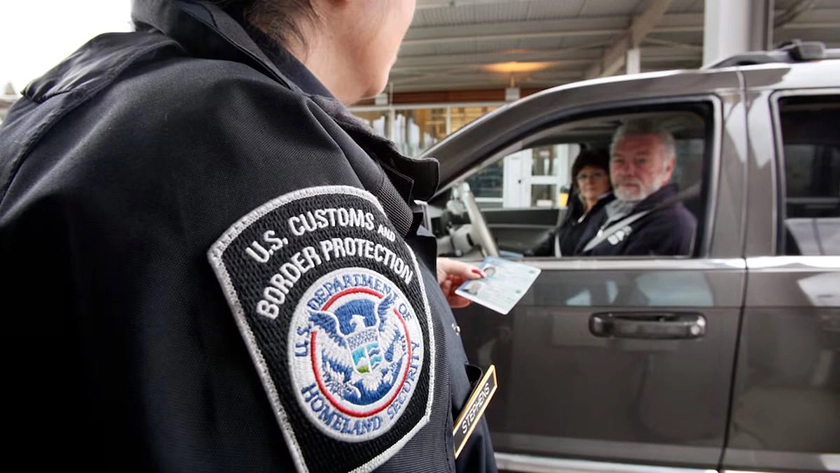
The contempt is plain to see. Travelling to the United States with your eyes wide open lays it bare
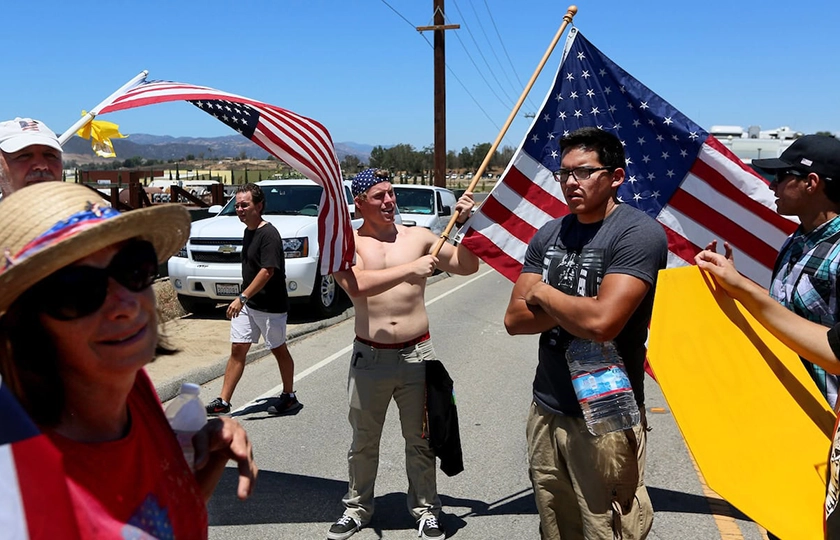
A section of American society displays its racism without the slightest fear of judgement, with a naturalness that is frightening. It is the section that believes itself to be the owner of the territory — even of ours, in Roma, San Miguel or Baja — which demands that people speak to them in English, that the drumming be silenced, that the gossip over coffee in the neighbourhood be hushed. And they shout themselves hoarse on social media against Lucía Caminos, the Latina protagonist of the video game set to be the biggest launch in history, as if a dark-skinned woman wielding a pixelated gun were an affront to civilisation. It is the same crowd that pours its hatred onto any politician who isn’t white — Rubén Gallego, Ilhan Omar, Gina Hinojosa, Abdul El-Sayed — whether they win or lose, for the sole ‘sin’ of their surname or their faith.
And who defends us from all this? Neither them nor our own people. Esteban Moctezuma was a figurehead labelled a useless fool. Ambassador Roberto Lazzeri is an economist with a background in public works and public debt. Both reduce the diplomatic profession to a mere figurehead role, remaining silent just when a voice is needed most. So the traveller must once again ask himself, without sugar-coating it: is it worth going if, at every turn, I have to peer into the shadows to see if someone is shouting at me, arresting me or spitting at me?
Travelling broadens the mind, yes; Oscar Wilde said as much, that travel improves understanding and dispels prejudices.
But there are journeys that do the opposite: they cost us our decency and respect. Because what happens in Las Vegas doesn’t stay in Las Vegas. Hatred, humiliation and the politics of racism cross the border on the return journey and take root in our own homes. And, as the classic saying goes, the strong can do what the coward wants to do.
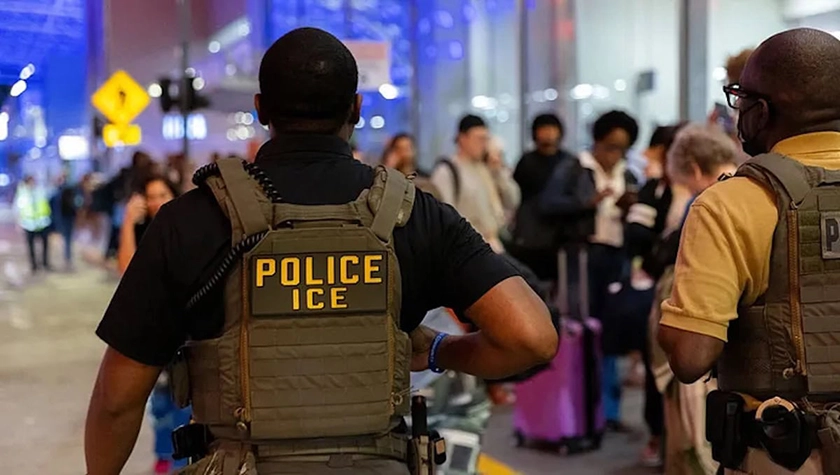
What next? Should we stop travelling to the United States?
At first glance, the answer is yes. At least from the perspective of the person writing this. It is not just Miller, nor the legacy of white Christianity, which, until barely half a century ago — not in the Middle Ages: fifty years ago — maintained a quota system that treated Latin American migration as a threat to be contained. It is also – and this is what hurts to acknowledge – the way the average person is treated: the look at the airport, the unnecessary question, the tone used when speaking to a Mexican, a Central American, a Muslim, or anyone who does not fit the mould of the ‘proper white person’.
Not everyone, of course; to generalise would be to fall into the very same trap I’m denouncing. But enough people, and with enough impunity, for the injustice to be structural rather than anecdotal.
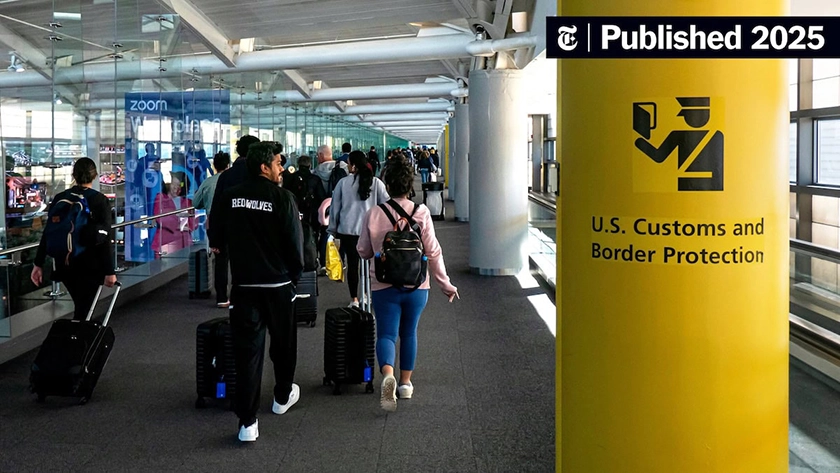
And in the meantime, we carry on. We carry on lining up for the biometric photo, and we carry on accepting the humiliating scrutiny, all for the privilege of shopping at Target and eating at Whataburger. We carry on treating as an aspirational destination a country that doesn’t even invest in wanting us: a country that has dismantled its tourism promotion, that doesn’t lift a finger to attract us, and that greets us with suspicion from the outset. We insist on entering the house where we’re looked at askance when there are one hundred and eighty sovereign countries that gladly open their doors to us. There are Guatemala, El Salvador, Colombia, Ecuador, Chile, and Peru—brothers in language and history. There’s also Canada, Ireland, Scotland, the United Kingdom, Spain, France, and Turkey—entire worlds where our passport isn’t a cause for suspicion but a welcome.
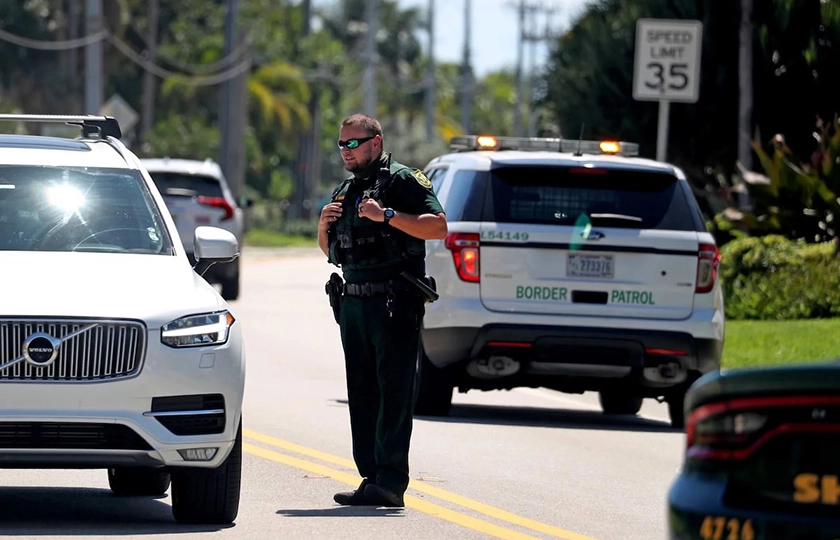
The real criticism is not directed at Trump or Sheinbaum, but at the mirror
Because the traveller is not a passive participant in history: every ticket they buy is a vote, every destination they choose is a political statement, and every dollar they spend is an endorsement. We like to think of ourselves as citizens of the world, yet we behave like parishioners of a single church. We keep repeating, like a child’s catechism, that Disney is “the happiest place on earth” and that San Francisco is where “dreams come true”, without realising that we buy into these slogans as part of the very package in which humiliation is sold to us. We have confused aspiration with submission. We believe that posting a photo in Times Square makes us cosmopolitan, when in reality it merely turns us into docile customers of those who despise us.
The American dream is dead, and it’s best to bury it without flowers. What remains is an unequal transaction in which we put in our money and our dignity and receive, if we’re lucky, the absence of mistreatment. Defending our dignity begins with an act as small and as radical as changing course: stopping our pilgrimage to the plastic castle and ceasing to pray to the red bridge. Understanding that journeys do not have a single destination, and certainly not the one dictated by those who ask for our passports with a frown. Let us vote with our feet and our wallets. Let us take our desire to discover the world to places where it is appreciated.
Dignity must come first. Because, as the old saying goes, it’s like virginity: once it’s lost, it’s never regained. It’s not about hating the United States; it’s about stopping begging for humiliation. There’s a whole planet out there, and the decision to turn and look at it is the most honest way a traveller can maintain their dignity. Let’s finally turn the globe around.
Carlos Dragonné is a tireless traveller, a journalist and filmmaker by profession, and a cook by conviction. I write about what I know and what I encounter. Twenty-six years in publishing drive me to carry on. I’ve been writing about gastronomy for twenty years now – its key figures, the stories that unfold, and the inspiration behind the fine art of enjoyment.