If biodiversity had its own name, it would be called Colombia. Páramos, jungles, savannahs, forests, wetlands and plains form a mosaic of ecosystems capable of harbouring thousands of animal and plant life, but also models of sustainable and genuine human habitats, as well as an extraordinary multiculturalism.
Being in the equatorial zone, together with the geological conditions of the country, makes it possible to enjoy a variety of ecosystems and landscapes in which natural experiences are developed that pursue the understanding and conservation of Colombia’s natural heritage.
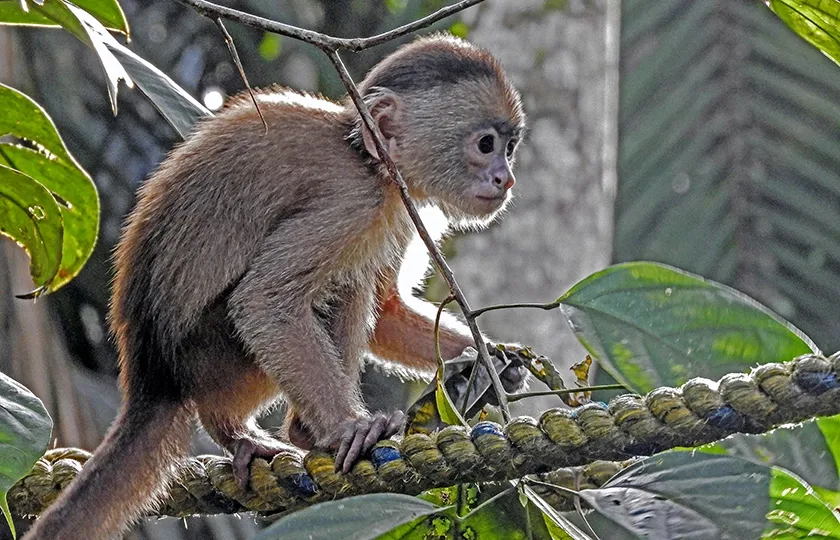
With the second highest biodiversity in the world, it has more than fifty thousand species of animals and plants, or 10% of the world’s census, and not all of its territory has yet been explored, so the future holds new surprises. This natural wonder brings another very interesting value in terms of endemic species that can only be seen here, which places the country third in the world after Brazil and Indonesia.
Colombia, the only country in South America with coasts on both the Atlantic and Pacific oceans, is a paradise for birdwatchers, as it is home to the largest number of bird species in the world, with more than 1,900 different species, 73 of which are endemic. As for whale watching, its eight and a half thousand kilometres of coastline are travelled by humpback whales on their journey from Antarctica to the Colombian Pacific coast between July and November, and are very visible in the Gorgona National Natural Park, which can be reached in just an hour and a half by boat.
Cultural and natural biodiversity
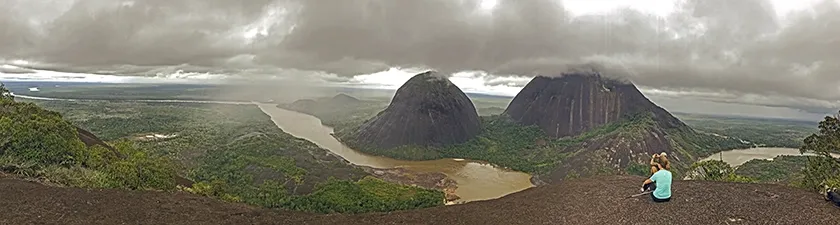
An important part of Colombia’s rich cultural diversity and impressive natural wealth has its roots in the Amazon. The river provides a unique and authentic opportunity to experience an unspoilt territory full of native communities living off the land and practising beliefs and rituals still relatively unknown to the western world.
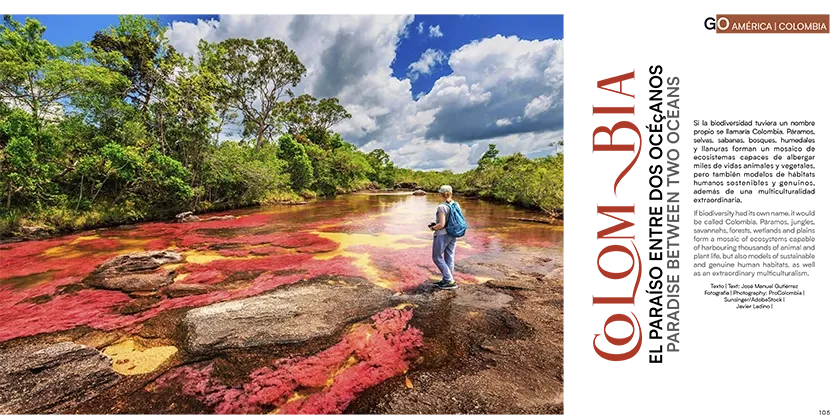
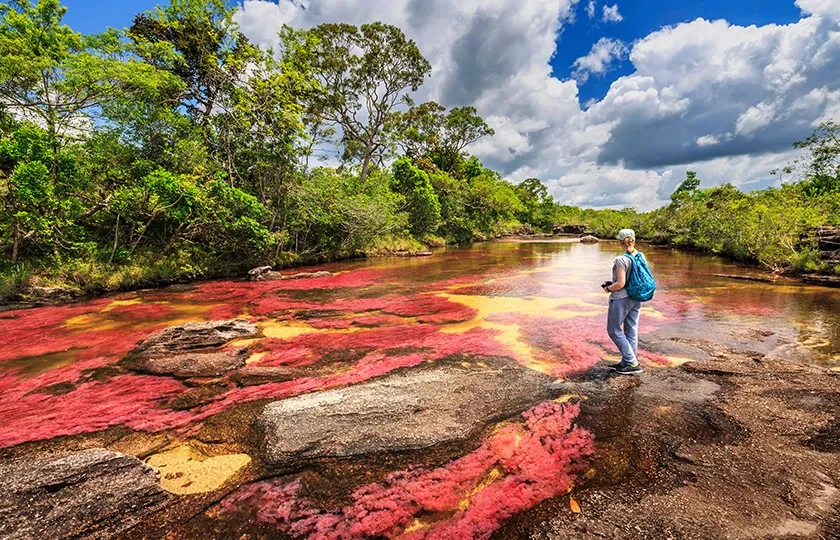
The Colombian Eastern Plains are also a perfect destination to enjoy experiences in contact with nature. This area, popularly known as the navel of the country, constitutes 28% of Colombia and has more than three hundred thousand square kilometres of plains to discover, full of abundant flora and fauna, perfect for getting in touch with the environment. For example, in the Bioparque Los Ocarros and the Manacacías River you can observe a number of fascinating species, including the unusual pink dolphins. Caño Cristales is a river named after the rainbow of colours that decorate its course thanks to the aquatic plants that grow there. The exceptional natural heritage of this region is accompanied by an equally fascinating cultural tradition cultivated by the llaneros, hard-working cattle herders who are also known for wearing liquiliquis. These shepherds tell ghost stories, participate in coleos, events in which the llaneros chase cattle on horseback, and dance the zapateo to joropo music.
We cannot forget that within the universe of biodiversity there are also the beaches, and in Colombia they are spectacular, culturally as well.
The Caribbean is one of the most colourful and lively regions of the country. Its beaches, its flavours, its fiestas, its music, its people and its stories are the cradle of García Márquez’s magical realism. Some of the main cities in this region are Barranquilla, Santa Marta with its cultural diversity and rich ecosystems such as the Tayrona National Park and the Sierra Nevada de Santa Marta and Cartagena, world renowned for the beauty of its colonial streets, its historic centre and its iconic castle of San Felipe de Barajas.
Another attraction of this region is its wide variety of beaches, unique for their crystal clear waters, white sand and breathtaking scenery.
In addition, the Caribbean region offers a rich culture that moves to the sound of the accordion and an impressive gastronomic variety, the result of a combination of rich local produce and traditional culinary practices. Among the most representative are rice with coconut, shrimp ceviche, fish stew, arepa de huevo, carimañola and queso costeño, among others.
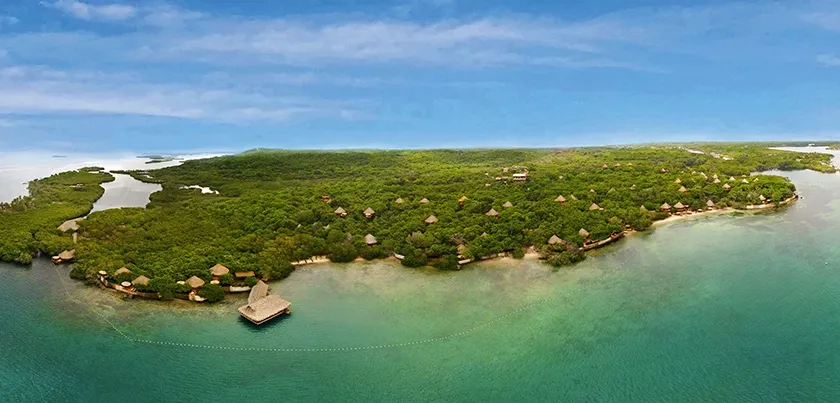
Colombia is the world’s largest producer of coffee and its aroma can be breathed in the mountains of the Western Andes, in an enchanting landscape with colourful villages, where the real protagonists are the paisas, the pleasant inhabitants of the region known for their hard-working culture and great hospitality. The region is a brilliant land of perfectly manicured hillsides and lush, flower-filled valleys that attract a myriad of exotic birds. Here agriculture and nature coexist in harmony, partly as a result of the omnipresence of the perpetual coffee bush, which seems to have been designed specifically for these mountains. But coffee is more than just a crop, it is a way of life. While it is true that coffee harvesting occurs in different regions of the country, in none is it as important as in the local culture of the Western Andes. The link between the coffee bean and these lands is so essential that the region has been declared a UNESCO World Heritage Site, thus designating it as the Coffee Cultural Landscape.
The Eje Cafetero mountains were first settled by paisas from Antioquia in search of fertile land. The first settlers brought with them a love of the countryside, good food and distinctive architecture. From here you can access the magnificent Los Nevados National Park, which offers high altitude hikes among glaciers, moors and lakes. The thermal action of the volcanoes heats half a dozen thermal baths in the foothills of the mountains, ideal for a relaxing bath.
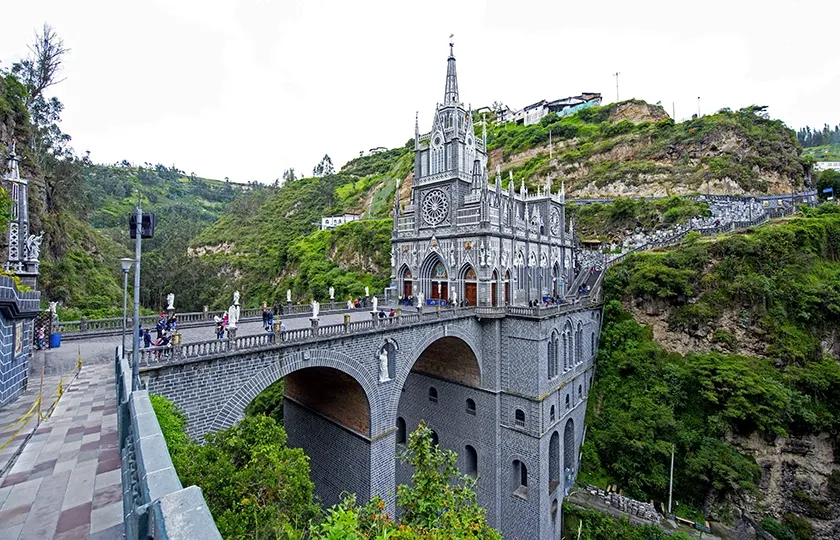
On the way to the west coast it is worth a detour to the municipality of Ipiales, near the border with Ecuador, to visit the sanctuary of Nuestra Señora de las Lajas. Located in the Guáitara canyon, it is a spectacular grey and white stone building from the beginning of the 20th century in neo-Gothic style. The place is very interesting both because of the complexity of its particular location and because it is culturally an element of deep devotion for the people of the area.
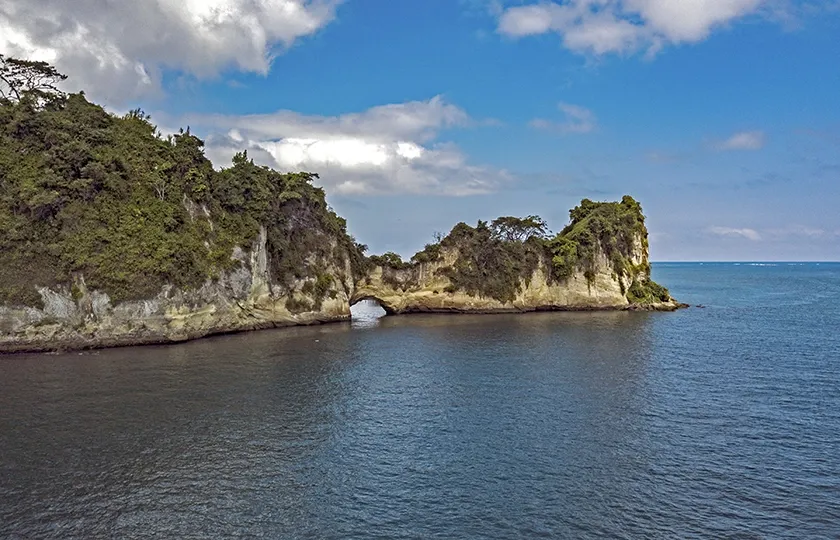
In the Pacific, the characteristic black of the beaches contrasts with the green of the dense vegetation. A unique combination that, to the rhythm of the currulao, captivates everyone who visits the region. In this multicoloured paradise, the beauty of exotic beaches stands out, where it is possible to enjoy the calm sound of the sea and the majesty of the landscapes of this territory.
An example of this is Bahía Solano, one of the most visited tourist destinations in Colombia, where the jungle, corals, mangroves and animal diversity offer an unparalleled natural experience, as depending on the time of year tourists will find migratory birds, turtles and the expected humpback whales. Another of the region’s outstanding beaches is Nuquí, a place that, in addition to its great beauty, is perfect for water sports, diving and ecotourism.
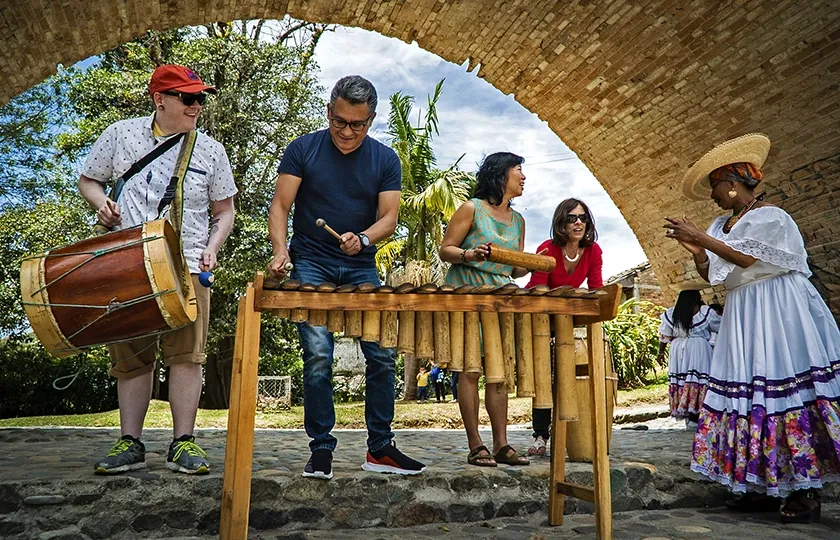
Visiting the pearl of the Pacific, as the municipality of Tumaco, located in the department of Nariño, is also a must. Its friendly and charismatic population includes Afro-descendant and indigenous cultures that inhabit places such as the beaches of El Morro, El Bajito and Bocagrande. In addition to its natural beauty, these lands are characterised by their history and tradition. Thanks to the African heritage, every corner of the city vibrates to the sound of the marimba de chonta, the cununo and the drums, sounds that give life to the Petronio Álvarez, the Pacific Music Festival held every year in the city of Santiago de Cali.
At the table, the flavours of the sea combine with the ancestral practices of the region to create dishes such as aborrajado de pescado, empanadas de jaiba, quebrado and huevos de piando.
The land of 1000 Rhythms
Culturally, thanks to its indigenous, African and European heritage, Colombia is a multicoloured and multi-coloured universe that has managed to harmonise all the influences and create its own identity.
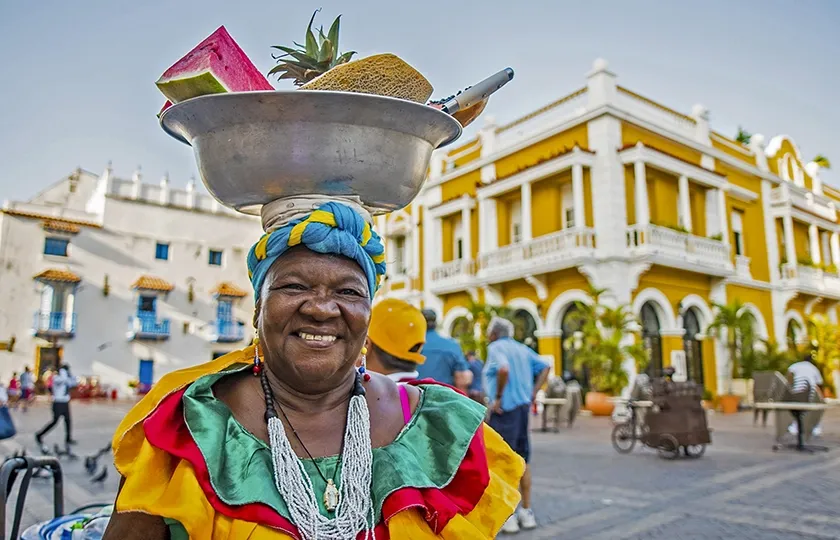
In this treasure chest of essences, cities like Cali, also known as the salsa capital of the world, has a special mention, with live music venues echoing throughout the city. Afro-descendant music from the Pacific Coast can be found in rhythms such as currulao, chirimía, alabao, bunde and juga. Historic Cartagena, a melting pot of cultures and the birthplace of the champeta, a lively music and dance genre with African ancestry. Bogotá is a modern metropolis that celebrates the sounds of cultural fusions, historical musical legacies and new independent proposals. Visitors can also head north of Bogotá to listen to the traditional musical melodies of the Boyacá region. In addition, the cowboy culture and tradition in the Eastern Plains, where cowboys and ranchers gather to celebrate their beloved music and unique culture that has remained unchanged for centuries, the joropo being the rhythm of the region and is played with harp, maracas and a small four-stringed guitar.
The Carnival of Barranquilla, declared by UNESCO as a “Masterpiece of the Oral and Tangible Heritage of Humanity”, which takes place every February, cannot be left out.
For all this, it has been called the Land of 1000 Rhythms, as every corner of the country has its own unique sound; in fact, it can be explored through its music, an integral part of Colombian culture and tradition.