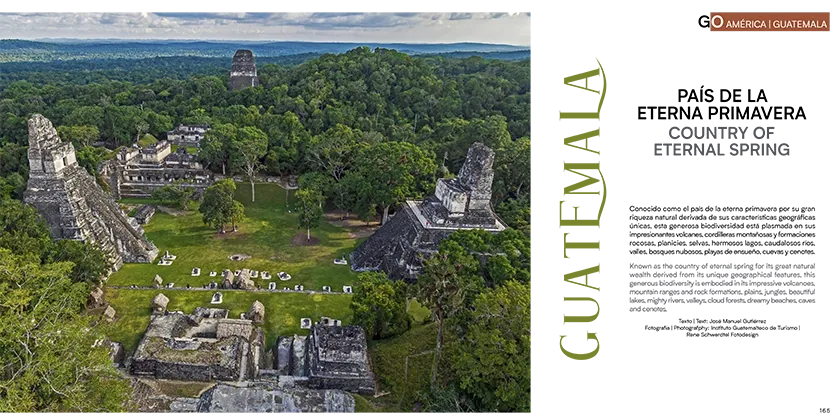
Known as the country of eternal spring for its great natural wealth derived from its unique geographical features, this generous biodiversity is embodied in its impressive volcanoes, mountain ranges and rock formations, plains, jungles, beautiful lakes, mighty rivers, valleys, cloud forests, dreamy beaches, caves and cenotes.
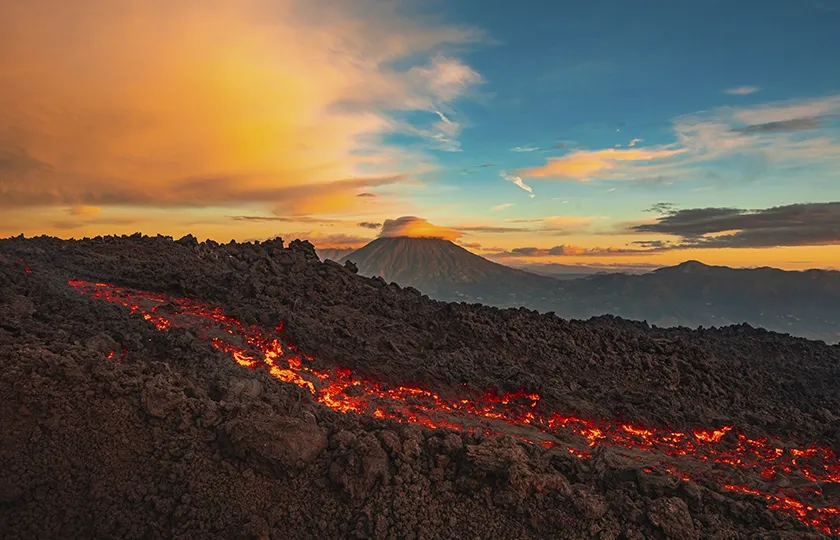
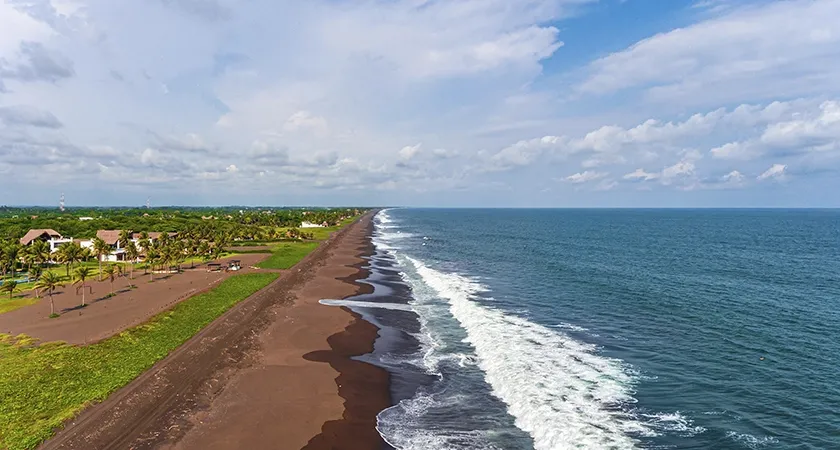
Some of the region’s highest and most extensive mountain ranges shape a variety of spectacular landscapes. Particularly noteworthy are the Cuchumatanes mountain range, the highest non-volcanic geological formation in all of Central America, which exceeds 3,800 metres above sea level, and the volcanic chain belonging to the “Pacific Ring of Fire”, which has given rise to three hundred and forty cones, with the Tajumulco volcano standing out as the highest peak in Central America at 4,220 metres. In addition, its pleasant climate, despite the contrasting temperatures, invites you to visit the country at any time of the year and appreciate a nature rich in flora and fauna, thanks to the country’s different microclimates. Natural sites ideal for hiking, mountaineering, abseiling, bungee jumping, cycling, rafting and canopy tours, as well as water sports on the volcanic beaches of the Pacific and relaxing on the white sandy beaches of the Caribbean, make Guatemala a microcosm of genuine experiences.
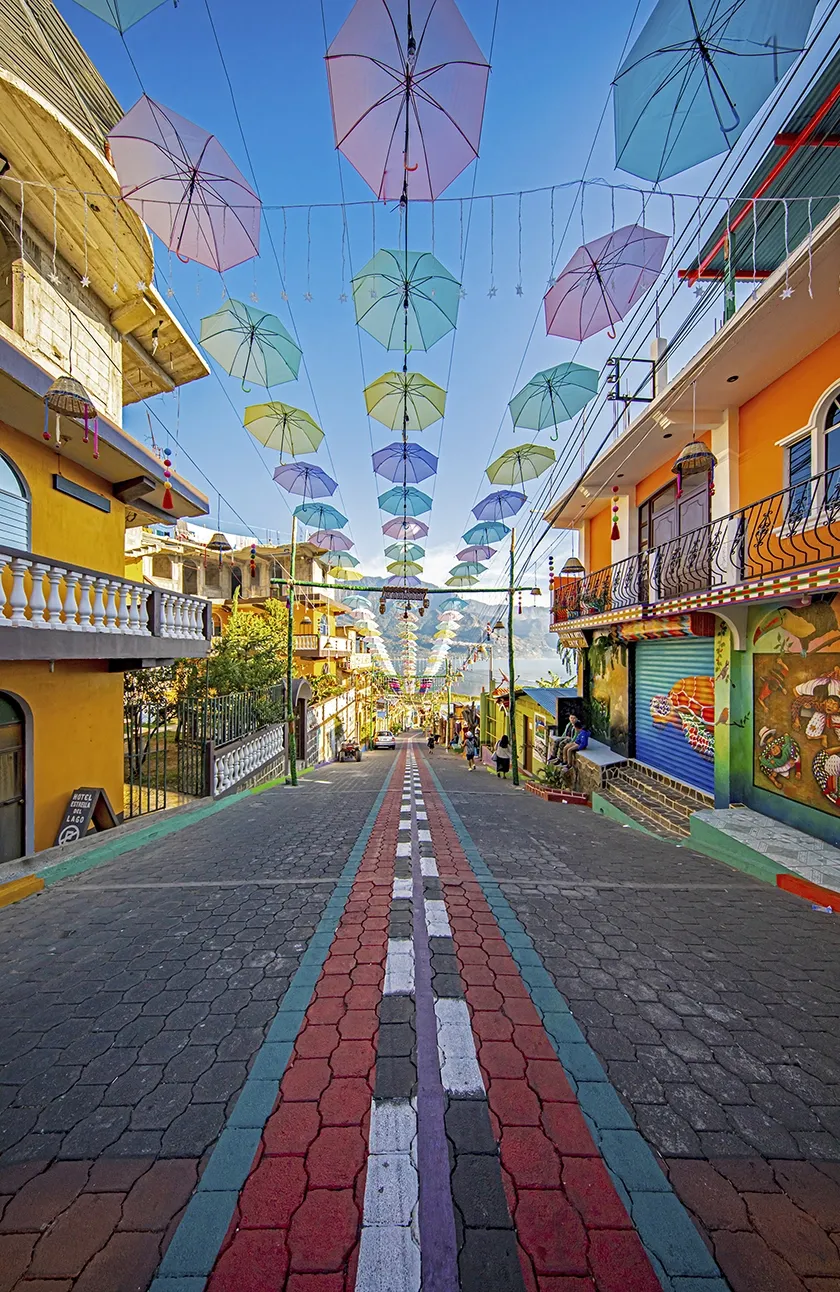
Its multi-ethnic, multi-cultural and multi-lingual population with twenty-five languages, of which twenty-two are Mayan, Spanish, Garifuna and Xinka, plus the cultural richness resulting from the mixture of the Spanish historical heritage, the splendour of the pre-Columbian civilisations through which traditions survive in the form of dances, costumes and gastronomy, make Guatemala one of the most diverse countries in the world.
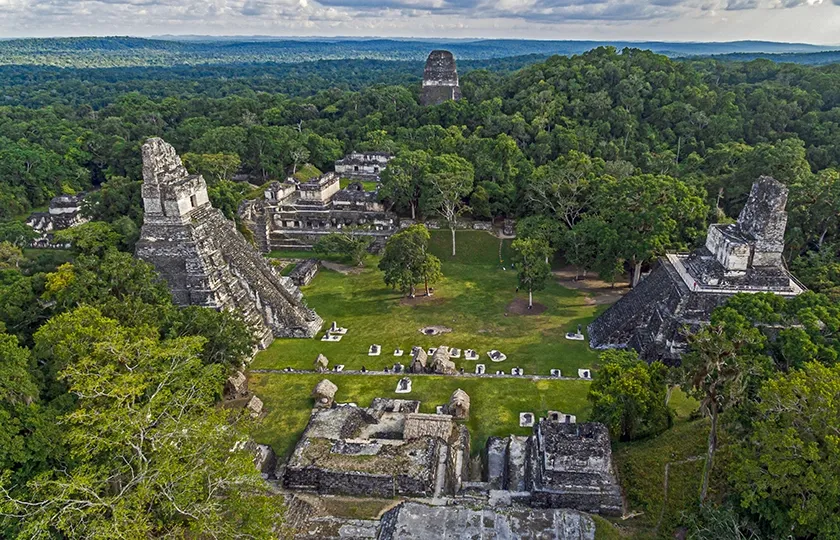
More than twenty-one archaeological sites make up the legacy of the Mayas and Olmecs and other cultures of ancient Mesoamerica, a rich pre-Columbian heritage that can be appreciated in the museums that house splendid handicrafts, relics and stelae. These riches can be discovered when visiting the Tikal National Park, La Antigua Guatemala or the Quiriguá Archaeological Park, but also in the colourful handicraft markets and in the regional costumes.
Modern and Colonial Guatemala
Guatemala City, whose official name is Nueva Guatemala de la Asunción, is one of the most modern and cosmopolitan capitals in the Central American region, with an important monumental heritage. The historic centre, declared National Heritage for the architectural legacy found in its streets and squares, the government buildings that stand out for their architecture and places such as the Plaza de la Constitución or the Plaza Mayor are some of the most attractive places in the city.
Moreover, its cultural offer is not far behind, represented by the Miguel Ángel Asturias Cultural Centre, an icon of contemporary architecture, the Numismatic Museum, the National Palace of Culture, the Carlos Mérida National Museum of Modern Art or the Archaeological and Ethnological Museum, among others.
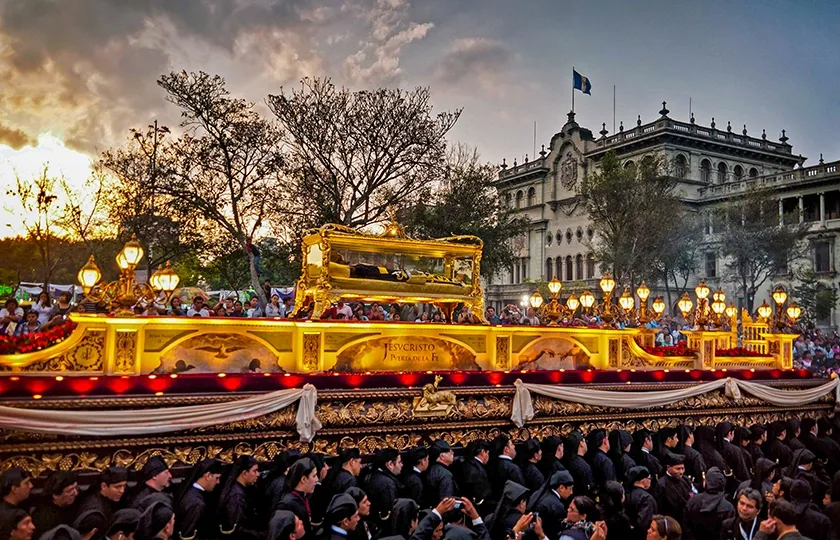
Antigua Guatemala, declared a UNESCO World Heritage Site in 1979, was the capital of the Kingdom of Guatemala between 1541 and 1776, until the Santa Marta earthquakes destroyed it. Located in the Panchoy Valley and surrounded by three volcanoes, it is the most important icon of the colonial Hispanic heritage. The Palacio de los Capitanes Generales, the Palacio de Noble Ayuntamiento, the Fuente de las Sirenas, the Parroquia de San José and numerous churches and convents make up the immense heritage catalogue of the old capital. It is important to highlight its Holy Week, declared Cultural Heritage of the Nation and Intangible Heritage of Humanity, in which the staging of the Death and Passion of Christ and its processions are manifested through majestic processions and images. One of the traditions of this religious festivity are the carpets made with beautiful flowers and sawdust, colourful decorations that fill the streets of Antigua Guatemala.
Petén Adventure in the Mayan World
Located in the north of the country, it is known as one of the lungs of the planet and has several protected areas, such as the Mayan Biosphere Reserve. Due to its great historical value, it is considered the Heart of the Mayan World, as it is here where most of the archaeological sites are concentrated.
Yaxhá, which means “Green Water”, had more than five hundred monumental buildings including plazas, causeways, astronomical complexes, a memorial plaza with twin pyramids, the Acropolis and an area inhabited by the aristocracy.
Piedras Negras, known by its ancient inhabitants as “Yo’ki’b”. Located within the Sierra de Lacandón National Park, it is considered one of the most important Mayan cities and is known worldwide for its sculptures.
Aguacateca, in Mayan K’inich Pa’Wits which translates as “Shining Cleft Mountain”. It is located at the top of the slope of the Petexbatún Lagoon surrounded by cliffs and jungle. The city had more than seven hundred buildings, eleven of which have been restored. Important discoveries have been made here that indicate the decline of the Mayan civilisation.
Uaxactún is considered to be one of the oldest cities and preserves interesting inscriptions on different stelae dating from 328 AD to 899 AD. It has a truncated pyramid that may have been used by the aristocracy to observe ceremonies, sacrifices and other important events, and a palace, actually a temple, which offers the best panoramic view of the site.
El Mirador, a Mayan city in northwestern Petén with outstanding architectural complexes such as the Tintal, the Florida, the Muralla, the Tigre, the Wakna and the Great Pyramid of La Danta, the tallest in the Americas at seventy-two metres, occupying a space of 2,800 cubic metres.
Tikal, declared a World Cultural and Natural Heritage Site because of its exceptional value, combining an extraordinary natural and cultural wealth, is considered one of the most important natural and cultural reserves in Guatemala.
Izabal a Green Caribbean
Guatemala also offers the possibility of enjoying marvellous Caribbean beaches of white sand, natural enclaves of great beauty and cultural diversity. With a rich ecosystem in a warm climate, Izabal is the ideal habitat for diverse species, with the ports of Santo Tomás de Castilla and Puerto Barrios, where boats and cruise ships dock.
Some of the attractions we will find is the richness of the Garífuna culture, an ethnic group that descends from the crossbreeding of the Carib Indians, the Arawaks and the Africans of Guatemala, which makes their culture and traditions unique in the country. With their exotic gastronomy and music, they make visitors dance to the rhythm of drums and maracas. Lake Izabal or Golfo Dulce, with its lush vegetation and impressive fauna including the endangered manatee, is the largest lake in the country and is surrounded by beautiful beaches such as El Estor, Mariscos and Playa Dorada.
Río Dulce is one of the first protected areas in Guatemala and connects the lake of Izabal and the bay of Amatique, an exceptional natural beauty where it is possible to observe the fauna in the middle of a jungle, aquatic and mangrove environment. The Castle of San Felipe de Lara, located on the banks of the Dulce River, was built by the Spaniards in the 17th century to protect colonial properties from pirate attacks. This National Historic Monument served as a military centre, prison and customs centre. With a privileged location on the coast of the Caribbean Sea, you will find Livingston with its crystal clear waters, white sand, palm trees, striking wooden houses and a natural environment full of vegetation and fauna.
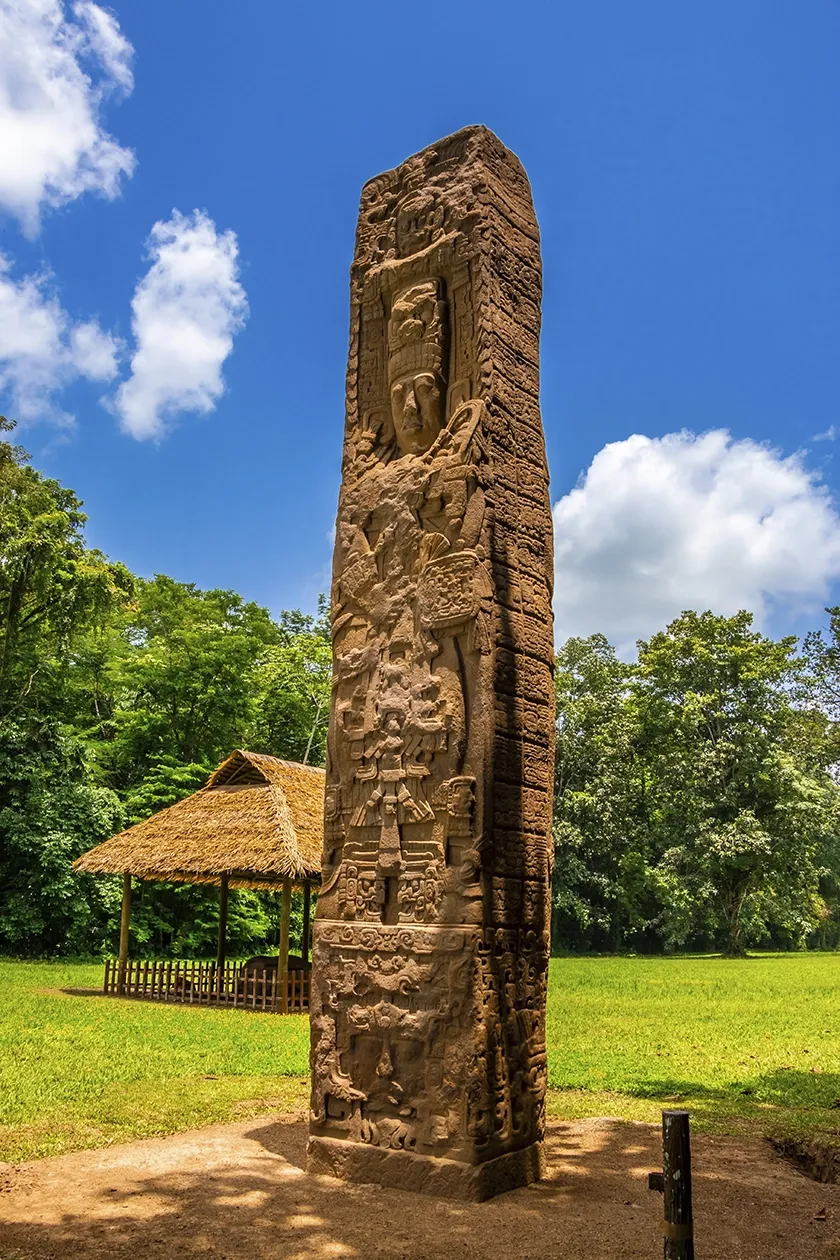
The Quiriguá Archaeological Park is located in the Lower Motagua River Valley region and was declared a National Monument of Guatemala in 1970, an Archaeological Park in 1974 and a World Heritage Site in 1981 for its cultural and historical value. You will be amazed by the tallest stelae of the Mayan civilisation, including one measuring 10.6 metres, as well as the Acropolis, the Great Plaza, the Ceremonial Plaza and stelae with zoomorphs (animal structures).