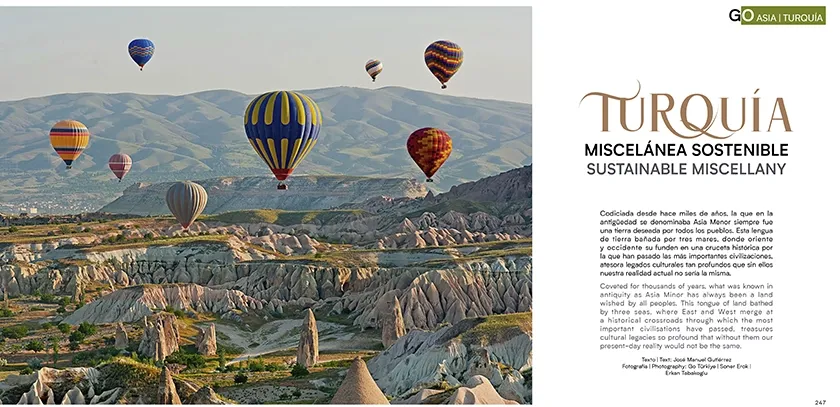
Coveted for thousands of years, what was known in antiquity as Asia Minor has always been a land wished by all peoples. This tongue of land bathed by three seas, where East and West merge at a historical crossroads through which the most important civilisations have passed, treasures cultural legacies so profound that without them our present-day reality would not be the same.
A living memory of the cultures that have left their mark over thousands of years, it was the cradle of the cuneiform writing system, saw the growth of the most important cities of antiquity, such as Ephesus and Pergamon, a paradigm of knowledge at the time with the second largest library after Alexandria and compared to the Athens of Pericles, as well as being the metropolis in which parchment was invented.
Anatolia is the gateway to many worlds, cosmopolitan like few others and an inexhaustible source of daydreaming that takes you to scenes of merchant caravans, to episodes mentioned in the Bible or in the Torah such as those of the Flood or the legend of the Tower of Babel, but also immerses you in the most fascinating and diverse archaeological scenery in the world, in vibrant cities full of colour and exotic aromas, in magical landscapes of almost unreal beauty, in multicultural sounds, in an exciting melting pot.
From the Istanbul that never sleeps to the endless Mesopotamian plains of the mythical Tigris and Euphrates rivers, Turkey is a mosaic that, without losing its intercultural essence, looks to the future of tourism and consolidates its position as one of the world’s top destinations.
In this new open scenario, the country where some of the most important pages of history have been written today boasts a score of beautiful sustainable destinations committed to the future.
Commitment to sustainable tourism
Turkey, through its Tourism Promotion and Development Agency, is the first country in the world to sign an agreement for the development of a national sustainable programme with the Global Sustainable Tourism Council. This signifies a clear commitment to sustainability, a move that comes on the heels of the implementation of the Safe Tourism Certification Programme in 2021.
Thus, the Turkish tourism sector, public transport and experience design have been restructured to meet sustainable tourism standards, placing Turkey at the forefront of new trends in both quality and competitiveness.
Iznik. Ancient Nicaea is a beautiful city on the shores of a blue-flagged lake, in whose waters lie the remains of a Byzantine basilica. It’s one of Turkey’s eight pilgrimage centres and a contender for UNESCO World Heritage status for gems such as the Hagia Sophia and the Roman Theatre as well as other interesting landmarks. The experience is enriched by pottery workshops on the secrets of the famous İznik tiles and local gastronomy based on fish from the lake.
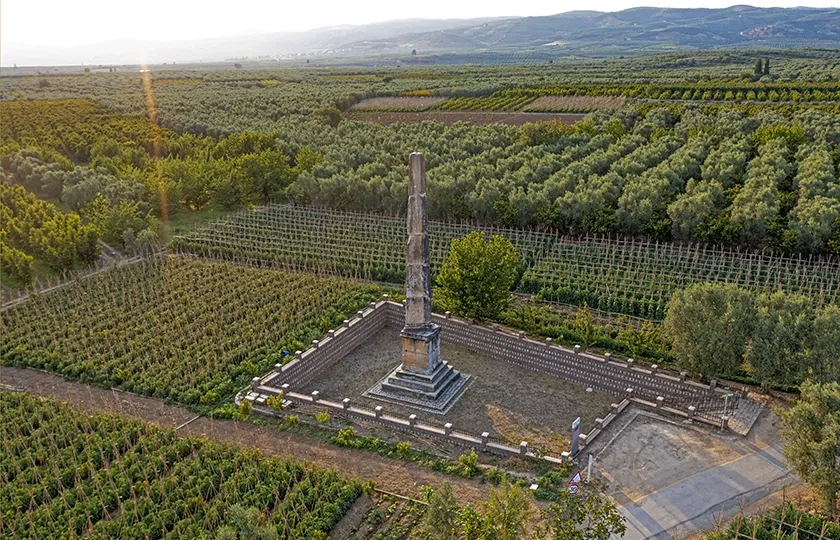
Halfeti. Situated on the east bank of the Euphrates River and with a three thousand year history, it is one of the most extraordinary places in Turkey. The old town, farms and mosque are under the waters of the Birecik Dam. It can be reached by small boats and the view of the half-submerged stone houses, minarets and historical monuments is spectacular.
Güdül. This haven of peace is a beautiful natural and historical setting bathed by the Kirmir, Süvari and İlhan rivers. The Sorgun reservoir is surrounded by forests in the Sorgun Göleti Nature Park and the surrounding mountains are the continuation of the Bolu Mountains, home to one of the best ski resorts in the country. The historic caves of İnönü were carved out of the rocks of the Kirmir River and inhabited two millennia BC.
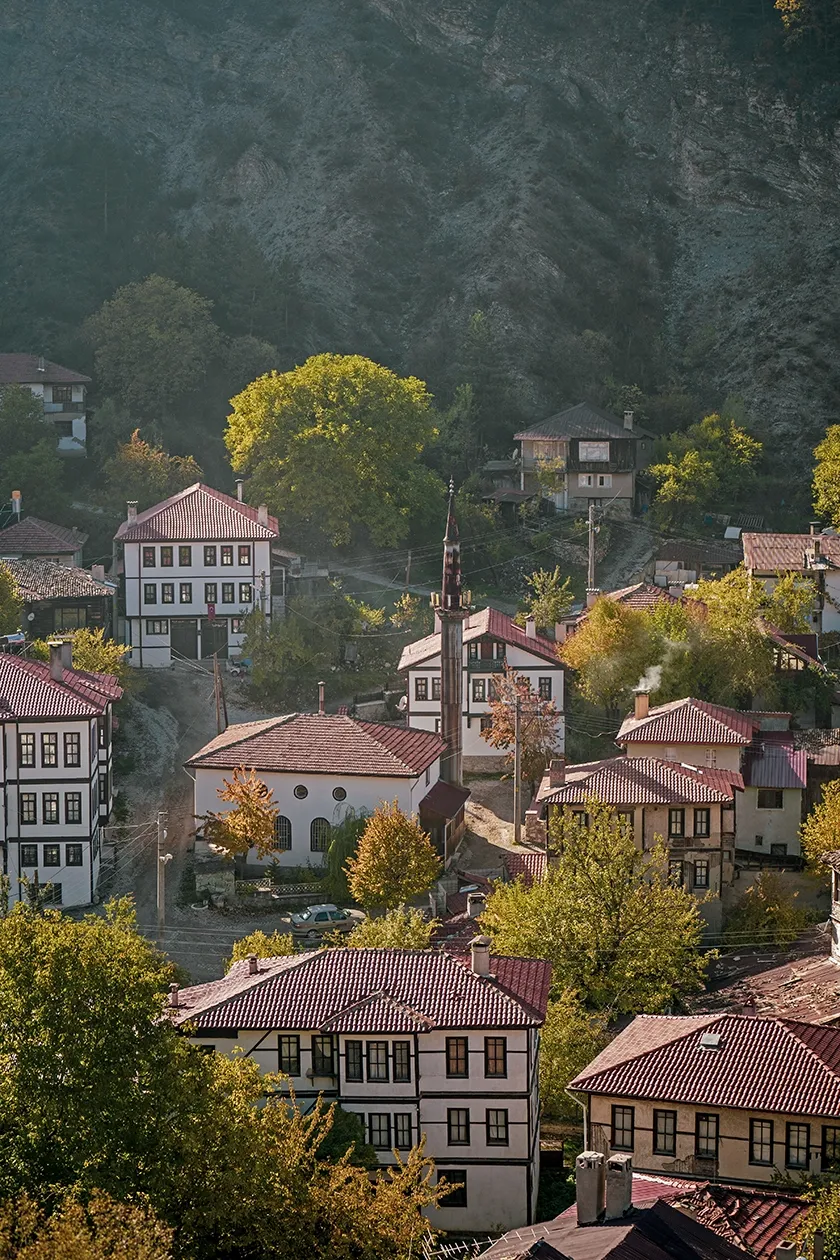
Göynük. Known as the Slow City, it has retained its historical, cultural, architectural and natural beauty since the Ottomans. It lived its greatest splendour with the saffron trade in the 14th century, preserving today buildings for their original functions. Reflecting the traditional Turkish civil architecture of the early 20th century, a stroll through its streets is like a history lesson.
Mudurnu. A small and charming town, part of which has been declared a “Historic Preservation District” for its more than 180 historic buildings and traditional houses, not to mention the fabulous nature of the Bolu Mountains. Walking through the city is invigorating because of the fresh air and the scent of pine trees, and exciting because of the fabulous mansions.
Perşembe. At an altitude of 1,500 metres, on the Aybastı plateau, the traditional oil wrestling and highland festivals take place every July, a tradition that dates back more than a thousand years. With its physiognomy structured by hundreds of meanders and a small lake, it is an ideal place for relaxation, hiking, safari and paragliding.
Şavşat. Located in the eastern Black Sea region, it is known for its wonderful clean-air landscape, a paradise of green plateaus and genuine villages surrounded by high mountains of more than 3,000 metres. Numerous streams and ponds surround the town, but it is the winter snow that makes the pristine scenery impossible to forget.
Seferihisar. A meeting point for nature, history and the sea, its lanterns are solar-powered, local seeds are grown and eco-friendly net bags are used. Restaurants offer unique local delicacies and the market at Sığacık Castle sells fresh, natural, homemade produce, such as the Turkish mandarin, which is welcomed each year in November with a festival. The archaeological site of Teos preserves what was once one of the twelve Ionian cities, and its 49 kilometres of coastline are lined with eleven beautiful beaches and coves.
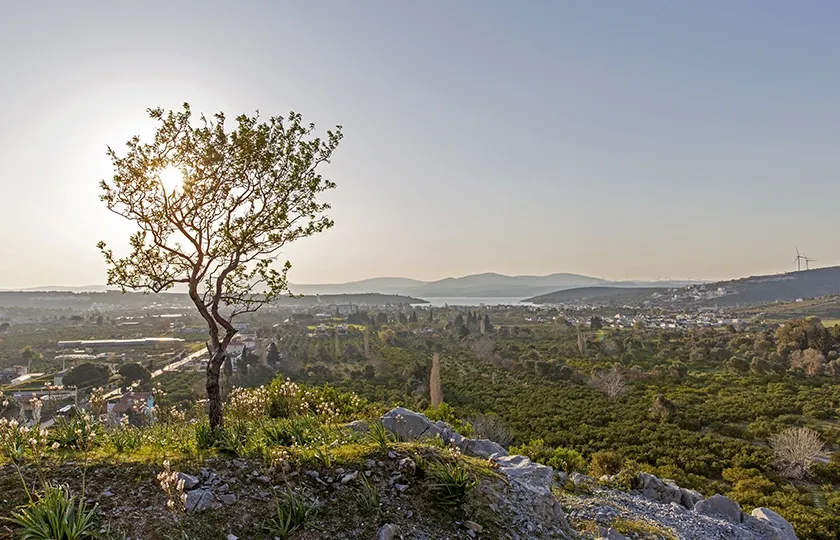
Uzundere is a quiet and peaceful town, rich in history and abundant in natural beauty with a mild Mediterranean climate, which means that a wide variety of fruit is grown. The Tortum waterfall is the highest in Turkey and together with the Oshki Monastery founded by the Georgians in the 10th century and famous for its manuscripts, are a small sample of the tourist and cultural value of the destination.
Vize. Situated between the Black Sea coast and the Istranca (Strandzha) Mountains, the district has a rich historical heritage inherited from the Byzantine period. The ancient Orthodox church built by Justinian I, today the Gazi Süleyman Pasha Mosque, is one of the most important historical monuments in the region, preserving part of the Ottoman decoration.
Yenipazar is a small and quiet district located in the Aegean region, on the slopes of the Madran Baba mountain surrounded by forests. Nearby is the ancient city of Orthosia, inhabited during the Hellenistic, Roman and Byzantine eras and a must-see, as well as the Aşağı Dip Lake Nature Park with fishing platforms, a bird watching tower and platforms and hiking trails.
Gaziantep is part of the UNESCO Creative Cities Network for its rich gastronomic heritage, the fruit of its centuries-old culture. Located at the crossroads of Mesopotamia and the Mediterranean, on the historic Silk Road, it exudes modernity and tradition with a unique flavour. Its heritage is sublime, including the Kastels, the only examples of water architecture in its own style, and the world’s largest underground temple of the mysterious Mithras religion.
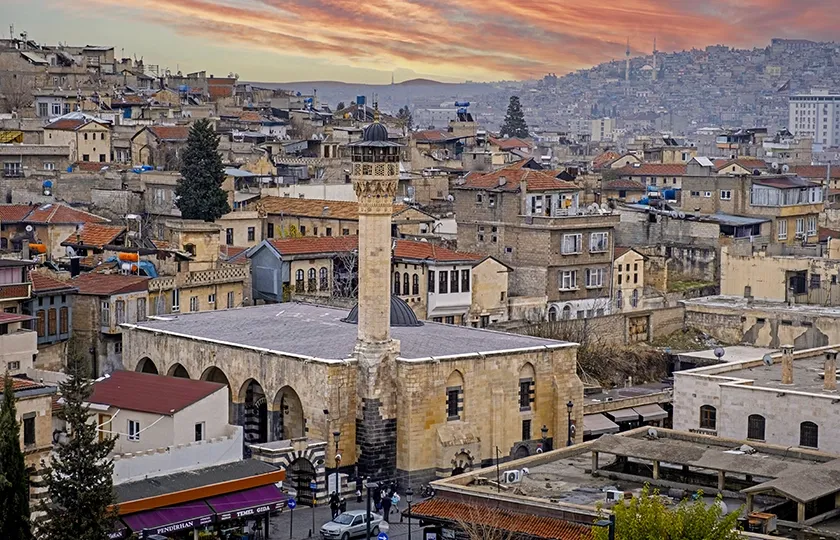
Hatay. Thanks to its rich gastronomic heritage, it is part of the UNESCO Creative Cities Network, but it is its ten-thousand-year-old historical legacy that gives it a more universal value. The cultural diversity here is adding more and more to the colourfulness of this region. Thirteen civilisations have passed through here, inspiring the motto “there is no you and me, there is only us” as the best example of Turkish hospitality. And tables full of unique dishes.
Kütahya has a rich historical and cultural heritage, but it is also a superb health destination thanks to its six thermal tourism centres, making it an important “Thermal Tourism Region” of Turkey, a feature already recognised since the time of the Roman Empire.
Afyonkarahisar, in the Aegean hinterland, is a crossroads through which many villages have passed. It takes its name from the castle of Karahisar that stands on a rocky volcanic peak and from the poppies that flood the fields. In addition to its historical importance, thermal and health tourism has taken centre stage thanks to its significant water and geothermal resources, earning it the title of “City of Healing”. The city’s rich history and culture also make it famous for its rich regional cuisine and flavours, including cream, sausages, Turkish delicacies and confectionery.
Kırşehir, the land of minstrels, is part of the UNESCO Creative Cities Network for its musical heritage, as well as its long astrophysical tradition of more than four millennia and its devotion to knowledge. Its natural beauties and its location on the trade routes with the cultural richness it brings make Kırşehir a fascinating destination. As the home of a brilliant heritage and the cradle of scientific scholarship in science and fine arts, it adds a special value with its nature and hot springs.
Bursa, as well as being a member of the UNESCO Creative Cities Network with its handicrafts and folk arts, it is nature, history and fun. Bursa, the heart of winter sports, is a detailed mosaic of historical and experiential events, rich gastronomy with unique dishes and sincere and welcoming people.
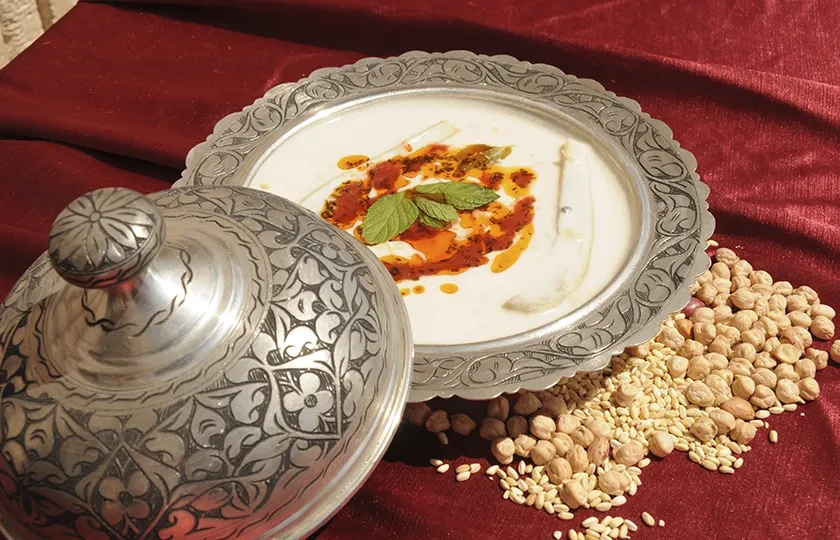
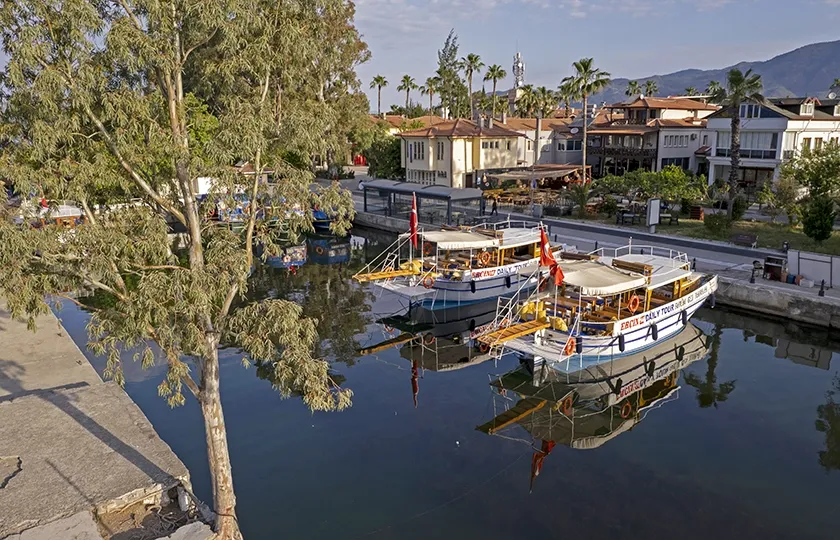
Köyceğiz, located in the southernmost part of the Aegean Sea, at the crossroads of the Carian and Lycian civilisations, is a region where blue and green dance together and where history is as old as time. Besides enjoying the ruins of the ancient city of Kaunos, you can take an incredible boat trip on Lake Köyceğiz accompanied by the scent of orange blossoms and views of Sandras Mountain, visit a sanctuary of loggerhead turtles that take refuge in the Köyceğiz-Dalyan Special Environmental Protection Area.
The Historic Town of Kemaliye, an aspiring UNESCO World Heritage site, preserves beautiful examples of traditional architecture, with the magnificent doorknobs being particularly striking. There are two different types of door knockers, one for men and one for women with different identifying sounds.
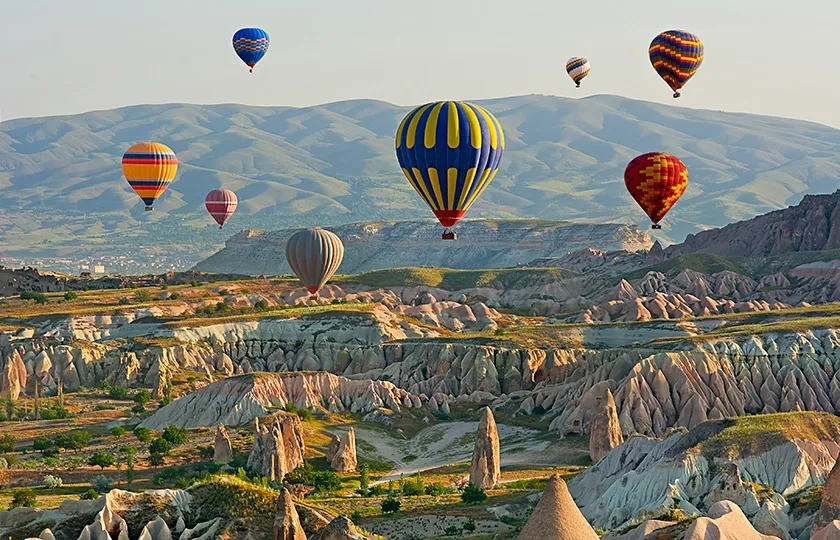
Mustafapaşa, one of the world’s top tourist destinations by the UNWTO, is a small village of stone houses at the foot of five surrounding hills. It was home to Orthodox Christians, who built two public churches, more than thirty chapels, monasteries and numerous places of worship carved in stone. Staying in the renovated traditional houses and tasting the genuine local cuisine in the traditional restaurants add incredible value to the experience. The viticulture of Cappadocia’s volcanic soil, handmade doll crafts and ceramics are a small snapshot of the universe of this universally recognised destination.