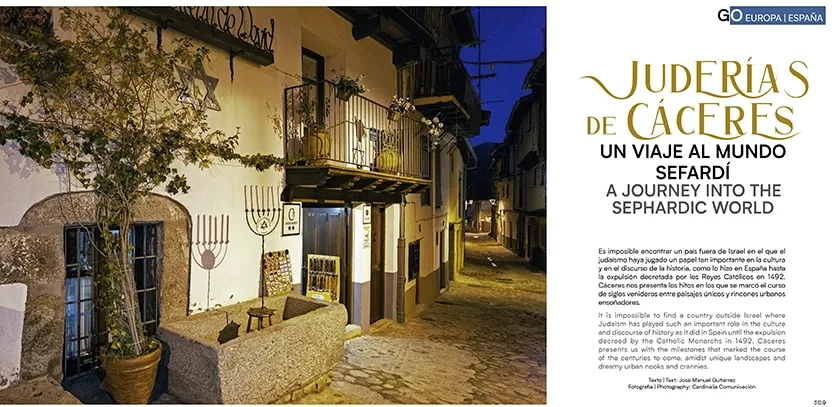
It is impossible to find a country outside Israel where Judaism has played such an important role in the culture and discourse of history as it did in Spain until the expulsion decreed by the Catholic Monarchs in 1492. Cáceres presents us with the milestones that marked the course of the centuries to come, amidst unique landscapes and dreamy urban nooks and crannies.
Although the first references to the existence of Sephardic settlers in Extremadura date back to the 1st century AD after the expulsion of the Jews from Jerusalem ordered by the Emperor Titus, it was not until the 13th century that there is documentary evidence of the increase in these communities.
Extremadura was one of the few regions that escaped the anti-Jewish riots of 1391 that began in Seville and spread to a large part of Spain. This led to their exile and subsequent settlement, mainly in what is now the province of Cáceres, with the aljamas of Cáceres, Trujillo, Plasencia and Hervás being particularly important.
The dramatic gap that their expulsion meant for the social and economic development of the young Spain, mired in fundamentalism and the mediocrity of its rulers, was a step backwards for progress with a very long shadow.
In addition to this, their cultural, craft, gastronomic and knowledge legacy, as well as the urban layouts of the neighbourhoods they were forced to abandon, the literary compositions of Lope de Vega, the Legends of Bécquer and the novels of Galdós and Blasco Ibáñez remind us that they shaped a part of our history that we cannot forget.
With absolute respect for history and admiration for those people who have not always been treated fairly, we set out to discover a unique historical landscape, starting from Hervás, through the most important milestones of the Jewish presence in the province of Cáceres.
A dreamlike journey
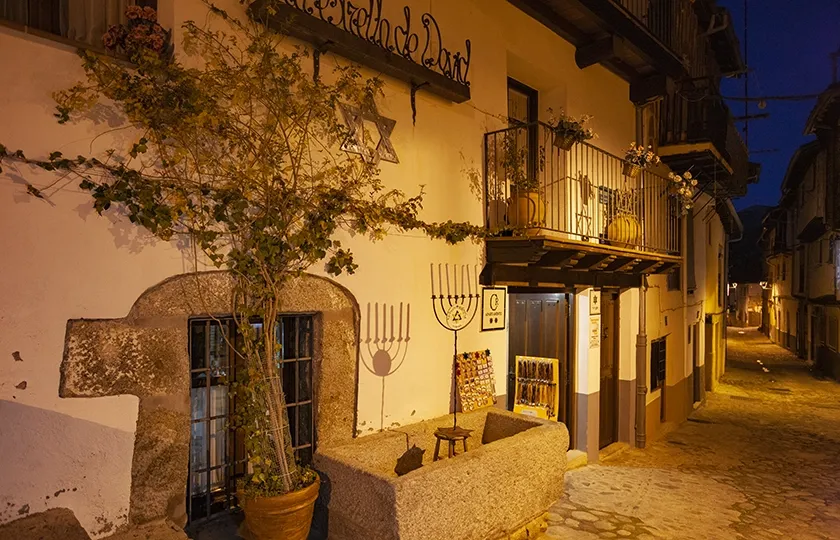
Hervás, at the foot of magical mountains and in the orchard of the river Ambroz, is one of the most beautiful Jewish quarters in this country, preserving the craftsmanship of the time based on the manufacture of leather, wood, wrought iron and glass. Walking through the old town it is impossible to resist the exciting evocation of what it was and what it meant. Its streets of splendid traditional constructions built with chestnut and adobe are a masterly exercise in wisdom. Perfectly maintained over the centuries, the serpentine of houses catches the eye, especially in and around Rabilero Street, where the synagogue was located. The Jewish quarter of Hervás has been declared a Historic Site and the Judeo-Christian Friendship Street has been dedicated to its past. The whole medieval quarter of Hervás is decorated with symbols such as the Star of David or menorahs, but the most colourful moment is the Los Conversos festival which is held every year at the beginning of July with various activities. We cannot leave Hervás without tasting the delicious Jewish pastries that have been wisely recovered, nor should we forget to visit the Pérez Comendador-Leroux Museum, whose rooms in the Casa de los Dávila palace exhibit a large part of the work of Enrique Pérez Comendador.
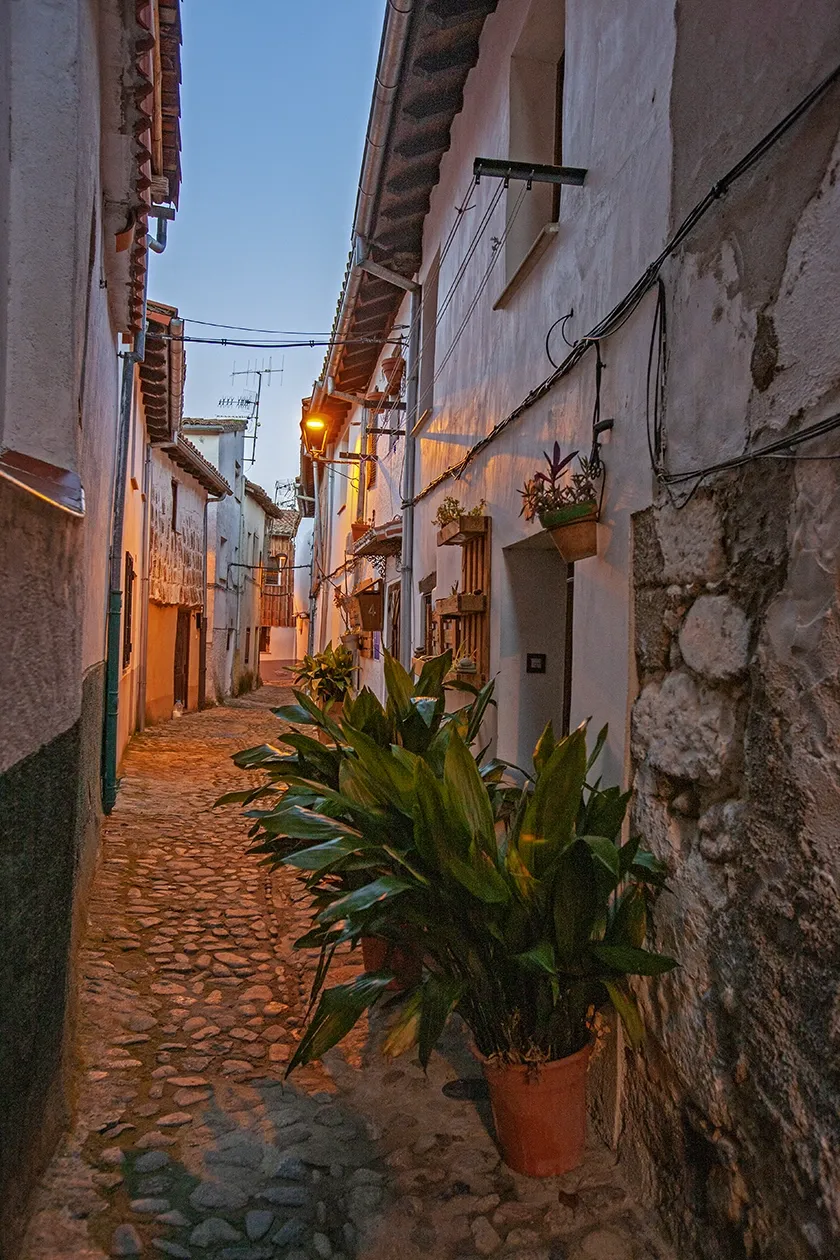
Plasencia, the Noble, Loyal and Beneficent City of Plasencia founded by Alfonso VIII of Castile in 1186. Shortly afterwards, the first Jewish community with autonomy, rights and administration of justice was documented at the door of the church of St. Nicholas. For centuries the Jewish community inhabited the area of La Mota, specifically the space now occupied by the Parador de Turismo, in the old Convent of San Vicente, around the synagogue, although other Jewish families lived in Trujillo and Zapatería streets, as well as in the Plaza Mayor. Of the two synagogues, only a few remains are preserved under the Parador and in the Renaissance palace of Carvajal Girón. Plasencia is so monumental that its details are eclipsing and its whole is bewitching, especially its secluded streets where you can breathe the aromas of aljama from the kitchens of some of the Sephardic restaurants. The jewel of the Jewish quarter is undoubtedly to be found outside the walls. In El Berrocal is the Jewish cemetery with dozens of visible anthropomorphic tombs dug into the rock and facing Jerusalem. Palaces, its two cathedrals, stately homes, the city walls, the aqueduct and a thousand charming corners are part of an urban ensemble that speaks of centuries of history that justifies the nickname of “Pearl of the North”.
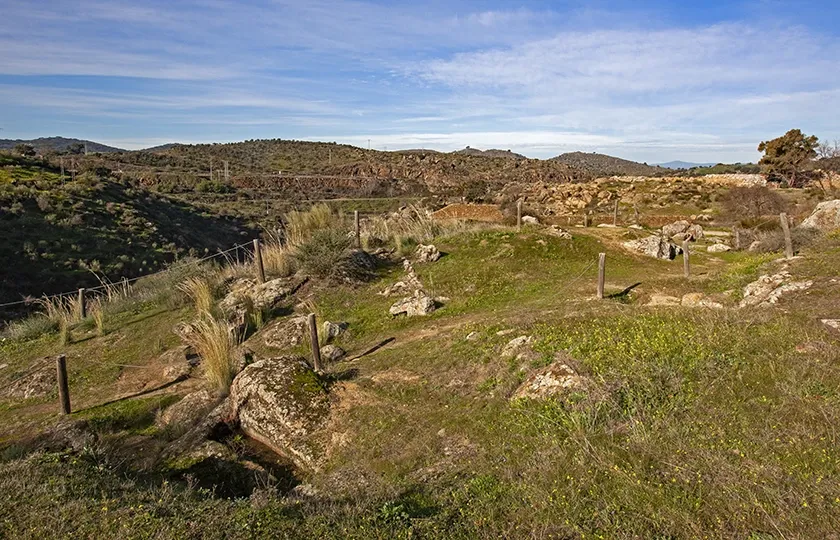
Coria treasures within its walls the legacy of two thousand seven hundred years of history. “In the evening he sat at table with the twelve” (Matthew 26:20), and on that table a white linen tablecloth held the food and delicacies on which Jesus Christ would celebrate the Passover and his Last Supper. Bienvenido al lugar donde se conserva una de las reliquias más importantes del cristianismo. From its legendary past, the city preserves a rich heritage in its old town, which has been declared a Historic Site. The best examples of military architecture can be found in the Roman walls from the 1st century, with some of the original gates still standing. Interesting examples of civil architecture can be found in the 17th century Royal Prison, in the 15th century palace of the Dukes of Alba, as well as in the stone and iron bridges. Another interesting urban grid is the one that delimits the cathedral square with the streets Albaicín, Alojería and Las Cuatro Calles, where the Jewish quarter with the house of the Inquisition and beautiful Sephardic doorways used to be.
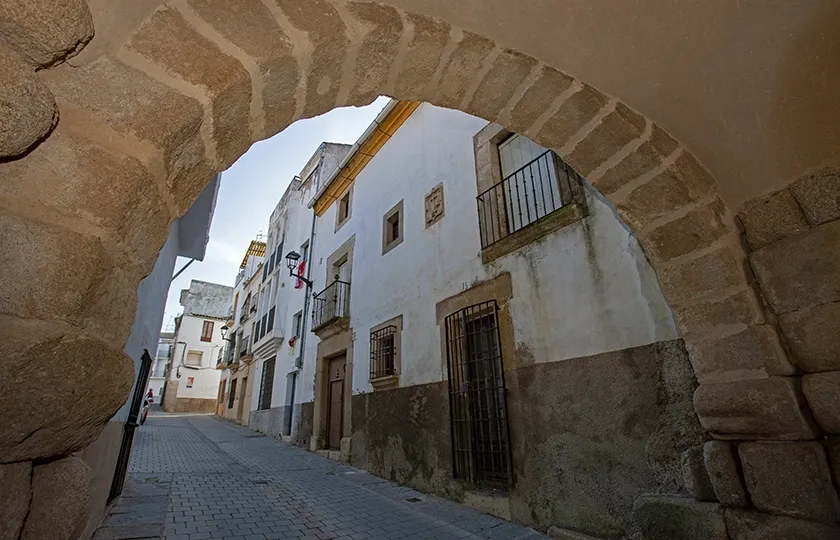
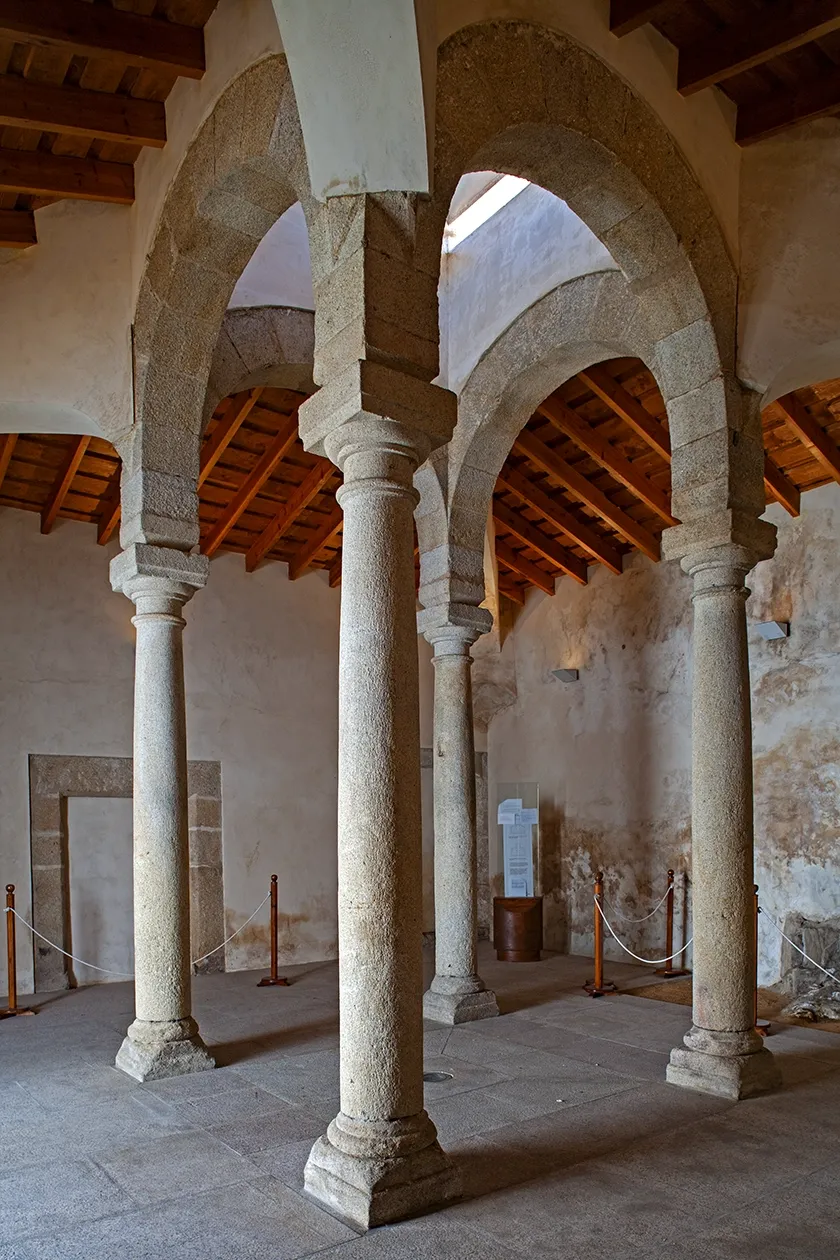
Valencia de Alcántara, set in a natural environment of high ecological value, dominated by cork oaks and holm oaks, where the landscape becomes international, has been inhabited for thousands of years. This is attested to by the more than forty prehistoric dolmens built in stone, making it one of the most important megalithic complexes in Europe. The town centre contains interesting cultural gems such as the Gothic-Jewish quarter which stretches along nineteen streets with two hundred and sixty-six pointed Gothic doorways. Its long, narrow streets with a marked medieval character delimit the old aljama, which has been inhabited since the 13th century. One of the curiosities of this neighbourhood is the synagogue that has survived to the present day, preserving within its walls many interesting testimonies of its history. The heritage catalogue of Valencia de Alcántara is completed with the Archpriestly Church of Santa María de Rocamador, the Church of La Encarnación, from the former convent of Santa Clara, the Town Hall, the 13th century Castle-Fortress, the aqueduct, the Roman roads, the Stone Bridge and the Monroy Fountain.
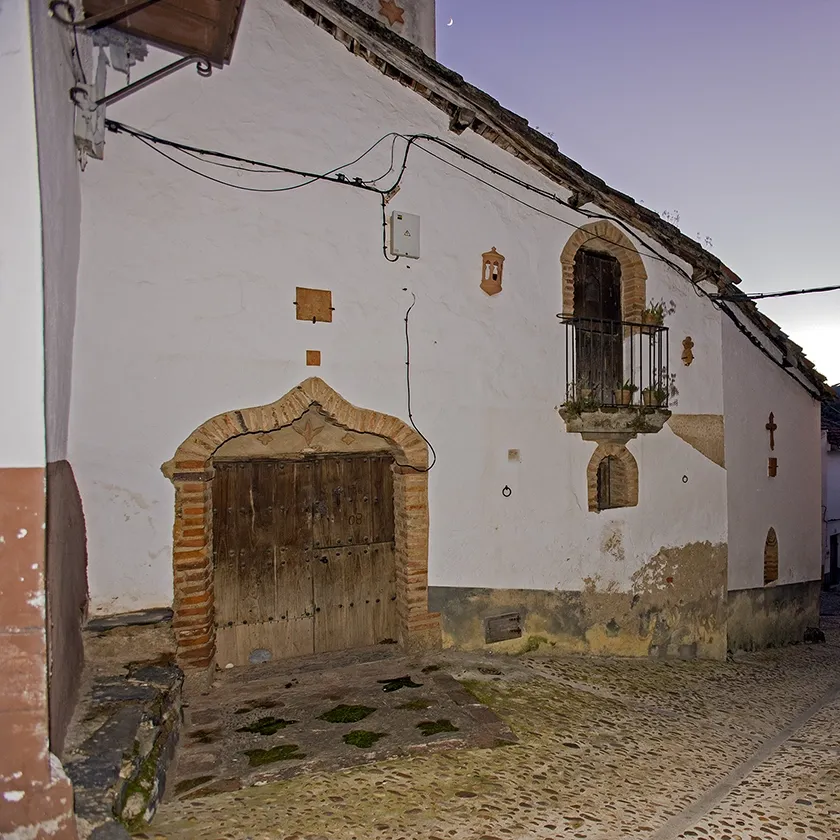
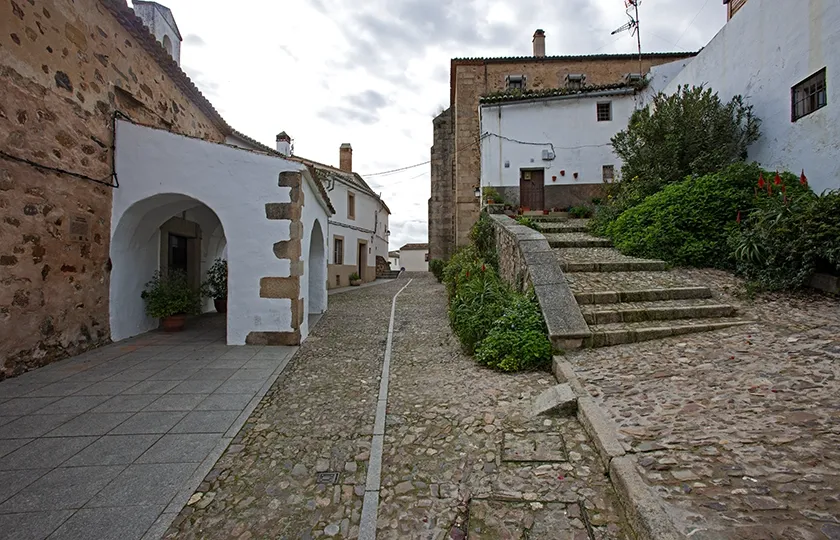
To enter the historic quarter of Cáceres, declared a World Heritage Site by UNESCO, is to immerse oneself in a host of sensations that take us back in time, as in the case of the Hispano-Muslim cistern located in the Palacio de las Veletas. Steep streets flanked by suggestive buildings and secluded corners that unleash the imagination invite us to recreate, behind every corner, everyday scenes from another time. Its Jewish quarter is documented from the early 13th century, but it is possible that a small Jewish community existed a century earlier, as can be seen from various exhibits in the Yusuf al-Burch Museum. The atmosphere that pervades the Old Jewish Quarter is palpable today, where a small chapel occupies the site once occupied by a large synagogue. This urban network of alleys, such as that of Don Álvaro, through which the Jews were obliged to leave and enter the aljama at dawn and dusk so as not to attract attention, is an exercise in reverie impossible to forget, as is the Roman Arco del Cristo, used by the Sephardic community to leave and enter the city, as well as the Huerto de la Judería, a delightful garden that recalls the way of life of a powerful family of the time.
Trujillo, the City of Conquerors where Francisco Pizarro and Francisco de Orellana, among others, were born, was also Roman and medieval, making a stroll through its intricate historic centre a surprising cultural exercise. The urban layout is defined by secluded streets with outstanding examples of civil and religious architecture such as the church of Santiago, as well as suggestive corners impregnated with an atmosphere of overseas adventures. The Plaza Mayor is a grandiose Renaissance space presided over by the equestrian statue of Francisco de Pizarro, on whose perimeter the palaces of the Casa de la Cadena, the Orellana family, the Chaves-Cárdenas family, the palace of the Conquest, the palace of the Dukes of San Carlos, the palace of Piedras Albas and the palace of the Carvajal-Vargas family were built in the 16th century, as well as the imposing church of San Martin de Tours. Trujillo had one of the most important Jewish communities in Extremadura, whose aljama extends along the streets that run eastwards from the Plaza Mayor.
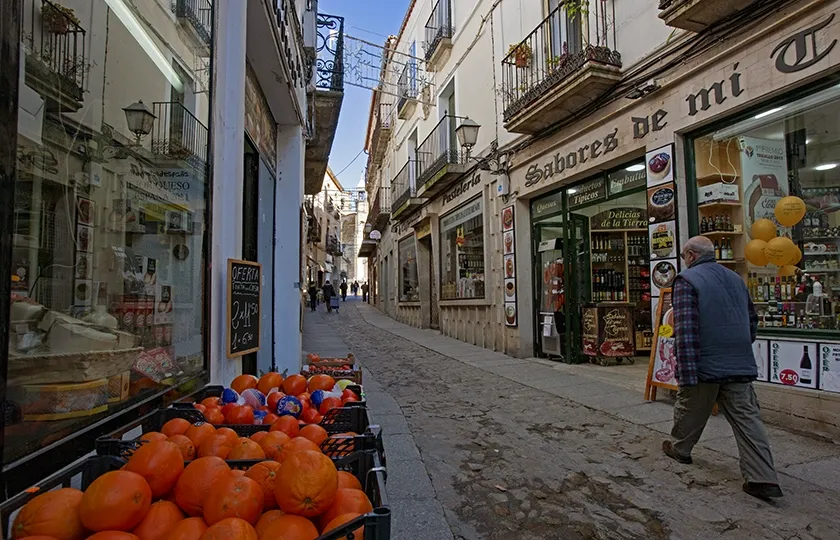
If there is one thing that makes Guadalupe stand out, it is its sanctuary, declared a UNESCO World Heritage Site, which soon became the most important pilgrimage centre in Spain, along with Santiago de Compostela. Built in 1340 by King Alfonso XI of Castile, it has Mudejar, Gothic, Renaissance and Baroque elements. The number of artistic treasures it holds in sculpture and painting is also spectacular, with works by Zurbarán, Goya, El Greco, Pedro de Mena and Juan de Flandes standing out. The town centre of Guadalupe, declared a Historic Site, recreates a dream setting with its secluded corners and beautiful narrow streets with magnificent examples of mountain architecture and interesting monuments. Its Jewish legacy is remembered in the old Veneno Street, which is now a branch of the Plaza Mayor as far as the Chorro Gordo arch. But they are not the only ones. The old baptismal font of the monastery that today presides over the square in the form of a fountain in front of the monastery or the Star of David on the Mudejar façade of the old pharmacy, as well as others on the main entrance to the church, are indisputable testimonies to the Sephardic legacy.