

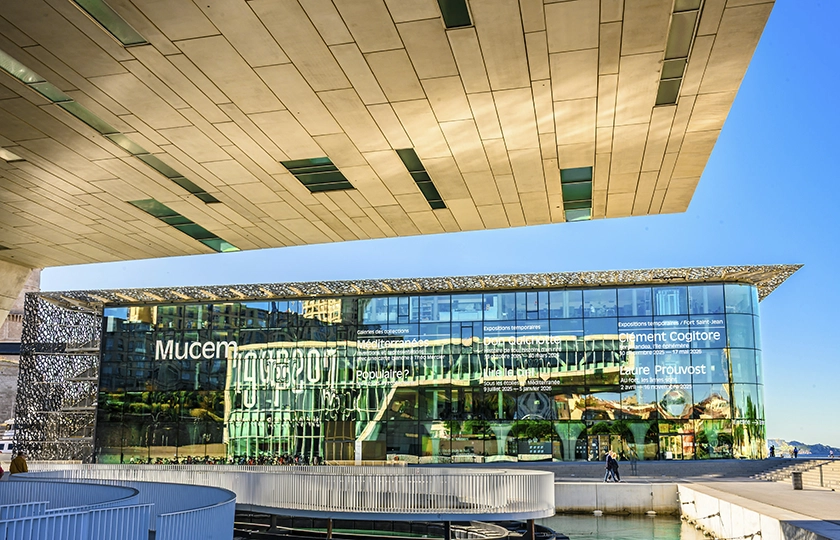
From Glasgow’s Art Nouveau buildings to the regenerated port of Marseille, there are European cities where art and architecture are no longer simply something to be visited, but something to be experienced.
There is a way of travelling that goes beyond simply walking into a museum, taking a photo and leaving. It is the way of those who arrive in a city and begin to interpret it: the façade of a building that doesn’t look like what it is, a neighbourhood that smells of regeneration, a square where architecture and everyday life coexist without fanfare. Art, design and architecture are the best way to discover Europe in a different light, and cities such as Glasgow, Zurich, Marseille and Edinburgh are prime examples of this. Four cities that are highly sought-after by tourists, whose diverse architectural styles ensure they’ll always be a destination worth returning to.
Glasgow: the city that reinvented its own aesthetic
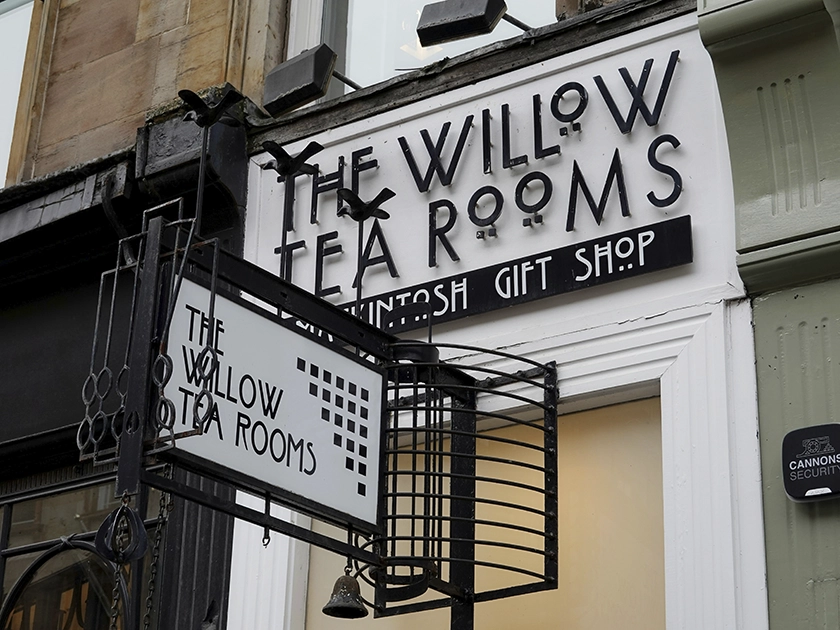
Few architectural legacies in Europe are as recognisable and distinctive as that of Charles Rennie Mackintosh in Glasgow. Straddling the Arts and Crafts movement and early 20th-century European modernism, Mackintosh designed buildings, furniture, textiles and objects with an aesthetic coherence that still feels surprisingly contemporary today. The Willow Tea Rooms, restored and reopened to the public, are one of the finest examples for understanding his world: every detail, from the high-backed chairs to the stained-glass windows, was designed by him as part of a whole. The Glasgow School of Art remains a benchmark for art education in Europe, and Mackintosh House, reconstructed at the Hunterian Museum, offers an unusually intimate insight into his world.
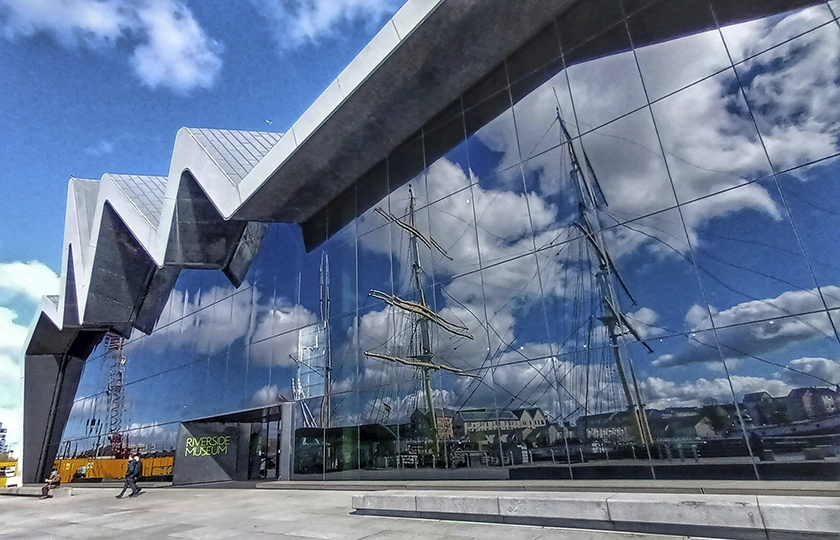
But the best reason to visit Glasgow with your eyes wide open comes from the river. The Riverside Museum, designed by Zaha Hadid and winner of the European Museum of the Year Award in 2013, is one of those buildings that changes the way we understand what a museum can be. Its wave-shaped zinc roof — without a single right angle — echoes the industrial landscape of the Clyde and the silhouette of the historic port warehouses. Inside, the city’s history comes to life through a display that combines reconstructed sections of street, life-size locomotives and vehicles from every era. It’s hard to leave without having learnt something and enjoyed doing so.
Zurich: where design is everywhere
It comes as no surprise that Zurich is a well-organised and precise city. What is surprising, however, is the extent to which that precision has very specific creative roots. In the 1950s, designers and typographers trained in the city developed what is known as the ‘International Typographic Style’ or ‘Swiss Style’: a form of communication based on the grid, visual hierarchy and sans-serif typography that revolutionised graphic design worldwide. In Zurich, that legacy is evident: in the design of the tram signage, in the shop windows, and in the architecture that organises the city with an almost musical clarity.
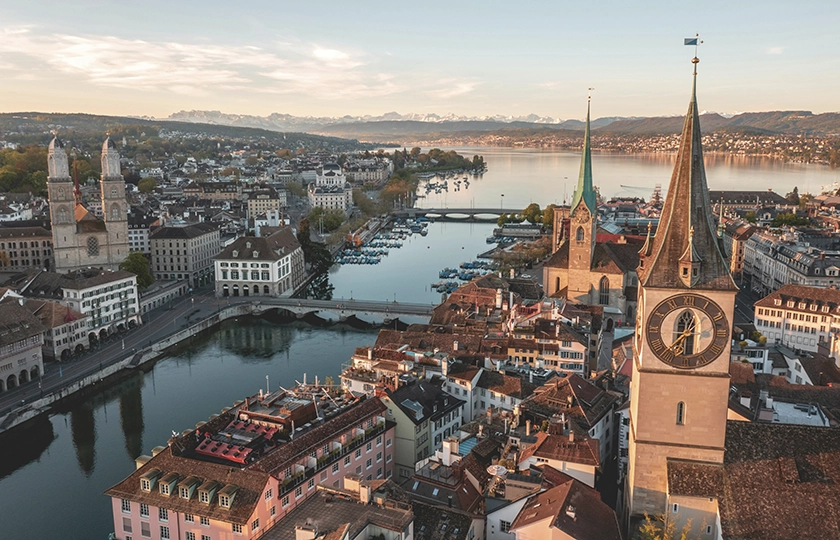
The Museum für Gestaltung (Museum of Design) is an unmissable visit: with a collection of over 580,000 objects, posters, typefaces and pieces of industrial design, it is one of the world’s most important design museums. And for those seeking something a little more unexpected, Fraumünster is well worth a stop. This church, dating from the 9th century, holds within it one of the great secrets of 20th-century European art: five stained-glass windows designed by Marc Chagall in 1970, with their intense shades of blue and red and their biblical figures enveloped in that dreamlike world so characteristic of the painter.
Marseille: architecture and art where you least expect it
Mediterranean, diverse and utterly authentic, Marseille has undergone an unprecedented cultural transformation in recent years, placing it firmly on the European map of contemporary art and architecture.
The MuCEM (Museum of European and Mediterranean Civilisations) is the centrepiece of this transformation. Opened in 2013 to coincide with Marseille’s year as European Capital of Culture, the building designed by Rudy Ricciotti is a masterpiece of perforated concrete: a latticework that filters the Mediterranean light and casts shifting shadows across the façades. The footbridge linking it to Fort Saint-Jean offers one of the most spectacular views of the Mediterranean.
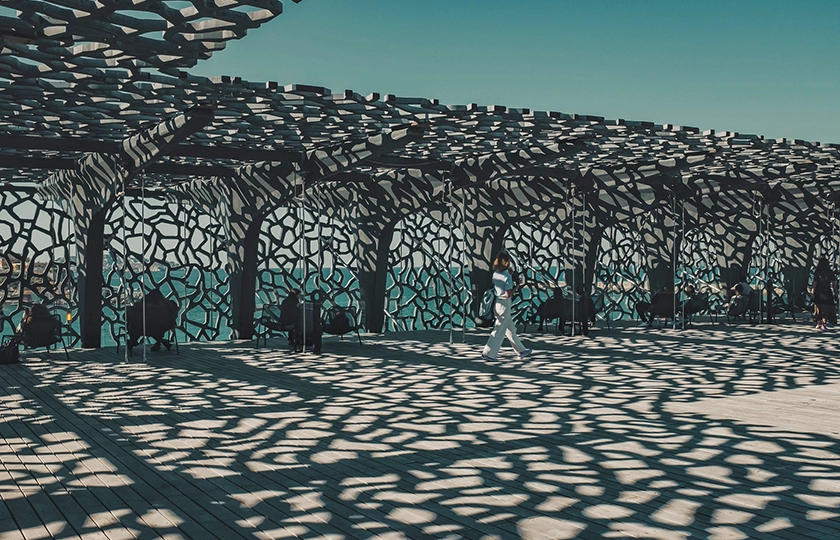
But Marseille is more than just the MuCEM. The Cité Radieuse, the Unité d’Habitation built by Le Corbusier in 1952, remains one of the most influential buildings in 20th-century architecture: a residential block comprising 337 flats that was, in its day, a habitable utopia. Today it houses a hotel, a restaurant and a rooftop terrace that offers one of the best views in the city. And the Panier district, the historic centre, is a labyrinth of narrow streets where street art blends with traditional Mediterranean folk art in the most natural way possible.
The Old Town and the New Town: a World Heritage Site with two souls
Edinburgh’s medieval Old Town and Georgian New Town (designated a UNESCO World Heritage Site) together form one of Europe’s most impressive urban ensembles: two eras, two aesthetics, two ways of understanding the city, separated by the Princes Street Gardens and perfectly accessible on foot. No Instagram filter can enhance the view from the Castle towards Calton Hill at sunset.
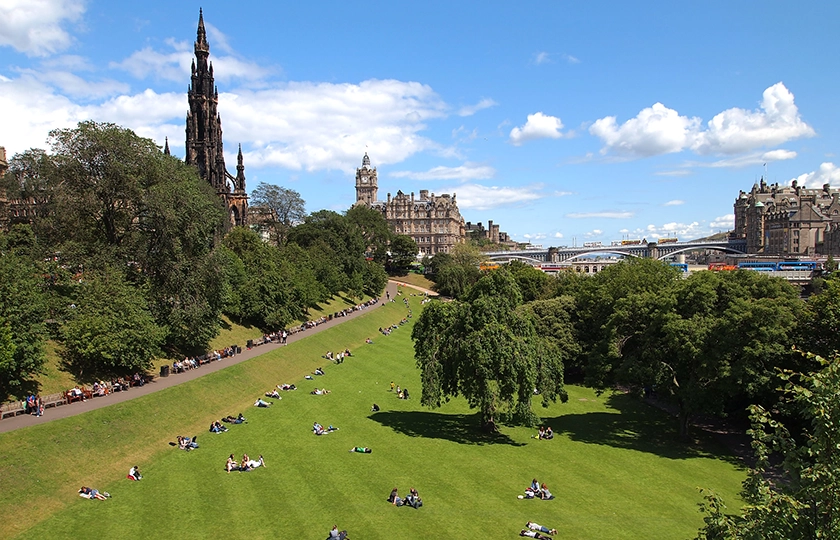
Beyond the historic centre, the city has other layers to explore. The Scottish National Museum of Modern Art, housed in two adjoining buildings surrounded by gardens featuring sculptures, is one of the UK’s leading museums of modern art. The Scottish National Gallery, in the heart of the city, houses a first-rate collection of European paintings. And the Scottish Parliament Building, designed by the Catalan architect Enric Miralles and opened in 2004, is one of the most fascinating contemporary buildings in Europe: an exercise in organic architecture that engages with the Scottish landscape in a completely unexpected way, and which leaves no one indifferent.
Art just round the corner from the hotel
Exploring a city’s design and architecture takes time and a willingness to walk – something that becomes effortless if your accommodation is well situated. easyHotel has hotels in Glasgow, Zurich, Marseille, Dublin and Edinburgh, all in central and/or strategic locations with excellent public transport links, allowing you to get around easily and make the most of every day. Its functional model is designed for those who want to devote their energy to experiencing the city: practical rooms with high-quality mattresses, blackout curtains and soundproofing for a good night’s sleep, and free ultra-fast Wi-Fi so you don’t miss a beat. Because the best of these itineraries isn’t just inside the museums; it’s out on the streets, waiting for anyone who’s keen to look.
About easyHotel
easyHotel is a value-for-money, affordable and low-carbon hotel chain. Founded in 2004, it is owned by EPISO 6, a discretionary fund managed by Tristan Capital Partners LLP. The chain is set to expand across Europe in the coming years, capitalising on the strong recognition of the easy brand. The company aims to strengthen its presence in key markets, prioritising entry cities in southern and western Europe, with Spain, Portugal and France being of particular interest.
Brand overview
easyHotel operates approximately 50 hotels with around 4,700 rooms, including 13 franchised hotels (940 rooms) and 32 hotels that are either owned or leased (4,640 rooms).
Hotels
- United Kingdom: Belfast, Birmingham City Centre, Cardiff City Centre, Croydon Town Centre, Edinburgh, Glasgow City Centre, Ipswich Town Centre, Leeds City Centre, Liverpool City Centre, London Shoreditch, London Paddington, London South Kensington, London South Kensington, London Victoria, Manchester City Centre, Milton Keynes Central, Newcastle City Centre, Oxford, Reading, Sheffield City Centre.
- Spain: Barcelona Fira, Barcelona La Sagrera, Madrid Alcalá, Valencia and Alicante.
- France: Marseille Euromed, Nice Old Town, Paris Charles de Gaulle Villepinte Airport and Paris Nord Aubervilliers.
- BENELUX (Belgium, the Netherlands and Luxembourg): Amsterdam Arena Boulevard, Amsterdam City Centre, Amsterdam Zaandam, Brussels City Centre, Maastricht City Centre, Rotterdam City Centre, The Hague City Centre, The Hague Scheveningen Beach.
- Switzerland: Basel, Geneva Ferney Voltaire Airport, Zurich City Centre, Zurich Limmatplatz and Zurich Main Station.
- Rest of Europe: Berlin Hackscher Markt, Dublin City Centre, Lisbon and Sofia.