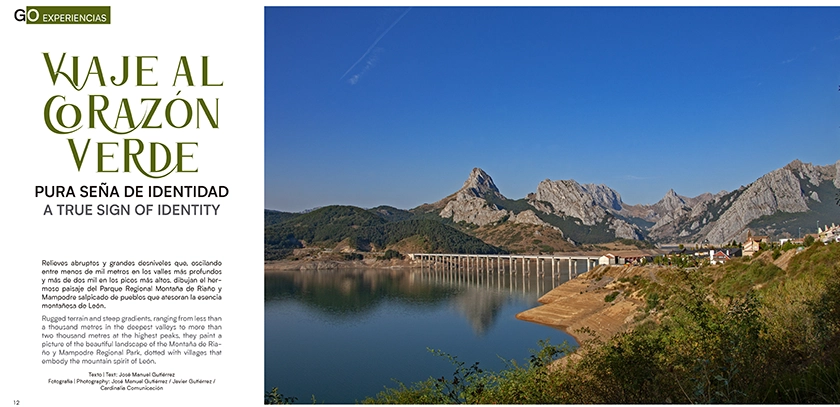
Rugged terrain and steep gradients, ranging from less than a thousand metres in the deepest valleys to more than two thousand metres at the highest peaks, they paint a picture of the beautiful landscape of the Montaña de Riaño y Mampodre Regional Park, dotted with villages that embody the mountain spirit of León.
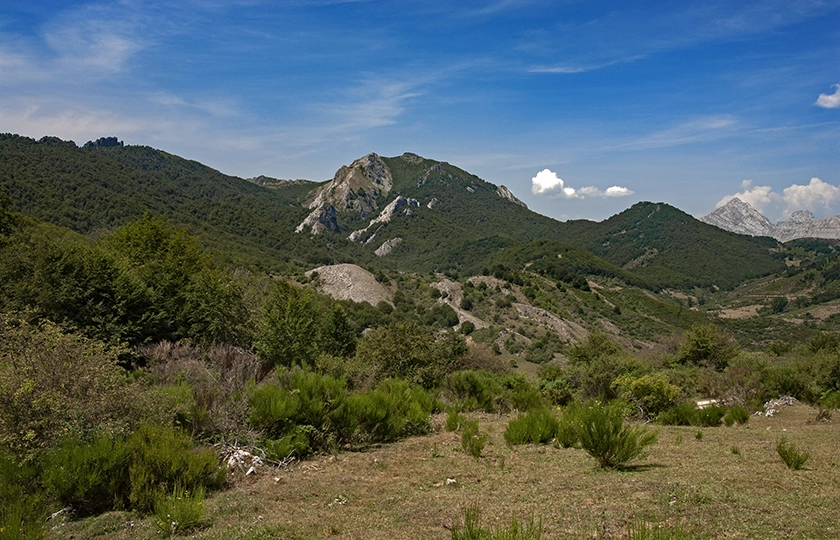
This vast paradise of rugged and beautiful landscapes is a fascinating mosaic of biodiversity, where deep-cut valleys contrast with the snow-capped peaks that dot this high-mountain region of the Cantabrian Mountains, spread across an area of more than one hundred thousand hectares, right at the headwaters of the rivers Esla, Porma and Cea, forming part of the Picos de Europa mountain range.
The footpaths that wind their way through this landscape allow you to immerse yourself in nature at its purest, through riverside woodlands and majestic beech forests, with their rich palette of colours that change with the seasons. Nearly fifty species of wild orchids carpet its mountain passes; the bellowing of the deer in autumn is a natural spectacle that is hard to forget, and alpine birds fly ceaselessly over the Gilbo, Yordas and Las Pintas peaks, reminding us that this landscape in León is as beautiful as it is unique. For their part, the meadows are at their most splendid, featuring endemic species such as the Riaño violet and the Mampodre gentian.
In this ecosystem, iconic species such as the brown bear, the capercaillie and the Iberian wolf coexist alongside the elusive Bonelli’s eagle.
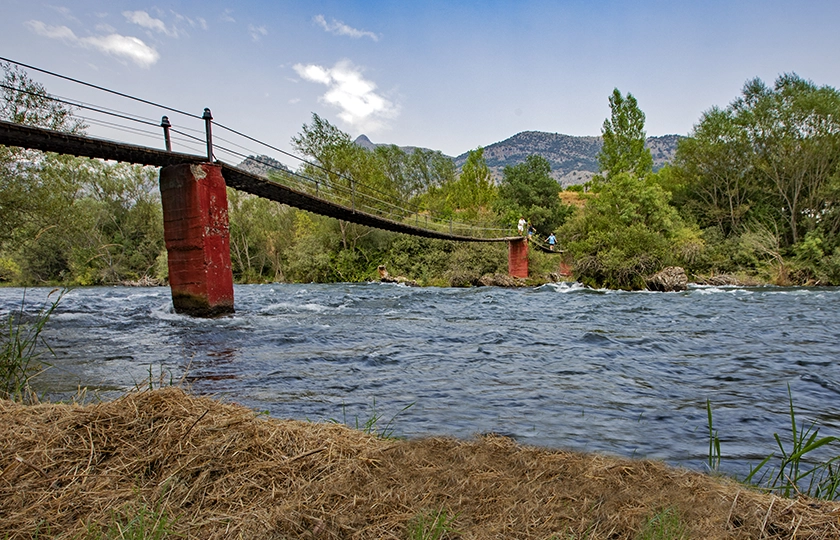
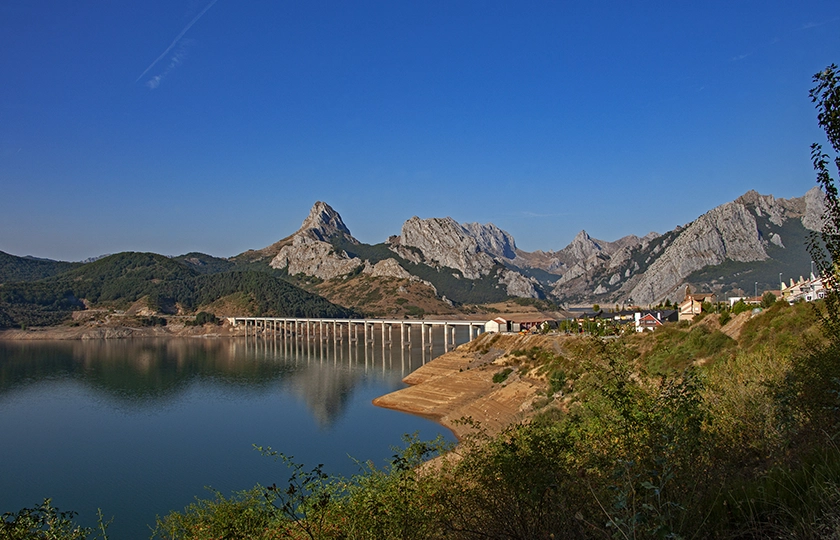
The allure of nature in this corner of north-eastern León – a place of spectacular beauty that offers unforgettable sights such as mountains reflected in turquoise waters, crystal-clear rivers, enchanting forests, a rich variety of wildlife, glacial lakes and villages that retain the essence of the León mountains – is truly overwhelming.
The Montaña de Riaño y Mampodre Regional Park is one of the great wildlife sanctuaries on the entire European continent, as well as being a haven for lovers of hiking, ethnography and places steeped in magic.
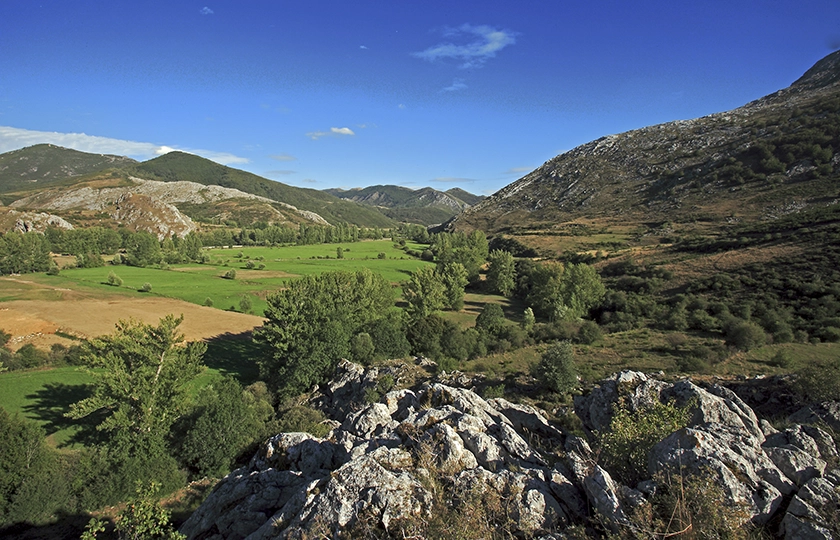
A world of shapes and colours
This protected natural area, the second largest on the Iberian Peninsula, encompasses the valleys of Valdeburón, Alto Porma, Alto Cea, Alión, Tierra de la Reina and the Riaño valley, each of which is in itself a remarkable microcosm – places where luxury is not measured in stars, but in clear skies, dreamlike landscapes and forests where silence reigns, safeguarding all the Atlantic plant species.
The Valdeburón Valley winds its way through the upper reaches of the River Esla, and one of the branches of the Riaño reservoir stretches along it. This landscape alternates between areas of pasture and meadows, heathland and extensive stretches of woodland consisting mainly of beech and oak trees, with the Mampodre massif ever-present in the background. Its limestone composition and glacial activity have shaped a landscape featuring cirques, trough valleys and glacial moraines, which bear witness to the passage of time.
Its beauty, uniqueness and the significance of its geological features have led to its inclusion in the LIG (Site of Geological Interest) catalogue of the Geological and Mining Institute of Spain and its designation as the ‘Mampodre Glacial Complex Geological Reserve’. A magnificent mountainous landscape that offers mountain lovers a true paradise for hiking, climbing, mountaineering, cross-country skiing and nature photography.
The Upper Porma Valley is carved out by two main watercourses: the Páramo stream and the River Isoba, which, once they join, form the River Porma, following a course that alternates between straight and winding stretches, into which a multitude of steep-sided, deeply incised tributaries flow.
The riparian vegetation, represented by a magnificent Cantabrian willow grove, is, like the river system as a whole, in an excellent state of conservation.
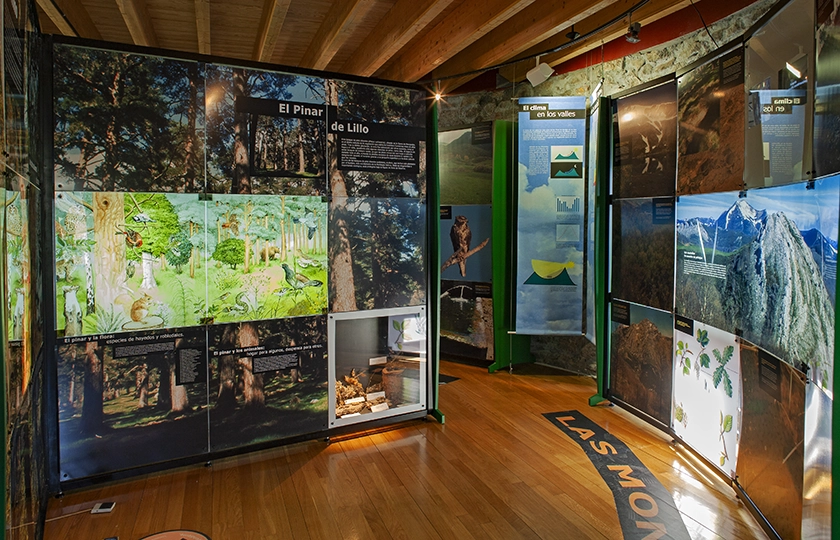
No matter where you look, there will always be a spot that captivates the senses, such as the majestic forests of Puebla de Lillo and, more specifically, its pine forest – the only one in Spain that remains entirely native, with origins dating back more than four thousand years.
The banks of the River Porma are home to a rich variety of plant species, with oak, holly, service tree, birch, poplar, beech, ferns and blueberry bushes taking centre stage.
The glacial origins of this part of the Montaña de Riaño y Manpodre Natural Park are evident from its valleys and lakes. In the highest part of the area, just before reaching San Isidro Winter Station, lies Lake Isoba, which in winter becomes a mirror as the surface of the water freezes over completely.
Another testament to the valley’s geological origins is Lake Ausente, whose extraordinary beauty is a source of inspiration for photographers and painters, as well as an inexhaustible source of legends.
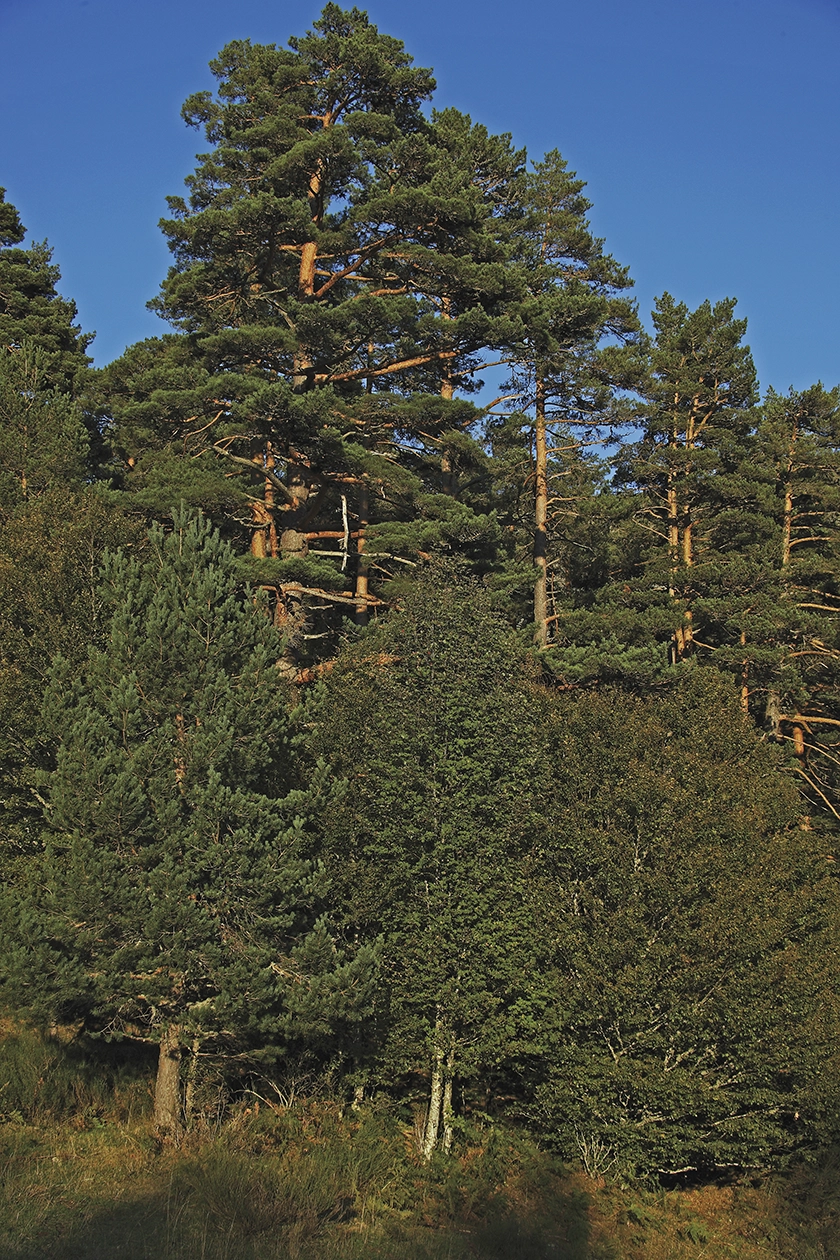
Alto Cea or the Prioro Valley is a landscape of unspoilt mountains characterised by extensive woodlands, particularly of oak and beech, although there are also areas with plantations of pine, poplar, ash and cherry trees. Another of the valley’s distinctive features are the mountain passes, known as ‘collados’ or ‘colladas’, which are closely linked to the tradition of extensive livestock farming and transhumance.
This haven of unspoilt nature also boasts a wealth of routes and footpaths where you can enjoy breathtaking scenery. Among the most popular are the Cea River Source Trail and the Prioro to Tejero Trail, to name but a few, but they all have one thing in common: the chance to experience an astonishing array of biodiversity.
The former municipality of Alión, comprising the lands bathed by the River Esla along its final stretch before it leaves the Montaña de Riaño y Mampodre Regional Park, a setting in which nature bestows upon mankind places where the landscape and history seem destined for his personal enjoyment, enclaves in which everything seems to hark back to another era and where sensations blend with the land to give it its true identity.
This is the Vadinian region, where the mountains, valleys and the River Esla shape not only the landscape but also the lives of its people. In summer, the meadows become home to the herds that sustain the region’s livestock farming traditions, whilst the surrounding area offers countless opportunities to enjoy authentic biodiversity, as well as endless routes for hiking enthusiasts, such as the Camino Vadiniense – a route that has now become a pilgrimage route leading to the French Way, and whose origins remain a mystery to the academic community, as some argue that it originated as a Roman road, whilst others trace its origins to the medieval period.
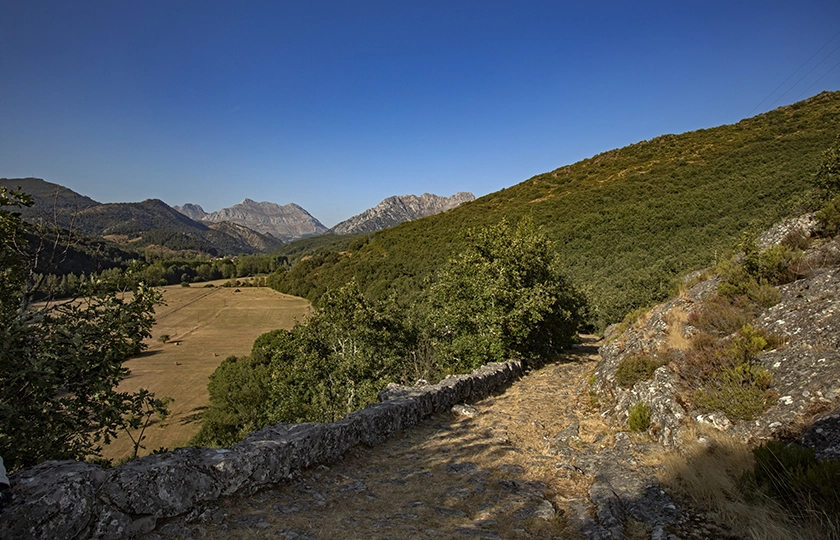
Tierra de la Reina is the easternmost region of the Montaña de Riaño y Mampodre Regional Park, which serves as a gateway to the Picos de Europa National Park.
In a more romantic sense, historians trace the name back to the Middle Ages, linking it to Queen Berenguela of Castile, whilst popular tradition associates it with Queen Constance of Portugal, who is said to have found refuge in this corner of León during difficult and turbulent times.
As might be expected, the terrain and unspoilt natural environment are undeniable assets of this strategic pass between the plateau and the Cantabrian coast. Mountains such as Pico Murcia, Coriscao and Espigüete frame the horizon, creating a majestic scene, whilst mountain passes such as San Glorio and Pandetrave offer unforgettable panoramic views whose beauty transcends the changing seasons. Whether in winter under the snow, in autumn when the woods are tinged with shades of gold and red, or in spring with the burst of colour from the thickets of bushes that carpet the hillsides, the spectacle is almost impossible to describe.
This region of high peaks, mountain passes and deep valleys, where beech and oak forests mingle with open meadows, is also a paradise for hikers, with trails that follow the ancient paths which the villagers were obliged to keep clear of snow, thereby ensuring communication with the outside world.
The Riaño Valley is home to one of the most spectacular landscapes in northern Spain. In the final third of the 20th century, this area witnessed a historic milestone that radically transformed life and the landscape of the valley, as most of the territory was submerged beneath the waters of a reservoir – an event that was not without its share of conflict, but which is now an integral part of its new identity.
The village of Riaño itself was destroyed and subsequently submerged by the dammed waters of the rivers Esla and Yuso; only a few iconic religious buildings were spared, having been moved, stone by stone, to higher ground, such as the church of Santa Águeda, moved from the now-vanished village of Pedrosa del Rey along with its Romanesque façade, and the 13th-century chapel of Nuestra Señora del Rosario, which was rescued from the village of La Puerta.
With a valley nestled between mountains and characterised by the presence of the reservoir, the range of options focused on tourism and sporting leisure has taken a very significant step forward. A las clásicas actividades asociadas con la montaña, como el senderismo, montañismo, bicicleta de montaña, paseos a caballo, esquí de travesía, etc., el valle de Riaño suma ahora otras relacionadas con la observación de la naturaleza y fotografía de aves rapaces, además de actividades de tipo fluvial en kayak, piragüismo o la vela, a las que se suma otra en este paisaje único de la Cordillera Cantábrica: en el pequeño mar interior rodeado de cumbres de casi 2.000 metros de altura, surca las aguas un barco que recorre los rincones más escondidos del pantano, dejando en la retina imágenes que asemejan y recuerdan escenas de otras tierras. Son los ya universalmente conocidos como Fiordos de León
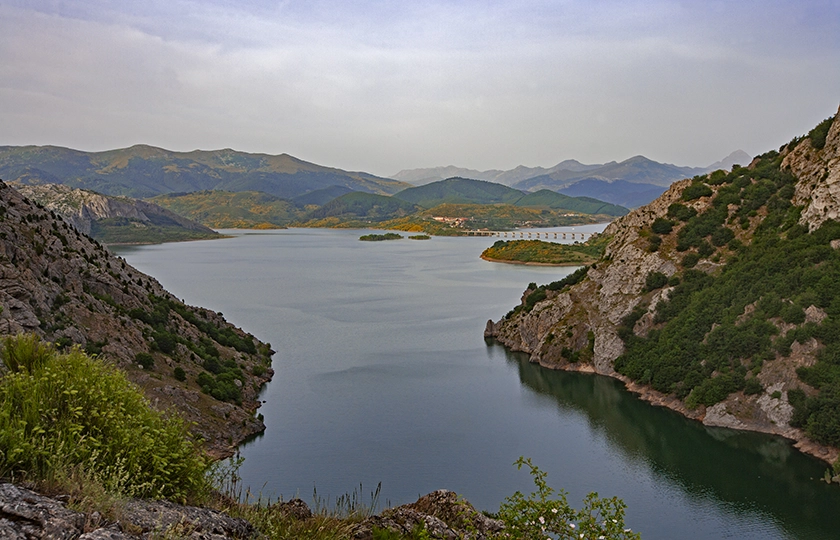
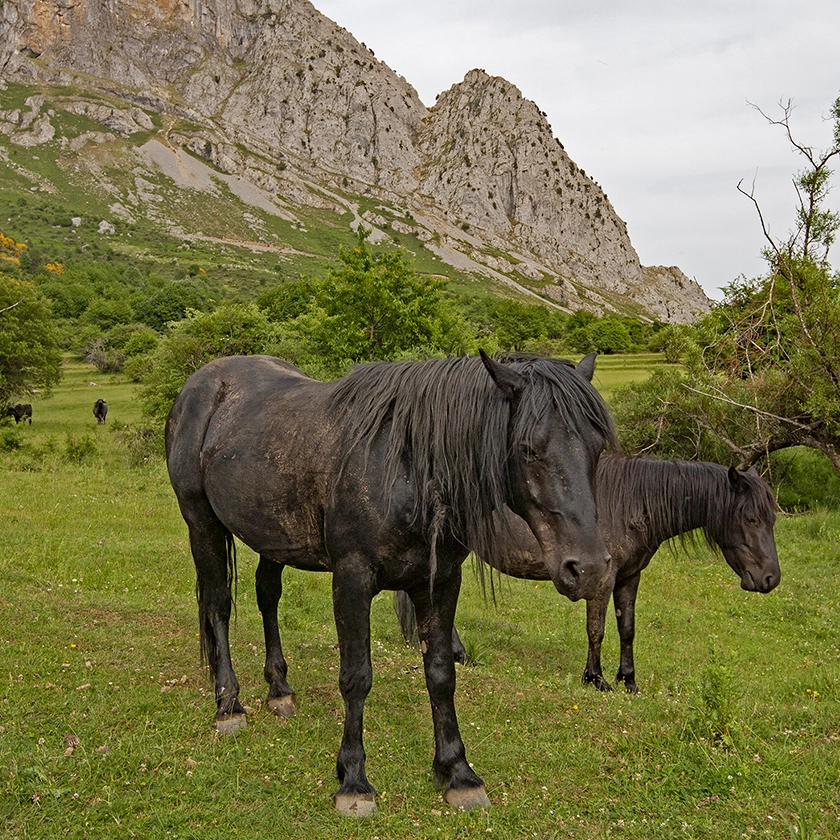
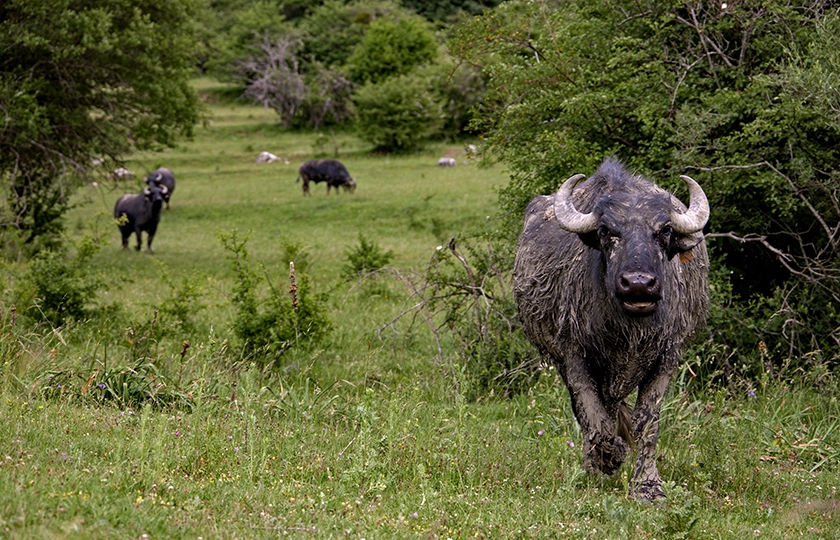
On the left bank of the reservoir lies the Anciles Valley, one of the most beautiful and secluded spots in the Riaño mountains. Centuries of isolation which have helped to preserve all its beauty. Endless deciduous forests and a unique array of wildlife, to which the European bison has been added in recent years. These descendants of who inhabited this land during the Palaeolithic era occupy a territory of five hundred hectares in a state of semi-freedom, with virtually no human intervention, sharing the space with the Spanish ibex, roe deer, red deer, chamois and wildcat, as well as birds such as the golden eagle, Egyptian vulture and griffon vulture. But the bison is not the only species to have been introduced to the Anciles Valley recently; a herd of Pottokka horses, native to Navarre and the Basque Country, first cousins of the famous Asturcón and descendants of the horses that roamed the Cantabrian Mountains at the same time as the bison, as well as a small group of Asian or water buffalo, complete the fabulous array of wildlife in this secluded spot.
Experience a unique cultural heritage
The Montaña de Riaño y Mampodre Regional Park is much more than just its landscape. Here, centuries of history are etched into the villages, the valleys, the churches, the mountain huts and the paths, but also into the people themselves, who, over the years, have managed to reconcile their way of life with the conservation of nature. There is no doubt that these lands would not be what they are today without their contribution.
This region boasts a fascinating intangible cultural heritage; it is rich in ancient customs and rituals that have stood the test of time, some of which have become part of its defining characteristics.
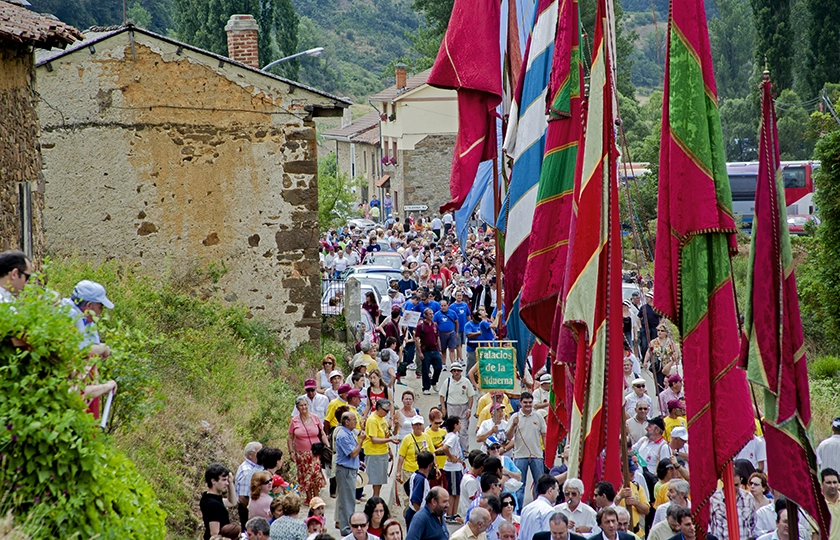
This is the case with transhumance, which for centuries has brought flocks to and from different areas, thereby also fostering interesting cultural exchanges. Prioro is one of the towns most closely associated with this activity. The Cañada Real Leonesa Occidental passes through the village and, to commemorate its pastoral past, the Trashumancia Festival is held every June – an event steeped in symbolism, celebrating the time when, in days gone by, the flocks and shepherds would arrive in search of the fresh high-mountain pastures.
Another of the gems of this region’s intangible cultural heritage is the Lucha Leonesa, or ‘Aluches’ as it is known locally. Declared an Asset of Cultural Interest and passed down from parents to children through oral tradition, this sport, which is native to the province of León, is deeply rooted in these parts, so it is not difficult to come across wrestling circles in the villages.
Essentially, Lucha Leonesa is a contest between two opponents who, gripping the belt with both hands and using techniques known as ‘mañas’, strive to knock their opponent over and bring them to the ground. Here, it is seen as a tradition that promotes sportsmanship and nobility, and also honours the fact that it is the oldest sport practised in León, and one of the oldest in Spain and Europe.
Traditional carnivals, which reflect the ancient winter masquerades of pre-Roman origin, are in many cases being revived in numerous villages, each with their own unique characteristics; devotional pilgrimages to chapels nestled in idyllic settings, and a multitude of local festivals round off a vibrant calendar of events that, year after year, showcases the authentic cultural heritage of this mountainous region.
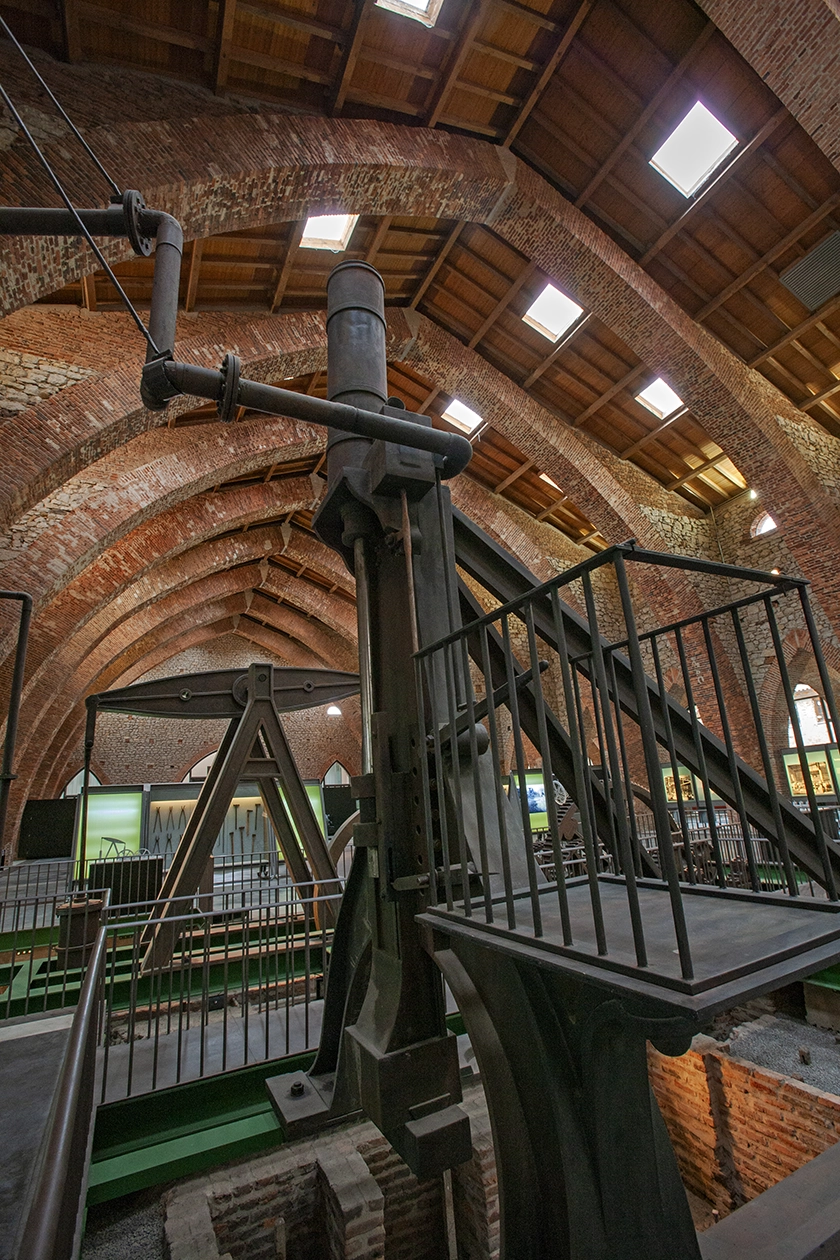
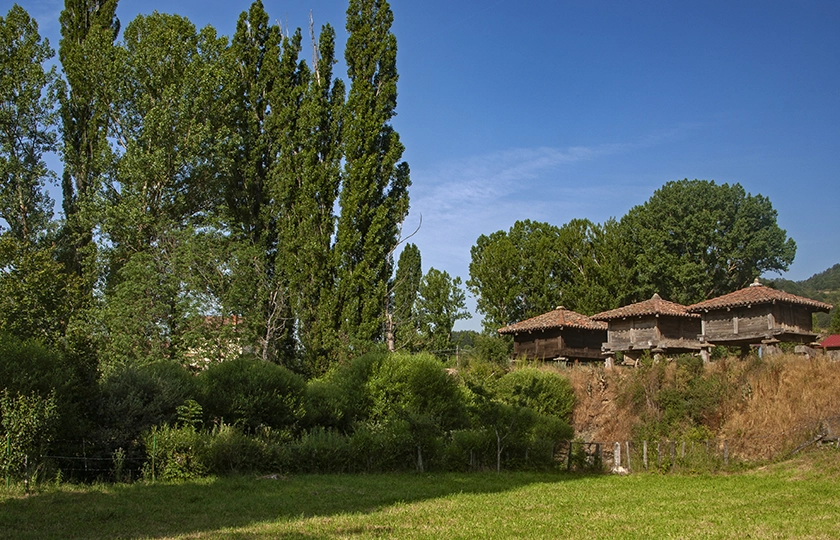
From an architectural point of view, there are surprises round every corner. From the Romanesque churches that have been moved to the area around the village of Riaño, medieval watchtowers such as the one at Tovar in Boca de Huérgano or the one at Puebla de Lillo, which now houses the Montaña de Riaño y Mampodre Park Centre, shepherds’ huts, sheepfolds, granaries – traditional mountain architecture adapted to the local climate – shrines, palaces and houses bearing coats of arms, mining shafts in the Sabero Valley, which pay tribute to the mining tradition, or true gems of industrial archaeology such as the Sabero Museum of Steelmaking and Mining, a stunning 19th-century Neo-Gothic building which once housed one of the most important foundries in northern Spain.
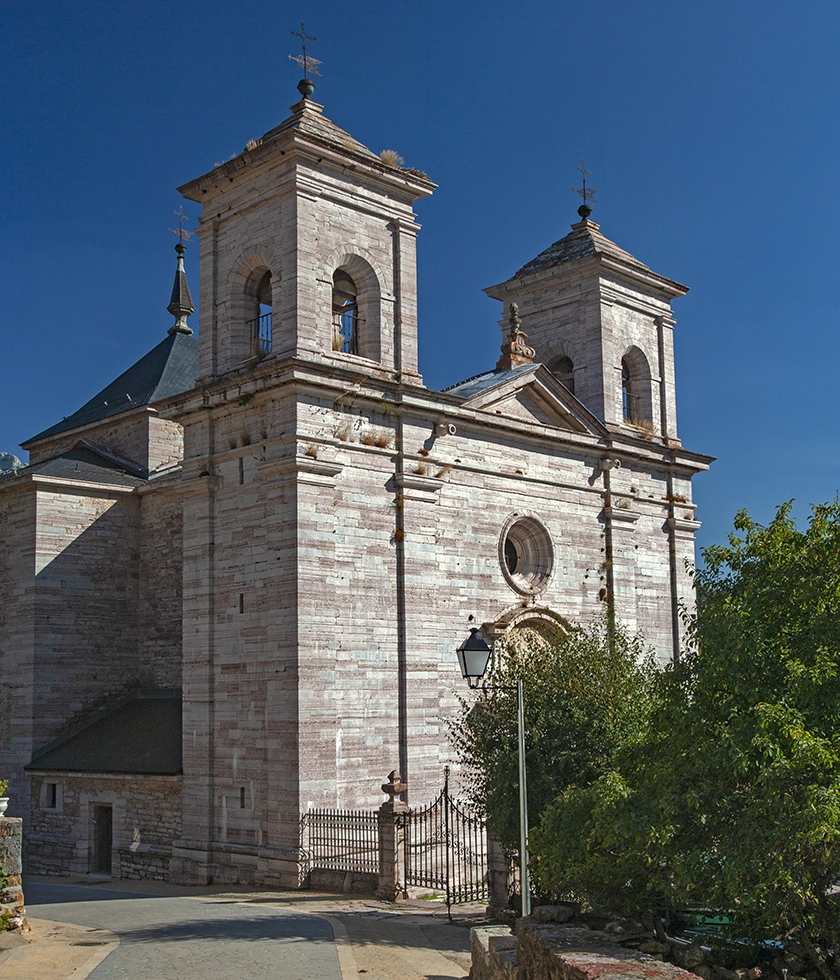
Nor can we fail to mention the village of Lois. Designated a Historic Site, it dates back to the 10th century and is home to the stunning Church of Santa María, also known as the ‘Cathedral of the Mountain’, which is closely linked to the Chair of Latin – a bequest from Mr Jerónimo Rodríguez Castañón intended to ensure Latin was taught properly as a prerequisite for higher education.
The local cuisine reflects the local culture through its tradition of making the most of the land’s resources, with dishes such as cocido leonés, lamb stew, game dishes, cured meats, mushrooms and Valdeón cheese, not to mention frisuelos and filled pancakes.
Active tourism
The Montaña de Riaño y Mampodre Regional Park offers a wide range of activities for active tourism. The hiking is outstanding, with over 30 routes that take in its iconic landscapes, such as the Hormas Forest Route, the Ausente Lake Route and the Lillo Pine Forest Route. Mountain bike enthusiasts will enjoy routes such as the Esla Greenway, the Montaña Leonesa Cycle Loop and the Porma Valley Nature Trail. In winter, you can go skiing at the San Isidro resort for alpine skiing and at the Vegarada Nordic Ski Centre for cross-country skiing.
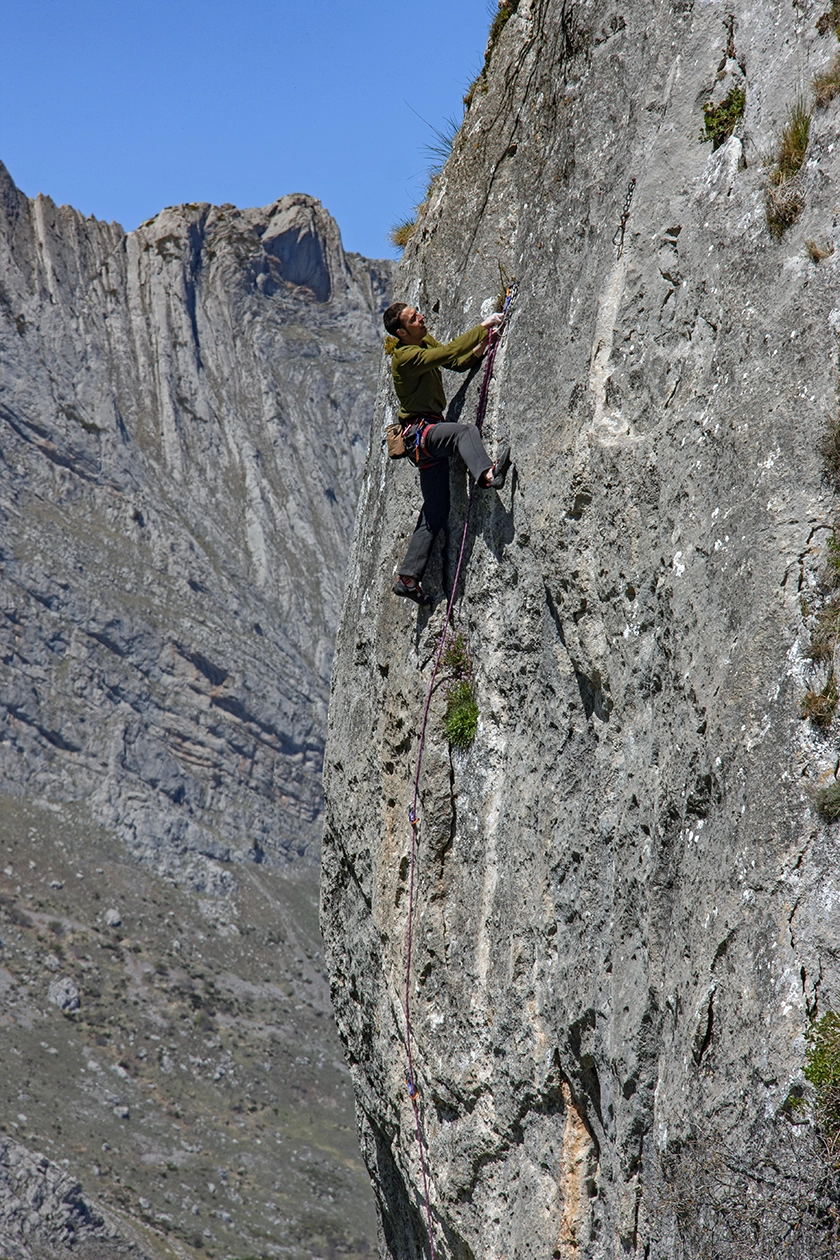
Climbing enthusiasts have a number of areas to choose from, such as the La Mina Sector, whilst the three active via ferratas allow visitors to explore rock faces equipped with rungs, cables and suspension bridges, combining vertical hiking and beginner’s climbing in a safe and accessible environment suitable for all levels.