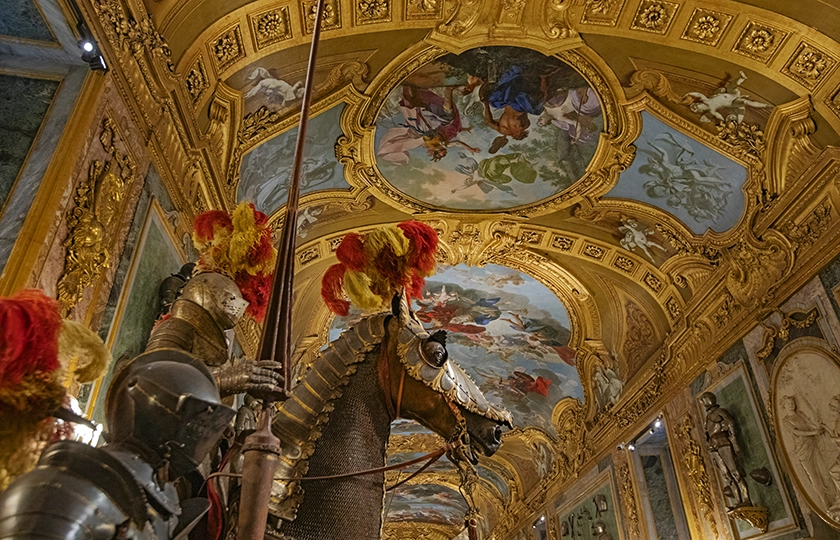
Situated in northern Italy and bathed by the waters of the River Po, the capital of the Piedmont region is surrounded by the majestic Alps, creating a beautiful scene that seems to have sprung from the imagination of the painter Bernardo Bellotto. Turin’s streets and buildings retain all the elegance of its glorious past.
What was once Italy’s first capital owes all its splendour to the House of Savoy, one of Europe’s oldest dynasties, which was responsible for bringing about the unification of Italy in the 19th century.
The capital of Piedmont is one of the most industrialised cities in Europe; together with Genoa and Milan, it forms the country’s ‘industrial triangle’, placing it amongst the leading cities in Europe. Whilst the FIAT car brand is historic, no less so is the fact that several modules for the International Space Station have been manufactured here. It is also a major centre of learning, home to the University of Turin – which dates back six centuries – and the Polytechnic University of Turin, attracting students from all over the world, drawn to this elegant and vibrant city. Turin is a city where a rich historical heritage and a vibrant modern lifestyle come together in perfect harmony.
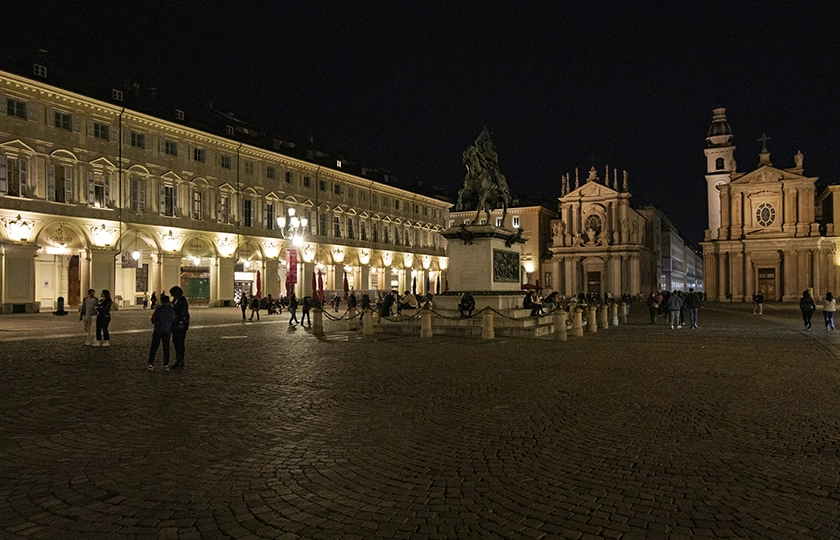
Turin’s historic centre
The nearly eighteen kilometres of arcades make it one of the longest such complexes in Europe, lining avenues such as Via Roma, Via Po and Via Palazzo di Città. These arcades were not built merely as decorative features; rather, they served to protect the inhabitants from inclement weather. Those who stroll along Via Po set off from the Royal Palace; the most famous of these walkers was the monarch himself, as tradition had it that rain or snow could not wet his head.
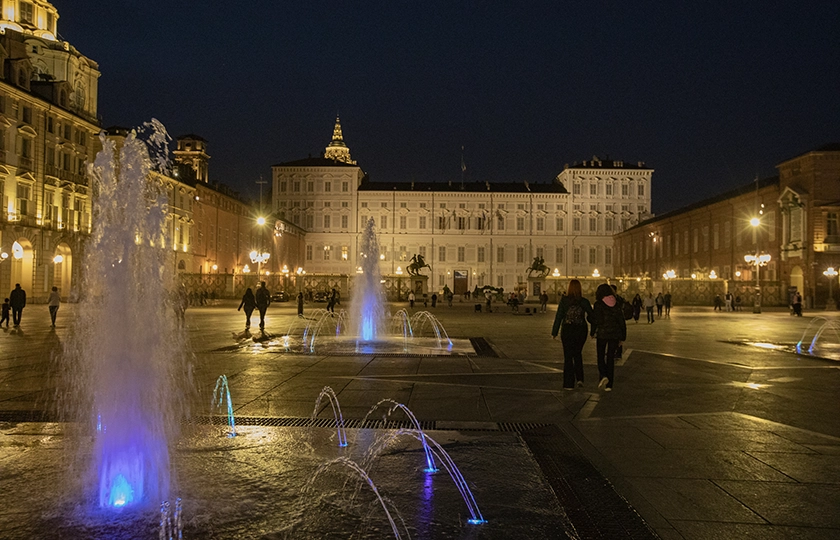
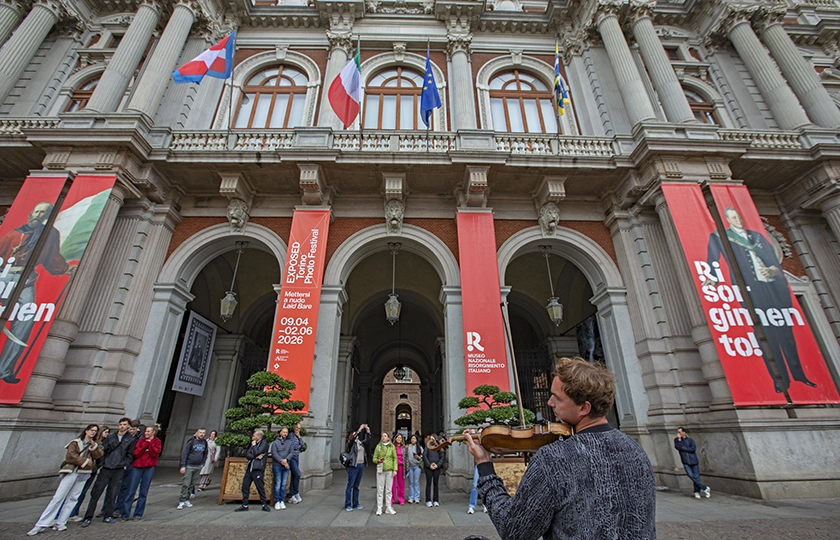
Elegant avenues that invite us to discover squares such as San Carlo, known as ‘Turin’s drawing room’ and a visual showcase of the finest Italian Baroque; Carlo Alberto, which houses the National Museum of the Italian Risorgimento, Carignano, with the majestic Baroque façade of the Palazzo Carignano, where a visit to the Chamber of Deputies of the Subalpine Parliament and the Chamber of Deputies of the Parliament of the Kingdom of Italy is a must; or Castelo, home to some of Turin’s most notable buildings.
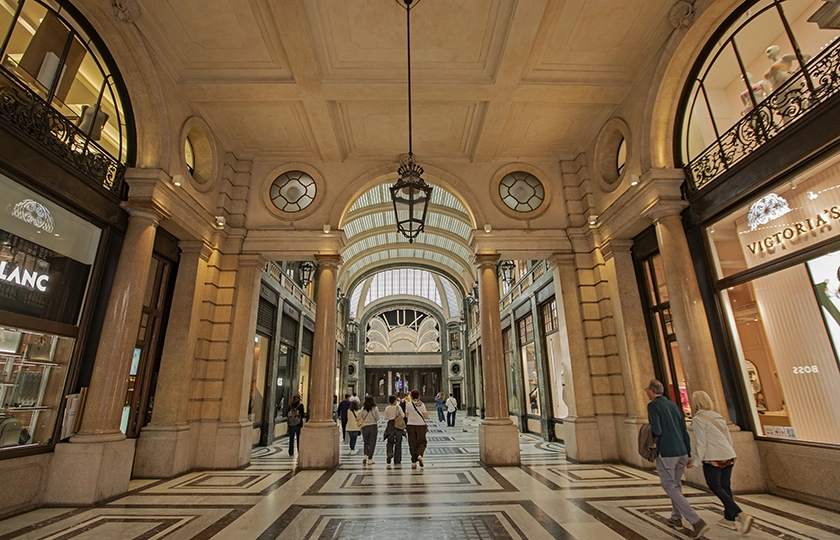
Some of the city’s most beautiful spots can be found in the Galería San Federico, built in the 1930s, and the Galería Subalpina, one of the capital’s three historic shopping centres.
The Roman Empire also left a significant mark on Turin, one that often goes unnoticed by tourists. The Palatine Gate, dating from the 1st century, where the ancient roads converged; the Roman streets that can be admired on the way down to the Diocesan Museum at the Cathedral of St John the Baptist; the ruins of the Roman Theatre or the crypt at the Decuman Gate, with its drainage systems, are perhaps the most notable remains still preserved in the city.
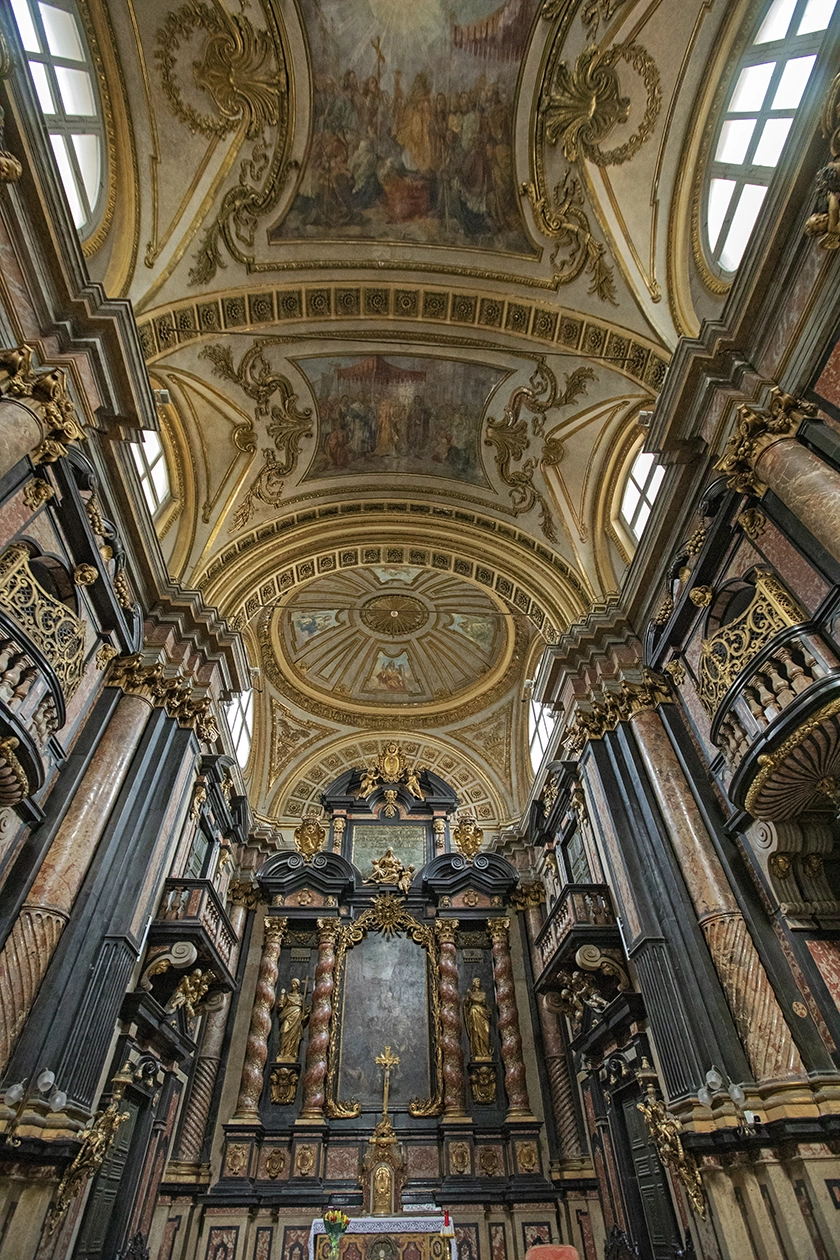
Of course, whilst exploring Turin’s rich history, we must not overlook the magnificent religious heritage represented by churches such as San Filippo Neri, the largest in the city; the Church of San Lorenzo, a turning point in Turin’s Baroque architecture; and the Basilica of Corpus Domini, notable for the black and red marble that adorns its interior.
Another of Turin’s iconic buildings is the Mole Antonelliana, commissioned from Alessandro Antonelli by the Jewish community to serve as a new synagogue. This neoclassical building, with its gigantic neo-Gothic dome, has been home to the National Cinema Museum of Turin since 2000.
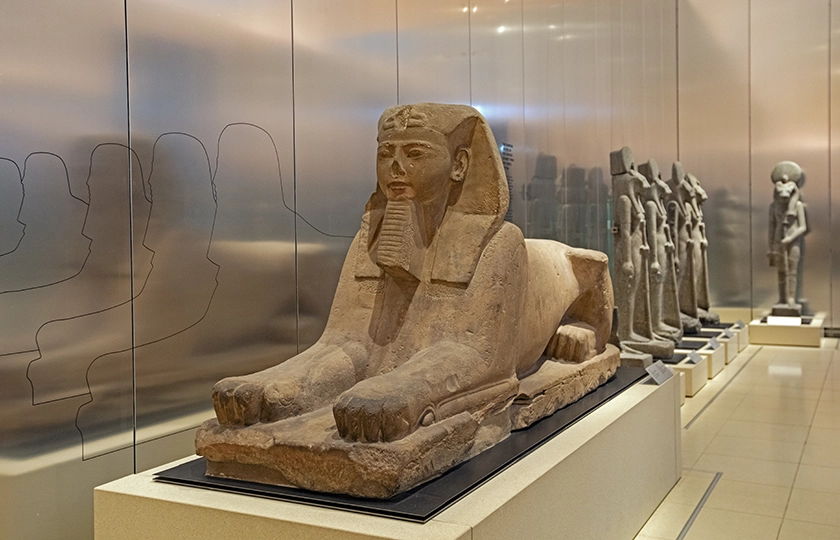
We cannot bring this tour of the historic centre to a close without mentioning the Turin Egyptian Museum, one of the oldest and the second most important in terms of its collection of antiquities, after the Egyptian Museum in Cairo.
The Royal Palace: Turin’s splendour and opulence
The geographical, strategic and political heart of the Savoyard capital, the Royal Palace dates back to 1584. It was at that time that Charles Emmanuel I of Savoy commissioned Ascanio Vitozzi to build a residence for the court, which had just moved from of Chambéry capital.
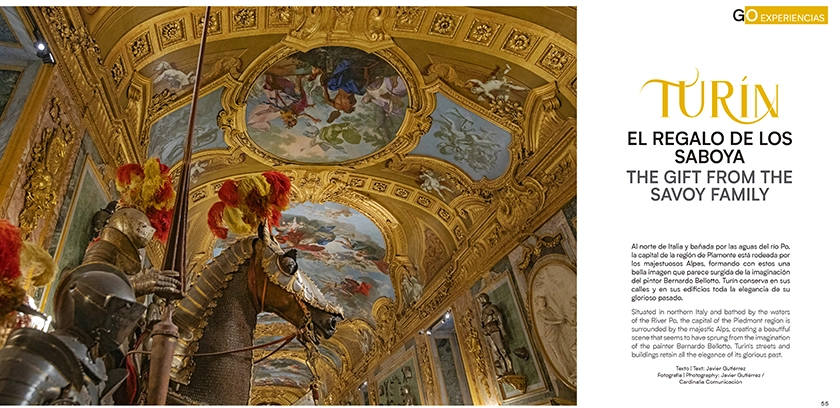
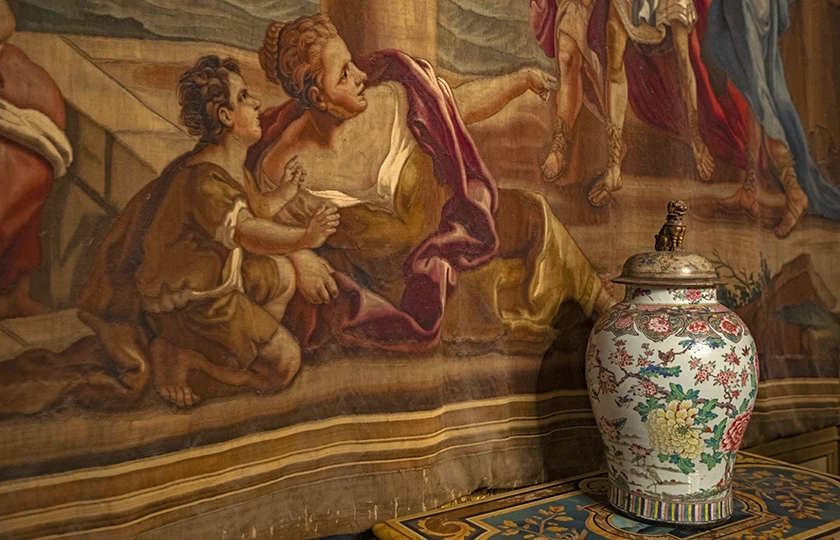
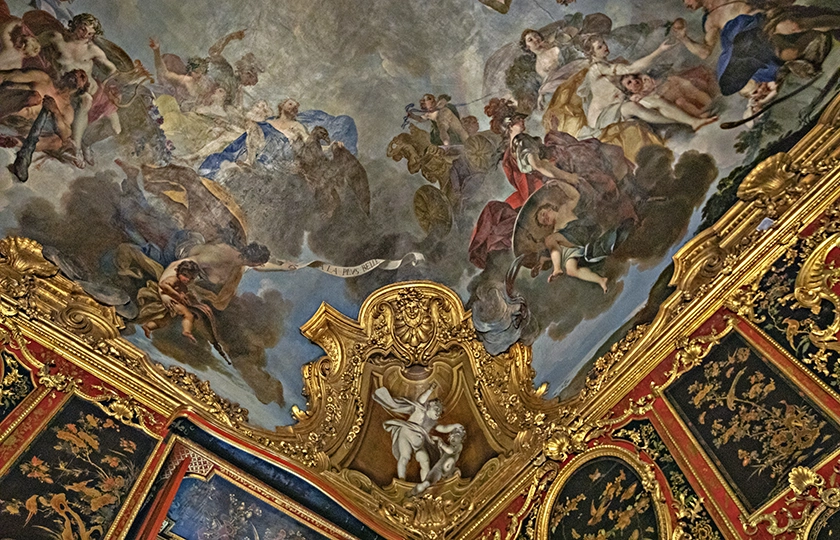
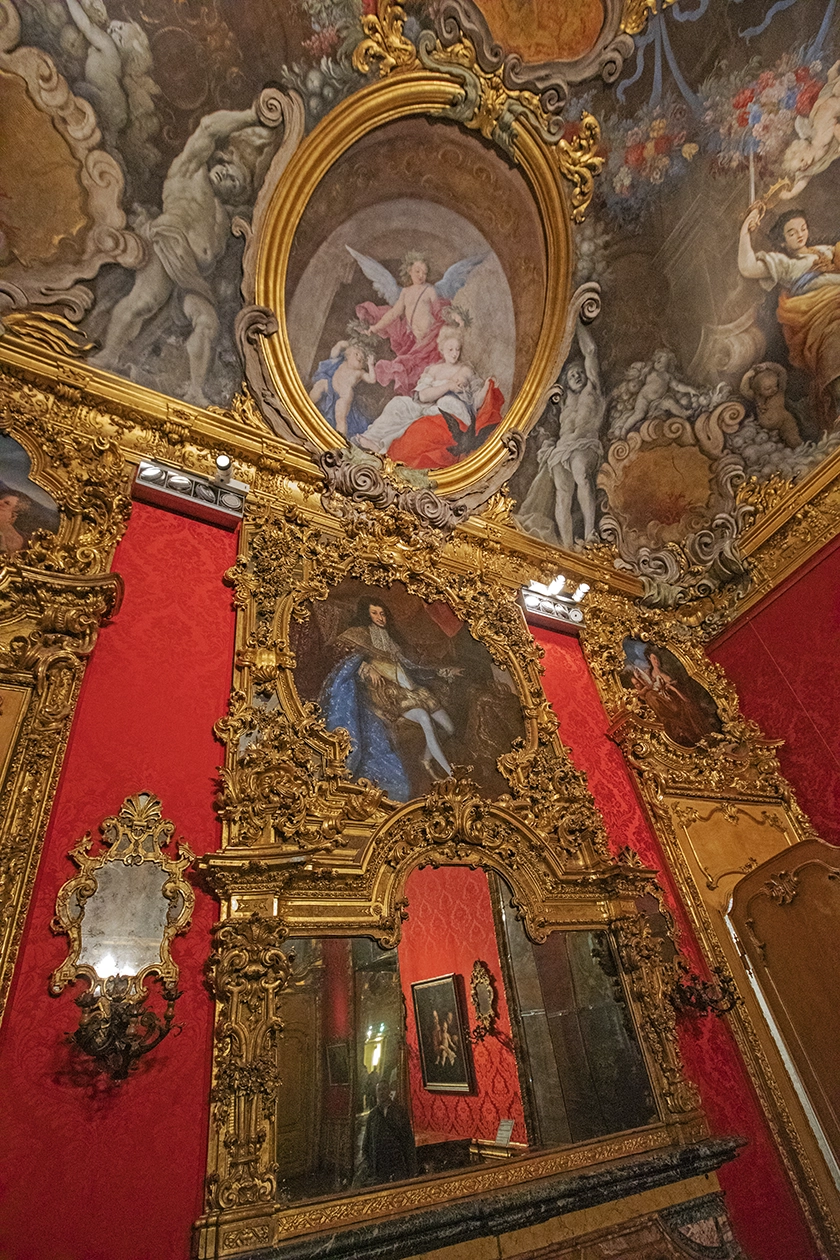
Its various rooms were decorated with sumptuous gilded wooden ceilings and commemorative paintings depicting allegorical scenes; tapestries commissioned from the workshops at Beauvais and the Manufacture Royale des Gobelins in France; painted, carved and gilded vaults; and rooms beautifully embellished with stucco, mirrors and Chinese lacquerware…
Subsequent alterations bear the mark of Filippo Juvarra, who was responsible for renovating the access to the second floor with the staircase known as the ‘scissor staircase’, and of Guarino Guarini, who was responsible for the construction of the Chapel of the Holy Shroud in the cathedral’s apse, to which the House of Savoy had direct access.
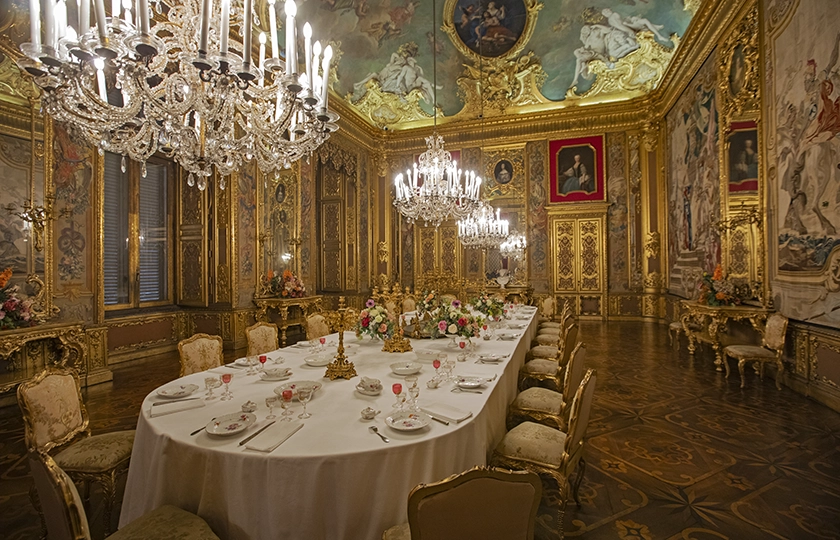
The Royal Palace, one of the most opulent and sumptuous historic palaces, houses the Royal Museums, which comprise the Armoury or Arsenal, beautifully decorated by the court painter Claudio Francesco Beaumont; the Chapel of the Holy Shroud, where the linen cloth bearing the image that Christians identify as that of Christ is kept; the Sabauda Gallery, featuring works by Sandro Botticelli, Beato Angelico, Mantegna or Veronese, as well as Bernardo Bellotto’s famous views of Turin; the Royal Gardens, a green space of extraordinary architectural and environmental value; the Royal Library, which houses thirteen pages autographed by Leonardo da Vinci and the “Codex on the Flight of Birds” and the Chiablese Rooms, whose decoration was the work of the finest artists, both local and those who had come from Rome and Naples.
Madama Palace, residence of the royal madamas
The spectacular Baroque façade designed by Filippo Juvarra welcomes visitors to what was once the residence of the royal ladies Christina of France and Maria Giovanna Batista of Savoy-Nemours. The town’s ancient medieval castle; in 1638, Christina of France commissioned the architect Amedeo di Castellamonte to enclose the old medieval courtyard in order to create, on the main floor, a reception area and a large hall for parties and receptions.
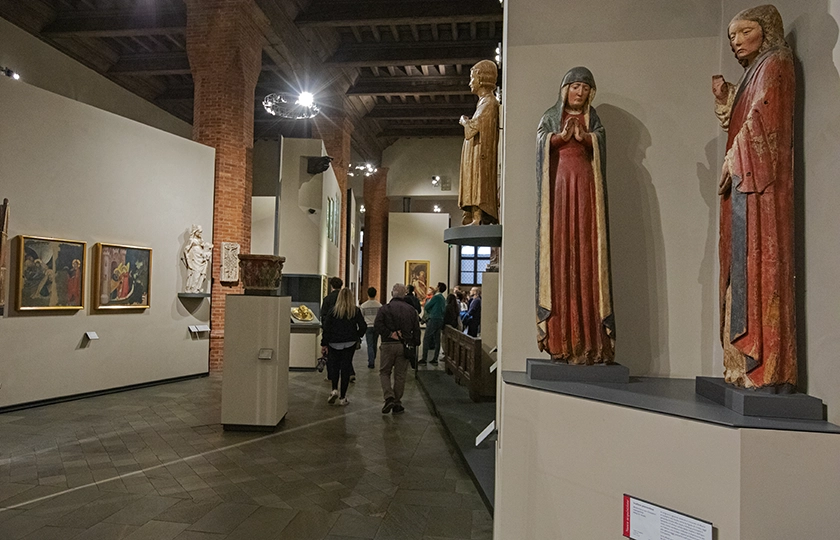
Subsequently, Maria Giovanna Batista of Savoy-Nemours made it her home following the death of her husband, Duke Carlo Emanuele II, in 1675, and the first step she took was to lavishly decorate the rooms with exquisite gilded stucco work modelled by Pietro Somasso and spectacular frescoes painted by Doménico Guidobono. It currently houses the Civic Museum of Ancient Art, offering an educational yet entertaining journey through time and history via the Medieval Lapidary, the galleries dedicated to the Gothic and Renaissance periods, the Baroque arts and the exceptional collection of decorative arts.
Cathedral of St John the Baptist
This magnificent Renaissance building, designed by the Tuscan architect Meo del Caprino, was completed in 1498. As with so many other buildings in Turin, the austere exterior gives way to a light-filled, marble-clad interior in which the Gothic style predominates. The spiritual heart of Turin and a UNESCO World Heritage Site, it is steeped in centuries of history relating to the House of Savoy, as can be seen in the family coat of arms depicted on the black and white marble floor, or in the candelabra of the high altar, on which their heraldic cross is engraved.
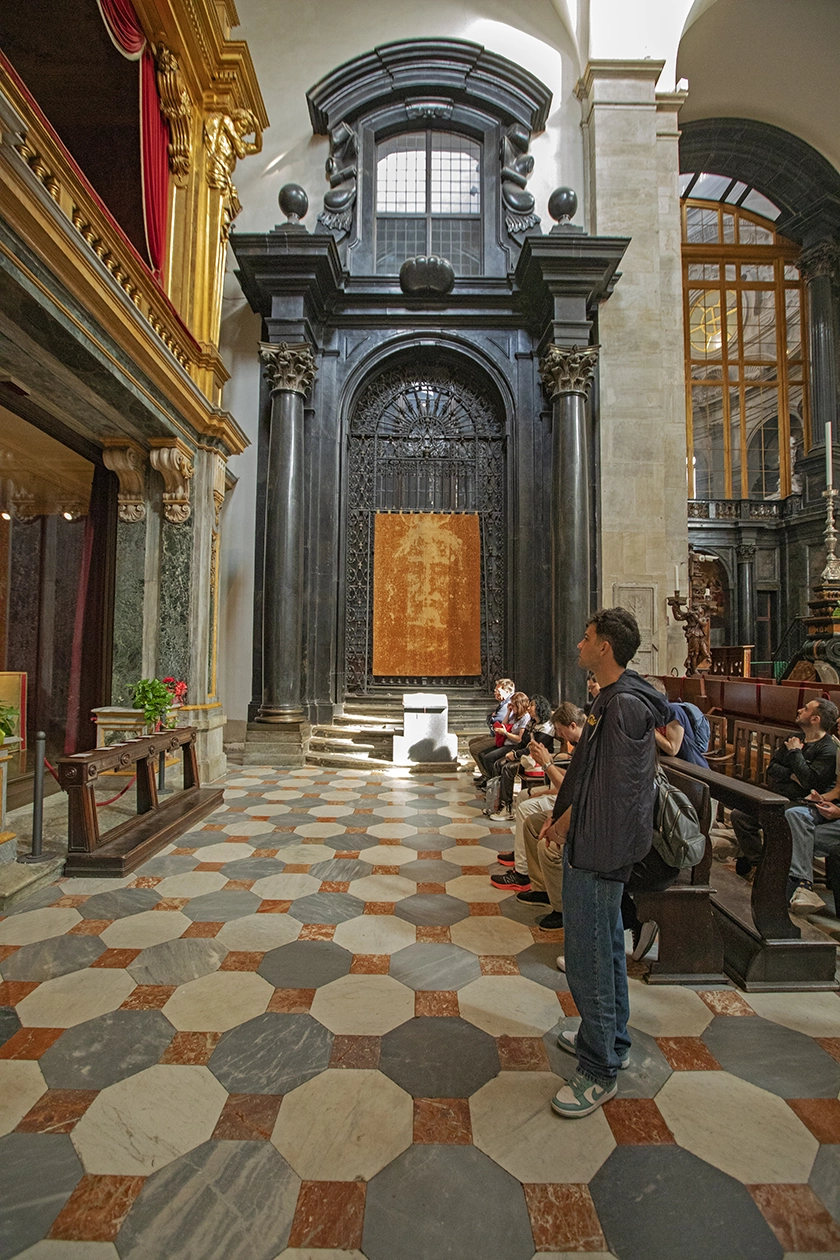
Spurred on by Guarino Guarini, a Theatine priest, mathematician and one of the leading figures of the European Baroque, construction of the Chapel of the Holy Shroud began in 1607. Owned by the House of Savoy since 1453, the relic is currently kept in a special reliquary at the end of the cathedral’s left-hand aisle. The Modena-born architect created a structure which, at the time, defied all known architectural conventions.
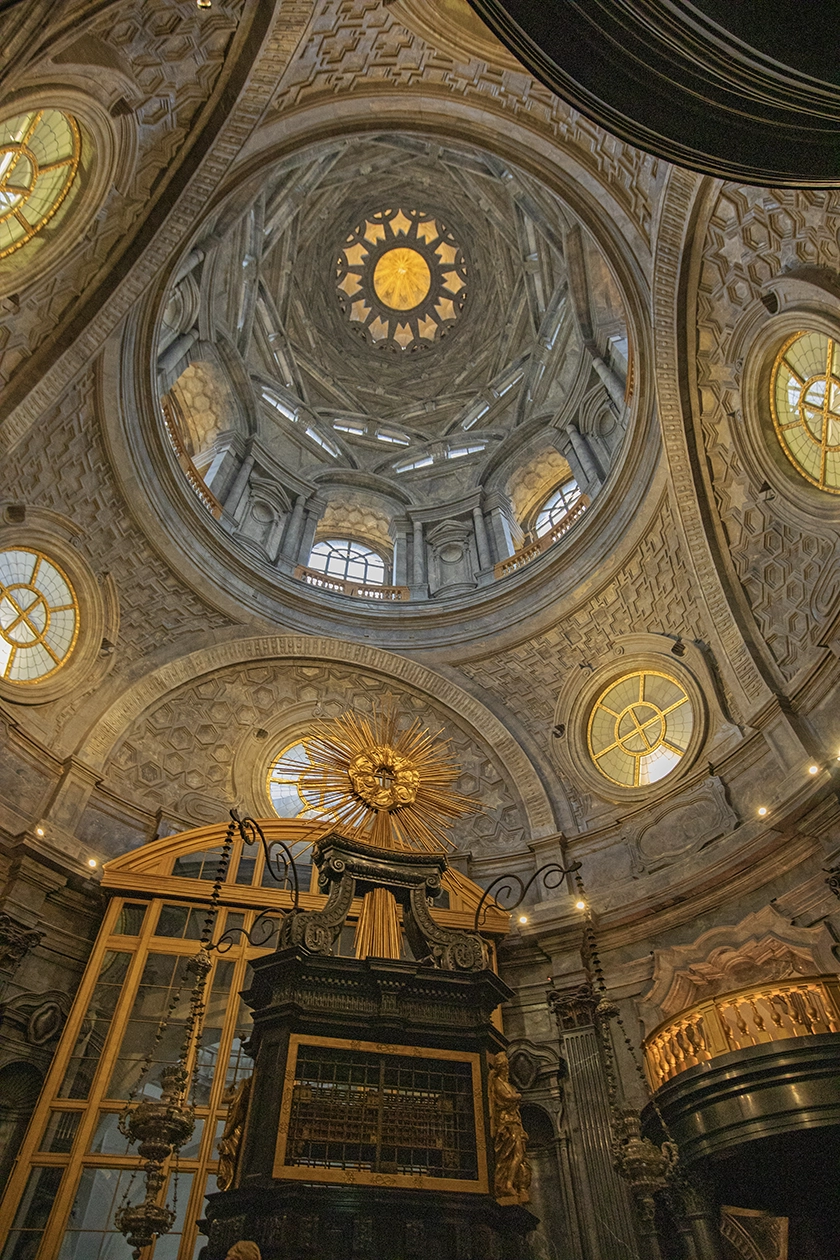
As well as the Chapel of the Holy Shroud, Turin Cathedral houses numerous treasures that are well worth taking the time to admire. Beautiful chapels housing paintings from the 16th to the 19th centuries; a valuable 16th-century altarpiece in the chapel of Saints Orso, Crispino and Crispiano; the Sacristy, which houses a 15th-century altarpiece by Martino Spanzotti, in which the delicate gilding and blues reveal the influence of the Milanese masters. También hay imágenes sublimes como la Madonna Grande o la Beata Vergine della Neve (Virgen de las Nieves) o la Vergine che allatta (Virgen de la Leche). Magnificent works such as the 15th-century crucifix by Baschenis, in which the expression of pain on the face illustrates the transition from the Gothic to the Renaissance in Piedmont; the tomb of Jeanne d’Orlier de la Balme, a lady-in-waiting who died in 1478, or the marble statues of Saint Christina and Saint Teresa, early 18th-century French works that stand out for their sculptural quality. We must not overlook the monumental 18th-century chancel, crafted from carved and gilded wood; the Royal Gallery, situated above the Chapel of the Holy Shroud; and the choir, with its biblical scenes that stand out for their use of perspective — something quite unusual in works dating from 1470.
The Basilica of Superga: a king’s wish
We left Turin’s historic centre behind and set off on a journey through history that began almost one hundred and fifty years ago. Affectionately known as “Dentiera” or “Dentera” in Piedmontese, the Sassi-Superga tram came into service on 27 April 1884 with the aim of connecting the Sassi neighbourhood with the Basilica of Superga, situated at an altitude of six hundred and seventy-two metres. Originally operated by a cable system devised by the engineer Tommaso Agudio, it underwent a major refurbishment in 1934 and reopened a year later with a new rack-and-pinion system.
This tram, one of the few rack-and-pinion lines still in operation in Italy, still uses the carriages that were in service in the 1930s and, as well as passing through two tunnels and over several viaducts, offers wonderful and unforgettable views of Turin and the Alps.
The Basilica of Superga is a magnificent architectural masterpiece, steeped in a rich history of faith, commitment and determination, as well as being one of the most iconic monuments in the Piedmontese capital. It was the will of Victor Amadeus II of Savoy that made the construction of the Basilica of Superga possible, as a token of gratitude for the victory over the French in 1706; once again, the project was entrusted to Filippo Juvarra, the leading figure of the Piedmontese Baroque.
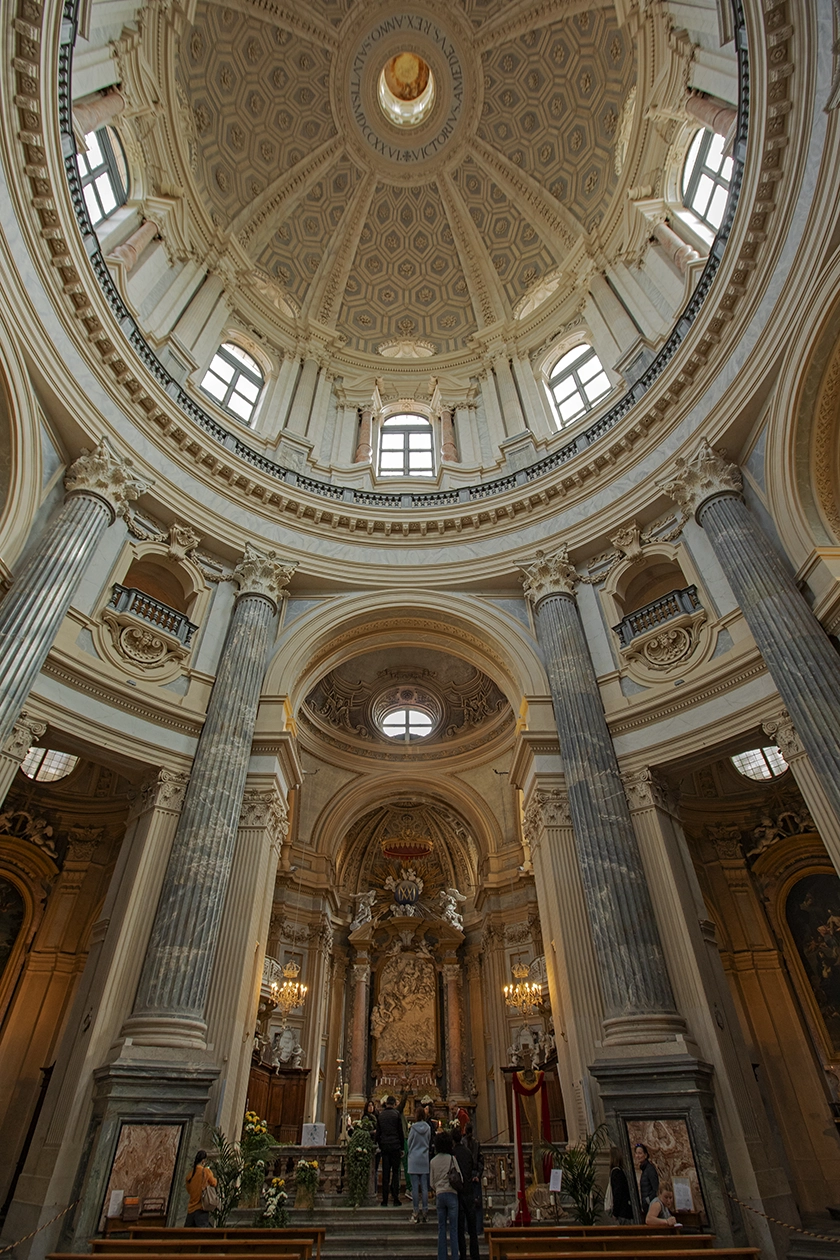
The architect designed a basilica that blends elements of the Roman Baroque with Neoclassical influences. Superga appears solemn and regal to visitors thanks to its majestic façade, featuring a portico supported by eight Corinthian columns, whilst its grand dome is inspired by the Pantheon in Rome. A perfect balance of grandeur and spirituality is what we find upon entering the interior, and the understated Baroque décor enhances the brightness of the spaces, inspiring admiration in all of us.
In the basement of the basilica lies the mausoleum of the House of Savoy, where numerous members of this dynasty are laid to rest, giving the site significant historical value, as well as symbolising the strong bond between the royal family and the city of Turin.
A tragic incident took place at the rear wall of the basilica. The Gran Torino – as one of the city’s football teams was known in the 1940s – was not only a dominant force in the Italian league but also the backbone of the national team at that time; it suffered a terrible plane crash due to thick fog and a navigation error. The result was that all the passengers on the plane lost their lives. A memorial plaque bearing the names of all those who died commemorates this legendary team.
Villa della Regina, a cardinal’s hilltop residence
A favourite residence of duchesses, princesses and queens of the House of Savoy until the 19th century, with Italian-style gardens, water features and agricultural areas, Villa della Regina was built in 1615 by Cardinal Maurice of Savoy and Princess Ludovica Cristina, his niece, whom he had married in 1642 after resigning from the cardinalate, drawing inspiration from the elegant landscapes of the Roman villas.
In 1657, following the death of Maurice of Savoy, his wife extended the complex, redesigned the gardens and buildings, and refurbished the décor and furnishings in keeping with the tastes of the time. Years later, Anne of Orleans, wife of Victor Amadeus II, undertook major reforms. The work was first commissioned to Filippo Juvarra and subsequently to Giovanni Pietro Baroni di Tavigliano, and the spaces were redesigned to blend in with the gardens.
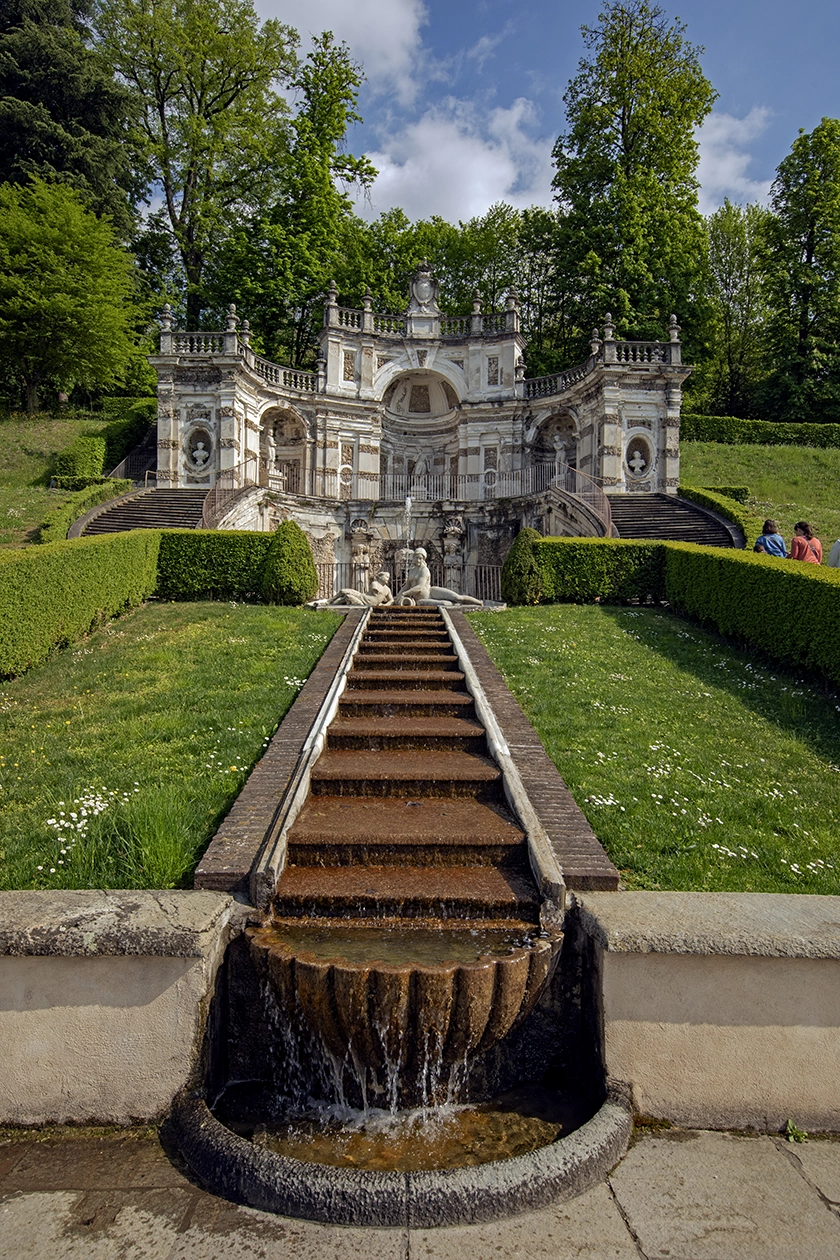
The grand entrance hall leading into the villa was constructed, and the reception rooms and apartments were embellished by some of the most celebrated artists working in the Savoyard capital. The four rooms or small chambers situated in the corner towers were decorated and furnished with Chinese-style objects, in keeping with the fashions and tastes of European courts during the 18th century. Elegant white stucco vaults, embellished with paintings by the artist Claudio Francesco Beaumont, adorned the rooms on the main floor, which were divided into chambers for the queen and the king.
After touring the various rooms of Villa della Regina, with all their grandeur and luxury, we enjoyed a pleasant stroll through the gardens and marvelled at the spectacular interplay between the architecture, nature and the landscape, rounding off the visit with the unforgettable views of the city that the villa offers, with the River Po and the Alps in the background.
Good food and even better drink
Italy is synonymous with fine dining, and a visit to Turin guarantees that you’ll enjoy cuisine that rivals that of other regions in the country. In line with this, the Chamber of Commerce, in collaboration with Turismo Torino e Provincia, has launched the Mangèbin scheme, involving a number of restaurants that guarantee that sixty per cent of the dishes on their menus are from the region.
The city has plenty more to offer that will delight our taste buds. Turin is the birthplace of vermouth, and Mulassano, a vermouth produced by Bordiga using traditional recipes, is available in three varieties: Red, White and Dry.
At La Drogheria, a bar dedicated to cocktails, art and entertainment, they organise a range of tastings every month, giving you the chance to discover the fascinating world of vermouth, as well as wines, drinks and spirits of all kinds.
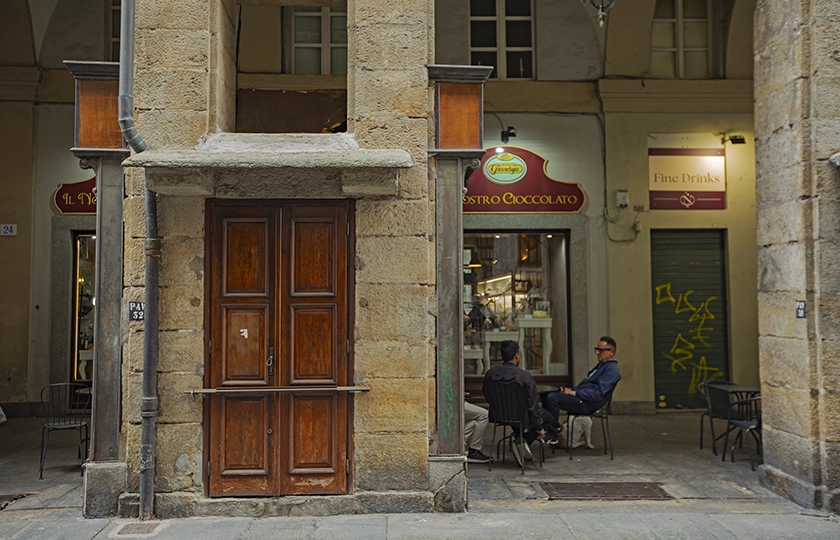
At Spegis Cioccolato, we can confirm that Turin’s chocolate is every bit as good as Swiss or Belgian chocolate. Here, the art of chocolate-making is expressed through creativity, and their work is characterised by the use of the finest ingredients which, combined with their expertise, result in a unique taste experience.
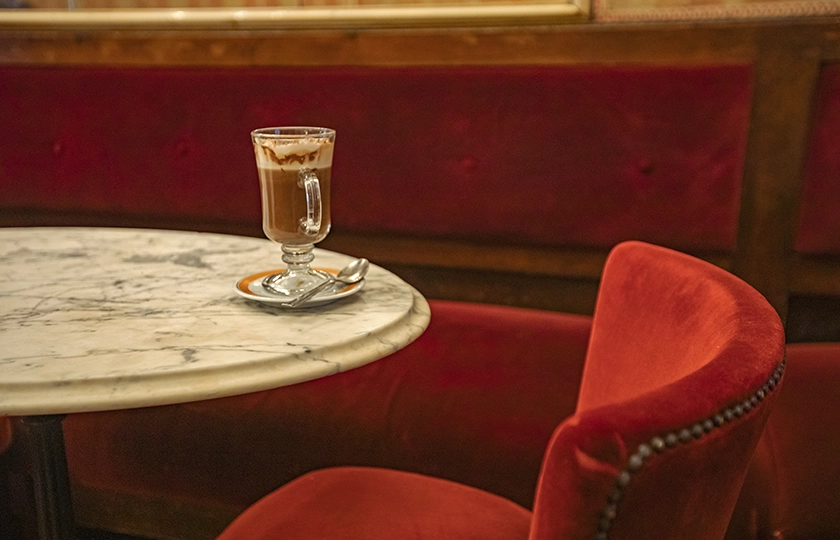
Turin is a city of historic cafés, some of which are among the most beautiful in Europe. You could choose between Mulassano, San Carlo, Fioro or Al Bicerin, where the famous drink of the same name – made with coffee, chocolate and cream – was first created. Simply delicious!
The city has an undeserved reputation for being a grey place, perhaps because it is always associated with the industry that has been based there for decades. Nothing could be further from the truth. The capital of Piedmont is green thanks to the gardens and parks that adorn it; embellished by the decoration of its palaces; white with the snow of the Alps; black and red, due to the marble of its religious temples and blue, yellow, ochre… in the altarpieces of its churches and the ceiling paintings in its palaces. Turin isn’t grey; it’s multicoloured.
https://turismotorino.org/en | https://www.italia.it/en | https://www.enit.it/en