Although it is less well known than other European regions, one could say that this region of Belgium is Europe’s best-kept secret. And there are plenty of reasons for this. Within its borders, we come across some amazing gems, such as castles, medieval and Baroque palaces, and industrial heritage sites.
Cities such as Mons and Liège, where architectural beauty blends with a deep-rooted beer and food culture, and charming villages where traditions are still very much alive. Not to mention the River Meuse and the adjacent canals, which run the length of the country and offer landscapes and natural surroundings that are ideal for walking or cycle touring.
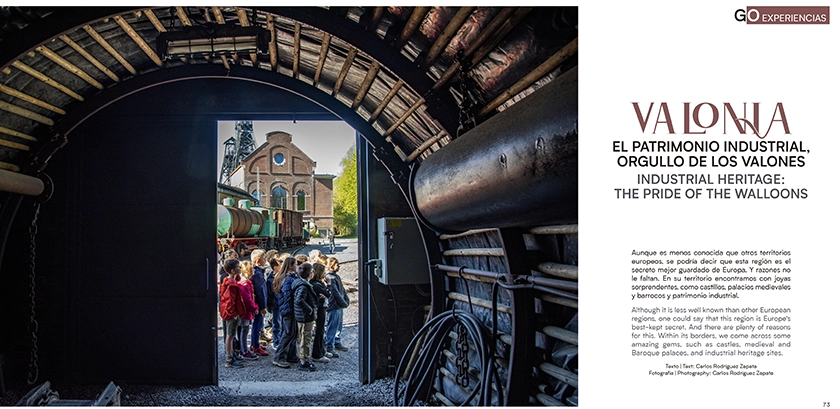
But if there is one thing the Walloons are proud of, it is their perfectly preserved industrial heritage, which is mainly linked to coal mining. Wallonia was one of the first industrialised regions in Europe from the late 18th century onwards. It was a very early form of industrialisation, the driving force behind the Walloon economy, which experienced its greatest boom from the first half of the 19th century to the second half of the 20th century. Wallonia as a whole, and cities such as Liège, Charleroi and Mons, underwent a profound transformation as a result of this economic development, witnessing the emergence of a new architectural landscape characterised by factories, mines, canals and glass production, alongside workers’ settlements and a significant influx of labourers from various parts of Europe, all of which contributed to the formation of a complex, diverse social identity deeply rooted in the industrial world.
Mons: the setting for the battle between St George and the dragon
The best way to visit Wallonia is to head first to the city of Mons. A medium-sized city with plenty of pedestrianised streets and majestic buildings, making it a very pleasant place. It’s no wonder it was European Capital of Culture in 2015.
During the 16th and 17th centuries, Mons maintained close ties with Spain, as it formed part of the Netherlands under the rule of the Spanish monarchy, a period which left its mark in cultural, military and architectural terms. As proof of this, on the Grand Place, to the left of the Town Hall, you can see a bust of King Philip IV of Spain on a house with stepped gables. The Grand Place is, without a doubt, one of the most beautiful squares in Europe. It is dominated by the 15th-century Town Hall, a most interesting example of Gothic-civil architecture, not to mention the other buildings surrounding it, whose façades reflect the city’s various architectural periods over the centuries.

When the weather is fine, the square fills with people in its bars and restaurants, where you can enjoy Walloon cuisine whilst taking in unbeatable views. Behind the Town Hall stands the former Monte de Piedad, which houses several museums, the most cherished of which by the locals is the “Doudou” museum. A true symbol of this ancient city, it is brought to life in early June during the Ducasse festivities, to mark the procession of the Golden Chariot (Car d’Or), a Baroque chariot carrying the relics of Saint Waudru, the city’s patron saint, and the contest known as the Lumeçon, a ritual battle between Saint George and the Dragon (Doudou) that draws thousands of visitors to the Grand Place.
The Beffroi bell tower: a UNESCO World Heritage Site
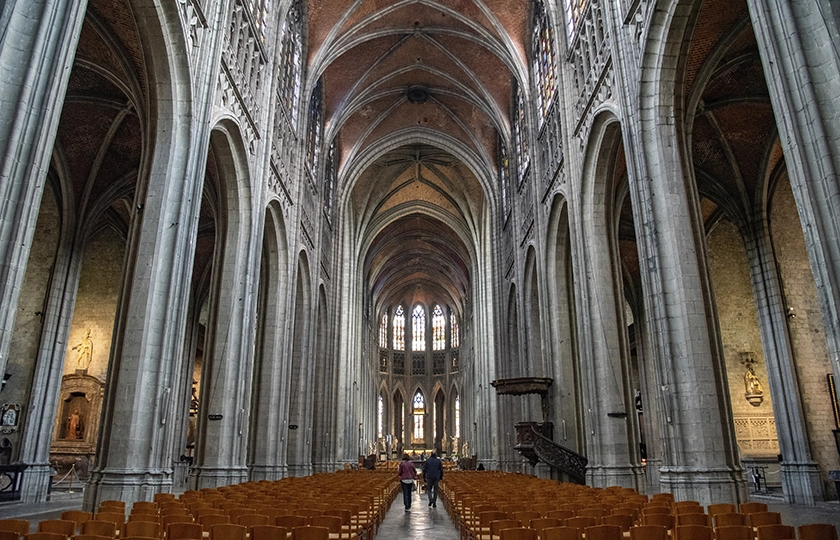
The sparse remains of the castle lie very close by. Although the most notable feature of the site is the city’s emblem, the Beffroi bell tower – also popularly known as the Catiau – which, at eighty-seven metres high, is Belgium’s only Baroque watchtower. As you walk down Rue de Clercs, you will come across the Brabant Gothic-style collegiate church of Sainte-Waudru and its relics. An imposing church which houses the Golden Chariot, which is paraded on Trinity Sunday, accompanied by musicians, banners and so on, as they make their way to the Gran Plaza during the Ducasse festival. A festival that has been designated as part of the Oral and Intangible Cultural Heritage of Humanity.
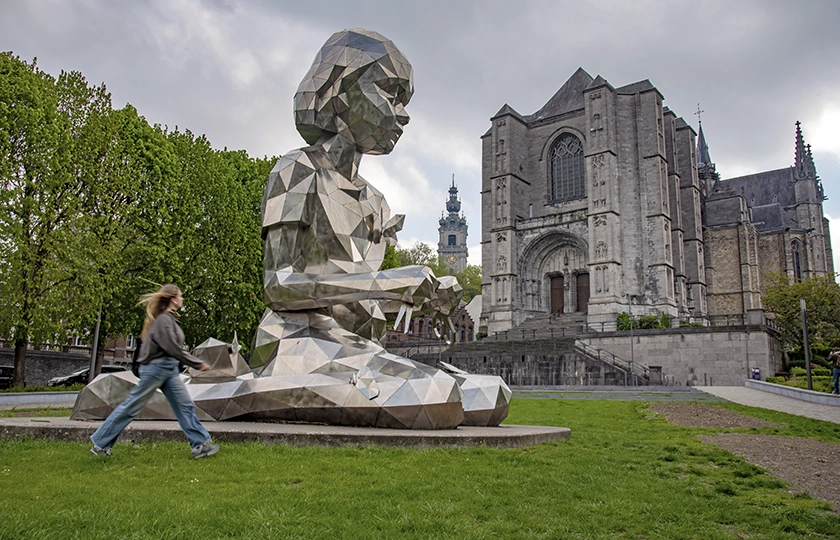
Right opposite the collegiate church, a secluded park is dominated by a silver statue called ‘Lucía and the Butterflies’, which is one of the most Instagrammable sculptures in the area.
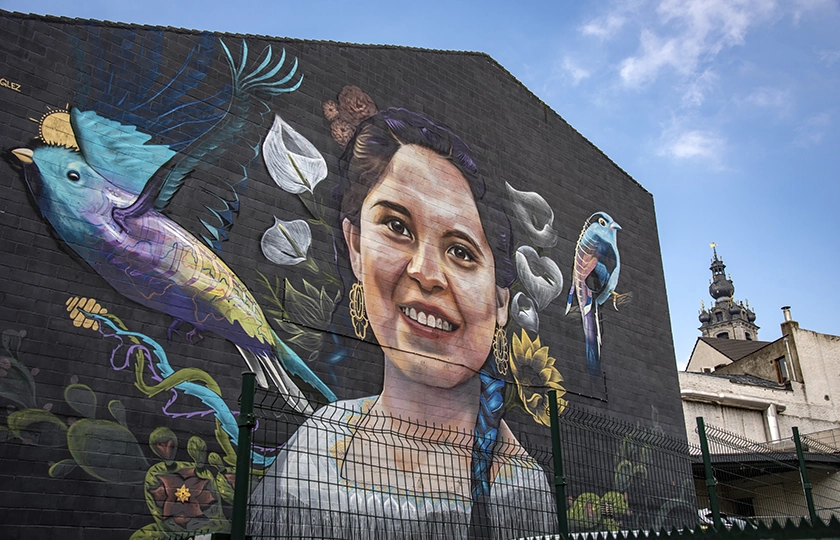
To really get a feel for the city, take a leisurely stroll through its secluded streets, where you’ll find everything from stone-built Gothic houses to numerous buildings with murals on their walls – thanks to a City Council initiative that promotes urban art through a trail called “L’art habite la Ville”. Also on the pedestrianised Rue des Fripiers, with its restaurants and numerous shops, we’ll walk on cobblestones painted in different colours, which give the street a very cool feel. Very close by is the “Boule de Bleu” restaurant, which specialises in original salads, organic produce and homemade desserts – and luckily, they speak Spanish.
Le Grand-Hornu: the working-class town
Le Grand-Hornu, nestled in the Borinage region, is one of the four jewels that make up this cultural site, which is regarded as one of the most important examples of European industrial heritage. They were recognised by UNESCO as a World Heritage Site. As if it were manna, but coming not from the heavens but from the earth, the mines stretch from the east to the west of Wallonia, along a strip of land nearly two hundred kilometres long and between three and fifteen kilometres wide. His discovery meant that the enormous energy requirements of the nascent heavy industry, combined with the technical advances of the Industrial Revolution, ultimately transformed coal mining into a major industrial activity of the first order.
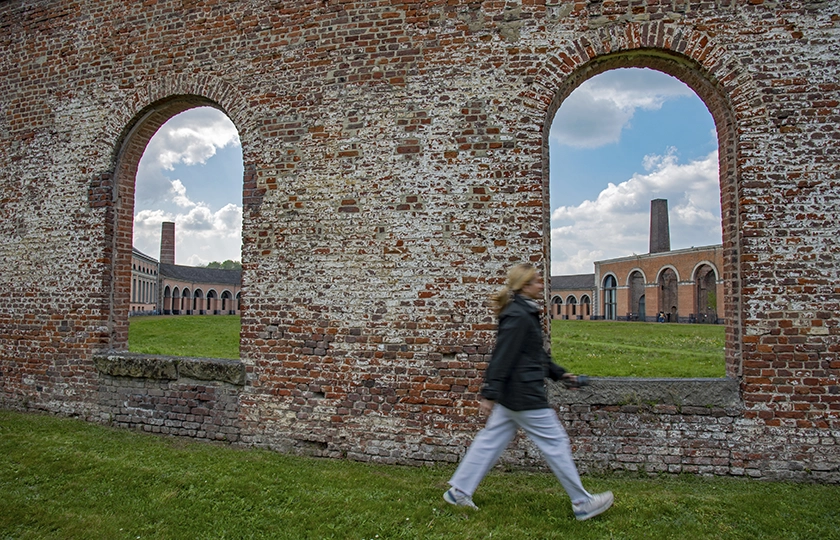
The Grand-Hornu thus became a model of how to reconcile the needs of thousands of miners with the hard work they were to undertake. A mini-town comprising four hundred houses was thus built, with the aim of attracting and retaining the workforce by offering exceptional amenities. In the heart of this industrial town, which was built in a semi-circular layout, with workshops and offices surrounding a large courtyard 150 metres long and 80 metres wide – a miniature replica of the Roman Circus Maximus – it thus formed the nerve centre of a mining company that operated more than ten pits to extract bituminous coal, which was highly prized at the time. Although the site was abandoned in 1953, the now-restored buildings have been transformed into a major cultural hub, housing the MACS (Museum of Contemporary Art) and the CID (Centre for Innovation and Design).
The oldest brewery in Wallonia
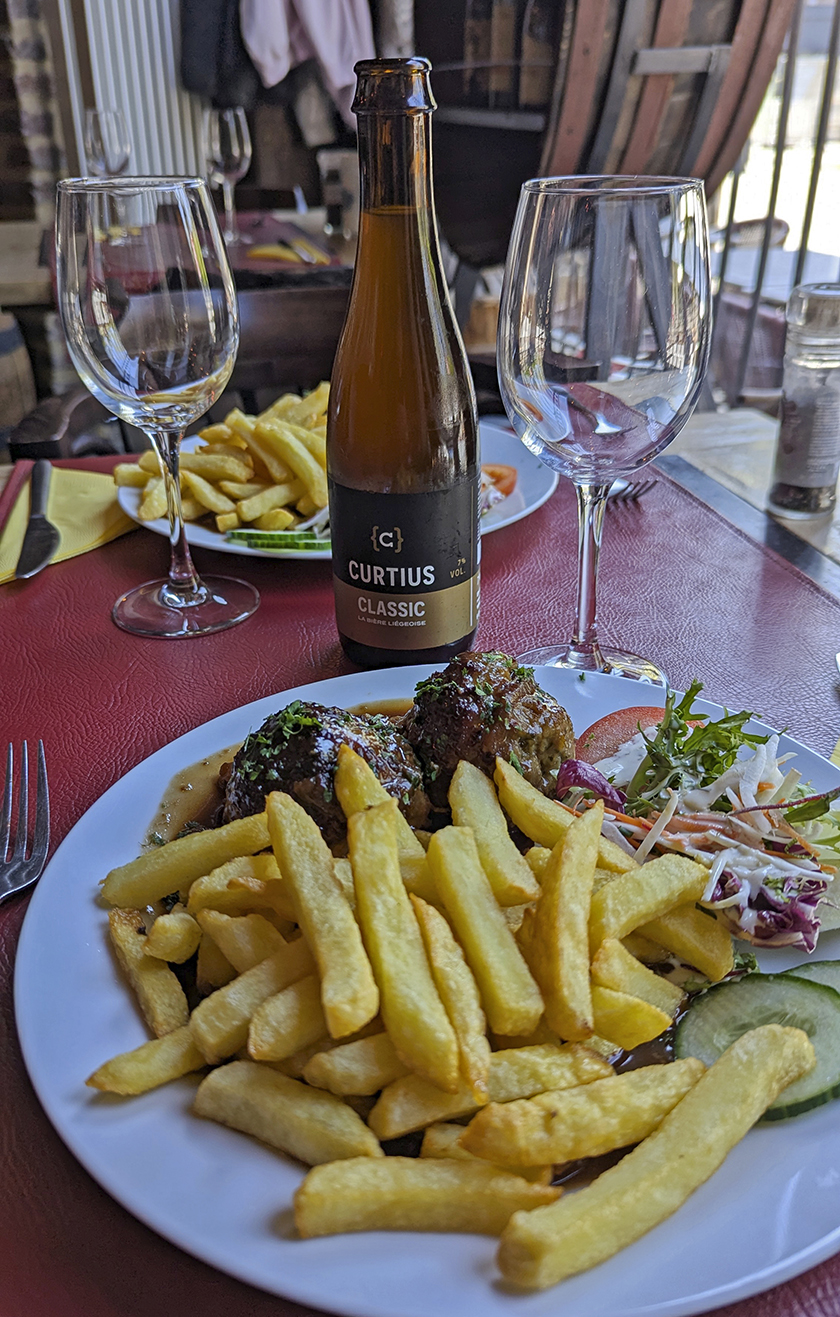
There’s probably no better place to drink beer than Belgium, and Wallonia knows a thing or two about that. There are all sorts: Trappist beers, abbey beers, gueuze, kriek, top-fermented and bottom-fermented beers, lambic, golden beers, sparkling beers, dark beers, effervescent beers, light beers, strong beers, bitter beers, with varying alcohol contents – in short, a whole host of possibilities. That is why Belgian beer culture has been recognised by UNESCO as Intangible Cultural Heritage of Humanity, That is why Belgian beer culture has been recognised by UNESCO as Intangible Cultural Heritage of Humanity, reflecting a unique expertise that can be discovered in more than eighty breweries in Wallonia.
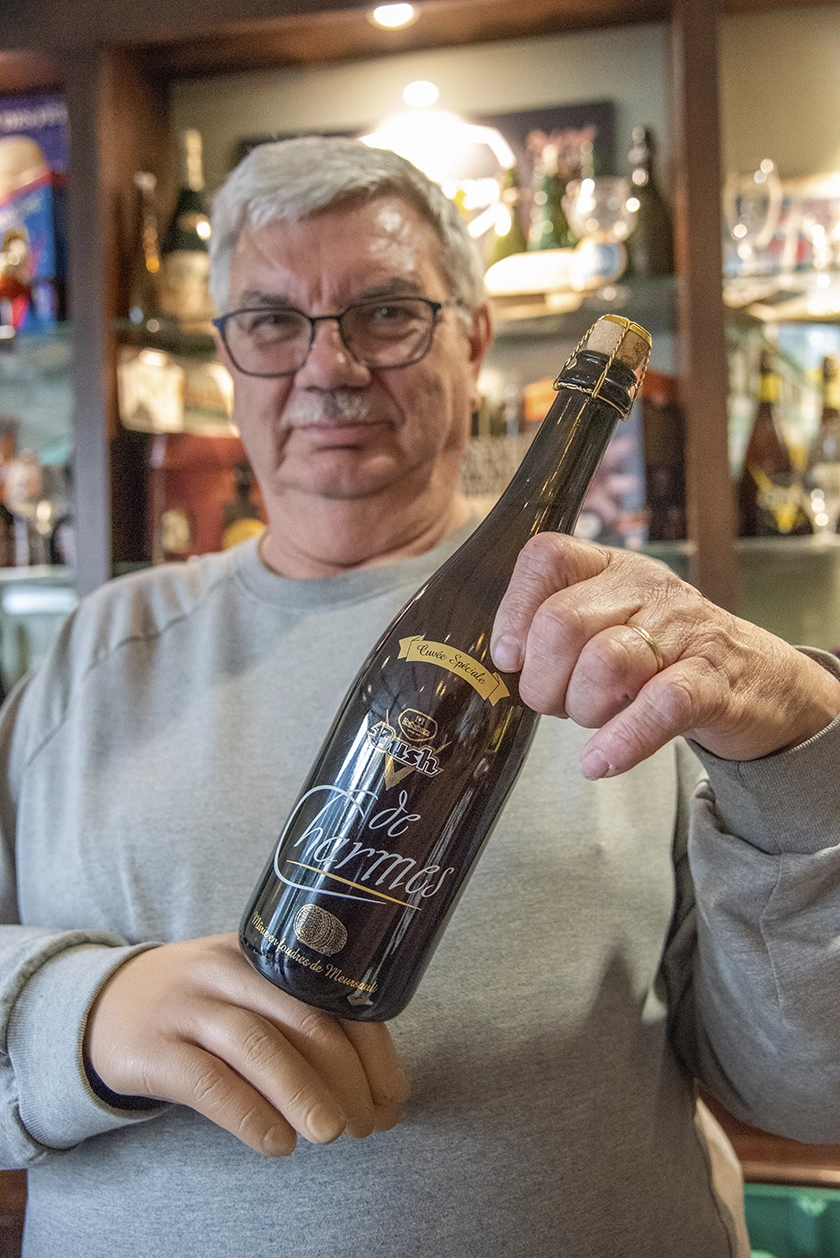
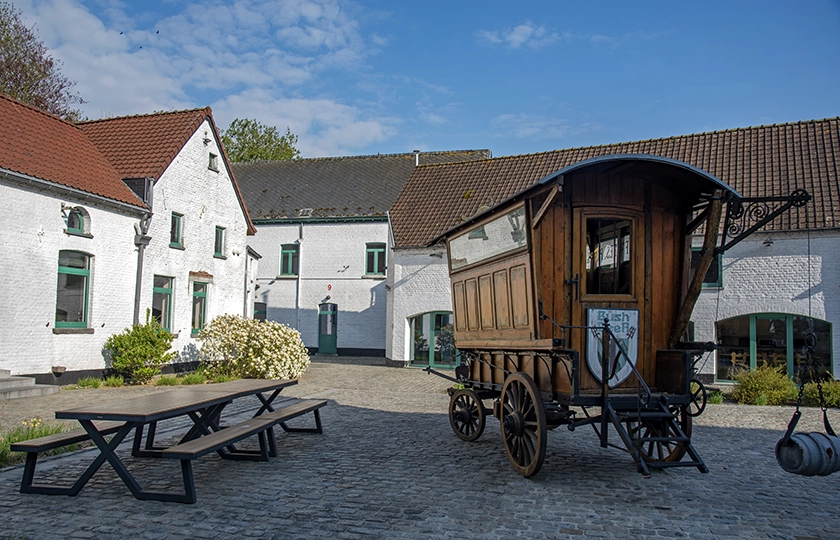
Among these, we would highlight the Dubuisson brewery, considered to be the oldest in Wallonia, which has been in operation since 1769 and has been part of more than 250 years of brewing tradition. A visit here allows you to discover its historic rooms, its traditional brewing methods and its iconic beers, such as Bush, created in 1933 and now a symbol of Wallonia’s brewing heritage. The experience is rounded off by the Dubuisson Beerstorium, an interactive museum that immerses visitors in the history and expertise of this legendary brewery, with a beer tasting included.
Bois-du-Luc. The mining epic
Le Bois-du-Luc is another of Europe’s best-preserved workers’ and industrial estates. This site, home to the oldest coal mines on the entire European continent, is also a World Heritage Site.
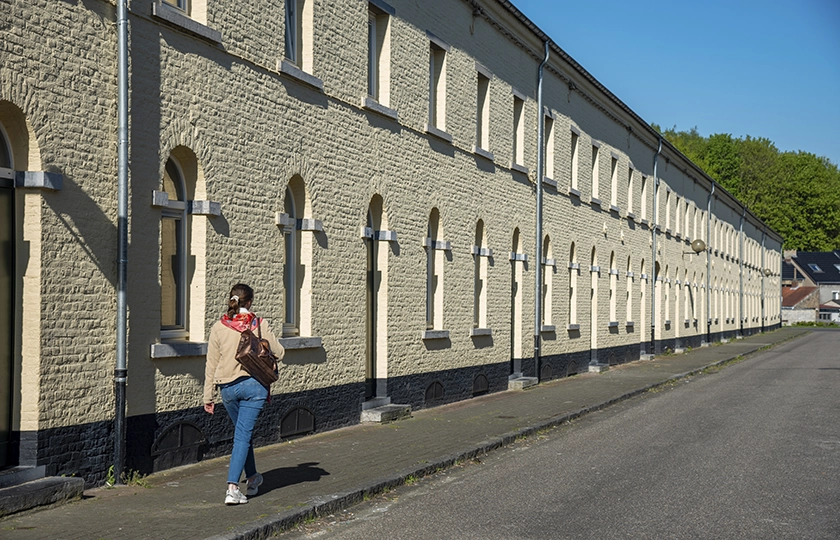
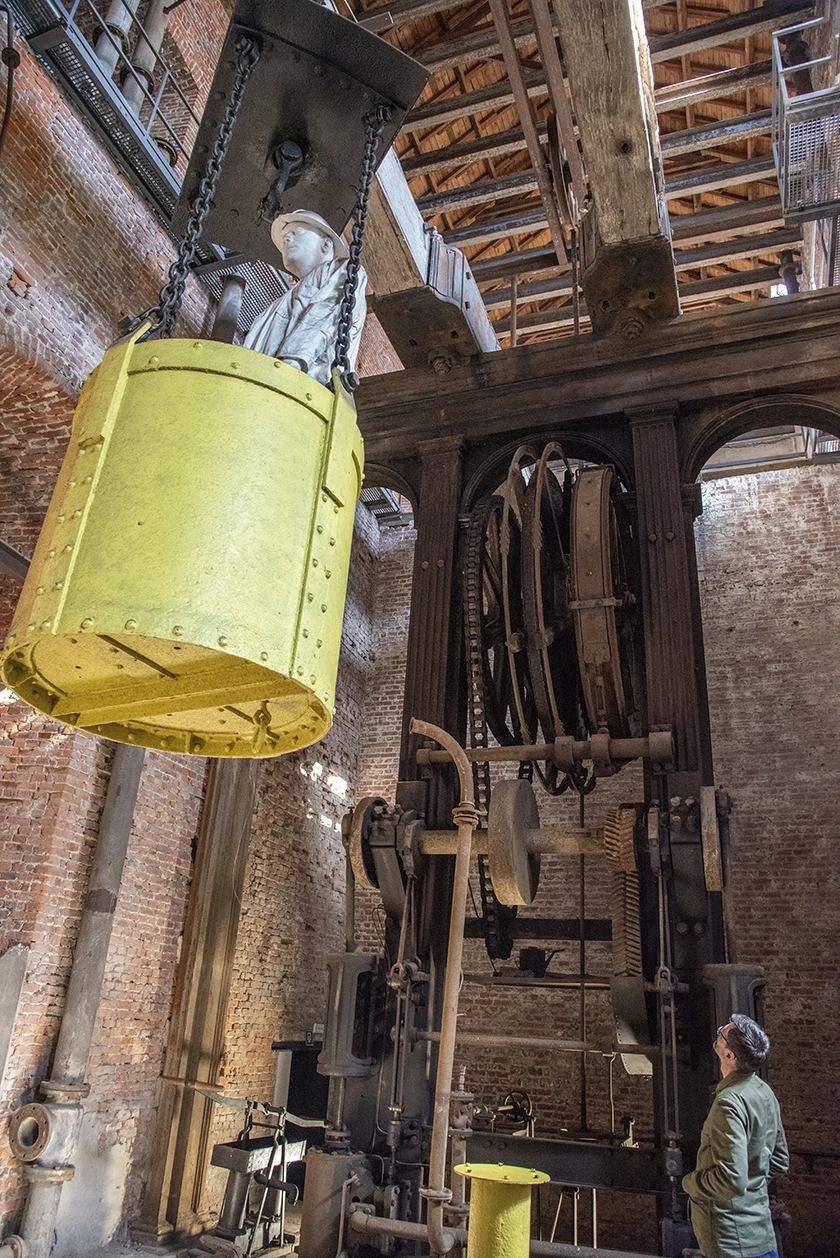
Alongside the industrial buildings, the workers’ houses –built in tight rows and all painted yellow– line the wide, straight, paved streets, forming a beautiful ensemble. Visitors will also be lucky enough to see the inside of one of them, with its own garden – large enough to accommodate a vegetable patch – as well as hot water, a bread oven, etc. The schools, the hospital, the hospice and the church give us an insight into how an entire mining community used to function. The restored buildings and a mining museum provide a clear insight into the development of the industry, working life and mining society in Wallonia.
The Grand Canal du Centre. An architectural marvel
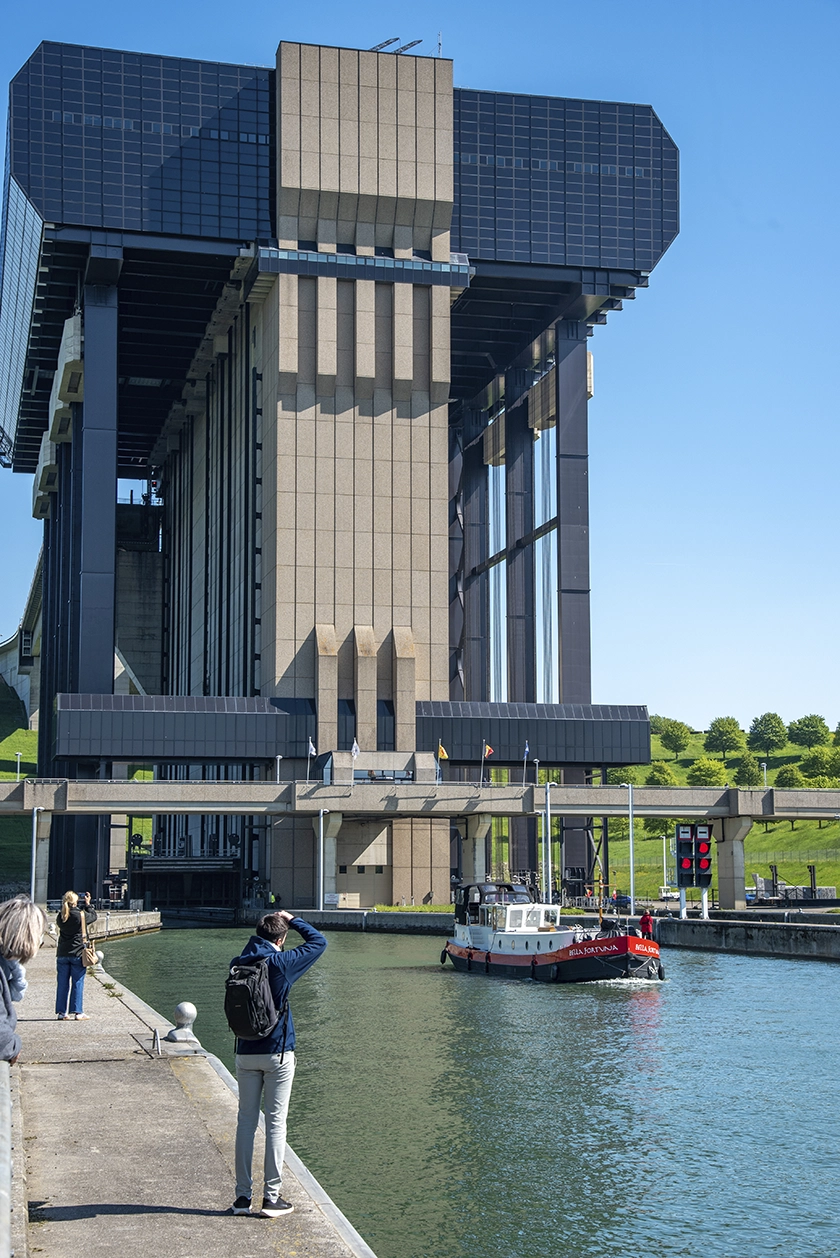
Wallonia is a region of rivers and canals. There are several rivers that flow across its plains and several canals that run through it. The most important of these is the Canal du Centre, a marvel of industrial engineering that has been designated a UNESCO World Heritage Site. This historic Canal du Centre, with its four hydraulic lifts, was built between 1882 and 1917 to transport coal from the mines at Bois-Du-Luc. The canal, which is about twenty kilometres long, connects two towns and two rivers: Mons with the Scheldt and La Louvière with the Meuse. Over time, it became too small because larger ships were needed which could not pass through the old locks; consequently, another canal was built for these ships in 2002, leaving the historic one for recreational and tourist vessels. A gigantic lock building was constructed, 110 metres high and 135 metres long, making it the largest ship lift in Europe. Watching the lift lower or raise the ship, given the seventy-three-metre height difference, is a truly unforgettable experience. To round things off, there are walking and cycling routes all along the canal, all of which are magnificent and suitable for everyone.
From pottery to castles
Very close to the canal is the Kéramis Centre, one of the major European ceramics manufacturers of the 19th century. The choice of La Louvière as the site for the factory was no coincidence, as the location offered direct access to the Charleroi Canal and the coalfields of Bois-du-Luc. The factory was renowned for its technical innovation, such as the installation of Europe’s first gas-fired tunnel kiln in 1904. In its museum dedicated to ceramics and the earthenware industry, visitors will be able to see, in addition to the three ancient, gigantic bottle-shaped kilns, the historical collections from the former Royal Boch factory and a previously unseen collection of ceramics from the 20th and 21st centuries.
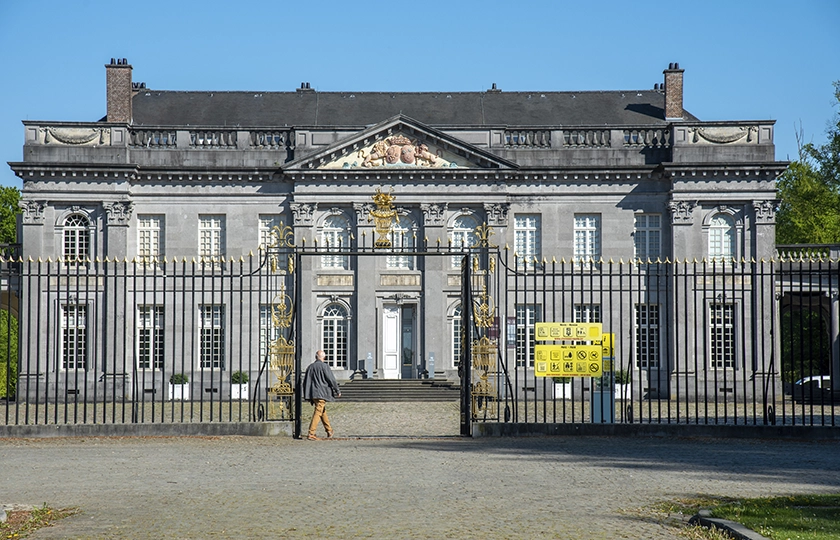
Our next destination is Seneffe Castle and Palace. Built in the late 18th century, it is yet another example of the Neoclassical style of Enlightenment architecture.
On arrival, we are greeted by a majestic park that has been designated an exceptional heritage site. Once through the gate, two wide colonnaded galleries extend the façade of the building’s central section. Its interior invites visitors to discover what life was like in this castle-palace in the 18th century. The palace also houses a Museum of Gold and Silverwork, which boasts one of Belgium’s most important collections of silverware.
The Bois du Cazier: the great disaster of 1956
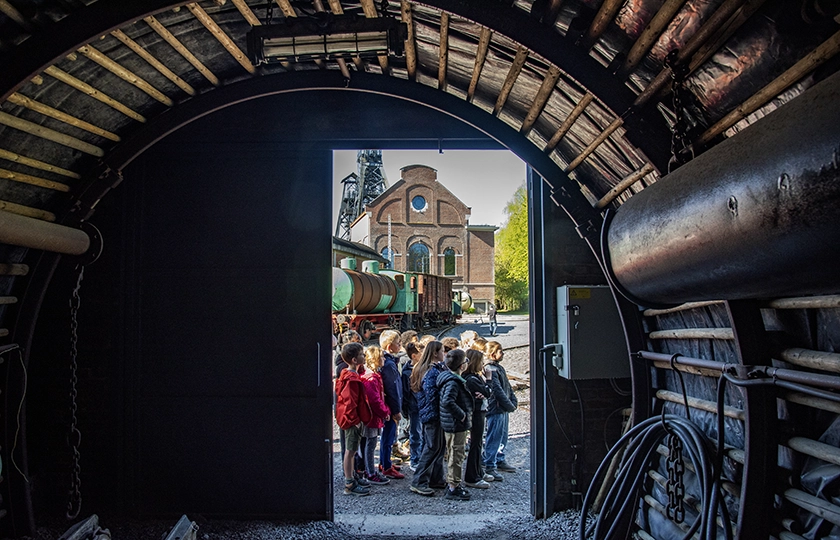
The Bois du Cazier, near Charleroi, is one of the most iconic sites of Wallonia’s industrial heritage. The former mining complex is also a UNESCO World Heritage Site due to its historical, technical and human significance. Our guide, the son of an Italian miner who speaks perfect Spanish, tells us about the scene of Belgium’s deadliest mining disaster – an explosion in 1956 that claimed the lives of more than two hundred and sixty miners, one hundred and forty of whom were Italian. During our visit, we were delighted to see hundreds of children from various schools running about here and there as part of a treasure hunt. Further proof that these mining complexes form part of the educational process, enabling future generations to understand and learn a history they must not forget.
Two museums are housed in their restored premises. One is the ‘Industry’ exhibition, which illustrates the methods used to extract coal and everything involved in mining life. The other, the Glass Museum, which shows how Walloon glass is made. For lunch, we headed to La Cantine des Italiens, a restaurant next to the historic Canal du Centre, which was built to accommodate the Italian workers employed in the steel and coal industries in La Louvière during the post-war industrial boom. After visiting the site, we went on a short walk up a “terril”, a feature typical of the Walloon mining landscape. A “terril” is an artificial mound formed from the mineral waste extracted during coal mining. Interestingly, these mounds have become natural spaces, offering unique panoramic views from their summits over the former mining site, the city of Charleroi and the surrounding area.
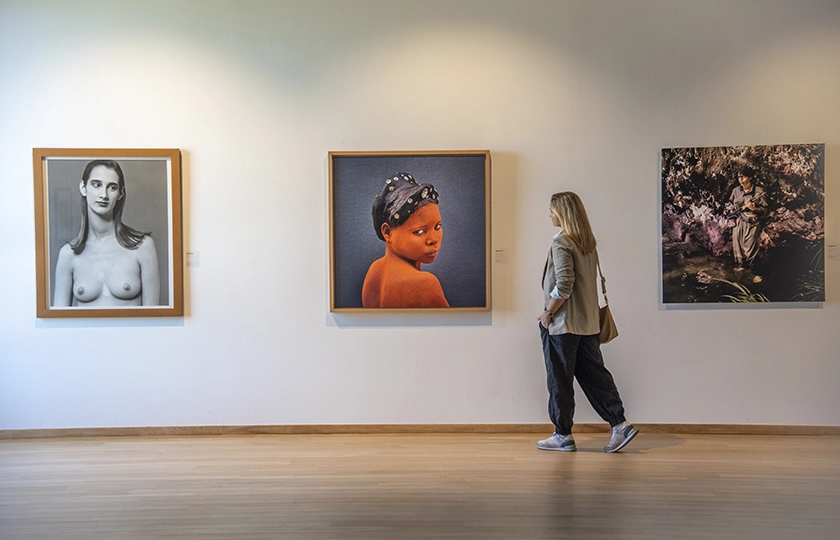
We left the mining site, but didn’t go far before visiting the Charleroi Museum of Photography, housed in a former neo-Gothic Carmelite convent in Mont-sur-Marchienne, which is arguably one of the most important photography museums in Europe. Its collection brings together historical and contemporary works that trace the evolution of photography from its beginnings to the present day.
The Val Sain-Lambert Glassworks
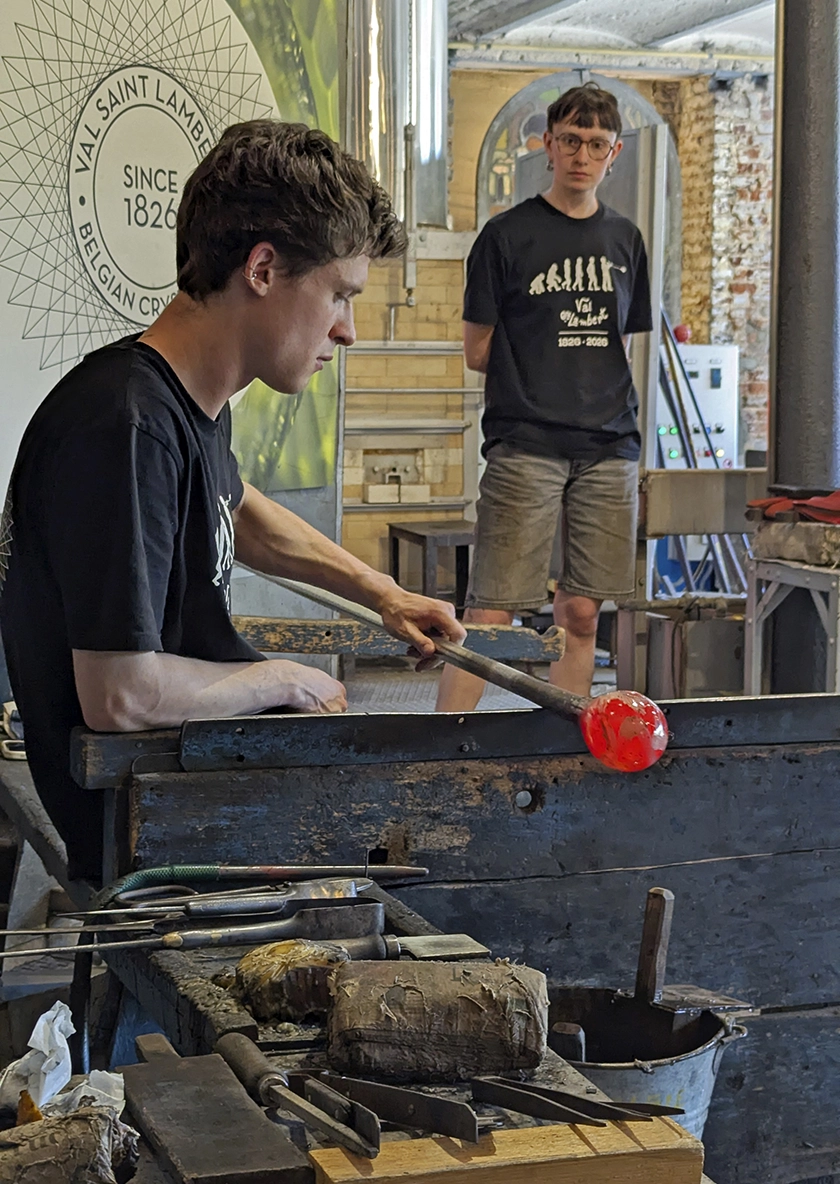
Our next destination is the city of Liège, but first we’re making a must-see stop at Val Saint-Lambert, Europe’s most famous glass and crystal factory, which is celebrating its 200th anniversary this year. Founded in 1826 in Seraing, it is still in full operation today. VSL’s prestigious glassware has stood out over the years for the quality of its cutting and its research into colours in double and triple-layered glass. VSL’s glassmakers have mastered the art of layering glass in different colours to perfection, enabling artists to create shapes through cutting, engraving or etching. And there’s nothing better than visiting the exhibition that traces these two centuries of creativity and excellence. One example of this is the Vase of the Nine Provinces, weighing two hundred kilos and meticulously carved and engraved; it is an impressive masterpiece from the late 19th century, created for the Antwerp World’s Fair. Afterwards, we enjoyed a live glassblowing demonstration. The glassmaker uses a long, hollow tube to scoop the molten glass from the furnace and blows the piece, shaping the stem of the glass and then the base – the final stage of the hot-working process. The decoration, engraving, carving, etc., is carried out using cold working techniques. And the most interesting thing is that the three glassmakers who produce it – two men and one woman – are very young, which suggests that this craft will continue to thrive for at least another two hundred years.
Liège, a beautiful and charming city
We bring this journey to a close with a visit to the lovely city of Liège and, to start with, we head to Saint-Lambert Square, where the Palace of the Prince-Bishops is situated. The current Palace of Justice is an imposing Renaissance-style building with Gothic influences, although it has been extensively remodelled. From here we can see the Fountain of the Three Graces and, above it, the Picota, which has become the emblem of the Liège region.
Strolling along Rue Hors-Château, flanked by beautiful 17th- and 18th-century buildings and running alongside the city walls, we come across one of the city’s most photographed spots: the steps leading up to the Montagne de Bueren, a steep flight of 374 steps that rewards the effort with views across the whole city.
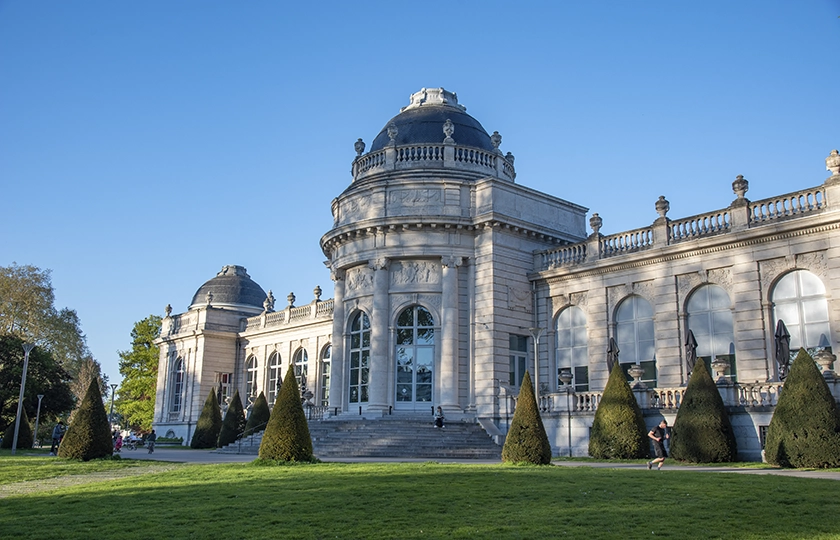
There are several collegiate churches in the city, which bear witness to the wealth and heritage of a city governed by bishops and princes over the centuries. But there is one figure born in Liège who is the best known in the world: the great writer Simenon, one of the most prolific authors of the 20th century. The creator of the famous Inspector Maigret, his books have been translated into numerous languages and widely adapted for the cinema. Right opposite the Town Hall stands a statue in his honour, where tourists are constantly taking photos. Very close to the railway station – which, like the one in Mons, was designed by Santiago Calatrava (and is spectacular, by the way) – is the La Boverie Museum, situated on an island in the River Meuse, which hosted the 1905 World’s Fair. You shouldn’t leave Liège without visiting the Carré neighbourhood, with its many cafés, bars and nightlife. And above all, enjoy the city’s cuisine, with dishes such as the Liège salad, perfect for a very cold day, and boulets à la liégeoise, which are huge meatballs served with a sauce made from the typical, traditional Liège syrup, onion, brown sugar and raisins. All washed down with a few good beers, or with Pékèt, a gin-based spirit that’s a staple at local festivals. And for dessert, pralines – those fantastic filled chocolates – and, above all, the unrivalled and unmissable Liège waffles, known throughout the world.