Unique in its authenticity, the first capital of the former Kingdom of Guatemala is a perfect melting pot of Mesoamerican colonial culture. Its uniqueness and the immense heritage value derived from the history it holds, together with the whims of the volcanoes that surround it, justify its designation as a UNESCO World Heritage Site.
Antigua Guatemala, or La Antigua as it is more commonly known, is one of those cities you simply must visit at least once in your lifetime. In reality, this will never be the case, as its charm is so captivating that we will always want to return once more, and there will never be any shortage of reasons to do so.
Without a doubt, it is one of the most beautiful cities in Central America; the city of ‘wow’, because that is the first word every visitor utters upon setting foot on its cobbled streets, flanked by rows of multicoloured houses and surrounded by volcanoes, creating a cinematic scene that is impossible to forget.
For two hundred years, between 1542 and 1773, it served as the seat of the Captaincy General of Guatemala, forming an integral part of the Viceroyalty of New Spain; it was during this period that the city experienced its greatest urban, demographic and economic growth. Palaces, monasteries and convents, churches anPd universities were built, leaving a fascinating cultural and architectural legacy with clear Baroque and Spanish influences, which has managed to survive for almost five hundred years despite the numerous earthquakes it has endured.
Vibrant and cheerful, Antigua Guatemala enjoys a relaxed harmony, proud of its beauty and untroubled by the volcanoes that dot the horizon, even though one of them remains moderately active. Nothing detracts from its colonial charm or the authentic essence of its ancestral cultures.
The city of colour and cultural diversity
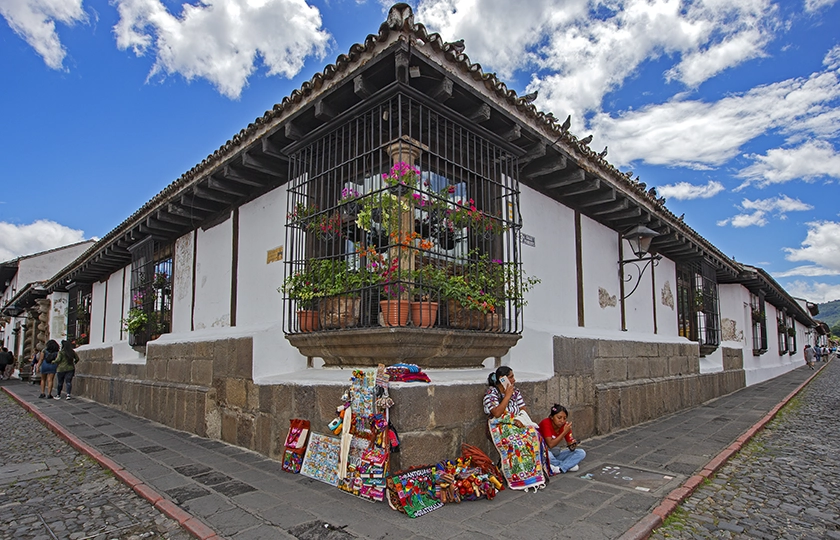
To wander through the cobbled streets of what was originally known as Santiago de los Caballeros de Guatemala is to enjoy a small, welcoming town with houses in warm, cheerful colours that conceal beautiful courtyards, craft stalls where Mayan women sell textiles they have woven themselves, stately buildings where the scars of earthquakes are visible as part of Antigua Guatemala’s unique identity – proud reminders of the monumental city it once was and, to a large extent, still is.
Around every corner or with every step, there are always examples of a Baroque style brought over from Spain, which set the artistic tone from the very beginning. So much so that this is where the seeds were sown for what has come to be known as the ‘Antigua Baroque’ – an architectural style unique in the world and the finest example of Guatemalan colonial architecture. According to UNESCO, the Antigua Baroque represents ‘a regional adaptation of the Baroque style designed specifically to withstand earthquakes’ and constitutes ‘an exceptional testament to the cultural fusion between European and indigenous traditions’.
It was thanks to the involvement of the military engineer Juan Bautista Antonelli, a specialist in urban design, that an urban plan was drawn up based on Renaissance principles – that is, featuring straight streets running perpendicular to one another, always radiating out from large public spaces such as squares or gardens. From Cerro de la Cruz, you can enjoy the best panoramic view of the townscape, dotted with a succession of colonial rooftops stretching out beneath the watchful gaze of the Volcán del Agua.
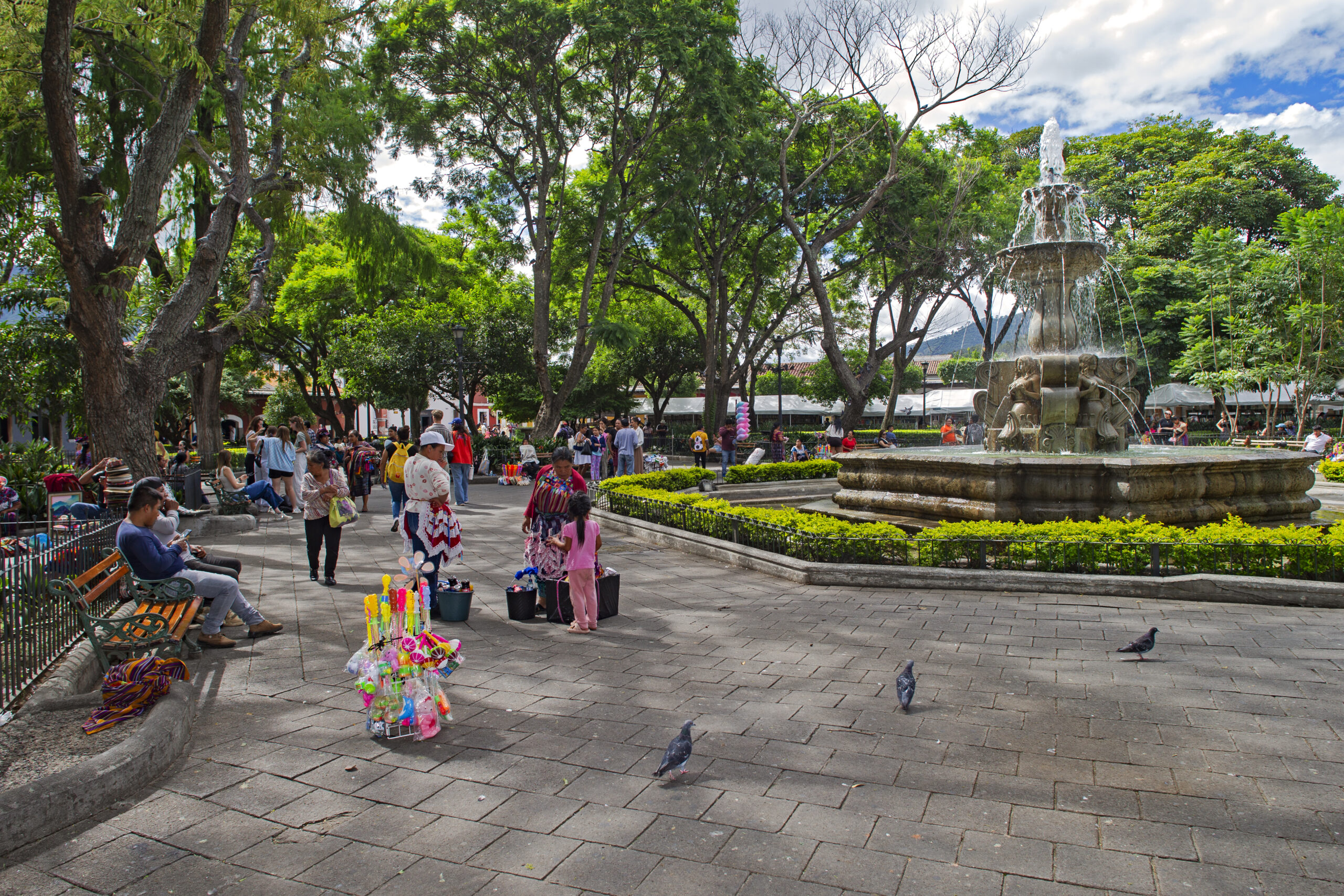
This explains why Antigua Guatemala radiates outwards from the Plaza Central, the heart of the city, where life always flows, just as the water does at its centre, gushing from the Fountain of the Sirens.
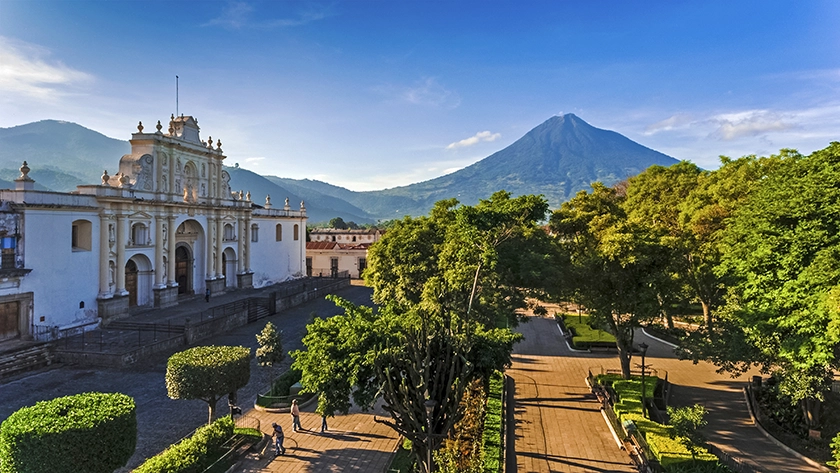
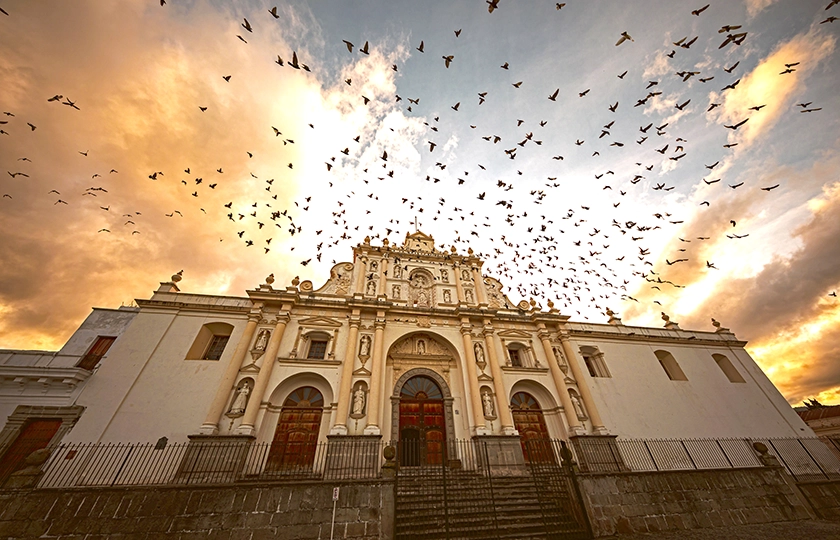
Some of the city’s most iconic monuments stand around this communal space, notably St Joseph’s Cathedral. Consecrated in 1680, it has suffered extensive damage from earthquakes over the centuries, particularly during the so-called ‘Earthquake of Santa Marta’ in 1773, which almost completely destroyed it. Its beautiful façade has been rebuilt, and the ruins of the destroyed temple can be accessed from inside, making it, as a whole, an extremely important historical and cultural landmark.
Without leaving the square, the imposing Palace of the Captains-General stretches along its southern side, with its fifty-four semicircular arches. For two centuries it was the seat of government for the whole of Central America, and today it houses the National Art Museum of Guatemala, which boasts valuable collections of Guatemalan art.
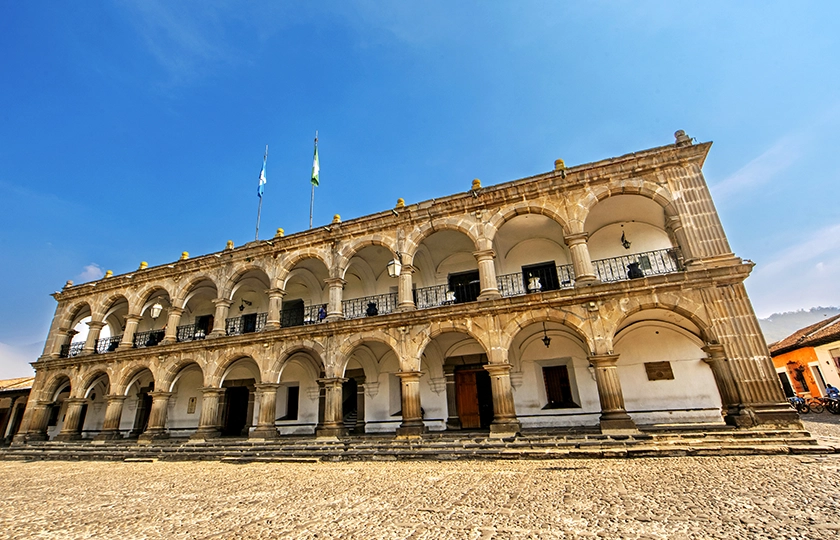
Sharing the limelight in the same urban setting, the Town Hall is the only building that has been in continuous use since its inauguration in 1743. Its sturdy construction, featuring a double-row of arches and Tuscan columns, has enabled it to withstand the force of earthquakes with only minor damage. It is one of the city’s most valuable heritage buildings.
During the colonial period, a great many religious orders arrived in Antigua Guatemala, which led to the construction of a large number of monasteries and convents. The result is a rich architectural heritage which, having weathered the ravages of earthquakes to varying degrees, has survived to the present day.
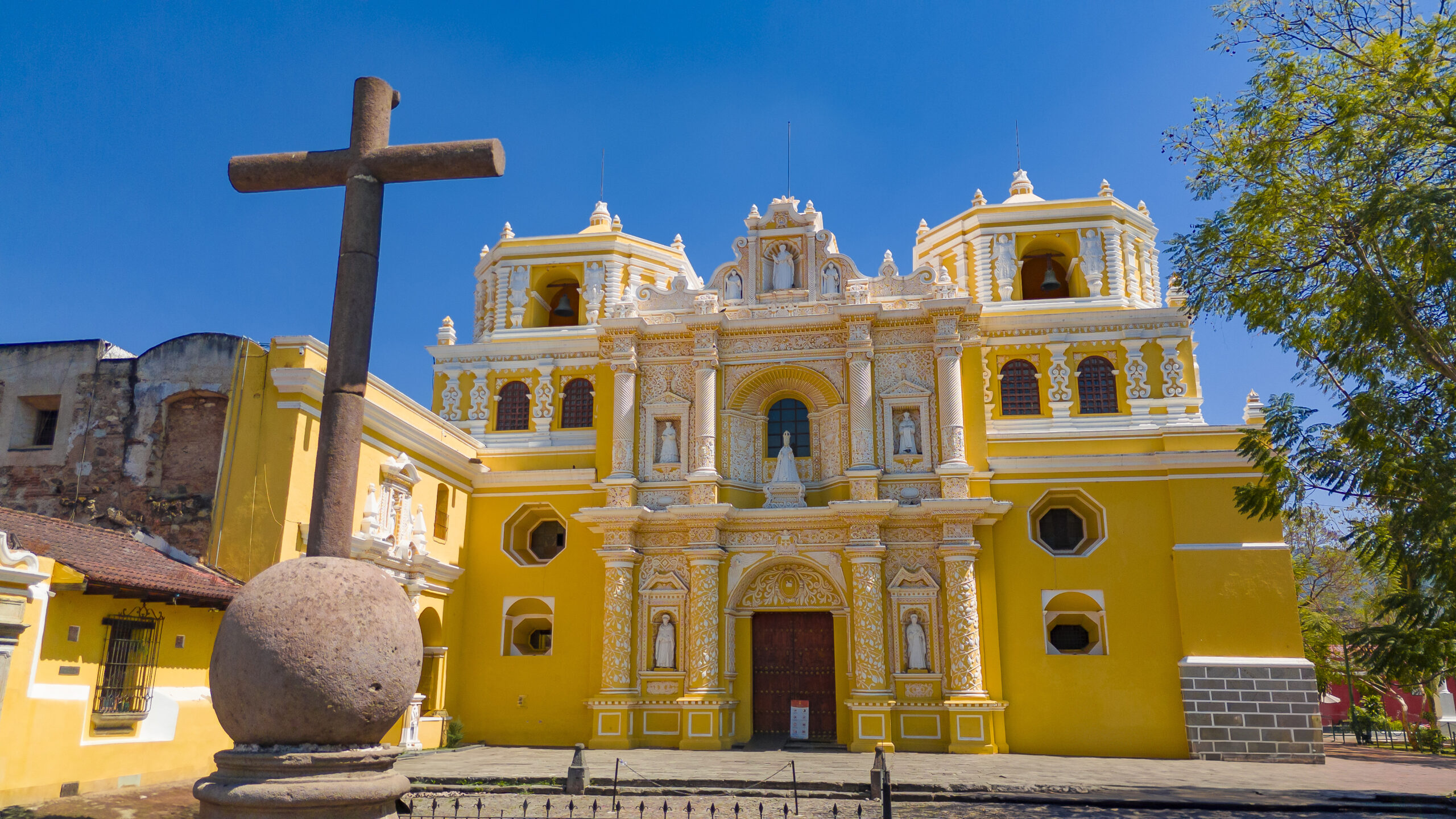
La Merced Church is a spectacular building, painted a vibrant yellow and decorated with white stucco, and is one of the finest examples of Guatemalan Baroque architecture. Although the original building dates from 1583, as a result of the earthquakes that struck in subsequent centuries, it had to be rebuilt in 1767, taking on the appearance it has today.
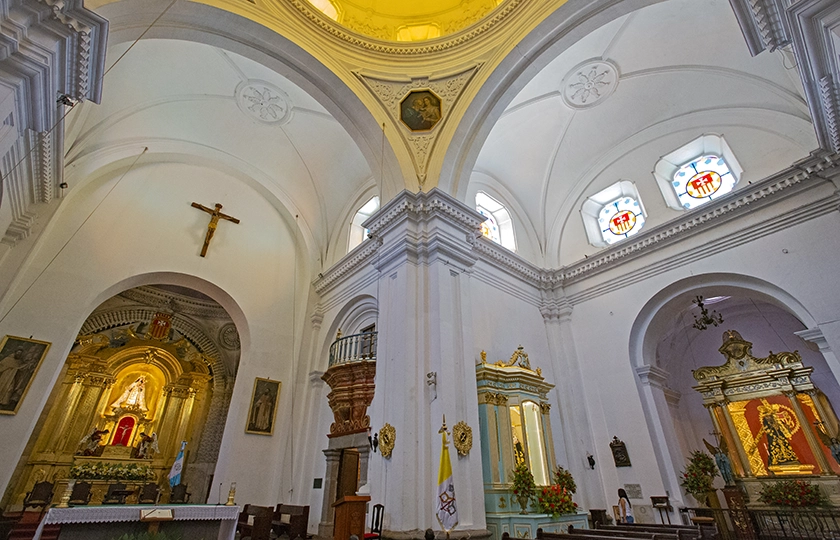
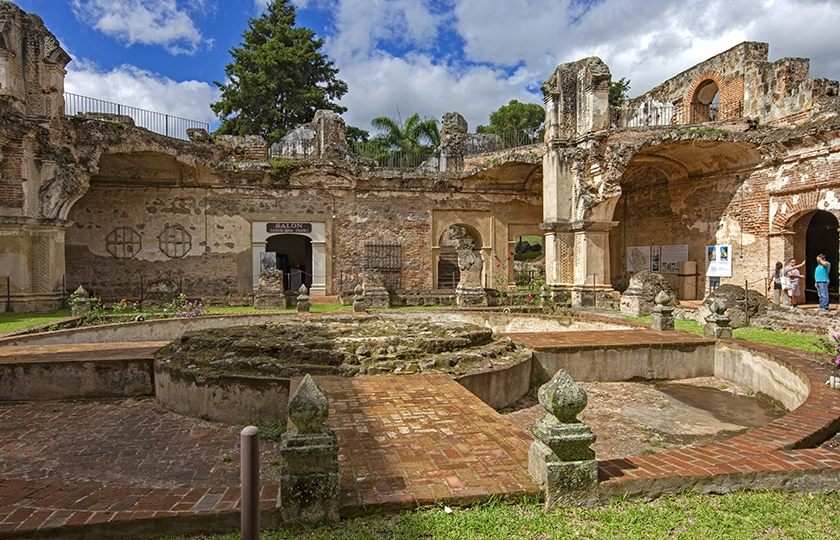
Beyond the entrance door to the church, with its original carvings, one enters a solemn and spiritual space that serves as a prelude to the former convent adjoining the church, where visitors can gain an insight into what monastic life was like in those days. In the centre of its courtyard stands the 18th-century Fuente de los Pecados, which, at twenty-seven metres in diameter, is one of the largest in Latin America. With its water-lily shape, it is an allegory from Mayan mythology, whose beliefs held that the gods were created from this plant, which is so common in Guatemala’s wetlands.
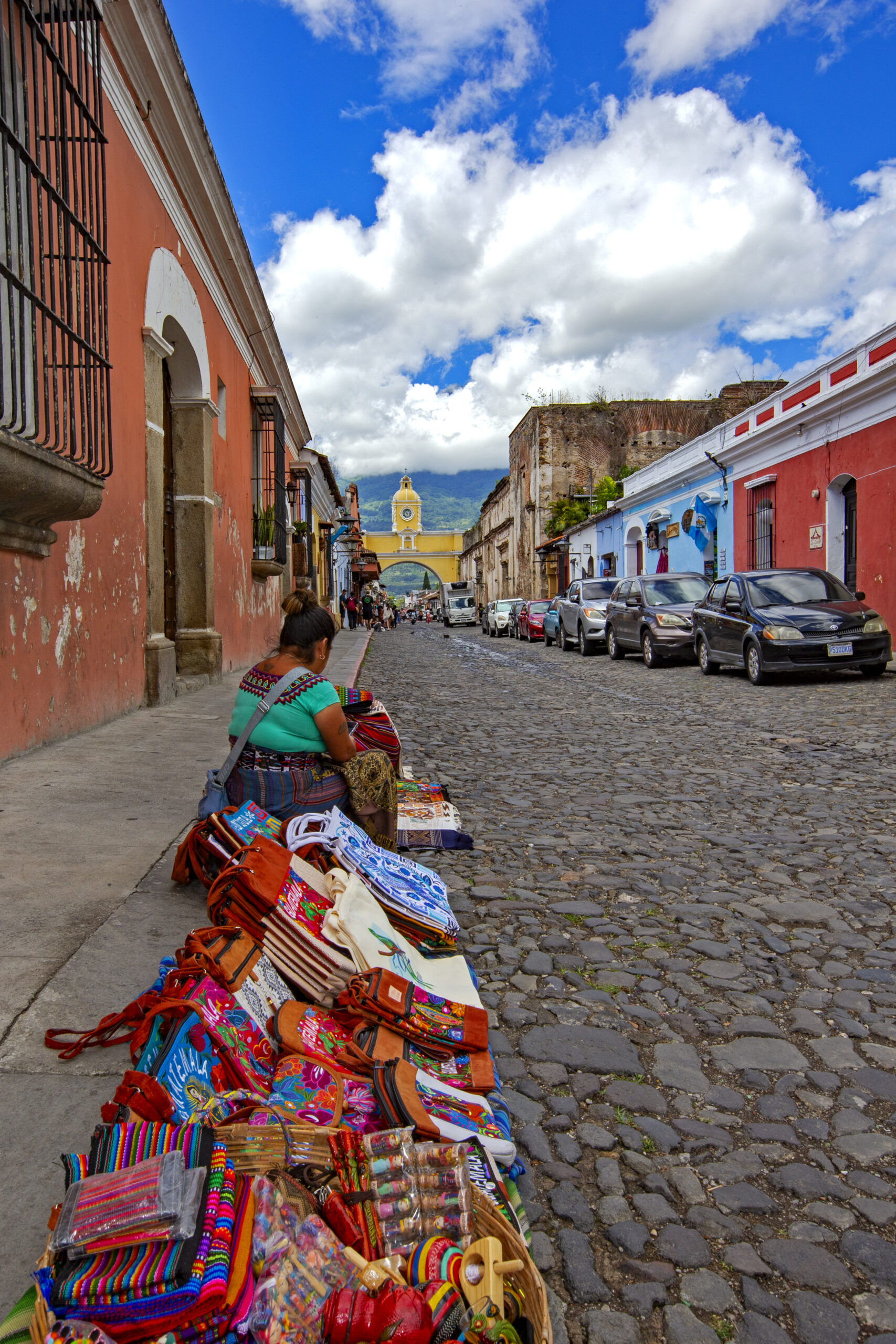
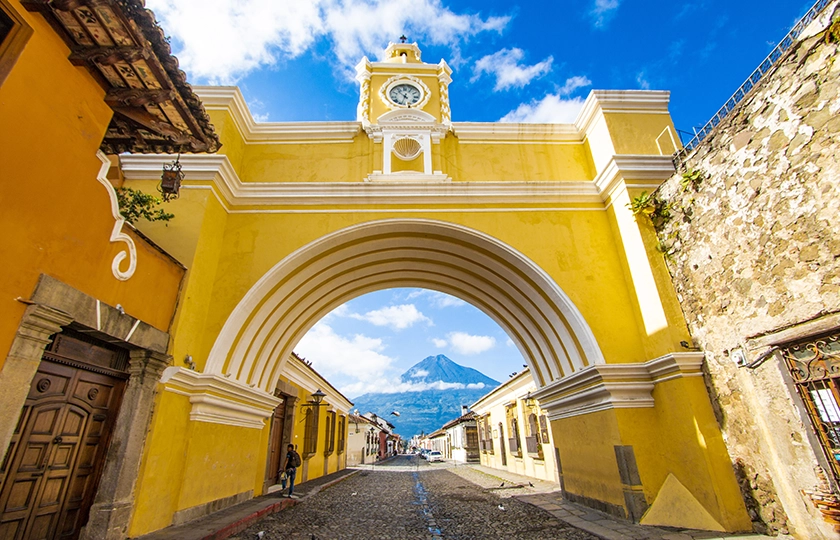
Right next to this iconic church stands the Arch of Santa Catalina, arguably one of the city’s most universal symbols, as well as one of the most photographed. There isn’t a single tourist who doesn’t want to take home that snapshot.
This 17th-century Baroque landmark, painted yellow and featuring a French clock, belonged to the Convent of Santa Catalina and was built to link the two buildings of the monastic complex, thus enabling the cloistered nuns to move from one to the other without having to set foot on the street. Symbolically, as well as serving as a bridge between the buildings, it also acts as a bridge between the city’s past and present.
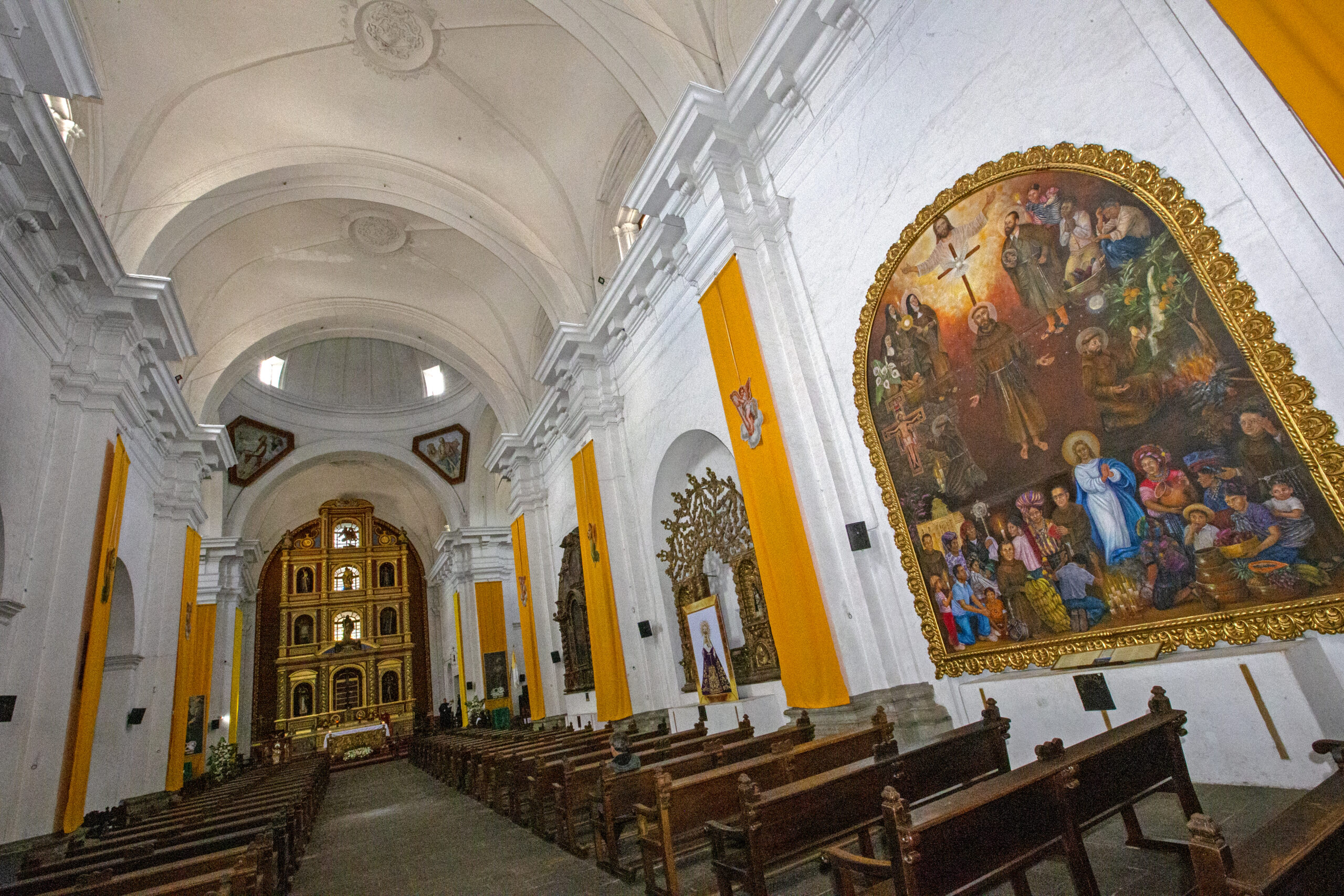
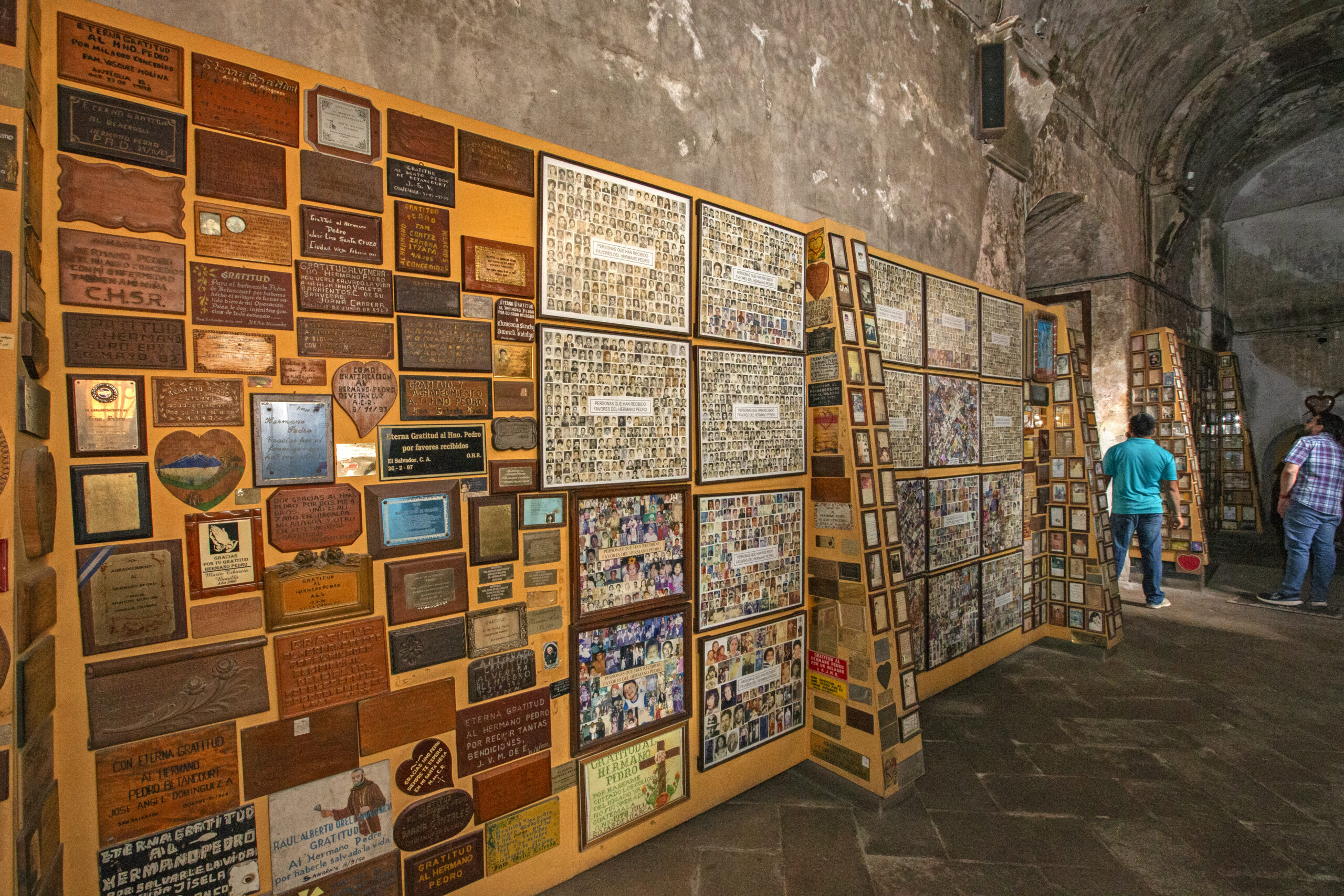
The Sanctuary of San Francisco el Grande is another of Antigua Guatemala’s most notable monuments from an artistic and historical perspective. Furthermore, it is of particular significance as the church houses the tomb of Saint Brother Pedro de San José de Betancur, the first religious figure to be canonised in Central America. His grave has become a place of pilgrimage and veneration. This missionary of Spanish origin founded the first hospital for the poor and the first school for children and adults, regardless of their gender or race.
The Franciscan complex was an important cultural and religious centre in its day; at its College of St Bonaventure – now located amongst the ruins of the monastery following a series of earthquakes – subjects such as mathematics, philosophy, theology and law, amongst other disciplines, were taught.
Unlike most of the monuments scattered throughout the city, the church of the School of Christ displays more distinctly Renaissance features, with simple lines, no white stucco and a stone cladding.
The convent of Santa Clara features the same architectural design. Founded by a group of nuns from Puebla, Mexico, it was only in operation for four decades before an earthquake destroyed this impressive complex. The church’s façade is regarded as a true gem of the Antigua Baroque style.
Traditions of identity
Following the trail of the many monuments dotted around the city is the ideal way to stroll through its streets, to enjoy the more down-to-earth side of its colourful architecture, to immerse yourself in its rich intangible heritage, its lively street markets and its traditional crafts.
In Antigua Guatemala, there are many events linked to a rich heritage of customs and traditions, both religious and historical in nature, but all of them form an integral part of the town’s authentic identity.
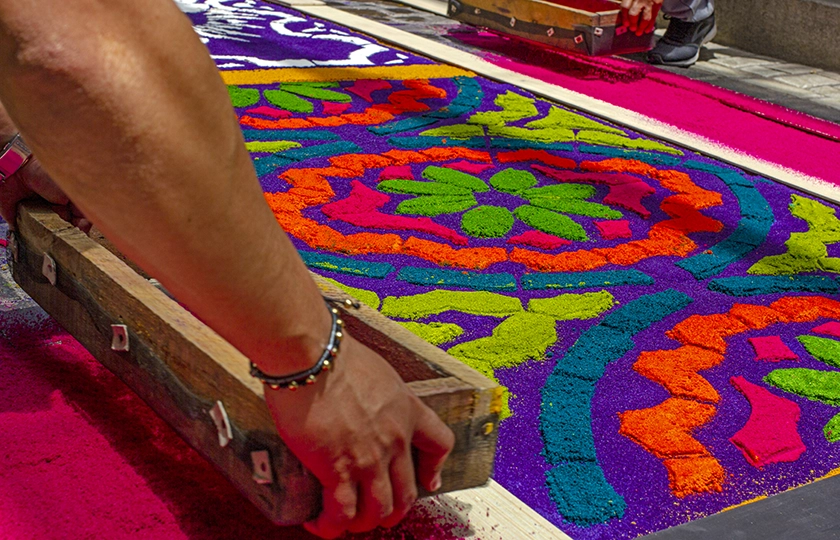
One of the most deeply rooted traditions is Holy Week, as the first Christian procession on Guatemalan soil took place here in March 1543.
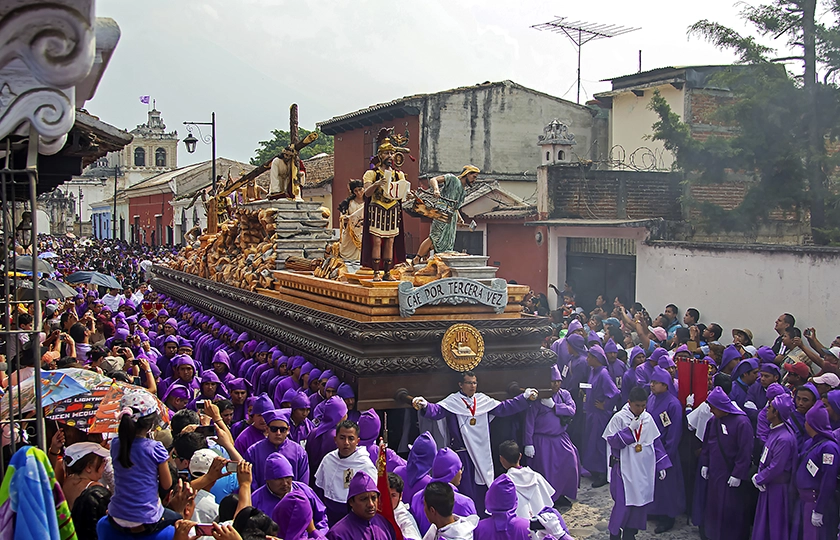
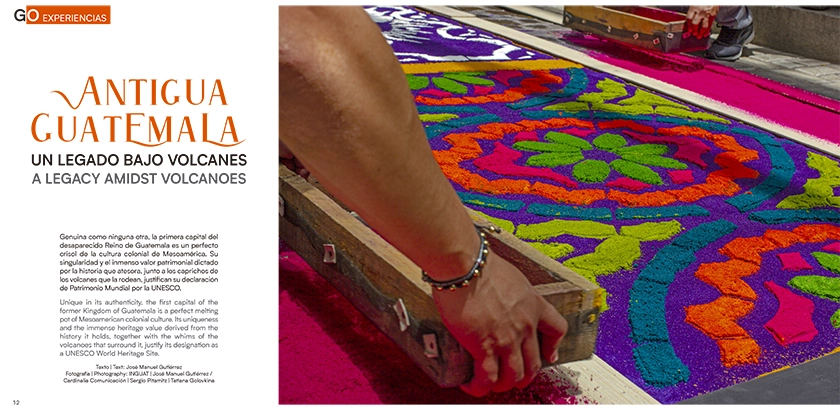
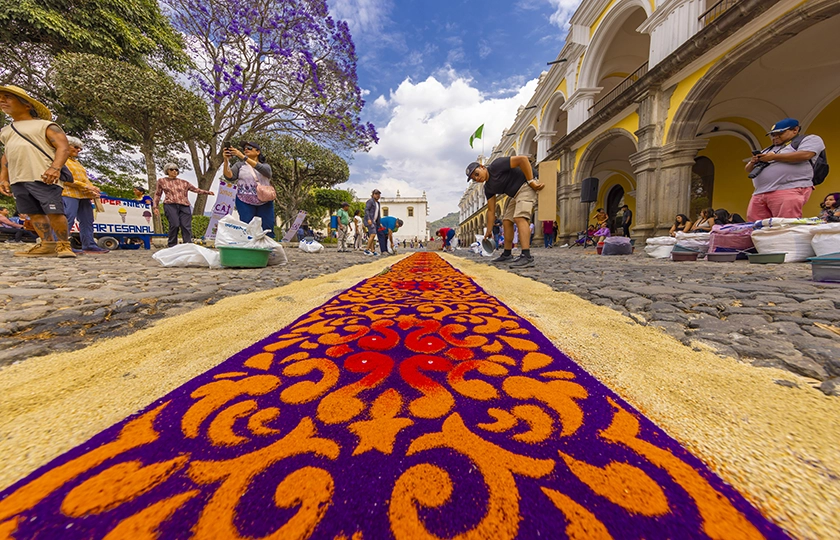
During these days, the city undergoes a profound transformation in which the solemnity of the processions, with their magnificent Baroque statues, blends harmoniously with the colour of the streets through which they pass, decorated with long, eye-catching carpets of sawdust, flowers and traditional elements. Whether you are a believer or not, the spirit with which the people of Antigua experience these moments is truly moving, and everyone’s contribution helps to make it one of the most fascinating religious celebrations in Central America.
Another unmissable event on the festive calendar, with a strong sense of local tradition, takes place every year in mid-November. For several days, the Flower Festival transforms the city’s historic centre into a colourful scene brimming with life, cultural activities and a pleasant atmosphere, especially as it coincides with a time of year when the weather is particularly pleasant.
But this festival is much more than just a sublime aesthetic spectacle. It is a true celebration of art and popular culture, spilling out onto the cobbled streets, adorning the façades and opening up to the public spaces that are otherwise off-limits for the rest of the year as they are private, such as the marvellous courtyards of the colonial houses.
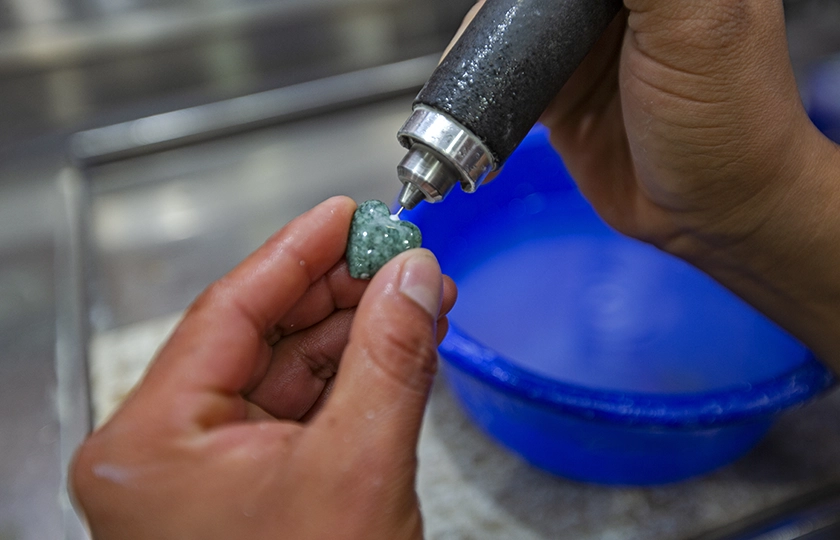
The ancient Maya would be proud today to see how the age-old tradition of jade quarrying and craftsmanship has been revived in Antigua Guatemala. This gemstone has played a very important role in Guatemalan history since pre-Hispanic times, and the type mined here is known as jadeite – that is, the most translucent variety, which is rare worldwide and, consequently, the most valuable.
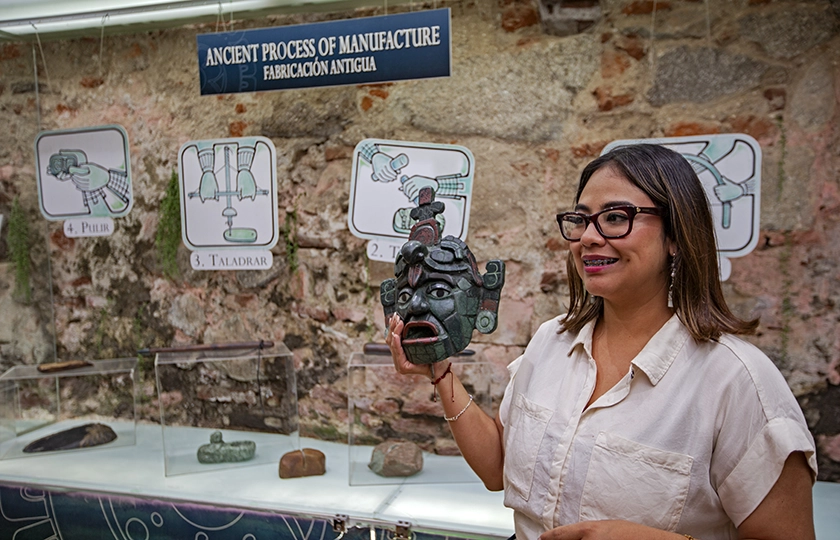
The ‘Stone of Heaven’, as it was known in ancient times, was a sacred stone in Mayan civilisation, a symbol of life, power and eternity – something that is masterfully explained at the Mesoamerican Jade Museum, housed in the Casa del Jade, right in the heart of the historic centre of Antigua Guatemala.
The exhibition space houses original pieces and perfect replicas carved by local master craftsmen, as well as a number of interactive experiences designed to help visitors discover the variety of colours and shades that make Guatemalan jade so unique.
Visiting the Casa del Jade to gain an insight into this intangible cultural heritage, taking part in one of its workshops, or simply seek advice when buying a gift, is an experience that offers something special which goes beyond the mere appreciation of a gemstone.
Antigua Guatemala has a serene, down-to-earth atmosphere that captivates you the moment you breathe it in on its streets but also in its craft markets. Scattered throughout the city are four souks steeped in tradition, from which it is impossible to leave empty-handed.
With nearly a hundred stalls selling Guatemalan handicrafts – renowned for their use of ancient Mayan techniques blended with Spanish influences – El Mercadito offers leather goods, ceramics and jewellery that remain true to centuries-old traditions, conveying a unique cultural heritage.
The El Carmen craft market, situated next to the church of the same name and occupying part of the ruins of the former convent, is unique in that some craftspeople create their works on the spot and display them in the street, creating a striking contrast between the vibrant colours of their creations and the monastic stonework.
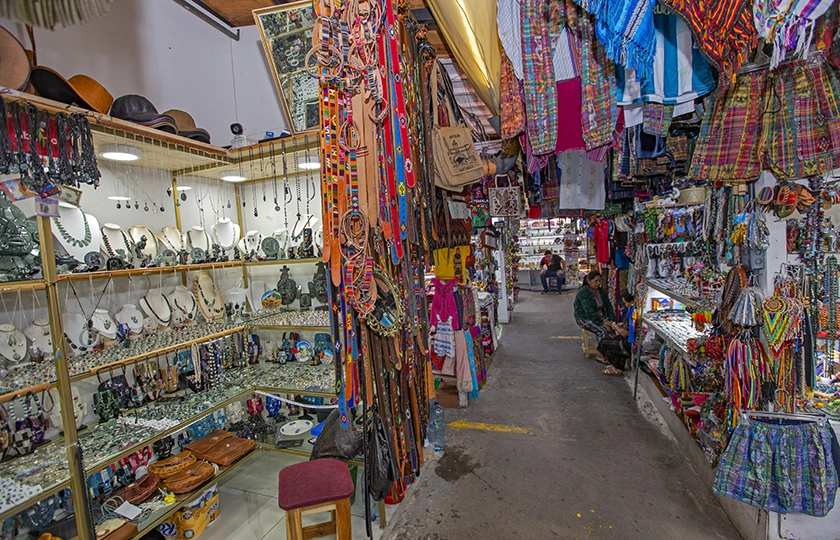
Situated next to the famous Arch of Santa Catalina, the Nim Pot market is a rather unusual place, as a huge selection of handcrafted items sits alongside giant kites, second-hand traditional clothing and an altar to Maximón, a syncretic Mayan deity.
The shopping tour, apart from the many street stalls – all run by women – ends at the Municipal Handicrafts Market, a venue with a strong colonial feel, where traditional textiles, jewellery and ceramics stand out for their quality and authenticity.
The craft markets of Antigua Guatemala form part of the cultural and historical heritage that the city itself represents, whilst also serving as vehicles for a cultural legacy that springs from the very essence of Antigua.
Thank you, Antigua Guatemala, for having managed to preserve your essence and your history, so that those of us who have visited can learn and get to know ourselves better.