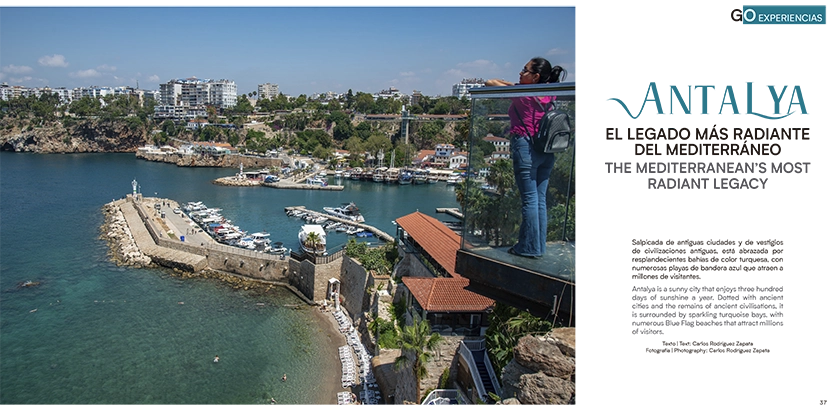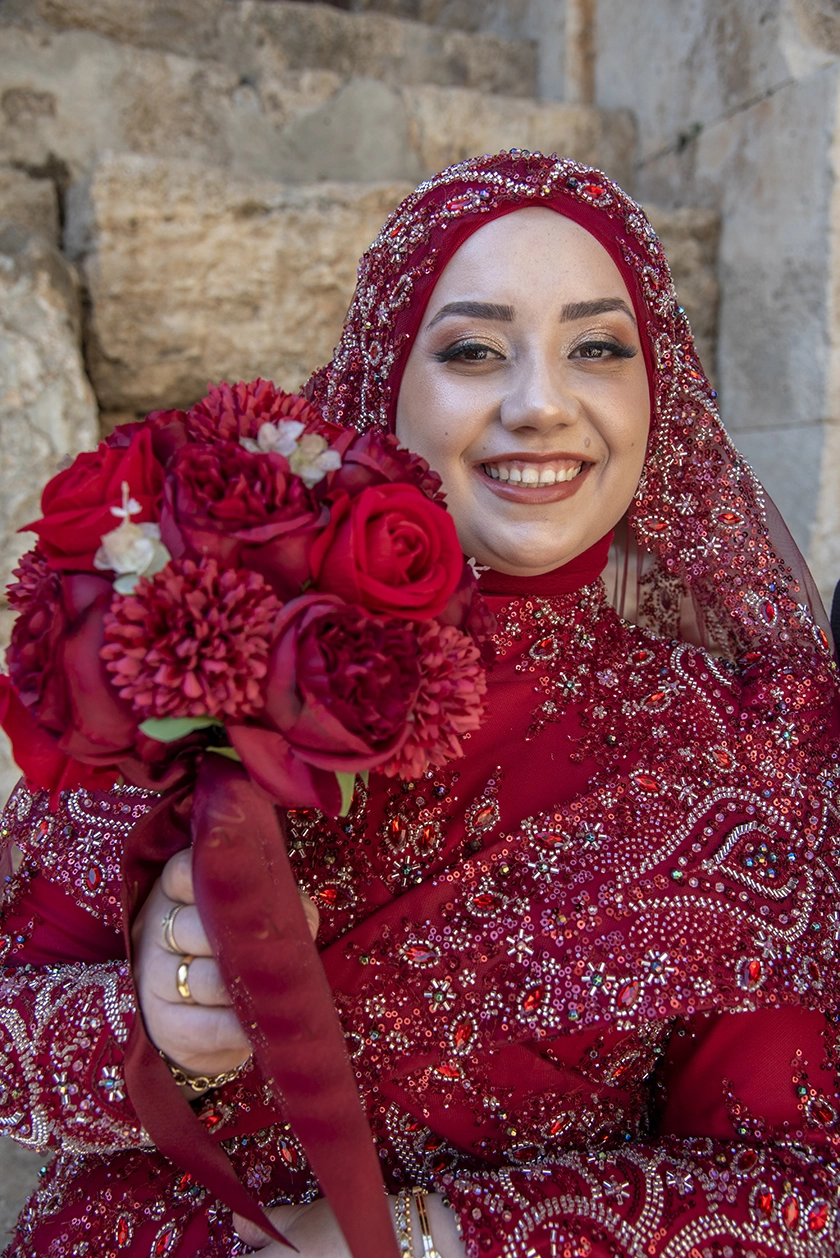
Antalya is a sunny city that enjoys three hundred days of sunshine a year. Dotted with ancient cities and the remains of ancient civilisations, it is surrounded by sparkling turquoise bays, with numerous Blue Flag beaches that attract millions of visitors.
Since time immemorial, the Turkish coastline – both on the Aegean and the Mediterranean – has been a destination for, and the site of settlements by, various peoples who have emerged along the shores of the Mare Nostrum. The Mediterranean coast to the south of the Anatolian peninsula, and specifically the vast Gulf of Antalya, has always been a favoured location and the cradle of civilisations that settled in these lands, blessed with an exceptional climate and great natural wealth, including abundant fisheries, rivers and groundwater. Furthermore, this entire coastline is regarded as one of the most comprehensive destinations in the Mediterranean, thanks to its crystal-clear waters, its rich marine biodiversity and the opportunity to explore everything from historic shipwrecks and archaeological remains to underwater caves and artificial reefs.
The Greeks, Lycians, Persians, Romans, Seljuks, Byzantines and Ottomans all passed through these parts, each leaving their mark, their culture and, above all, the ruins of their ancient cities and monuments, which are still a real sight to behold today. We are approaching the city that gives its name to the whole gulf: Antalya. Also known as the heart of the Turkish Riviera, for many Turks and Europeans it is the city that symbolises excellence in tourism on the Turkish Mediterranean coast. And he is absolutely right; in recent years, Antalya has become a magnet, drawing in millions of people who want to enjoy the finest beaches with their unrivalled turquoise waters, excellent cuisine, an exceptional climate — with over three hundred days of sunshine a year — and Greek and Roman ruins that are, at times, even more impressive than those found in other countries. All in all, it is a destination that will undoubtedly leave a lasting impression on everyone, thanks to a form of tourism that is neither intrusive nor destructive, and which is focused on the sustainability of resources.
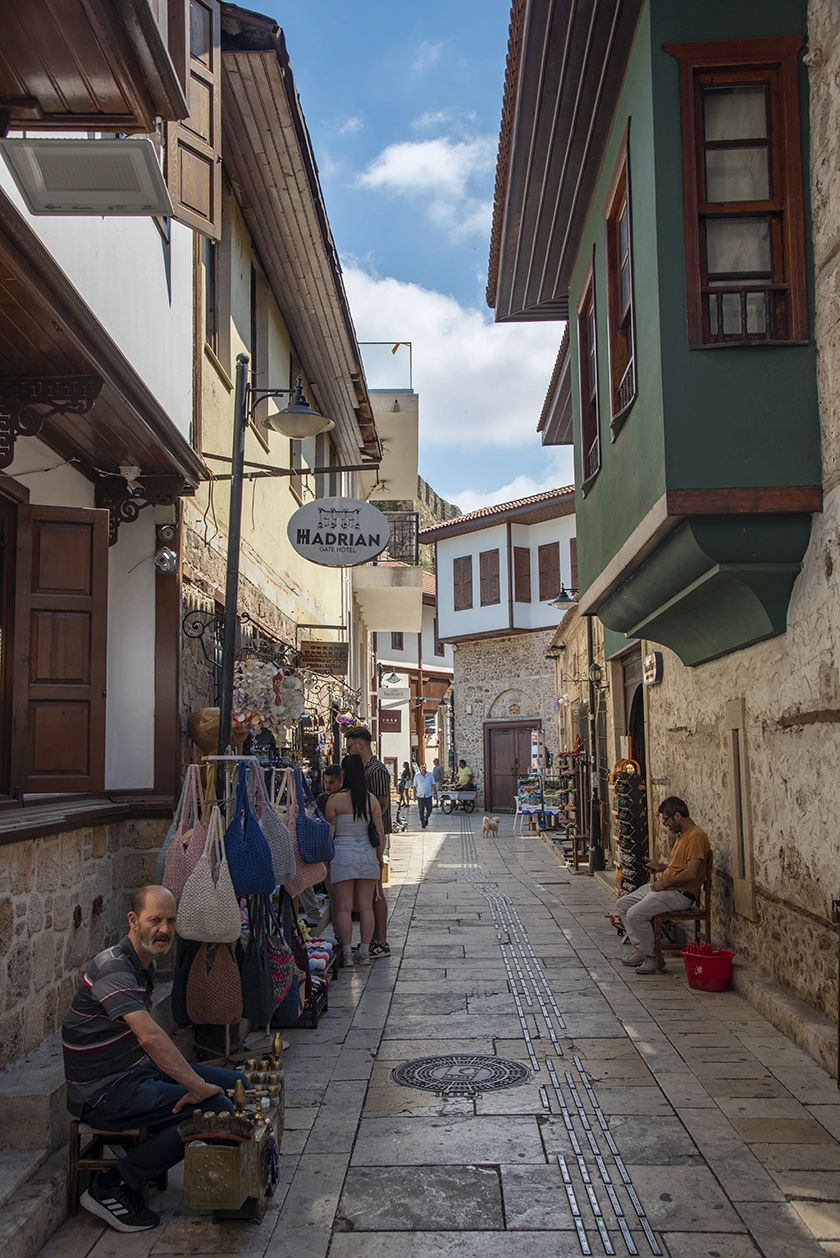
Before visiting Antalya, it is important to distinguish between the new town and the old town. The new town, with its wide, palm-lined avenues, modern shopping centres and elegant hotels right by the sea, reflects the city’s vitality. On the other hand, the old town known as Kaleiçi is a charming place where a leisurely stroll will allow you to discover its charms. Perched on a rocky outcrop overlooking a cove, old Antalya reveals its labyrinthine alleyways, some of which are as winding as those leading down to the harbour.
The gateway to two thousand years of history
The best way to explore Kaleiçi is to pass through the imposing Hadrian’s Gate, one of Antalya’s historic landmarks and the most iconic entrance to the walled city. Built in the year 130 AD to commemorate the visit of the Roman Emperor Hadrian, this elegant structure with three arches remains, almost twenty centuries later, the natural gateway for those wishing to explore the historic heart of the city.
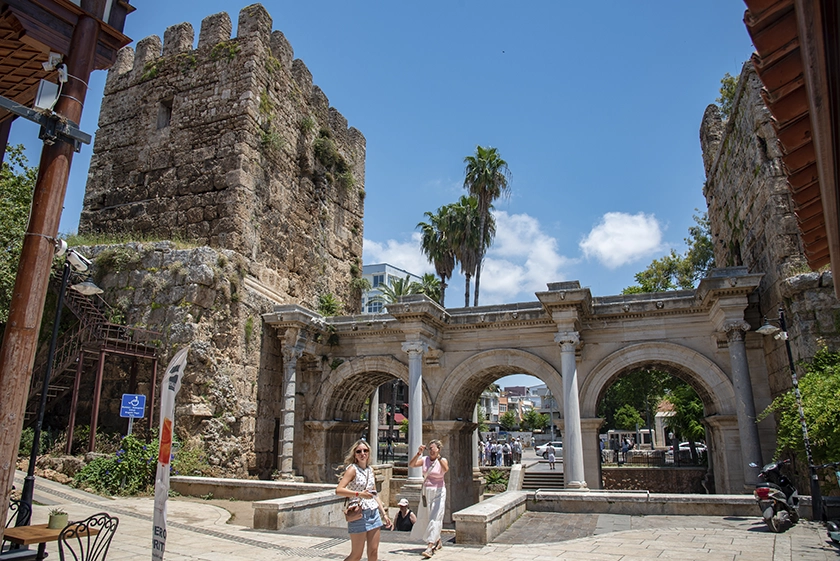
As we step through the gate, we’ll come across ancient Ottoman houses with their white and colourful façades, which whisper tales of past civilisations. Some of them, such as the old Konaks, are mansions that have been converted into boutique hotels, opening their doors to allow us to step into courtyards that exude the scent of orange blossom and jasmine. We also come across the Şehzade Korkut Mosque, which is impressive both for its architecture and its rich history. The ruins inside and in the courtyard bear traces of various civilisations, but what has made it famous for over a hundred years is its truncated minaret, the Kesik Minare, the top of which was destroyed by fire and has recently been restored.
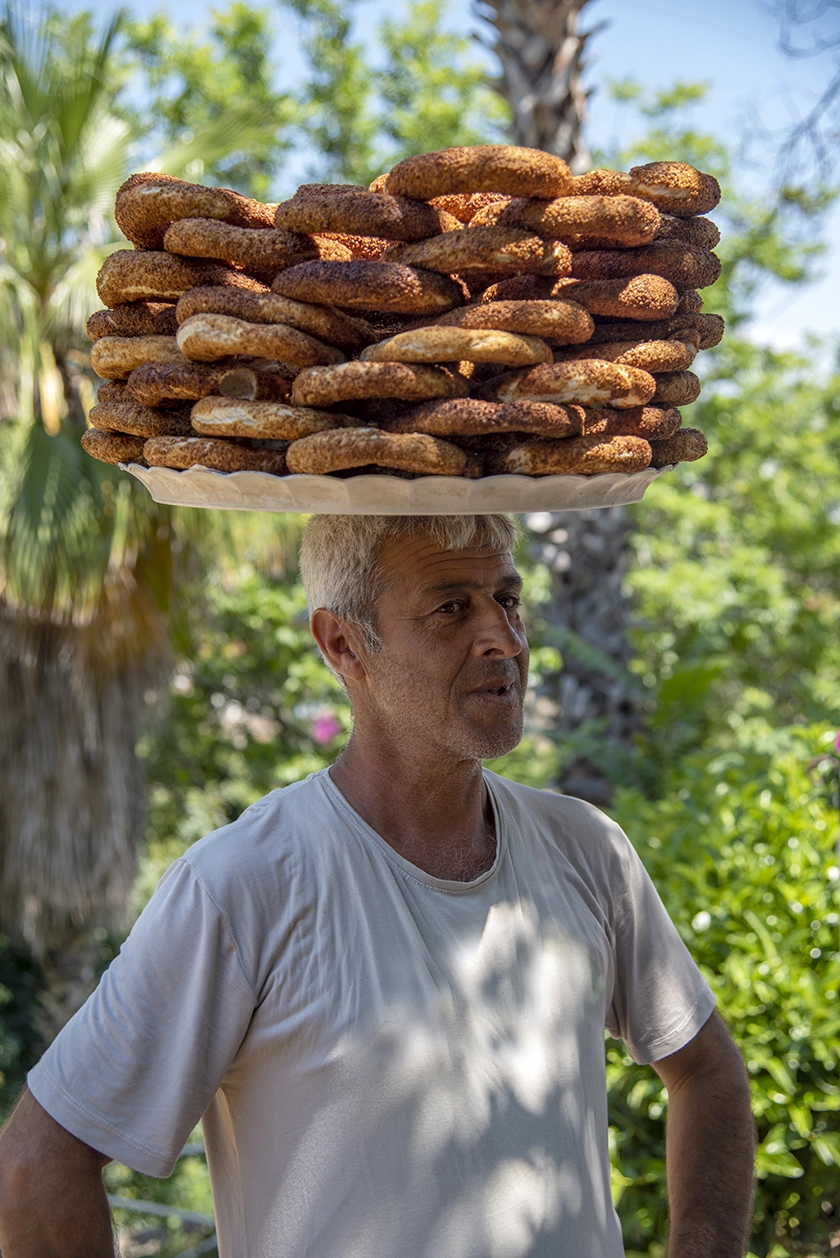
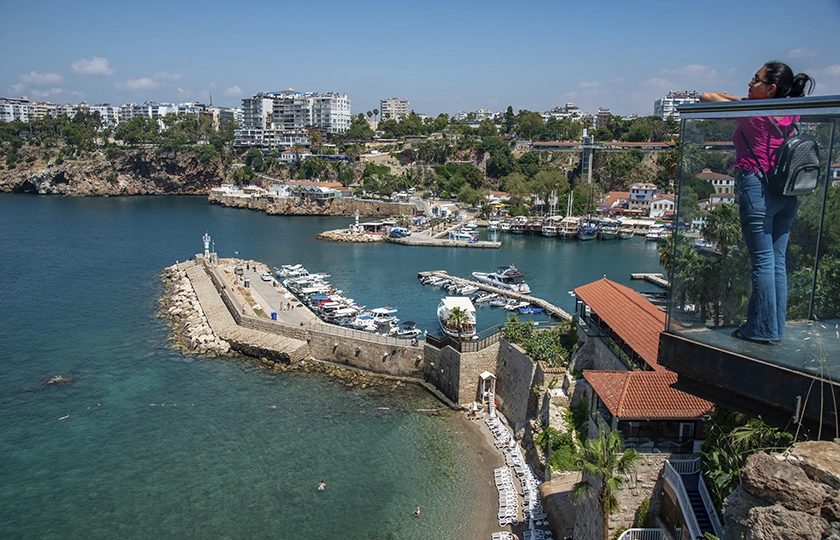
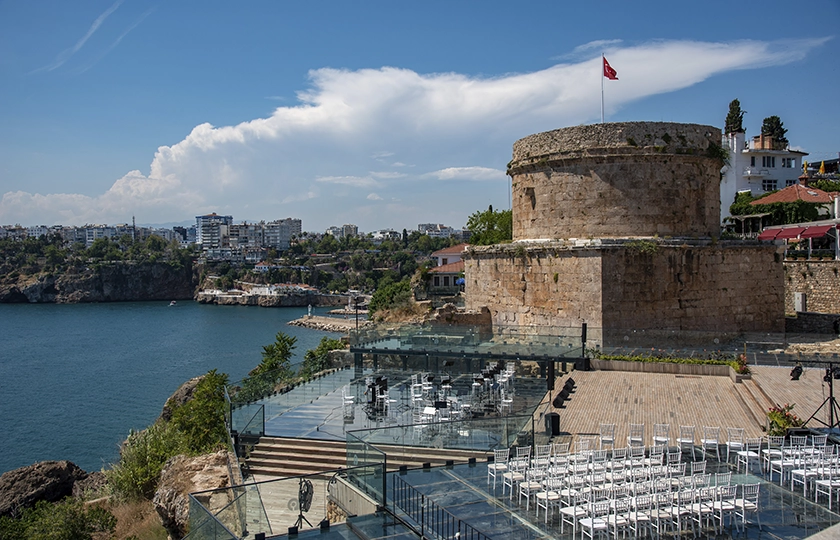
Wandering through its streets, we came to the Roman tower of Hidirlik Kulesi, a remnant of the ancient walls on the cliff from which the harbour can be seen. Although the best view of it is right next door, in Karaalioglu Parki, which offers stunning views of the mountains, the bay, the harbour and a small beach. It won’t be hard to spot the odd vendor selling simit (a round bread with sesame seeds) – one of the country’s traditional specialities – in the park; they usually carry it in a basket balanced on their heads.
Cuisine is one of the main attractions of the trip
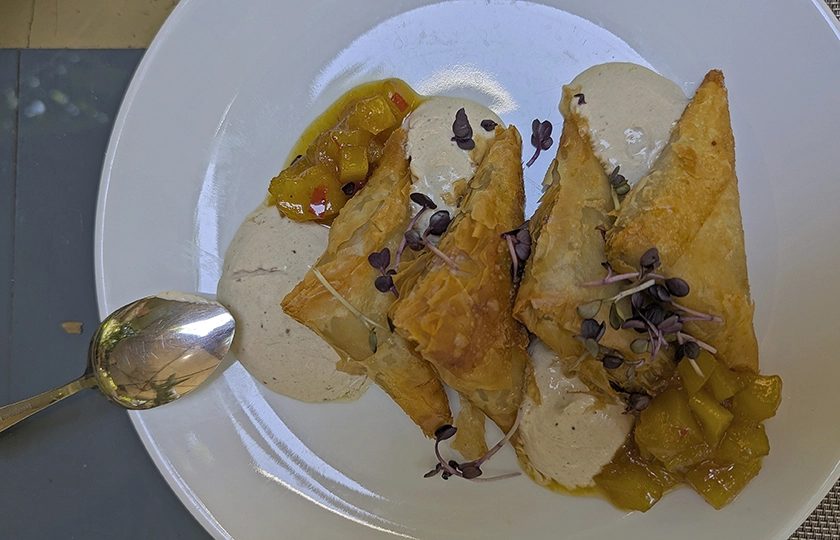
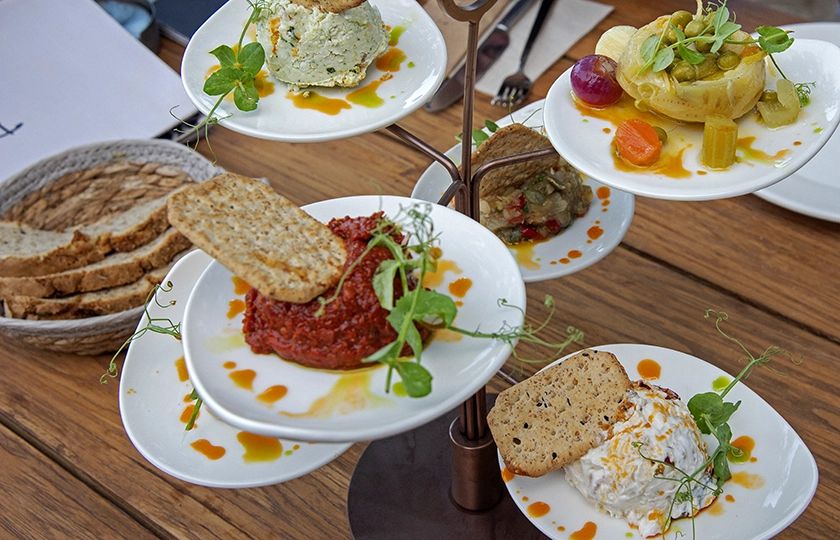
At lunchtime, we headed to the Casa Sur Boutique Hotel and Restaurant, an old 19th-century Ottoman house offering some of the finest cuisine in the city, as well as rooms featuring a variety of themed designs.
There are places that encapsulate the very soul of a city. In Antalya, this place is the old harbour, a cove protected by walls which for centuries was a port of call for merchants, sailors and travellers from all corners of the Mediterranean.
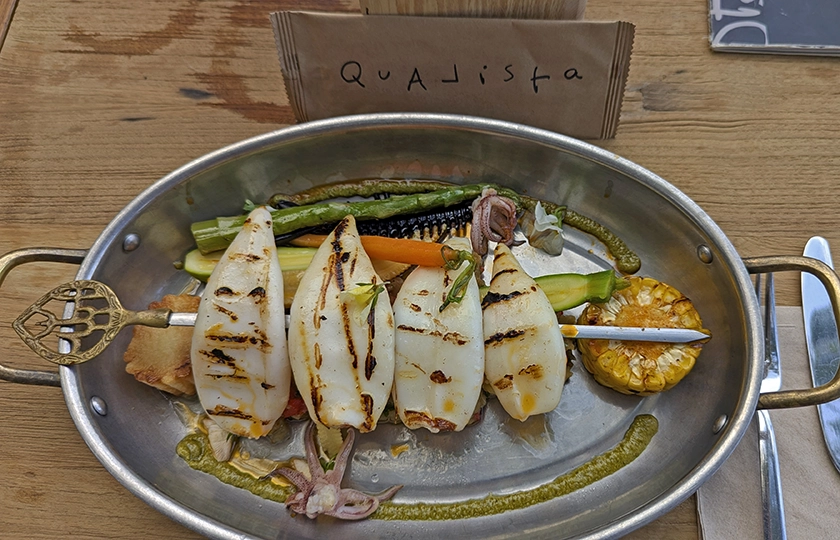
You simply must visit this fishing port and admire the sailing boats as they cruise along the coast. At sunset, the harbour is bustling with tourists looking for one of the countless restaurants to have dinner at. At any of these places, you simply must try a grida (the most prized fish on this coast); Patlican reçeli; aubergine jam, tandir kebap, lamb cooked inside a potato; Kofte, Turkish meatballs; Pide, a Turkish flatbread; and the popular Meze, a selection of hot and cold appetisers, where savoury, sweet and spicy flavours come together, such as aubergine, tomato, cucumber, chicken, mussels, etc. They are almost always accompanied by raki, a very famous aniseed-flavoured spirit in Turkey, as well as ayran, a yoghurt-based drink made from sheep’s milk, water, salt and mint. Not forgetting the national drink, çay (tea), which is served in Meyhane, taverns where alcoholic drinks such as raki or wine are served.
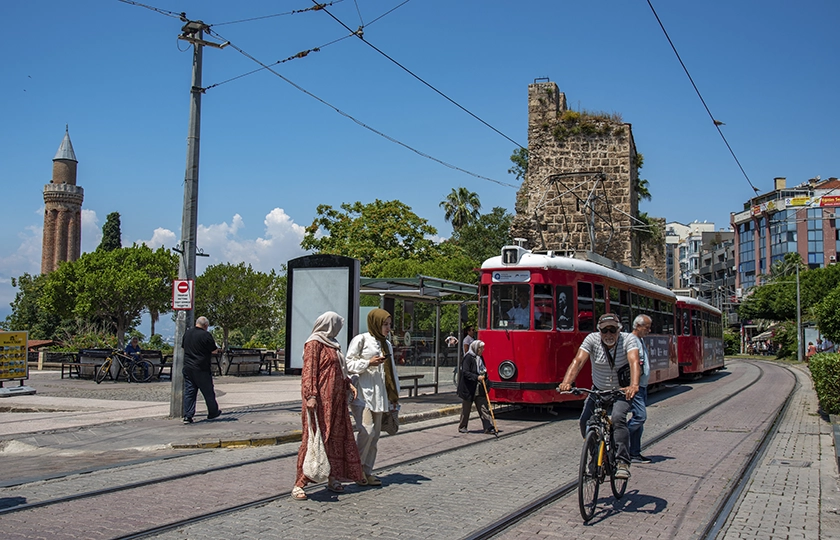
Wandering through the narrow streets, we came to the Clock Tower, of Roman origin, situated on the boundary between the historic and modern parts of the city. Several shopping streets and a bazaar meet here. A red tram also passes through here, much to the delight of visitors, and further in the distance you can see the Yivli Minare, dating from the 13th century – the city’s most famous red-brick minaret and another of its landmarks.
We cannot leave this charming town without visiting, firstly, its Archaeological Museum – a real treat for lovers of history and ancient art – and, above all, the Düden Waterfalls, on the river that flows into the sea near Lara Beach. To see them, it’s best to go to Düden Selalesi Park at sunset, when they’re lit up.
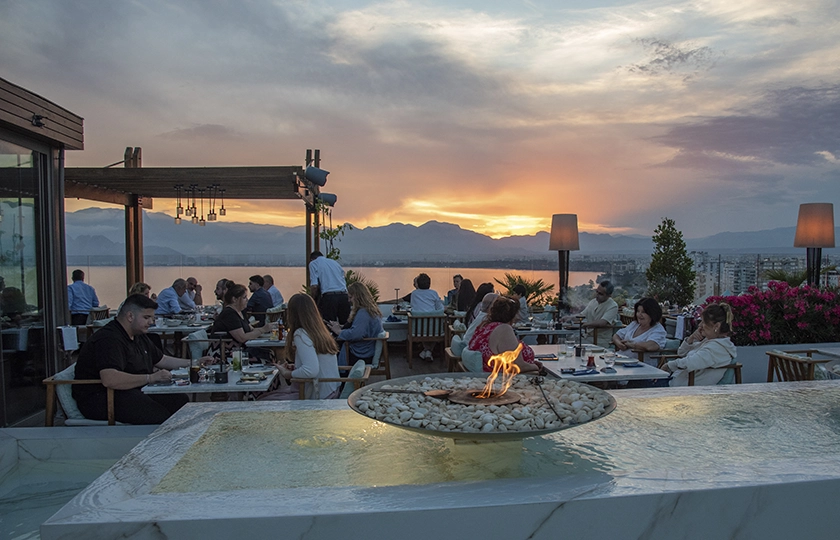
After exploring the old town, we visited a hotel in the new town, the 5-star Hotel Akra, where we had a fantastic stay. This splendid accommodation offers guests the chance to swim in its pools or on a beach reserved exclusively for the hotel. Situated on the hotel’s terrace, the Asmani restaurant offers an exceptional dining experience with unique flavours and panoramic views of the Mediterranean. The experience of dining at this restaurant is made even more unforgettable by the sunset and the inspiring music that accompanies it. It is undoubtedly one of Antalya’s most notable dining destinations.
The Turkish Riviera: from endless beaches to forgotten towns
Turkey also stands out as one of the most well-rounded destinations in the Mediterranean, thanks to its crystal-clear waters, rich marine biodiversity and the opportunity to explore everything from historic shipwrecks and archaeological remains to underwater caves and artificial reefs.
We left Antalya to continue westwards. After passing countless Blue Flag beaches, we arrived in Kemer. This small coastal village is just one of the hundreds of towns and villages in the area boasting extraordinary beaches. One example of this is Qualista Beach, in Moonlight Bay, with its cutting-edge beach clubs, which, judging by its facilities, could easily be mistaken for any beach in the Caribbean. Lying on a Balinese bed, with a mojito in hand and listening to all sorts of music, we realise that we are at a beach destination we’ll never forget.
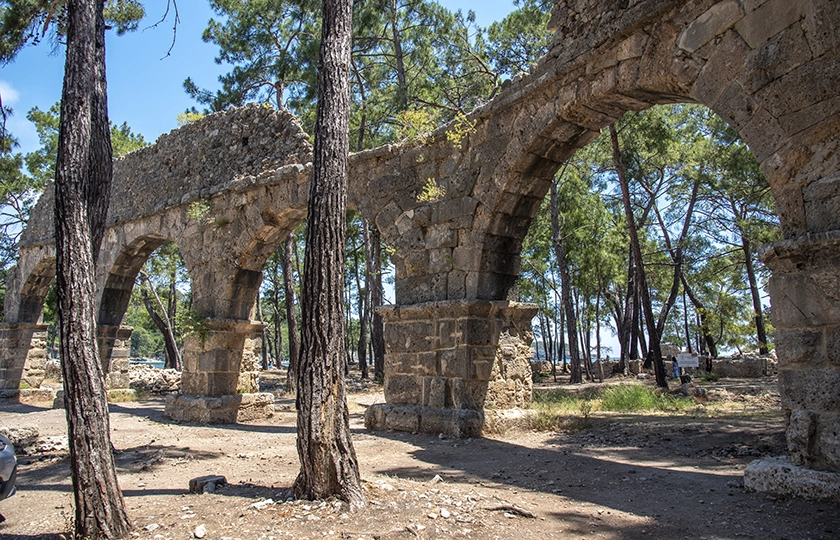
However, what really emphasises its importance even more is that it is surrounded by historic sites that are well worth a visit. The first of these is Faselis (Phaselis), an ancient trading port under Greek rule, where even Alexander the Great lived for several months. Later, the Romans settled here and left behind many monuments along the magnificent beaches, such as an aqueduct, whose stone arches rise amongst the pine trees.
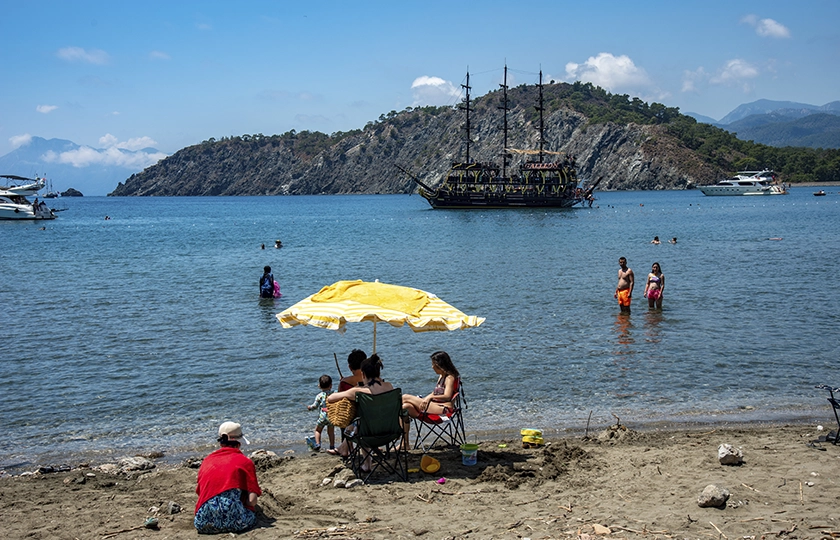
But the best bit comes when you reach the main street. An avenue nearly three hundred metres long, flanked by the remains of huge columns, leads us to the agora and another magnificent beach teeming with tourists, where numerous boats are moored in the calm waters of the Mediterranean; amongst them, one with a pirate-like appearance stands out, evoking the memory of the ancient peoples who once anchored here. But perhaps the most interesting feature of the whole complex is its theatre. From up here, we enjoyed a magnificent view of the mountains and the sea, whilst the song “Bésame mucho” played in the background, performed by two American girls, one on the violin and the other on the flute. This is yet another of the unforgettable memories we’ve brought back from this trip.
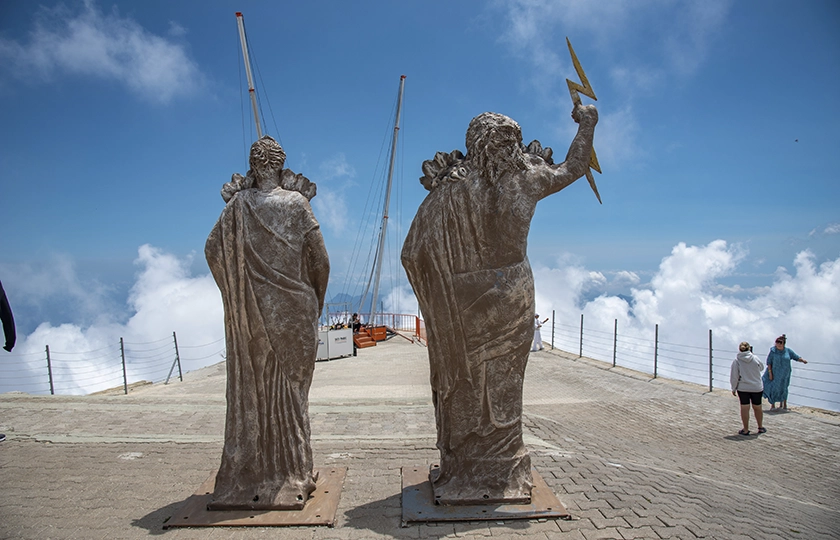
To round off our tour of this area to the west of Antalya, we’re heading to one of Turkey’s most iconic mountains, Mount Olympus in Lycia, which, at 2,365 metres, is the highest peak on the Turkish Riviera and is better known as Tahtali Dagi. Although their names are reminiscent of the legendary Greek Mount Olympus, the two mountains are part of different stories. The Olympos Teleferik cable car, which takes you close to the summit, offers fantastic views of the entire Mediterranean coastline and the sea when the clouds give us a break.
It is said that Atatürk, the father of modern Turkey, described Antalya as “the most beautiful place in the world”. The best way to find out is to visit this city and its surroundings to understand why this region inspires such universal admiration.
Turkish Airlines
The best way to get to Istanbul from Spain is with TURKISH AIRLINES, which flies from Madrid, Barcelona, Málaga, Bilbao, Valencia and Seville – the latter having been added recently to strengthen connections between Andalusia and the Turkish hub, adding a significant number of weekly flights and offering connections to Asia, Africa, the Middle East and elsewhere with just one stopover. In 2025, Turkish Airlines was once again recognised by Skytrax as the best airline in Europe, an award that recognises both its in-flight service and the quality of its premium cabins and culinary offering. Istanbul’s new airport has become one of the world’s major transport hubs, serving a network of 360 destinations in over 130 countries. It ranks amongst the world’s airlines with the greatest international reach, in terms of capacity and number of aircraft, and also offers travellers the opportunity to stop off in Istanbul for a few days before continuing on to other cities around the world.
The “lounge” at Istanbul Airport also offers hotels, rest areas and showers to make a long lay-over more bearable and, above all, Turkish and international cuisine that leaves no one indifferent.
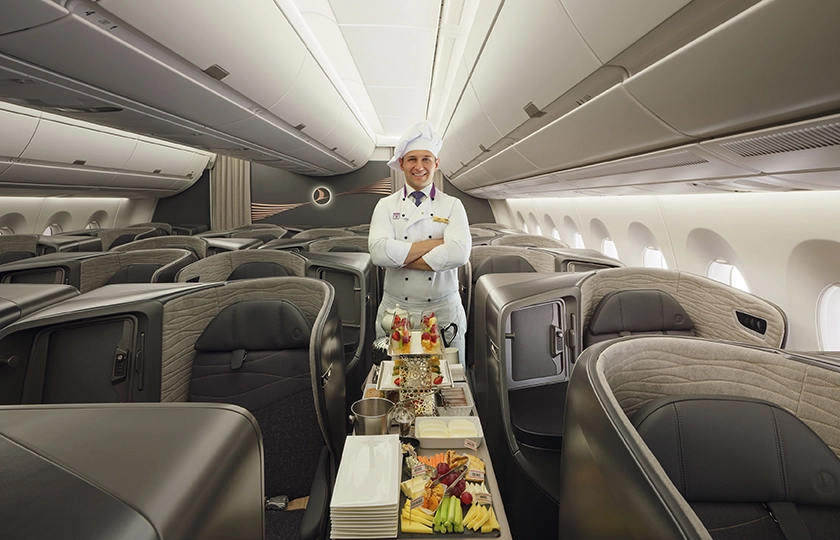
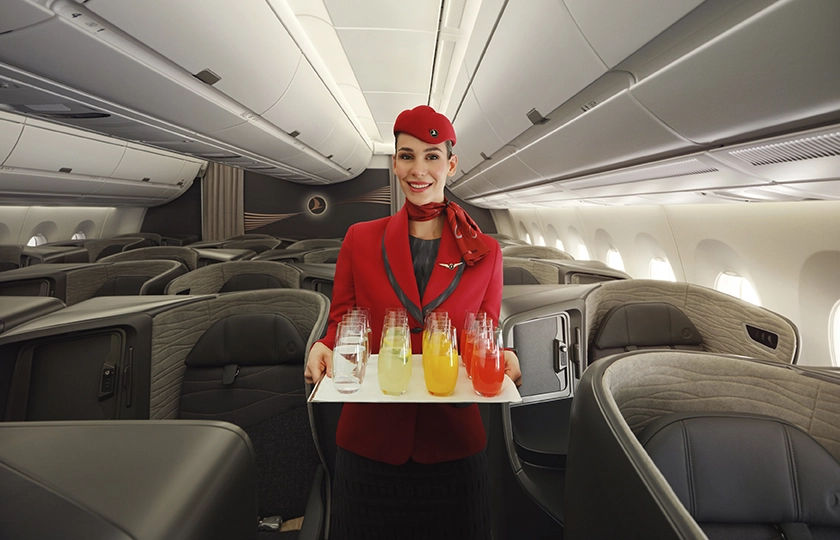
Flying in Business Class with Turkish Airlines means stepping into an experience from the very first moment where Turkish hospitality takes centre stage. The warm welcome on board leads to spacious, carefully designed seats that ensure maximum comfort whilst travelling and, on long-haul flights, allow you to rest almost as if you were in bed. The cuisine deserves a special mention: a carefully curated selection of Turkish and international flavours is served with elegance and accompanied by an extensive drinks menu. The attentive and discreet service rounds off an experience designed to ensure that your flight is spent in complete comfort. A journey in its own right, where comfort, fine dining and traditional Turkish hospitality come together at an altitude of thousands of metres. Turkish Airlines operates several daily flights from Istanbul to Antalya, a journey of approximately one hour and twenty-five minutes.