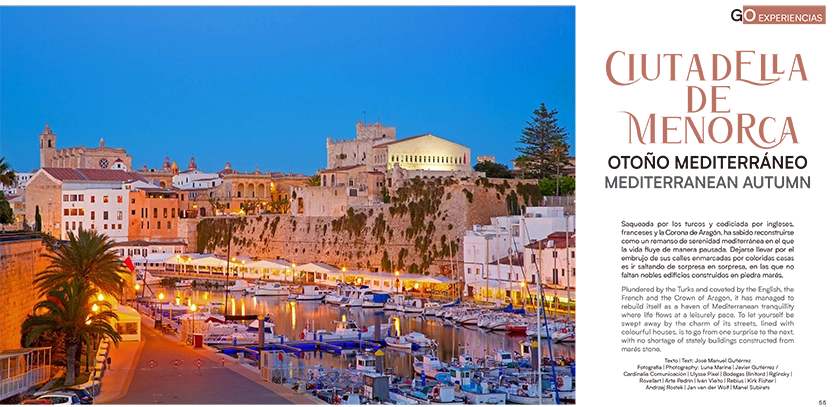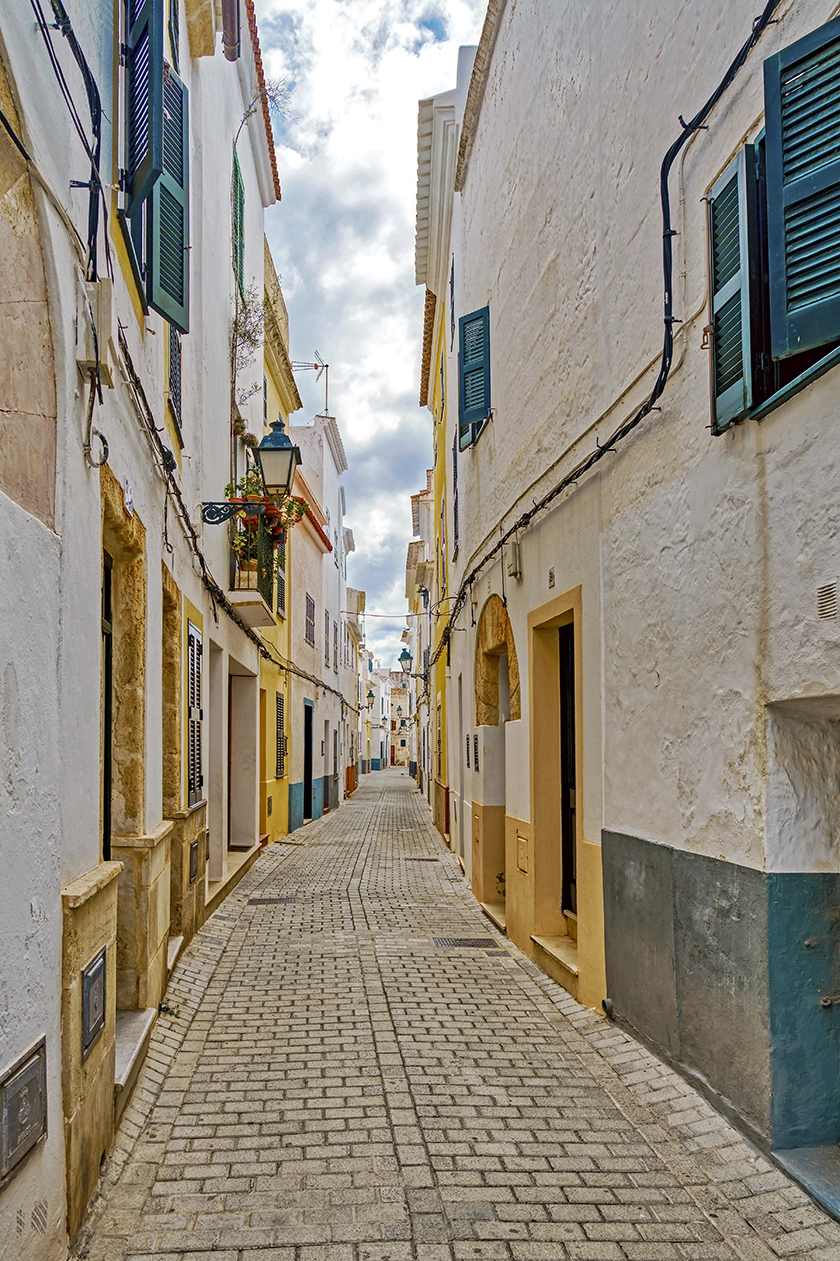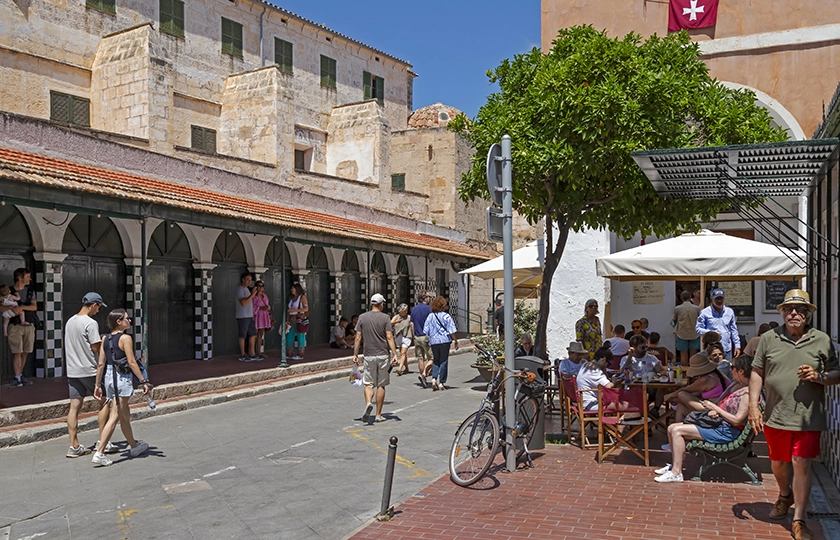
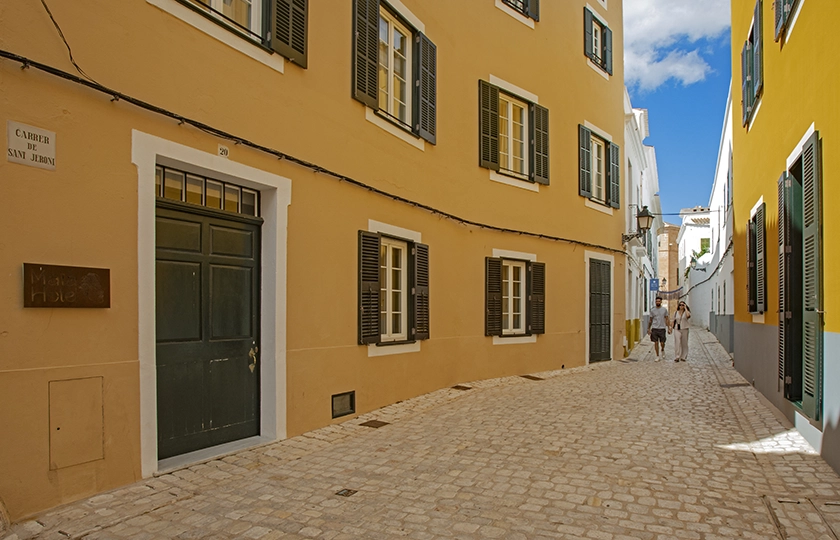
Plundered by the Turks and coveted by the English, the French and the Crown of Aragon, it has managed to rebuild itself as a haven of Mediterranean tranquillity where life flows at a leisurely pace. To let yourself be swept away by the charm of its streets, lined with colourful houses, is to go from one surprise to the next, with no shortage of stately buildings constructed from marés stone.
The city, which was the island’s capital until 1714, has seen all the cultures of the Mediterranean basin pass through it, and each has left its mark on its culture, art, language and cuisine. Even those early prehistoric settlers, whose origins remain a mystery to the academic community, left behind a legacy that is unique in the world in the form of Talayotic culture, and their remains are a UNESCO World Heritage Site.
Ciutadella is a city that invites you to stroll through it, constantly enticing you with its hidden corners and little squares, its stately and religious architecture, its ever-lively terraces, its markets brimming with a lively, local atmosphere, and its traditional crafts – in a seductive interplay where the hours slip by before you realise it.
Its compact urban layout, where distances are short, makes it easy to explore; everything is close by, and in autumn it is particularly pleasant thanks to its mild climate, the special white light during the day and the incredible orange hues as evening falls, as well as the absence of the summer crowds.
Ciutadella, step by step
The city’s grandeur is a logical consequence of the events that have shaped its history, but despite its turbulent past, its artistic and architectural heritage is spectacular. It is therefore hardly surprising that, as early as 1964, its historic centre was declared a National Architectural and Artistic Heritage Site.
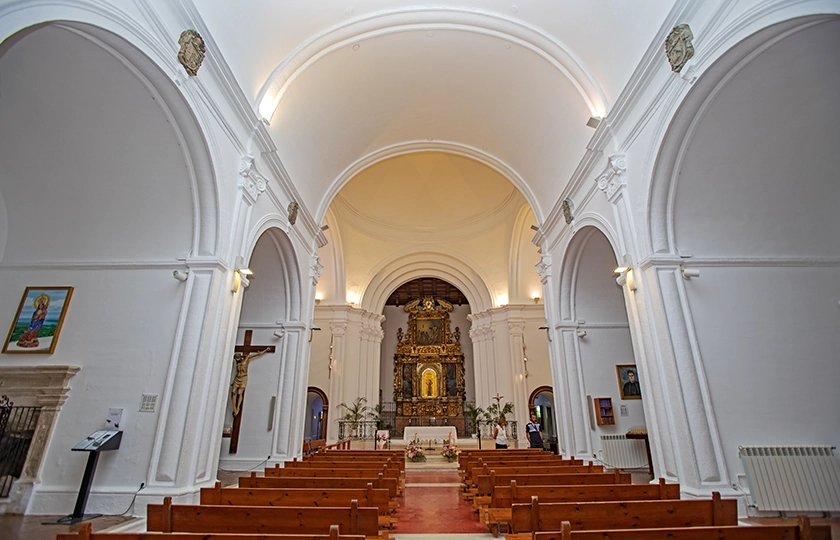
The Cathedral of Santa María de Ciutadella stands at the highest point in the heart of the old town. Built on the site of a former mosque, it was originally constructed as a church in the Catalan Gothic style on the orders of King Alfonso III of Aragon following the conquest of the island in the late 13th century. Throughout its history, it has endured numerous sieges, attacks and looting, which have necessitated successive reconstruction work. This explains the presence of different architectural styles, such as Neoclassical and Baroque.
In 1986, a comprehensive restoration project was undertaken which has dramatically improved the appearance of the church; the choir stalls, the 17th-century Baroque Chapel of the Souls, the early 19th-century Neoclassical Chapel of the Immaculate Conception and the Chapel of the Blessed Sacrament have all been restored.
Externally, in addition to its imposing silhouette, one can see what was originally the minaret, which was later converted into a bell tower.
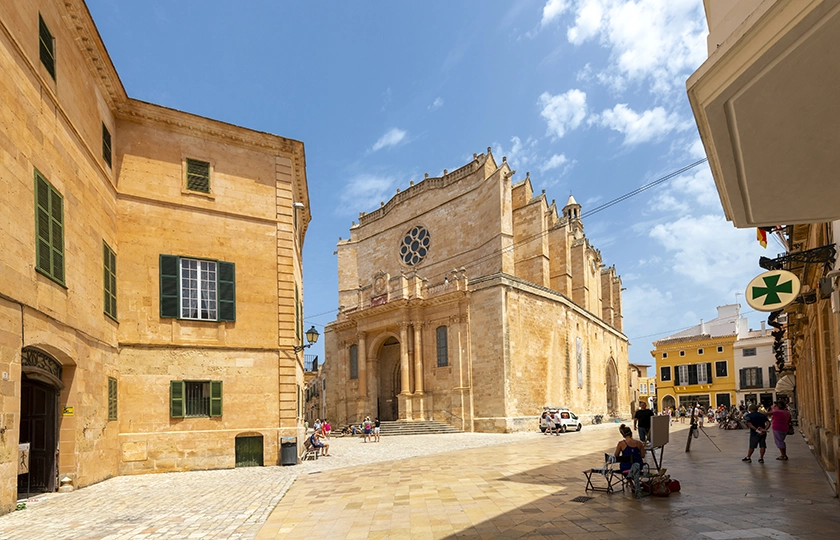
Staying on the subject of religious architecture, the church of the Augustinian convent, known as Els Socors, is a unique landmark in Menorca due to its Renaissance style with Castilian influences. It is also notable for its triple classical façade and the exquisite mural decoration inside.
Adjoining this church is the seminary cloister, built in the second half of the 17th century. It is a very pleasant landscaped space bordered by rows of semicircular arches, above which runs another gallery featuring Baroque stained-glass windows. It currently houses the Diocesan Museum of Menorca.
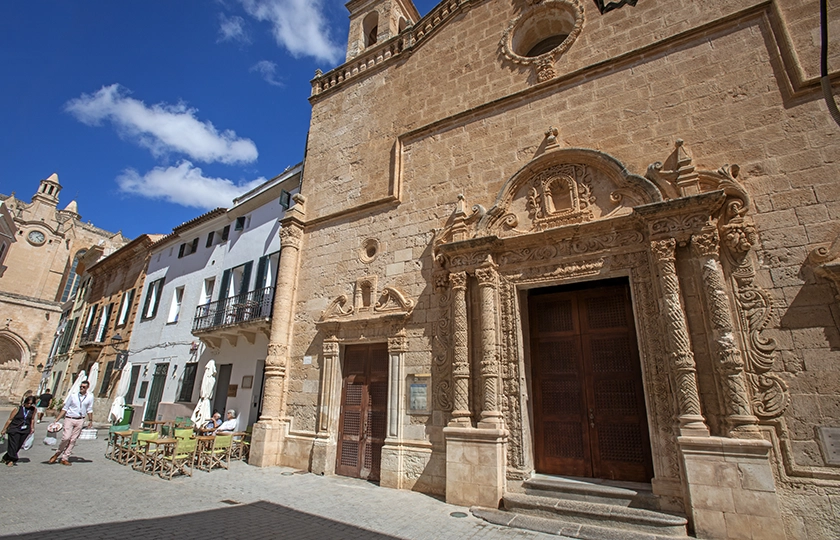
Whilst wandering the streets, one is bound to come across yet another architectural gem. The Church of El Roser, now used as the Municipal Exhibition Hall, was built in an early Baroque style between the 17th and 18th centuries, but what catches the eye most is its façade, with its extraordinarily rich ornamentation.
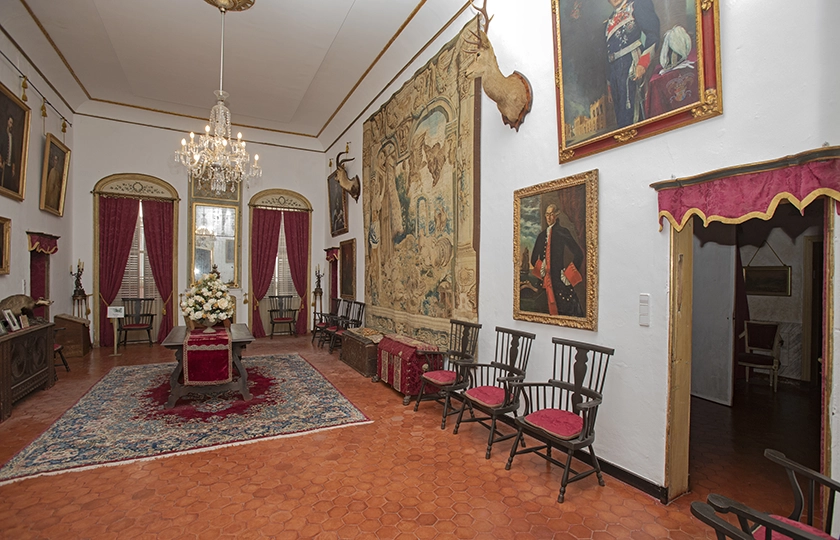
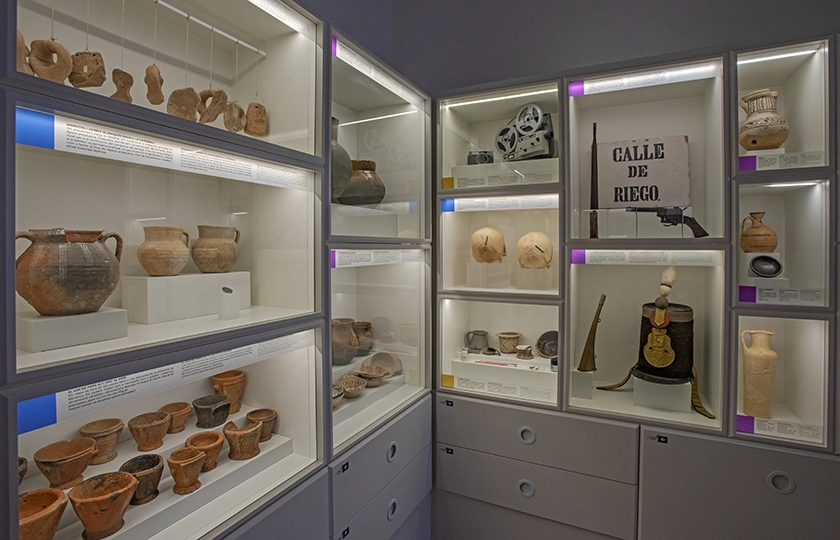
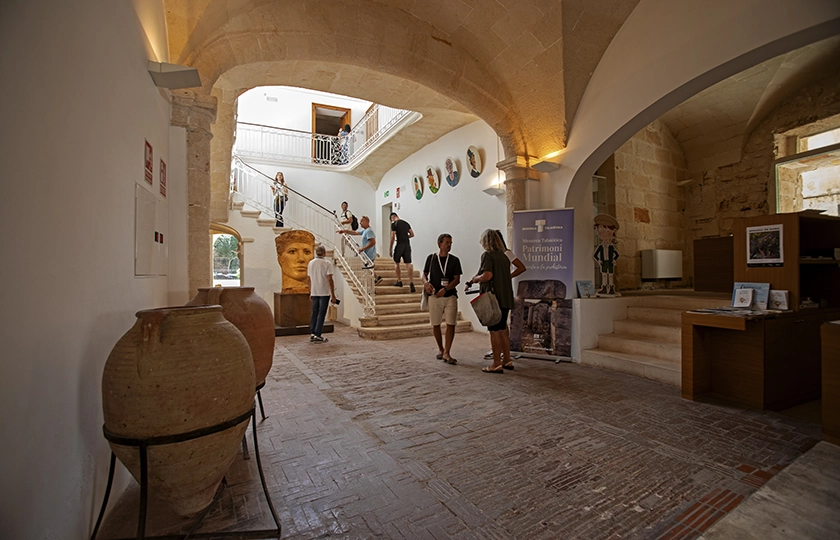
We frequently come across examples of magnificent civil architecture. Can Saura is a nobleman’s house dating from the late 17th century, whose façade – dominated by the Saura family coat of arms – is one of the finest examples of Menorcan Baroque. Inside, the highlights include a monumental staircase and the large octagonal dome that floods the entrance hall with light; from here, visitors can access the various rooms of the Ciutadella Municipal Museum, which is housed in this palace. In addition to a room specifically dedicated to the Sant Joan Festivities, the museum’s exhibition tells the history of the municipality through fascinating ethnological and archaeological collections, such as the artefacts found in the Mussol and des Càrrtitx caves. The museum’s more academic work takes place at the Bastió de Sa Font, the former bastion of the 17th-century city walls, where the museum’s collections are classified, documented and conserved.
Tradition has it that the relief of a blindfolded female face adorning the entrance to the Palau Torre-Saura – Cas Comte conveys the idea that, as it cannot see who is crossing the threshold, everyone who enters is welcome. This is one of the jewels of neoclassical civil architecture. Extraordinary events for both the town and the family of the Counts of Torre-Saura have taken place within its walls; the family has maintained a direct connection with the Royal Family from 1818 to the present day. In 1860, Queen Isabella II, accompanied by her family and a large entourage on an official visit, was travelling to Maó, but bad weather forced them to disembark at Ciutadella. They stayed at the residence of the Counts of Torre-Saura, where a room was set up with a simple throne to serve as a Royal Hall. That seat now faces the wall as a sign that it can never be used again.
From Alfonso XII to the current King Felipe VI, many distinguished figures have visited the Palau Torre-Saura.
Another stately home open to visitors, and no less interesting, is Ca n’Olivar. Built in the first half of the 17th century opposite the cathedral, it is a fine example of the way of life of the Menorcan nobility of the time.
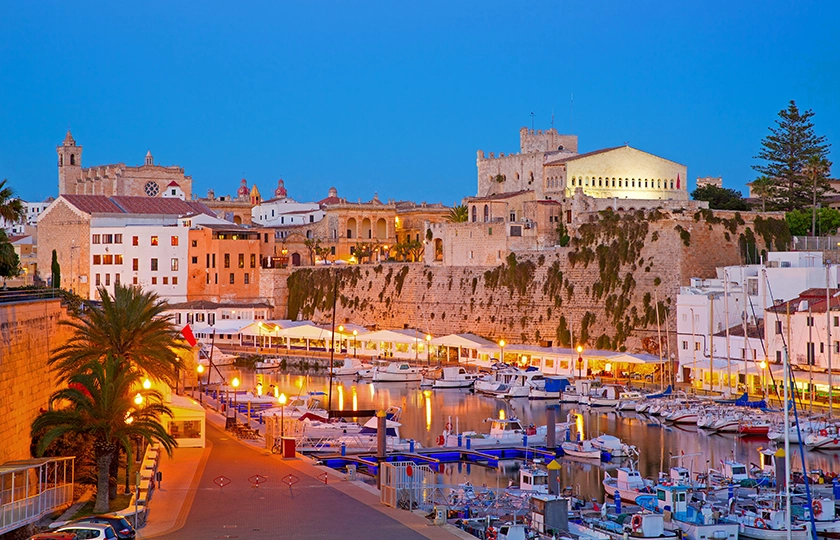
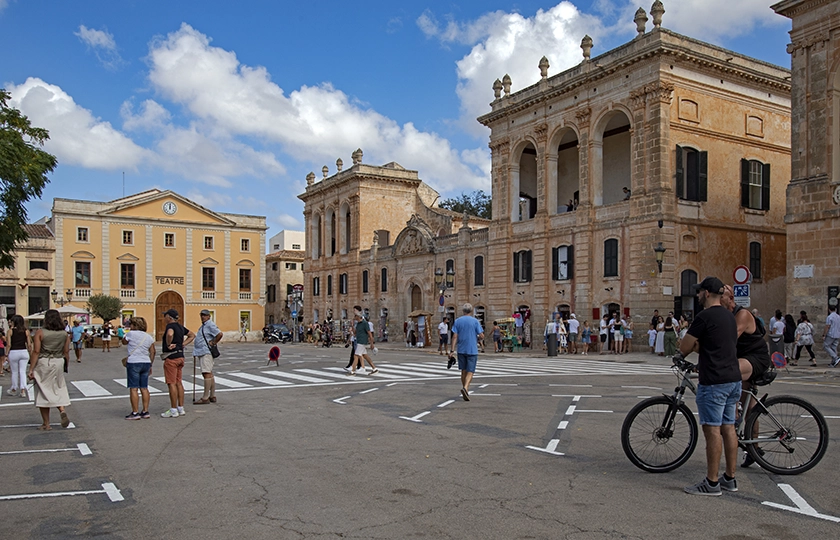
Plaça des Born is the nerve centre of the town, providing access to the historic centre, the old harbour and every part of Ciutadella. This landmark square is home to the Des Born Theatre and the Cercle Artístic, as well as the Town Hall. Opened in 1925, it stands out for its Moorish architecture, following the style of the former fortress and later Military Governor’s Palace on whose site it was rebuilt. Next to it stands the Governor’s Bastion, a splendid viewpoint offering magnificent views over the old harbour; it is one of the few remaining sections of the 17th-century wall, built on top of the medieval wall destroyed in 1558 during the Turkish attack.
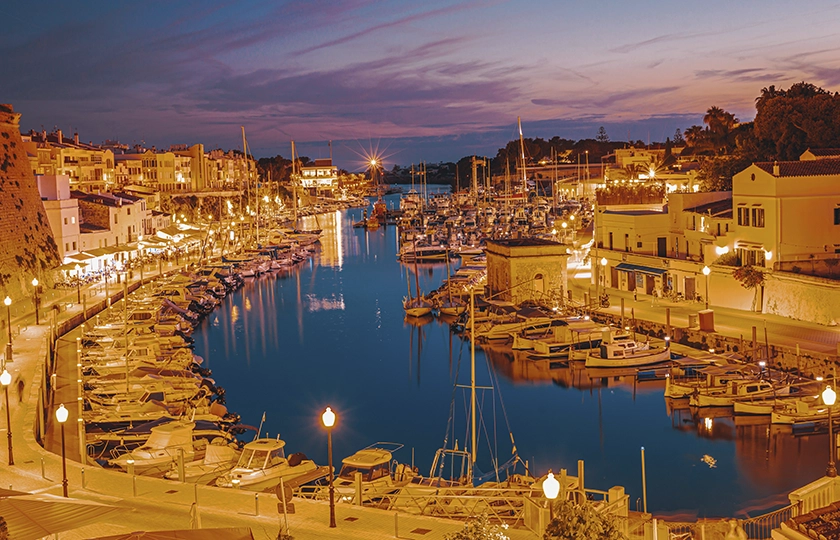
At its feet, the old harbour is brimming with local charm and a lively atmosphere. As well as its many dining and nightlife options, it is also becoming a cultural hub with an ever-expanding programme of events each year.
The entrance to Ciutadella harbour is guarded by the Tower of Sant Nicolau, built in 1680. Its construction in marés stone and its octagonal floor plan give it a striking appearance, as it befits a defensive structure. Inside, a column supports the structure to bear the weight of the eight pieces of artillery that once defended the entrance to the city.
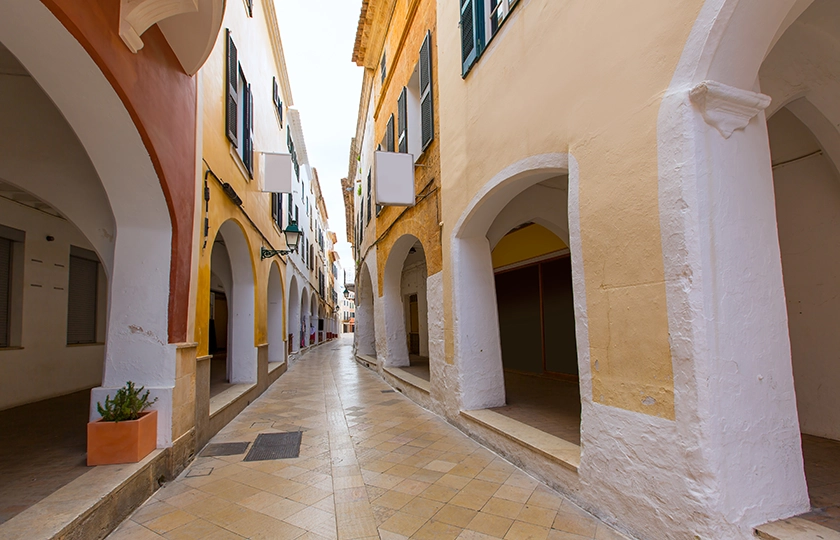
On your way back to the old town, the best route is via Ses Voltes, as Ciutadella’s most iconic street is popularly known. As well as its picturesque arcaded street lined with restaurants and shops, it provides the most spectacular backdrop for the horse parade during the Sant Joan festivities.
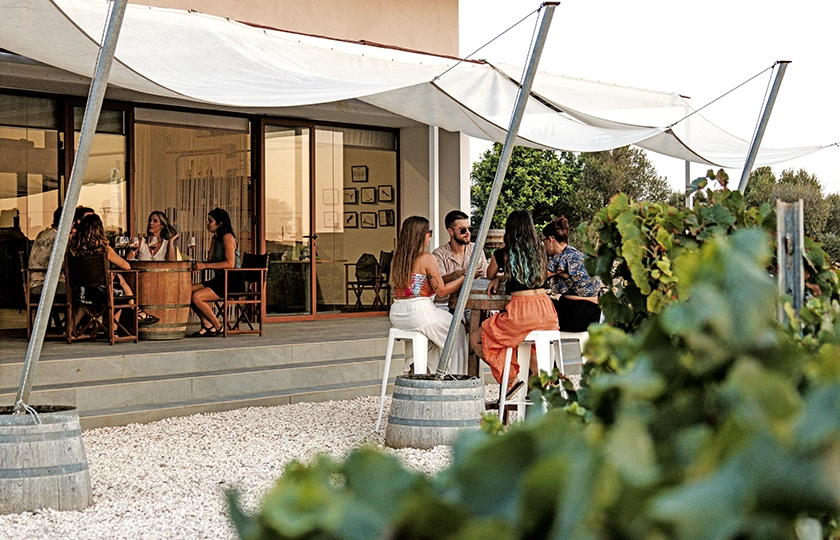
Without losing any of the charm of urban spaces, Plaça des Peix, also known as Plaça del Mercat, is one of the city’s most authentic spots, as well as one of the liveliest. A small wrought-iron structure, decorated with white and green tiles and roof tiles and resembling a kiosk, and the arcades that surround the square are home to a vibrant world. Fishmongers, butchers, greengrocers, stalls selling cheese, cured meats and the island’s sobrasada, and cafés from which to watch the hustle and bustle of the town whilst enjoying an authentic ensaimada or sipping a local wine, such as one of the excellent wines produced by Bodegas Binitord. If you find yourself there in the afternoon, the Plaça del Mercat is also a great place to try out that trend that’s all the rage: ‘tardeo’. A great atmosphere and live music invite you to enjoy something as quintessentially local as Menorcan gin in any of its forms.
One interesting feature of some of the restaurants in the square is that they will cook and serve fish that you have previously bought at the market, but that is not the only one. Within the town centre, Ciutadella is home to an authentic windmill, the only one of its kind still standing on the island. Molis des Comte was built in 1778 to serve the local farmers. Inside, there was space for the milling machinery, a storehouse and the miller’s dwelling until it ceased operations in 1905. Today, it houses a restaurant.
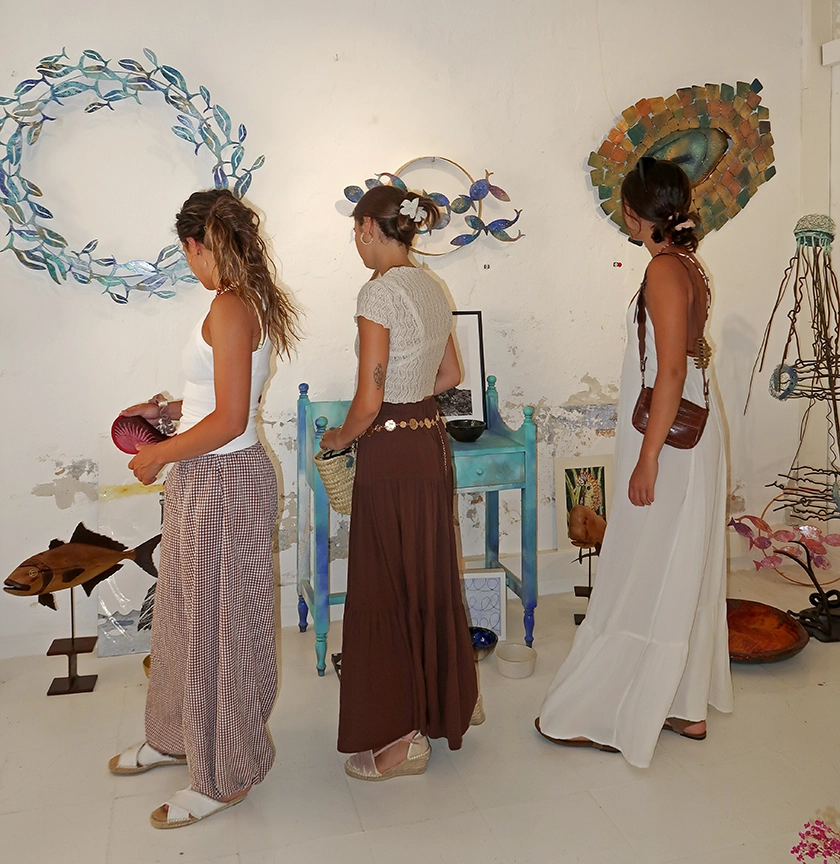
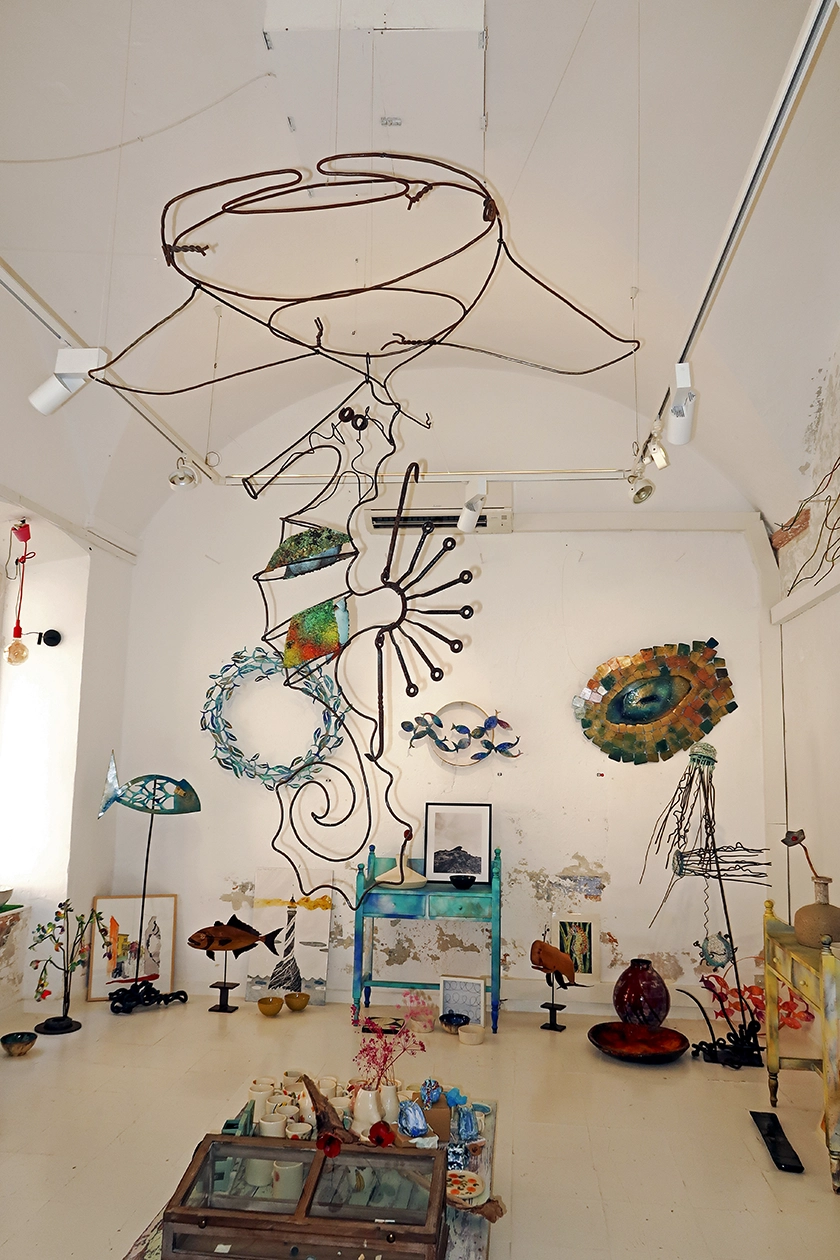
Contemporary art also has its place within Ciutadella’s historic centre. At 8 Carrer del Santíssim, Rovellart is much more than just a shop; it is a workshop for creation, thought and colour that brings to life works exhibited and experienced across all five continents.
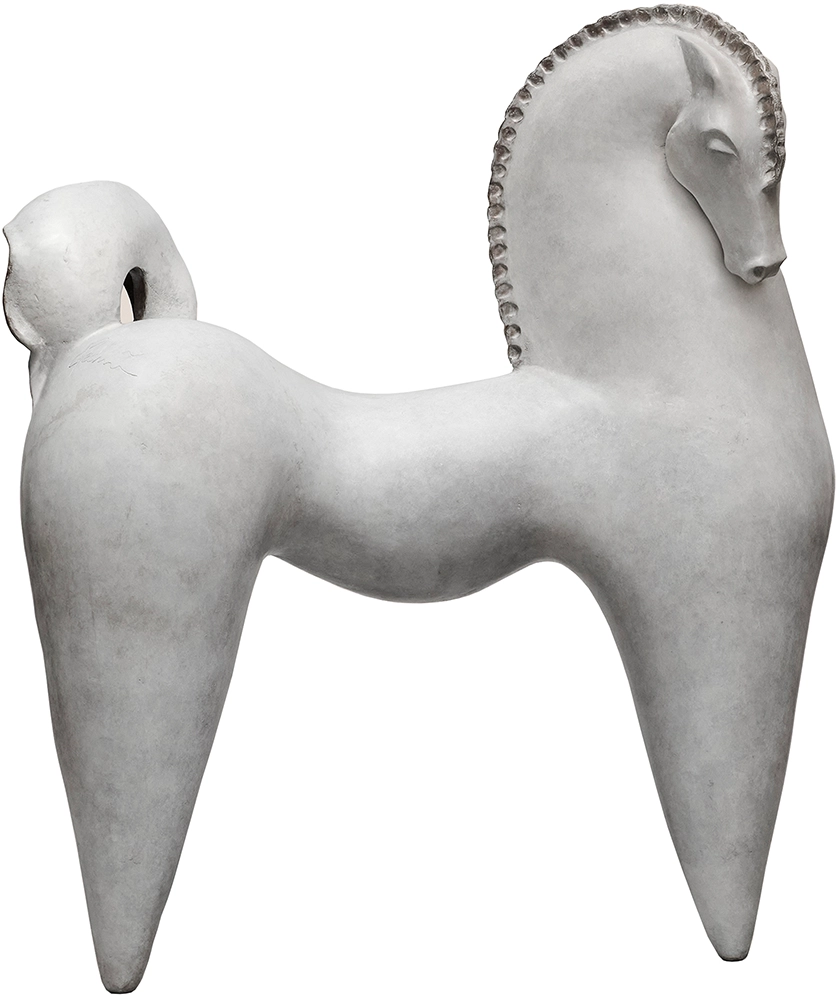
The Pedrín Art Gallery, at 30 Carrer Seminari, exhibits and sells works by the sculptor Pedro Rodríguez, inspired by nature and clearly influenced by Mediterranean light.
Light and stone in the landscape
island, it is a UNESCO Biosphere Reserve, which in itself is a testament to its environmental value. Furthermore, its magical, crisp white Mediterranean light at midday transforms into orange hues as evening falls, offering sunsets so breathtakingly beautiful they are truly mesmerising.
Mount Toro is the island’s highest peak and, rising up in its centre, offers a superb vantage point from which to admire the island from a bird’s-eye view. On clear days, there is a panoramic view of the entire Menorcan coastline, stretching from Fornells Bay in the north to the white sandy beaches of Son Bou, passing by the Artrutx lighthouse at the southwestern tip. Wherever you look, you are always surrounded by the vast expanse of woodland that covers the island. At the summit of the mountain stands the sanctuary of Mare de Déu del Toro, run by a community of Franciscan nuns, along with a souvenir shop and a restaurant.
With this overall picture of the territory, we take a step back in time in search of its origins. Research suggests that the first human settlements on the island date back to the third millennium BC, with the inhabitants developing their own distinct culture and way of life until the arrival of the Romans in 123 BC. The period up to this turning point is known as the Talayotic culture, understood as the prehistoric social customs and techniques of the inhabitants of Mallorca and Menorca. However, it is on Menorca that the main remains are concentrated, spread across two hundred and eighty sites. Collectively, these have been termed ‘Talayotic Menorca’ and were recognised as a UNESCO World Heritage Site in 2023.
Five kilometres from Ciutadella lies the most iconic Talayotic monument of this culture. The Naveta des Tudons is a type of collective tomb built using the so-called Cyclopean technique, which involves the dry-stone setting of medium-sized stones. Its shape resembles an inverted ship, hence its name, ‘naveta’. Inside, it is divided into three levels separated by structures built from large slabs.
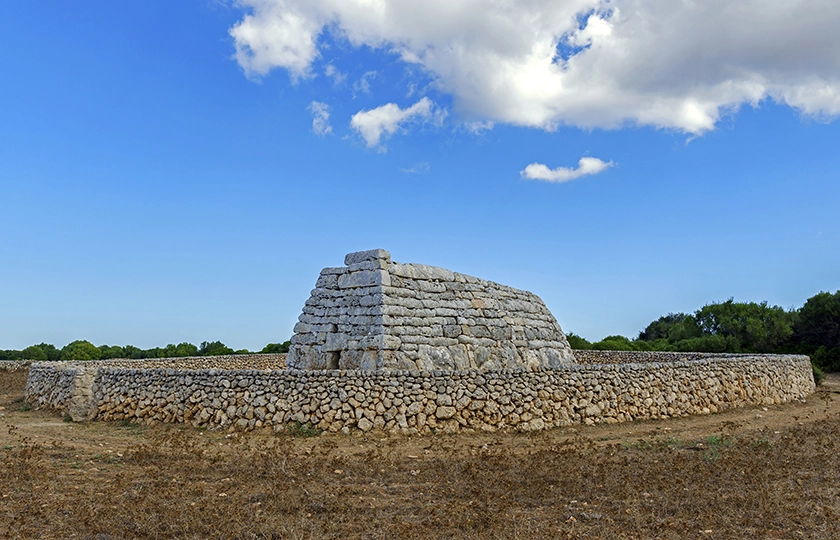
Inside, the remains of one hundred individuals of both sexes and all ages, dating from the 9th century BC, were found, along with abundant grave goods such as bronze bracelets, pottery, bone buttons, bronze weapons and a decorated bone stopper which formed part of a casket containing the hair of some of the deceased as part of the funeral ritual.
For conservation and safety reasons, visitors are not permitted to enter the interior or climb up to the dome; nevertheless, it remains one of the must-see monuments due to its great cultural significance.
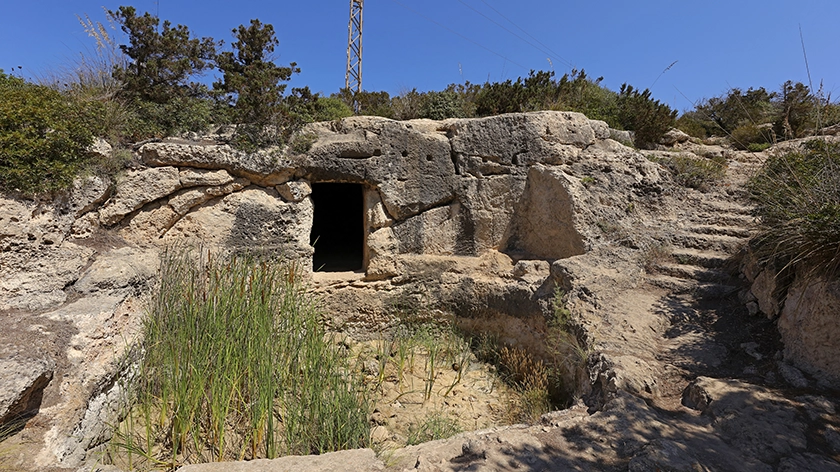
Cala Morell, on the north coast of Ciutadella, is a small natural harbour whose rocky cliff face is home to a group of fourteen man-made caves, forming an exceptional prehistoric rock-cut cemetery. Archaeological research confirms that it was in use from the Talayotic period in 1700 BC until the 2nd century AD.
They vary in size, ranging from the smallest—with a circular floor plan and vaulted ceiling—to the most monumental, notably one featuring classical architectural motifs on its façade, which demonstrates the arrival of cultural influences from other peoples of the Mediterranean basin during the final phase of the Talayotic period.
On a more social level, the Talayotic settlement of Torretrencada is an interesting open-air museum that illustrates what society was like during the late Talayotic and post-Talayotic periods through its archaeological remains.
We now move on to a more contemporary narrative, whilst still drawing on the language of the stones. The Canteras de s’Hostal are the limestone quarries from which marés stone was extracted for building construction. After ceasing operations in 1994, the site was set to be backfilled and reforested, thus leading to the disappearance of a monumental man-made landscape which had, to a large extent, helped to create another – the urban landscape with its beautiful monuments.
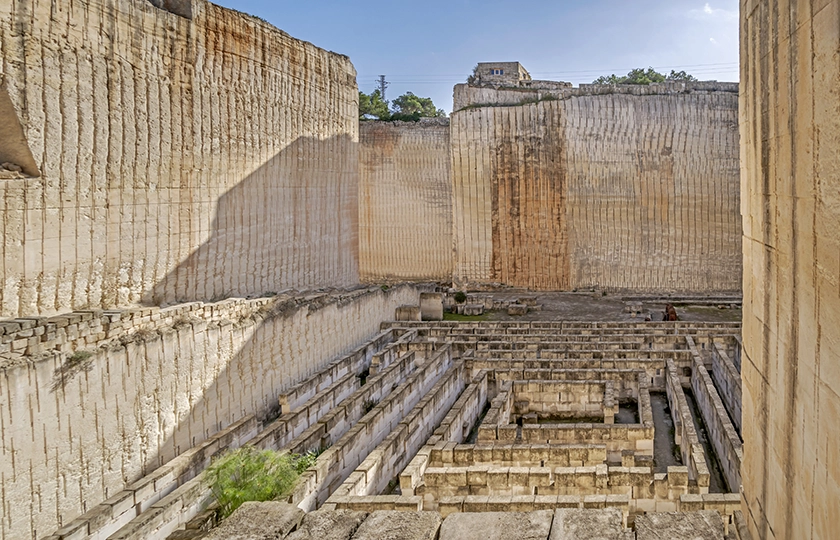
It was at this point that Líthica entered the picture – a private, non-profit foundation set up to prevent the disappearance of the Marés quarries. It developed a comprehensive restoration plan to transform them into a space for education, culture, nature and leisure. In 2017, they were declared a Site of Ethnological Interest, becoming part of Menorca’s Historical Heritage catalogue, and in 2019, they received the Europa Nostra heritage award.
Its programme of activities is extensive and varied throughout the year; workshops are held for children and adults, and visits can be guided or self-guided, allowing visitors to explore the surroundings at their own pace. Every summer, Lithica brings together music and cultures from around the world with the Fosquets de Lithica festival. A series of concerts that once again fill the Canteras de s’Hostal with life, harmony and creativity.
Always with the utmost respect for the natural environment and its conservation, the various mazes – one of which is inspired by that of the Minotaur – offer an immersive experience in stone-masonry, in the plant and animal species that have gradually colonised the space, or simply in the wholesome activity of enjoying our time, whether individually or collectively, but always in an enriching way.
Líthica has transformed a derelict industrial site into a hub of creativity where nature, art and humankind engage in dialogue on the same wavelength.
Here our visit to Ciutadella comes to an end, imbued with the serenity of its atmosphere, our palates satisfied, enriched by a little more culture and, above all, warmed by the hospitality of its people.
https://www.ajciutadella.org/OrgansGovern/Servei.aspx?IDIOMA=3&ID=36