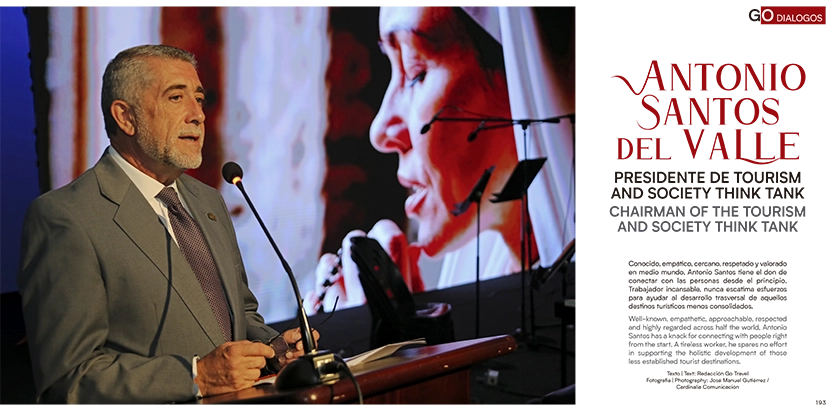
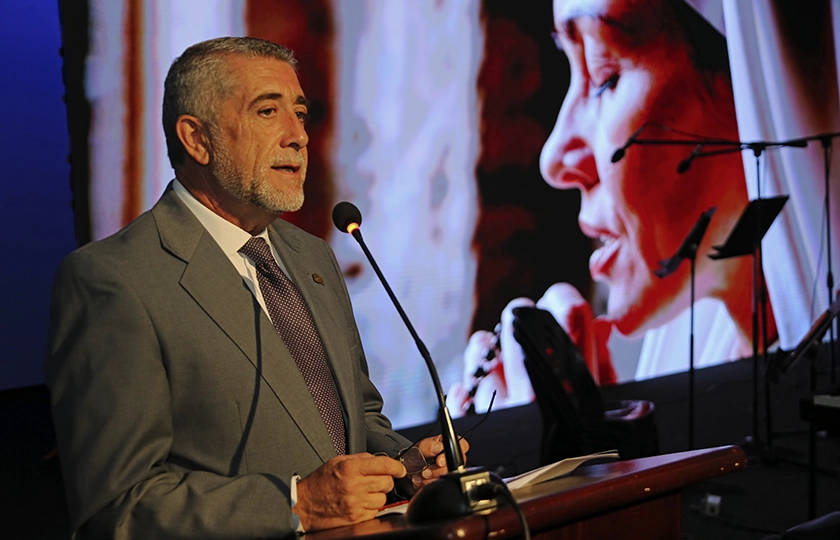
Well-known, empathetic, approachable, respected and highly regarded across half the world, Antonio Santos has a knack for connecting with people right from the start. A tireless worker, he spares no effort in supporting the holistic development of those less established tourist destinations.
His humanities background and three decades of professional experience – always within the tourism sector, having held senior positions in numerous countries – have enabled him to develop a crystal-clear global perspective on the sector, to explore new avenues of socio-economic development for each region, and to act as a link between governments, businesses and organisations in order to launch tangible projects that add value to destinations.
From your perspective as an international adviser and consultant, how would you assess the state of the tourism sector globally?
First of all, I would like to thank GO Travel for the opportunity to have this conversation.
I would say, with caution, that global tourism is in good health, although it is going through a period that calls for a level-headed approach. According to the latest UNWTO Barometer – in whose expert group I have the honour of serving – international arrivals reached 690 million in the first half of 2026, just 0.4 per cent more than the previous year, with Africa and Europe showing growth and the Middle East severely affected by the wars currently taking place there and their impact on the world.
The figures, however, tell only part of the story. After many years, I have learnt that the true health of the sector is measured in terms of people: in the decent jobs it creates, in the pride of those who work there, and in the gratitude of those who visit.
Given that the tourism market is so polarised between established and emerging destinations, what advice would you give to those who are struggling to secure a share of the pie?
I would tell them, with all due respect for their efforts, not to try to be like anyone else. I have had the privilege of being involved in strategic planning in cities as diverse as Valparaíso, Montevideo, Quito and Elvas, and in all of them I learnt the same thing: no small destination can succeed by imitating a large one. Their strength lies in what only they can offer, be it their heritage, their cuisine, their skies or, quite simply, the way their people welcome visitors.
I would also advise you not to go it alone, because networks and alliances amplify the voice of those who, on their own, would barely be heard. And, finally, they should measure their success with patience, not by the number of visitors, but by the quality of spending and the well-being that tourism brings to their local communities.
And finally, development should be led by professionals, and there should always be a strategic plan with a realistic timeframe.
Do you consider that artificial intelligence, at present, is an ally in the development of high-quality tourist destinations, or is there a risk that it will create false expectations?
I believe – and I say this with great caution – that she is a valuable ally, provided we do not forget whom she is meant to serve. Artificial intelligence now enables a destination to gain a better understanding of its visitors, anticipate visitor flows, manage its resources more efficiently and personalise the visitor experience – and this represents an extraordinary opportunity, even for regions with fewer resources. The risk you mention does exist, and it arises when technology is presented as a magic solution or when the image that is promised does not match the reality that the traveller encounters. No algorithm can replace a smile, some good advice or looking after one’s surroundings.
For this reason, at the Tourism and Society Think Tank, we address these issues through a working group dedicated to science, technology, data and tourism intelligence, in the firm belief that training people must always come before the tools.
Given your experience, what values should a tourist destination always uphold if it wishes to be sustainable?
My studies in History, Art and Heritage taught me very early on that a destination is, above all, a community with a memory. That is why the first value I would mention is respect for the people who live there, their identity, their heritage and their natural environment. Alongside this, I would place equity so that the benefits of tourism truly reach local families and small businesses; honesty in management, which requires long-term planning and accountability; and education for both residents and visitors.
Finally, I would add cooperation between the public, private and academic sectors.
A sustainable destination is not the one that grows the most, but the one that its own residents want to continue calling ‘home’.
What is the Tourism and Society Think Tank?
It is, if I may say so with affection, a shared home. The Tourism and Society Think Tank is an international, independent forum for reflection, consultancy and advice on tourism and society, which I have had the honour of chairing since May 2022. It brings together more than 1,500,000 professionals from around the world, according to our records as at August 2026, from the public, business and academic sectors, regardless of the institution to which they belong.
Our aim is to provide accurate information on the risks and opportunities within the sector, analyse its trends and contribute to tourism that is inclusive, sustainable and beneficial to all. But, beyond the definitions, it is a place where very different people listen to one another, share what they know and help one another.
How does the Tourism and Society Think Tank contribute to the socio-economic growth of tourist destinations?
It helps, above all, by building bridges. Throughout my professional life, I have found that many regions do not lack talent or resources, but rather someone to bring together those who need to make decisions jointly. At the Tourism and Society Think Tank, we support destinations in drawing up their strategic plans through our consultancy model and workshops with local stakeholders, and we provide them with trend analyses, training programmes and the expertise of professionals from numerous countries.
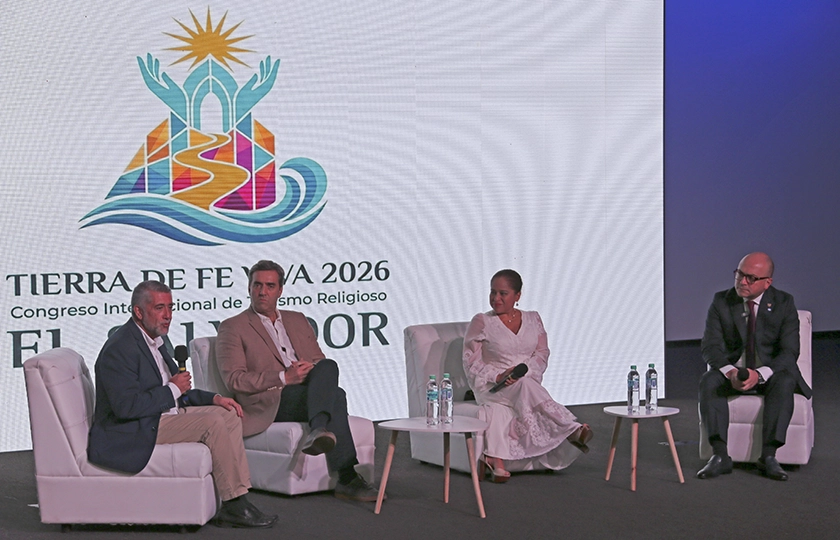
Our thematic networks – such as those for Cocoa Tourism, Religious Tourism, etc. – also enable lesser-known destinations to gain international visibility and learn from one another. All of this is based on a very simple conviction: economic growth is only worthy of the name when it translates into jobs, opportunities for young people and a better life for those who live there.
Who can join the Tourism and Society Think Tank, and what are the requirements?
The doors are open, and I say this with genuine satisfaction. The TSTT is open to professionals in tourism and related fields, academics and researchers, businesses, destinations, and public and private institutions wishing to share their experience.
The procedure is simple: all you need to do is complete the registration form available on our website, www.tourismandsocietytt.com, and, if you wish, send us your CV so that we can find out more about your background. Rather than formal requirements, we are looking for a certain attitude: a commitment to service, rigour, respect for other people’s opinions and a sincere commitment to responsible tourism. We don’t ask anyone where they’re from or which organisation they belong to; what matters to us is what they can contribute and what we can learn together.
Within Turismo y Sociedad Tank there are several sub-organisations: the World Network for Religious Tourism, the Ibero-American Network of Astro-tourism Destinations and the World Network for Cocoa Tourism. Tell me about them.
First of all, and if I may say so, they are not sub-organisations in the strict sense, but rather organisations that report to the TSTT; however, their objectives are so significant that they lead them to undertake parallel initiatives amongst themselves, always under the TSTT’s management umbrella.
Networks, like working groups, stem from the same idea: to bring together people who share common interests.
The Global Religious Tourism Network connects destinations, organisations, businesses and experts in the field of religious and spiritual tourism, and promotes intercultural understanding and respect for diversity of belief; it held its first meeting at FITUR 2023 and its first international conference in Guatemala in 2024.
The Ibero-American Network of Astro-tourism Destinations, launched in May 2025, brings together local authorities and organisations committed to preserving the night sky and turning it into a source of scientific education and local development.
The Global Cocoa Tourism Network connects regions and experiences, from cultivation to chocolate, putting the spotlight on producer communities. All three are open to anyone who wishes to join.
And once working groups have become established, they tend to organise themselves in a more public manner, as is the case with nature tourism, wine tourism, technology and innovation, and others.
What services and tools does the Tourism and Society Think Tank provide for its members?
Above all, we aim to offer them practical support and guidance.
Our members have access to catalogues of services and tools, strategic studies and analyses of industry trends, publications and interviews, a newsletter, etc., as well as this magazine, GO Travel, which is also their home.
We offer training programmes and have Global Education Consultants (GEDUC), our division dedicated to education, as well as working groups, as I mentioned earlier, in which any member can take part.
Added to this are professional visibility, preferential terms for conferences and courses, and access to an international network of colleagues. Although, if I may be so bold, the most valuable tool is still being able to ring a colleague in another country and get help.
What would be the ideal tourism scenario in the medium term in terms of the well-being of local communities?
The ideal scenario would be one in which residents of any destination could say, without hesitation, that tourism has improved their lives.
A scenario in which decisions are taken in consultation with communities rather than behind their backs; in which the wealth generated remains in the local area, in the form of decent jobs, thriving local businesses and young people who are not forced to leave; and in which success is no longer measured by the number of new arrivals but by the well-being of residents.
Ultimately, I aspire to a form of tourism in which visitors behave like ‘temporary neighbours’ and are welcomed as such.