

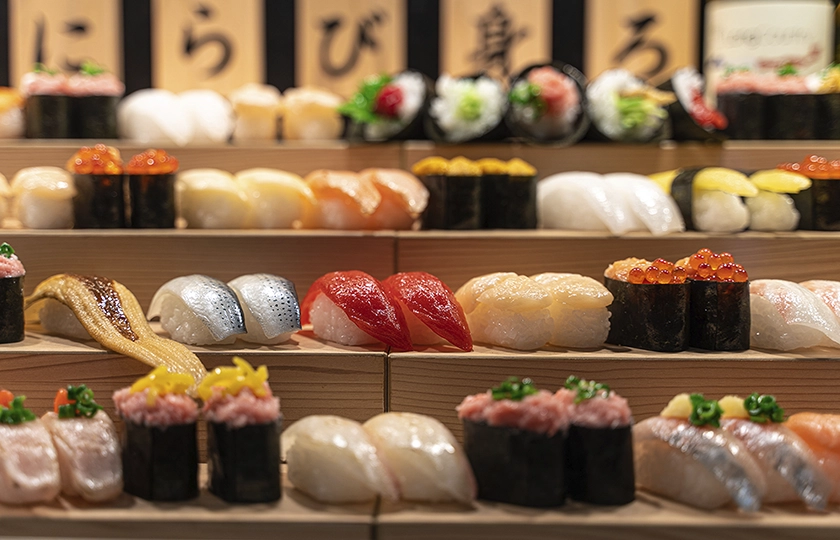
Japan’s northernmost island boasts one of the country’s richest fishing grounds and is home to towns such as Otaru, considered one of the best places to enjoy sushi made with fish and seafood of exceptional quality.
Did you know that every 1st November, Japan celebrates Sushi Day Sushi? This date was established in 1961 by the National Federation of Sushi Industry Associations (Zensushiren), which represents sushi restaurant operators across Japan’s 47 prefectures.
The choice of this date is no coincidence. It coincides with the arrival in shops of shinmai, the freshly harvested rice used to make sushi, and with one of the best times of the year to enjoy fish and seafood. During autumn, the drop in water temperature causes many species to accumulate more fat, intensifying their flavour. Furthermore, tradition links 1 November to the date on which, in the famous kabuki play Yoshitsune Senbon Zakura, the commander Taira no Koremori assumes a false identity to work as a sushi apprentice.
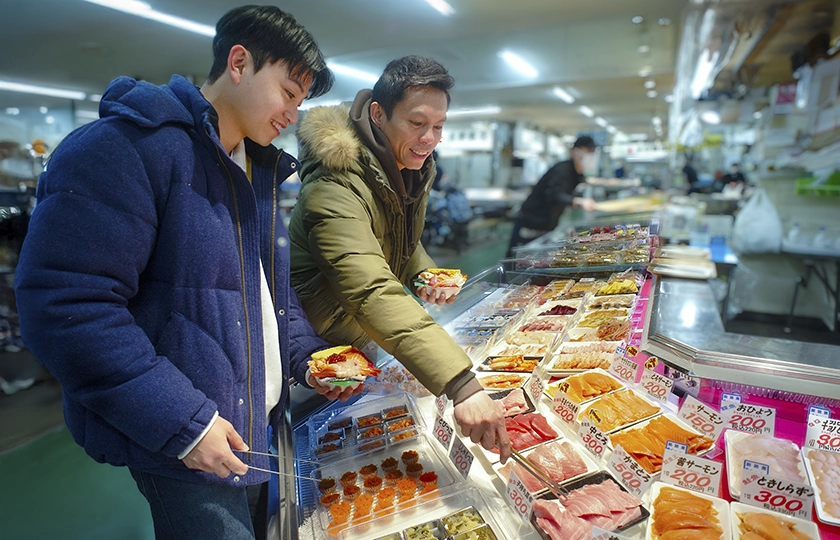
If there is one place to enjoy sushi in Japan, it is Hokkaido. The country’s northernmost island accounts for approximately a quarter of the entire national fish catch, as it boasts exceptional natural conditions: surrounded by the Sea of Japan, the Pacific Ocean and the Sea of Okhotsk, it is also influenced by the Oyashio Current, which feeds some of the country’s most abundant fishing grounds. These plankton-rich waters foster an abundance of high-quality fish and shellfish.
This marine wealth is also due to areas such as the islands of Rishiri and Rebun, or the Shiretoko Peninsula, a UNESCO World Natural Heritage Site, where the convergence of ocean currents fosters extraordinary biodiversity.
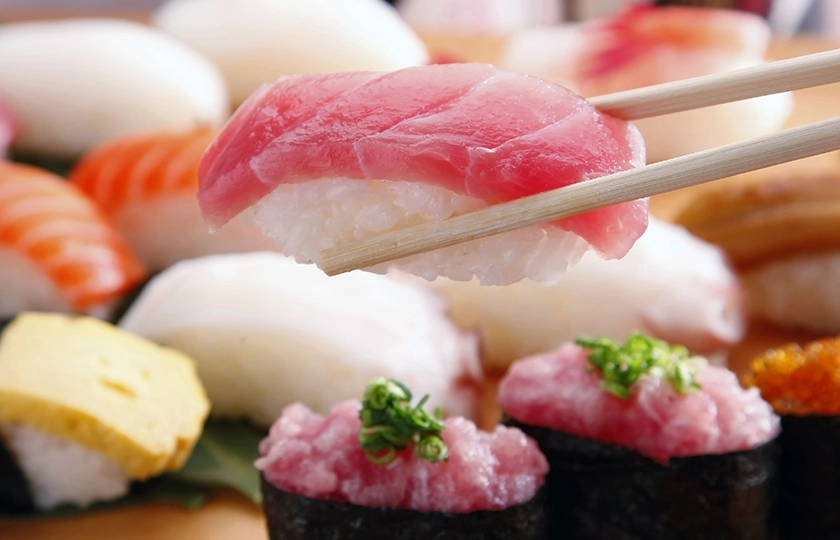
Among Hokkaido’s star products are sea urchin (uni), considered one of the best in the world for its creamy texture and natural sweetness; scallops (hotate), renowned for their size and delicacy; salmon (shake), of which Hokkaido produces 90 per cent of the national total, and its prized roe (ikura); as well as various varieties of crab that are highly prized in haute cuisine, such as king crab (tarabagani) and snow crab (zuwaigani).
The best way to discover these produce is to visit some of Japan’s most famous markets and fish markets. In Sapporo, the capital, the historic Nijo Market and the outdoor section of the Central Wholesale Market (Sapporo Jogai Ichiba) are home to numerous stalls where you can sample sushi, sashimi and bowls of rice topped with seafood fresh from all over the island.
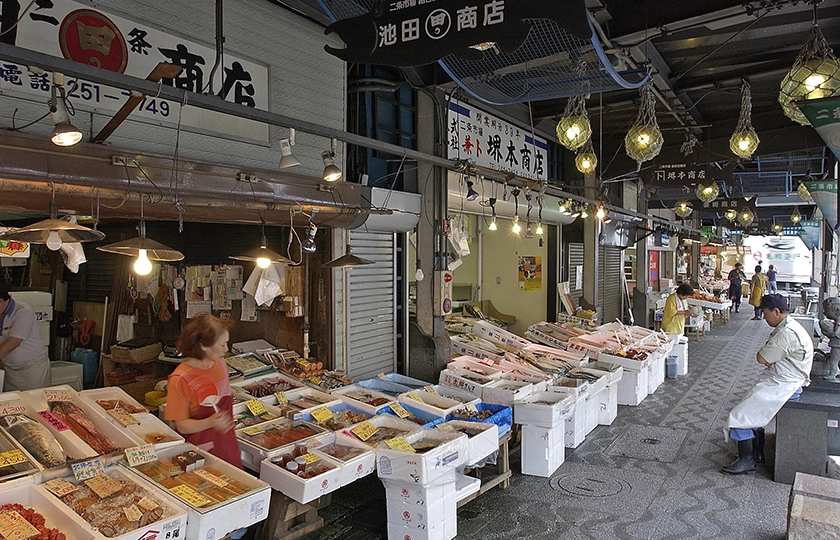
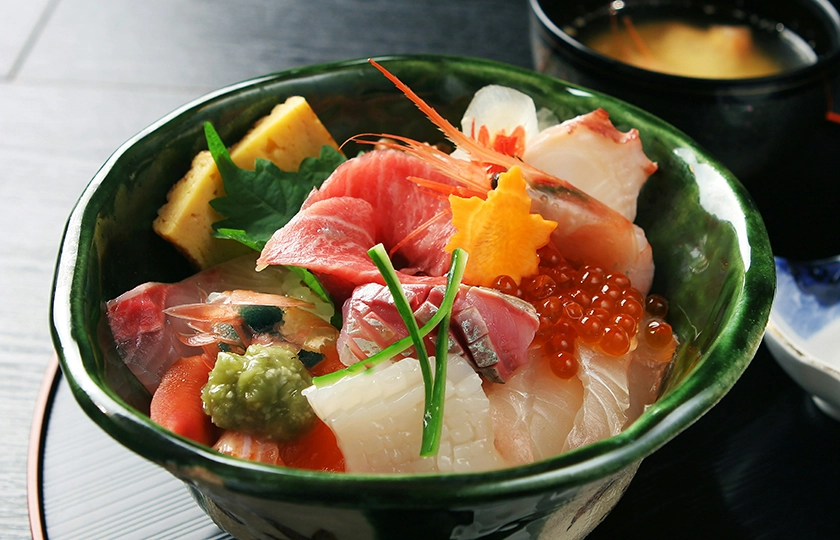
Hakodate, known for its morning market (Hakodate Asaichi) with over 250 stalls, is particularly famous for its fresh squid. Meanwhile, the Washo Market in Kushiro, a city on the east coast, attracts lovers of seafood with the popular katte-don, an experience in which each visitor creates their own bowl of rice by selecting pieces of fresh fish and seafood from the various stalls in the market.
Added to this is another unique attraction: the chance to enjoy top-quality fish at reasonable prices, whether in local izakaya, specialist restaurants or the popular kaiten-sushi (conveyor-belt sushi) establishments. Many of these are concentrated in the Susukino district, the heart of Sapporo’s nightlife.
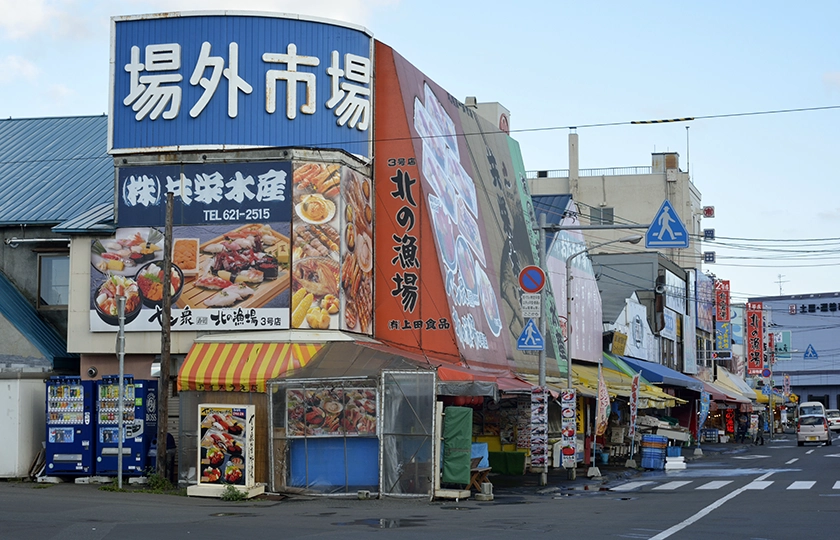
However, the ‘sushi capital’ par excellence in Hokkaido is undoubtedly Otaru. Located just 35 minutes by train from Sapporo, it is home to around 120 specialist restaurants. Its famous Sushi Street is home to many of them and offers one of the best opportunities to discover the extraordinary freshness of Hokkaido’s seafood.
Thanks to the combination of abundant fishing resources and culinary tradition, Hokkaido has established itself as one of Japan’s leading gourmet destinations and one of the best places in the world to discover sushi culture. The excellent transport links between Tokyo and Sapporo (New Chitose Airport) – one of the world’s busiest air corridors, with dozens of daily departures and a flight time of around 90 minutes – make it a getaway that is as accessible as it is unmissable for lovers of Japanese cuisine.
About the JNTO
The Japan National Tourism Organisation (JNTO) is an independent administrative body of the Japanese Government attached to the Japan Tourism Agency, which in turn reports to the Ministry of Land, Infrastructure, Transport and Tourism. Its role is to promote Japan as a tourist destination. Following the opening of its first office in Spain in March 2017, the JNTO now has 26 offices worldwide.
The JNTO’s Madrid office is responsible for promoting tourism to Japan in the Spanish and Portuguese markets. Its main functions include supporting professionals in the tourism sector in the development and promotion of new destinations and itineraries, as well as participating in trade fairs and specialist events. It also provides information and resources to travellers interested in visiting Japan, collaborates with the media and journalists by supplying them with content about the destination, promotes the country within the MICE sector, and conducts studies on the Spanish outbound market to Japan.
The growth of the Spanish outbound market reflects Japan’s increasing appeal as a tourist destination. In 2025, a total of 245,600 visitors from Spain travelled to Japan, representing a 34.7 per cent increase on the previous year and 218 per cent growth over a decade, compared with the 77,200 visitors recorded in 2015.
Source: COMUNICACIÓN IBEROAMERICANA