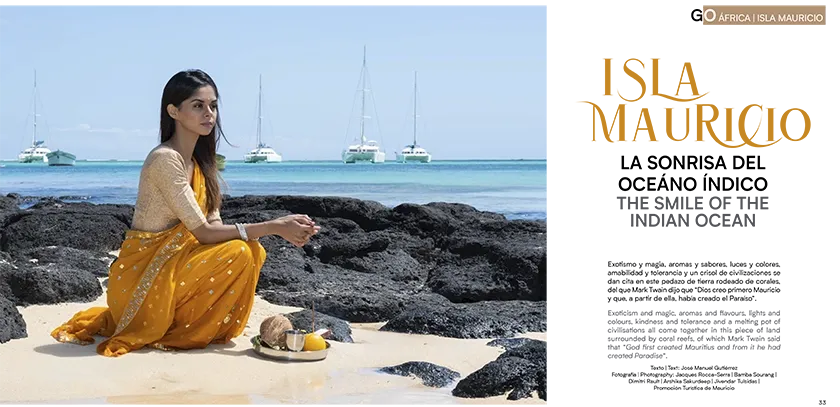
Exoticism and magic, aromas and flavours, lights and colours, kindness and tolerance and a melting pot of civilisations all come together in this piece of land surrounded by coral reefs, of which Mark Twain said that “God first created Mauritius and from it he had
created Paradise”.
Virtually uninhabited until the 16th century, although there is evidence that Arab and Malay sailors reached its shores as early as the 10th century, it was the Portuguese under Pedro Mascarenhas who rediscovered it in 1505 and the Dutch who established a stable base in 1598, naming it Mauritius after the Prince of Orange, Maurice of Nassau.
Its extraordinary strategic location on the shipping routes to the East Indies and its bountiful nature aroused great interest and the first Dutch settlers soon settled in this paradise, introducing new crops such as sugar cane.
In 1712 it passed into French hands in a clearly colonial administrative system that allowed the use of slave labour, especially of Indian and Chinese origin.
In 1810 Mauritius became a Crown colony until independence in 1968, although it remains a Commonwealth colony.
This short but eventful history is the reason why Mauritius is intercultural and so special, so exciting, so plural and harmonious.
A natural paradise with soul
As if emerging from a sea bed of a thousand shades of blue, the island, volcanic in nature, is a reference point for biodiversity thanks to its subtropical climate and the magnificent state of conservation of its natural spaces.
Mauritius is well known for its idyllic beaches with a year-round temperature range of twenty-three to thirty degrees Celsius, which, in addition to providing very special moments of relaxation, are home to unique and sometimes secluded settings for direct contact with the magic of these different ecosystems.
The island’s interior is a genuine cosmos with incredible gorges, extinct craters, tropical forests where some endemic species still survive, rich in flora and fauna such as Maccahabée, or mountains such as the Piton de la Petite Riviére, the highest on the island at 828 metres above sea level. Whichever option you choose, all of them guarantee suggestive walks through unusual landscapes and fantastic hiking trails.
Among the immense variety of insects, with more than three thousand different types, butterflies are considered to be the most beautiful in the world.
The environmental mosaic extends all over the island, offering alternatives for all tastes and many curiosities such as the trochetia, which has become a national symbol and of which very few specimens remain, not to mention the different lotus flowers, which are so highly prized for the production of essential oils.
The east of Mauritius is the wildest and most rugged, but no less beautiful or interesting, retaining many surprising attractions such as Deer Island, a water sports paradise and some of the most beautiful beaches on the planet, as well as a magnificent eighteen-hole golf course. The Heron Island emerges from the Mahérbourg lagoon, hosting a nature reserve where hundreds of endangered species such as the green gecko or the giant Aldabra tortoises and rare birds such as the red pigeon are protected.
In the south, wide valleys and rugged landscapes open up to recreate unique scenes. The Black River Gorges National Park is a succession of ravines and thick mountains such as the Piton de la Petite Rivére Noire and the Grand Bassin, the lake sacred to Hindus who believe its waters are directly connected to the Ganges River. Souillac is a beautiful village overlooking the sea in a wild setting of steep cliffs. The waterfalls of Rochester Podra drop the waters of the Savanne River down a ten-metre drop over black rock walls, defining an evocative natural setting in which it is possible to take a refreshing dip.
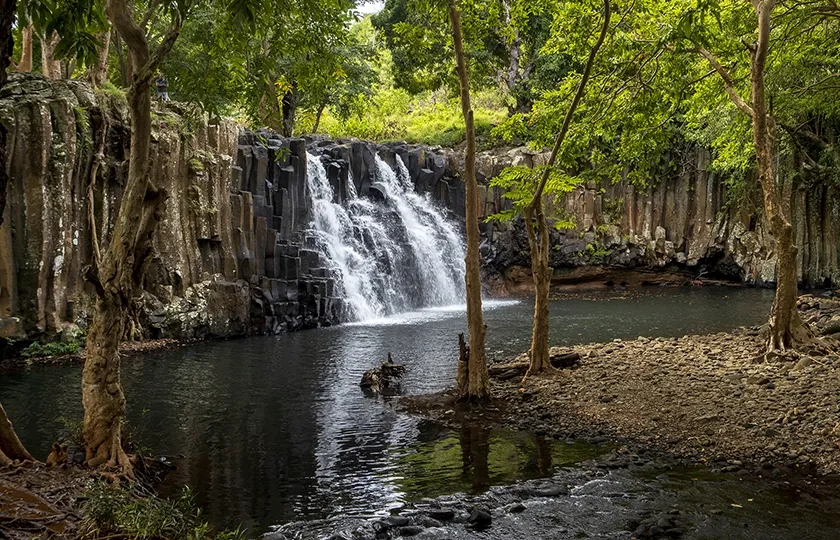
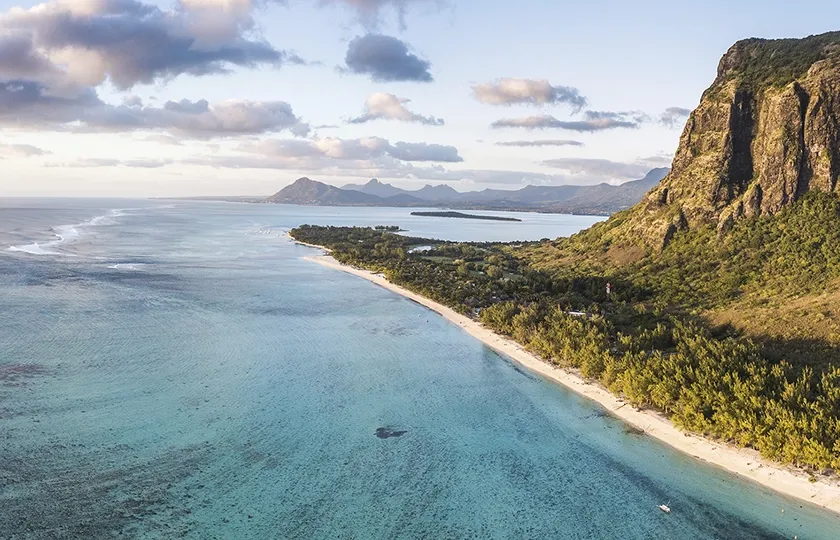
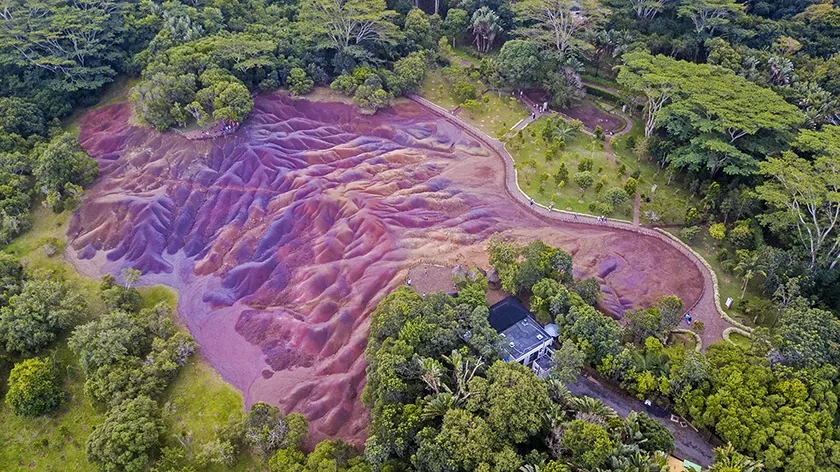
The mountainous west of Mauritius is a catalogue of whimsical shapes. The Black River Gorges National Park is home to the beautiful Black River Gorges, the lush forests of Brise Fer or Bel Ombre among others and the Savanne Mountains creating a grandiose landscape. Le Morne, a World Heritage Site, is a peninsula dominated by a huge rocky outcrop called Morne Brabant that overlooks the beach and is a symbolic memorial to the slaves’ struggle for freedom. The Land of the Seven Colours of Chamarel is a unique landscape with an eighty-three metre waterfall gushing through dense vegetation that contrasts with the rounded dunes that colour the volcanic earth, turning it into a palette of colours.
The interior of Mauritius was originally covered with dense vegetation, which gradually gave way to cultivated areas and urban centres, although it still maintains natural areas worth visiting. Deer Hole is a geology lesson in a crater three hundred metres in diameter and ninety metres deep. The Tamarin or Seven Waterfalls are the highest in Mauritius and are named after the seven steps down which they plunge, the Grand Bassin is a natural lake occupying a volcanic crater and a place of pilgrimage for Mauritians of Indian origin and the Victorie waterfall is a spectacle of nature that plunges into a dense forest overflown by Paille birds and white-tailed phaetons.
The Domaines are estates adapted for nature tourism under the criteria of environmental sustainability.
Beaches in their purest form
The island is surrounded by a coral reef that supports the warm turquoise waters that bathe endless beaches of fine white sand, protected by extensive exotic forests and from which it is possible to watch some of the most beautiful sunsets on the planet.
The north coast is the most popular and closest to the capital, Port Louis. It is a coastline of contrasts between golden sand and sugar fields, adorned with coconut trees and a paradise for water sports and deep-sea fishing.
The west of Mauritius has the longest beaches, some of which are very quiet and ideal for relaxing, while others are more lively, such as Tamarin, which is an important destination for surfers. On this coastline of beautiful mountain scenery, it is also possible to enjoy the tranquillity of small fishing villages full of charm.
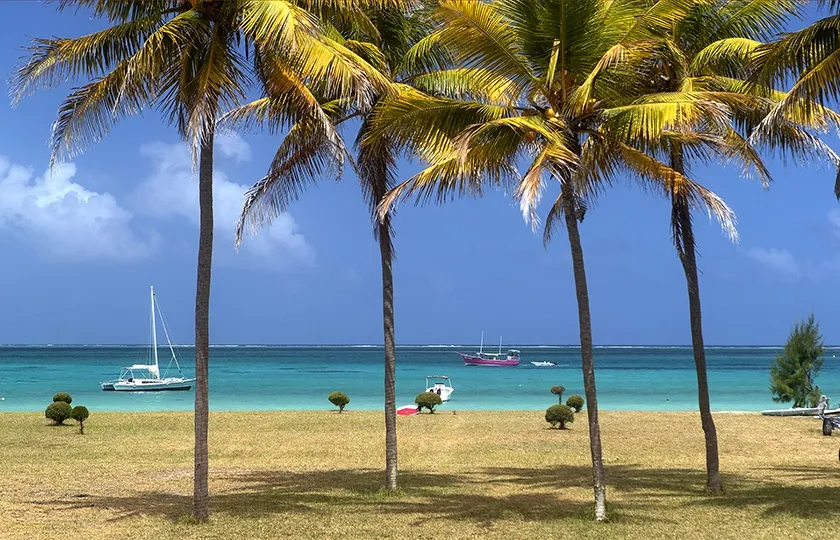
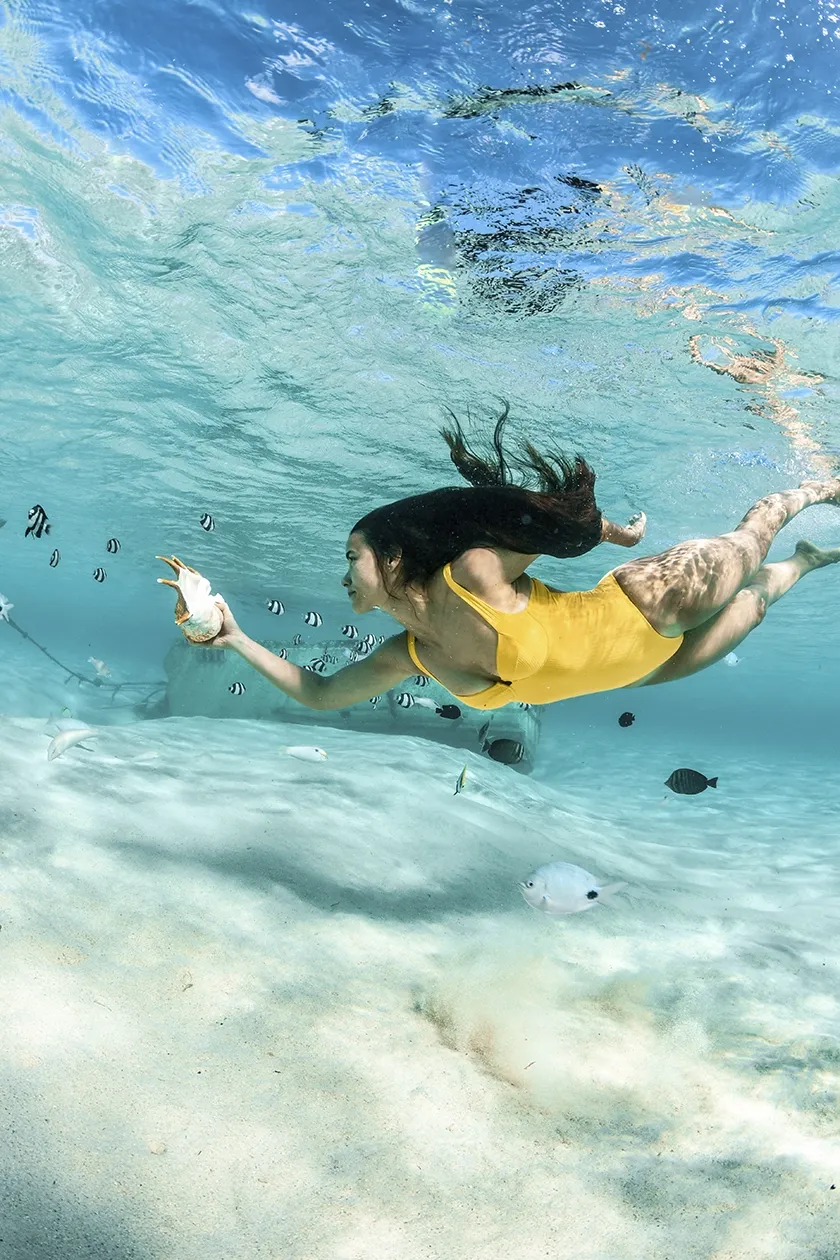
The south coast is ideal for scuba diving thanks to its rich seabed, as well as being outlined by the most spectacular cliffs. It is the wildest area of the island.
The west end is full of unspoilt beaches in the midst of a changing relief, with charming little villages with poetic names such as Petite Julie, for example, giving it a magical atmosphere.
Rodrigues Island, located five hundred and sixty kilometres from Mauritius, deserves special mention. Of volcanic origin, it is bathed by an extensive shallow lagoon that sits on a coral reef. To the east of the island are the most paradisiacal beaches imaginable, and the people, mixed race descendants of slaves and French settlers, are the epitome of cheerfulness and friendliness.
Cultural diversity
In addition to the island’s natural world, Mauritius is a truly enviable melting pot of cultures and coexistence, so it is no wonder that it is considered one of the best places in the world to live. Each and every one of the people who have passed through here have left their mark, to a greater or lesser extent, and from the beginning those who stayed knew how to internalise the best of each culture to create their own style in a sustainable way.
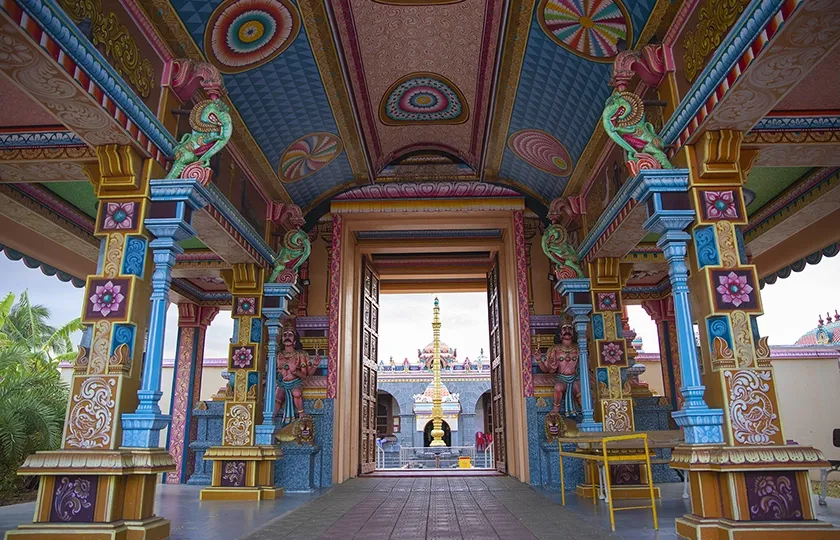
Port Louis, the state capital, is a modern and vibrant city, but at the same time a fascinating mosaic of architectural styles that mixes French colonial and British colonial buildings, Christian temples, mosques and Hindu temples.
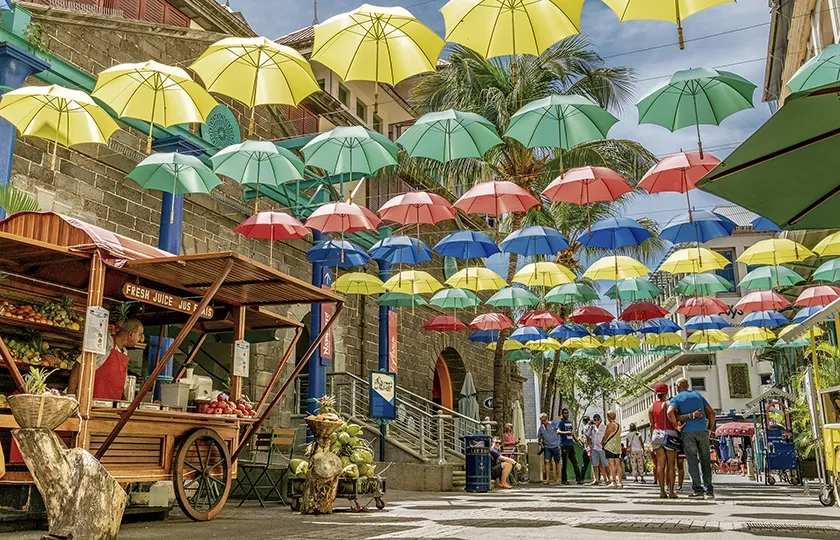
For all its symbolism, the Aapravasi Ghat complex is worth a moment’s pause. With a sober and forceful design, it was built by the British in the first third of the 19th century after the abolition of slavery in 1834 to house the first free labourers who came to the island to work on the plantations. Today it is a World Heritage Site in memory of the victims of the deplorable slave trade.
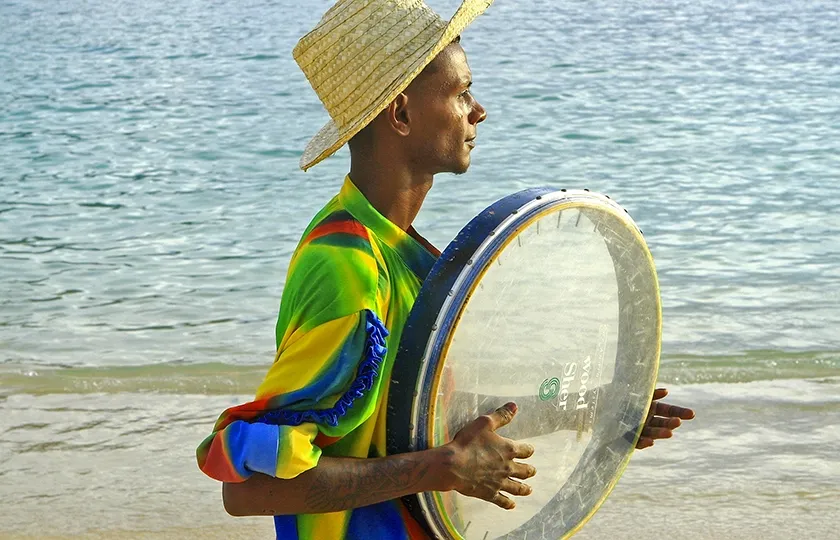
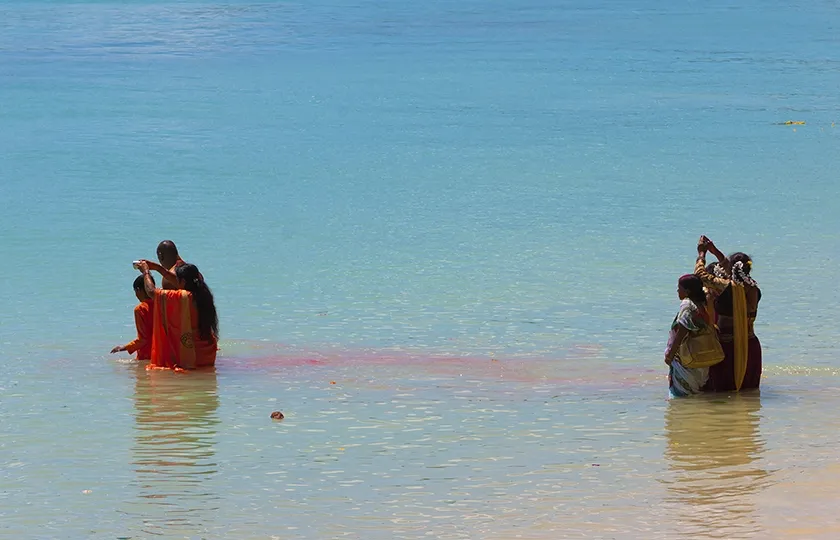
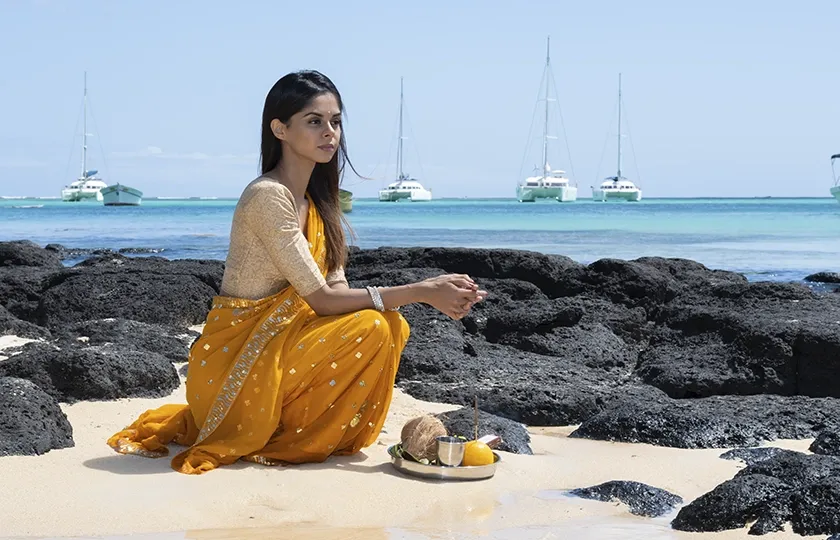
Port Louis is home to every imaginable religion in an atmosphere of absolute harmony and tolerance, with each religion celebrating its own holidays, so there is always something to celebrate in the calendar. There is always music, a curious fusion of drums and percussion, accordions and hand clapping, Scottish reminiscences, waltzes or polkas and lots of colour.
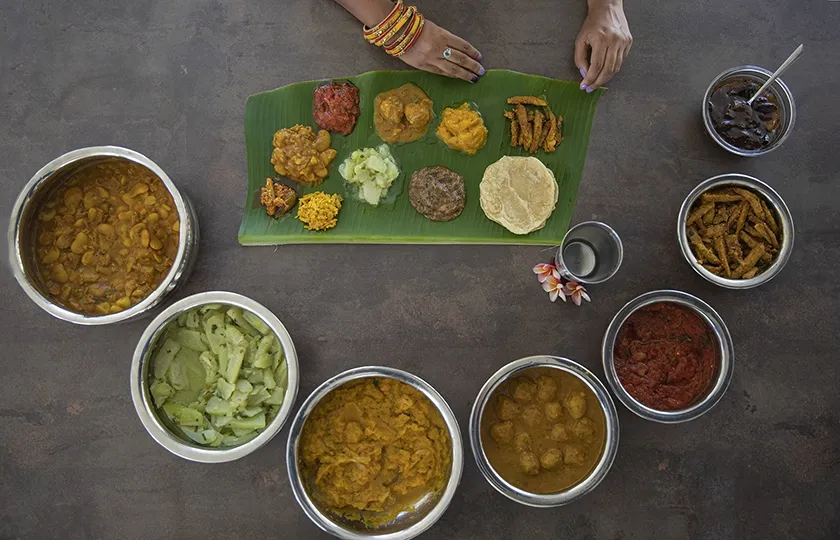
The gastronomy is varied and tasty, rich in tropical products and seafood, mainly seafood, including the delicious lobsters. The cuisine is a mixture of African, Chinese, French and Indian influences, but with distinct nuances depending on the ethnic community that prepares it.
Mauritius is undoubtedly much more than a paradise in the Indian Ocean.