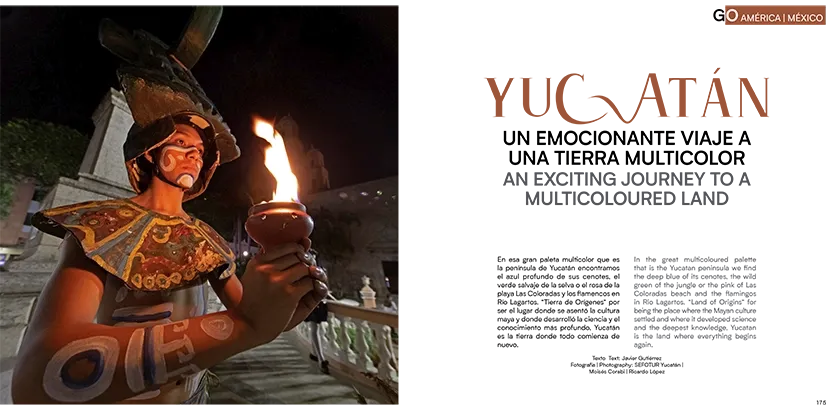
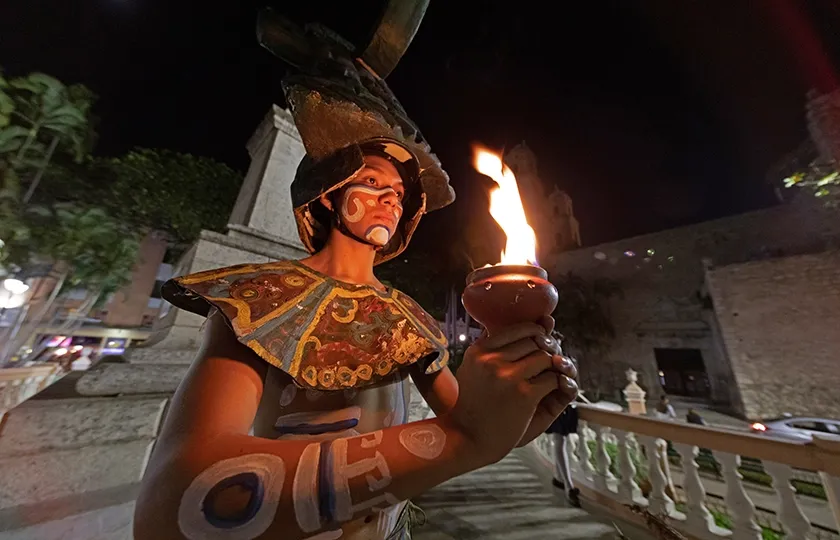
In the great multicoloured palette that is the Yucatan peninsula we find the deep blue of its cenotes, the wild green of the jungle or the pink of Las Coloradas beach and the flamingos in Rio Lagartos. “Land of Origins” for being the place where the Mayan culture settled and where it developed science and the deepest knowledge, Yucatan is the land where everything begins again.
And it is its magnificent archaeological sites, its historic colonial cities, its vast and attractive natural wealth, its rich culture reflected in music, dance and gastronomy, as well as its most ancestral traditions that we pack in our suitcases to begin this exciting journey through one of the most amazing corners of the planet. Heirs to all this wealth, the Yucatecans open the doors of their homes and their hearts to share it with all of us.
Merida, the White City
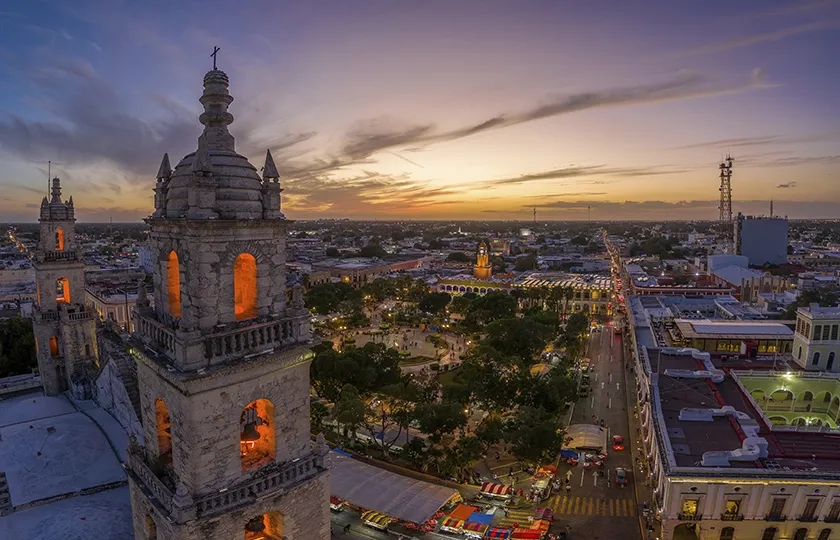
Recognised as “Best Small City in the World” and “Best Convention Destination”, the state capital was founded in 1542 and built on the site of the ancient Mayan city of T’hó. Nowadays, it is a city that stands out for its important cultural and artistic offer and for being a colonial historic centre with an architecture of clear European influence and a striking and outstanding French style, which we can admire in the mansions of the Paseo de Montejo, the main artery of the city. A modern, diverse and avant-garde city, its proposals range from culture with its museums, art galleries and theatres to entertainment thanks to its vibrant nightlife, passing through the history told by its colonial buildings, archaeological sites, religious temples or haciendas and the gastronomy that stands out for its flavour and tradition that we can enjoy in the more than three hundred restaurants spread throughout the city, among which we find traditional and signature cuisine and, of course, in the markets.
Mayan World Capital
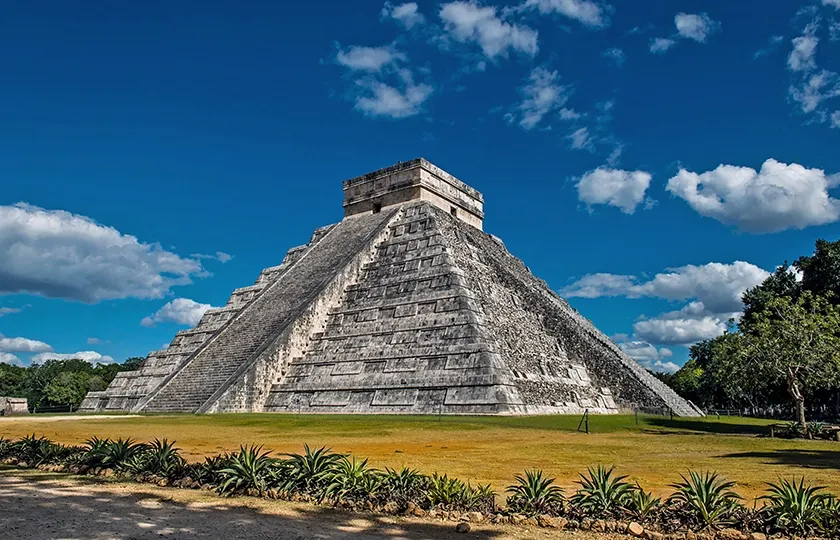
Historical and cultural centres and above all one of the new wonders of the modern world, the Pyramid of Kukulkan in Chichen Itza, are located in the Capital of the Mayan World region. The most famous Mayan city in the world and one of the best preserved testimonies of this civilisation, it was once one of the largest settlements in the north-central Yucatan peninsula. Its mysticism will captivate you as you walk around and admire the Main Esplanade, the Observatory, the largest Ball Court in Mesoamerica, the Courtyard of the Thousand Columns, the Temple of the Warriors or the Sacred Cenote. The visit to the Capital of the Mayan World can be completed with the cenotes Dzipnup and Ik Kil, Valladolid, “the Capital of the Mayan Orient” and one of the Magical Towns of Yucatan, Temozon, a peaceful community that will welcome you with its excellent smoked meats, Ek Balam, a lesser known archaeological site than Chichen Itza, but which offers the possibility of climbing to the top of the pyramids to admire the spectacular surrounding jungle.
Mayan Port and Yucatan Riviera
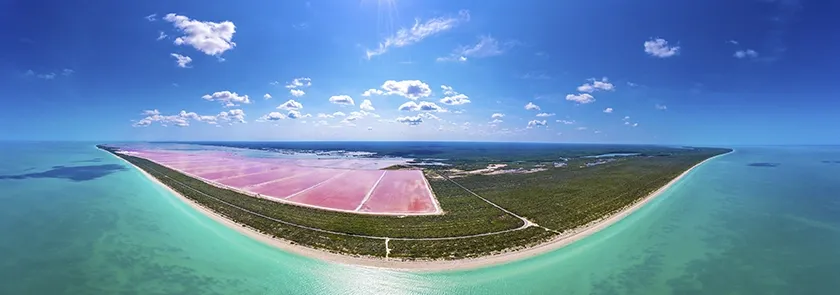
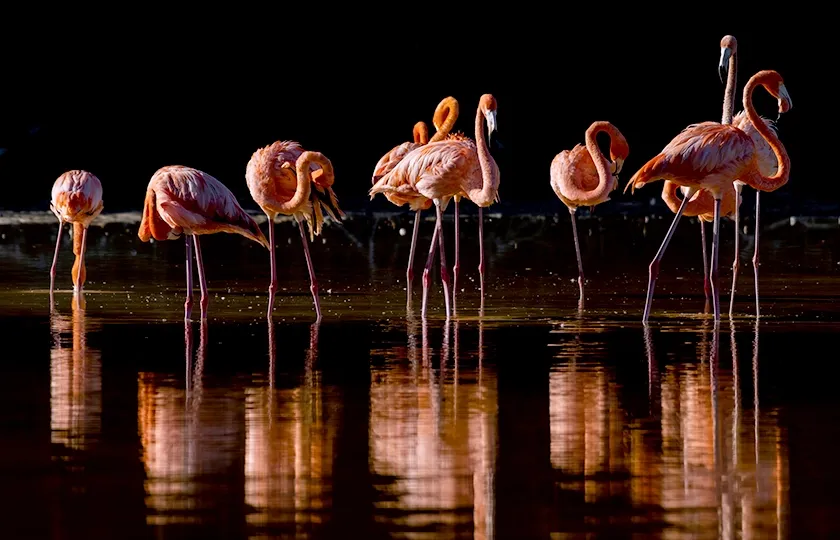
Seven of the beaches along the almost four hundred kilometres of Yucatan’s coastline have been selected to be among the most beautiful and pristine in the country, a recognition reflected in the Platinum Beaches distinction awarded by the Mexican Institute of Standardisation and Certification. Puerto Maya offers a unique natural spectacle thanks to its protected natural spaces and its great and varied fauna. A visit to Las Coloradas in Río Lagartos is a must, with its characteristic pink colour that perfectly blends in with the flamingos that nest here
Other places not to be missed in Puerto Maya are San Felipe, one of the most visited tourist destinations in Yucatan; Tizimin, also called “Place of Tapir” and known as the City of Kings for its traditional festivity in honour of the Three Kings; El Cuyo, ideal for ecotourism and adventure activities, or the ruins of Kulubá, where the Temple of the Mascarones and the Palace of the Chenes and the Kikil cenote stand out.
Magic Towns
The state of Yucatán has four magical towns: Maní, Izamal, Sisal and Valladolid that meet the requirements for this recognition. The reason is that they have been the scene of transcendental events for the country and show their identity in each of their corners.
Maní is one of the oldest towns and its name in Mayan language means “place where everything happened”. It is a living community that preserves its mother tongue and proudly wears the colours and designs that give it its identity. Izamal, with its pre-Hispanic and colonial features and yellow ochre and white colours, enchants with the harmony of its mansions, horse-drawn carriages and neighbourhoods full of history. Sisal, a commercial port in colonial times and nowadays an area of great biological influence for the Caribbean, and Valladolid, which boasts a perfect layout and the old mansions of the centenary Calzada de los Frailes.
Yucatan Cenotes and Haciendas
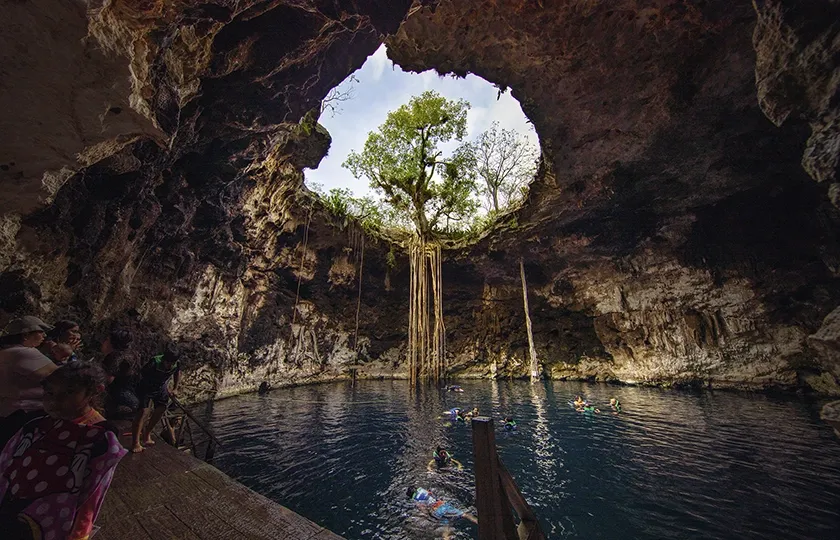
Sixty-five million years have passed since a meteorite hit Chicxulub, forming hundreds of cenotes and caves. There are currently more than three thousand cenotes registered in the Yucatan peninsula, of which one hundred and thirty-nine are open to the public, being a hallmark of the state. Present in other parts of the planet, Yucatan is home to some of the most beautiful and famous ones such as Carlota and Azul Maya at Hacienda Mucuyché or the Saamal cenote at Hacienda Selva Maya. In the long list of Yucatan cenotes we find others just as beautiful: Sambula in Motul de Carrillo Puerto, Cascabel and Chaksilkin that form the cenotes of Santa Barbara in Homun, Cenote Xooch in Cenotillo or Cenote Dzul Ha in Hacienda Sotuta de Peon.
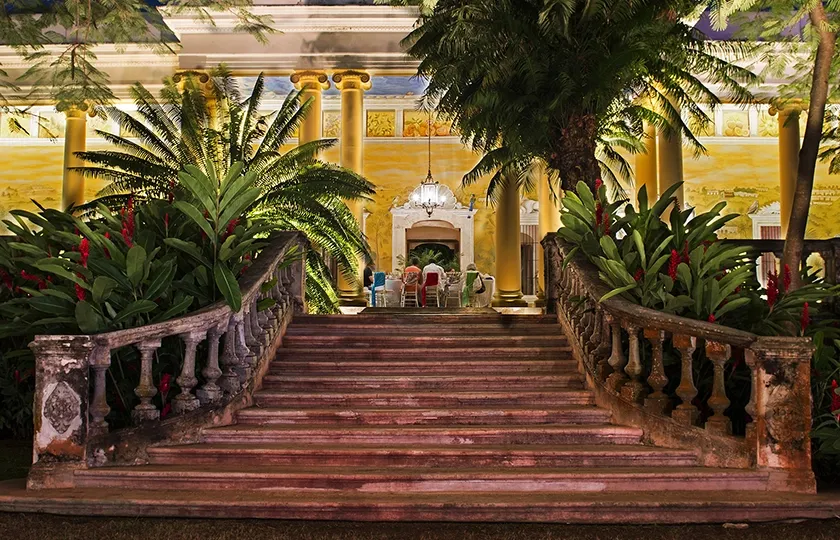
As a result of the impulse given by the oldest and most powerful families, in the second half of the 19th century, important estates emerged. Some of them have been reconverted into luxury hotels, restaurants, tourist inns, museums or country houses, which has allowed them to recover their boom and splendour. The splendour of past times can be admired in Hacienda Chablé, Hacienda Teya, Hacienda Chenche de las Torres, Hacienda Mucuyche, Hacienda Sotuta de Peón, Hacienda Tekik de Regil or Hacienda Temezón.
Puuc Route and Mayan Villages
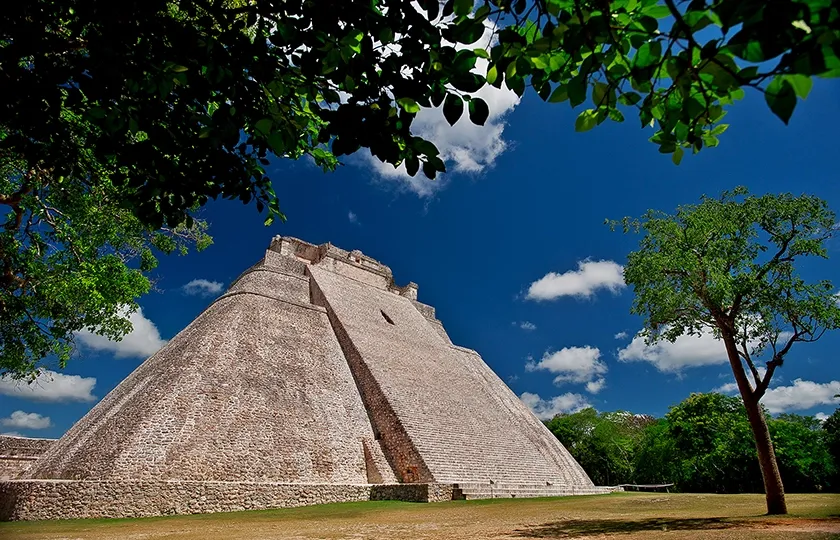
The Puuc Route (Ruta Montículos or Serranía) brings us closer to the Mayan culture by visiting some of the most interesting archaeological sites in the state. Uxmal, located in the Santa Elena Valley and surrounded by legends and myths, its occupation dates back to 500 B.C. and during the IX and XII centuries it was the seat of the peninsular Mayan political and economic power in the Puuc region. Kabah, whose name has been interpreted as “lord of the strong or powerful hand” and which was mentioned by the Mayas in the Chilam Balam – books that relate historical facts and circumstances of the Mayan civilisation written by anonymous characters in the Mayan language during the XVI and XVII centuries – after the Spanish conquest. Labná, one of the most beautiful archaeological sites and where most of the decorations of its buildings are preserved, being the Palace, the Mirador and the Arch the most outstanding constructions. Sayil, one of the most important settlements in the Puuc area and where approximately seventeen thousand inhabitants were concentrated. Xlapac, which lived its period of maximum splendour between 600 and 1000 A.D. and whose inhabitants worshipped Chaac, God of Rain and, finally, Oxkintok, the oldest and most mysterious Mayan city of Yucatan and one of the three Mayan cities known to have a Tza tun tzat (place to get lost), a kind of Mayan labyrinth very rare to find and which has an almost supernatural significance. A visit to the Puuc region should not miss the caves of Loltun, which in Mayan means “stone light” and where cave paintings have been found, and the cave of Calcehtok, “stone of deer necks” in Mayan, literally a journey to the centre of the earth. In addition, along this route we will pass through villages full of history, artisans and the best of Yucatecan gastronomy.
Gastronomy in the "land of pheasant and deer"
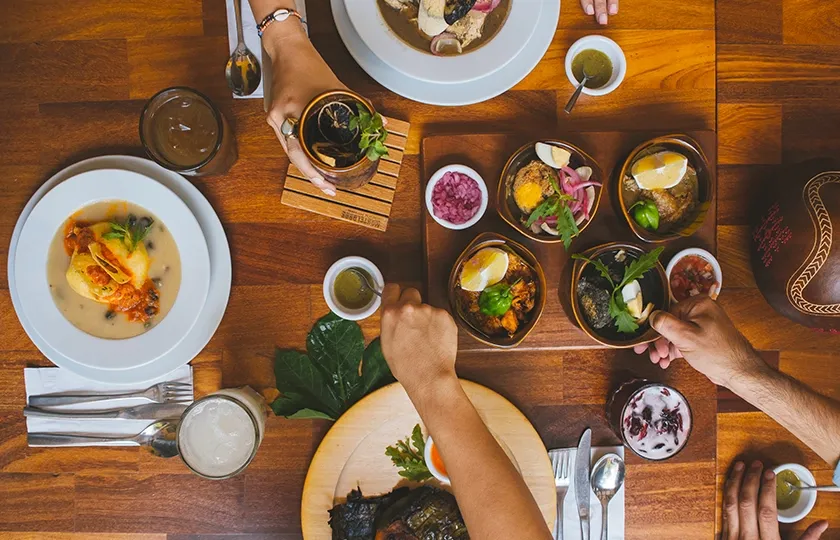
The gastronomy of the Yucatan is a delicious journey through flavours, smells and colours and the result of contact through its ports with Europe, Cuba and New Orleans. Recognised as one of the most varied and emblematic in Mexico, accumulates awards for the quality and flavour of its dishes. Traditional cuisine based on ancestral Mayan preparation techniques such as the use of earth ovens or pib, the custom of assigning a different dish for each day of the week or the tasting of specific dishes such as the delicious mucbipollo or “Pib” in celebrations such as the Day of the Dead or Hanal Pixán cannot be missed here.