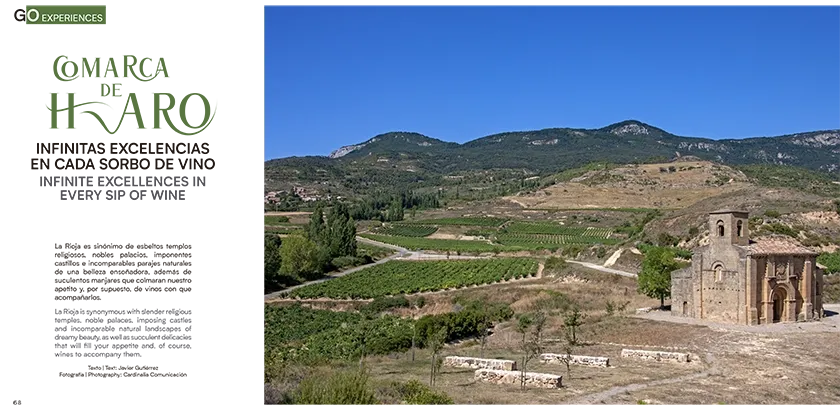
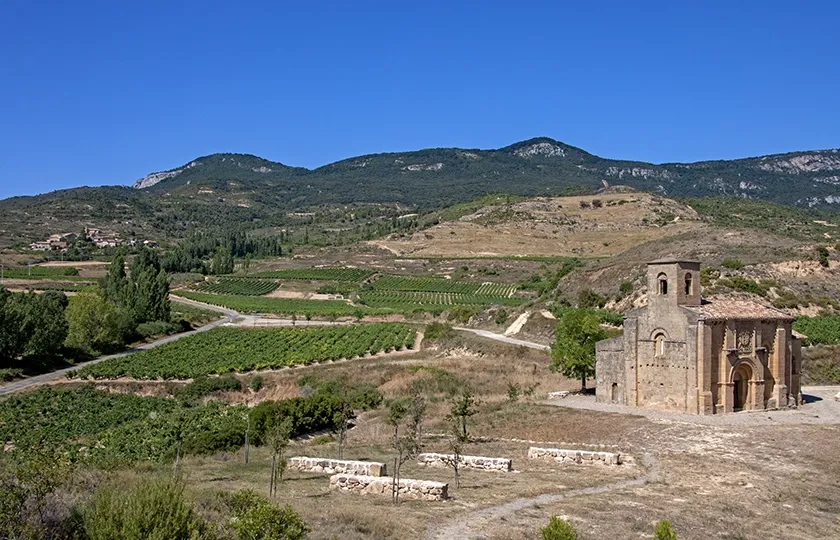
La Rioja is synonymous with slender religious temples, noble palaces, imposing castles and incomparable natural landscapes of dreamy beauty, as well as succulent delicacies that will fill your appetite and, of course, wines to accompany them.
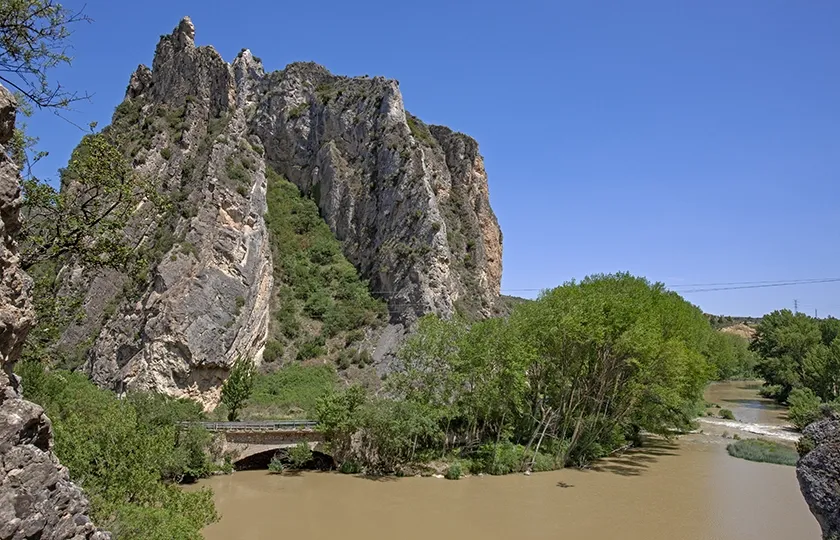
We have chosen three towns in the district of Haro for this journey: Briones, San Vicente de la Sonsierra and Haro, the head of the district. Located in the far north-west of the region, the Haro region is characterised by its different landscapes. From the northern mountains, a natural vantage point with incredible viewpoints, deciduous and oak forests and the castles that crown their peaks, to the course of the River Tirón, the southern limit of the district of Haro, which invites you to follow its Wine Trails or the Oja-Tirón Greenway. In between, there is a transitional landscape, the one formed by the river Ebro as it enters La Rioja through a place of singular beauty: the Conchas de Haro. Steep landscapes where the Riscos de Bilibio, the Toloño mountain range or the San Felices viewpoint offer unforgettable images and where hiking routes such as the Long-Distance Footpath 99 that runs along the Ebro Nature Trail or the mountain bike routes take us to ancient villages and their wine-growing tradition.
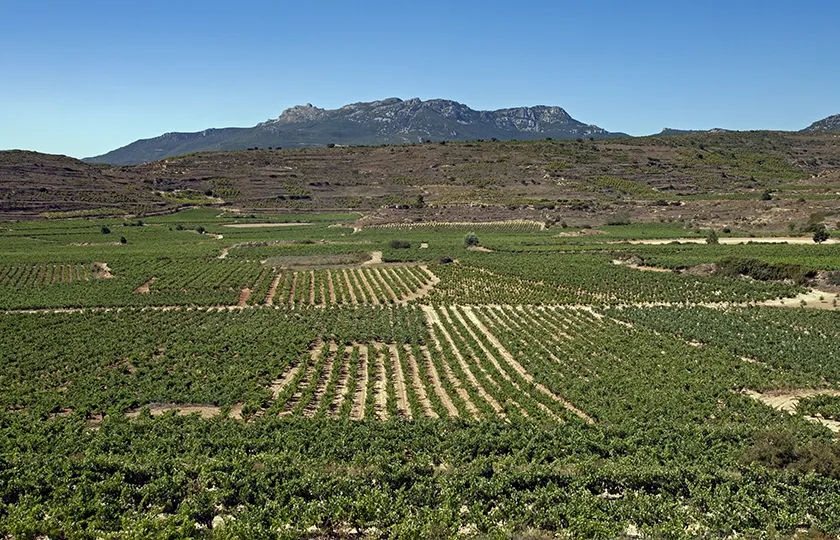
These landscapes share a common element, the vineyards which, due to the variety of reliefs and altitudes, soils and climates, make the region’s wines so different from one another.
Haro, the beautiful "jarrera" city
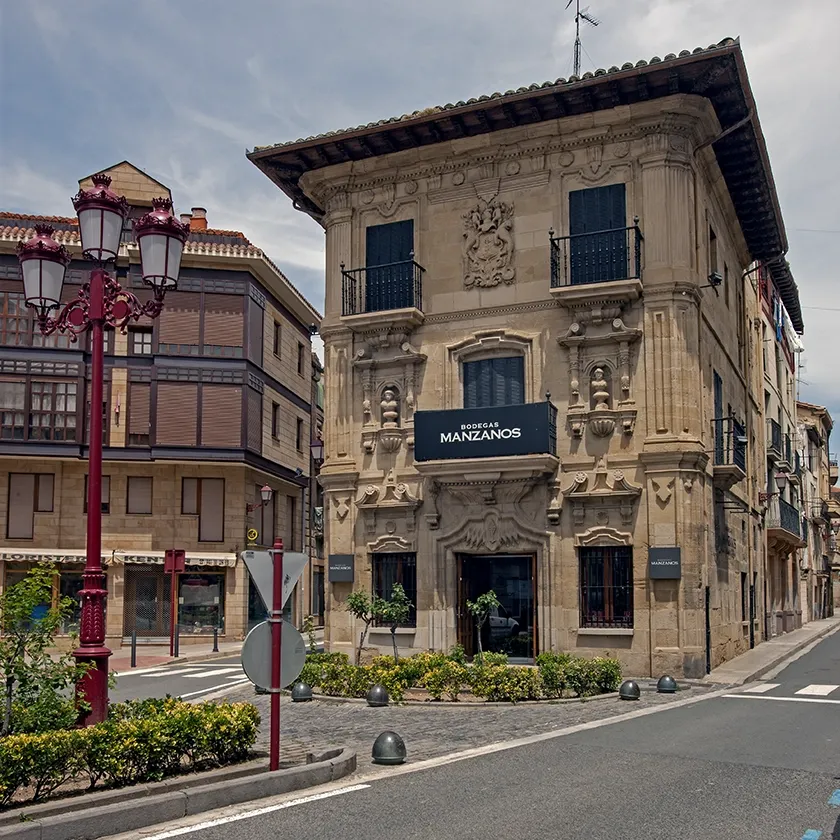
Historical, monumental and world famous for its wines, the city is the living image of a prosperous and bourgeois 19th century that is reflected in the palaces of Bendaña or Paternina, of the Bezares, of the Counts of Haro, of Tejada, of the Salazars, the one located in the Plaza de la Cruz, of the Sevillanas or the Casa Pisón.
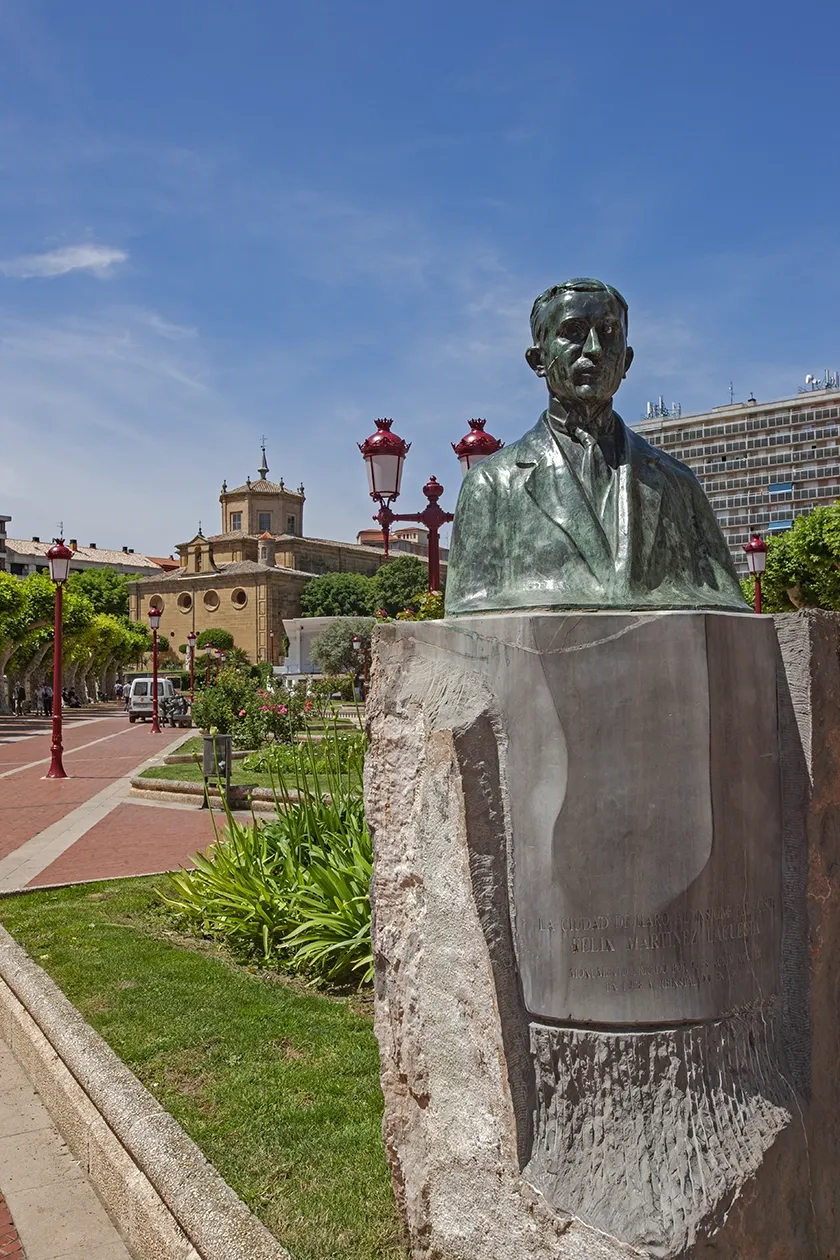
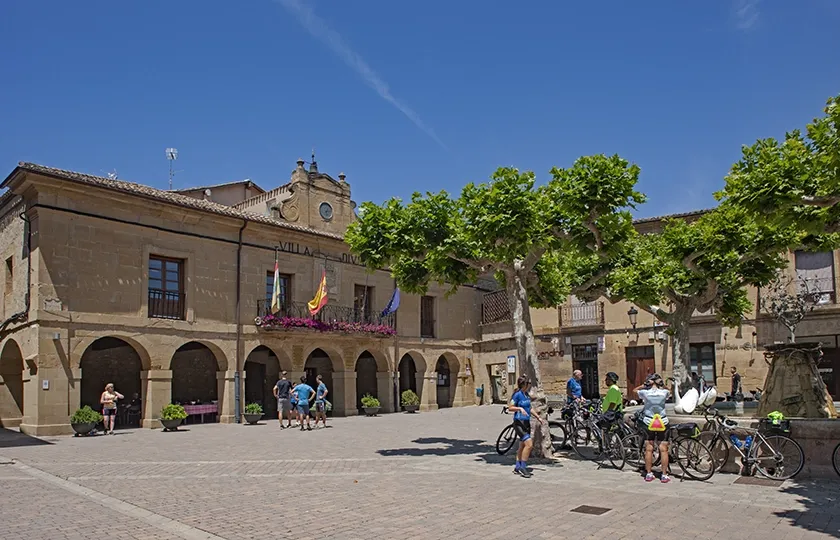
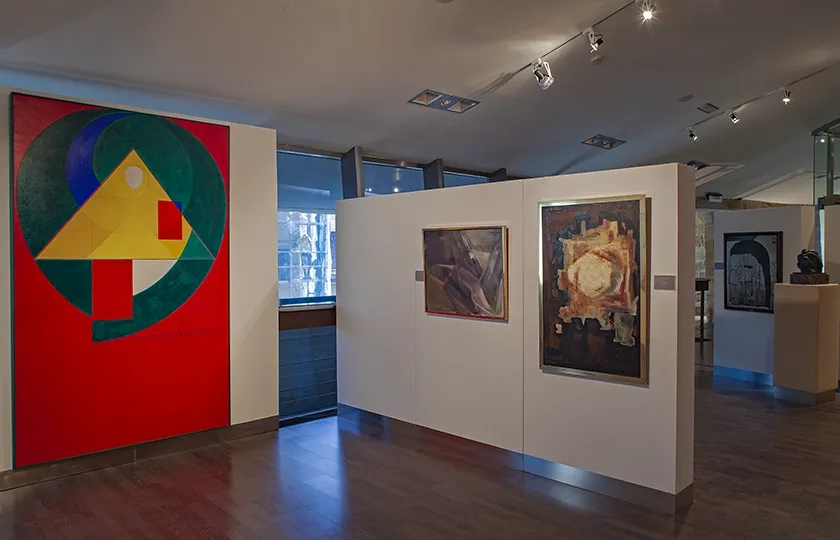
The Plaza de la Paz, the heart of Haro and a place where the people of Haro meet and pass through in their daily lives, is also a must for all those who travel here to discover its charms. The Town Hall, with the most famous barrels in La Rioja, shares space with important buildings such as the palace of Bendaña or Paternina or the Torreón, which today houses the Museum of Contemporary Art and the Open-Air Museum, and with terraces where you can experience the atmosphere of Haro.
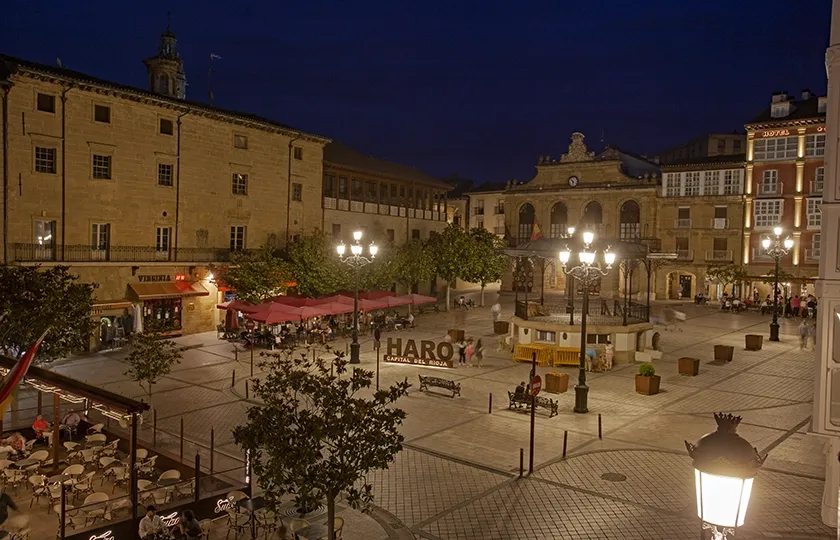
It is also the perfect starting point from which to discover the rest of the city. Calle de la Vega takes us to the Bezares Palace, the old Bank of Spain, the Bretón de los Herreros Theatre and the old convent of the Augustinians. A pleasant walk that ends at the Jardines de la Vega gardens and the Basilica de la Vega, where the 18th century Baroque altarpiece stands out.
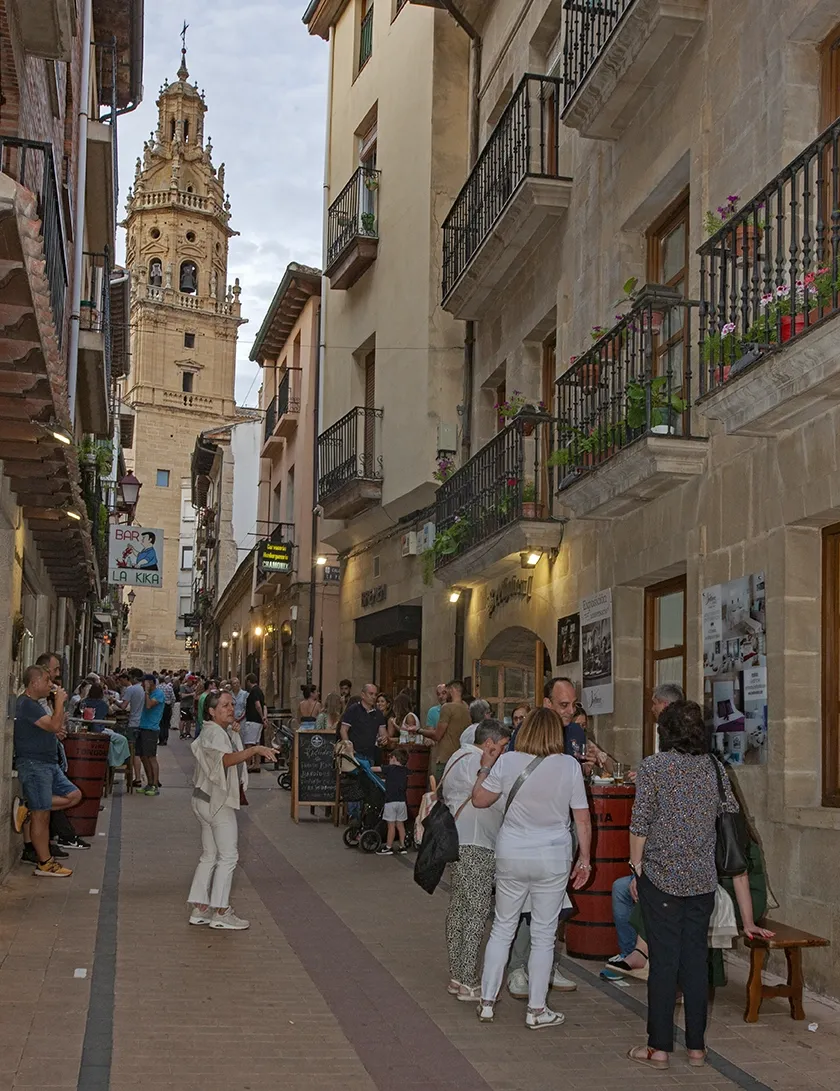
Also, from the square you can access the Herradura, an area of bars that runs along Santo Tomás street, San Martín square and San Martín Street where the leisure offer is varied, from the famous “pinchos”, to the wine bars where you can buy typical products, souvenirs and, of course, wine. Here we find the most important monument in Haro, the church of Santo Tomás, which deserves a leisurely visit to admire its slender tower, its impressive façade, the choir with its late 17th century choir stalls, the 18th century organ and the great altarpiece, the largest in the whole of La Rioja. And next to the church, the palace of the Counts of Haro, built in the 16th and 17th centuries with its beautiful Solomonic columns.
At this point, we cannot omit two of the city’s landmark establishments. Nublo Restaurant, awarded a Michelin star, whose cuisine is based on honesty in the kitchen, connection with nature and respect for tradition, placing Haro on the gastronomic map of Spain. The other establishment is Los Caños, which offers carefully selected traditional cuisine with market produce, complemented by tasty desserts and an excellent wine list.
In Los Caños there is a curious tradition that dates back to the 1930s. After the “chupinazo”, which marks the start of the patron saint’s fiestas in June, the town crier rides on horseback to the San Felices brotherhood where he gives the proclamation. Afterwards, he goes to Los Caños where horse and rider, accompanied by neighbours and authorities, enter the premises and once inside the town crier repeats the proclamation. This tradition is immortalised every year with a photograph, many of which can be found decorating the walls of the premises.
It is precisely during the patron saint festivities that the Wine Battle takes place. Every 29th June, the feast of St. Peter, the Riscos de Bilibio are the stage where the participants throw thousands of litres of wine at each other without rest, with all kinds of weapons being valid for this harmless battle.
Haro’s love affair with wine began in the Las Cuevas neighbourhood, but it was in the second half of the 19th century that the Barrio de la Estación was born, when the railway replaced horse-drawn carriages as a means of transporting wine and coincided with the ravages caused by oidium and phylloxera in French vineyards, forcing winemakers from the neighbouring country to buy wine in La Rioja and to set up their export centres in the area around the provisional railway station.
Almost one hundred and fifty years later, the Barrio de la Estación continues to welcome thousands of wine professionals and amateurs every year who want to enjoy its wines and take part in the wine tourism activities organised by the different wineries.
Briones, authentic medieval flavour
We leave Haro behind us and head for our next stop, the town of Briones, whose name may derive from the ancient Berones, a Celtic people who inhabited these lands before the arrival of the Roman Empire.
Walking through its streets we are immersed in the authentic medieval atmosphere, reaching its full magnitude every July with the celebration of the Medieval Days.
The church of Nuestra Señora de la Asunción, built in the 16th century and whose architectural style ranges from Gothic to Renaissance, is its most outstanding monument. The towering Baroque tower, the Plateresque façade, the impressive sacristy with Baroque mirrors, reliquaries or cornucopias or the baptismal font from the medieval period are the jewels inside this grandiose temple of cathedral dimensions.
Briones’ centuries of economic prosperity thanks to wine are reflected in the mansions and palaces of its historic quarter, particularly the palace of the Marquis of San Nicolás, now the Town Hall. And in the Plaza de España itself, opposite the Town Hall, you can admire the house considered to be the oldest in La Rioja, dating from the 16th century.
We end our visit to the historic centre at the place known as Cercas de las 40, a site from which forty churches or chapels can be seen and where tradition has it that whoever said a prayer from this place was granted forty days of indulgence.
Before leaving what for many is the most beautiful village in La Rioja, a visit to the Vivanco Museum of Wine Culture is a must. It is a reference point on the Spanish cultural scene and has been recognised by the World Tourism Organisation as the best wine museum in the world. Surrounded by an incomparable landscape, its more than four thousand square metres tell the story of wine and its relationship with man over the last eight thousand years.
San Vicente de la Sonsierra, watchful from the top of a hill
In addition to its history, which dates back to the 10th century when the Kingdom of Navarre founded a fortress here, San Vicente has an important ethnographic heritage, with more than a hundred wine presses and cave dams, reflecting the rise of the wine culture that has existed here for centuries, not forgetting the vineyard guards that make the vineyard landscapes surrounding the town even more beautiful.
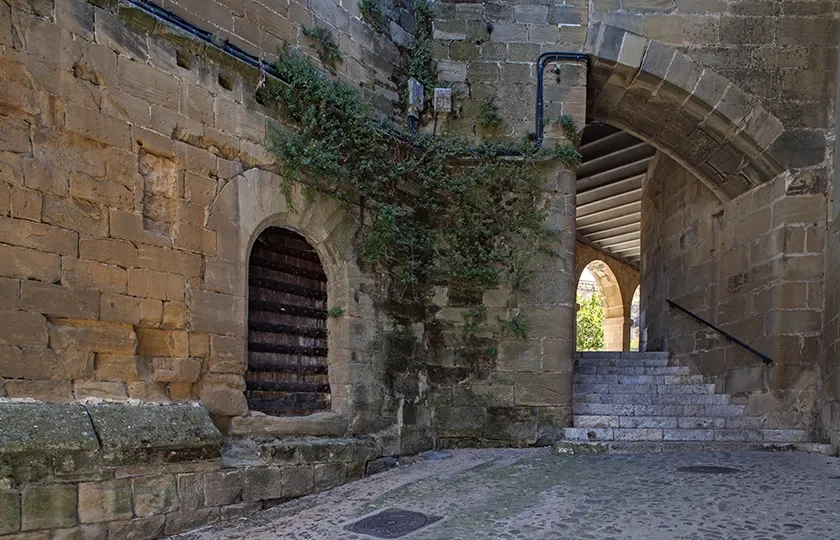
In its skyline, probably one of the most recognisable in La Rioja, its impressive walled enclosure stands out, a visit that is completed with the self-guided route that starts in the Plaza Mayor and with the six points of the virtual reality application Arkikus-Castillo de San Vicente.
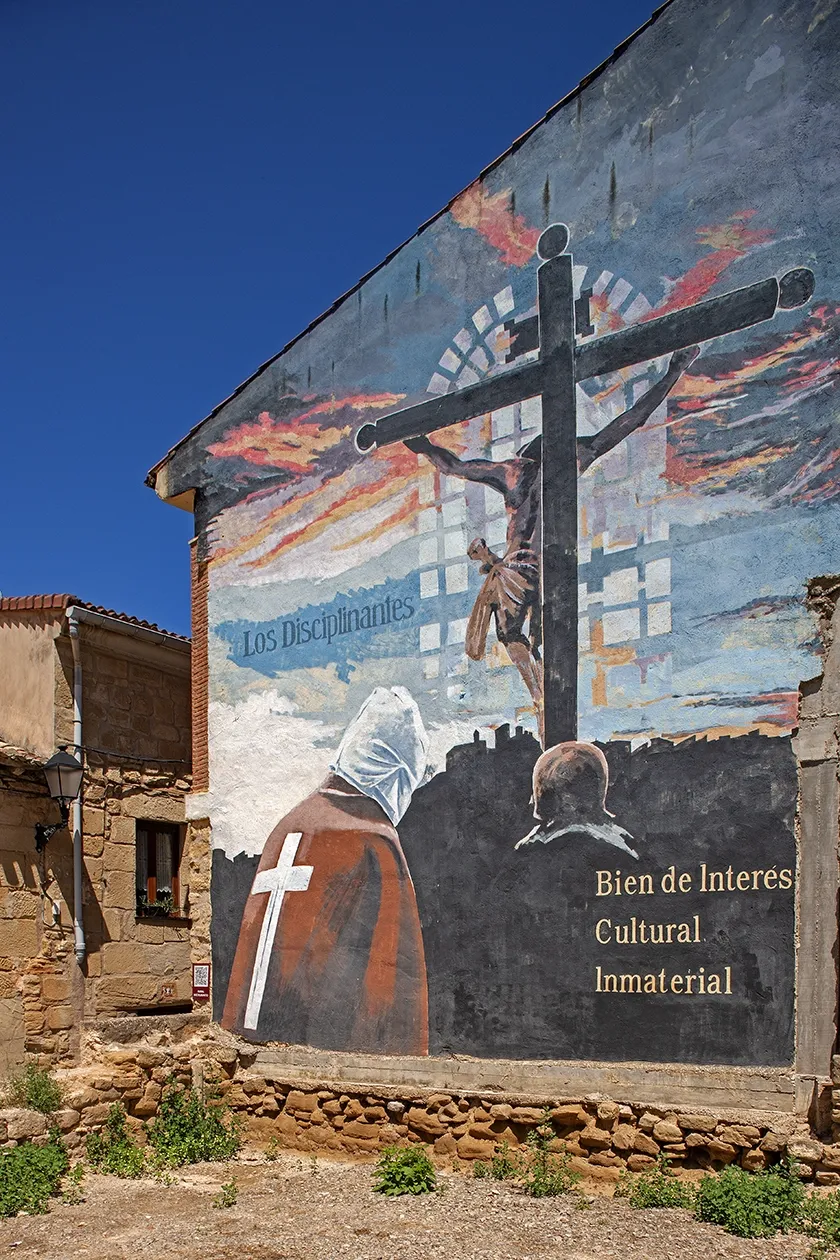
The route has other surprises in store in the form of large murals depicting “The Discipliners of San Vicente de la Sonsierra”, the “Archaeological Ensemble of Santa María de la Piscina” and the “Larra’s vineyard guards”.
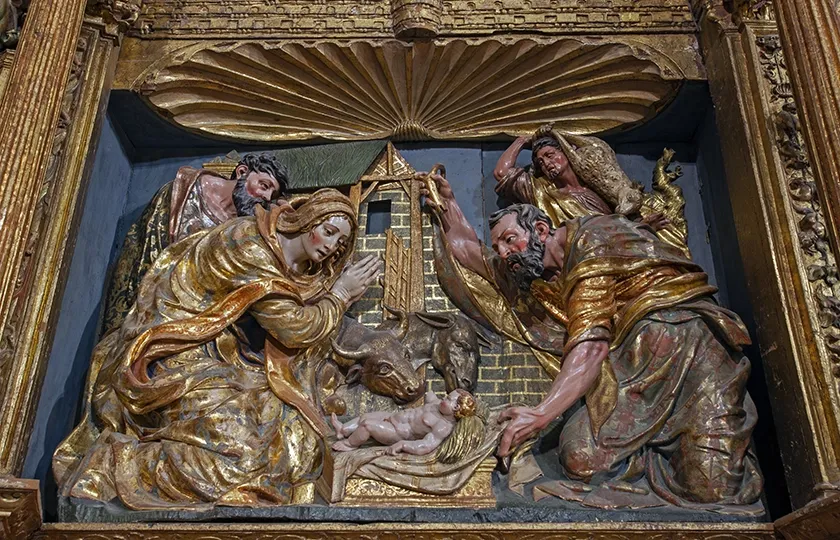
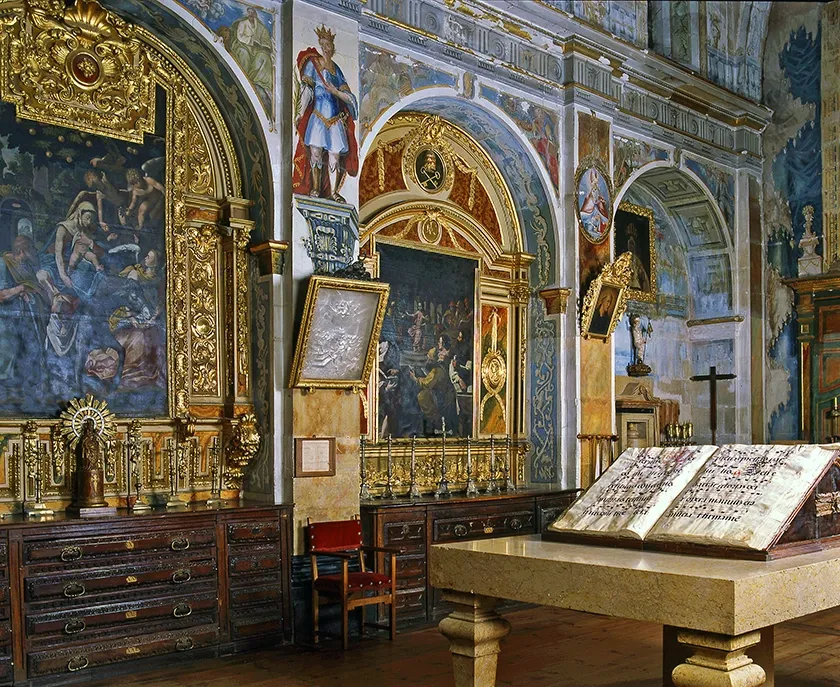
The church of Santa María la Mayor, located in the walled enclosure, was built in the 16th century and features a monumental altarpiece with an interactive touch screen that allows visitors to admire this magnificent Renaissance work in the Mannerist style in detail.
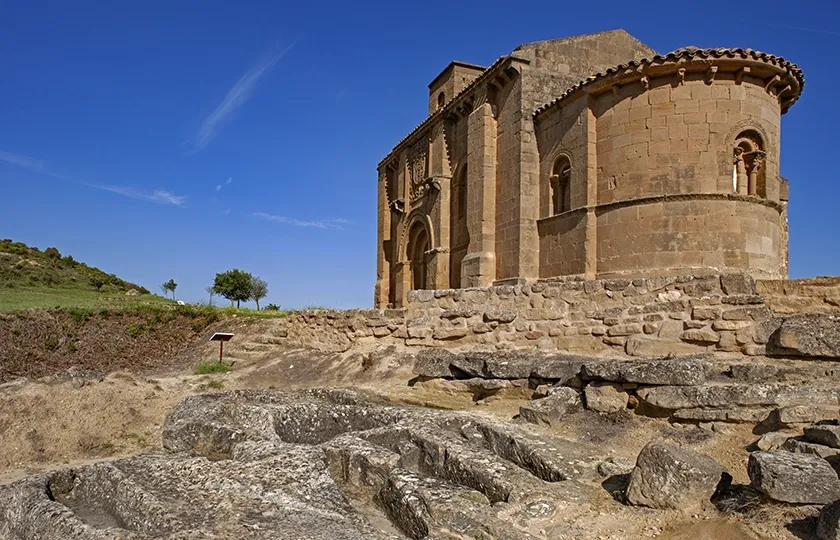
Outside the historic centre and surrounded by vineyards is the archaeological site of Santa María de la Piscina, made up of the 12th century Romanesque church, a necropolis, a settlement with semi-burial dwellings and the remains of fortifications and watchtowers. Information panels and QR codes allow visitors to discover the history and curiosities of this interesting archaeological site. Legend has it that the church must have been a reproduction of the Pool of Bethesda in Jerusalem, which the Infante Ramiro was able to admire when he took part in the First Crusade, from which he brought back a splinter of the True Cross and an image of the Virgin supposedly carved by the Apostle Saint Luke. In his will he left a request that a temple be built to venerate the image and the relic.
Traditions in San Vicente de la Sonsierra have three key dates in the calendar: Holy Week, the Cross of May and the Cross of September in which the members of the Brotherhood of the Holy Veracruz of San Vicente are the real protagonists. Dressed in the habit, the disciplinants go to the procession or the Holy Hour, kneel before the paso to which they have made the offering, generally the Dolorosa or before the Monument in the church, and say a prayer. Once finished, the companion removes the cloak from the shoulders and opens the opening in the back to begin the flagellation, which is carried out with a “hank” held in both hands and swung between the legs, hitting the man’s back alternately to the left and to the right, for a period that varies depending on each disciplinant, but which usually lasts about twenty minutes, during which time they receive between eight hundred and a thousand blows. When the accompanying person and the pilot deem it appropriate, the puncture is carried out. The disciplinant bends down and places his head between the legs of the practitioner, who will hit him lightly three times on each side of his back, in the lumbar area, to draw a little blood, in order to avoid further discomfort. This process is carried out with the “sponge”, a ball of virgin wax with six crystals embedded in it in pairs, so that each disciplinante will receive twelve punctures. Once the penitence is over, the disciplinant and his companion return to the confraternity where the practitioner meticulously washes and heals the small wounds with rosemary water.
The district of Haro, the economic heart of La Rioja Alta, is the best known wine tourism destination in the region and one of the most important in Spain. It is art, culture, history, tradition, gastronomy and experiences, giving shape to one of the most attractive and surprising corners of the Iberian Peninsula that the traveller can enjoy.
aytosanvicentedelasonsierra.larioja.org