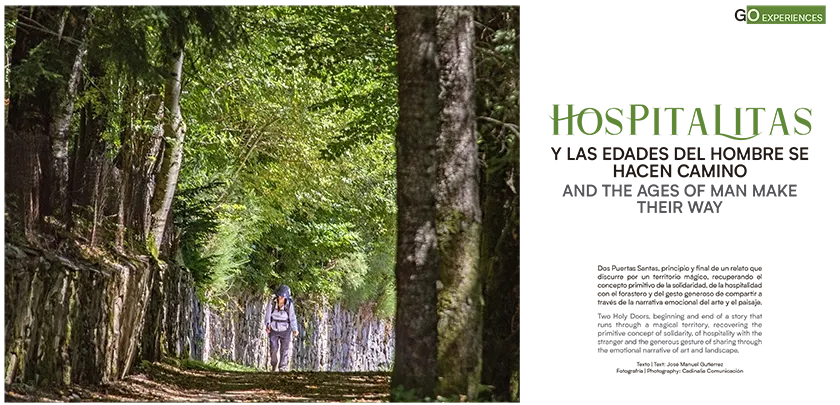
Two Holy Doors, beginning and end of a story that runs through a magical territory, recovering the primitive concept of solidarity, of hospitality with the stranger and the generous gesture of sharing through the emotional narrative of art and landscape.
It is said that there are as many paths as there are walkers, that each one has its own motivations and that this makes them different for those who walk them. Perhaps that is the emotion that makes the Camino de Santiago universal, but it is certainly not the only one.
Much has been written since the French priest Aymeric Picaud wrote the Codex Calixtinus in the 12th century, Book V of which is considered the first guide to the Camino, referring to the fact that “everyone should welcome with respect and charity pilgrims, whether rich or poor, going to or returning from the place of Santiago, since whoever welcomes them with charity will have as a guest not only Santiago, but also the Lord, as the words of Jesus in the Gospel say: Whoever welcomes you welcomes me“, so we will not be tempted to give a new descriptive account of what is on the Way. Rather, we propose a walk based on the sensations and emotions that await in every friendly and hospitable corner of a route, the last to fulfil the dream, delimited by two Holy Doors, that of the church of Santiago in Villafranca del Bierzo and that of the cathedral of Santiago de Compostela, the only two places where it is possible to obtain the Jacobean indulgence, today more than ever united by the value of hospitality.
This succession of scenarios charged with so much symbolism is, therefore, the setting for Hospitálitas, the new exhibition cycle of the 27th edition of The Ages of Man. Two localities located in different regions united by devotion and heritage that establishes fraternal links through the Way of St. James.
Hospitality is the protagonist of the exhibition, and the story of the primitive concept of solidarity and its journey and evolution up to the present day. A thematic one, moreover, closely linked to the pilgrimage that unites these two important enclaves.
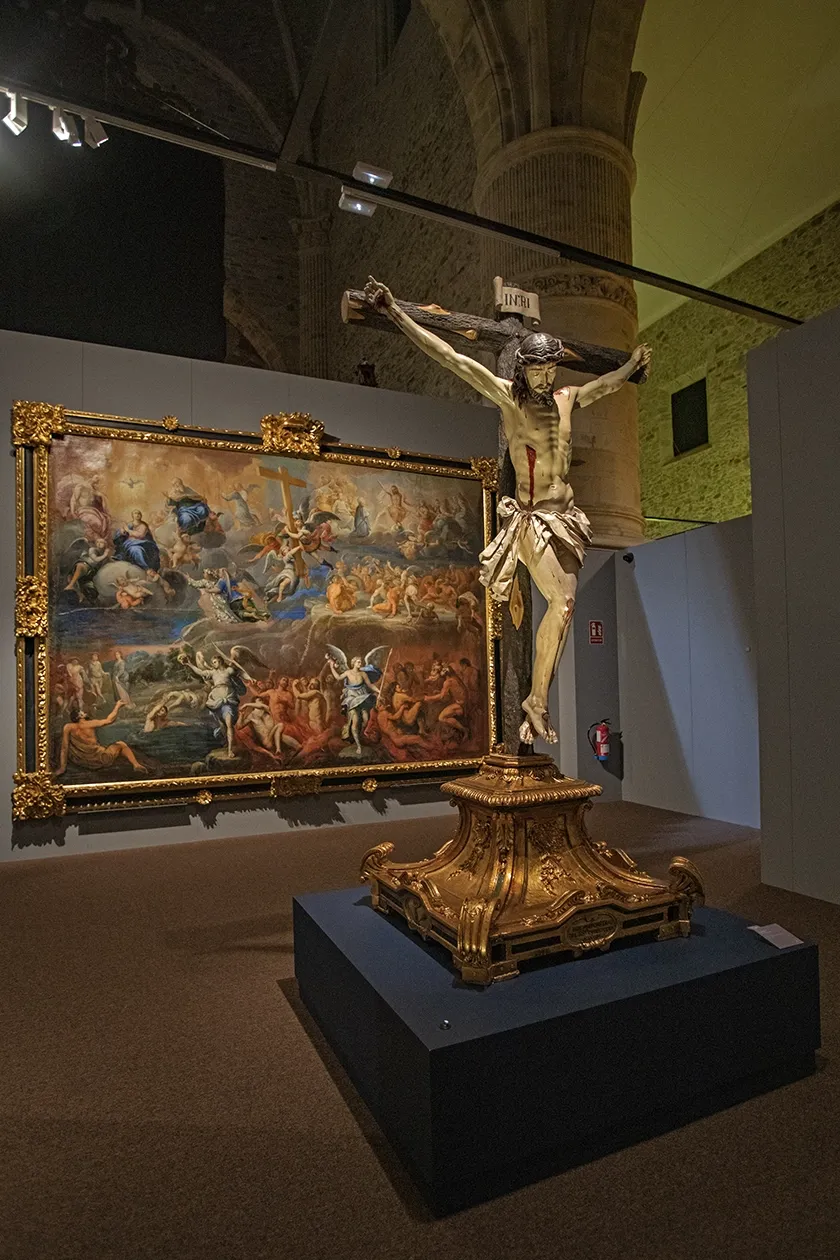
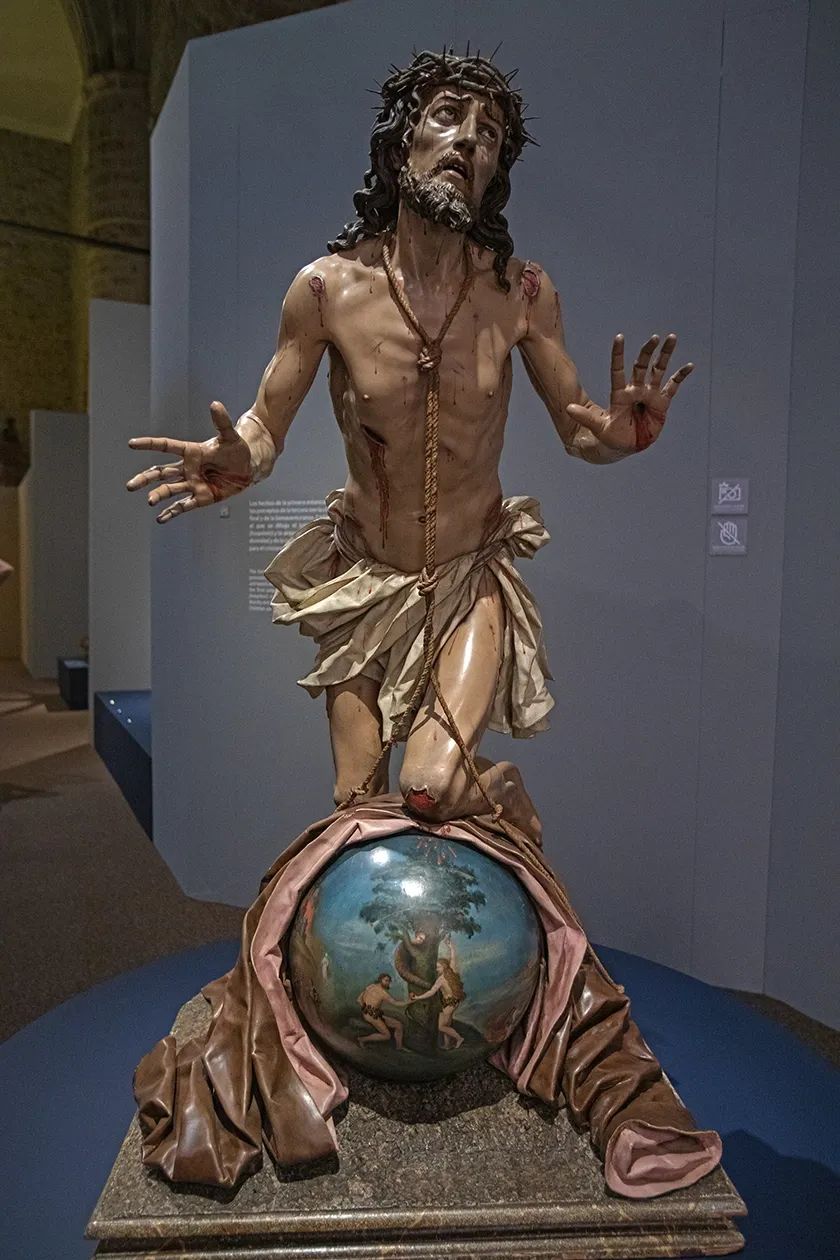
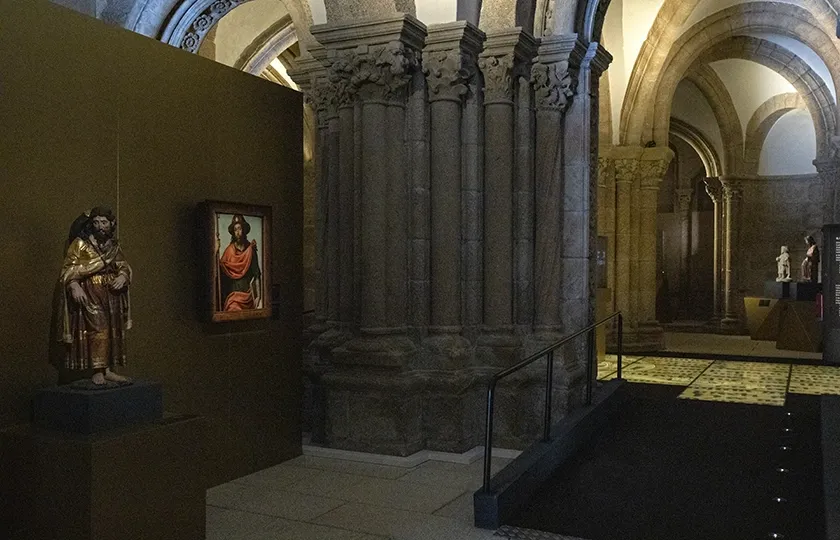
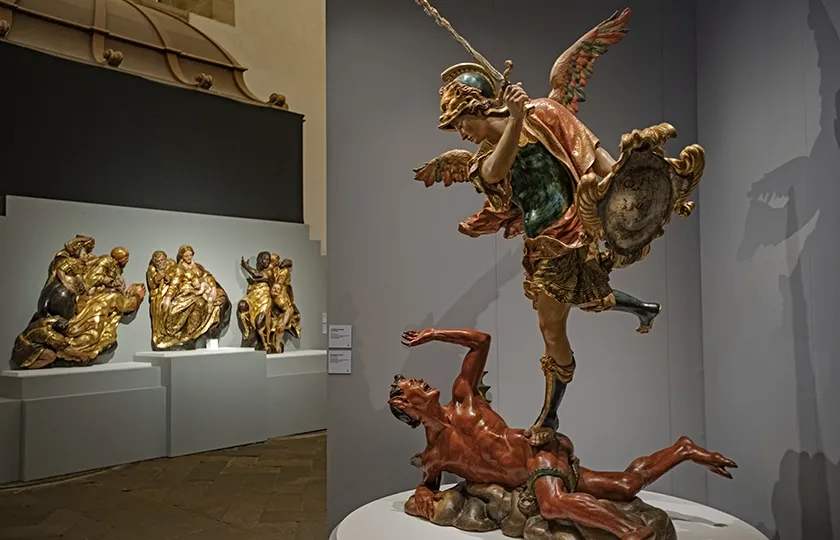
The works by Juan de Juni, Gregorio Fernández, Luisa Roldán, El Greco, Luis Salvador Carmona, Venancio Blanco and Vela Zanetti are on display in the church of Santiago and the Collegiate Church of Santa María in Villafranca del Bierzo, as well as in the crypt of the Cathedral and the monastery of San Martín Pinario in Santiago de Compostela.
Samantha Wilson said: “towalk the Camino de Santiago is to undertake a spiritual adventure… an experience that has the power to liberate, heal and transform“.
A path to hospitality
Among fields of vineyards already mentioned by Pliny the Elder and Strabo, whose image recalls the atmosphere of the wine press and feelings of love for the land, the Way enters Villafranca del Bierzo next to the Romanesque apse of the church of Santiago, known for its emblematic Door of Forgiveness. For centuries its Templar-influenced apostolate has been both witness to defeat and consolation for those who could not continue their pilgrimage, and here they obtained the desired Compostela.
In this symbolic temple, the Hospitálitas exhibition promoted by the Las Edades del Hombre Foundation hosts an immersive audiovisual experience whose script is centred on hospitality. Pioneering techniques unheard of in religious heritage turn the walls of this Romanesque temple into a 360-degree projection room. With an interesting narrative, a dynamic overview of the universal concept of solidarity and hospitality through the ages and across civilisations is presented.
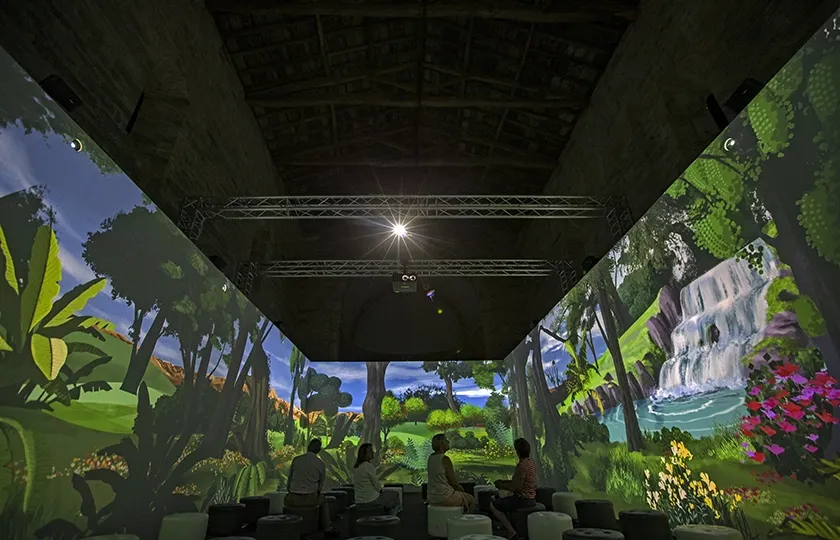
Villafranca is old, very old, the last village to be repopulated by the Franks in the Middle Ages, but it exudes a stately and serene air that invites you to walk through it without haste.
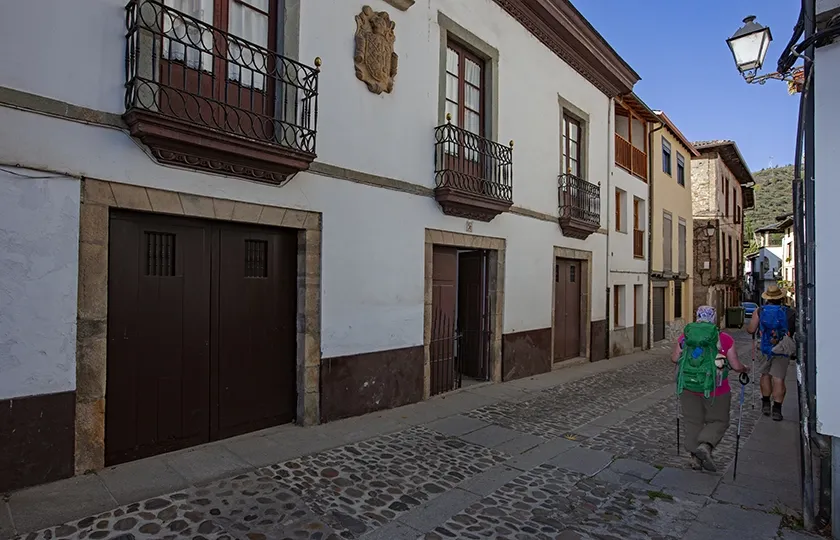
Walking along Calle del Agua, lined with emblazoned houses, palaces and even an old Moorish house, it is very easy to dream, imagining the stories that the stones could tell after so many centuries of watching pilgrims pass by, while remembering the romantic phrases born of the creativity of Enrique Gil y Carrasco, whose birthplace is on this street, the most genuine of the town.
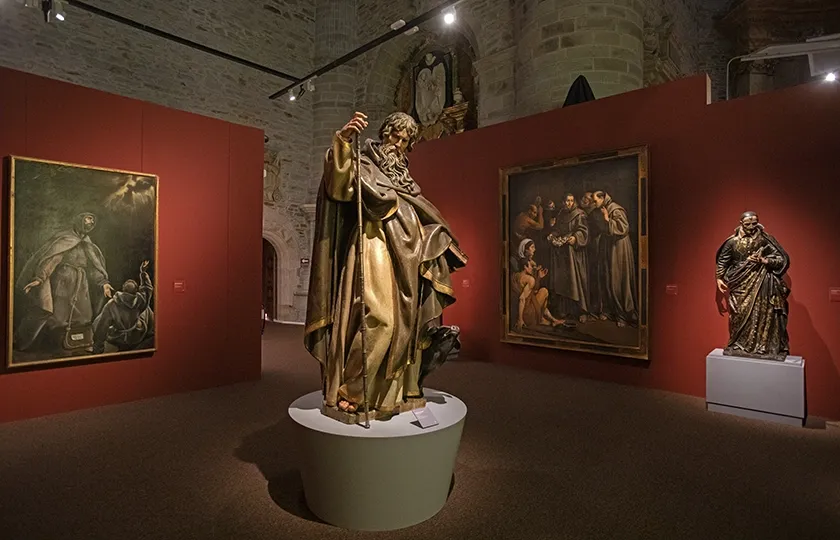
Suddenly, the Collegiate Church of Santa María unfolds its monumentality and prominence as the second venue for the Hospitálitas exhibition. Its dazzling interior houses more than a hundred works of art from all over the country, including El Greco’s “The Vision of Saint Francis”. The distinguished cultural exhibition is divided into four areas: linked to the letter, allegory, moral sense and analogy, to which is added a Prelude entitled “Works of Mercy”.
The Camino continues through evocative narrow streets to the bridge that crosses the river Burbia, always watched over by the sculpture of a pilgrim, Aymerich Picaud said that the clean water from the peaks of the Ancares mountains was good to drink.
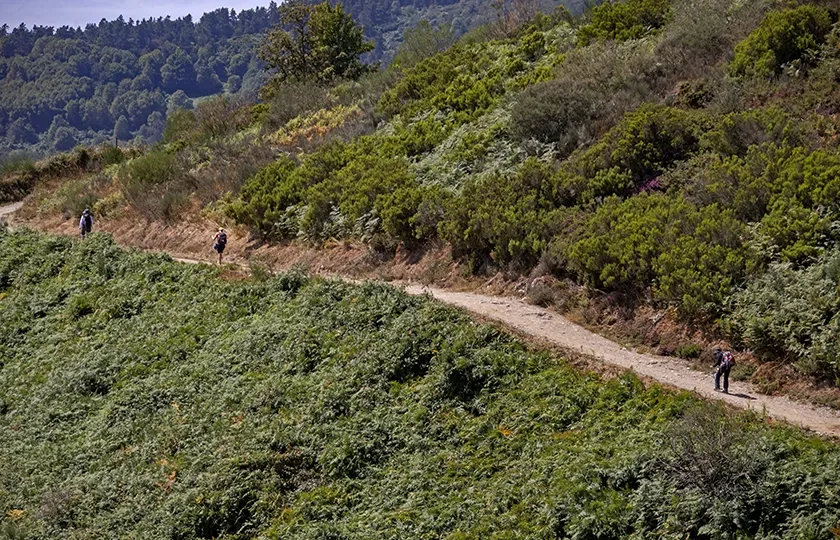
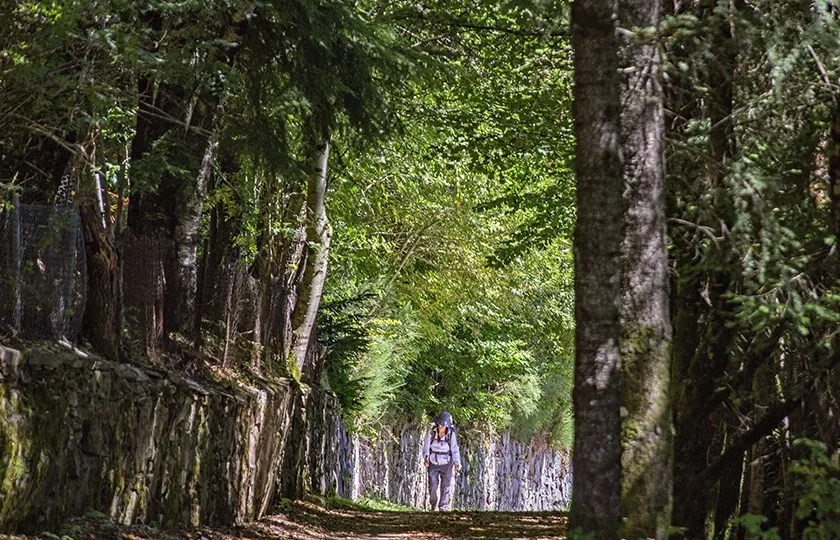
The pilgrim footprints always show the way to follow along the bottom of the valley of the river Valcarce under the protective gaze of the castle of Sarracín. Between meadows, leafy groves of chestnut trees and villages where the walker is always welcome and where you will never be short of inns to recharge your batteries, the air brings the sounds of water rushing down the streams and the countryside smells like an orchard. There is something in the atmosphere that captures the senses, a homely peace that slows the pace and soothes the soul. That must have been how Saint Froilán felt, back in the 9th century, to live for a time in a grotto in the village of Ruitelán. And that which springs from nature is also hospitality.
Little by little the road becomes more “uphill” in search of Galician lands, but the difficulty does not mitigate the serenity of the oak-covered forest, nor the generosity when it comes to offering beautiful views of a vertiginous landscape outlined by the Courel mountain range.
Arriving at the village of O Cebreiro, in the province of Lugo, the emotional and physical reward is difficult to describe in words. The path that runs under the shade of centenary trees is so friendly that it makes you forget the hardships of the last kilometres, at the same time as it prepares the senses for the sensations to come.
Galicia is always magical
I still remember the first time I visited this village of stone houses and some “pallozas” that refuse to disappear. Three decades have already passed since that cold night in December; the streets were barely lit by a few bulbs to illuminate the heavy snowfall that kept it almost isolated, so that it was only possible to reach it by 4×4. There was only one pilgrims’ hostel next to the church, which I assumed would be closed. Fortunately for me this was not the case, and inside there was a small group of old people around the fireplace who, surprised to see me arrive on such a bleak night, immediately invited me to sit by the fire, while the owner of the establishment immediately took care to serve me a feast of Galician delicacies capable of bringing a dead man back to life.
Nobody asked me what I was doing there or how long I would stay. They simply made a place for me among them, they made me feel like one of them, they made sure I felt safe from the cold night and nothing else mattered. That is also hospitality.
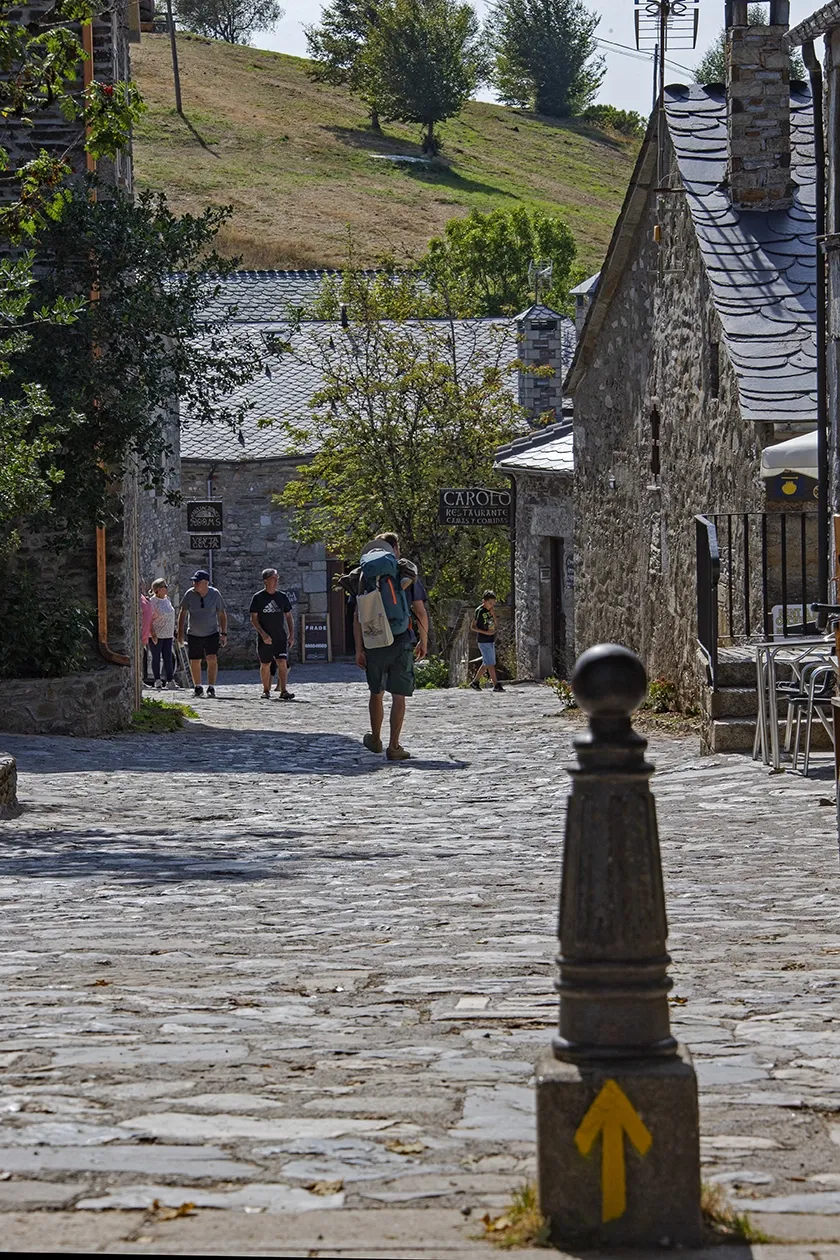
Today O Cebreiro has not lost any of its Jacobean magic, although it is no longer so lonely and its streets and inns are always full of pilgrims and some tourists who take photos in front of the “pallozas” and visit the church, whose altar preserves the chalice and paten where, according to tradition, the miracle of turning the sacred host into flesh and wine into blood took place in the 14th century, This is preserved in two silver phials given as a gift by Isabella the Catholic in 1486 when she visited the place.
From here onwards, the Jacobean symbolism is increasingly present, the landscape gradually becomes friendlier, the colour green becomes infinite, the forests are extraordinarily generous and the Atlantic influence becomes more evident. And the Galician people, those who carry in their genes the wisdom of what it means to go to foreign lands in search of fortune, today welcome the traveller and the pilgrim with a smile and open arms, aware of the meaning of solidarity with the traveller and hospitality to the stranger.
It's impossible to feel like a stranger in Galicia
Step by step we arrive at Triacastela, whose name is due to the existence of three castles in the past, which have now disappeared. A pilgrims’ prison is documented here, of which only a door with inscriptions remains, while tradition has it that pilgrims would take a stone from the quarries near the village as a sign of penitence and carry it to Castañeda, where the lime kilns that supplied the construction of the cathedral of Santiago de Compostela were located.
A few kilometres further on, at a bend in the Sarria River, the monastery of San Julián and Santa Basilisa de Samos captures the monumentality of the pilgrims arriving in the valley along the corredoira that links the suggestive Galician forests.
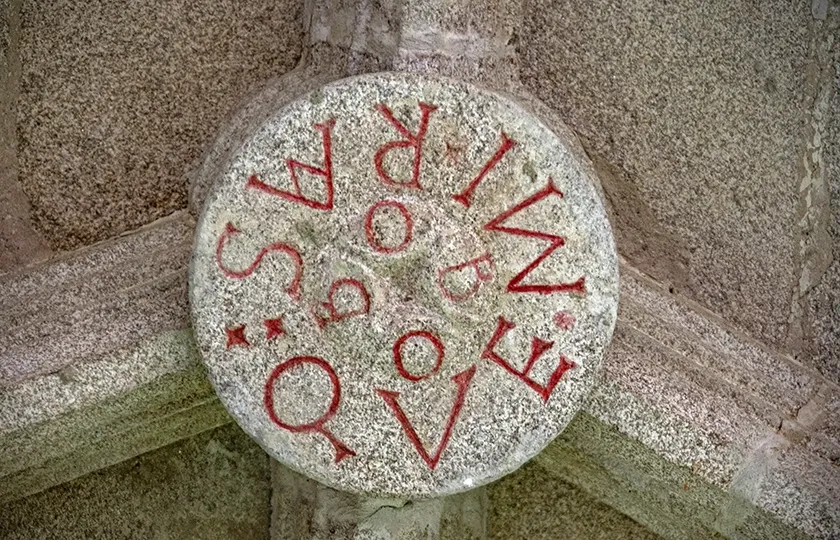
Beyond its historical importance, as it was founded in the 6th century as a sign of the mystical magnetism of these lands, or the fact that it was a school of philosophy and theology, the monastery is a landmark on the Camino de Santiago and well worth a visit. Architecturally it is very interesting and illustrative and little can be said that has not already been said, but I will allow myself the licence to mention two curiosities that caught my attention. One is the voluptuousness of the Nereids that support the baroque fountain in the Small Cloister. and the other is a humorous inscription on one of the keystones of the same Gothic cloister which reads: “What are you looking at, you fool”.
Also noteworthy is the library with around 25,000 volumes and the small Mozarabic chapel from the 9th century, located outside the monastery walls but very close by.
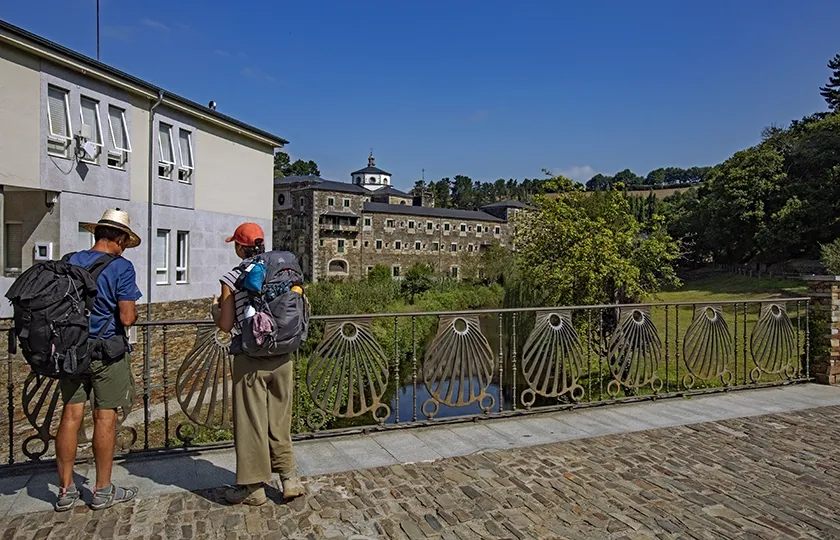
On the way to Portomarín, on the outskirts of Sarria, the church of Santiago de Barbadelo is the only thing that remains of the primitive 10th century monastery, but the place keeps alive that sense of peace that one always feels when entering a monastery. In addition, the tympanum of the Romanesque door features a strange character with esoteric overtones and raised arms.
Suddenly, the river Miño unfolds like a lake thanks to the Belesar reservoir, under whose waters lies the lush valley that once housed the old village of Portomarín. A number of churches were taken to the present site, but the church of San Nicolás and its carved portico reminiscent of San Juan de la Peña stand out. In fairness, it must be recognised that the current buildings reproduce the Galician air of the vanished village with its arcaded streets, its welcoming atmosphere and the hospitality with which the people welcome the traveller.
It is that air of reverie that wafts through the Galician streets that stimulates the sensibility to listen to other stories that, in some way, are linked to the Way. This was the case in Portomarín, where I was told that very close by, in the village of Loio, there are remains of the disappeared monastery of Santa María de Loio, where the Order of the Knights of Santiago was born in 1170, when twelve knights swore to protect the pilgrims.
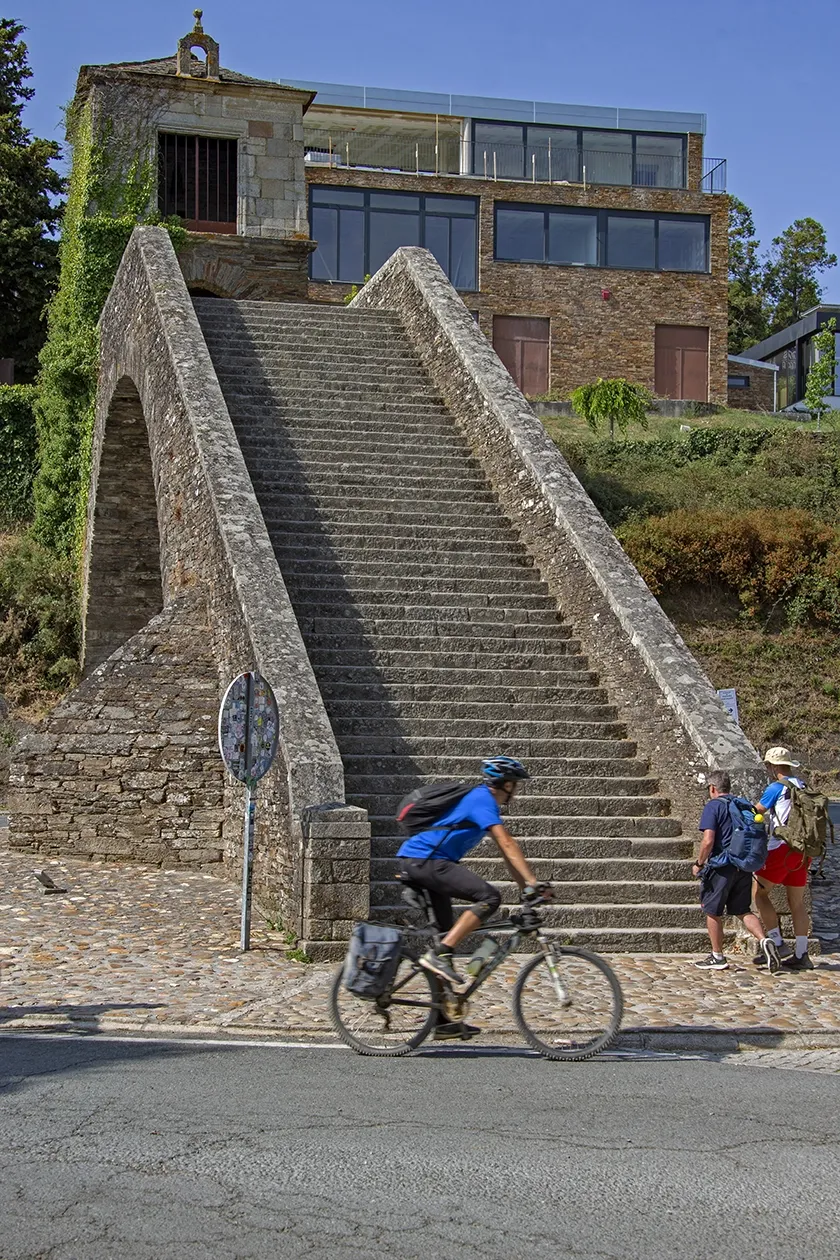
Little by little, step by step, we accumulate sensations and memories of the surprises that the Way generously gives us, and without giving respite to the senses, new emotions continue to arise. In a seemingly unassuming place, but very close to the oldest pilgrimage route, there is a medieval jewel in the form of a temple. The church of San Salvador de Villar de Donas was founded by women in the 12th century and is a rare example of the preservation of magnificent medieval wall paintings in Galicia. But all this does not overshadow its gentle energy, the energy that must have driven its construction and that of the monastery that existed next to it, where a pilgrims’ hospital was opened. Once again, the feeling of solidarity of the Way is present again.
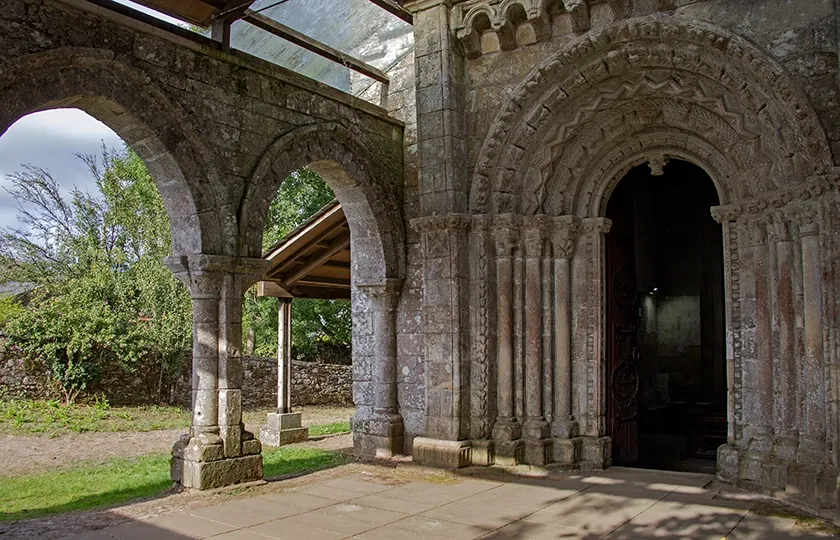
Among immense forests of oak, chestnut and eucalyptus trees that fill the air with pure aromas, the Way of St. James merges with the Primitive Way in Palas de Rey, exponentially accentuating the Jacobean atmosphere and hospitality among noble houses and Romanesque temples. A short distance away and in the midst of a natural environment of majestic beauty, where the natural generosity of this land takes on dreamlike hues, the charming castle of Pambre conserves its secular role as protector of the Pilgrim’s Way to Santiago and collector of “portazgos”, as well as the legend that tells that a strange creature built it in one night.
From here the Camino becomes more suggestive, magical and animated by the increase of pilgrims and the emotions in Melide cover all spectrums. In the Romanesque church of Santa María de Melide, an enthusiastic forest fireman with a passion for the Camino de Santiago, spends his free time selflessly and very well documented as a guide of the temple, explaining the curiosities of the mural paintings, the architectural details or the only Romanesque grille that is preserved in Galicia, but above all, we must recognise the kindness and attention that he gives to the pilgrims when he invites them in or when he stamps their pilgrim’s card.
A few kilometres from Melide, in a haven of peace in an oak wood whispered by the waters of the river Iso, we find the chapel of Nuestra Señora de la Fuente Santa, the remains of an old mill and a spring of sulphurous waters, where pilgrims used to go to cure the sores on their feet. The place has remained unchanged for centuries and the magical realism has been transformed into legends, such as the one that tells that a “moura” witch lies here, a fantastic being according to Portuguese mythology. Its remains were transformed into a sulphur statue, which causes the peculiar colour and smell of the water flowing from the fountain.
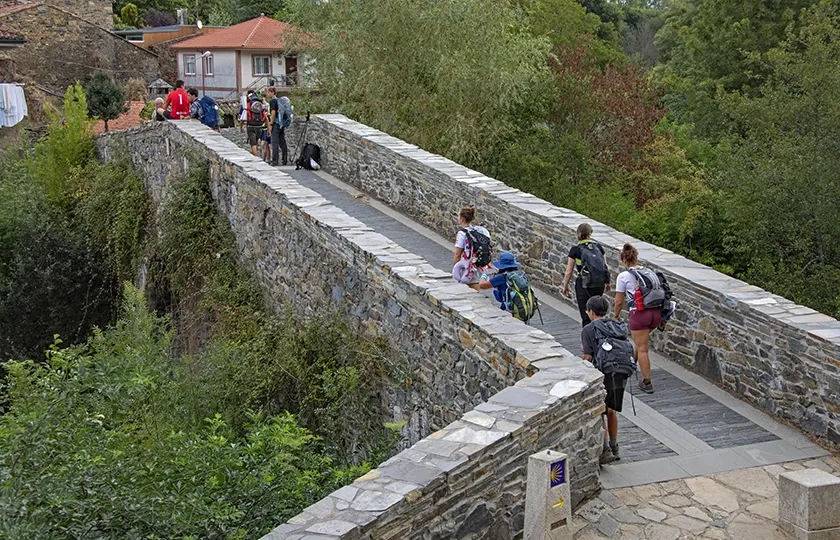
Returning to Melide, the Way runs along a gentle “corredoira” with romantic overtones and the source of all reverie. The remaining kilometres to Arzúa have many pleasant surprises such as the bagpiper who animates the walk next to the old washing place of Melide or the curious couple formed by Marvin, a German, and Carlota from Zaragoza, who with a permanent smile and exquisite kindness put an original wax seal on the pilgrims’ passbooks. just before crossing the unique Ponte Ferreiros in the heart of a native forest of extreme beauty.
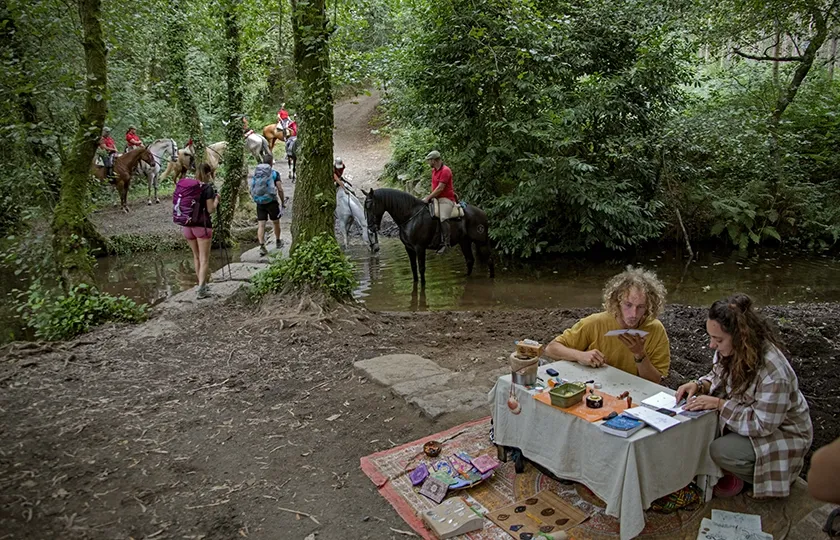
Thus, breathing hospitality in nature and in the people, our feet cross in Arzúa, and our thirst is quenched at the fountain of the French, until we cross the medieval bridge of Ribadiso da Baixo and we will recharge our batteries in the only old pilgrims’ hospital that has been functioning for centuries.
This is the start of the last stage before reaching Santiago. Breathing deeply and with contained emotion, the city unfolds before us from Mount Do Gozo and accompanies us as we walk through its streets to the Obradoiro square.
How can we describe the sensations and emotions that can be felt when we stop in front of the cathedral and watch the river of people weeping, hugging each other, bursting with joy or collapsing as they see their dream come true? It really is very difficult to put into words. You have to live it.
Such an emotional outpouring concentrated in the relatively small space of the Obradoiro or the surrounding streets and squares, so many different languages sounding at the same moment, so many cultures and races united by a common desire, could never come together in harmony without the magic of the Way and the generosity and hospitality that reigns in this land.
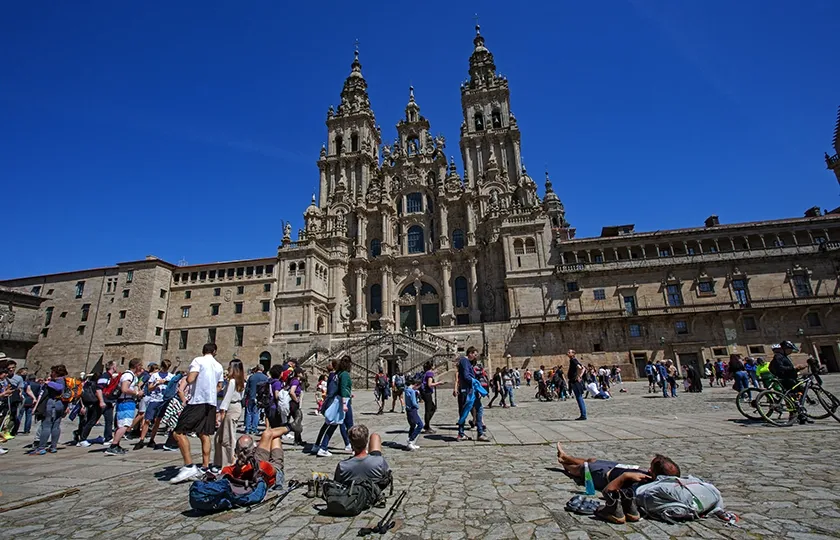
And that hospitality today is also called Hospitálitis, the exhibition project of the Ages of Man that closes the circle next to the second Holy Door. Specifically, the crypt of the Pórtico de la Gloria of Santiago Cathedral and the monastery of San Martín Pinario house around 170 works of art from the dioceses of Galicia and Castilla y León, as well as from national and regional museums, galleries and private collections. In addition, pieces from Portugal, France and the Cathedrals of the French Way of St. James and the Via de la Plata complete the careful selection of pieces.
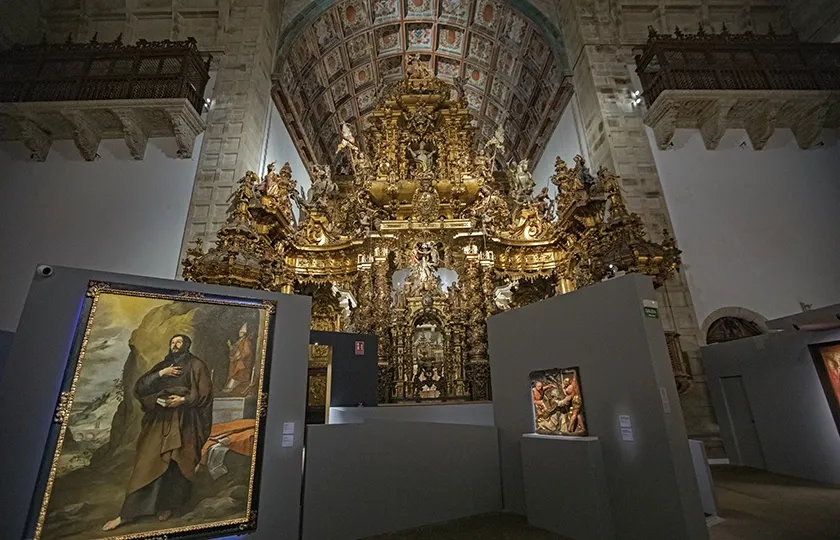
Hospitality is the attitude of cordial approach to strangers, the way of relating to them, of meeting their needs. And that universal value is the cornerstone on which the Camino de Santiago is based and the source of inspiration for Hospitálitis.