After the resounding success of last year’s Art Nouveau, which attracted almost two million people to the Belgian capital, Brussels surprises us with the celebration of the Year of Art Deco. This emblematic architectural style, omnipresent in the Brussels-Capital region, will further enhance the destination’s appeal, contribute to the deseasonalisation of tourism and highlight the architectural richness of all the capital’s neighbourhoods.
At the end of the First World War, old Europe was devastated. The cities and their inhabitants want to forget the nightmare they have lived through as soon as possible and start afresh, but the coffers are empty. It was at the International Exhibition of Modern Decorative and Industrial Arts in Paris, held in 1925, that this artistic movement was born, seeking to introduce this new architectural style to Europe and the rest of the world. The organic motifs and curves of Art Nouveau disappear, as does the traditional focus on aesthetics and the contemplation of luxury, giving way to sharper lines and more geometric shapes. This novel trend is also reflected in interior design, furniture, glass, jewellery and other decorative arts.
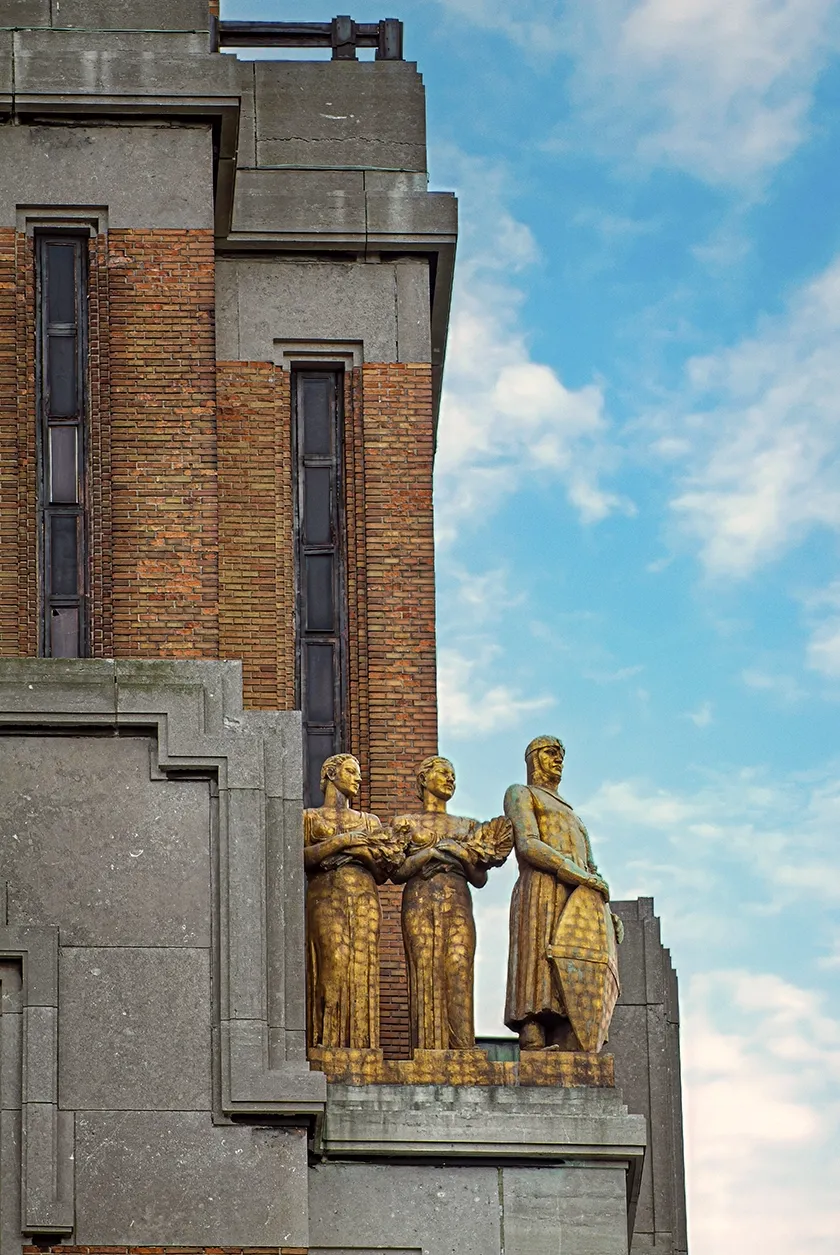
In the Belgian capital it was Victor Horta who in 1919 set the tone for Brussels Art Deco with the presentation of the plans for the Centre for Fine Arts (BOZAR), a building that defined the new approach to architecture and the arts.
Coinciding with the centenary of the Paris International Exposition, Brussels has designed an attractive programme of activities. Supported by the leadership of visit.brussels and urban.brussels and with the backing of multiple partners, the aim is to explore the contemporary relevance of art deco from a critical perspective that goes far beyond its traditional aesthetic. In addition to the activities, there will be the chance to visit some of the most representative buildings of this architectural style, many of them unseen before, within the context of the BANAD Festival to be held in the second half of March.
Art Decó jewellery from Brussels
Sometimes discreet and sometimes monumental, Art Deco in Brussels is as varied as the tastes of the period. From a carved ledge on an apartment building to spacious villas with swimming pools, the streets of the Belgian capital are full of middle-class and working-class housing, religious temples, cultural centres and avant-garde industrial buildings.
Temples of culture
The Flagey building, formerly the National Broadcasting Institute (NIR), was built between 1935 and 1938. The work of the architect Joseph Diongre, this “beautiful sound factory”, as the judges defined it, is a technical and aesthetic feat, whose aerodynamic style has acquired worldwide fame. For thirty-five years the Flagey building was the setting for all radio broadcasts and recordings, as well as jazz concerts and classical and contemporary music, and later television programmes. In 1960 it ceased to be used for its original purpose and after an extension and renovation of the complex it has continued to be a unique venue for concerts and music recordings thanks to its exceptional acoustic qualities.

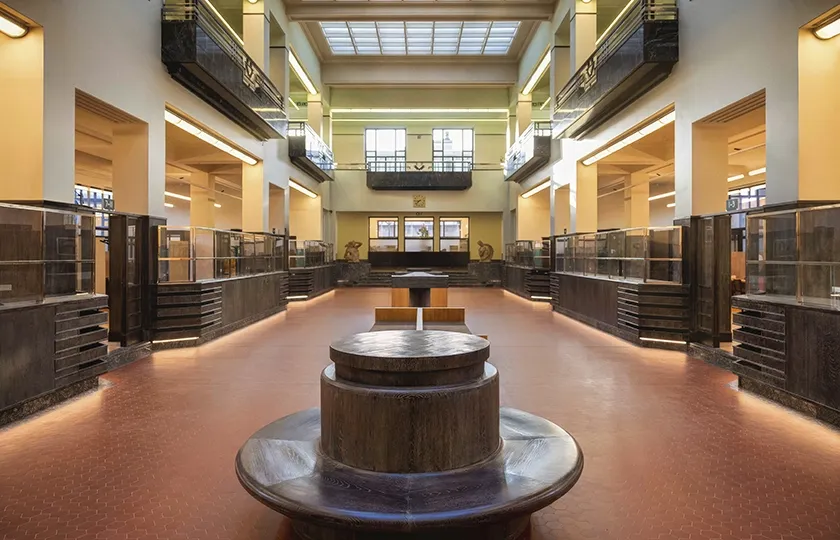
The construction of the Palace of Fine Arts (BOZAR) laid the foundations for Art Deco in Brussels. Built between 1922 and 1929, financial problems marked the beginnings of this project, to which must be added the uneven and limited height site on the Place des Palais side, the maintenance of the shops and the viaduct on rue Ravestein or the complex of stairs on rue Baron Horta. Víctor Horta overcame all the limitations and built a brilliant complex with exhibition and concert halls and three levels linking the upper and lower cities. The key was the innovative use of concrete – which can be seen above all in the great Horta room – as it was much easier to find and much cheaper than metal. Another of the outstanding spaces is named after Henry Le Boeuf, banker, music lover and great defender of the Brussels music scene and this temple of music. The Salle Le Boeuf is characterised by its exceptional undulating balconies and its egg shape, with which Horta fulfilled the wishes of violin virtuoso Eugène Ysaÿe, who wanted the musicians to be surrounded by the audience. This cultural landmark, characterised by its exceptional acoustics, has, throughout its history, welcomed the world’s greatest musicians.
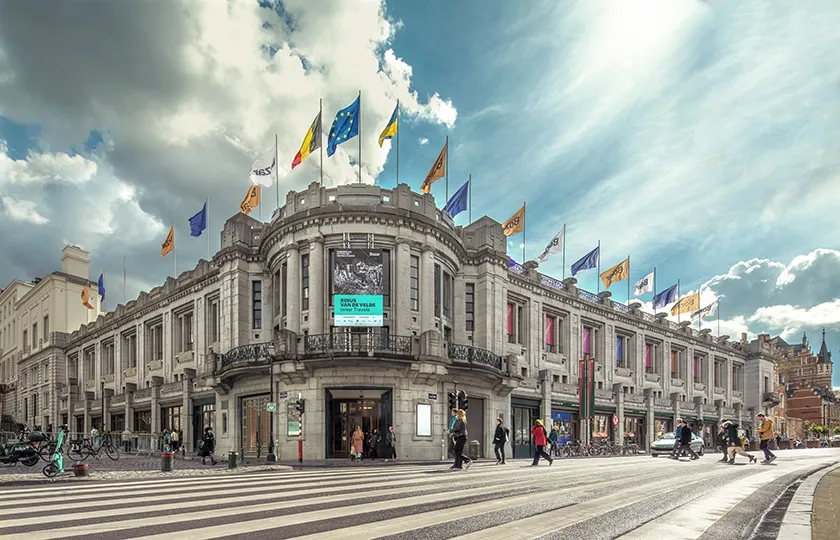
The Wielemans Tower symbolises the success of the former Wielemans-Ceuppens brewery, which employed over a thousand workers. Built in 1930 by Adrien Blomme, both architecturally and technically it was one of the most modern breweries in Europe. A concrete building with clean lines, it has large continuous windows through which one could see the workers brewing the beer. The interior of this excellent example of art deco is decorated with glass and metal ceiling and wall lamps and black and green tiled panels. Also visible from the street are eight original copper jars that serve as a backdrop to the café of the Wiels Contemporary Art Centre. It has a bookshop that is open to the public and periodically organises exhibitions of contemporary artists, talks by artists, guided visits and workshops, activities that aim to bring contemporary art closer to the public.
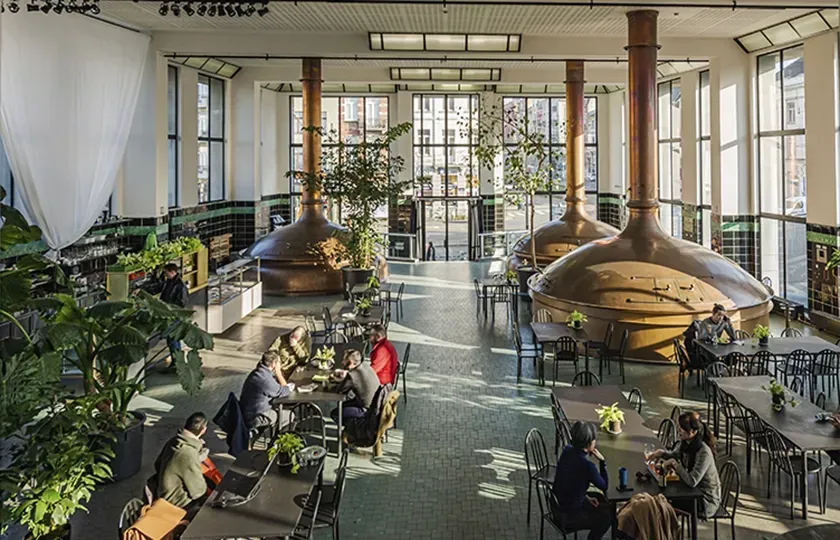
The House of European History is located in the Eastman Building in Leopoldo Park, in the heart of the European Quarter. Financed in 1931 by the American George Eastman, businessman, philanthropist and inventor of the Kodak camera, to house a dental clinic for disadvantaged children, it was built between 1934 and 1935 by the Swiss architect Michel Polak. Its waiting room was designed with children in mind and features colourful paintings of animals from the fables of the French author Jean de La Fontaine.
UGC De Brouckère is a complex with twelve cinemas, including the prestigious Art Deco-inspired Grand Eldorado, with a capacity for 706 people.
Social housing
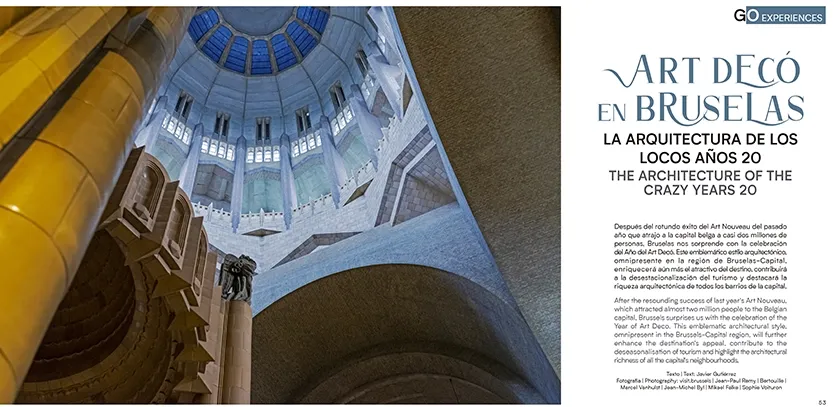
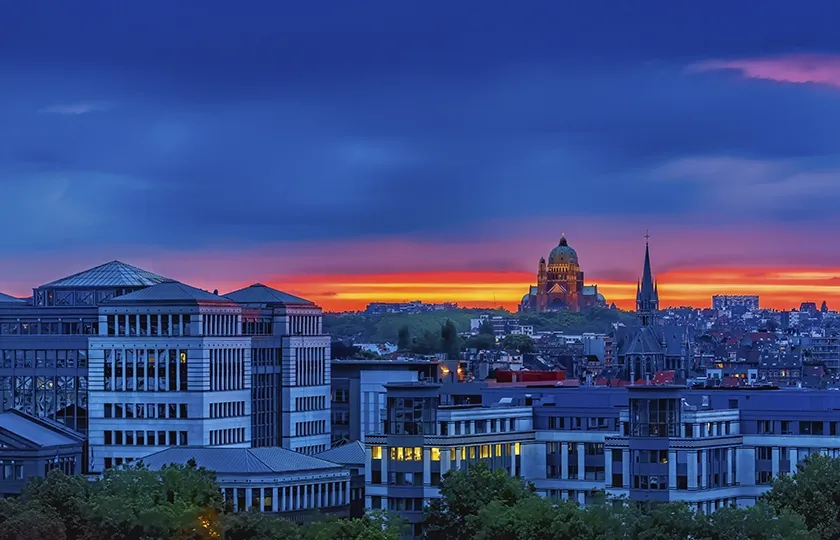
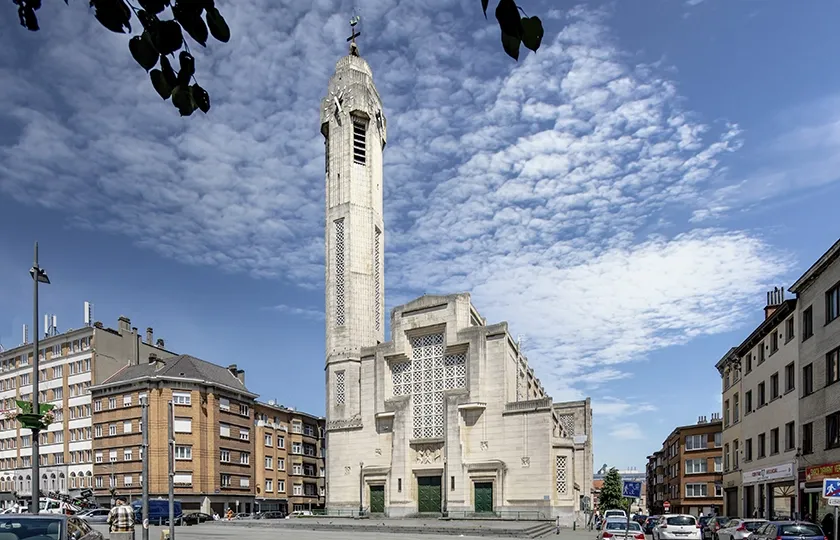
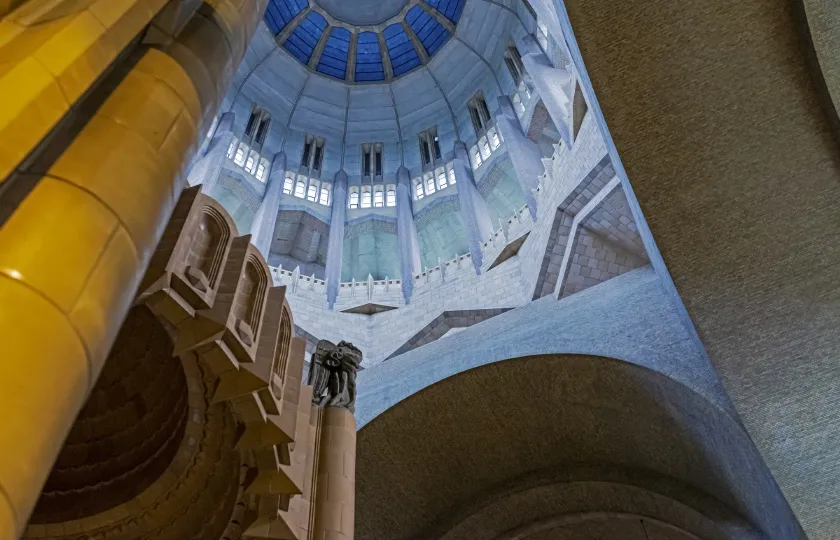
King Leopold II dreamt of a Basilica of the Sacred Heart in Brussels and his own Champs-Élysées, but the country’s post-World War I economic situation made it unfeasible. The first project for the building was much more expensive so a more economical one was chosen, for which the architect Albert Van Huffel was selected who, being faithful to the Art Deco spirit, created a functional and aesthetically coherent whole. And so the world’s largest Art Deco building saw the light of day, with a capacity for between fifteen hundred and two thousand people and regularly hosting concerts and exhibitions. It also houses two museums, the Museum of the Nobles Sisters of Brussels, with an extensive collection covering several centuries of religious and civil art, and the Museum of Modern Religious Art, which focuses on contemporary variants.
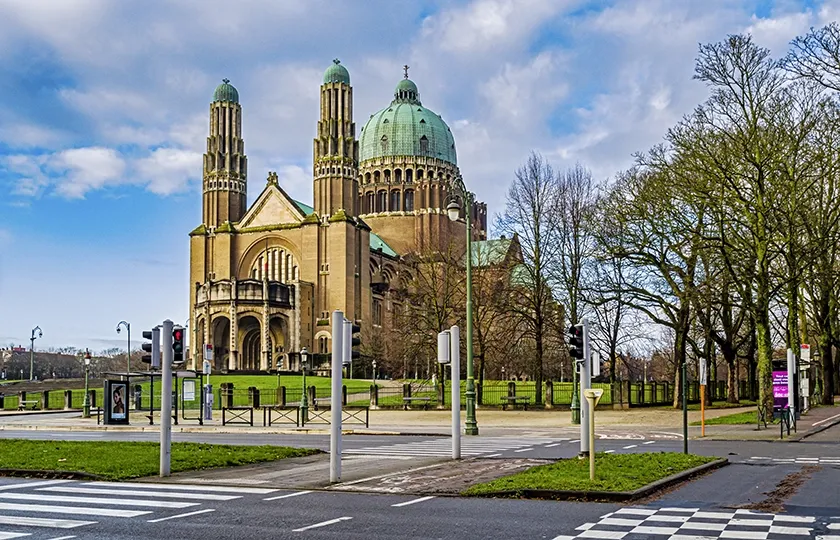
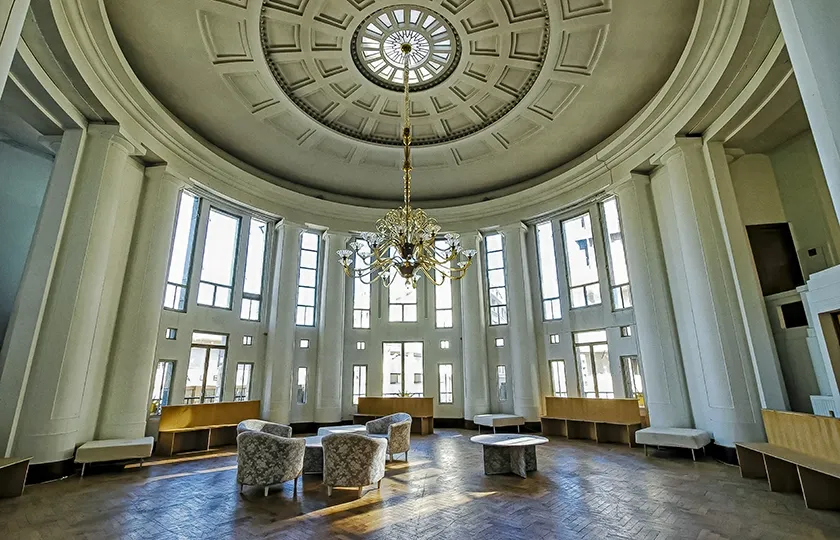
Built between 1935 and 1938 by Jean-Baptiste Dewin, the Town Hall Forest is without doubt the architect’s greatest achievement. Located in the historic heart of Forest, very close to Place Saint-Denis and Forest-Est station, wood plays a leading role and nature is represented throughout the building, especially in the most important rooms: College, Council and Weddings and in the stained glass windows that decorate the lobby and the grand staircase. Guided visits to this recently renovated building have been organised to mark the Year of Art Deco. More information is available at www.visit.brussels and www.forest.brussels.
The church of Sainte-Suzanne in Schaerbeek is the most colourful and the first to be built in reinforced concrete. The intense red and blue glow of the monumental rectangular stained glass windows is striking, and the theatre hall located in the basement is surprising, as are various spaces designed to help the community life of the neighbourhood.
The church of Saint-Jean-Baptiste was designed by the architect Joseph Diongre, who also designed the Flagey building, Woluwe-Saint-Lambert town hall and the garden cities of Molenbeek. A sober and elegant building, the imposing parabolic arches that support the structure and the stained glass windows are impressive.
The church of Saint-Augustin was built between 1932 and 1935 as part of the urban development of the Forest district. It stands out for its imposing central tower and harmonious proportions, as well as for its general aesthetics.
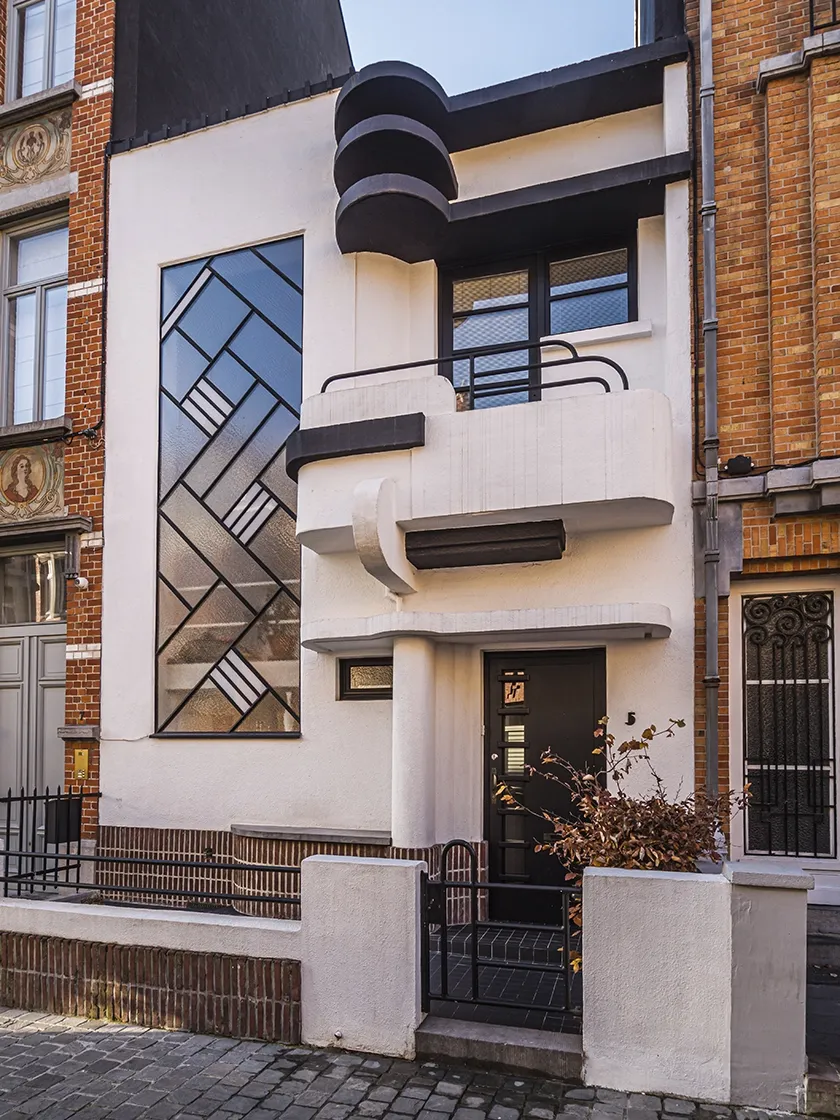
The Maison Tenaerts, built in 1933-1934 by the architect Louis Tenaert, has clean, geometric lines and a daring window on the façade, while retaining the original distribution of rooms inside.
The Hotel Riez was built in 1927-1928 by the architect Jean-Baptiste Dewin. A marvellous stained glass window, furniture designed by Kortrijk De Coene Frères and a surprising kitchen stand out. Visits are by guided tour only and must be booked in advance.
Middle-class housing
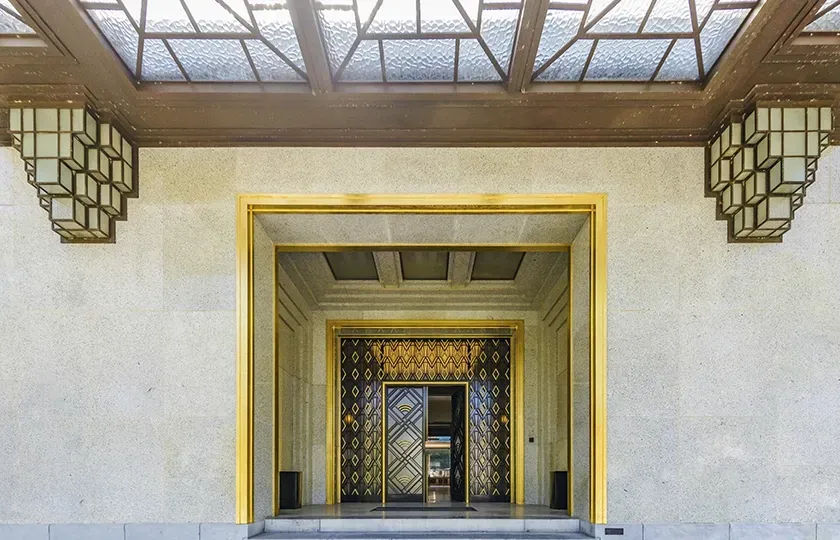
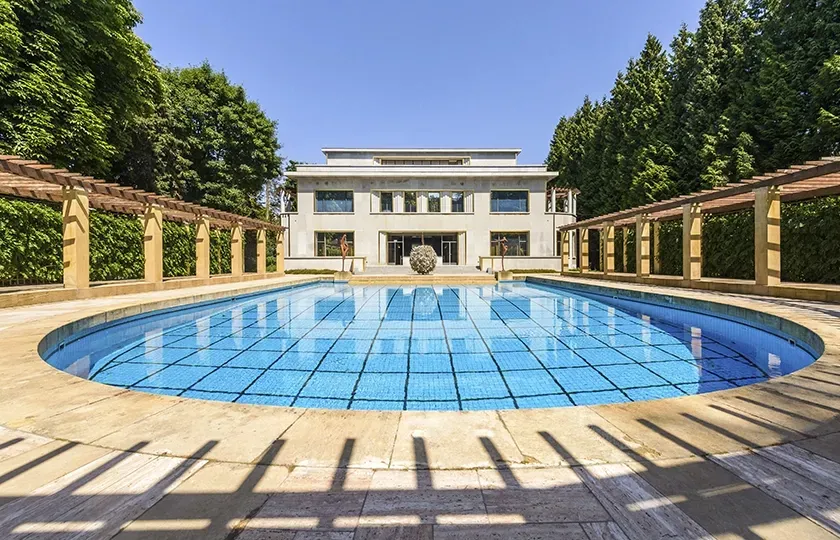
Designed by Michel Polak in 1930, Villa Empain was abandoned for several years until it was acquired by the Boghossian Foundation to create a centre for art and dialogue between Eastern and Western cultures. With its symmetry, clean, rigid lines and rich materials, this building embodies the ideals of Art Deco. In addition to the exceptional exhibitions and its luxurious interior, it is worth visiting the shop, which offers an interesting collection of quality items, its cafeteria and its American bar, which will reopen its doors soon. With the arrival of the good weather, the sculpture garden or the shows and parties in the pool with its sublime oval pergola are an unforgettable experience.
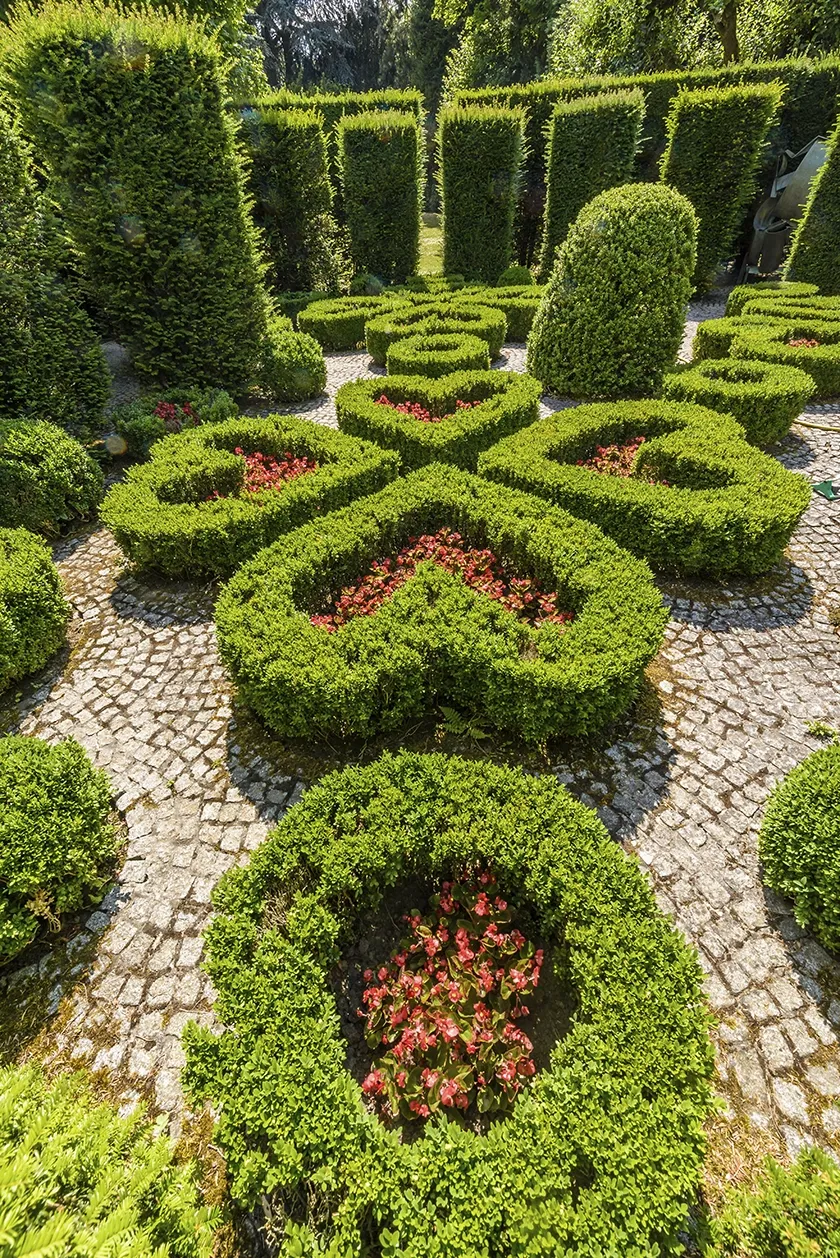
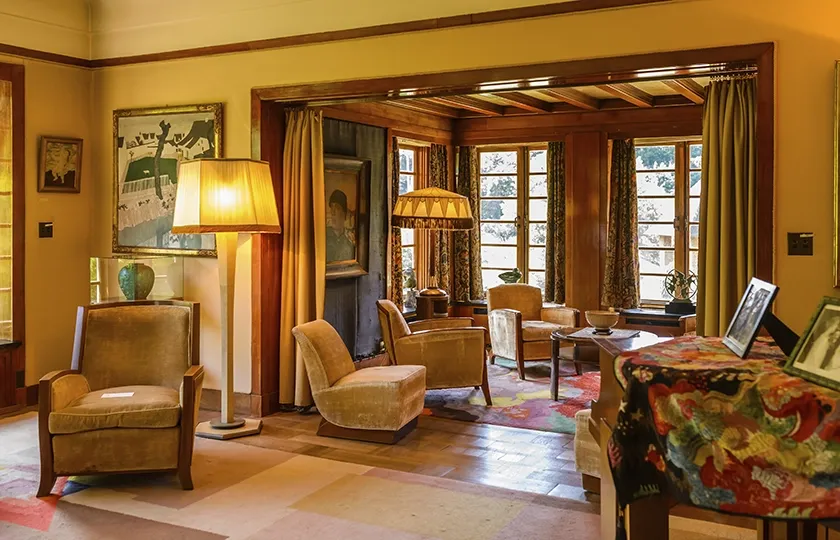
The house of the Van Buurens was built by the Brussels architects Léon Govaerts and Alexis Van Vaerenbergh following plans drawn up by David Van Buuren himself, based on the Dutch Art Deco school. The home of patrons David and Alice Van Buuren has asymmetrical façades, decorative masonry with handmade red bricks, stained glass and staggered windows or sloping roofs, emphasising manual labour and the use of noble materials such as brick and wood. The interior design, which bears the signature of renowned Belgian, French and Dutch designers, is made up of rare furniture, designer carpets, stained glass and sculptures and paintings by Belgian and international masters, which turn it into a true work of art. On reaching this building, where time seems to have stood still, we are welcomed by the gardens, a beautiful example of landscape art designed by Jules Buyssens, also in the Art Deco style. Artists, writers and musicians were regular visitors to this house a hundred years ago and that bohemian spirit of hospitality is still maintained by the Van Buuren Museum and Gardens Foundation, which opens its doors to the public and to various cultural activities.
Activities for the Year of Art Deco
The city of Brussels has designed an interesting, attractive and comprehensive programme of activities in which visits, activities and events will mark the year.
The Museum of Art and History will open two permanent exhibition rooms dedicated to its Art Deco and Art Nouveau collections.
From 15 to 30 March, as part of the BANAD Festival, the doors of most of the city’s most representative Art Deco buildings will be open to the public, with numerous previously unseen spaces to be presented for the first time. Some of these buildings will be accessible with the Art Nouveau Art Deco Pass.
Art Deco Week will be held from 12th to 16th May. Five days in which each night they will surprise us with a different event such as conferences, exhibition openings, festive events and guided tours aimed at a wide audience and which aims to connect the different places included in the programme.
This is the full programme of activities:
The gardens of the Van Buuren Museum & Gadens will be the setting for an exhibition of sculptures from the interwar period, which can be visited from 24 March to 28 September.
From May, the Maison Autrique will host the exhibition “Art Déco 2025, posters and magazines”, which analyses the evolution of society between the two world wars through posters and magazine covers.
From 4 June to 4 January 2026, the BELvue Museum will present “Art Deco: The Style of a Changing Society”, which will address the transition between Art Nouveau and Art Deco, as well as the social and societal changes of the time, through the collections of the King Baudouin Foundation.
“Sylvie Feron et René Baucher” will showcase an archive received in 2024, from the legacy of the duo René Baucher and Sylvie Feron, who excelled in furniture, lighting, textiles and interior design projects. At The Design Museum Brussels from 6 June to 2 November.
The Halles Saint-Géry are joining in the year of Art Deco with three major exhibitions and a general programme that will alternate between hosting exhibitions by partners, valuing intangible heritage such as gastronomy, conferences and the discovery of Art Deco beyond Belgian borders. All of this with a broad focus on guaranteed accessibility for people with reduced mobility.
“Art Deco Cinemas in Brussels” – until 11th May – will transport us to the magical world of cinema through a written and visual evocation of the great “first exclusivity” cinemas in the centre of Brussels at the time, as well as other cinemas, both in the city centre and in the suburbs, from the largest to the most modest.
“On the menu, the Art Deco table” – from 24 March to 29 June – will invite the public to immerse themselves in an era where refinement was combined with the elegance of a unique lifestyle. Through an unprecedented collection of period menus, true works of art, an appreciation will be given to an art of living that fused gastronomy, culture and aesthetics.
“Fashion and Art Deco: contemporary resonances” – from 26 May to 26 August – will reinterpret the Art Deco movement through the vision of ten contemporary designers from Brussels, who will address specific aspects of the movement in fashion, accessories and jewellery. Contemporary creations that will be accompanied by photographs of historical garments preserved in the Museum of Fashion and Lace.
“With Art Deco notes” – from 10 July to 10 October – will explore the universe where music and graphic arts meet in harmony, exhibiting an exceptional selection of scores from the period.
“Art Deco – Crazy Years, Crisis Years” – from 11 September to 11 January 2026 – will offer a journey to discover the Art Deco movement in Brussels, as part of the Heritage Days.
The Brussels Art Deco Year will be rounded off with themed conferences, meetings and debates with Belgian and foreign specialists; activities in the city’s green spaces to discover the gardens of the Belle Époque; events to bring heritage closer to schoolchildren; and various publications by museums, associations and magazines with Art Deco as the main theme.
All the information you are looking for on Art Deco 2025 can be found at: www.visit.brussels