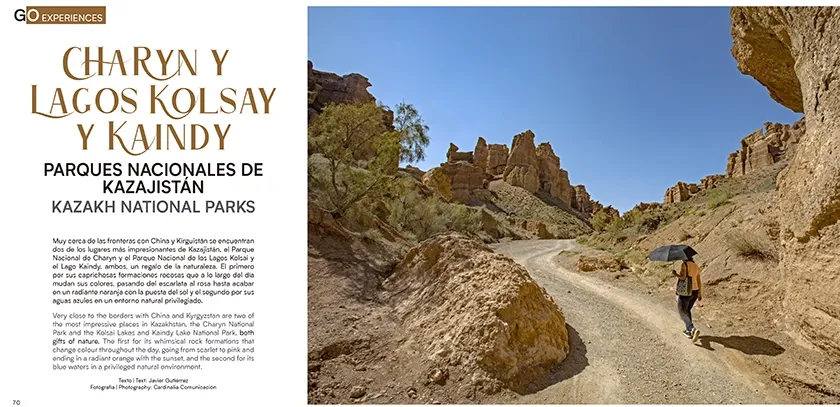
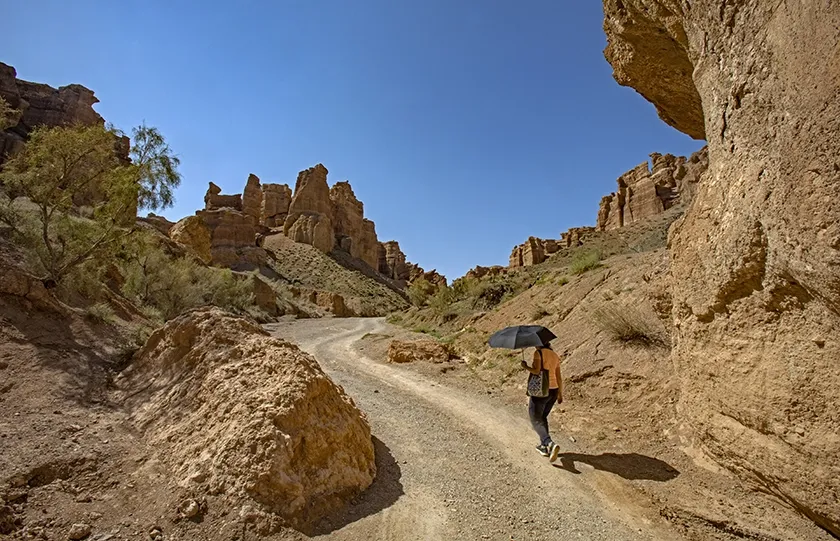
Very close to the borders with China and Kyrgyzstan are two of the most impressive places in Kazakhstan, the Charyn National Park and the Kolsai Lakes and Kaindy Lake National Park, both gifts of nature. The first for its whimsical rock formations that change colour throughout the day, going from scarlet to pink and ending in a radiant orange with the sunset, and the second for its blue waters in a privileged natural environment.
Before the first rays of the sun appeared on a day in September, we left our hotel in Almaty and headed for the national parks, of which the previous day Viktoriya, our friendly and professional guide, had given us a small preview of what we were going to find. During the journey through the landscapes of the mythical Silk Road, which lasted more than two hours, we tried to get an idea of what we were going to see, but once again, our imagination fell far short of reality.
Charyn National Park
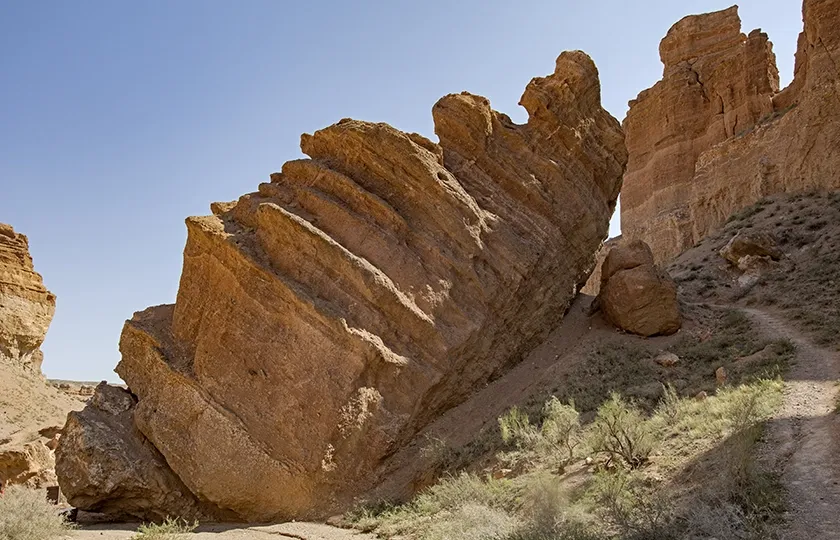
Some two hundred kilometres east of Almaty is Charyn National Park, created in 2004 with the sole objective of preserving this impressive natural and geological site. The main cause of this gift of nature has been the river that gives it its name, the Charyn, which over millions of years has shaped this spectacular canyon that varies in depth from one hundred and fifty to three hundred metres.
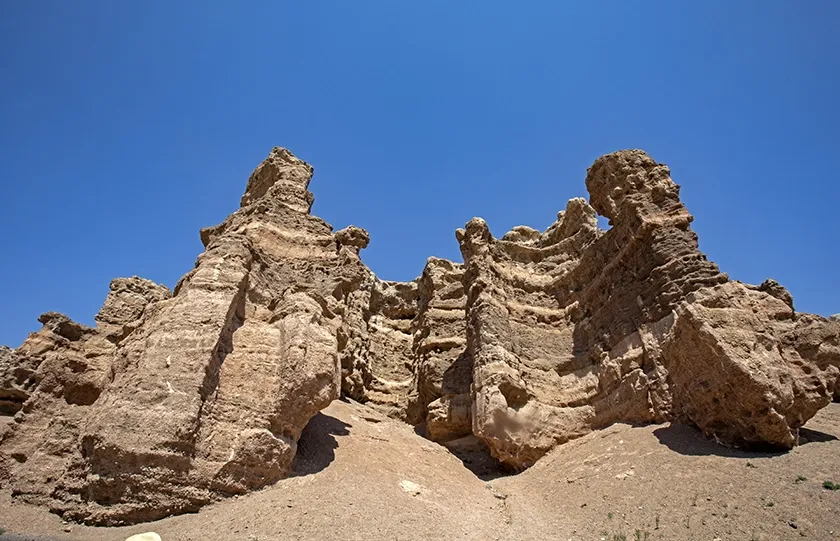
One hundred and fifty-four kilometres long, it is made up of sedimentary rock that is over twelve million years old, and is home to sixty-two different species of mammals, one hundred and three species of birds and twenty-five species of reptiles. And despite its desert-like appearance, it has fifteen hundred species of plants, seventeen of them protected, and forests in which unique trees grow, such as the Sogdian ash, which is around five million years old, located in the lower course of the Charyn River, or the Turangas forest of Asian poplars. Both have been declared UNESCO World Heritage Sites: the ash forest as part of the Sayarka steppes.
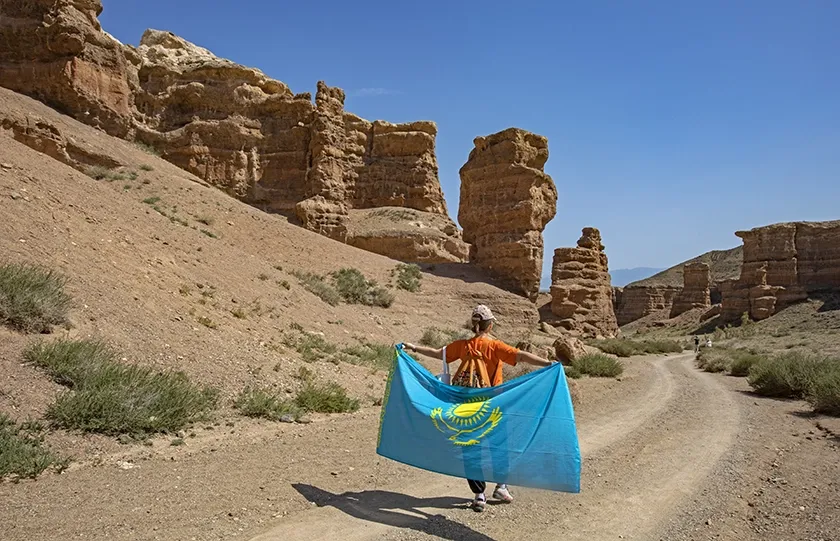
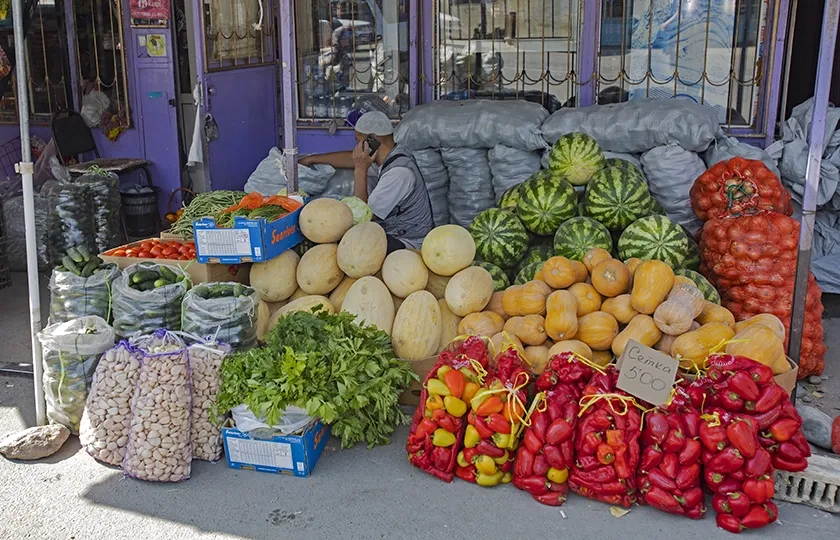
Different villages come out to meet us on this journey along the Kazakh roads, some of them with their small markets set up on both sides of the road. In one of these villages we decided to stop and our curiosity, faithful travelling companion, made us fully immerse ourselves in their way of life, feeling, even if only for a brief moment, like just another neighbour taking advantage of the early hours of the day to do some shopping. Colourful fruits and vegetables invitingly piled up in the stalls, while a most appetising smell reminded us that we had had an early breakfast that day. We crossed the street to one of the many simple eateries there, where appetising lamb kebabs, known here as “Shashlyk”, were roasting on the coals in a traditional oven. After clearing several trays, we resumed our journey to continue with this experience that was proving so rewarding.
We arrive at our long-awaited destination and are welcomed by the Visitor Reception Centre, a modern building where, as well as providing all kinds of information, there is a film about the national park, a café and buffet and a souvenir shop. Their proposal is completed with the possibility of staying at the glampling Charyn Camp and enjoying the nights in total harmony with nature in the comfortable and cosy heated tents for two people, located on a plateau near the centre.
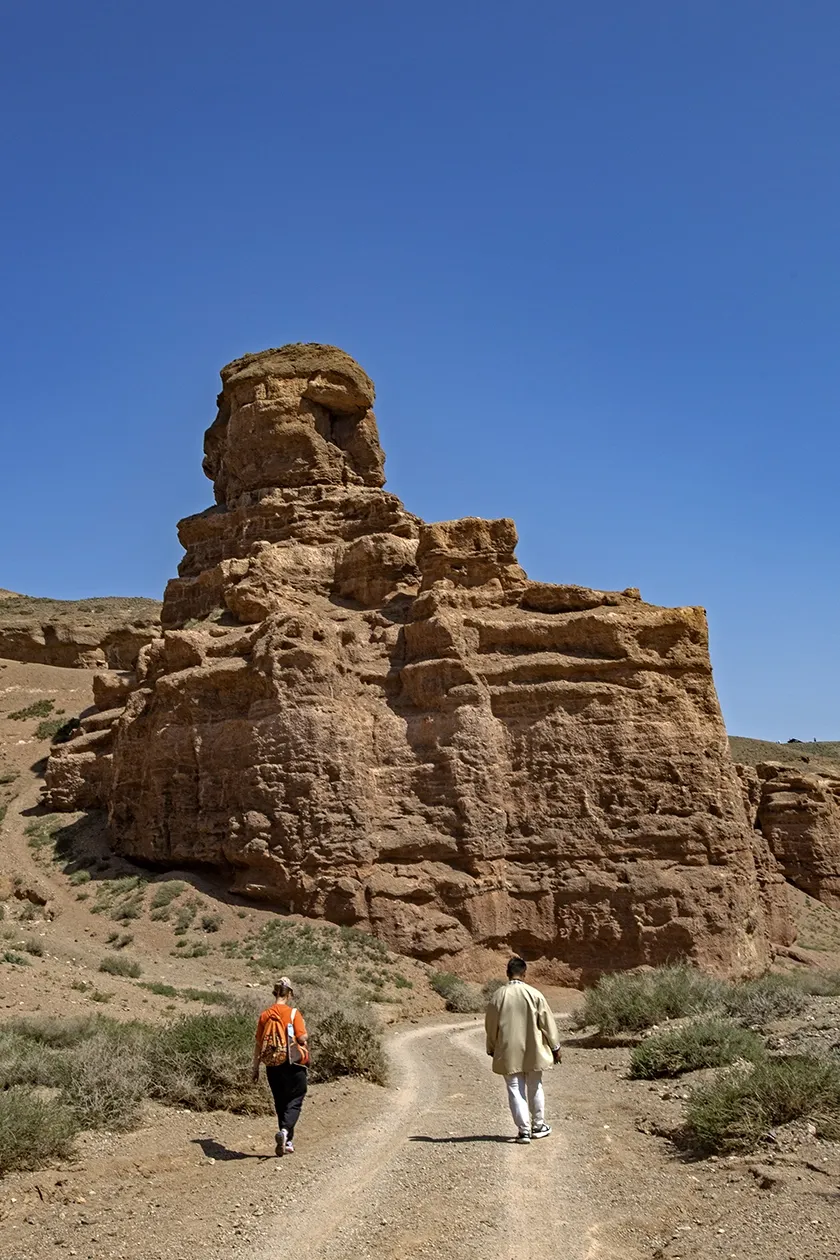
There are several areas of the Charyn canyon that are worth discovering: the Temirlik canyon with its waterfall, the Yellow Canyon, the Bestamak that runs through very narrow areas, the Red Canyon where it is possible to admire volcanic rock formations and the one we had the privilege of visiting, the Valley of the Castles, without doubt the most popular and most visited.
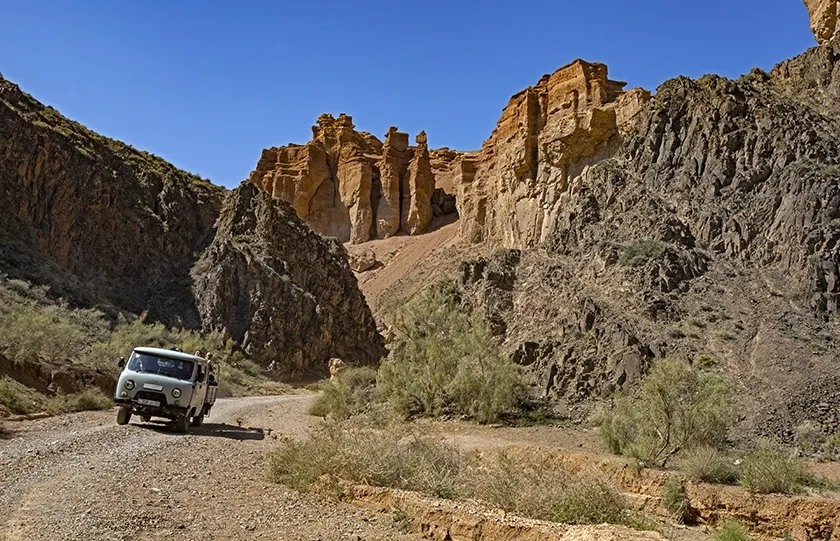
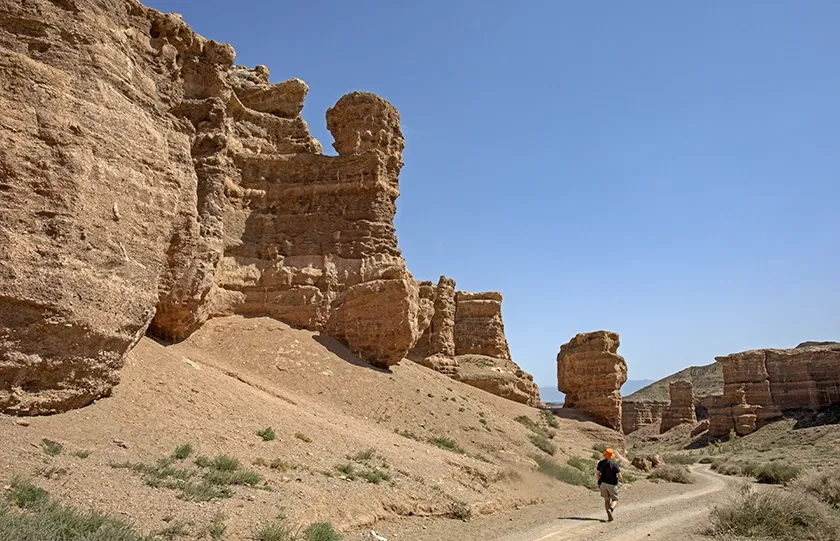
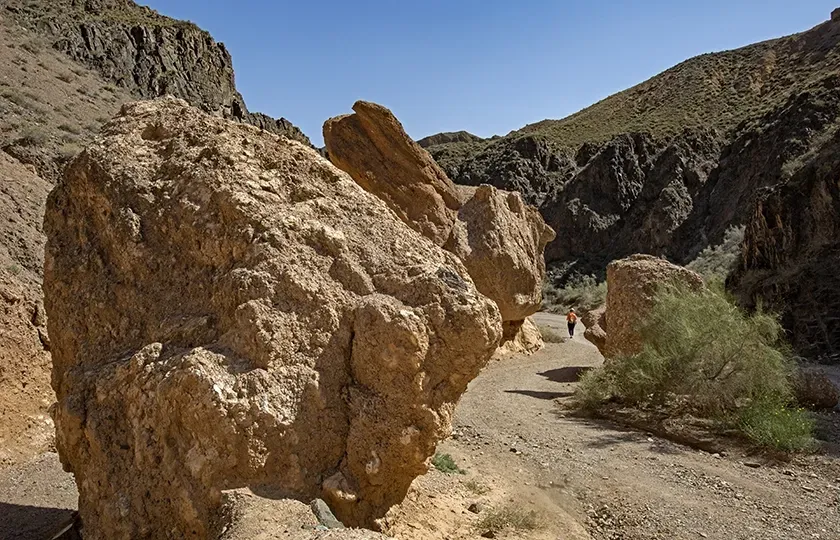
Known as such because the formations are reminiscent of the towers of a castle sculpted like a magical “city”, along its two kilometres and seven hundred metres it is obligatory to let our imagination run wild, transforming the stone cliffs into fabulous fortresses, the faces of giants or the silhouettes of mystical animals. One of these formations resembles a person with their right arm outstretched, on which an eagle, known as the guardian of the canyon, is perched. It goes without saying that one of the most beautiful times to visit the canyon is at sunset, when the rays of the sun stain the rocks an intense reddish colour that gives the landscape an even more mysterious appearance.
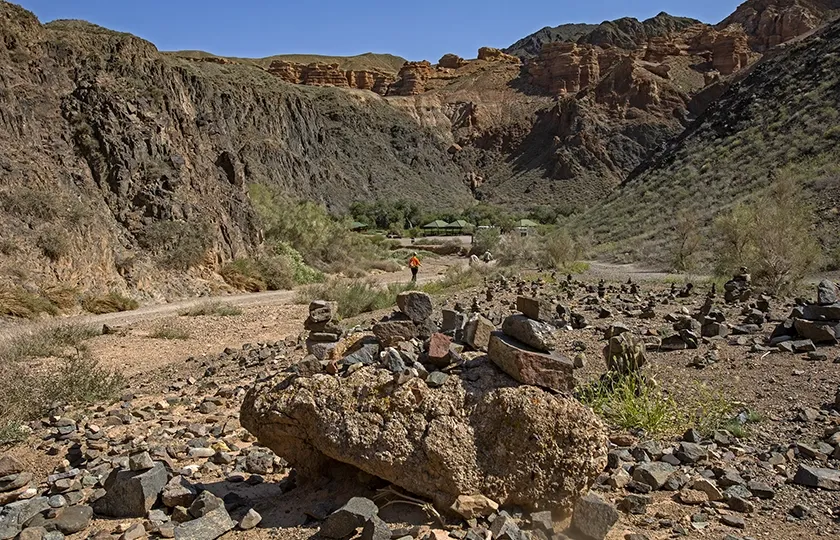
Also known as Dolina Zamkov, this evocative path between rock formations reminiscent of the most famous in the United States is between twenty and eighty metres wide until it ends at the Charyn River. In the warmer months, this wonderful spot is an invitation to take a refreshing dip, as well as to enjoy the rest areas with tables.
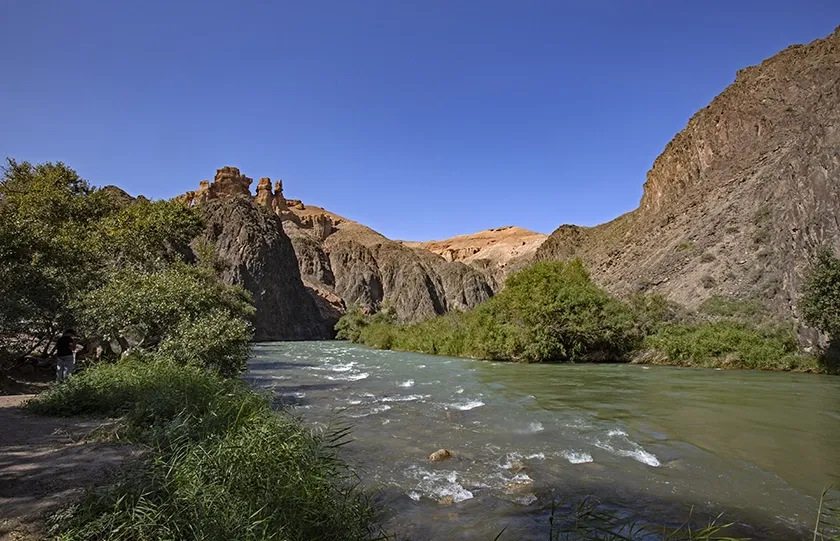
And when it comes to returning there are two possibilities. If you still have energy left, you can do the cliffs and enjoy different, but equally impressive views, or sit comfortably in one of the transport services that take tourists to the Visitor Reception Centre.
In a place as fantastic as this, there is no shortage of legends. In the past, when teenagers became adults they were obliged to undergo a series of tests and the one they most feared was spending a night alone in the canyon. What caused them to fear was “the laughter of the witches”, which was nothing more than the wind passing through holes in the sedimentary rock, emitting sounds similar to eerie laughter. They were terrified at the thought of these beings turning up and attacking them.

Kolsay Lake and Kaindy Lake National Park
After this marvellous experience, which we will surely never forget, we took advantage of the afternoon to visit some of the country’s other natural jewels. Located in the Tian Shan mountain range, the main mountain system in Central Asia and one of the most important in the world, the Kolsay Lakes National Park is one of the most visited areas in the country, especially at weekends.
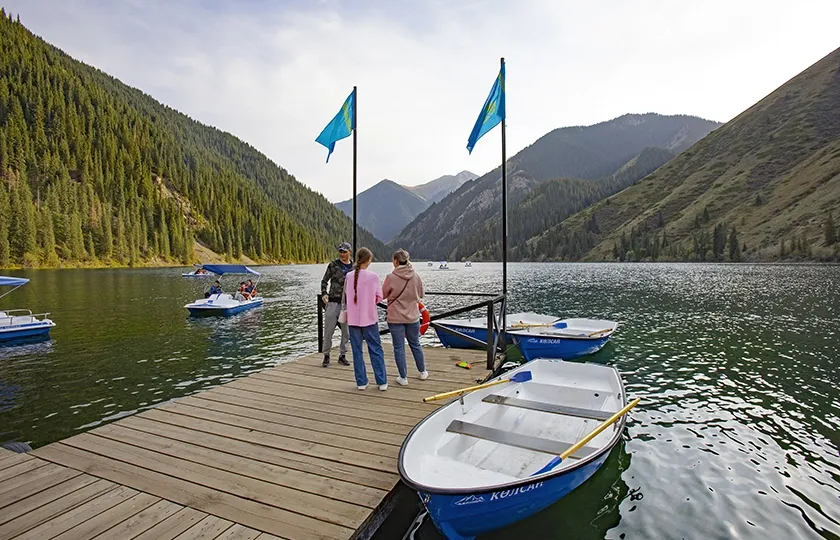
This protected area is made up of four lakes, the three Kolsay lakes and the fourth, the most remote, Lake Kaindy. Regarding the former, it should be said that “kolsay” means “lake in the gorge” because they are located in the Kolsay gorge. Deep, cool and picturesque, they are known as the “blue necklace” because of their crystal-clear sky blue waters. Lake Kaindy, meanwhile, offers one of the most spectacular images in Kazakhstan and can be reached by following one of the many authorised trekking routes.
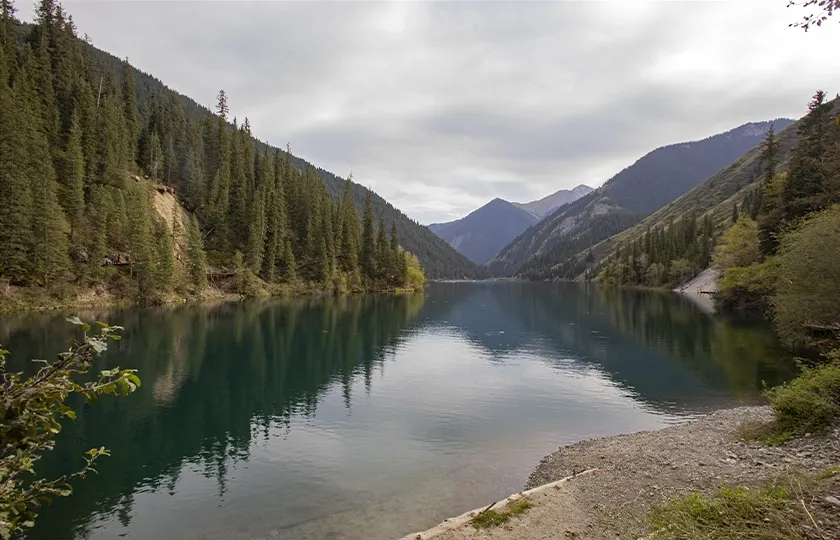
Near the lakes, there are companies that organise excursions on horseback and on foot, and in the small village of Saty it is possible to stay in comfortable and authentic guest houses, taste traditional cuisine and immerse oneself in the life of the Kazakh village.
As for hotels, the only option is the Kolsay Nómadas, an ecological resort with incredible views of the main lake. In addition to comfortable, fully-equipped rooms, it has ecological houses and glampling for two and four people, and its delicious cuisine is based mainly on local dishes.
After savouring the culinary offerings of Kolsay Nómadas, we set off again for Almaty, recalling some of the images that this wonderful day has given us, while we listen, until tiredness overcomes us, to the interesting information that our guide provides. Thanks to the professionalism of Viktoriya Miroshnichenko, guide and founder of the Kazakhstan Tour travel agency, which organises adventure trips for Spanish-speaking tourists to different areas of the country such as the Mangystau Desert, the Baikonur Cosmodrome, the Semipalatinsk nuclear test site and the wild Altai Mountains, this trip turned out to be one of the best experiences we had in the country.