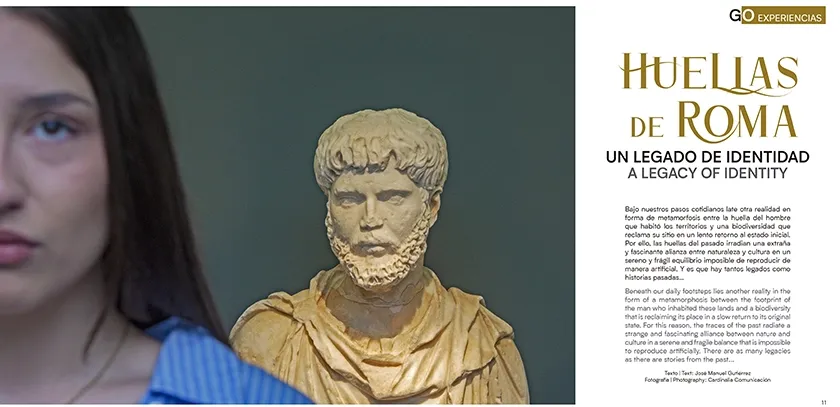
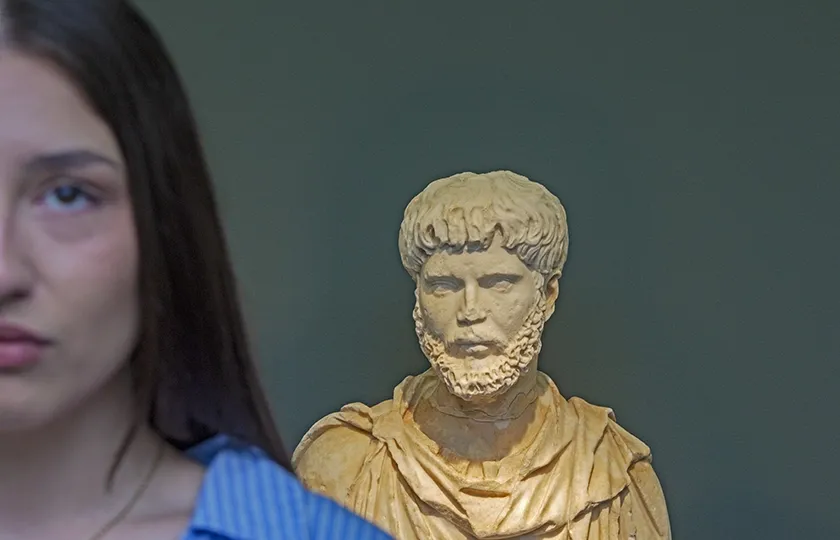
Beneath our daily footsteps lies another reality in the form of a metamorphosis between the footprint of the man who inhabited these lands and a biodiversity that is reclaiming its place in a slow return to its original state. For this reason, the traces of the past radiate a strange and fascinating alliance between nature and culture in a serene and fragile balance that is impossible to reproduce artificially. There are as many legacies as there are stories from the past…
Castile and León today defines its personality around two essential values that combine with emphatic symbiosis in this case: its natural heritage and its historical heritage. In both cases, conservation is vital, through knowledge and protection as the only forward-looking alternative and the only backward-looking behaviour.
In a land of universal biodiversity, disparate or harmonious foundations survive, affirming the triumph of its existence and allowing us to exercise an evocative, and sometimes dreamlike, freedom that is impossible to experience elsewhere.
There are many ways to discover a region, but exploring Castile and León by following the trail left by Rome since the 1st century BC means delving into the story of the arrival of knowledge, culture, art and power that left a mark on our identity that can still be seen today.
With this sensitivity in mind, the A-Roma Heritage Network enters the scene, proposing an exciting journey into the past that will help build a sustainable future, both culturally and touristically.
The traces of Rome in Castile and León remain as vivid as ever, and its presence is widespread and extraordinary, constituting an important asset that enriches the list of more than 2,600 Assets of Cultural Interest. Two of them, the aqueduct of Segovia and Las Médulas, have been declared World Heritage Sites by UNESCO.
The creation of the A-Roma Heritage Network aims to bring together synergies, potentialities and a common itinerary that contributes to local development in a cross-cutting manner. As a result of all this, different itineraries are proposed to discover the main cultural assets from the Roman period in Castile and León through archaeological remains of cities, palatial villas, military camps and great works of engineering and mining.
This innovative project has been promoted by the Las Médulas Foundation which promotes projects for research, conservation, protection and dissemination of the region’s cultural, natural and social heritage. These activities are complemented by the organisation of archaeological campaigns, enhancement projects, tourism and cultural consulting, publications, participation in trade fairs, product design and marketing, conferences and seminars.
This is a pioneering, cross-cutting project at the regional level, which aims to create a cultural and tourist product focused on the most outstanding Roman heritage in the region, selected according to criteria of conservation, relevance, interest and accessibility.
A Roman heritage Mosaic
Throughout Castile and León, the succession of sites of high cultural value is extraordinary. Although some are better known than others, they all play an important role in understanding what daily life was like at the time, the social and economic structure, the strategy followed for the total Romanisation of the territory and, above all, what impact it had on development through the transmission of knowledge. This process enabled the transformation of Castreño societies, making them part of the most vigorous and complex organisation ever created by humankind: cities. To this must be added impressive works of hydraulic engineering, communication routes, elements that enabled the transition from Antiquity to the Middle Ages, and much more.
Roman villas
Roman villas are a unique case. Flourishing when the Roman city began its decline in the 3rd century, villas constituted a universe endowed with many urban characteristics: a desire for autonomy, specialisation and spatial distribution of tasks, established hierarchical systems for their operation, and architectural and urbanistic aspirations. Furthermore, they are a key element in understanding the historical transition between Antiquity and the medieval world, as the complex relationships of dependency established under the protection of the towns would be projected for centuries into the feudal system.
Roman villa of El Vergel
Twenty kilometres from the capital of Ávila lies the Roman villa of El Vergel, an enclave that evolved from an agricultural estate to a symbol of rural opulence.
Today, what remains of its walls and dazzling mosaics tell us of a vibrant past, in which agriculture and technical knowledge were the key elements in this transformation, allowing Roman rural life to take root with its own palatial structure.
El Vergel, on the outskirts of the town of San Pedro del Arroyo (Ávila), displays the perfect symbiosis between pragmatism and luxury, an exceptional example of Roman splendour in Hispania.
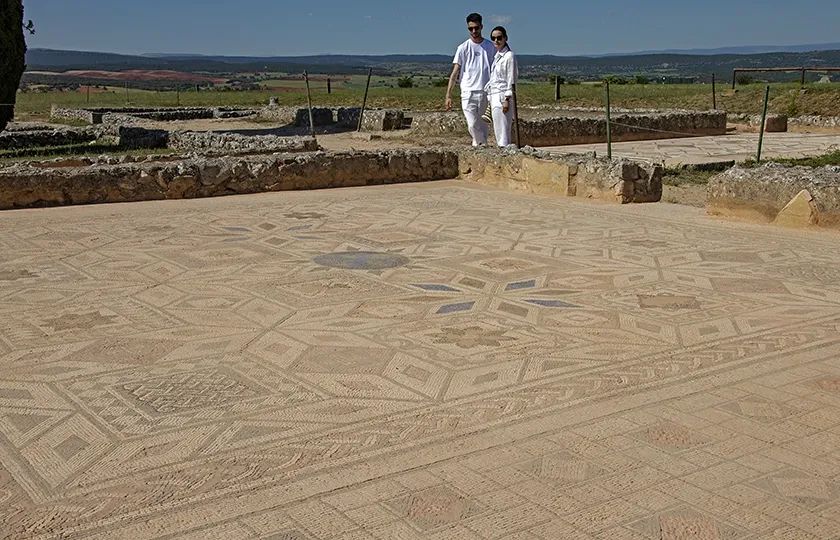
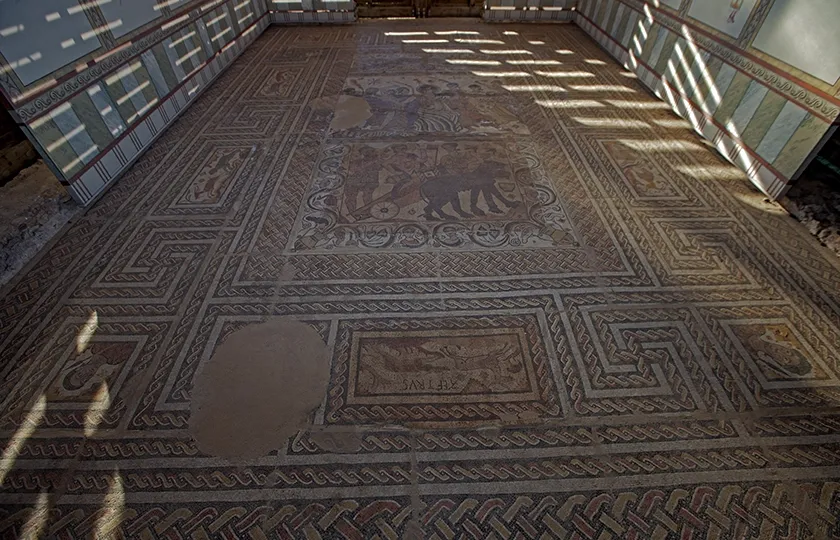
Founded in the 1st century AD and active until the 5th century AD, it was organised around the peristyle and the covered gallery that surrounded it, articulating the passage to the domestic spaces. The gallery and rooms were paved with mosaics featuring geometric and figurative motifs as a display of the economic and cultural power of their owners, while the thermal baths or private baths speak of luxury and refinement. The triclinium (triclinium) or main hall was used for banquets with the most distinguished guests. The floor of this distinctive room is decorated with a mosaic depicting the mythological scene of Meleager hunting in nature. Fortunately, it has remained in its original location to this day to tell us its story.
Also particularly noteworthy is the scene of partridges decorating the antechamber of the triclinium, a prelude to the striking depiction of Meleager’s hunt and the imposing Calydonian boar, the central focus of the mosaic in the main room.
Roman villa of Orpheus
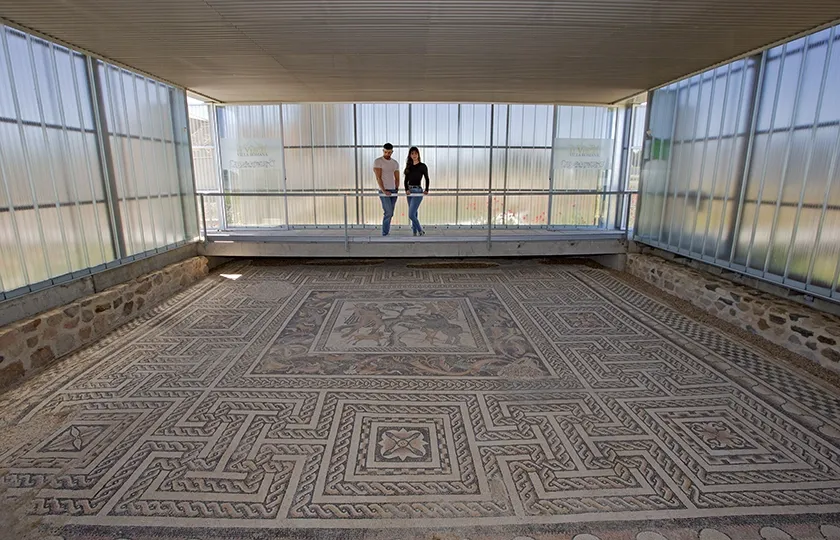
This sumptuous late Roman villa, inhabited between the 2nd and 4th centuries AD, is located in the town of Camarzana de Tera in Zamora. It is one of the most sophisticated sites in the A-Roma heritage network.
The rich mosaics compose a narrative that comes to life through the tiny marble, glass and ceramic tiles. A highly refined decorative universe for creating stunning hypnotic and figurative geometric scenes.
This masterful artistic work represents the tastes, culture and beliefs of its former inhabitants, as indicated by the imposing presence of the enigmatic Orpheus, who tames wild beasts with his music, surrounded by a cohort of animals.
The exceptional mosaic depicting a life-size figure of a young woman, which some researchers attribute to Ariadne, the legendary princess of Crete who fell victim to love and betrayal, is particularly striking. She was abandoned by Theseus after helping him defeat the Minotaur, while she slept on Naxos, the island where Dionysus, the god of wine and celebration, found her and made her his wife, elevating her to goddess of Mount Olympus.
In the centre of the residence, a mosaic of exceptional beauty unfolds, dominating the central floor. This work, one of the most outstanding in the town, is framed by elegant borders that guide the viewer’s gaze towards its main scene: the abduction of Europa.
The complex forms part of the pars urbana or residential area where the owner and his family lived in all the luxury and comfort of the period. Thanks to its location, the town also enjoyed a strategic commercial position, as it was situated next to the Roman road connecting Asturica Augusta (Astorga) with Bracara Augusta (Braga).
Roman villa of Santa Cruz
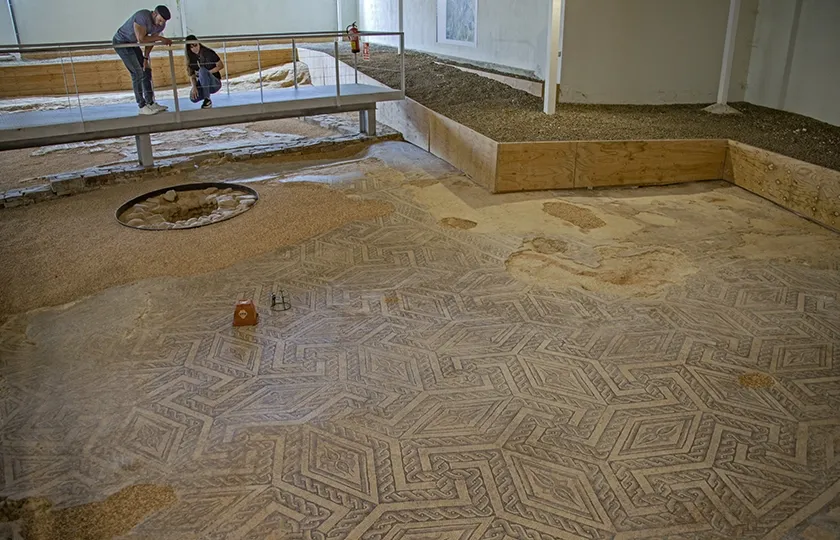
In Baños de Valdearados (Burgos), an interesting residential complex with refined architecture and symbolism dating back to the 5th century AD has been brought to light once again. Eight rooms arranged around four corridors and two smaller rooms form a layout that exudes the splendour of an elite steeped in Hellenism and sophistication, complete with bathrooms, cisterns, water tanks and a heating system.
Three of its rooms feature floors covered with exquisite mosaics, among which the figurative mosaic dedicated to the triumph of Bacchus and his return from India stands out. In the triclinium or main hall, ornamental geometry reaches its peak: a tapestry of tesserae intertwines complex geometric designs around a large central circle surrounded by shields, evoking the taste for harmony and aesthetic refinement of its time.
The splendour of the town extended far beyond the borders of the Roman world. This is suggested by the discovery of a small medieval necropolis (9th-10th centuries) as evidence that this rural enclave, a symbol of prestige and power that remained in use, probably as a religious building, survived for centuries after the imperial presence of Rome.
Mining complexes
For centuries, the Roman Empire ruled the Iberian Peninsula, but we must go back to the 1st century BC, when, after more than two centuries of partial occupation, many areas of the north-western quadrant remained un-Romanised. The riches beneath the ground were one of the reasons that prompted Emperor Augustus to launch a harsh campaign to gain control of these rich territories.
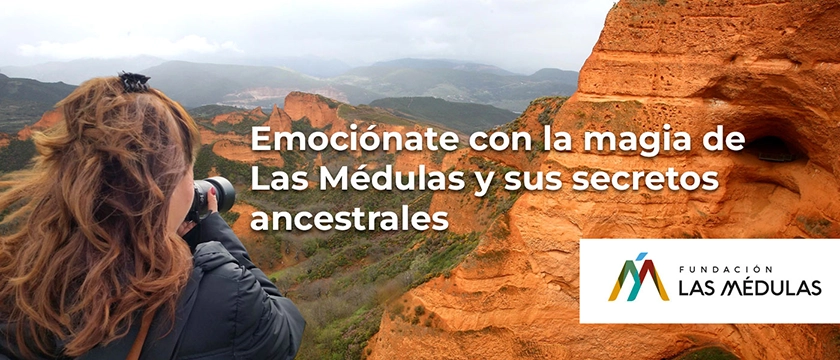
Las Médulas
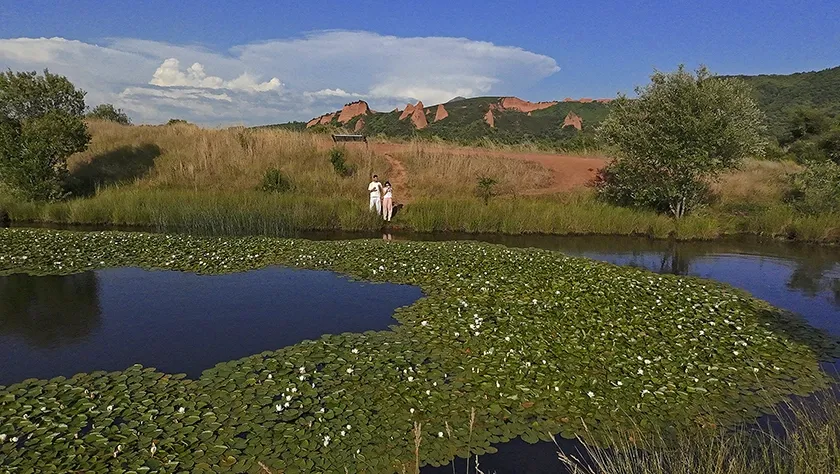
The enormous area occupied by the Las Médulas mining and metallurgical complex in the El Bierzo region of León is one of the most extensive and spectacular archaeological landscapes in Western Europe, recognised in 1997 as a UNESCO World Heritage Site.
It was the largest open-pit gold mine in the Roman Empire, the result of an enormous undertaking that moved around eighty million cubic metres of earth and from which, according to Pliny the Elder, some twenty thousand pounds (6,540 kg) of gold were extracted annually. Current data estimates that around five tonnes were extracted during the entire period of operation.
The gold wealth of this corner of León was already being exploited by indigenous peoples using traditional methods, panning and smelting the gold into uniquely precious jewellery, which proved to be an undeniable attraction, and an unmentionable casus belli, for the Latin conquerors, whose campaigns of conquest were particularly significant.
From the 1st century AD onwards, Las Médulas became the immense setting for a titanic undertaking, fuelled by the expectations created by a ‘gold rush’ that gave rise to a veritable urban complex. Its facilities and settlements are scattered over a vast area and must have involved large numbers of people, who were probably not much like the romantic idea of slaves forced into servitude.
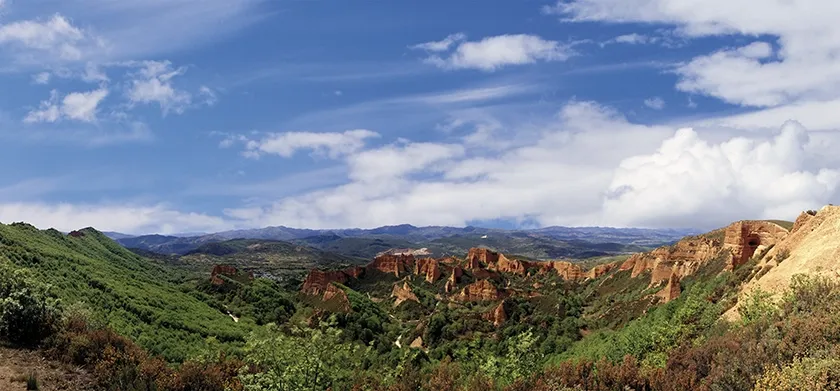
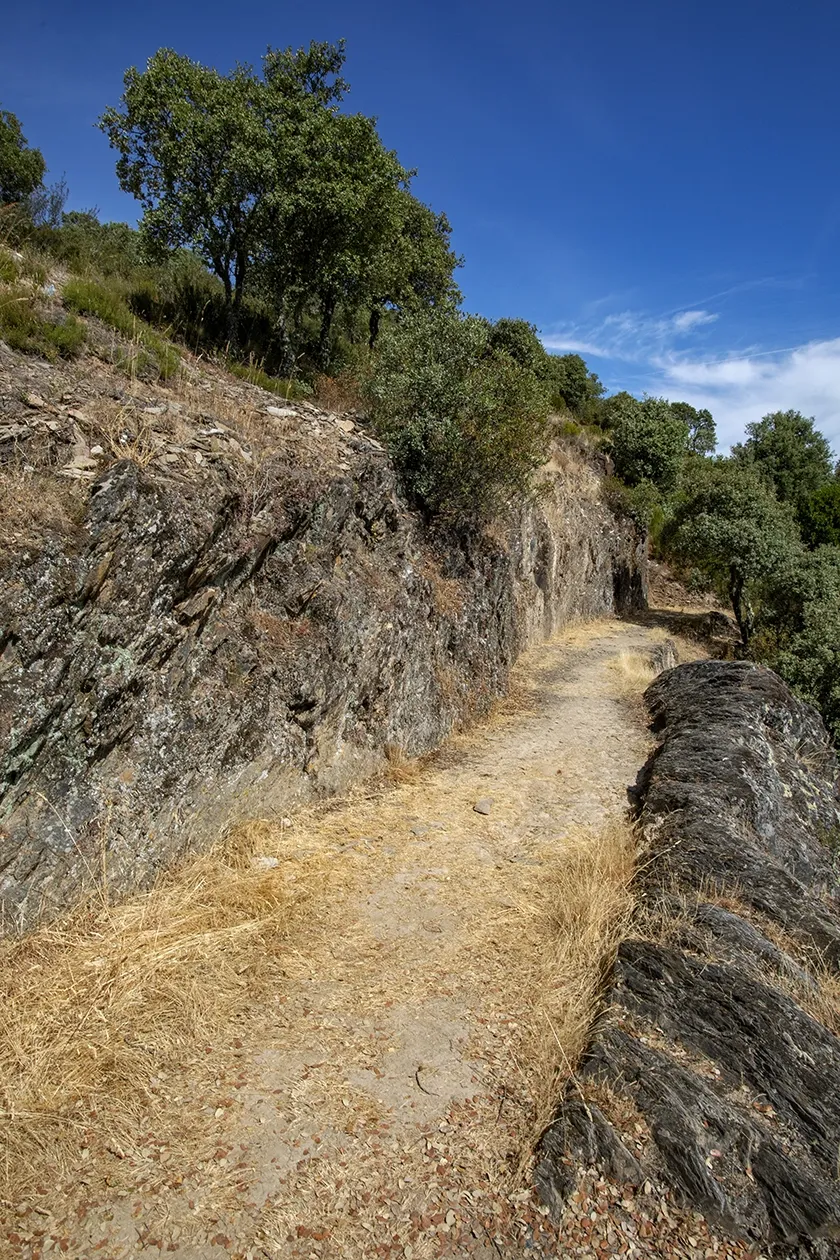
Among all the elements, the enormous crater of the mining cirque stands out, which can be seen from the Orellán viewpoint. In this colossal cut, of reddish earth with an evocative polychromy when the sun shines on it, the channels that carry water down the slopes of the Aquilanos mountains flow into the conduits dug into the subsoil to cause the ruina montium, a procedure of collapse by hydraulic pressure that dragged the earth for the decantation of the mineral in the valley. The channels, carved out of solid rock and sometimes reinforced with masonry walls, form a network covering a vast area of rugged terrain stretching over a thousand kilometres in another region, La Cabrera. Large accumulations of debris and Lake Somido, an artificial pond created by mining activity, complete a landscape that was radically transformed by human activity two thousand years ago.
Several settlements of different chronologies and functions have been identified in the surrounding area, structured as isolated, small-scale settlements. You can visit Asturian-style settlements, such as El Castrelín de San Juan de Paluezas, whose circular huts, protected by walls, often house craft workshops that show what life was like in pre-Roman villages before industrial activity, or the Borrenes hill fort, whose construction was influenced and halted by the emergence of Roman power. The Orellán site dates back to Roman times and specialised in smelting furnaces for the manufacture of tools. In contrast, the Las Pedreiras site was the stately residence of the complex’s administrators, with rooms arranged around a peristyle or porticoed courtyard, stuccoed and polychrome walls.
In the vicinity of Las Médulas, you can visit various monuments of great interest, surrounded by nature in a state of grace. Cornatel Castle stands on a rocky outcrop overlooking the Sil Valley, and its current remains, despite other domains including the Templars, correspond mainly to the county of Lemos in the 15th century. No less interesting is the Palombeira cave, although it is not a cave as such, but rather an evacuation tunnel from Las Médulas excavated in rock that reaches a height of over thirty metres.
The beautiful Las Médulas Natural Area is today the scar left by Rome’s ambition to sustain the imperial coffers for centuries.
Pino del Oro
Under the rule of Augustus, the first emperor of Rome, the Empire had already extended its dominion to the far reaches of the peninsula, and gold was essential for economic stability.
In Hispania Citerior, the power of Rome was reorganising its possessions, and in the gentle rolling landscape of Pino del Oro (Zamora), a treasure hidden among holm oaks and granite scree slopes that break off vertiginously into the breathtaking Arribes del Duero canyon was exploited during the 1st and 2nd centuries AD.
In this rugged corner, the sound of water and the whisper of the wind through the dense vegetation evoke a mining activity that forever changed the landscape. The Romans inherited the knowledge of the indigenous peoples who, since the 4th century BC, had been extracting gold from the area by panning in the streams.
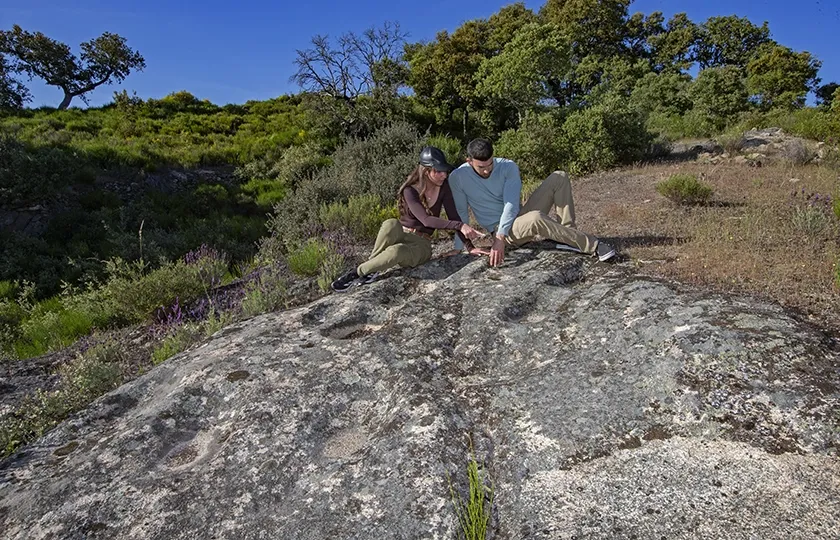
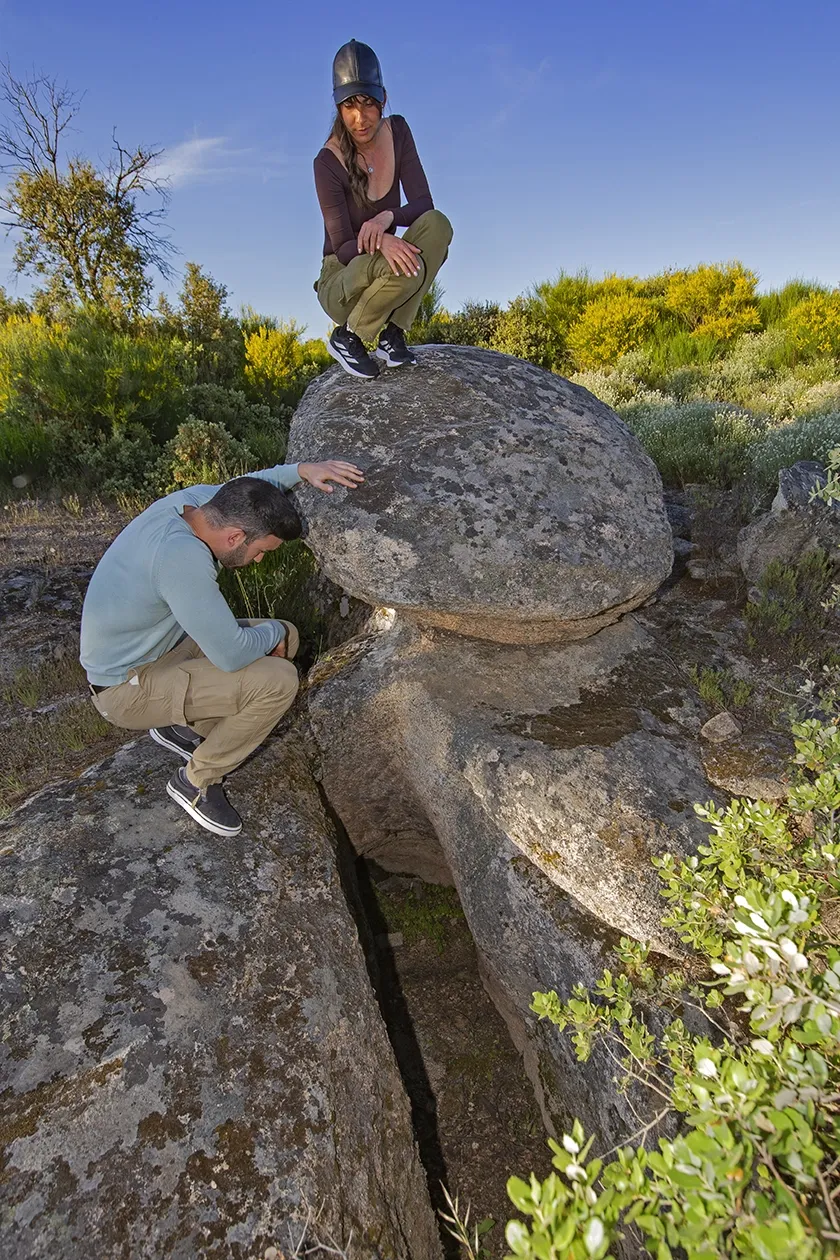
The result was a landscape marked by human activity, leaving a trace that can still be seen today in more than a thousand bowls carved into the granite to grind the ore. This practice is the most repeated, visible and striking in the landscape of Pino del Oro and the most exclusive trace of the mining activity that fuelled imperial splendour.
The work was arduous and meticulous, and fell to the pre-Roman inhabitants of the region themselves. These local miners, far from being slaves, worked in the mines as part of their tribute to the Roman state, integrating their seasonal mining efforts as imperial tribute.
But Rome’s influence was not limited to mining. Romanisation was not colonisation in the usual sense: Hispano-Roman society emerged from the local population itself, whose leaders, far from being outsiders, came from the ancient pre-Roman elites.
The Pino del Oro archaeological site reveals the secrets of a setting where history and nature merge in an age-old embrace. One of the most extraordinary discoveries of ancient mining visible in Europe.
Cities and camps
The city is the most vigorous and at the same time most complex organisation that human beings have created since they first walked the earth. Each era and each region proposes a different meaning, although all agree that a city, regardless of its size and shape, is a meeting place for a community in which different people, knowledge and ways of life acquire an interdependence that gives them unity, security and, in the best cases, a unique personality.
Clunia
The Roman city is the result of the Romanisation of an indigenous (Arevaco) settlement during the military conquest phase around 55 BC. Its location on a rocky plateau and its central position on the roads connecting Asturica Augusta (Astorga) to Caesaraugusta (Zaragoza) made it a municipality as early as the Tiberian era and the capital of an extensive legal district, the Cluniac district, from the time of Emperor Claudius.
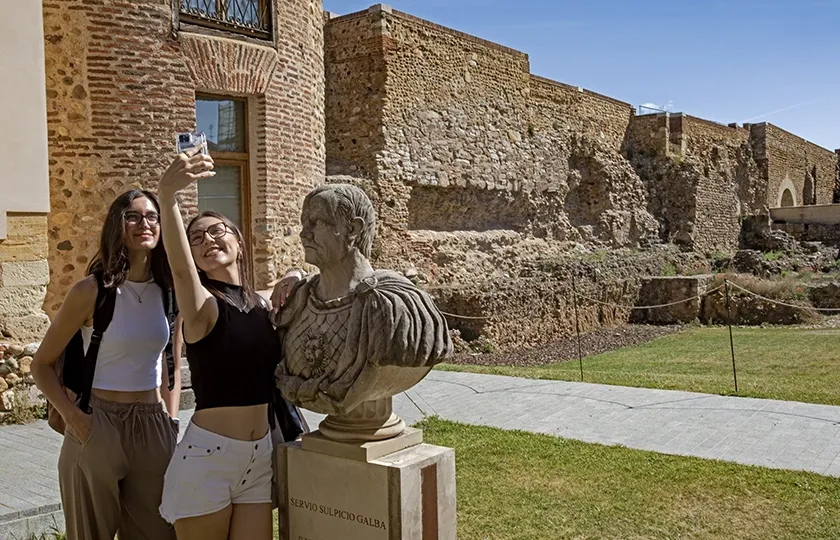
But it was with Galba that Clunia had its moment of glory, as the rebellious general took refuge in this city with his legion, the VI Victrix, and proclaimed himself emperor here in 68 AD to overthrow Nero. This would give rise to the Colonia Clunia Sulpicia, Galba’s family epithet.
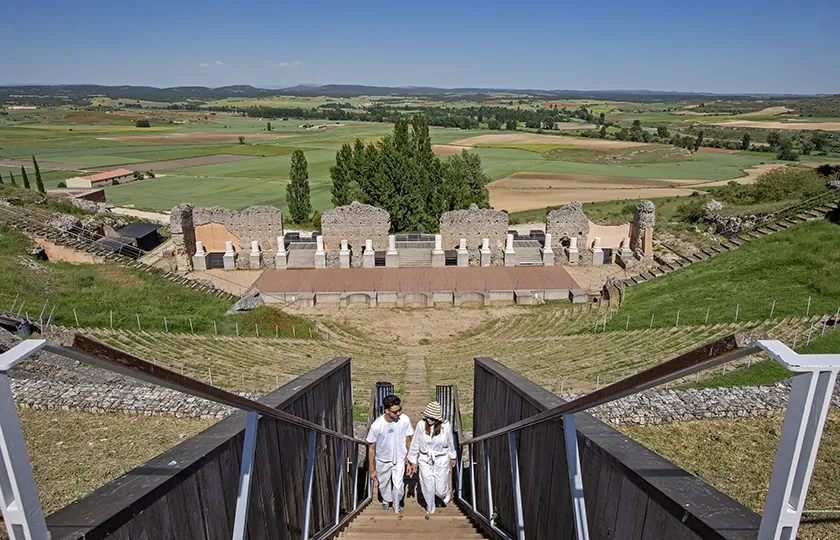
Its more than 130 hectares contain examples of the richness of public and private life in Rome. On the hillside leading up to the city, the vast cavea or seating area of a theatre with a capacity for around eight thousand people was excavated in the Greek style. Already in the streets of the city, the imperial forum, an enormous rectangle measuring 150 x 100 metres, organises a public area of markets and temples; while not too far away, equally formidable thermal baths or public baths arrange their classic functional layout into two symmetrical parts. Several dwellings, authentic Roman domus, such as the ‘house of Taracena’, with its columned peristyle and beautiful mosaics on the floors, make up a panorama of urban splendour that lasted until the 3rd century and, with a certain upturn in the 4th century, declined until the city was finally abandoned at the end of the 7th century.
Astorga
The resistance of the Cantabrian and Asturian peoples to Romanisation triggered the Cantabrian Wars (29-19 BC), which required a large military deployment on the peninsula. In 14 BC, on a promontory surrounded by the Tuerto and Jerga rivers, with a magnificent strategic location in the natural pass between the León moorland and the León mountains, perfect for guarding the natural route to Galicia, the Legio X Gemina was installed to control and pacify the indigenous peoples.
Asturica was established as a key communications hub and strategic enclave to ensure the management, storage and subsequent transfer to Rome of the abundant mineral resources extracted from the region’s mines, mainly gold from Las Médulas, which brought prosperity to the area, turning it into a civilian settlement at the beginning of the 1st century BC. This placed it within the Roman judicial division of Tarraconensis, the largest and most important Roman province on the Iberian Peninsula.
It was Emperor Augustus who granted it the title of Augusta, and it became known as Astúrica Augusta. Economic prosperity led to the construction of a magnificent city, equipped with a forum, city walls, remarkable thermal buildings and urban sanitation. Such was its importance that even its Hispanic inhabitants came to be considered free citizens under Roman law. Its splendour flourished until the 3rd century AD, when the Empire began to decline. Fortunately, the passage of time has preserved some of its most outstanding traces, as evidenced by the archaeological remains that the city displays today.
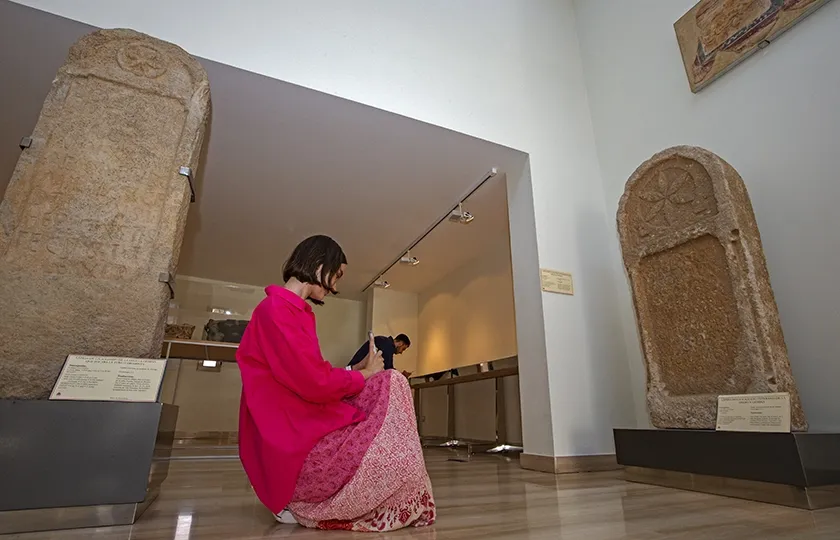
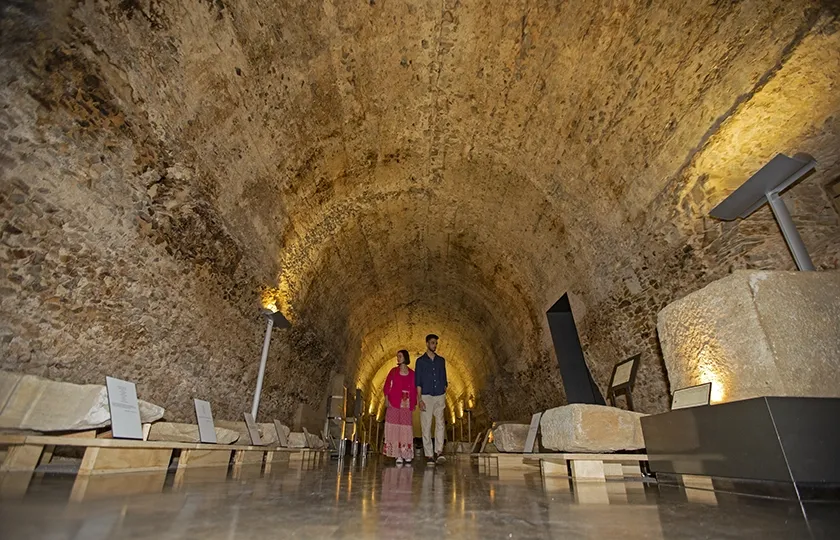
Astorga offers an archaeological itinerary, the Roman Route of Astorga, to recreate its historical past. The Roman Museum of Astorga, located above the Roman Ergástula, a striking vaulted gallery on which stood the Ara Augusta, an altar where imperial worship ceremonies were held. This monumental construction evolved to become the centre of the forum and the epicentre of public life. The museum brings together a large part of the recovered material culture that illustrates the way of life of the inhabitants of this Roman city, as well as its origin and evolution.
León
Three legions of the exercitus Hispanicus had a direct order from Emperor Augustus: to fortify the southern border of the Empire along the main Roman communication routes.
Founded as a camp for Legio VII, León still has Roman walls, thermal baths and other remains that tell the story of its military origins in Imperial Hispania. Previously, the Sixth Victorious Legion (Legio VI Victrix) had built the castrum Legio at the confluence of the Bernesga and Torio rivers. A settlement which, due to its importance in controlling traffic from the plateau to the Cantabrian coast, had the vital mission of safeguarding the gold deposits mined in Las Médulas and their transport, protected by the escorts of this imperial division.
The camp remained inhabited for almost a century until the legion was mobilised to the German front, being replaced in 74 AD by the Legio VII Gemina, the only one that remained in Hispania from then on. A new camp was set up nearby, along with a space for the civilian population, which joined the first settlement, the remains of which are still visible next to the Royal Collegiate Church of San Isidoro.
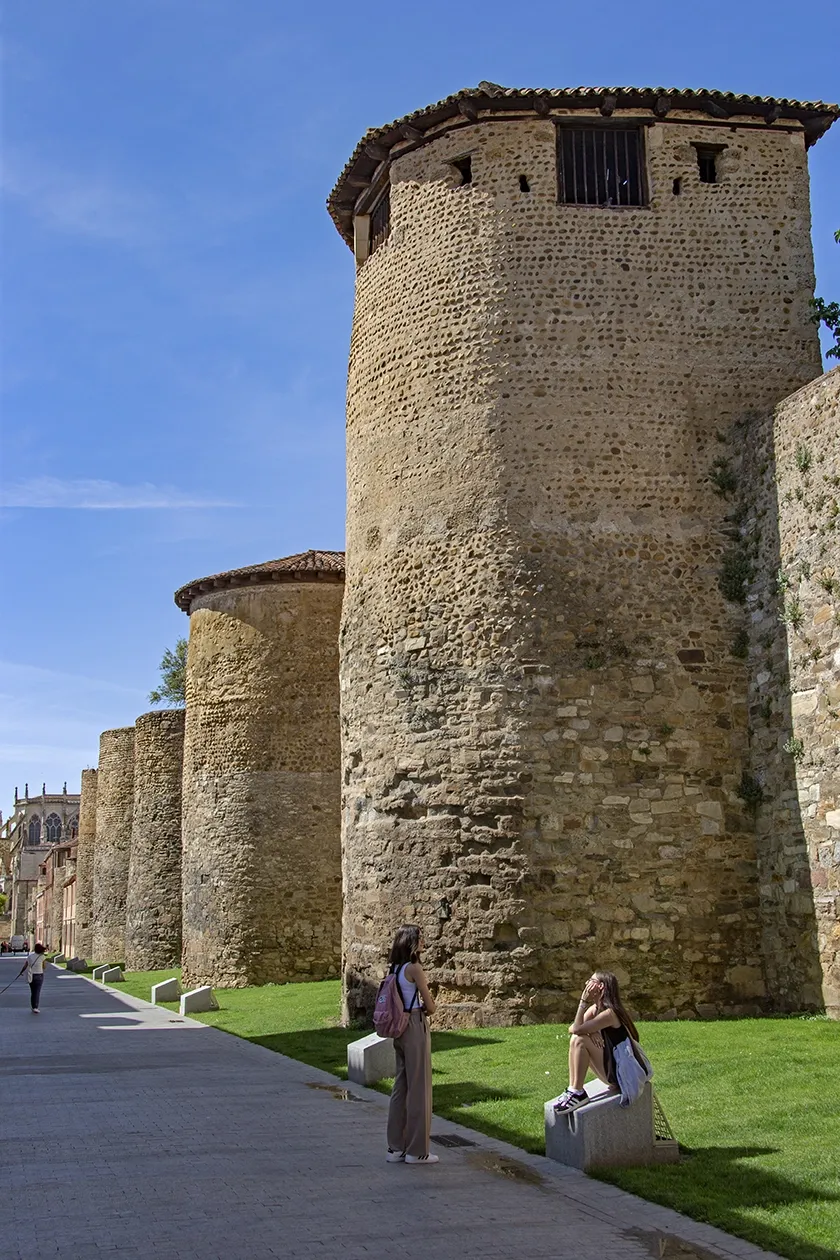
In the historic centre of the modern city, elements of that urban layout can still be seen in the form of a rectangular enclosure organised around two main roads (Principalis and Decumana), facilitating the distribution of space in a grid pattern. The complex was protected by a defensive wall with four gates located at the ends of these main streets.
With the decline of the empire came decline, until repopulation from the Asturian kingdom in the 9th century promoted its prosperity, eventually establishing it as the capital of the kingdom of León.
The time has come to return to Rome, travelling back in time to the Lion of the Roman Empire and listening to how history still echoes among its ancient stones, following in the footsteps of the rampant lion, the city’s heraldic symbol and one of the oldest in Europe, because it holds the secret of the legions that settled here, through a guided tour of the Roman Lion.
We will tread the same ground as the imperial soldiers, walk along its walls, imagine the clamour of the amphitheatre and the tranquillity of the thermal baths, whose remains lie beneath the foundations of the cathedral. We will discover a thousand archaeological details that preserve the heritage of that military camp, many of which are on display in the magnificent Museum of León. An adventure that begins at the Roman Lion Interpretation Centre, located in the emblematic Puerta Castillo mansion, where the glory of the imperial army and the daily life that flourished around it are brought back to life.
Numancia
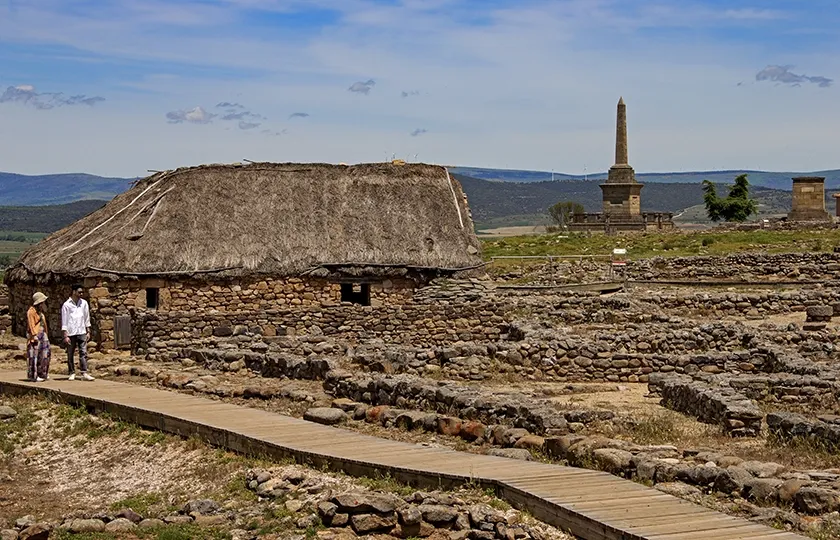
The year 133 BC is a legendary date in the history of the Iberian Peninsula. After fifteen months of siege and two wars of conquest that lasted more than two decades, the Roman armies entered Numantia, ‘the terror of the republic’, the centre of the Arevaci resistance and the flagship city of Celtiberian culture. To capture this imposing fortified settlement perched on a rocky hill and walled with stone and adobe, Rome had to use a siege involving seven camps and a wall over nine kilometres long, calling upon the most famous general of the republic, Publius Cornelius Scipio ‘the African’, victor over Carthage.
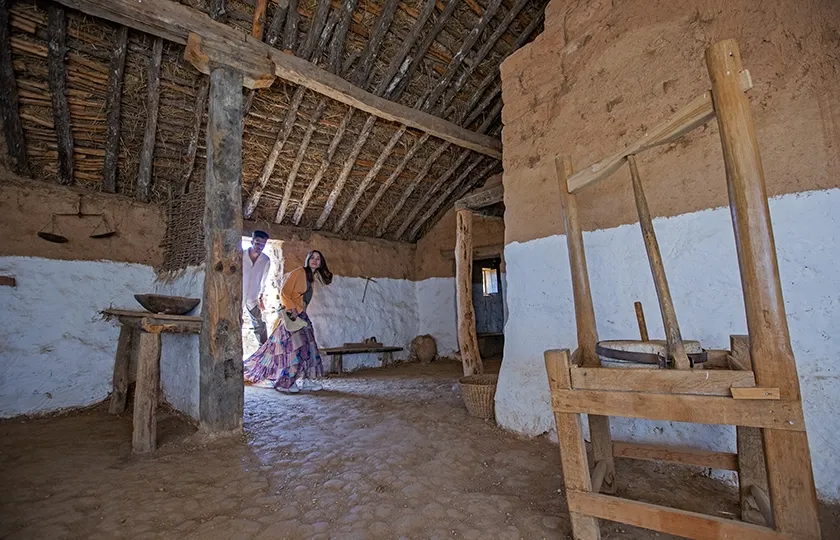
The siege, which led to starvation and exhaustion, and which Cervantes also dramatised, ended with the Romanisation of the site and its urban reconstruction according to Latin patterns: straight, orthogonal streets with larger rectangular dwellings coexisted, however, with indigenous ways of life and constructions. All of this can be seen today both in the archaeological remains and in the educational reconstructions, which in both cases make Numantia one of the most distinctive sites in the region.
Among the most striking remains are the city walls with their monumental gates, a large Roman mansion with a peristyle, indigenous houses, and cisterns to ensure the water supply.
Public activity in the city declined in the 3rd century, as happened in almost all Spanish imperial enclaves, and despite occasional Visigothic or Romanesque occupations for religious purposes, the place was definitively depopulated at the beginning of the Middle Ages, sinking into the mists of legend.
The site has a support room, and the Garray Archaeological Classroom effectively dramatises the history of the siege and both sides involved, while the Numantino Museum, actually the provincial museum of Soria, retains both its old name and the most important remains of this culture, to which it is particularly dedicated.
Celtic-Roman city of Tiermes
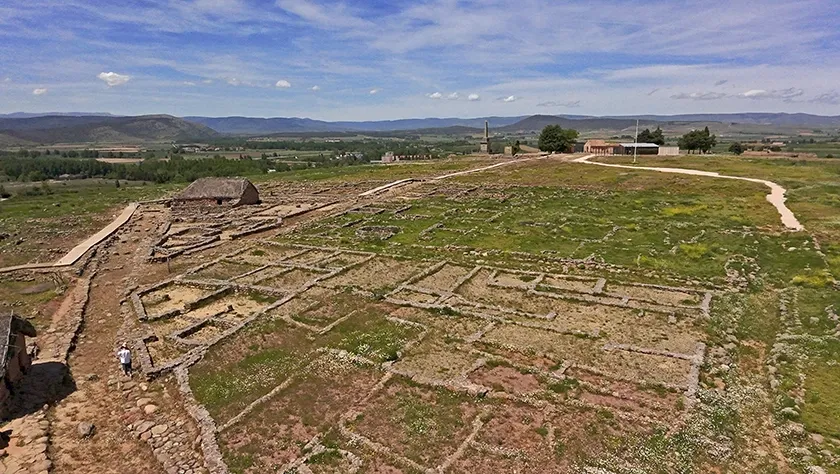
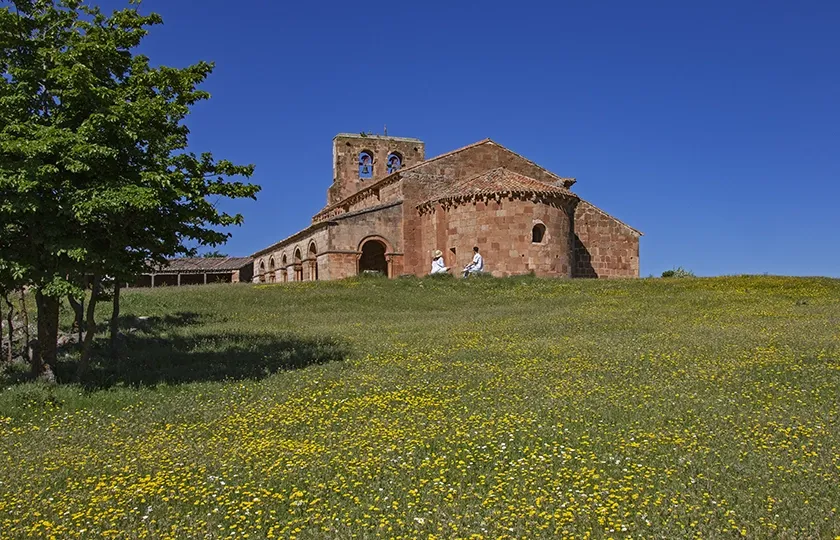
The Arevaci town of Tiermes has a history parallel to that of Numantia. n impregnable stronghold during part of the Celtiberian wars, it was conquered in 98 BC and its population, as was Roman custom, was forced to inhabit the lowlands of the river plain, abandoning their favourable strategic position. Thus, most of the buildings that have survived to this day are Roman in origin, as the town of Tiermes remained intact during the late Empire, surviving Islamic rule and the early medieval centuries. From that period, the 12th-century Romanesque chapel of Nuestra Señora de Tiermes remains, with its beautiful historiated capitals.
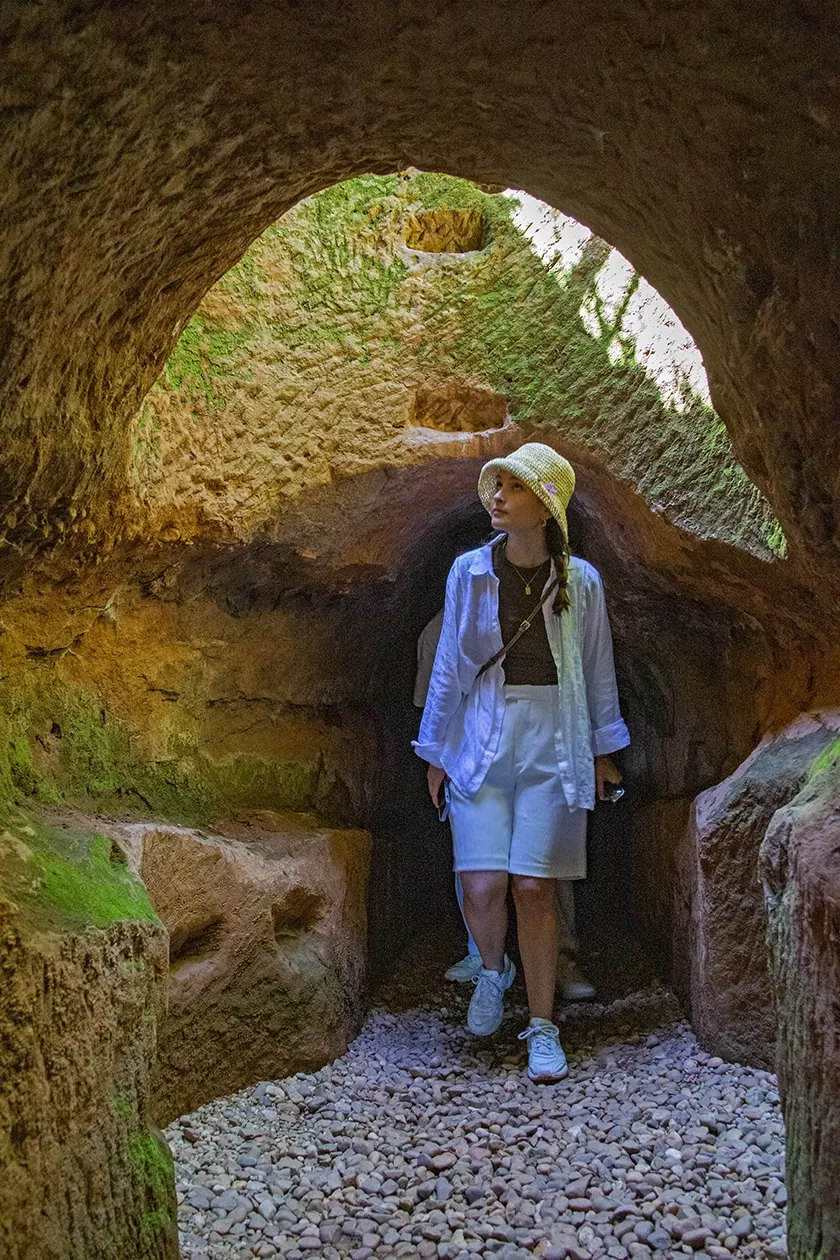
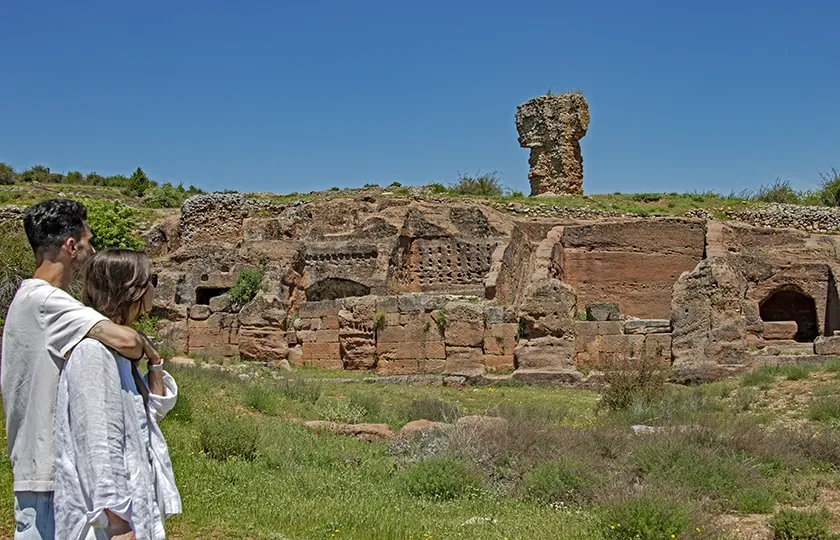
But what undoubtedly sets this city apart is the peculiar use of ductile sandstone as the foundation for its buildings. The ease with which it can be carved has allowed many of them to be carved out of the stone itself, creating a cave-like architecture, almost troglodytic at times, of great aesthetic beauty and originality.
The semi-cave dwellings are excavated at the rear, taking advantage of a hillside, and the building is completed with masonry, thus achieving greater insulation to cope with the harsh climate of Soria, while many other elements were more solid and economical if they were carved directly by excavating the rock. Among these, those dedicated to bringing water to the city stand out, especially a castellum aquae or settling tank and an aqueduct that pierces, cuts through or flies over the rock. These infrastructures addressed one of the concerns of the Roman world: public health through the use of water. Other interesting structures include the evocative stands, a series of overlapping benches carved into the rock, which may have been used as a theatre or venue for public performances, but also as a meeting place for community events. Buildings over three stories high, an imposing wall, canals and niches everywhere, wide streets, a 35-room house on several levels called the ‘aqueduct house,’ a forum or public space dominated by the tabernae of a market and a temple… a city in full possession of a remarkable personality nourished by the stone that shelters it and the water that still seems to flow through its canals.
Roman fort of Petavonium
In the Zamora towns of San Pedro de la Viña, Rosinos de Vidriales and Santibáñez de Vidriales, the possible sounds of Roman military machinery in Hispania still echo in the imagination.
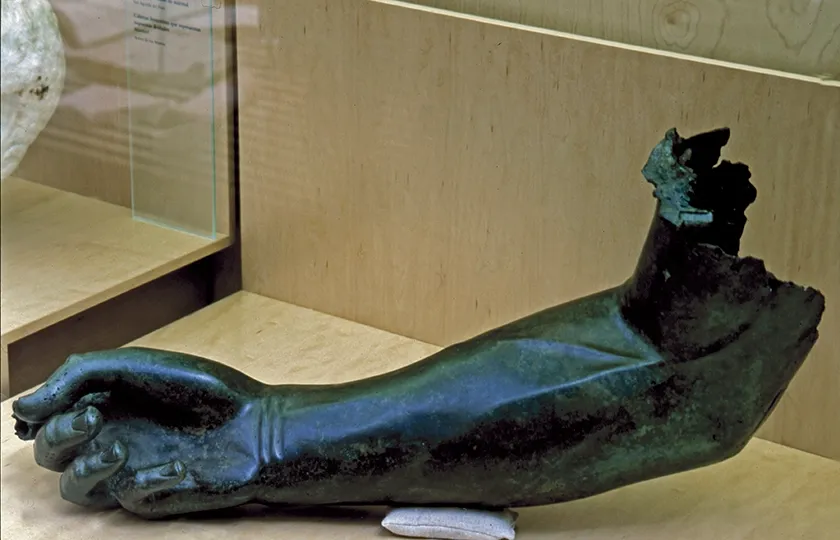
At the end of the 1st century BC, after the Cantabrian Wars had ended, the Legio X Gemina settled on the border with the province of León. Almost six thousand soldiers built a camp covering some seventeen hectares, which was discovered thanks to aerial photographs and the discovery of objects such as a monumental bronze arm, now on display in the museum in Zamora. Strategic control of goods via Bracara Augusta (Braga) and Asturica Augusta (Astorga) and, consequently, of the gold from Las Médulas and related supplies meant that when this military corps was sent to the Rhine limes, it was replaced by the cavalry unit of the Ala II Flavia Hispanorum civium Romanorum. This auxiliary cavalry unit, composed of five hundred Hispano-Roman horsemen, remained in the camp until the 3rd century AD and was responsible for setting up a smaller camp within the original camp.
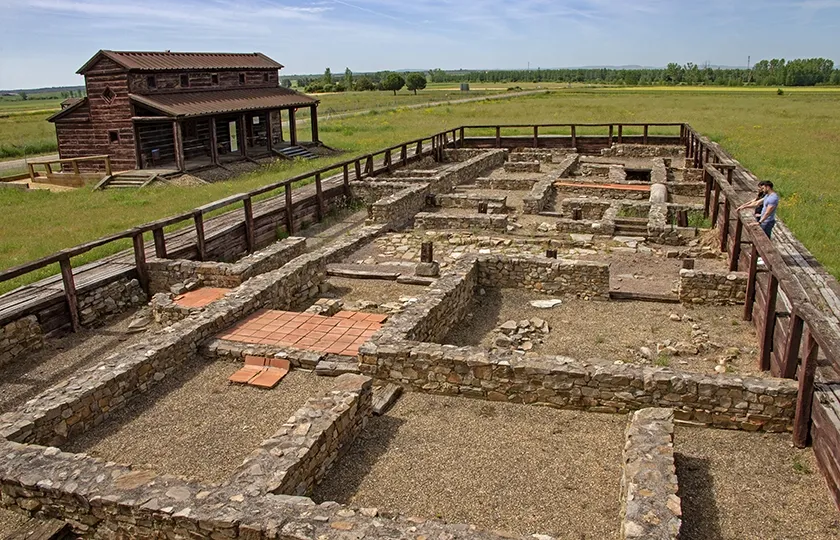
Currently, the defensive wall of the latter can be recognised, equipped with an inner embankment that facilitated access to the upper area in case of defence. Towers and gates, warehouses, kitchens, cisterns for collecting rainwater, streets and barracks (contubernia) are recognisable, some of them have been reconstructed for visitors, providing a comprehensive insight into military life, supported by the Archaeological Classroom in Santibáñez de Vidriales. It is the other side of the coin of the Asturian way of life, but in both cases they have left scars that still run across the land as a reminder of a conflict that has now been forgotten.
A-Roma takes us to Petavonium, one of the most exceptional remains of Rome in the north-west of the peninsula, to relive the most epic imperial period that shaped Hispania.
The roads to Rome are open, and with meticulous research and compelling storytelling, the past comes alive and is revitalised with authenticity and relevance, ensuring that this journey leaves a unique mark on you.