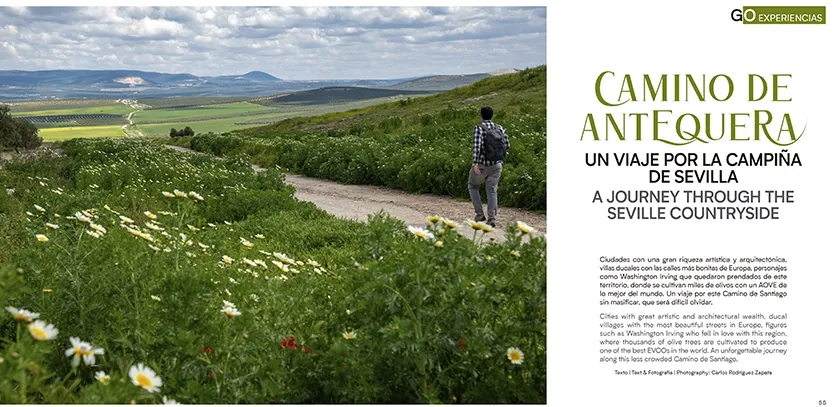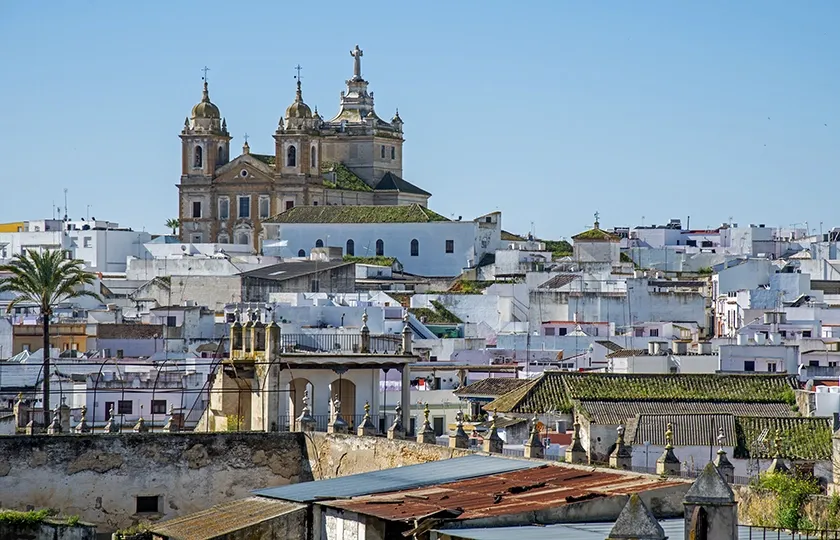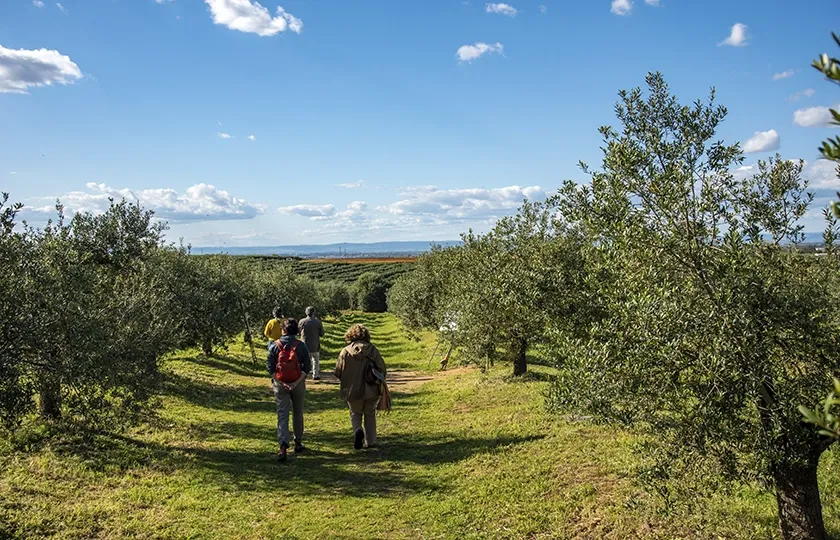
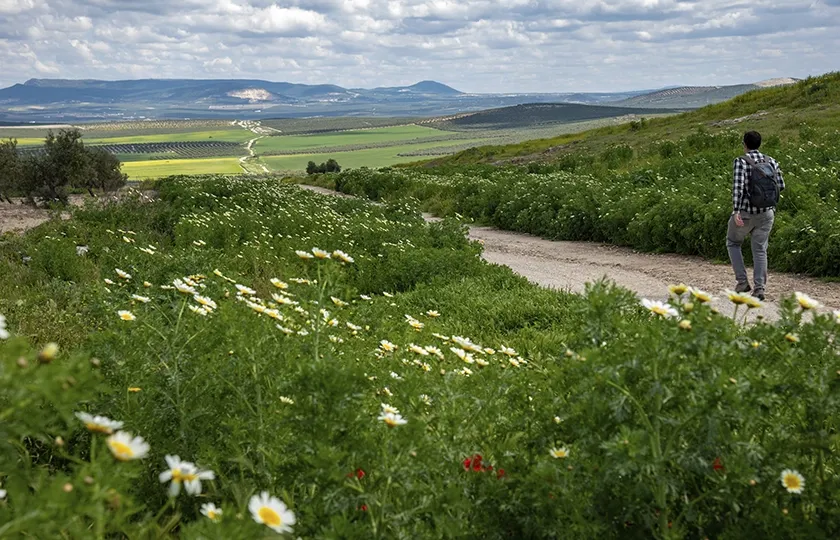
Cities with great artistic and architectural wealth, ducal villages with the most beautiful streets in Europe, figures such as Washington Irving who fell in love with this region, where thousands of olive trees are cultivated to produce one of the best EVOOs in the world. An unforgettable journey along this less crowded Camino de Santiago.
There are many routes to Santiago that cross the Iberian Peninsula. The best known is the French route, which runs from the Pyrenees to Santiago. But there are others that, although a little less well known, are no less important. Not counting those who come from the far reaches of Europe, we have the Northern Way, the Silver Route, the English Way, the Portuguese Way, etc., and also from any major town in Spain.
Andalusia is also a nerve centre for the pilgrimage routes to Santiago de Compostela. Thus, the most important Andalusian routes are the Mozarabic Way, which runs through Almería, Granada, Málaga, Jaén and Córdoba, ending in Mérida, where it joins the Silver Route. Then there are the Camino Sur de Huelva and the Camino Vía Augusta, which starts in Cádiz and ends in Seville, where it joins the Vía de la Plata.
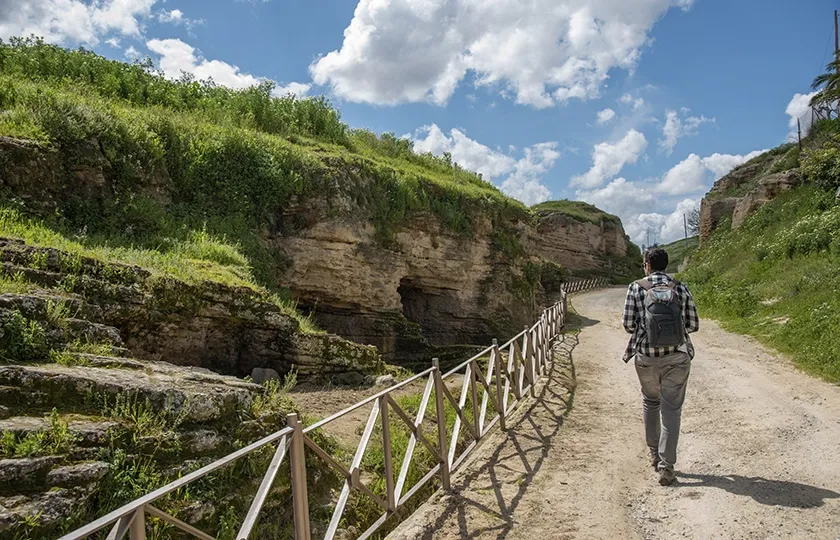
In the town of Antequera in Málaga, through which the Mozarabic Way passes, pilgrims travelling to Santiago have two options for reaching the tomb of the Apostle. On one hand, there is the branch line that goes to Mérida via Córdoba, along the road known as Mozárabe, or the branch line called Camino de Antequera, which ends in Seville, where it also connects with the Vía de la Plata.
If you choose this highly recommended route, you will enjoy exceptional scenery, especially when you reach the province of Seville, where you will find the region known as ‘La Campiña’ and the Sierra Sur de Sevilla, with its almost endless plains dotted with villages perched at the foot of fortresses and castles with a wealth of monuments. A spectacular sight that pilgrims will appreciate, offering an additional incentive for this fascinating journey.
The Estepa Mantecados
The first stop for pilgrims in the province of Seville will be the town of Estepa. Known throughout Spain for its famous ‘mantecados (shortbread), it is not surprising that the scent of cinnamon, sesame and almonds wafts through its street. The ancient Roman Ostippo and Muslim Istabba was conquered by the Christians in 1241. The town, one of Washington Irving’s stops, is dominated by the magnificent Cerro de San Cristóbal Monumental Complex and its old Alcázar, where the Torre del Homenaje (Tower of Homage) stands out. You can climb to the top and enjoy a magnificent panoramic view, not only of the whole of Estepa, but also of the Sierra Sur of Seville with its fields of cereals and olive groves.
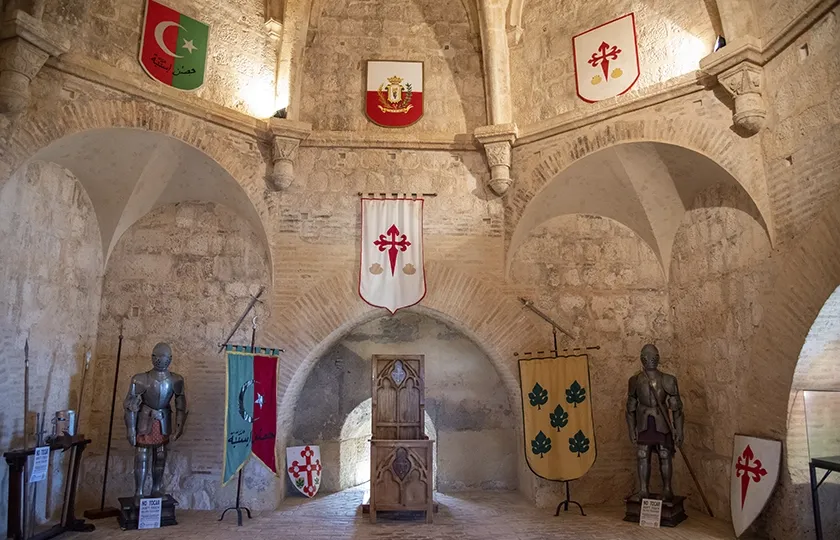
The hill is also home to the Convent of Santa Clara, where you can buy mantecados (shortbread), muffins, etc., made by the cloistered nuns, and the magnificent Church of Santa María la Mayor, which was first a mosque in the 10th century, then a Mudejar church, and finally a Gothic church. We left the hill to descend to the historic centre, but not before stopping at the Balcón de Andalucía viewpoint, which offers another beautiful view of the city and the Sierra Nevada on clear days. From the viewpoint, the Torre de la Victoria stands out like a lighthouse. It is a National Monument as it is one of the most important examples of Andalusian Baroque architecture.
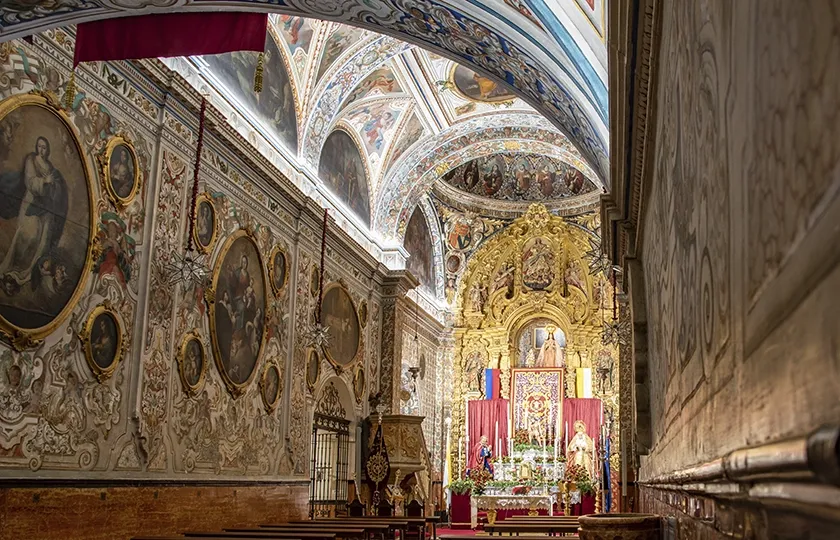
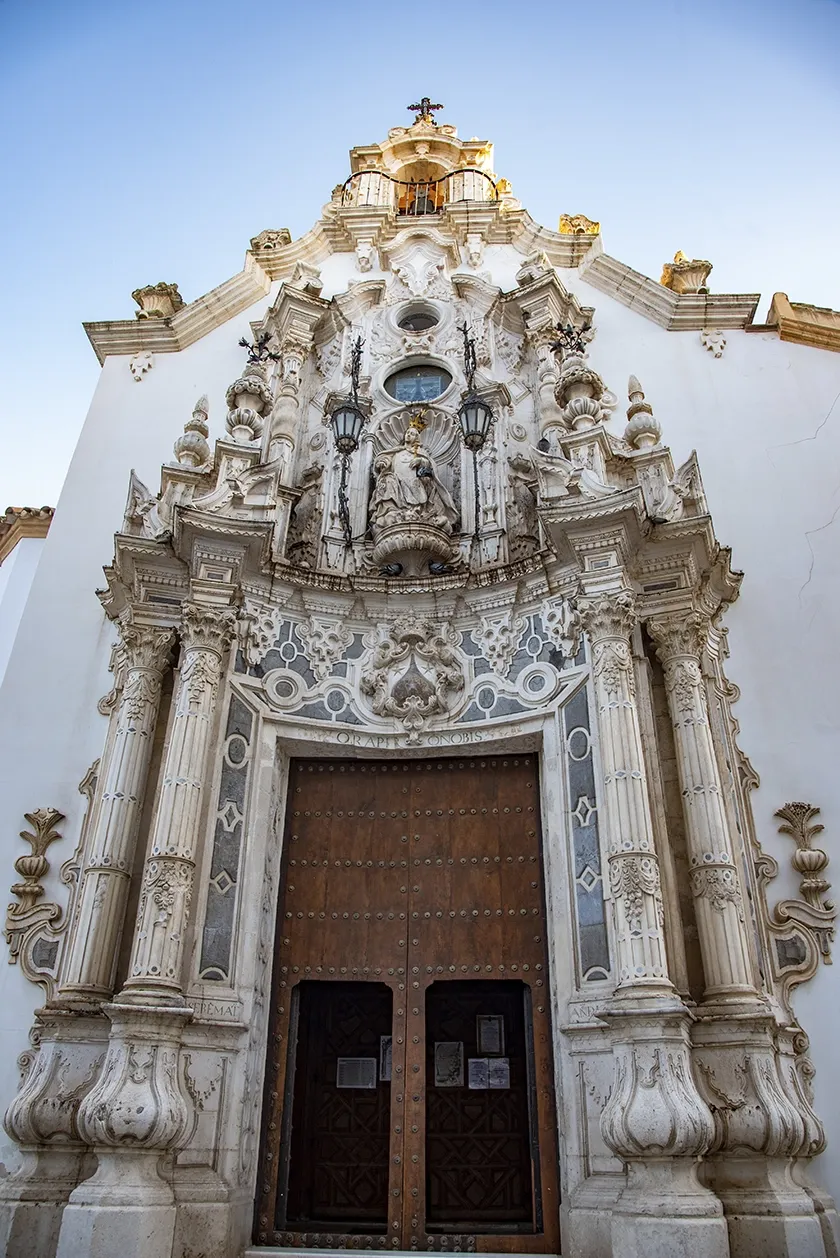
Very close to the Plaza Mayor, known as ‘El Salón’, are the Church of Nuestra Señora del Carmen, with one of the most emblematic façades of Andalusian Baroque, and the Church of Nuestra Señora de la Asunción, considered the ‘Sistine Chapel’ of Estepa due to its exuberant decoration, both are must-see attractions.
We continue on our pilgrimage route once we have stocked our rucksacks with some mantecados (shortbread) and chocolates from the Chocomundo museum, the largest museum dedicated to chocolate in Spain, and head towards Osuna.
Osuna: a landmark architectural and artistic ensemble in Spain
When pilgrims arrive in Osuna, they will fall in love with another beautiful town nestled on a hill. Inhabited for over 3,000 years, the ancient town of Urso, with Iberian and Roman roots, passed through Muslim Osona before becoming Christian Osuna. It was also Turdetania, as can be seen in its quarries, which today are considered the Spanish ‘Petra’.
The Roman conquest left its mark here in the form of the so-called ‘Osuna bronzes’ and the ruins of the theatre and necropolis.
It later became the seat of one of Andalusia’s most influential aristocratic dynasties, the Dukes of Osuna, who embellished and enlarged their town with a significant collection of stately Baroque mansions to create an entire Ducal Town, reflecting the lordship and power of its nobles. Few Spanish cities could match its monumentality, earning it recognition as a historic-artistic site in 1967.
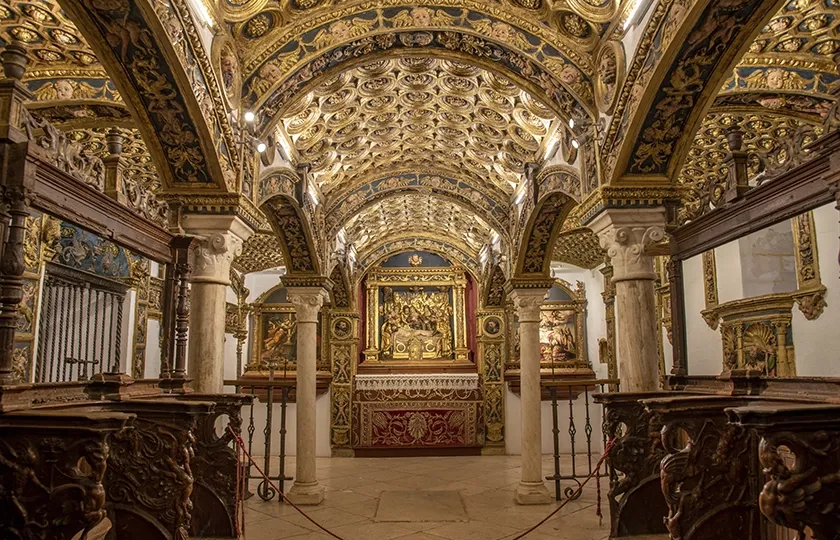
At the highest point of the town stands the Collegiate Church, which seems to dominate the town. It is undoubtedly the most important Renaissance building in the city, housing countless artistic treasures, including works by Juan de Mesa and, above all, several oil paintings by José de Ribera ‘El Españoleto’, all of them magnificent. Attached to the Collegiate Church is the Ducal Pantheon, a richly decorated crypt that houses the mortal remains of the dynasty.
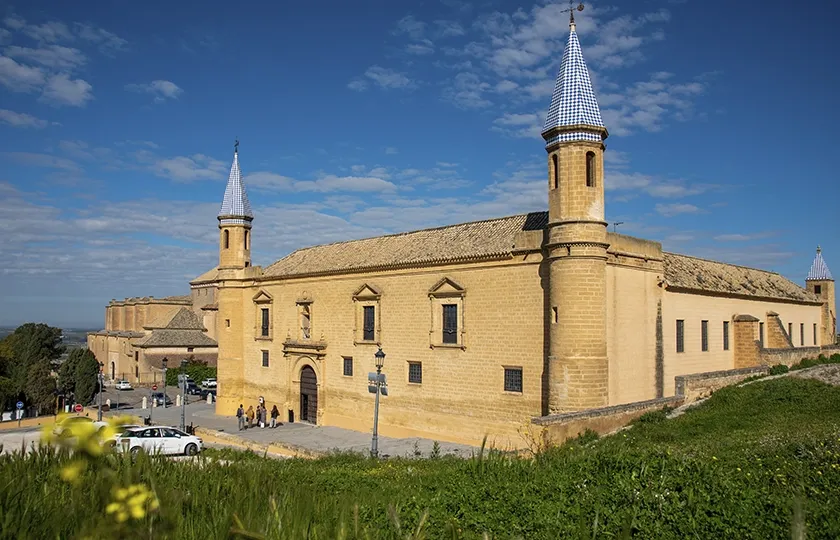
Right next to the temple is the University, which was open from the 16th century until 1842. Rectangular in shape, it is structured around a beautiful square cloister with a cistern in the centre. Its pinnacled towers with tiled domes are curious, giving it a more Central European than Spanish appearance.
The most beautiful street in Europe
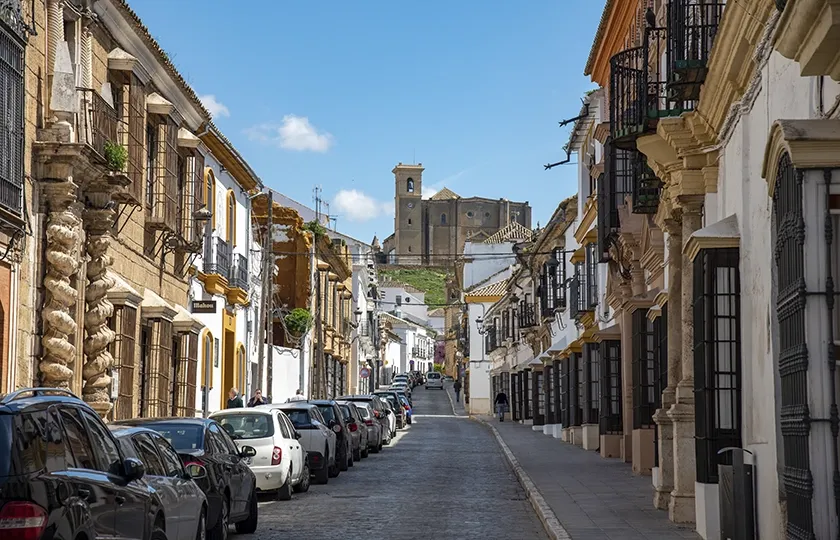
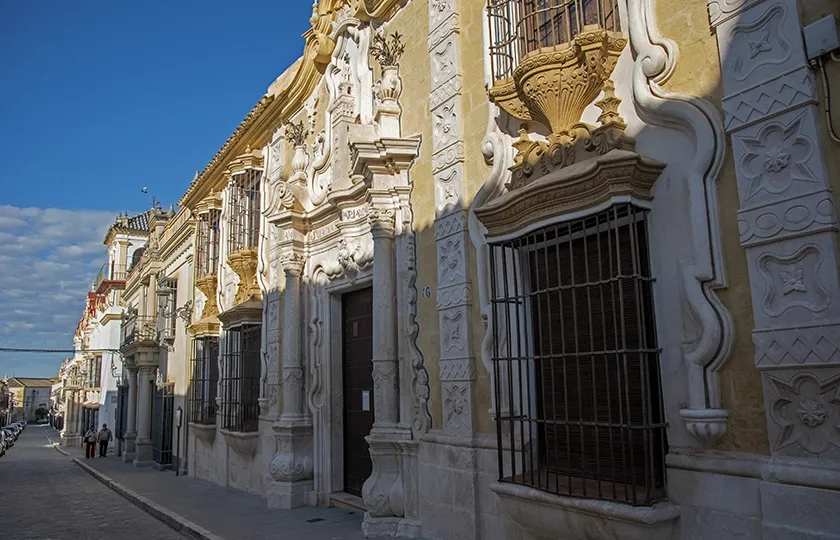
At the foot of the collegiate church is the Convent of the Incarnation, a former hospital and now home to the Museum of Sacred Art. Downhill, the Plaza Mayor opens up, flanked by the Town Hall. From here, several streets run through the town’s network, the most interesting being Calle de Sevilla and Calle de San Pedro, lined with noble palatial houses, churches and convents. Thanks to the harmony of its houses and eleven Baroque palaces from the 17th and 18th centuries, Calle San Pedro is considered one of the most beautiful streets in Europe. Among the palaces, the Cilla del Cabildo and the Palacio Marqués de la Gomera stand out. The latter is now a fantastic four-star hotel with a charming cloister and spacious rooms with delightful décor and furnishings. The Cepeda Palace, on de la Huerta street, is also worth a visit for its magnificent façade.
Game of Thrones landed in Osuna
The entire cast of the series ‘Game of Thrones’ stayed at the Palacio Marqués de la Gomera hotel in 2015, as they chose the Plaza de Toros for its fifth season, where ‘Daenerys Targaryen’ rode one of the dragons for the first time. In addition, all the actors went to eat at the famous restaurant ‘Casa Curro’, a place that has become a cult destination for all fans of the series, with countless photos of the actors on its walls and even a tapas menu dedicated to them. The Osuna Museum also has an exhibition dedicated to the series that will delight its fans.
The Way of St James reaches Marchena
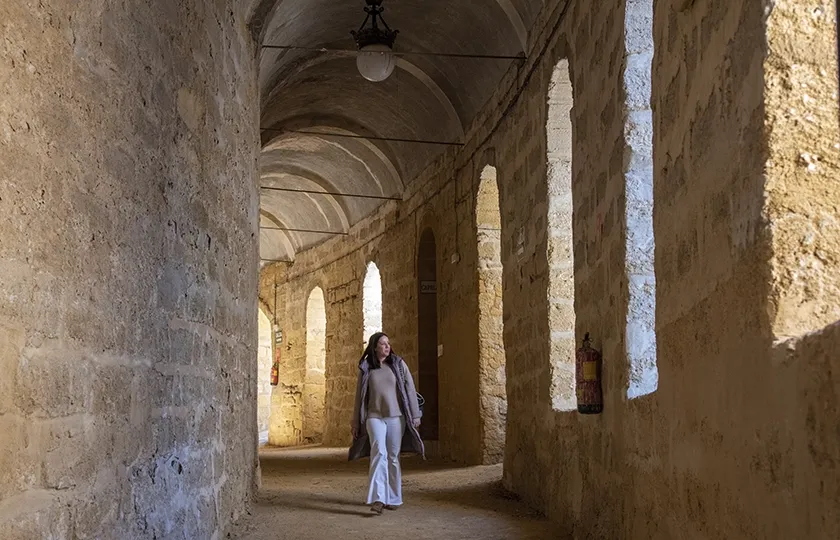
We left Osuna, not without some regret, to continue on the road that would take us to the town of Marchena. On leaving the town of Ursaon, we come across the remains of the necropolis, where we stop briefly to take some photographs. On the Camino, we heard some pilgrims greet each other with a phrase that has become universal: ‘Ultreia,’ which means ‘Let’s go.’ We wonder what the romantic writer Washington Irving thought when he made this journey, during which, incidentally, he fell in love with these landscapes.
We arrive in Marchena and head straight for the 12th-century Almohad gate of Morón, where the Tourist Office is located, which houses the Municipal Sculpture Exhibition ‘Lorenzo Coullaut Valera’, the city’s most famous son. This great artist, who worked between modernism and classicism in the late 19th and early 20th centuries, became one of Spain’s most important artists with works all over the world, the best known being the monument to Cervantes in Madrid’s Plaza de España.
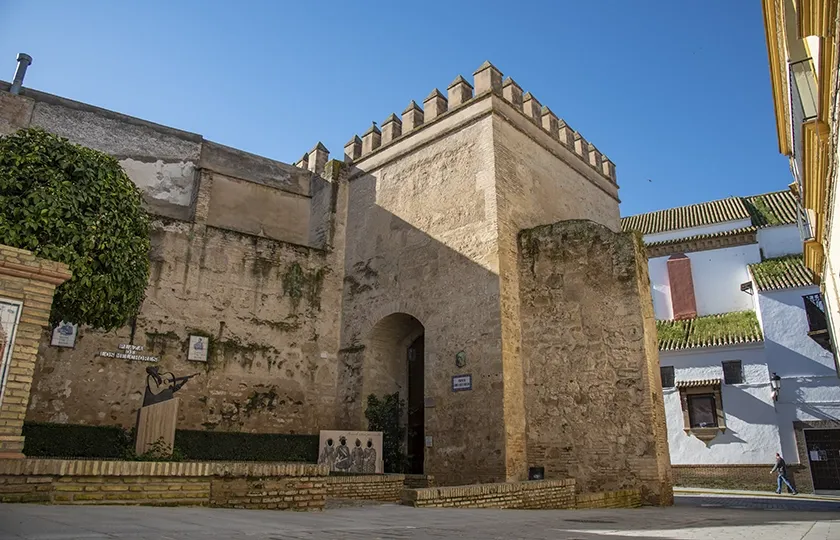
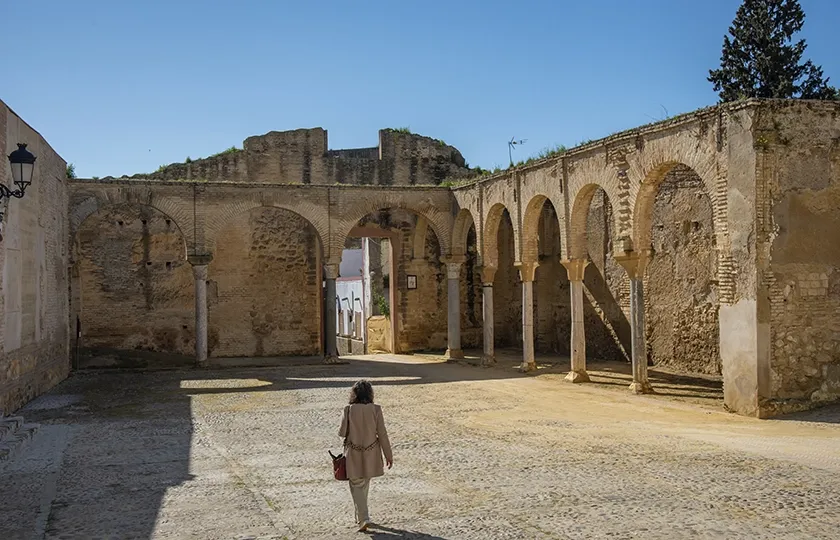
To get to know Marchena better, it is a good idea to take a stroll around the Ronda de la Alcazaba, a huge, well-restored walled enclosure, where you can see the Puerta de Carmona gate behind the Alcázar. Also noteworthy are the Arco del Portillo, another gate in the Alcázar, and the Arco de la Rosa or Puerta de Sevilla, another entrance to the old medina. All of them are Almohad remains of great interest.
Apart from Islamic architecture, it also has several civil buildings of great merit, such as the stately homes with their latticework balconies and windows, the House of the Coat of Arms and the Palace Houses.
As for religious buildings, the church of San Juan Bautista preserves a magnificent altarpiece and, above all, in the sacristy, a veritable treasure trove of nine canvases by the great Zurbarán.
From Marchena, we will stop for lunch in the village of El Viso del Alcor. Upon entering the village, we are surprised by a gigantic silo on which a fantastic mural has been painted, entitled: ‘La mujer recovera’, in homage to all the women who travelled daily from this village to Seville, laden with produce from their gardens to sell. Already tired, we approach the Torre restaurant where chef Juan Carlos serves us, offering us cod à la vizcaína, squid caught with a jig, tuna with onions, and some spectacular meats and ham.
Basilippo, or how to discover the best EVOO
From El Viso del Alcor, and before concluding this journey along the Mozarabic Way or Antequera Way, which will end in Seville, we enjoyed a special treat by visiting Basilippo. We are in the heart of the best olive groves in the province of Seville, and what better experience than to visit the 18th-century estate of Basilippo, one of the most prestigious and internationally recognised brands on the market, which offers olive oil tourism and sells extra virgin olive oil. With a clear commitment to olive oil tourism, its aim is to promote and disseminate, in an educational and entertaining way, one of the greatest treasures of Andalusian culture and the Mediterranean diet: extra virgin olive oil.
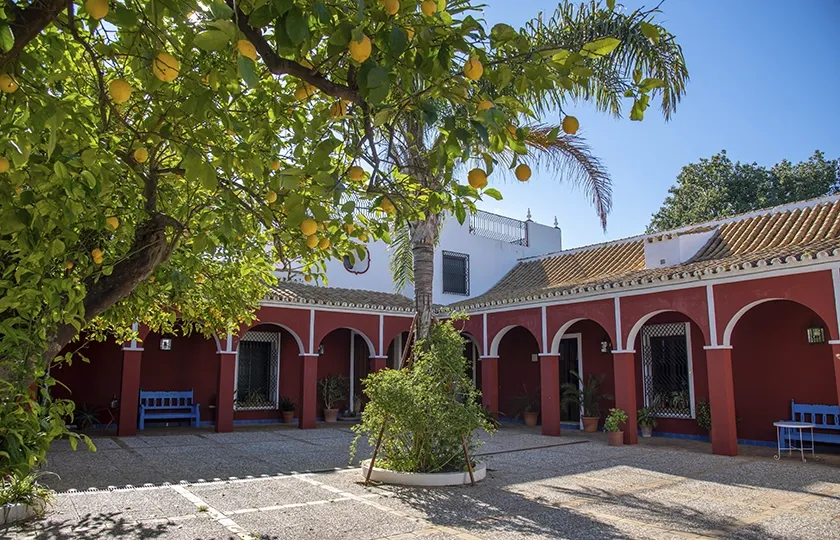
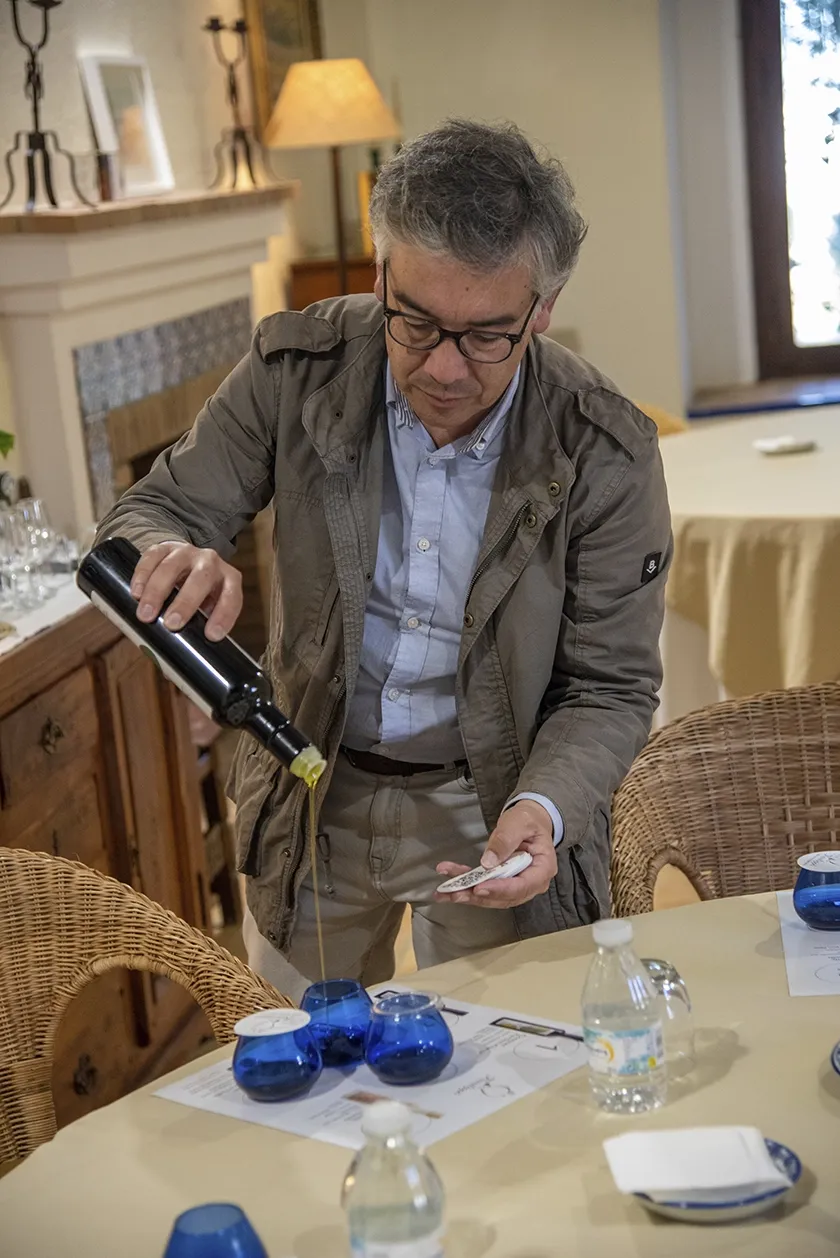
Pilgrims will be taken on a guided tour to discover the world of EVOO, visiting the facilities, the olive grove, the estate, the museum and even a recreation of a Phoenician ship, ending with tastings where they can enjoy its nuances, aromas and flavours. A fantastic way to end this journey of discovery through these lands, among the finest cuisine, endless olive groves, towering castles and villages considered to be among the most beautiful in Spain and Europe.