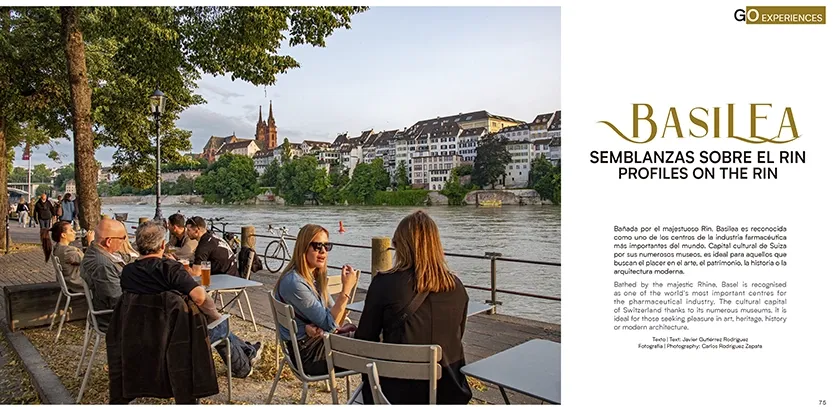

Bathed by the majestic Rhine, Basel is recognised as one of the world’s most important centres for the pharmaceutical industry. The cultural capital of Switzerland thanks to its numerous museums, it is ideal for those seeking pleasure in art, heritage, history or modern architecture.
The arrival of the Renaissance turned the city into an important cultural centre, with the founding of the University of Basel in 1460 being the key event in its development. On the other hand, centuries of commitment to humanism attracted the interest of some of Europe’s most brilliant minds, such as Erasmus of Rotterdam, Hans Holbein the Younger, Friedrich Nietzsche, and, well into the 20th century, Hermann Karl Hesse and Karl Theodor Jasper.
During the Renaissance, Basel also became a major commercial centre thanks to the boom in the silk weaving and dyeing industries, which would eventually give rise to today’s pharmaceutical and chemical companies.
Different ways to discover the city
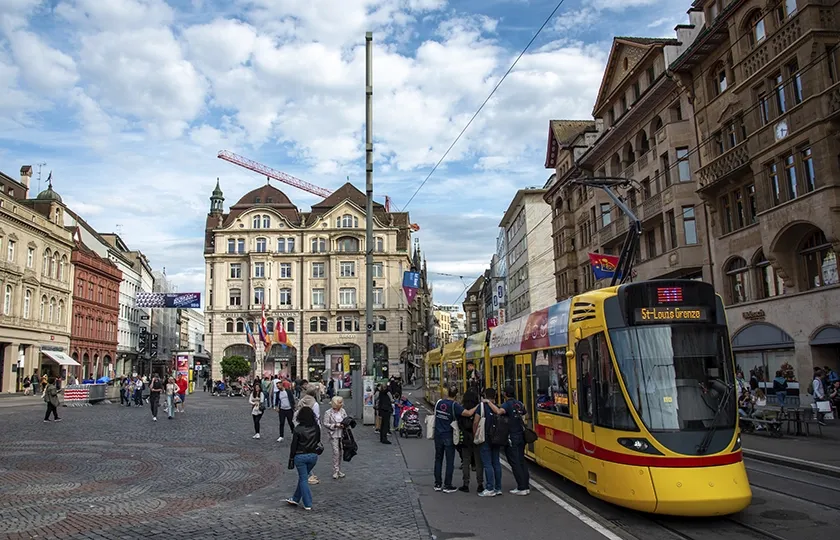
We leave the past behind and return to the present to discover a city that is a delight to stroll through. Its excellent public transport network, which prioritises punctuality and short waiting times, is dominated by green and yellow trams, some more modern and others older, which retain the magic of times gone by. Added to this is the bus network, which allows you to travel quickly and comfortably around the city, and even cross the border to visit neighbouring France and Germany.
All this means that traffic flows very smoothly in Basilia, especially in its historic centre, so visiting it is an invitation to take your time and admire all its beauty. The options for getting around the city are rounded off by four river ferries that connect both sides of the Rhine all year round, and guest bicycles. With the personal Basel Card, you can hire an electric bicycle from Rent a Bike (at the central train station – Bahnof SBB) for just 20 Swiss francs per day (just over €20).
In addition to the special offer on electric bike hire, the Basel Card allows you to travel for free on public transport (with some exceptions) and enjoy half-price admission to various attractions around the city.
Grossbasel and Kleinbasel, Basel's old town
Separated by the Rhine, Grossbasel (Greater Basel) and Kleinbasel (Lesser Basel) form the city’s captivating historic centre, boasting over two thousand years of history. Narrow cobbled streets lead us to numerous beautiful spots, lovely squares, medieval and Renaissance buildings, and more than two hundred fountains.
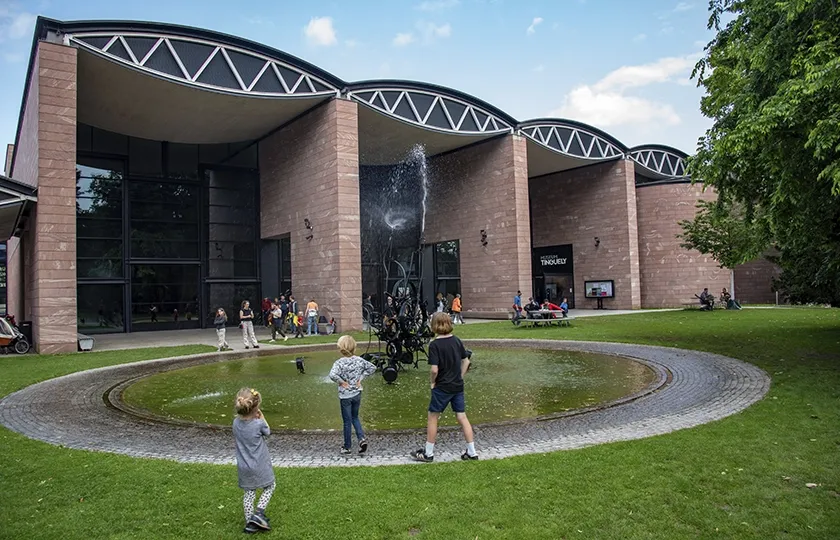
The Tinguely Fountain is located on the site of the former city theatre. Jean Tinguely, one of the most important Swiss artists of the 20th century, conceived in 1977 an enormous swimming pool in which ten mechanical sculptures represent actors, actresses and dancers on a stage.
Nearby, the Elisabethen Church is the first Protestant church built in Basel after the Reformation. Its origins date back to the 19th century, and today it is a cultural meeting place. In addition to being a pastoral centre, it is also a concert hall, a venue for parties and an exhibition space.
The next stop is Barfüsserplatz, a beautiful square which, in addition to offering access to eight tram lines that take us to all parts of the city, already had a commercial settlement in 1100. Together with Münsterplatc, this is one of the locations where Basel’s Christmas market is held every year, which I consider to be one of the most beautiful and largest in Switzerland. Here you will find the Basel Historical Museum-Barfüsser Church. Located in what was once the church of the Discalced Franciscans, it ceased to be used for religious purposes with the arrival of Protestantism, becoming a salt warehouse until the 19th century when it was converted into the History Museum. This space focuses on Basel’s historical identity, at the intersection of Swiss, German and French cultures, and displays an interesting collection of tapestries, Renaissance and Baroque collections, the region’s rich archaeological heritage, the Coin Cabinet and the Burgundian Booty.
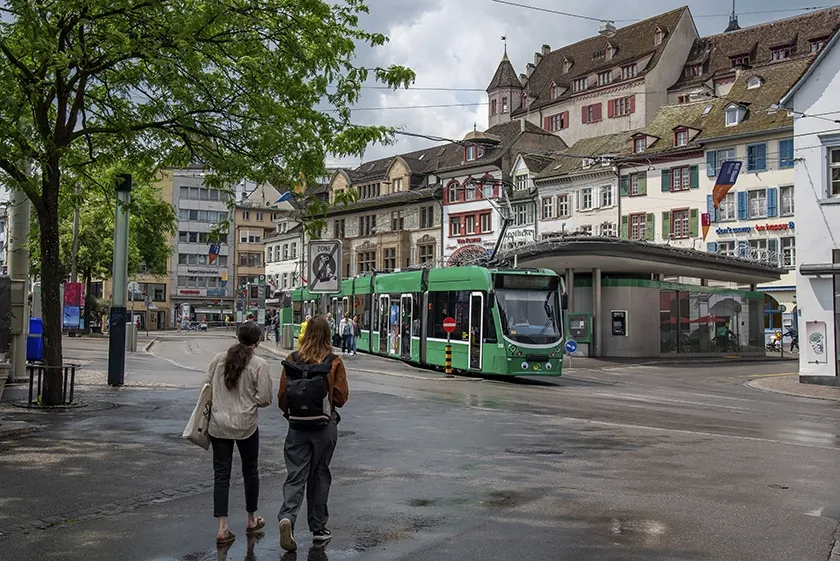
Freie Strasse, Basel’s main shopping street, is located very close to Barfüsserplatz. This long avenue, closed to traffic, ends at Marktplatz (Market Square) and is lined with shops selling everything from the most luxurious international brands to more affordable options, as well as restaurants, banks and insurance companies.
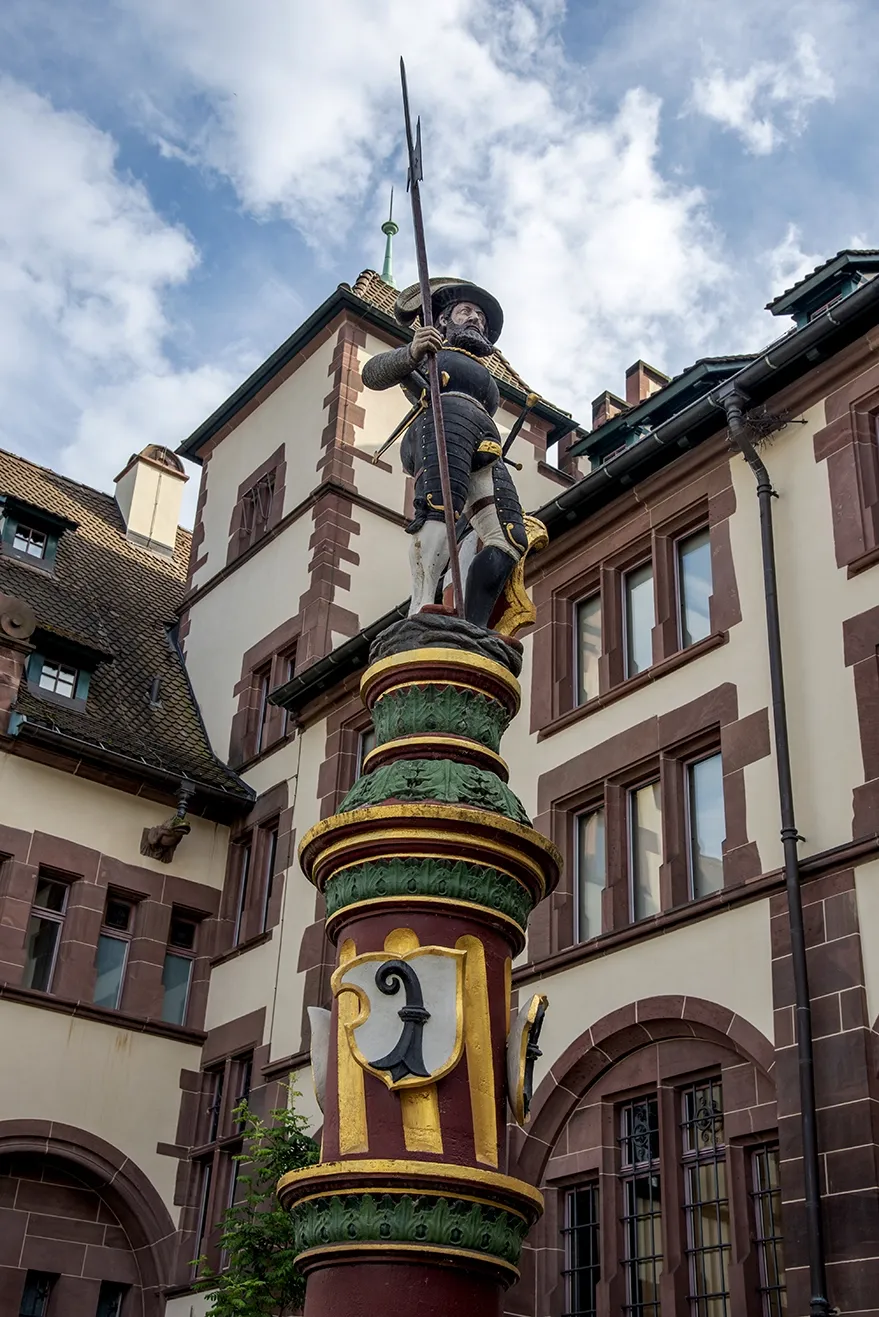
Strolling through the old town, you can discover the house where Erasmus of Rotterdam spent his last years in Bäumleingasse, simple houses and more noble palaces in Rittergasse, the Basilisk fountain in Augustinergasse, with a curious legend: a rooster laid an egg, which was hatched by a toad or a snake —here the legend varies— and from which emerged the basilisk with a rooster’s head, a snake’s tail and dragon’s wings, which petrified anyone who dared to look at it, or the White House and the Blue House in Rheinsprung, built in the 18th century as the private and commercial residence of silk ribbon manufacturers Lukas and Jakob Sarasin.
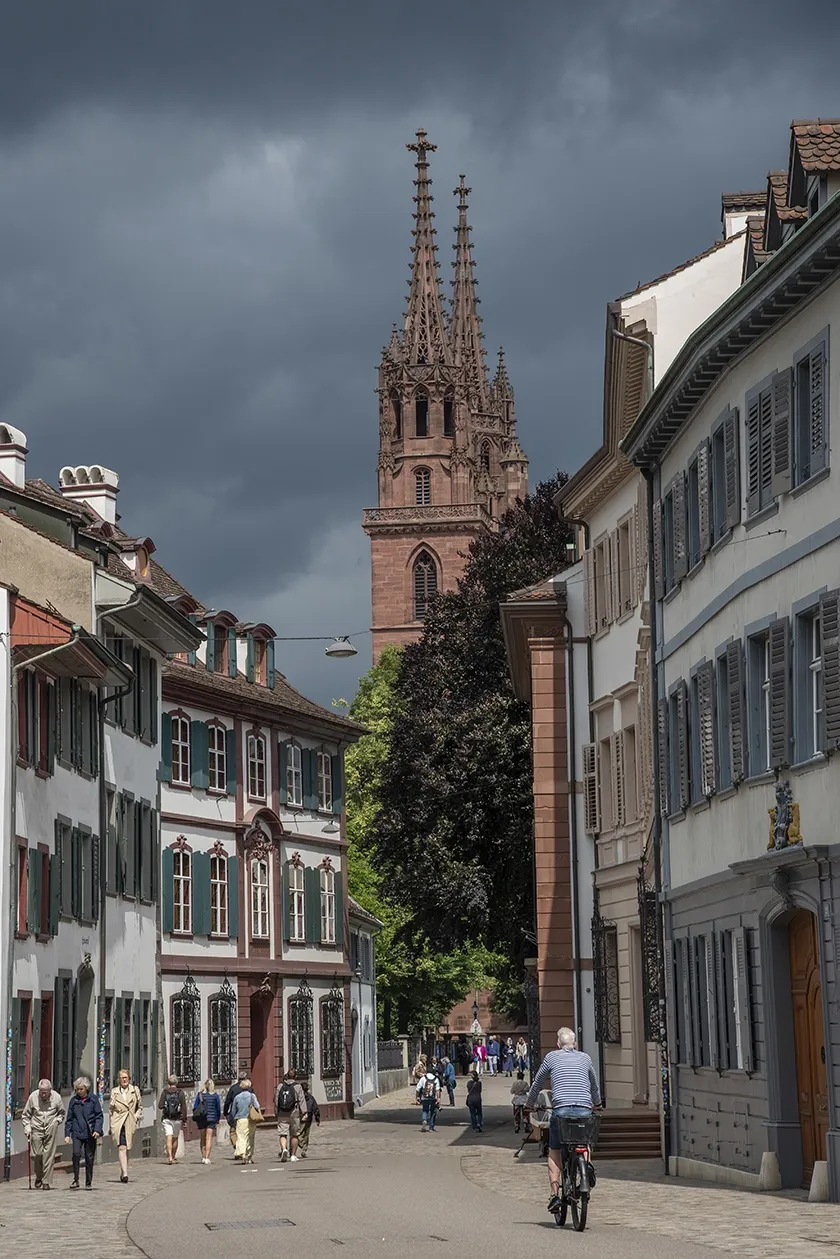
Martingasse is home to St. Martin’s Church, the city’s first Protestant church, which, thanks to its magnificent acoustics, has become a venue for concerts by orchestras and large choirs. Next to San Martín is the Sevogel fountain, which has a persistent error regarding its name and the figure represented there. The figure is supposedly supposed to represent Henman Sevogel, a commander who fell in the Battle of Birs in 1444, but in reality it is a symbol of Basel’s involvement in the religious conflicts of the 16th century.
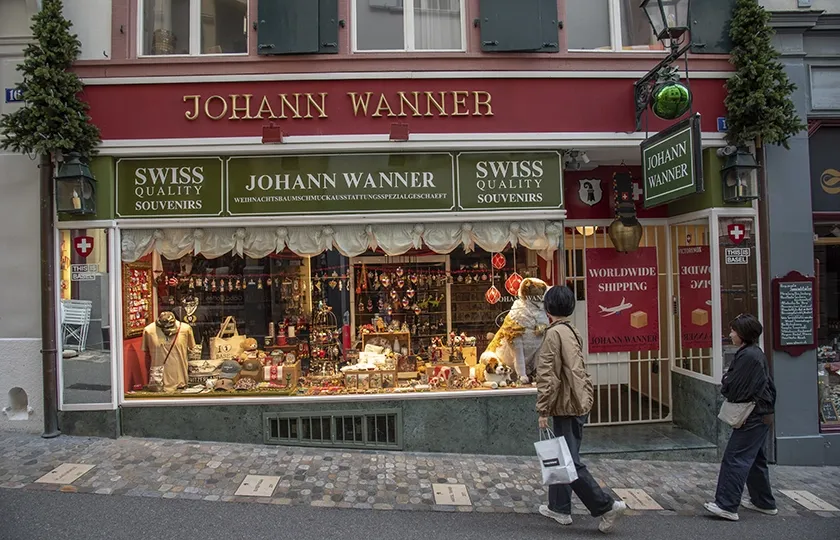
You cannot miss Andreasplatz, with its red paving stones marking the site of the former St. Andrew’s Church, the former headquarters of the saffron guild. We are in the old spice merchants’ quarter, where traces of its medieval past remain, such as buildings dating back to the 14th century. Today it is a welcoming square where cafés, restaurants and the spring plant market have stolen the limelight from the suppliers of these culinary condiments. Nearby, on Spalenberg Street, is Johann Wanner’s Christmas House. Its owner is considered the leader in hand-painted blown glass Christmas decorations, and everyone recognises his importance in reviving this ancient craft technique.
Close to Spalenberg is one of Basel’s most interesting restaurants, Löwenzorn Restaurant. A popular meeting place where you can sample culinary offerings that perfectly blend traditional and modern cuisine, either within the walls of a historic building in the old town of Basilia or in its cosy courtyard.
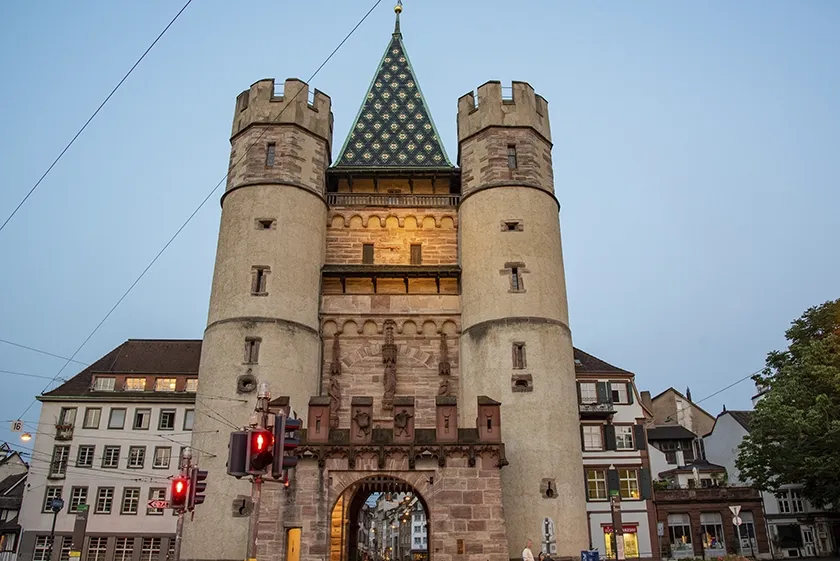
Since the 11th century, Basel’s old town had a walled enclosure, of which only ruins remain. Reinforced in the 13th century, the earthquake of 1356 completely destroyed them, making it necessary to build another one in 1400. Three gates remain from the latter, among which the imposing and majestic Spalentor stands out, through which many of the goods and food products arriving from neighbouring Alsace entered the city.
Finally, in Gemsberg, there is the Gamuza fountain, so named because it is crowned by a cast iron gamuza, dating from 1861. As a curious fact, it should be noted that when they tried to bring the fountain into the city to place it in its current location, they encountered the problem that it did not fit through the gate in the city wall. At that point, it became necessary to fill in the moat surrounding the walled enclosure and open a breach in one of its walls.
Another of Basel’s most iconic monuments is the Mittlere Brücke or Central Bridge, which leads to Kleinbasel. Opened in 1226, it was one of the oldest Rhine crossings between Lake Constance and the North Sea.
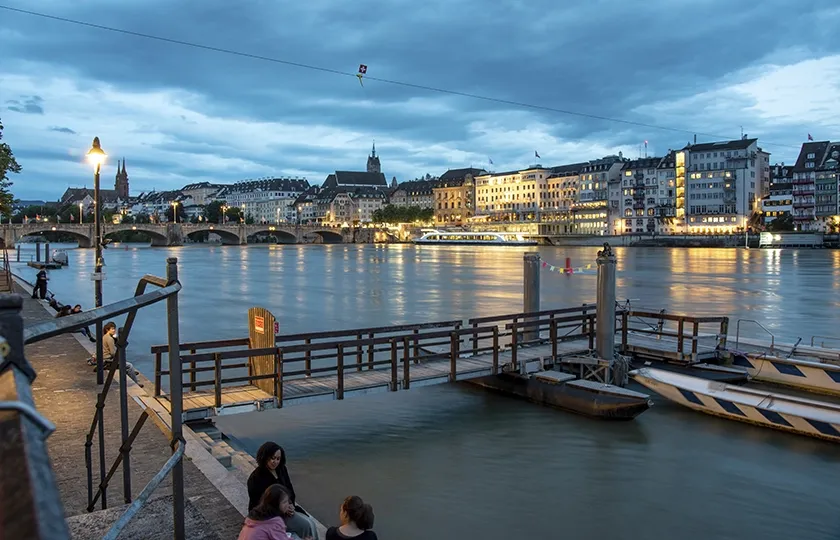
Kleinbasel was originally an independent town founded in the 13th century. Today, it is very popular due to its pleasant atmosphere on the banks of the Rhine and its lively streets and squares lined with cafés, bars and restaurants. A must-see is Bäckerei Kult, considered the oldest bakery in the world; St. Theodore’s Church, the former Carthusian monastery of St. Margaret, Baden railway station, Café Du Pont, the former Klingental barracks with the church of the same name, and the Tinguely Museum.
Basel Cathedral, the viewpoint over the Rhine and Markt - Platz
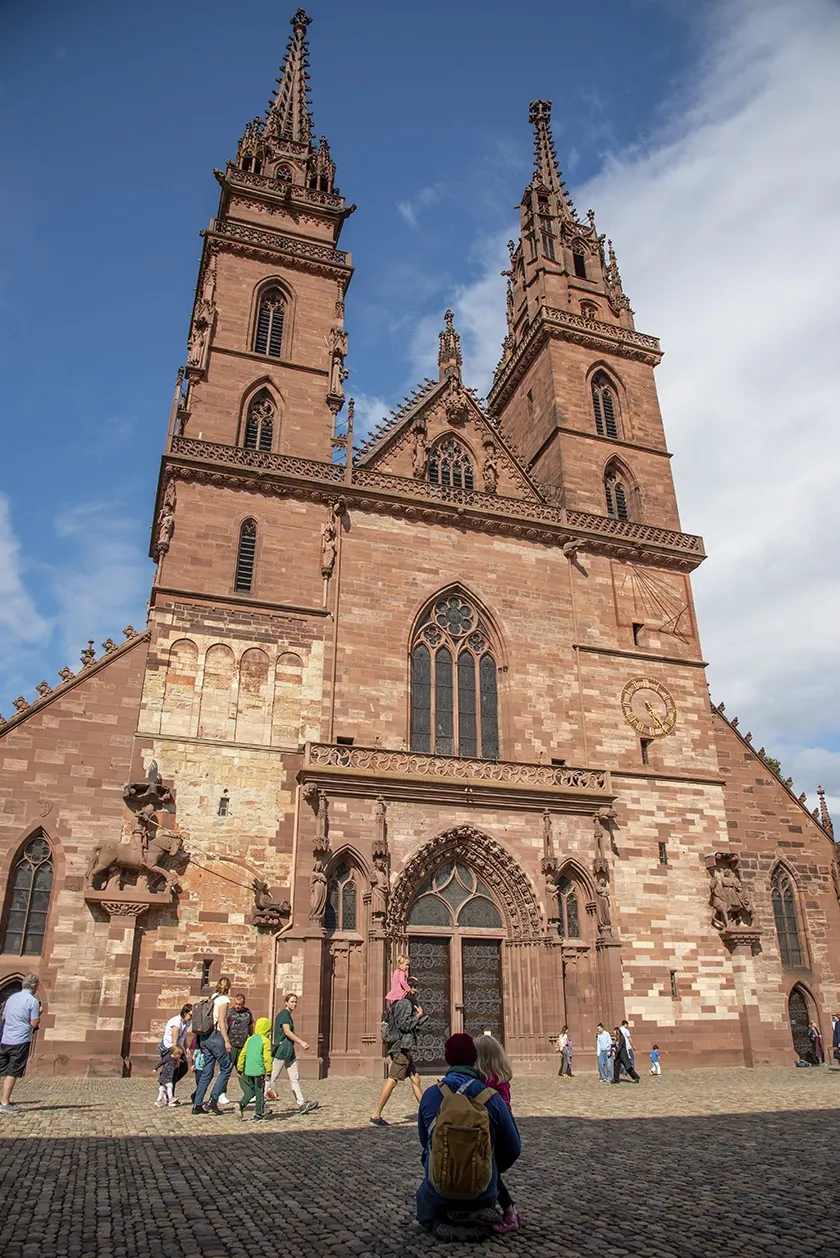
It was at the beginning of the 11th century that Bishop Adalbert II ordered the construction of a cathedral, work on which was completed around 1225. Built in the late Romanesque style, the earthquake of 1356 destroyed five towers and several parts of the building, which were rebuilt in the Gothic style. With the advent of the Reformation in 1529, it became the main church of the Reformed Evangelical Church of Basel-City. Crowned by two large towers, St George’s and St Martin’s, it features the Gallus door, which is important in art history as it is considered to be the oldest preserved door with figures in the German-speaking world. Other notable features of the cathedral include the crypt, which consists of two sections: one beneath the high choir and the other beneath the transept; the choir, which is late Romanesque in style in the lower section and Gothic in the gallery and triforium and the unique double cloister with an intermediate hall built in the 15th century, which is a true rarity in the history of architecture.
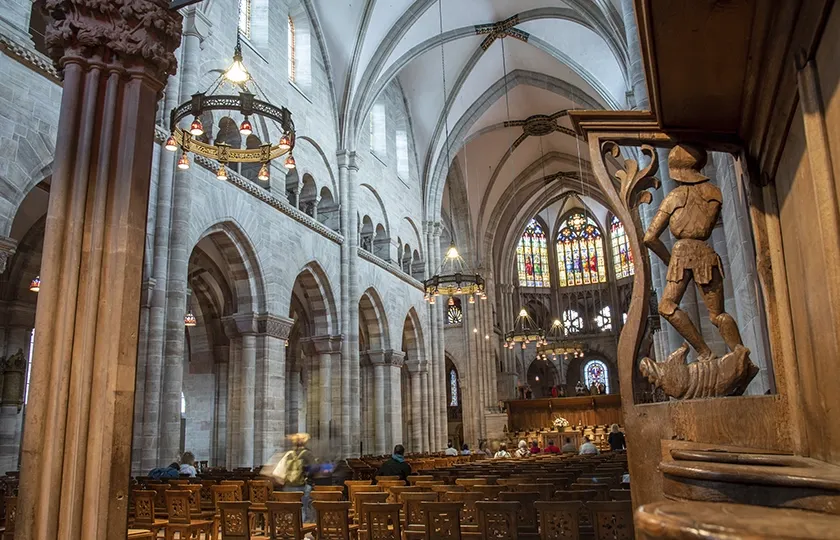
This temple is also the final resting place of Erasmus of Rotterdam. You cannot leave the cathedral without visiting the Pfalz, a terrace overlooking the Rhine located behind the temple, which offers magnificent views of the river and Kleinbasel, Little Basel.
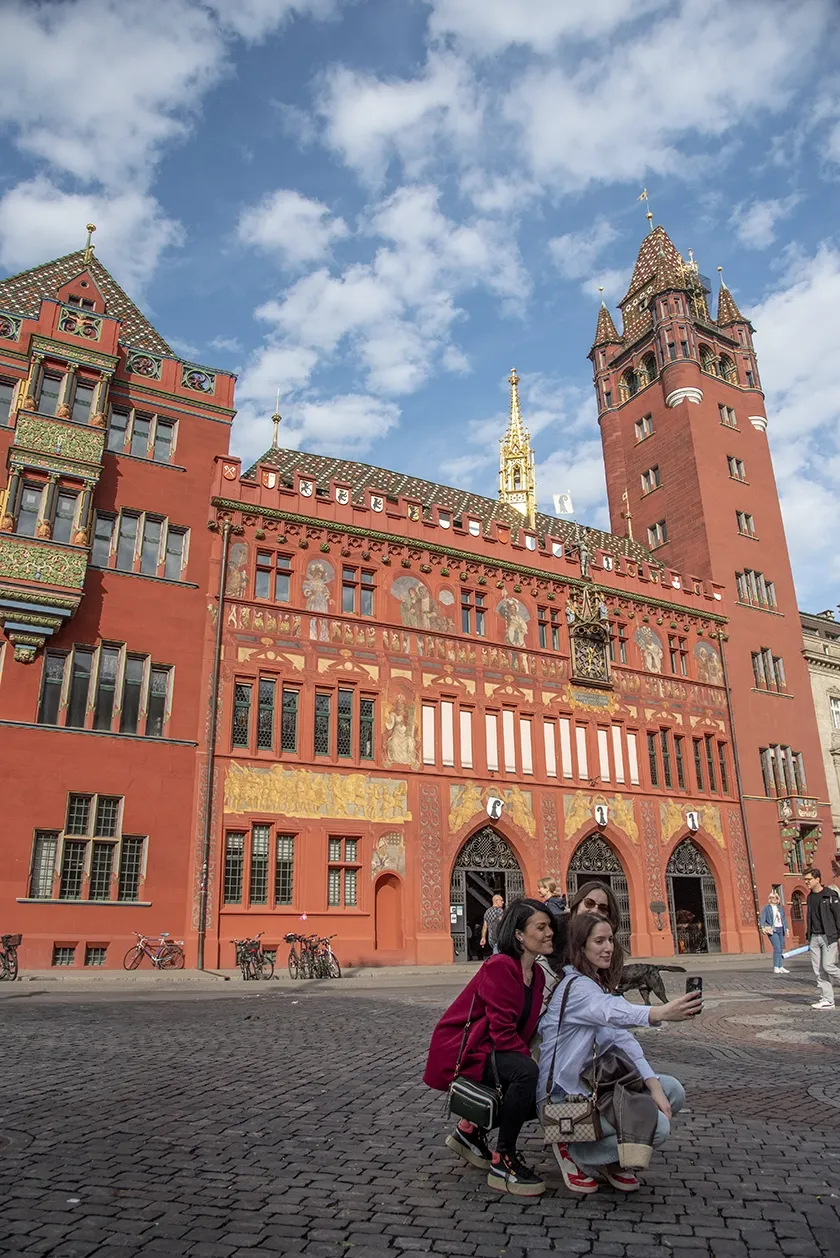
Every day except Sunday, a market is held in the Marktplatz or market square, complementing the grocery shops in the centre. Built in the 12th century, it is dominated by the imposing and colourful town hall, seat of the government and parliament of Basel. A thirty-minute tour of the parliament and governing council chambers brings us closer to the political history and current situation of the city-canton.
Museums in Basel
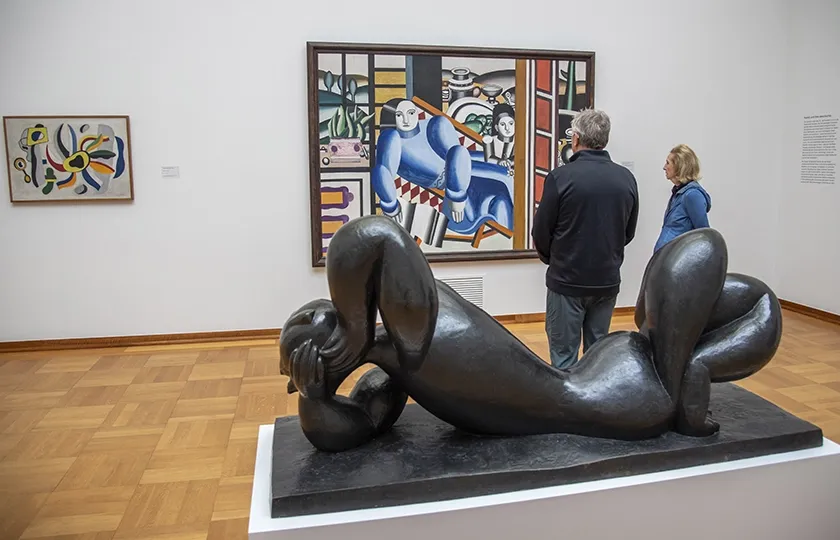
It is known as the cultural capital of Switzerland because it has forty exhibition spaces spread throughout the city and its surroundings. As it would be impossible to review them all here, we will focus on three outstanding museums: the Beyeler Foundation, the Kunstmuseum Basel and the Tinguely Museum.
The Beyeler Foundation is located in Riehen, a short distance from Basel. Housed in a building designed by renowned architect Renzo Piano, its art collection ranges from Impressionism to Modernism, including Classical Modernism, with more than four hundred works by ninety-one different artists, including Pablo Picasso, Paul Cézanne, Edgar Degas, Vasili Kandinsky, Henri Matisse, Joan Miró or Vincent Van Gogh. It also has a restaurant, Beyeler Restaurant In Park, located in a late Baroque-style building in the park of the Beyeler Foundation. His cuisine is based on the use of regional and seasonal ingredients.
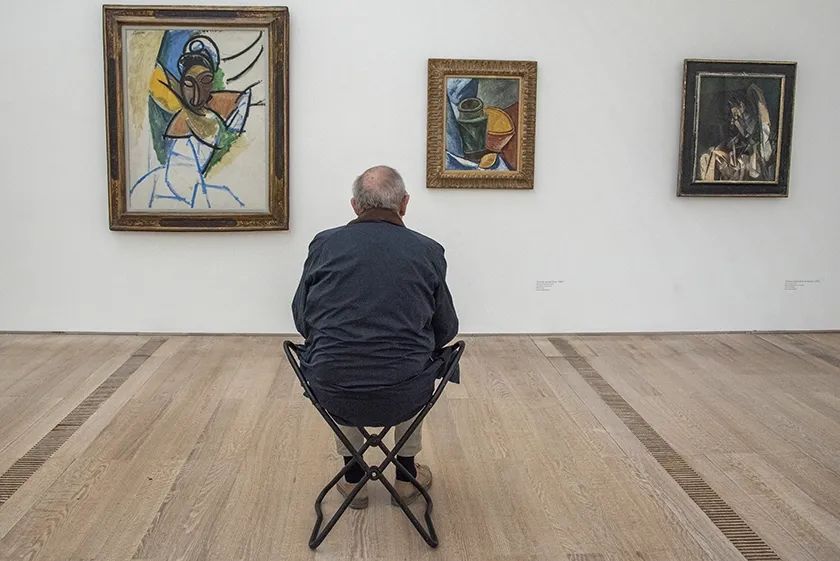
Kunstmuseuem Basel is spread across three buildings and is one of the most internationally renowned museums of its kind. The main building, designed by Basel architect Rudolf Christ and built in 1936, houses the Basel Art Collection, works from the Im Obersteg Collection, art collections from the Middle Ages and the Renaissance, as well as from the 17th, 18th and 19th centuries; works of classical modernism and post-war European modernism and the Print Room. It is complemented by the Kunstmuseum shop and bistro. Kunstmuseum Basel | Gegenwart was opened in 1980 and displays contemporary art from the collections of the Kunstmuseum Basel and the Emanuel Hoffmann Foundation, as well as permanent and temporary exhibitions. Finally, the new building was inaugurated in 2016 and is connected to the main building by a tunnel, hosting both special exhibitions and collection presentations. Its extensive catalogue of works bears the signatures of artists such as Hans Holbein the Younger, Albrecht Dürer, Pablo Picasso, Vincent Van Gogh, Edgar Degas, Paul Gauguin, Claude Monet, Andy Warhol and Henri Matisse.
The Tinguely Museum is located in Kleinbasel, on the banks of the Rhine. The largest collection of works by Jean Tinguely fills the various rooms of the building designed by architect Mario Botta. A journey through four decades of the Swiss artist’s work, ranging from his early refined reliefs to the monumental machine sculptures of the 1980s, in which liveliness, laughter, wonder and discovery come together to shape a museum that awakens the senses and brings art closer to the viewer.
World-renowned modern architecture
With a high level of aesthetics and craftsmanship, the influence of Swiss architects has transcended the country’s borders. Just a few metres from the old town and in perfect harmony with the ancient buildings, works by world-renowned architects such as Richard Meier, Frank O. Gehry and Mario Bota coexist.
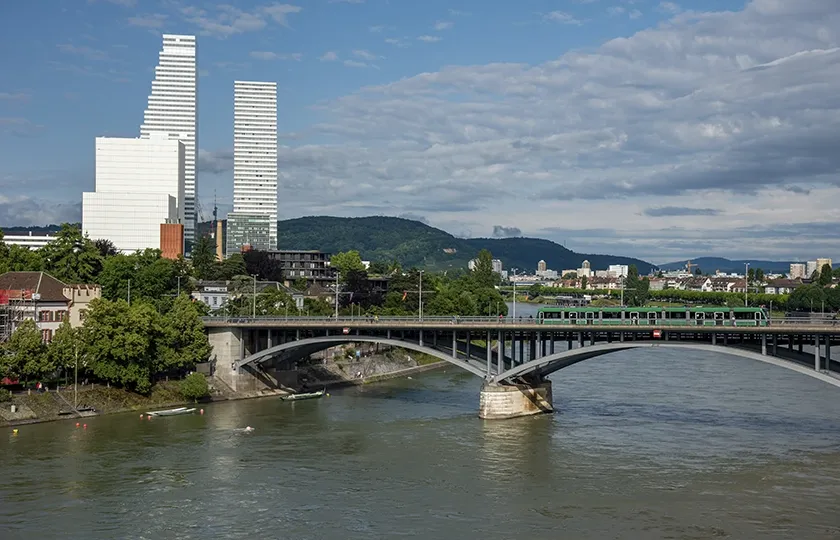
Furthermore, in recent years, the Basel region has established itself as a pioneer in sustainable construction, tackling the challenges of the future with innovative projects such as buildings made of clay, façades made from recycled materials, and creatively repurposed industrial sites.
Some of the fifteen most impressive buildings in Basel are the Stadtcasino Basel by Herzon & de Meuron, the Kunstmuseum Basel by Christ & Gantenbein, the Ferial Tower by Morger & Degelo y Daniele Marques, the Beyeler Foundation by Renzo Piano, the Tinguely Museum and BPI by Mario Botta, the Vitra Design Museum by Frank O. Ghery, the Novartis Pavillon by Michele De Lucchi, and the Roche Towers by Herzog & de Meuron.