
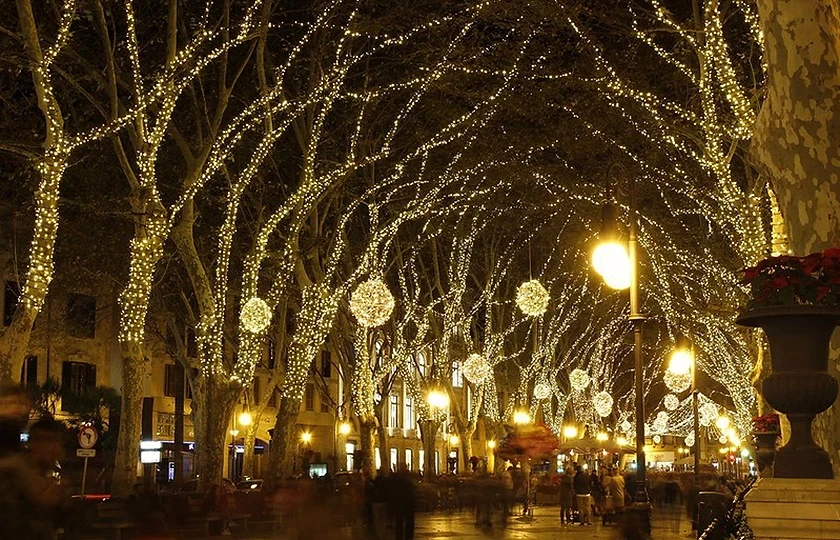
- The Balearic island combines its mild climate with the Christmas spirit in a wide range of leisure and cultural activities, where nativity scenes, artistic performances and gastronomy play an important role.
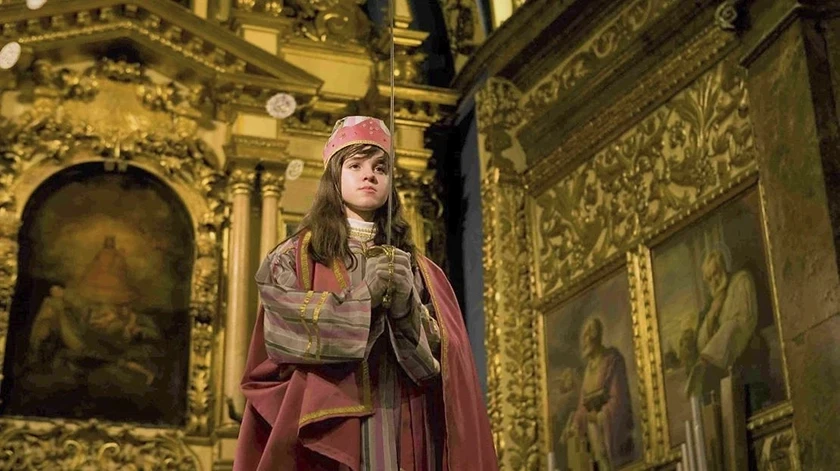
- The Songo of the Sibil·l a, declared a UNESCO World Heritage Site in 2020, is one of the most special ceremonies with the strongest Mallorcan identity that can be experienced on the island during Christmas.
Mallorca is transformed into a charming Christmas setting, with dazzling decorations and a varied cultural offering, thanks to traditions that combine religion, art, history and even gastronomy. On the island, the celebrations begin on 22 November with the traditional switching on of the lights, marking the start of a season full of activities that combine the festive spirit with the unique charm of the Balearic island.
The Song of the Sibyl, a tradition that endures through time
On the night of 24 December, Midnight Mass is celebrated throughout Spain. However, one tradition that remains in very few places, including Mallorca, is the Song of the Sibyl, which takes place at the beginning of the mass. The Song of the Sibyl has medieval origins and, in 2020, was declared Intangible Cultural Heritage of Humanity by UNESCO. The chant can be heard in most churches in Mallorca. Some churches are particularly emblematic, such as Palma Cathedral, where the chant is performed by the Capella de Mallorca choir, and the Sanctuary of Lluc, where there is a room explaining the origins of the religious figure of Sibil·la.
Christmas markets all over the island
There is a huge range of Christmas markets in Mallorca (especially given that it is an island), and the wide variety of options means that there is a market to suit all tastes and ages. In the capital, Palma, there are several Christmas markets, each offering a different experience.
The Pueblo Español market opens on 5 December and is notable for its atmosphere, with live music, children’s activities and visits from Father Christmas. The Plaza Mayor market is perfect for buying Christmas figures and decorations, while the Rambla de Palma market offers all kinds of crafts and sweets. Likewise, the Parc de les Estacions market hosts various Christmas workshops and has its own large Christmas tree, characteristic of the city.
On the other hand, Calvià, and specifically Puerto Portals, is home to one of the most popular Christmas markets in Mallorca, with concerts, an ice rink and wooden huts reminiscent of a Central European market. However, for more traditional options, the villages of Santa Ponsa, Andratx, Alaró, Sa Pobla and Sencelles also offer their own unique Christmas markets, all of which are full of charm.
Mallorca also has markets with a more religious atmosphere, such as Lluc, located next to the Sanctuary of Lluc. This picturesque mountain village is an ideal place to enjoy the market and Christmas activities in a privileged setting.
The tradition of nativity scenes, a journey through art and history
At Christmas, Mallorca displays one of its most characteristic traditions: the exhibition of nativity scenes in convents, churches and cultural centres. Some stand out for their artistic value, such as the 18th-century Neapolitan nativity scene at the Palau March, with thousands of figures crafted in great detail. Also noteworthy are the convent nativity scenes at the Monastery of the Immaculate Conception, Santa Magdalena and Santa Clara, which preserve the most traditional essence. The Sa Nostra Social Centre exhibits a Mallorcan nativity scene in the shape of an island, while the one at Palma City Hall recreates emblematic corners of the city, making it one of the most evocative. A tour that invites you to discover the island’s craftsmanship and Christmas heritage.
The Mallorcan Christmas table, also with cultural significance
Gastronomy, especially at this time of year, is also a cultural symbol. Traditional, comforting recipes with a link to the land have been passed down from generation to generation to be enjoyed with the family on a day that, for many, is one of the most special of the year. In Mallorca, no table would be complete without sopa de Nadal, a broth similar to the Catalan escudella, which is cooked with bread, meat and vegetables. And although in many coastal towns they do not give up a fish stew, the truth is that meat is the queen of Mallorcan Christmas, with dishes such as porcella (also known as lechona) roasted in the oven or in a casserole, rice with turkey, cold meats and escaldums¸ a turkey stew with potatoes and a sauce made from fried onions, tomatoes, garlic and a touch of white wine with hazelnut and pine nut sauce, ingredients that are widely used in all the island’s traditional dishes.
In Mallorca, Christmas desserts play a major role. Among the most typical is coca de turrón, made with a sweet mixture of almonds and sugar between two wafers. Also common are ensaimadas with hot chocolate and cocas de Nadal, a sweet bread made with flour, milk, sugar, aniseed and saïm, the lard characteristic of Mallorcan pastries.
Cocas de Nadal are usually eaten with almond milk, another classic of the local cuisine. This drink is cooked with sugar, cinnamon and lemon peel, and has strong historical roots: it was common in religious orders, especially among the Minims of Santa Maria, and in neighbouring municipalities such as Marratxí and Santa Eugènia, where the tradition is still alive.
Christmas shows
Throughout December and early January, Mallorca is filled with cultural events designed for families and lovers of the performing arts. These include the Christmas Circus, a classic that returns every year, and special winter concerts in venues such as the Auditorium in Palma. There are also intimate performances such as the Candlelight recital of Christmas music in the Pueblo Español, which offers a magical experience by candlelight.
About the MALLORCA RESPONSIBLE TOURISM FOUNDATION
The Mallorca Responsible Tourism Foundation works to promote a model of sustainable and conscious tourism on the island. Its mission is to balance tourism development with the conservation of Mallorca’s natural and cultural heritage, aligning the sector’s actions with the principles of responsible tourism. Through the Responsible Tourism Pledge, the foundation invites both residents and visitors to commit to the care and regeneration of the island, promoting tourism that respects the environment and local communities. By joining this commitment, each individual actively contributes to creating a more sustainable future for Mallorca.
Join the Pledge!
Join the Pledge for Responsible Tourism. By signing it, you are not only supporting more conscious tourism, but also actively contributing to the preservation of our island. Visit the website and find out how you can be part of the Mallorca of tomorrow at
https://pledge.fundaciomallorcaturisme.net/