

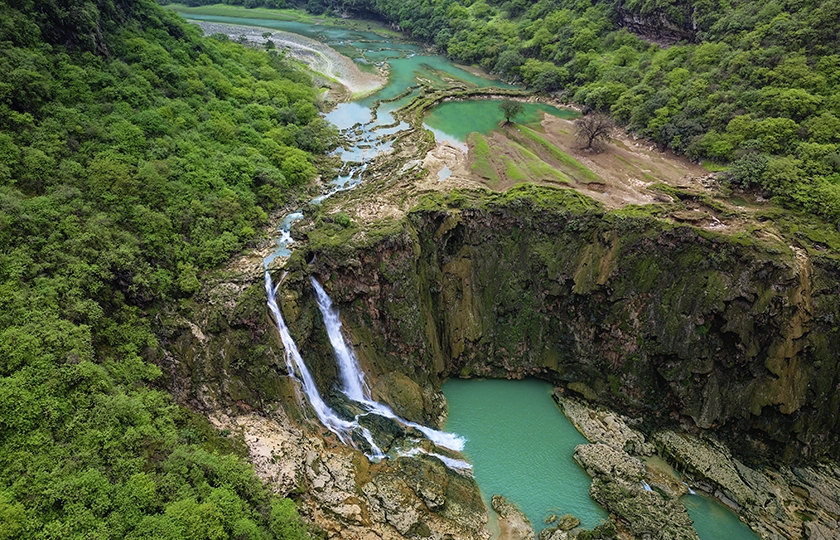
- With the arrival of the Khareef – the monsoon that, between June and September, blankets southern Oman in green and brings cooler temperatures – Ain Razat Nature Park becomes a must-visit destination in the Dhofar region, in the south of the Sultanate of Oman.
- Situated in the centre of Salalah, about a 25-minute drive from the city, the park features caves, a viewpoint with panoramic views and an easy walking trail leading to the water’s source.
Ain Razat is, without a doubt, one of Salalah’s unmissable spots during the Khareef season in the Dhofar region, in the south of the Sultanate of Oman. It is a nature reserve with crystal-clear waters flowing down from the mountains into a green valley, and it also serves as a key water source for local agriculture.
The park is located about a 25-minute drive from the city in the central region of Salalah, making it an ideal half-day excursion. The best time to visit is between June and September, during the Khareef, when the landscape turns green and lush.
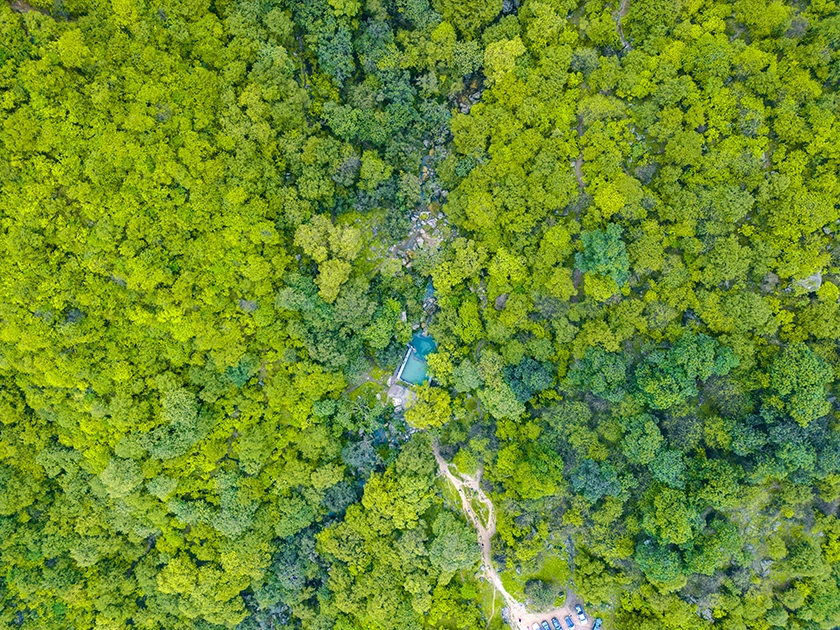
Among its main attractions is the Ain Razat cave. It is accessed via a stone staircase leading to its entrance, from where you can admire the crystal-clear waters and the vegetation surrounding the mountain. For those seeking a more active experience, this nature reserve also offers a gentle trek leading to small caves scattered amongst the hills near the spring, from where the water that feeds the valley originates.
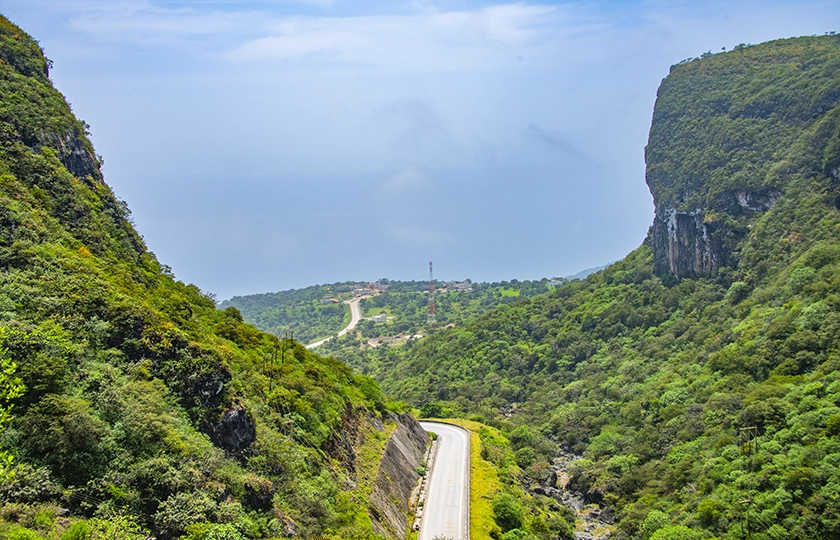
And, as in the rest of Oman, nature coexists with history: in this very same central region of Salalah lies the Incense Museum, a space that offers an insight into the sultanate’s cultural heritage and the maritime and commercial history that made Dhofar a key trading centre on the Incense Route.
With springs, caves, viewpoints and trekking trails, Ain Razat encapsulates in a single location everything that makes the Khareef a unique season: nature, cool temperatures and the chance to discover, very close to the city, one of the most stunning landscapes in southern Oman.
About OMAN
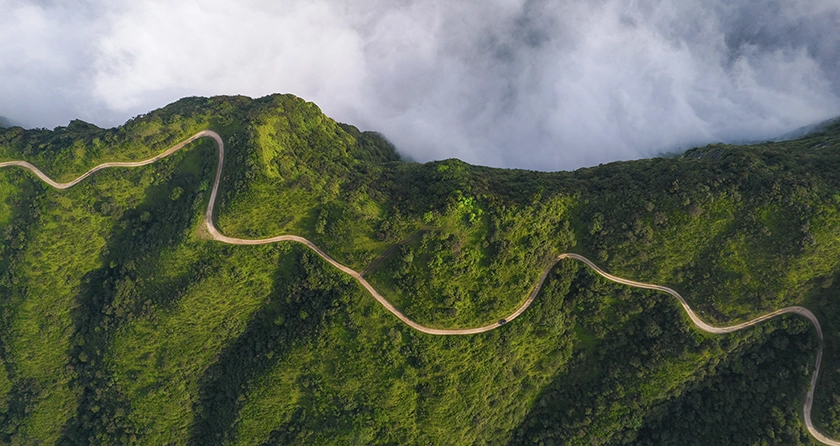
Situated in the south-east of the Arabian Peninsula, Oman boasts over 3,000 kilometres of coastline along the Arabian Sea and the Sea of Oman. Its territory features a wide variety of landscapes, ranging from deserts and mountains to valleys, wadis, beaches and tropical areas in the south of the country. This natural diversity is complemented by a historical legacy that includes sites designated as UNESCO World Heritage Sites. The country has an expanding network of tourist infrastructure, international air links and a range of accommodation that combines major brands with establishments integrated into the local environment.
Further information at: www.experienceoman.om
Source: THE BLUEROOM PROJECT