

- Angola has been named “Best International Destination” at the fourth edition of the National Geographic Travel Readers’ Choice Awards 2026, beating destinations such as Thailand, Malta, Oman, Qatar, the Czech Republic and Poland in its category.
- A tour of Angola’s must-see destinations from north to south: from Luanda to the Namib Desert, passing through ancient ethnic groups and unspoilt landscapes.
International tourism is evolving towards a new paradigm. Spanish travellers are no longer seeking only established destinations, but authentic, distinctive experiences far removed from mass tourism. The concept of luxury is being redefined: it is no longer measured solely by infrastructure, but by access to non-standardised experiences and the opportunity to discover places that very few have had the pleasure of exploring.
In this international context, Angola stands out as one of the countries that best embodies this new way of travelling. This has been confirmed by thousands of readers of National Geographic Traveller, who have chosen the country as “Best International Destination” in the fourth edition of its Readers’ Choice Awards, placing it ahead of destinations with an established track record in the global tourism market.
The recognition comes at a key moment for the country, which is making decisive strides in its international opening. Angola has implemented specific measures to facilitate access to the destination, such as visa exemptions for citizens of over 90 countries, including Spain, and the recent opening of Dr António Agostinho Neto International Airport in Luanda, one of the largest airport facilities on the African continent, which strengthens international connectivity and positions the country as a future regional hub.
A north-to-south route through Africa’s best-kept secret
Angola may impress with its sheer scale, but it is that very magnitude that conceals its greatest appeal. From north to south, the country offers a diversity of landscapes and experiences rarely found in a single destination. This route brings together some of its essential stops to understand why Angola is becoming one of the most promising destinations of the moment.
Luanda, the gateway to the country
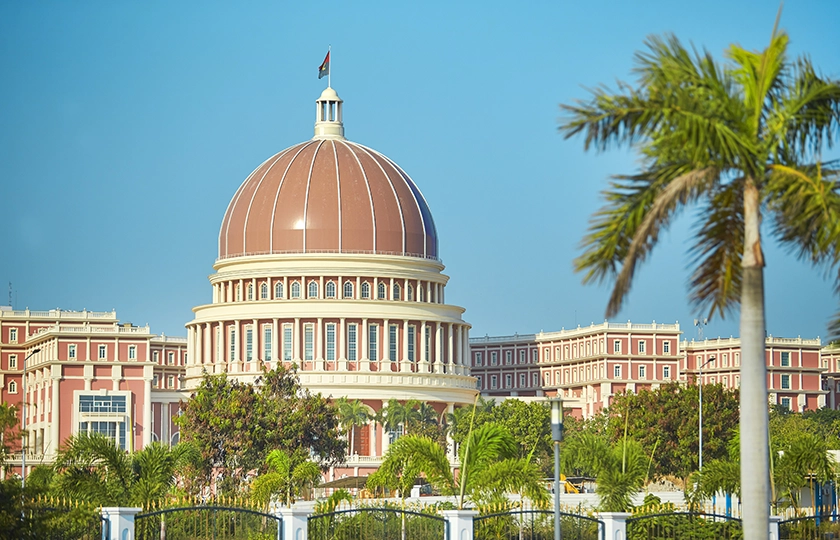
Located on Angola’s north-west coast, Luanda is the main international entry point and the natural starting point for any tour of the country. Beyond its logistical role, the capital offers a first taste of Angolan identity: an Atlantic city where colonial architecture, modern skyscrapers and a vibrant cultural scene coexist. Strolling along the Marginal at sunset, exploring the historic Baixa district or visiting Ilha do Cabo helps you understand the contrast that defines Angola. It is not just a stopover: it is the place where you begin to sense the energy of a country in transformation.
Malanje and the Kalandula Falls: one of Africa’s greatest surprises
About 4–5 hours by road or a short flight from Luanda, the province of Malanje is home to the Kalandula Falls, one of the continent’s most impressive natural spectacles. Standing over 100 metres high and spanning a width of more than 400 metres, their power and scale rival those of other great African waterfalls, yet without the crowds. The chance to view them from both upper viewing points and at their base makes for an immersive and rare experience. It is an essential stop to truly appreciate the raw natural grandeur of Angola.
Moçâmedes (Namibe), the colonial town that doesn’t yet know it’s special
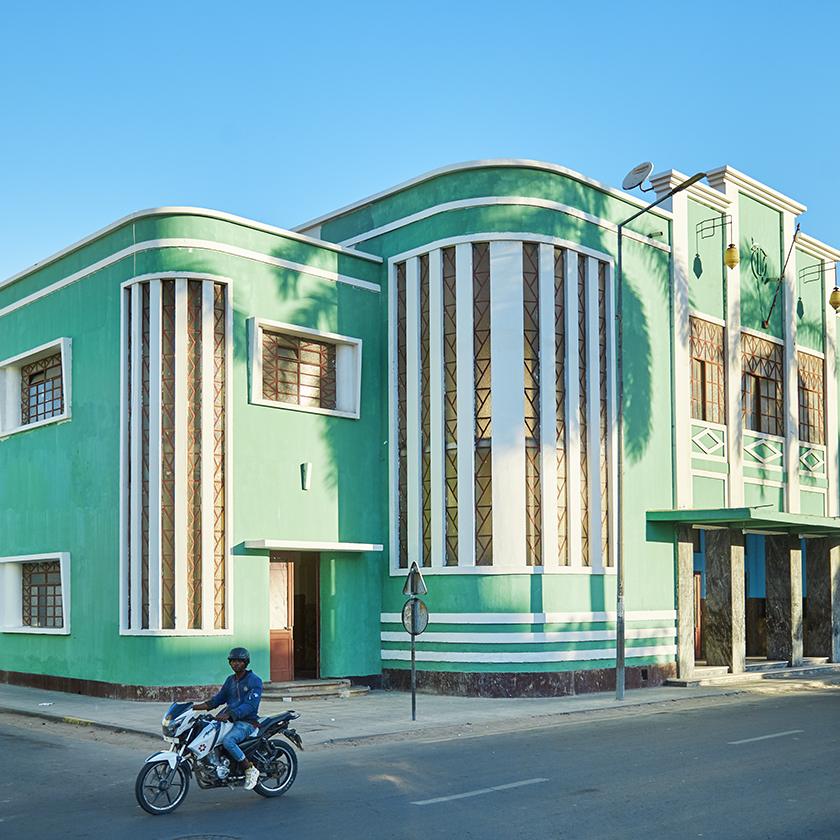
From Luanda, the most common route is via a domestic flight to Lubango and then approximately two hours by road to Moçâmedes, on the country’s southern coast. This town, with its strong Portuguese heritage, stands out for its colonial architecture, its quiet streets and its promenade facing the Atlantic. Here the pace slows and the landscape begins to transform, marking the transition to a more remote and less explored Angola. Moçâmedes is not only a strategic base but a destination in its own right, ideal for understanding the contrast between colonial history and the nature that dominates the south.
Ethnic groups of the south: Himba, Mucubal and Muila
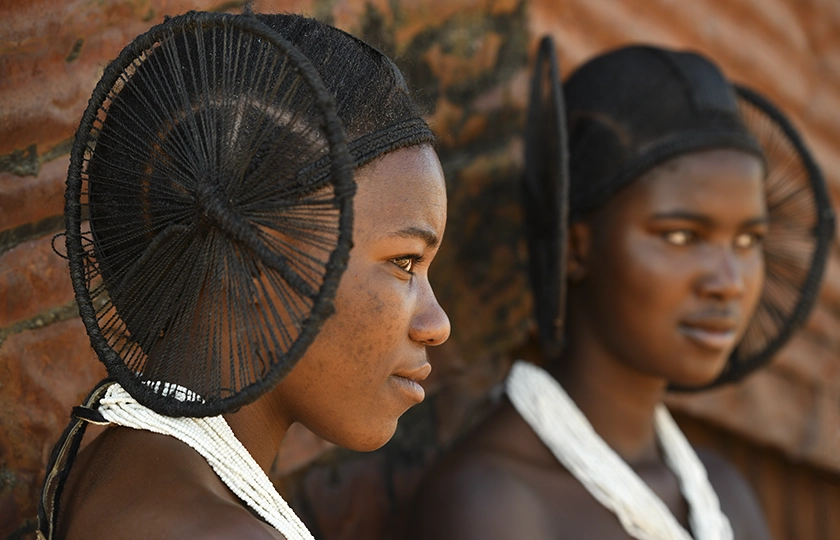
From Moçâmedes, heading inland towards areas such as Virey or Lubango, you reach territories inhabited by communities such as the Himba, Mucubal and Muila. This journey, which can be completed in several hours by road depending on the area, offers an insight into ancestral ways of life that have endured for centuries. Beyond their distinctive appearance, these communities maintain deeply rooted social structures, rituals and traditions. This is not a conventional tourist visit, but a unique opportunity to come into contact with one of the most authentic cultural dimensions of the African continent.
Iona National Park: one of Africa’s last great wilderness areas
Located some 200 kilometres south of Moçâmedes, Iona National Park is Angola’s largest protected area and one of the continent’s wildest places. Access requires a suitable vehicle and careful planning, but the effort is rewarded with landscapes on a scale rarely found elsewhere: arid savannahs, isolated mountains and, finally, the Namib Desert meeting the Atlantic. Wildlife such as oryx, jackals and flamingos inhabit this virtually untouched environment. It is an essential destination for those seeking unspoilt nature off the beaten track.
Baía dos Tigres: where the desert meets the Atlantic
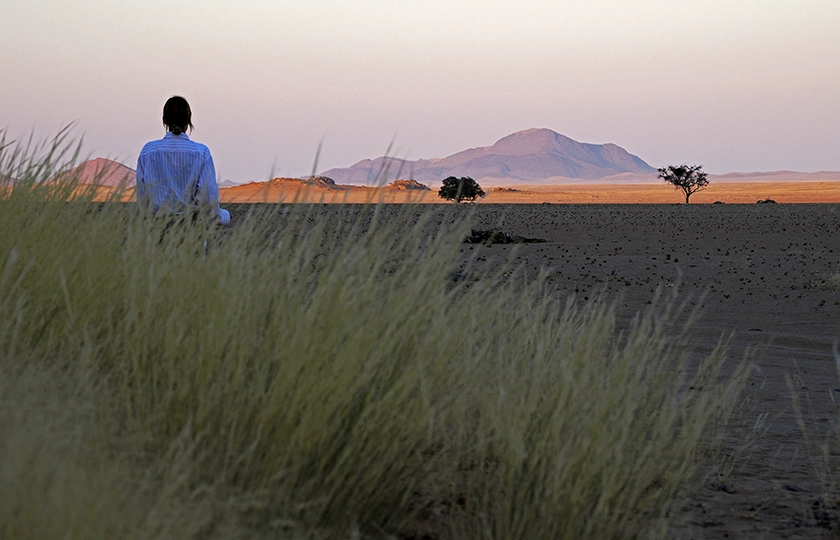
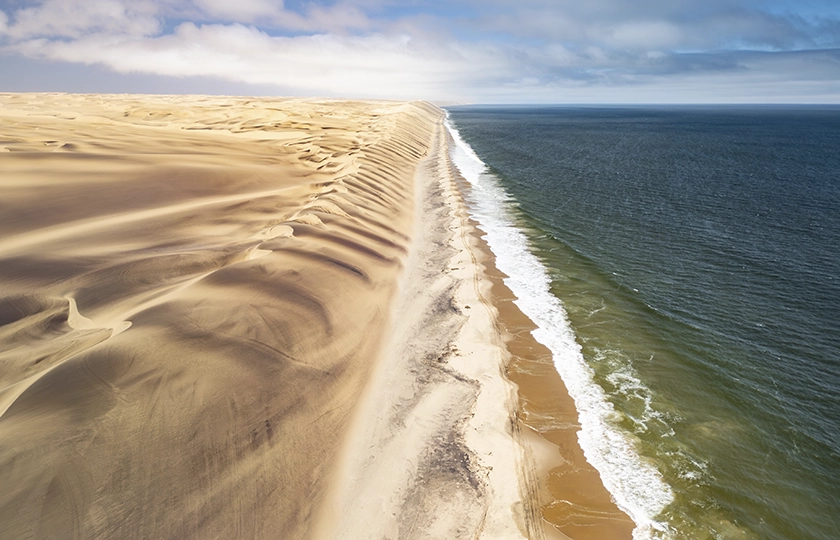
From the town of Tômbua, about three hours by 4×4 along the Doodsakker coastal corridor, you reach Baía dos Tigres, one of the most spectacular landscapes that has remained virtually untouched. Access depends on tidal conditions and requires an experienced guide. This landscape, which Angola shares with neighbouring Namibia along the Namib Desert, reaches one of its most striking forms here: dunes rising to 80 or even 100 metres in height — higher than on the Namibian side — which meet the Atlantic directly.
Unlike the reddish tones more common in other parts of the Namib, here yellows, beiges and dark greys predominate. It is precisely this latter colour which, shaped by the wind, draws lines in the sand that, at certain times, resemble a tiger’s stripes and explain the bay’s name. It is one of those places that justifies the journey all on its own.
Ilha dos Tigres: the ghost town between the desert and the sea
About 15 minutes by boat from Baía dos Tigres, Ilha dos Tigres is home to the ruins of São Martinho dos Tigres, an old Portuguese town abandoned in the 1960s after the isthmus connecting it to the mainland broke away. Today, its buildings, partially covered in sand, coexist with colonies of sea lions and birds, in a setting that seems frozen in time. The combination of history, nature and isolation makes this enclave one of the most unique and memorable along the entire route.
About ANGOLA
Angola is one of the last great adventures yet to be discovered on the planet: a hidden gem in south-west Africa that surprises with its unspoilt nature, cultural diversity and extraordinary scenic richness. The continent’s seventh-largest country offers landscapes ranging from tropical rainforests to endless deserts, shaped both by the legacy of the Kingdom of Kongo and the influence of Portuguese colonial history.
Its capital, Luanda, is the gateway to the Atlantic and a true melting pot of African, Portuguese and indigenous influences, where music, dance and cosmopolitan energy pulsate with vigour. Under the slogan “Visit Angola – The Rhythm of Life”, the country presents itself as an authentic destination for explorers and lovers of nature and culture seeking to discover a different, genuine Africa, full of rhythm.
Source: KLEBER Group