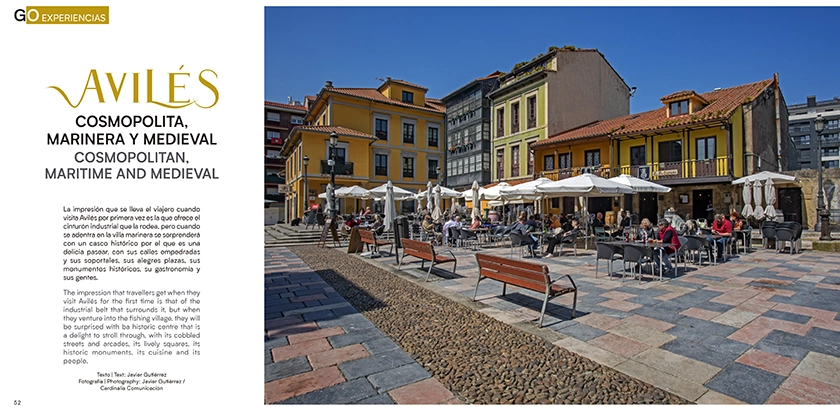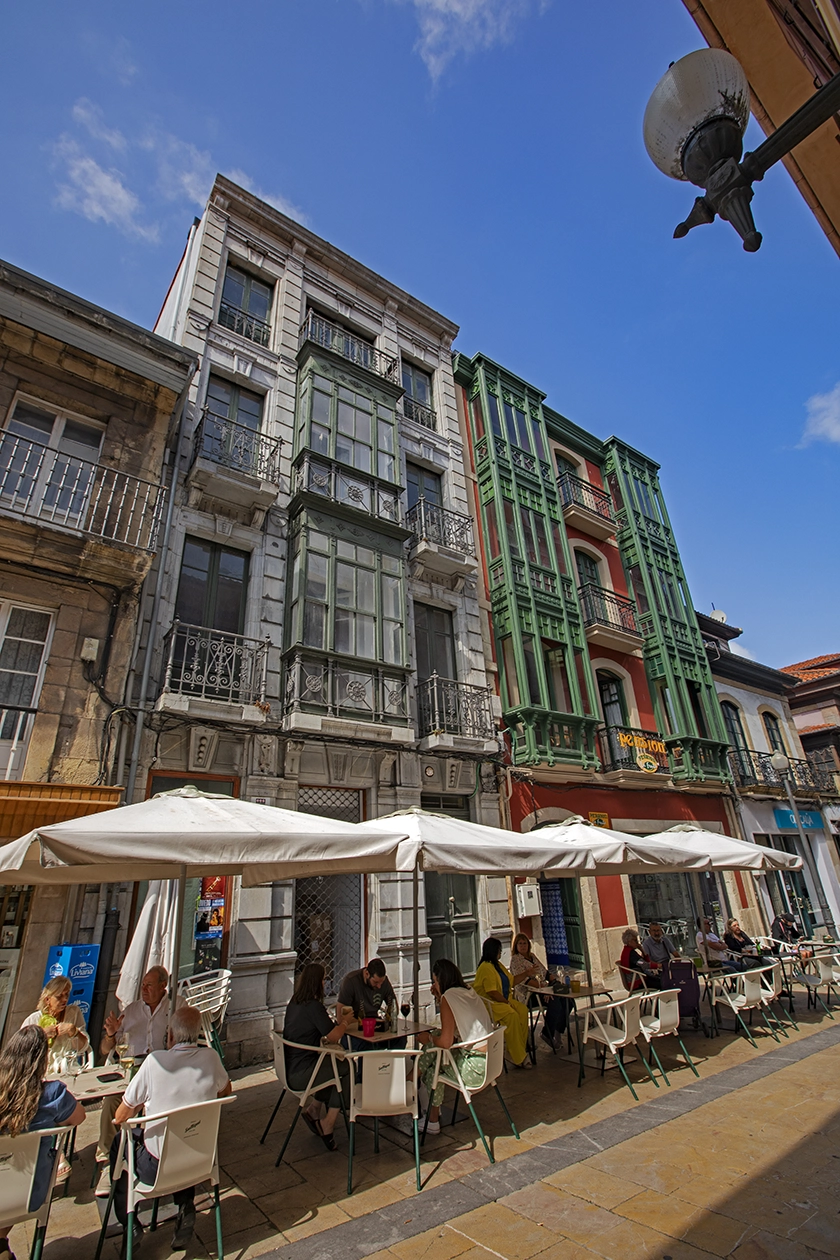
The impression that travellers get when they visit Avilés for the first time is that of the industrial belt that surrounds it, but when they venture into the fishing village, they will be surprised with ba historic centre that is a delight to stroll through, with its cobbled streets and arcades, its lively squares, its historic monuments, its cuisine and its people.
This town with a long seafaring tradition, once one of the most important ports on the Cantabrian coast, did not have a permanent population until after the Roman era.
Some historical events that marked its development were the granting of jurisdiction by King Alfonso VI of León in the 10th century, which gave it a series of privileges as it was designated royal property, including the possibility of holding fairs and a weekly market.
In 1479, the town suffered a major fire and the Catholic Monarchs granted it several privileges to aid in its recovery, such as the concession of a weekly market every Monday, which is still held today.
The Modern Age saw a period of splendour with the rise of the bourgeoisie, followed by a period of decline that was alleviated by trade in goods from America, the arrival of the railway and intensive industrialisation, particularly in the steel industry.
Successive expansions of the port led to the town’s industrial boom, also promoting the development of a significant canning industry.
In the 1950s, the industrial complex in Avilés was consolidated with the installation of large production plants on both banks of the estuary, promoted by the National Energy Institute, such as Ensidesa and Aceralia. An industrial legacy that has turned the town into one of the most important centres of industrial archaeology in the country.
Historic centre of Avilés
Considered a Site of Cultural Interest in the category of Historic Complex since 1955, the old town of Avilés is one of the best preserved in northern Spain. Its architecture spans different periods of history, from Romanesque to 20th-century industrial heritage, including modernist buildings.
Civil and religious buildings adorn beautiful streets such as La Ferrería, Rivero, de los Frutos, Galiana, San Francisco and la Cámara, where walking becomes a leisurely experience so as not to miss the thousand and one details that come our way.
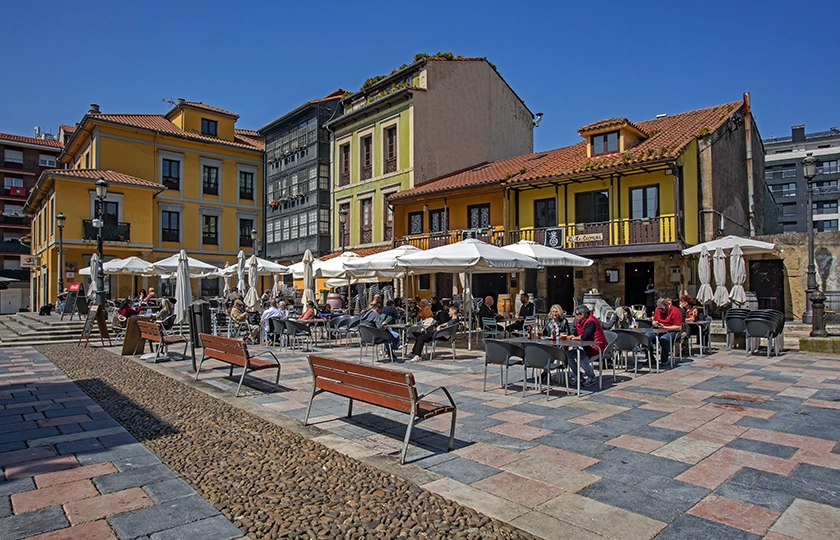
The nerve centre of the town is Plaza de España, also known as ‘El Parche’, whose origins date back to the 17th century, when population growth forced urban expansion known as ‘baroque expansion’. As a result, three outstanding palaces were built: the Municipal Palace or Town Hall, the Llano Ponte Palace or Casa de García Pumarino, and the Ferrera Palace which, together with the Camposagrado Palace, form the city’s splendid Baroque heritage.
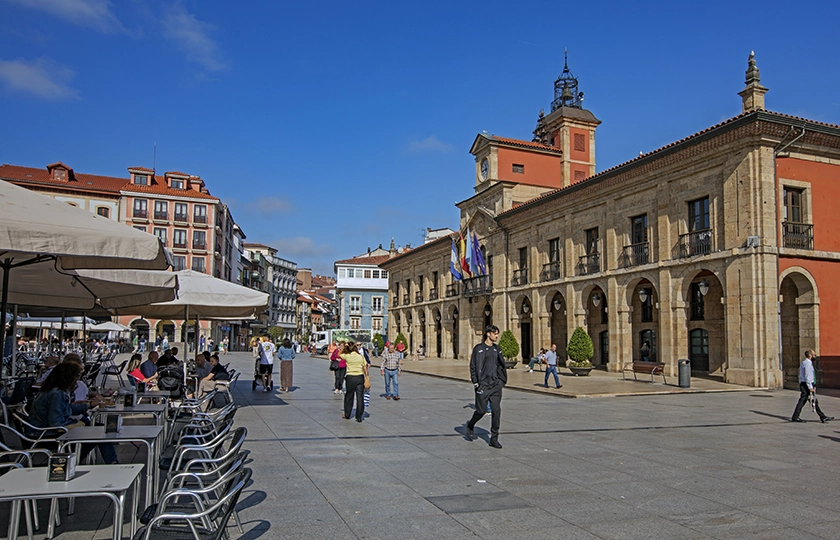
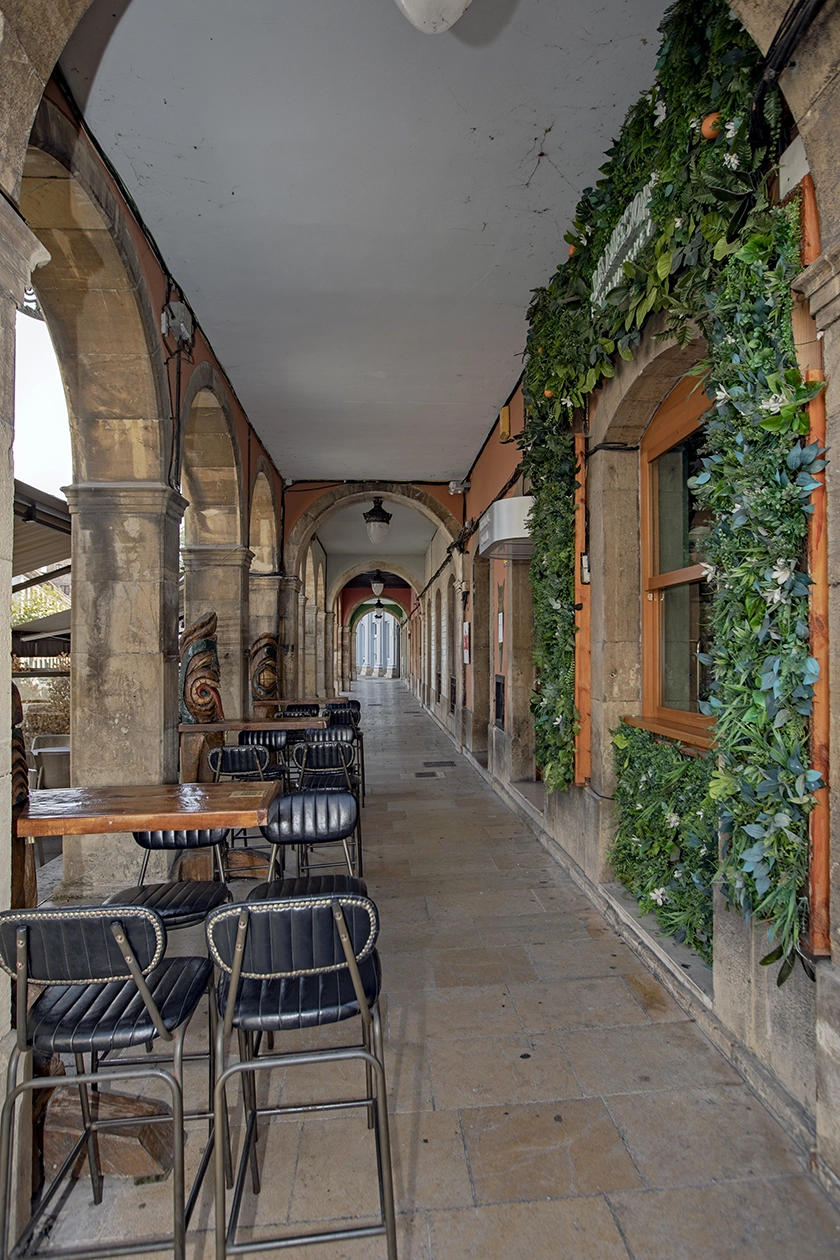
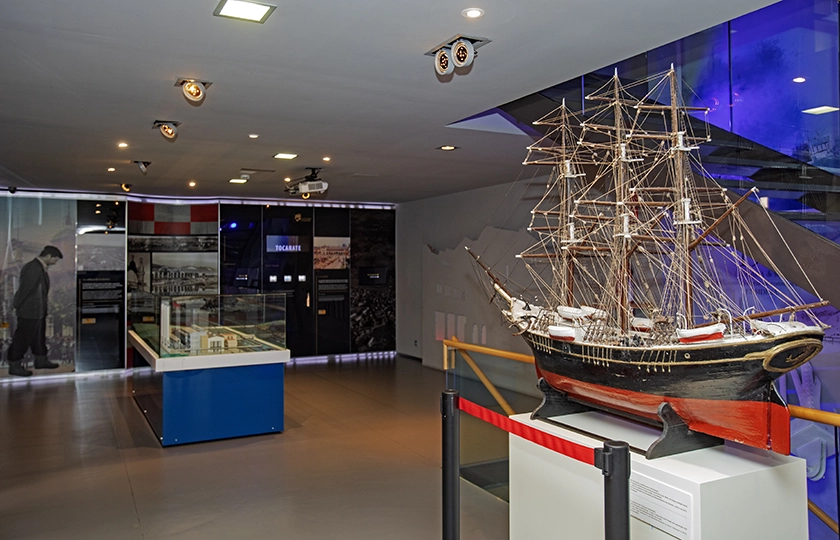
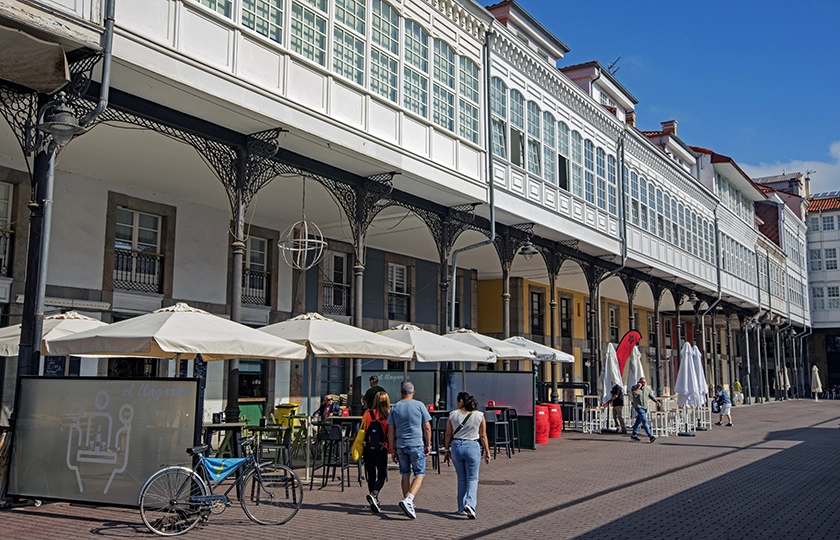
The most typical and busiest streets in the city start from what is considered kilometre 0 of the town. Walking down la Ferrería is to remember the figure of Pedro Menéndez de Avilés, Governor of Florida, who was born on this street. The main thoroughfare of the old walled enclosure is the one that preserves the purest medieval atmosphere and is adorned with arcades that provided shelter for people when it rained. It owes its name to the blacksmiths who settled here, although another theory tells us of the existence of a smithy at the beginning of the street. La Ferrería brings us closer to the Valdecarzana Palace, which houses the Historical Archive of Avilés and holds the Fuero de Avilés, the oldest known document written in Asturian; to the Plaza de Carlos Lobo or San Nicolás, where the alfolíes, salt warehouses of vital importance to trade at the time, were located; to the church of the Franciscan Fathers, built between the 12th and 13th centuries; to the chapel of Las Alas, the only Gothic monument in the city; and to the Museum of Urban History of Avilés. And at the end of the street, the Pier Park unfolds before our eyes.
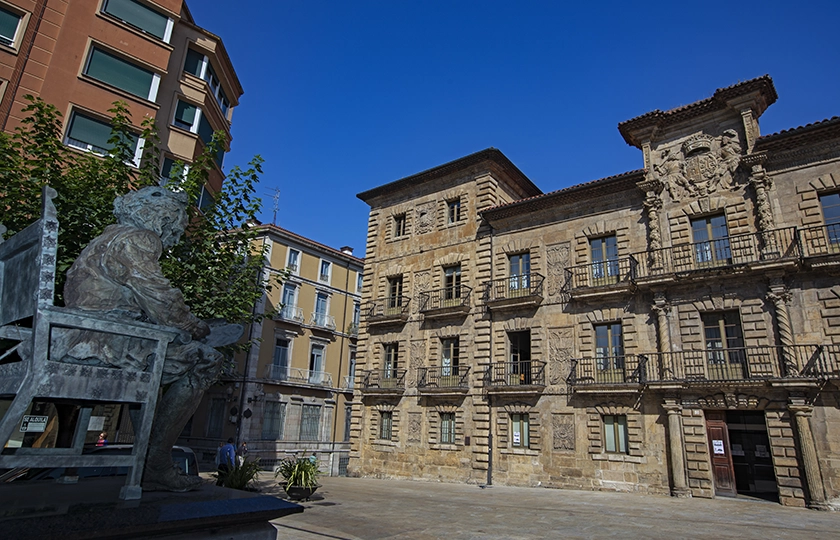
On the other hand, la Fruta Street is the other main artery of medieval Avilés. Originally, there were two streets that followed the same layout as La Ferrería, with arcades on both sides, until two fires in 1478 and 1621 destroyed many of the houses. Their reconstruction was used as an opportunity to make them more spacious and give them their current names. This street ends at Plaza de Camposagrado, where the palace of the same name is located. It is the most outstanding building in Avilés and is considered by some experts to be the finest example of Asturian Baroque architecture.
These two streets are connected by San Bernardo Street, named after the monastery of the Bernadas nuns, which was built in 1553 and demolished at the end of the 19th century.
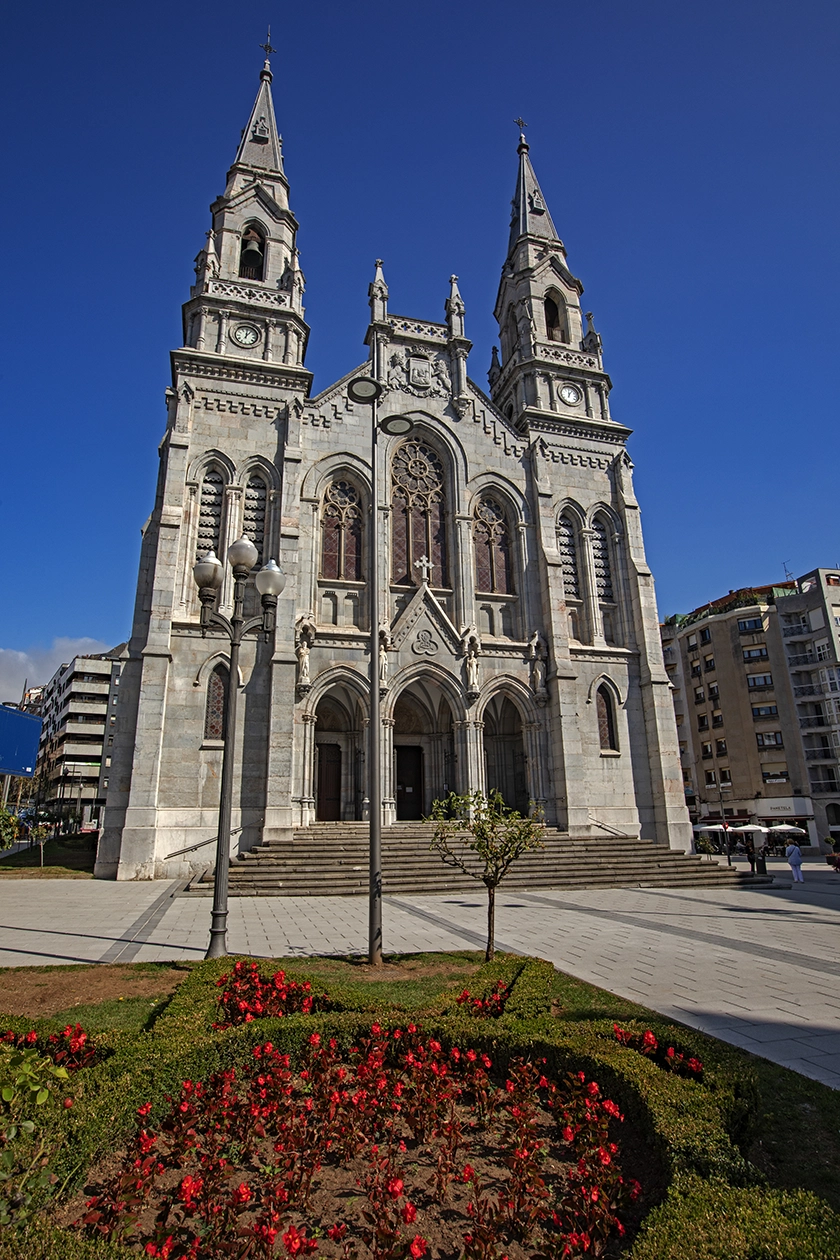
La Cámara Street is currently the city’s main thoroughfare, created in 19th-century bourgeois Avilés to connect the town with the Sabugo neighbourhood. En su recorrido destaca el palacio de Maqua, construido en 1855 por encargo del primer marqués de San Juan de Nieva y la Plaza del Mercado o de los Hermanos Orbón, quizás el espacio arquitectónico más singular de Avilés. At the end of the street and located in La Merced Square, the Church of St. Thomas of Canterbury, or New Church of Sabugo, was built in 1903 with stones from the old La Merced Convent, which was demolished around 1895.
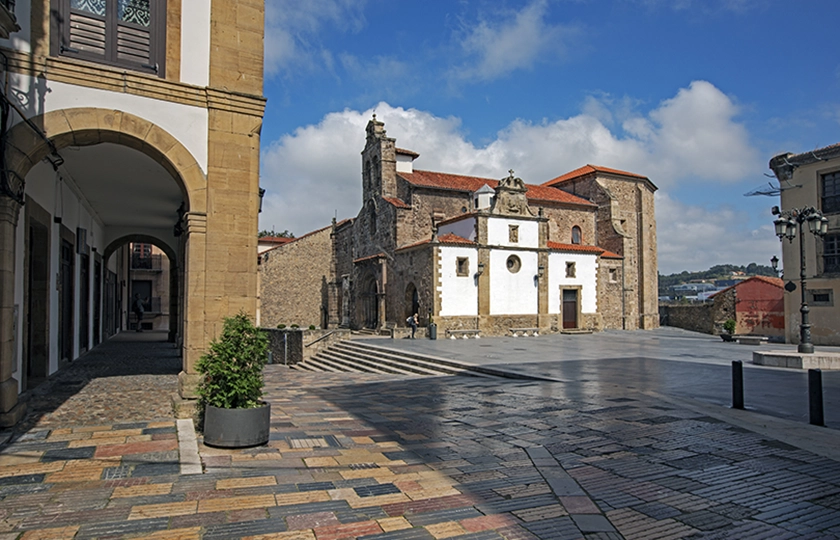
We are in the fishing district of Sabugo and we cannot miss visiting the Plaza del Carbayo with the old church of Sabugo. It owes its name to a large carbayo (the name given to oak trees in Asturias) that stood in the centre of the square. This space owes its name to a large carbayo, the name given to oak trees in Asturias, which was planted in the centre of the square. These trees were very important because they were used to build fishing boats. Finally, the old church of Sabugo dates back to the 13th century and on one of its sides is the ‘Mesa de Mareantes’, a meeting point for fishermen to make their fishing plans.
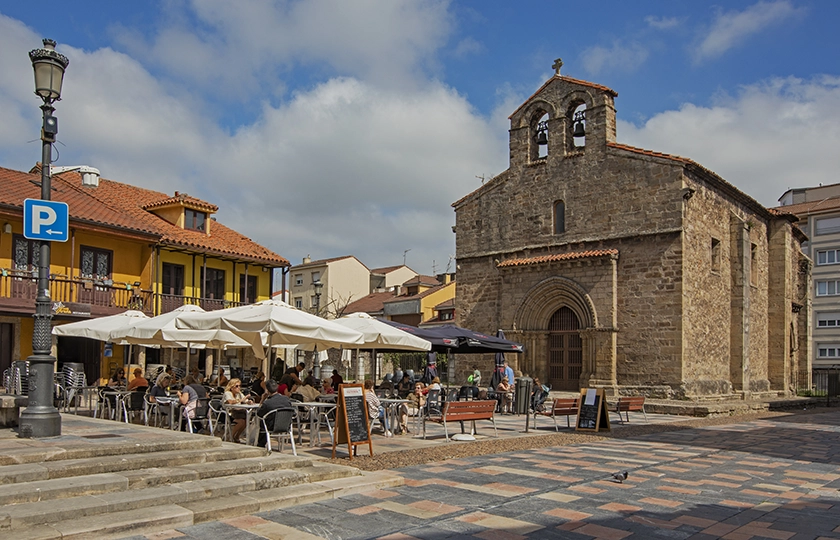
Today, this square is one of the main meeting places for the people of Avilés, ideal for enjoying a few “culines” of cider or sampling the local cuisine at one of its outdoor cafés.
In medieval times, Rivero Street was the point of entry and exit for goods arriving by ship at the dock bound for Oviedo, as well as being part of the Way of St James. Highlights include the 17th-century chapel of Santo Cristo del Rivero y San Pedro and the 19th-century fountain of Los Caños de Rivero. It is also one of the access points to Ferrera Park and the French Garden of the Marquis of Ferrera.
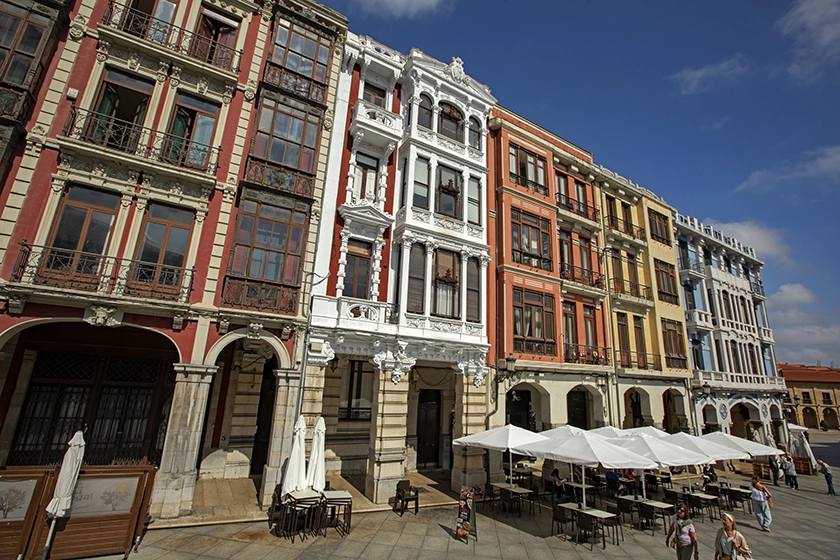
Next to Ferrara Palace is Calle de San Francisco, lined with beautiful modernist buildings which, together with the Caños de San Francisco fountain, the church of San Nicolás de Bari and Balsera Palace, make it one of the most beautiful streets in the city. Next to Ferrara Palace is San Francisco Street, lined with beautiful modernist buildings which, together with the Caños de San Francisco fountain, the church of San Nicolás de Bari and Balsera Palace, make it one of the most beautiful streets in the city. The church of San Nicolás de Bari or San Francisco was built mainly in the 14th century as part of a monastery belonging to the Franciscan Order. Inside, there is a remarkable Roman marble capital that serves as a baptismal font. On the other hand, the Balsera Palace, located in Plaza de Álvarez de Acebal, is one of the most striking buildings in Avilés, as well as a clear example of the economic power of the bourgeoisie in the early 20th century. It currently houses the Julián Orbón Municipal Conservatory of Music.
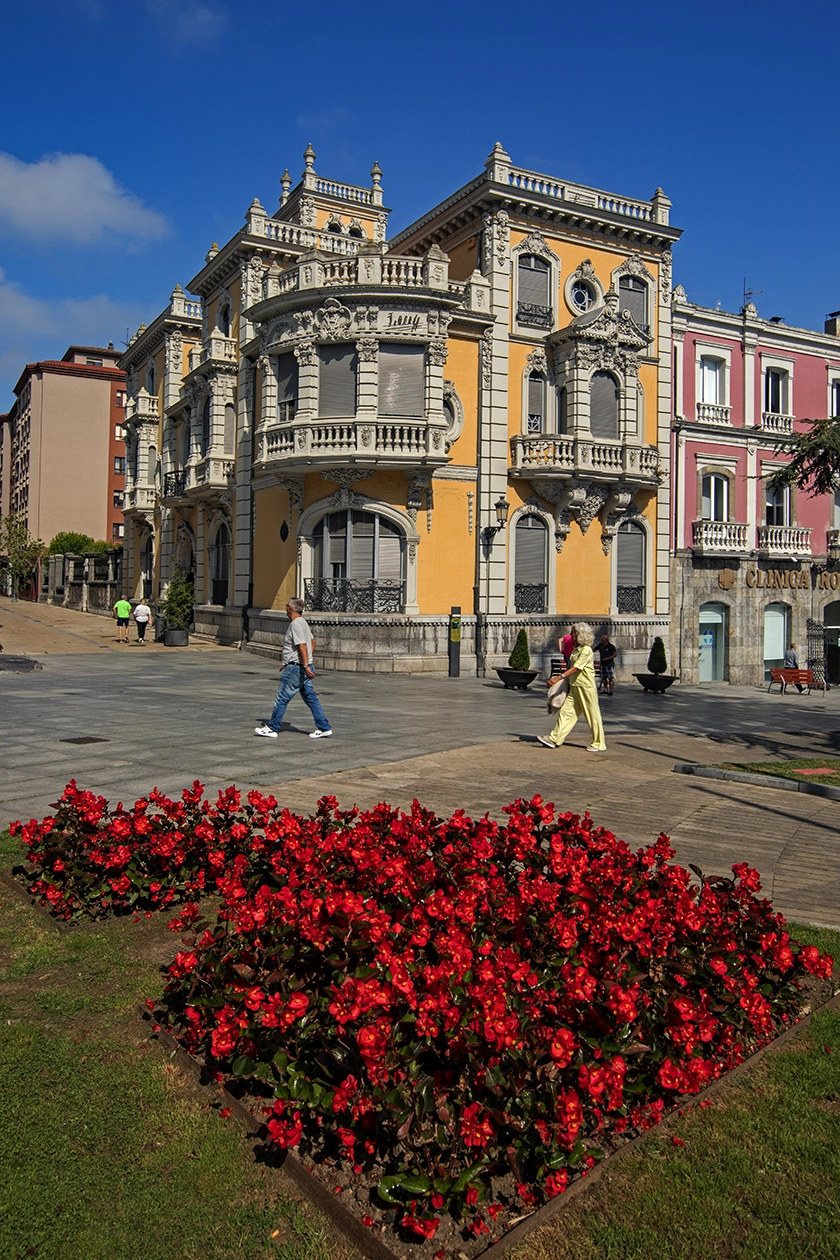
With the growth of the city in the 17th century, the first houses began to be built on Galiana Street, or the path that led down from Carbayedo to the urban centre. It features two different types of buildings: on one side, the humble dwellings of artisans, houses under arcades that they used to sell their products or work; and on the other side, the buildings of the Indianos, built in the early 20th century. A popular spot for enjoying the terraces during the day and the night-time atmosphere when darkness falls, on one side of the street is Carbayón Square, so named because it was once occupied by a forest of Carbayos trees and was the site of the first livestock market in Asturias at the end of the 18th century, of which a drinking trough remains in the lower part of the park. From this street, you can also access Ferrera Park and the French garden of the Marquis of Ferrera.
La Carriona Cemetery
It is increasingly common to find a cemetery among the attractions promoted by a destination, and Avilés is no exception. The La Carriona cemetery was started in 1888 and inaugurated in 1890, at a time when the town was flourishing due to the return of the Indianos who had made their fortune in America. Not content with constructing important buildings within the town, they wanted to demonstrate their economic power after death with mausoleums adorned with sculptures of great beauty. Some of the most impressive are the tombs of the Marquise of San Juan de Nieva, made of Carrara marble, that of Armando Palacio Valdés, one of the most important writers of Spanish realism, and that of the family of the Marquis of Teverga.
Óscar Niemeyer International Cultural Centre
Avilés is a city brimming with cultural life, deeply committed to literature, music, theatre, cinema, and painting. The Palacio Valdés Theatre and the Oscar Niemeyer International Cultural Centre are two venues where various artistic and cultural activities are held, much to the pride of the people of Avilés.
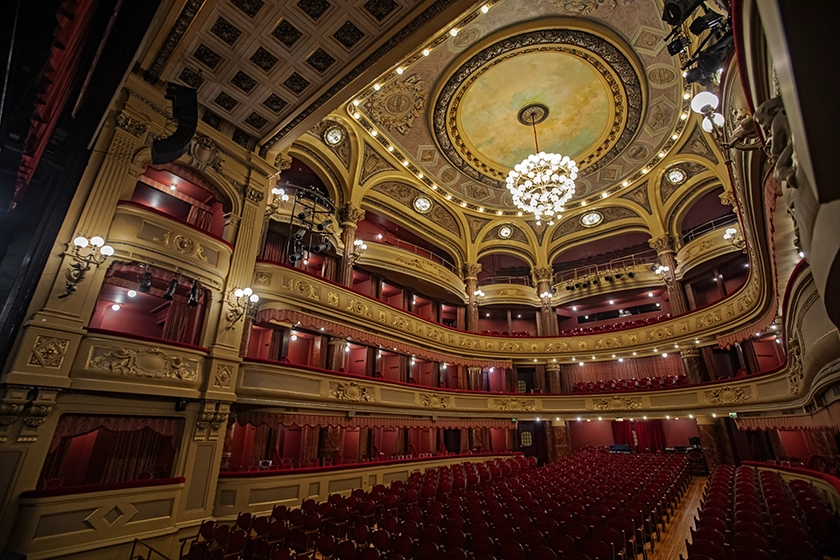
The Teatro Palacio Valdés was inaugurated in 1920 when the city had only twelve thousand inhabitants, which clearly demonstrates the cultural and artistic interests of its residents. With a beautiful neo-baroque façade, the interior is adapted to the ‘Italian-style’ theatre structure: a horseshoe-shaped auditorium and several floors with boxes and galleries. Its curtain was down from 1972 to 1992 when it reopened after a complete refurbishment, thanks mainly to the mobilisation of citizen groups, which proved crucial to its relaunch.
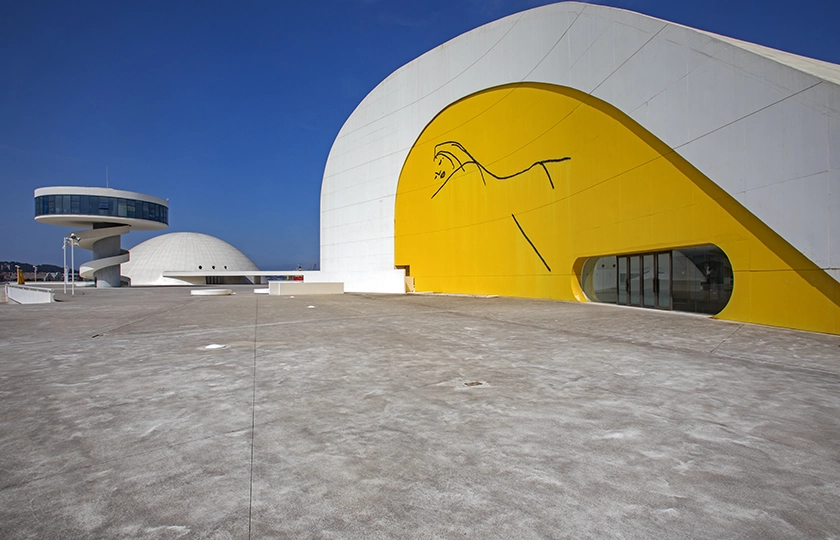
The great industrial revolution brought about by the steel industry in contemporary Avilés shaped the post-industrial landscape of the city, inspiring the architectural genius Óscar Niemeyer in the design of the Óscar Niemeyer International Cultural Centre and symbolising the urban and sociological renewal that the area underwent. It is the great cultural landmark of Avilés that has helped it to be recognised beyond our borders, a gift from the Brazilian genius to commemorate the twenty-fifth anniversary of what is now the Princess of Asturias Foundation, an award he received in 1989. The cultural centre is one of the few works outside his country that bear his signature and is considered the most important and beloved outside Brazil.
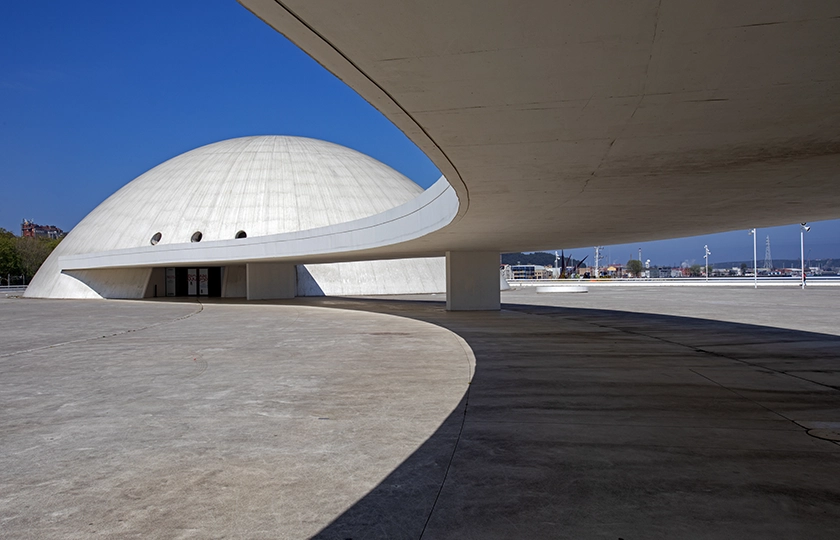
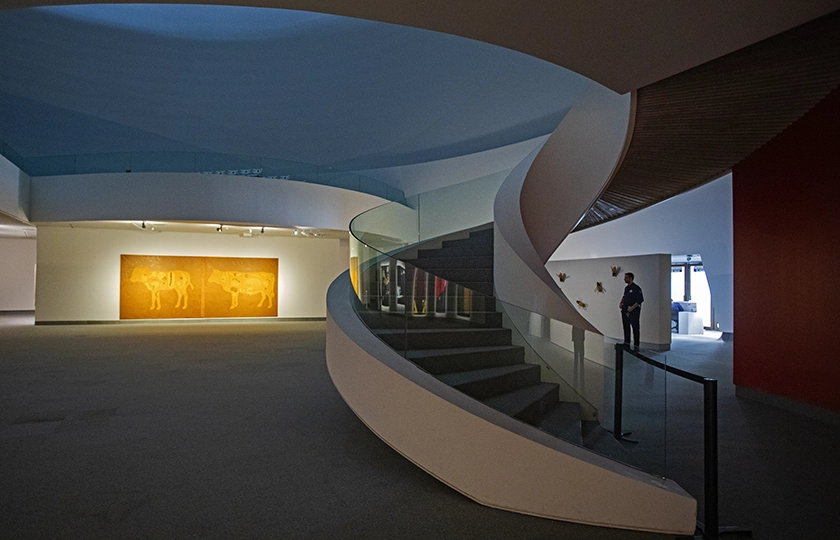
Built in concrete and with white as the main colour, the architectural design consists of five different spaces. The Square, an open space for public use where cultural or recreational activities can be held; the four-thousand-square-metre semi-spherical dome, an open-plan building intended for exhibitions; The Tower, which stands twenty metres high and offers a privileged viewpoint over the city and its estuary, is accessed by a spiral staircase. It currently houses Yume, a restaurant with innovative techniques and an artistic approach that transforms humble ingredients into surprising experiences. The Auditorium, a versatile space that hosts all kinds of shows. Its main hall has a stage that can be opened up onto the square outside, while temporary exhibitions are held in the foyer. Finally, the multipurpose Building, with an aesthetic in which straight lines play a leading role, serves as the link between the auditorium and the dome. It has exhibition halls, meeting rooms and a cinema.
As for the cultural programme, it revolves around music, cinema, theatre, dance, exhibitions and the spoken word, with the aim of reaching all audiences.