

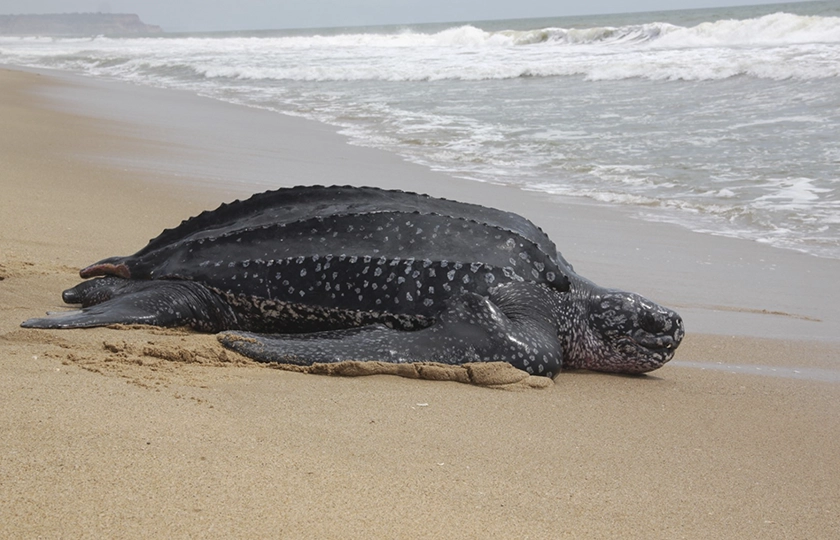
- Between September and April, Angola’s beaches are the setting for one of the great natural cycles along its coastline: the arrival of sea turtles to nest and the subsequent hatching of thousands of hatchlings.
- Five species use Angola’s coastline and, according to the latest annual report from Fundação Kissama, three of them breed on its beaches.
- The Kitabanga conservation project now monitors around 110 kilometres of coastline, from Cabinda to Namibe.
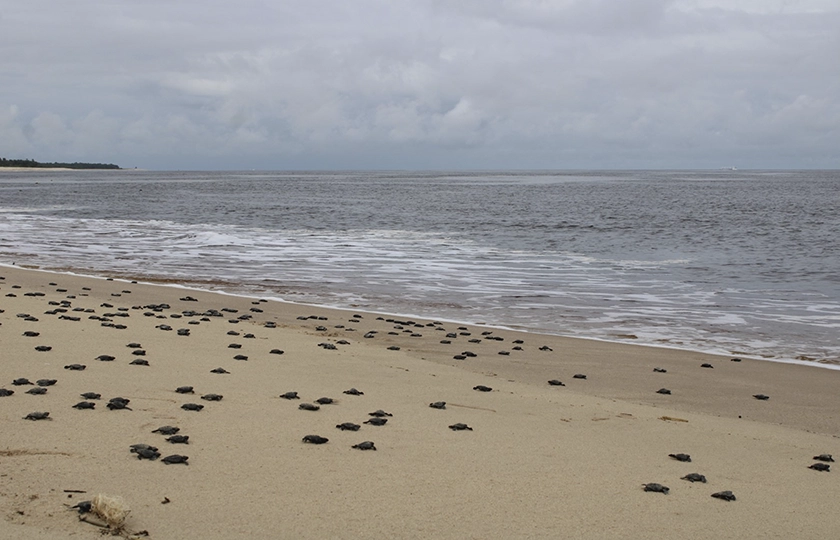
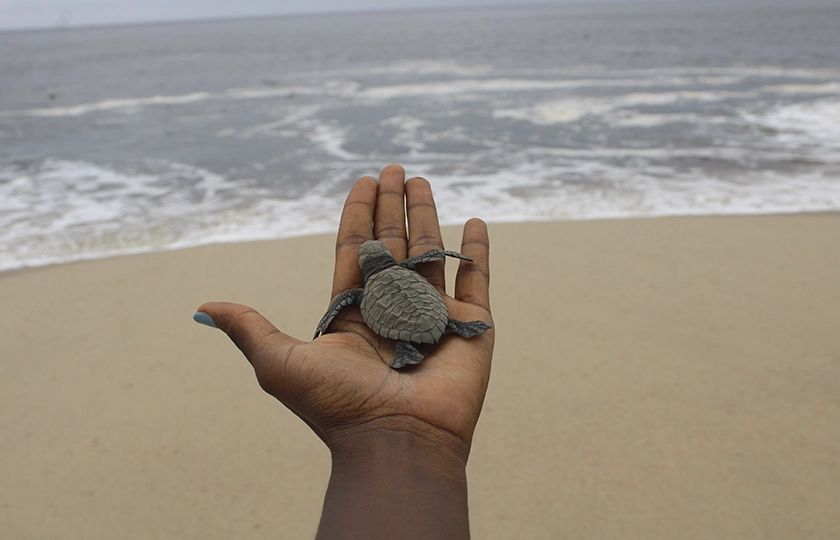
As night falls, some beaches in Angola are completely transformed. Tracks appear in the sand, stretching from the Atlantic and leading to the spots chosen by the sea turtles to lay their eggs. Weeks later, the journey is reversed: tiny hatchlings make their way across the beach towards the ocean.
The sea turtle nesting and monitoring season in Angola runs from September to April, offering an opportunity to discover a still little-known aspect of the country’s biodiversity. Five species use its coastline – the olive ridley, loggerhead, green, leatherback and hawksbill turtles – and three of them nest on its beaches, according to the Annual Activity Report of the Fundação Kissama.
A coastline of turtles, from north to south
The phenomenon extends along much of Angola’s Atlantic coastline. In 2025, the Kitabanga project expanded its network to Massabi, in Cabinda, adding 5.5 kilometres of beach and extending monitoring to approximately 109.5 kilometres of coastline between Cabinda and Namibe.
The network includes sites such as Praia dos Pobres, in Soyo; Palmeirinhas and Cabo Ledo, near Luanda; and Baía das Pipas, in Namibe, amongst other points along the coast. These are not tourist resorts built around the turtles, but rather bases and beaches from which conservation teams work during the season.
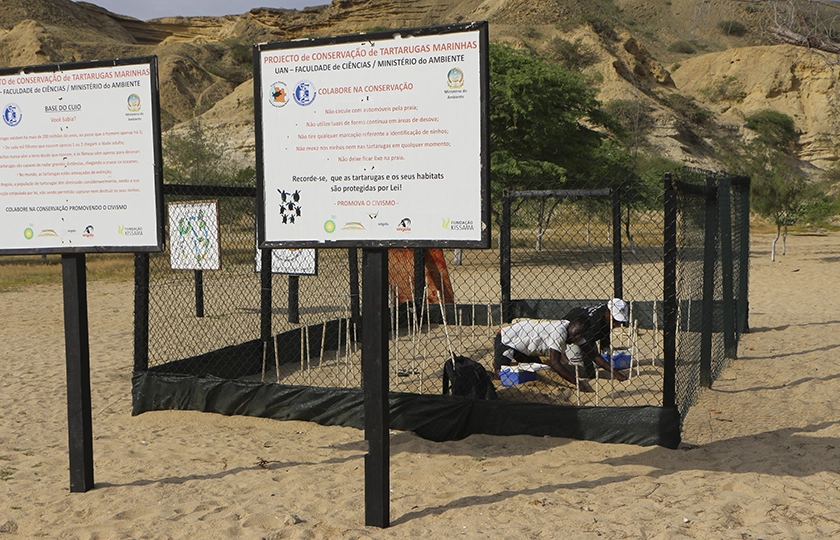
Behind this monitoring programme is Kitabanga, a project that has been running since 2003 in collaboration with the Department of Biology at Agostinho Neto University. Its teams patrol the beaches, identify and protect the nests, and relocate those found in high-risk areas when necessary. The scale of the phenomenon is reflected in the results for the 2024/2025 season: more than 2,500 nests recorded and over 240,000 hatchlings released into the sea, within a network of 18 bases supported by around 80 guardians from coastal communities.
Experiencing conservation from the beach
For travellers, Kitabanga also offers the chance to gain an insider’s view of this work. The project allows visitors to tour some of its bases and observe conservation work first-hand, always in coordination with the teams on the ground.
Its nest adoption programme enables participants to track the progress of a specific clutch and visit the nest at the relevant base or beach. When the natural cycle and conservation protocols allow, participants can also witness the hatching and follow the hatchlings’ journey to the ocean.
This is not, however, a scheduled event. Nature sets the timetable, and any observation depends on how the nests develop and the specialists’ criteria. This is precisely where much of the experience lies: getting up close to a natural process in its own environment and understanding the work required to protect it.
The local communities themselves are an essential part of this story. The so-called ‘Turtle Keepers’ take part in the daily monitoring of the beaches, whilst educational and awareness-raising initiatives extend conservation efforts beyond the nesting areas. In 2025, for example, coastal clean-up campaigns were carried out in six provinces, alongside environmental literacy programmes aimed at different audiences.
The turtle season thus offers another way to explore Angola: following the Atlantic coast, where nature, communities and conservation are all part of the same journey. Because some of the country’s most extraordinary wildlife is not always found inland. Sometimes it begins right where the beach ends.
Practical information
- Destination: Angola’s Atlantic coast, with Kitabanga Project monitoring sites spread from Cabinda to Namibe. In 2025, the network covered approximately 109.5 km of monitored beaches.
- Season: September to April, coinciding with the sea turtle nesting and monitoring season on the Angolan coast.
- Experience: it is possible to visit the Kitabanga Project’s bases and monitoring sites and learn about its conservation work first-hand, subject to prior arrangement with the team.
- What you can see: nest monitoring, the work of community rangers and conservation teams, and, depending on the time of the season and weather conditions, activities related to turtle nesting or hatching.
- Nest adoption: Kitabanga runs a programme that allows you to adopt a nest, monitor its progress and visit the relevant base or beach. Where possible, participants can also witness the hatchlings’ journey to the sea.
- Planning: hatching dates are estimated and may be brought forward or delayed depending on natural conditions. Visits must be arranged in advance with Kitabanga, and travel to the bases, as well as the associated logistics, is the responsibility of the visitor.
- Entry into Angola: Spanish citizens are exempt from tourist visa requirements for stays of up to 30 consecutive days per entry and a maximum of 90 days per year. A passport valid for at least six months and an international yellow fever vaccination certificate are required.
Further information at: https://kitabanga.org/index.php/en/
About ANGOLA
Angola is one of the last great adventures yet to be discovered on the planet: a hidden gem in south-west Africa that astonishes with its unspoilt nature, cultural diversity and extraordinary scenic richness. The continent’s seventh-largest country offers landscapes ranging from tropical rainforests to endless deserts, shaped both by the legacy of the Kingdom of Kongo and the influence of Portugal’s colonial history. Its capital, Luanda, is the gateway to the Atlantic and a true melting pot of African, Portuguese and indigenous influences, where music, dance and cosmopolitan energy pulsate with vigour. Under the slogan “Visit Angola – The Rhythm of Life”, the country presents itself as an authentic destination for explorers and lovers of nature and culture seeking to discover a different, genuine Africa, full of rhythm.
Source: KLEBER Group