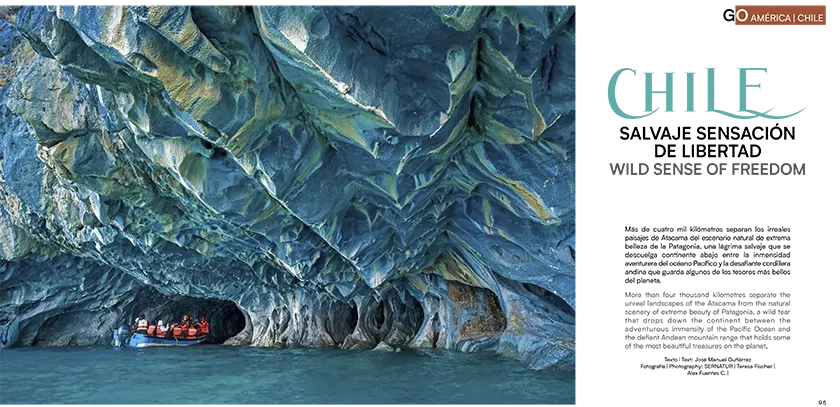
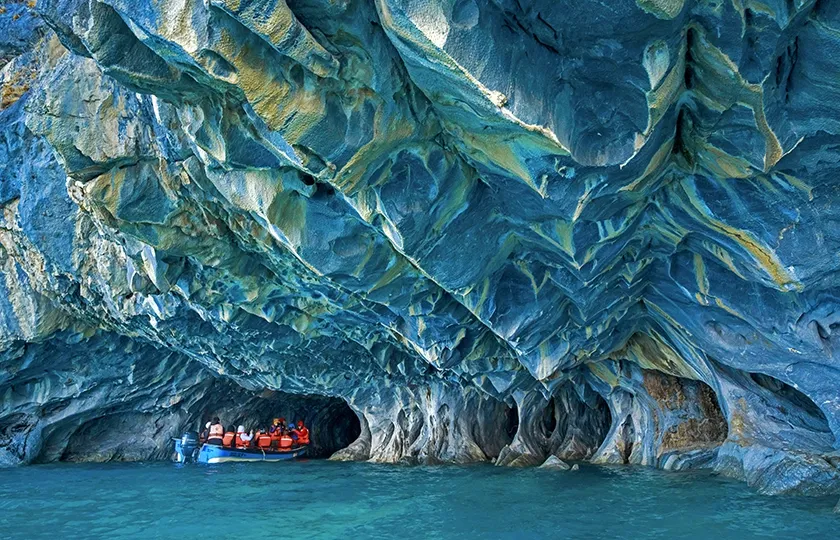
More than four thousand kilometres separate the unreal landscapes of the Atacama from the natural scenery of extreme beauty of Patagonia, a wild tear that drops down the continent between the adventurous immensity of the Pacific Ocean and the defiant Andean mountain range that holds some of the most beautiful treasures on the planet.
Chile is one of the most extraordinary destinations in the world. Travelling through it from north to south brings with it a permanent enjoyment of landscapes from another planet, of small fishing villages or serene hamlets where the customs of the first settlers are still alive, of the untamed nature of the south or of the defiant southern tip of eternal ice and inverted waterfalls. And if you still want something more, just go to Easter Island to find the most magical landscapes in the world where the moai are the real stars.
The country with one of the best stargazing balconies in the world is a paradise for nature and outdoor lovers, with an extraordinary variety of landscapes including vineyards, volcanoes, deserts, beaches, lakes, glaciers and forests, as well as culture, excellent cuisine and hospitable people, making Chile a truly fascinating place where you can still be the only visitor.
North and Atacama Deser
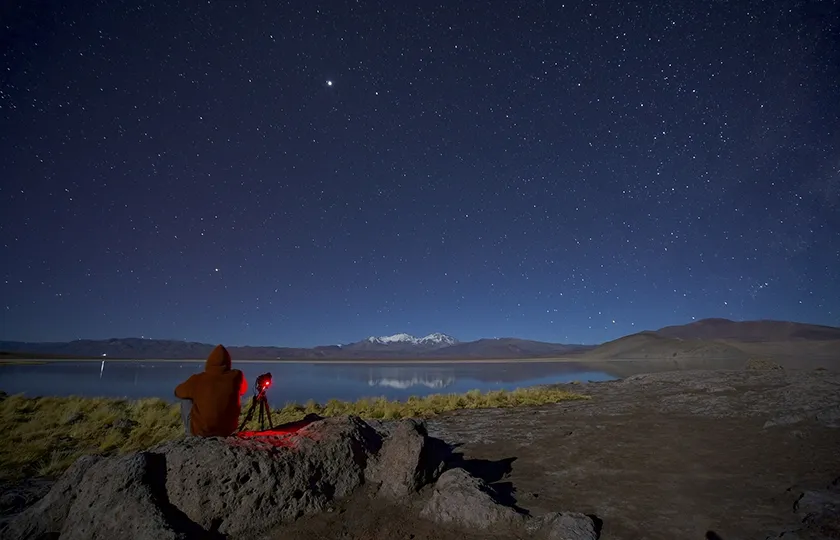
Located in the far north of the country, it is the driest continental space on the planet and one of the most beautiful places. Its clear, infinite sky is broken by the peaks of volcanoes at more than 5,000 metres which, like guardians, watch over empty spaces that are not exempt from the whimsical corners where life exists. The rocky desert is sometimes interrupted by the sight of rheas, guanacos and vicuñas, species typical of the Andean altiplano, by turquoise salty lagoons like those in the Flamingo National Reserve, by columns of water vapour, by the Valley of the Moon and Mars or by seas of dunes.
A surprising counterpoint to such aridity can be found in the Termas de Puritama at an altitude of over three thousand metres, a succession of staggered pools of sulphurous waters rich in minerals and with medicinal properties with a temperature of between 25 and 30 degrees Celsius.
It is stimulating to think about the reasons why humans settled in such a hostile but beautiful landscape. Possibly it was the wealth of minerals in the subsoil, and from there the first settlements arose. In the villages, ancestral customs and many curiosities are maintained, such as the church of Machuca, which seems to hang from the mountain, or the village of Toconao, built entirely of volcanic stone, where alpaca wool weavings are typical.
San Pedro de Atacama, located at an altitude of 2,450 metres, is the region’s centre of reference. Its grid-like urban layout with unpaved streets, including the one known as Caracoles (snails) where souvenir shops and colourful houses with thatched roofs make for a seductive picture. This village of craftsmen and friendly people is the starting point for all the excursions and activities that the magical desert has to offer.
For ethnography lovers, a very interesting route is the Inca Trail to the village of Chiu Chiu. Set in an oasis in the middle of the desert, it is inhabited by Atacameño communities that maintain the same welcoming and peaceful atmosphere as always, as well as a rich gastronomy of their own. The church of San Francisco, built in 1600 in adobe and cactus wood, following indigenous construction techniques, is particularly striking. Declared a National Monument, it is one of the oldest in Chile.
In addition, nightfall in the desert opens up an extraordinary celestial spectacle with the twinkling of millions of stars in the Atacama sky. Something of this magnitude can only be experienced here.
Downtown, Santiago and Valparaíso
The central part of the country signifies a change of register. The plains, which are structured by a succession of small valleys between the Andean mountain range and the Pacific Ocean, are home to the largest Chilean cities, which are no less interesting, not to mention beautiful corners full of charm.
Santiago, the state capital, seems multifaceted, modern and cosmopolitan, but beyond the general perception from the surrounding hills such as San Cristóbal, the best way to get to know the essence of the city is to walk through its neighbourhoods.
The Lastarria and Bellas Artes neighbourhoods, in addition to its many gastronomic options and intense nightlife, are home to a good number of cultural centres, art galleries, design and antique shops, bookshops and cinemas that transform it into an oasis of culture, with the Gabriela Mistral Cultural Centre, the Fine Arts Museum and the Parque Forestal standing out.
The Bellavista neighbourhood, known for its bohemian reputation and lively nightlife, also keeps alive the memory of Pablo Neruda in La Chascona, the house-museum where his most universal poet lived. Other centres of national importance such as the theatres of San Ginés, the Centro Mori and the Bellavista add value to the cultural interest of the neighbourhood.
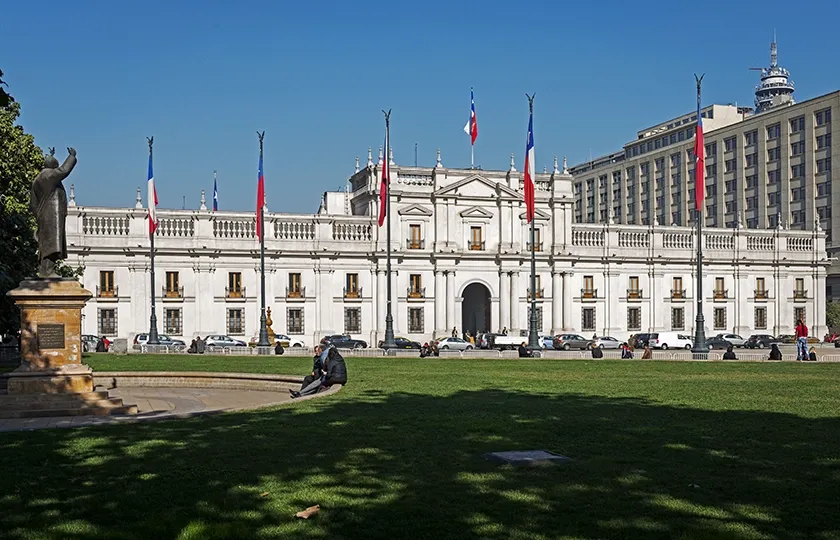
The Plaza de Armas is the centre of the historic centre and its streets are home to the oldest buildings such as the Municipality of Santiago, the cathedral, the Moneda Palace, the National Historical Museum and the Palace of the Courts of Justice. The wide gastronomic offer comes from the elegant restaurants and the “picadas” offered in lively street stalls.
The Italia neighbourhood is a suggestive and labyrinthine succession of avant-garde shops, collectors’ and craft shops, bookshops and art galleries, clothes shops and, of course, bars and restaurants where you can taste authentic Chilean food and the excellent wines that in recent decades have earned a well-deserved place on the world scene.
The highest viewpoint in Latin America at 300 metres high is the Sky Costanera in the heart of the city’s financial district, popularly known as Sanhattan. Its streets are lined with art galleries, exclusive shops and the finest restaurants. Next to it stretches the Bicentennial Park, a true lung of Santiago, ideal for relaxing walks and leisure time with family or friends.
In the region of Valparaíso, Viña del Mar is also known as the Garden City for being the ideal setting for good taste and relaxation, outdoor activities and high level gastronomy, sun and sea and incredible sunsets from the beach resorts of Recaña, Concón and Las Salinas. Its streets are a showcase of its stately past thanks to its palaces and mansions, many of them converted into museums or the glamorous Casino. A cultural icon of the city is its Festival de la Canción de Viña del Mar (Viña del Mar Song Festival), which brings together a multitude of music lovers every February.
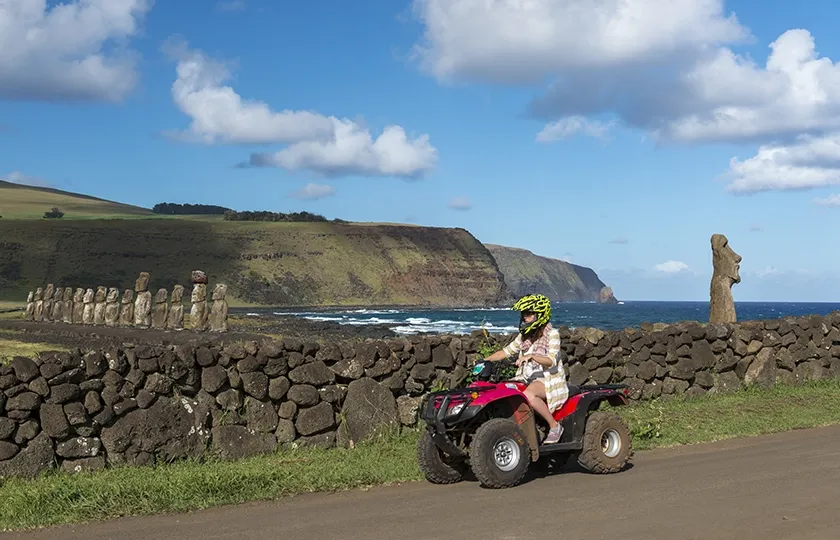
In the middle of the Pacific Ocean, distant Rapa Nui on Easter Island is the most isolated inhabited place in the world, which makes it fascinating and mysterious. Its landscape of volcanoes and its enigmatic archaeology with more than a thousand moais arouse all kinds of emotions, accentuated by the traditions of the Rapa Nui people that survive in their gastronomy or in their traditional Tapati festival.
South, lakes and volcanoes
The south of Chile, of unique and incomparable beauty, is a land of lakes and volcanoes, of parks and nature reserves, of warm and welcoming people and of traditions embodied in the Mapuche people. The Araucaria, Los Rios and Los Lagos regions are dotted with these geological formations, and the Seven Lakes Route is the best way to discover some of these wonders.
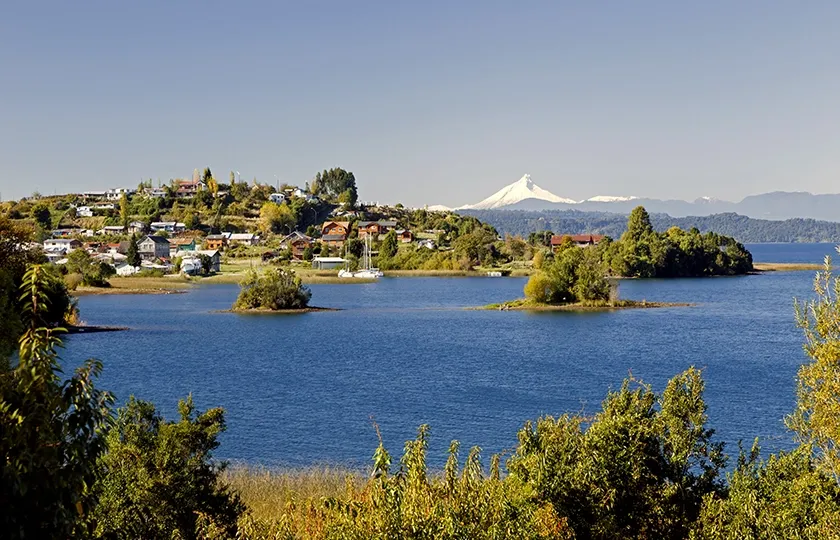
Lake Calafquén has seven islands and is an important tourist centre where swimming, sport fishing and yachting can be practised; Neltume with some of the most spectacular views of the Seven Lakes circuit such as the one formed by the Villarrica volcano, the adjoining river valley and the lake itself and with the Mocho Choshuenco volcano in the background; Panguipulli, with its beautiful turquoise waters, surrounded by impressive mountains and presided over by the Villarrica volcano, is also a protagonist of the Seven Lakes circuit; the Pellaifa which, although not suitable for water activities or bathing, is surrounded by mountains and volcanoes and is one of the most beautiful; the Pullinque of glacial origin and dotted with islets; the Riñihue surrounded by volcanoes, the Villarica and the Lanín among others, and with beautiful beaches where you can do different nautical activities and the Pirihueico which invites you to travel on the barge “Hua Hua” through a nature reserve of native forest.
Chile has the second largest and most active volcanic chain on Earth and has the two most active volcanoes in South America: Villarrica and Llaima, many of which are located in national parks or reserves. Lonquimay and Tolhuaca in Nalcas National Reserve; Llaima and Sierra Nevada in Conguillo National Park; Villarrica and Quetruoillán in Villarrica National Park; Mocho Choshuenco in Mocho Choshuenco National Reserve and Puyehue, Carrán Los Venados, Casa Blanca and Antillana Volcanic Complex in Puyuhue National Park.
Southern Chile boasts a unique pristine scenic beauty and the cultural heritage of its native peoples.
Patagonia and Antarctica
An almost untouched nature full of mountains, fjords, glaciers, forests, steppes, pioneer villages where you can breathe the cattle tradition and the gaucho culture, together with important cities, is part of what Chilean Patagonia has to offer.
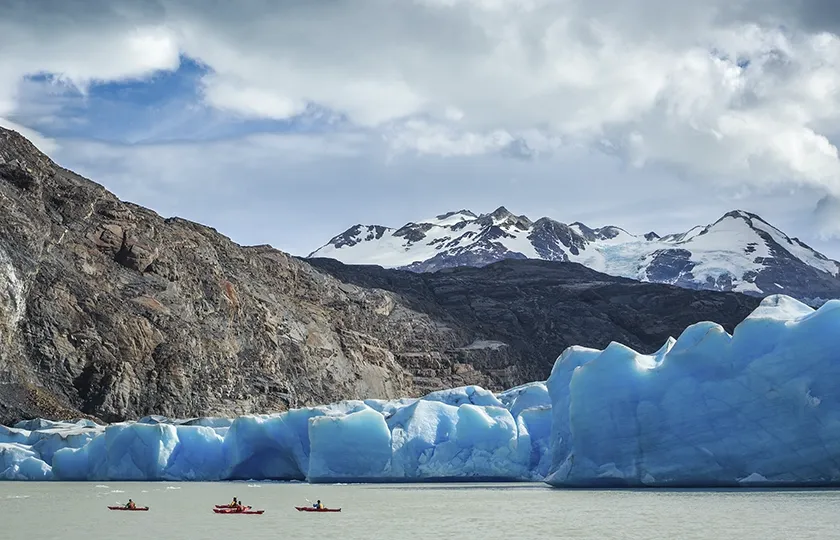
Traveling the Carretera Austral is one of the most fascinating experiences you can have.
Torres del Paine is one of its emblems with hills, waterfalls, lakes and unforgettable panoramic views of the Southern Ice Fields; the Capillas de Mármol natural sanctuary, declared a National Monument or the national parks Cerro Castillo, Laguna San Rafael or Queulat, are a must on this exciting journey to the ends of the earth.
There is also the possibility of crossing the fjords and channels to reach the mythical Cape Horn, the southernmost point of the continent, and continue on to Antarctica.
One thing is for sure: touring Chile can be transformative, but it is sure to be unforgettable.