

Bookings for the night of 12 August have risen by 260 per cent in A Coruña, 170 per cent in León and 120 per cent in Burgos, whilst cities and regions less commonly visited in summer are preparing to welcome new visitors.
The total solar eclipse on 12 August will not only have Spain looking up at the sky. The phenomenon is already influencing travel decisions and shifting some of the tourist demand towards cities, towns and rural areas that do not usually feature prominently in the summer travel rush.
According to data from Booking compiled by El País, bookings for the night of the eclipse have risen by 260 per cent in A Coruña, 170 per cent in León and 120 per cent in Burgos compared with the same period last year. Airbnb has also noted that bookings in rural destinations along the eclipse’s path have tripled, with some towns recording up to ten times more demand than in 2025.
For Mundo Amigo, an agency specialising in cultural travel, this trend represents an opportunity to raise the profile of the heritage, history and identity of the regions crossed by the path of totality. The challenge will be to ensure that interest is not limited to simply travelling to the destination, observing the eclipse and leaving a few hours later.
“The eclipse is demonstrating that an exceptional event can completely transform interest in a region. Towns that do not normally feature at the top of summer itineraries are now at the centre of the conversation and have the opportunity to showcase their heritage, history and cultural identity”, explains Mikel González, director of Mundo Amigo.
The first total eclipse in over a century
The eclipse on 12 August will be the first total solar eclipse visible from the Iberian Peninsula in over a century. Its path of totality will cross Spain from west to east, from A Coruña to Palma, passing through cities such as Oviedo, León, Bilbao, Zaragoza and Valencia.
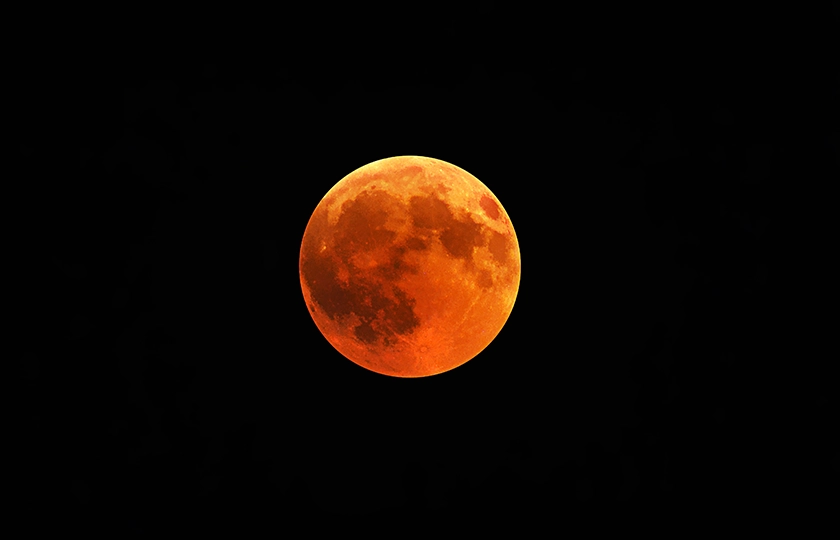
The phenomenon will take place at sunset, when the Sun is very close to the horizon. In towns and villages within the path of totality, the Moon will completely obscure the Sun for a few moments. Elsewhere in the country, the eclipse will be visible as a partial eclipse.
Beyond its astronomical significance, the path of the eclipse connects regions with very different landscapes, heritage and cultural identities. For Mundo Amigo, the event could serve as a gateway to gaining a deeper understanding of them.
Burgos already experienced the ‘eclipse effect’ in 1905
It would not be the first time that a phenomenon of this kind has temporarily transformed a region. On 30 August 1905, a total eclipse with a path across the Iberian Peninsula very similar to that of 2026 turned Spain into the international epicentre of astronomical observation.
Burgos was chosen as one of the main observation sites due to its location and the conditions of its sky. The city welcomed more than twenty international scientific teams and set up temporary facilities to house instruments, cameras, spectrographs and polarimetres.
The event also had a significant social and cultural dimension. Thousands of people travelled to Burgos, the trains were packed with visitors, and the city organised festivals, theatre performances, bullfights and a photography competition. There was even an attempt to observe the eclipse from hot-air balloons, in an initiative promoted by the Ministry of War.
More than a century later, the current rise in bookings shows that eclipses still have the power to alter travel patterns and temporarily place certain regions at the centre of national and international attention.
From observation to cultural experience
The eclipse thus presents an opportunity to diversify summer travel and showcase local heritage. To make the most of this, Mundo Amigo believes it is necessary to complement the observation with content that helps people understand both the phenomenon and the location from which it is viewed.
Visits to sites of historical and scientific heritage, tours relating to navigation and celestial navigation, meetings with astronomers and historians, activities in museums and planetariums, or guided observations would help to link astronomy with the art, architecture, history and identity of each region.
In A Coruña, for example, the phenomenon can be linked to the Tower of Hercules, the only fully preserved Roman lighthouse still in use for maritime signalling. The monument serves as a reminder of the importance that sky observation, coastal signals and navigation played for seafaring and the development of Atlantic routes since ancient times.
Other content could explore the representation of the Sun in art, the influence of astronomy on the organisation of calendars, the ways in which different cultures have historically interpreted eclipses, or the relationship between the position of the stars and the construction of certain buildings.
“The risk is that the experience is reduced to simply arriving, taking a photograph and continuing the journey. Travelling for cultural purposes means precisely the opposite: taking the time to get to know the area, connecting the phenomenon with its landscape and discovering the history that lies beyond that moment,” says Mikel González.
An opportunity that goes beyond a single night
For Mundo Amigo, the eclipse’s value for tourism and culture should not be measured solely by the increase in occupancy on the night of 12 August. The opportunity lies in encouraging visitors to stay longer, discover the local heritage and forge a Deep connection with the destination.
Incorporating cultural visits, educational initiatives and activities specific to each region can help ensure that the benefits also extend to museums, monuments, tour guides, cultural institutions and local businesses.
The National Geographic Institute points out that, as the eclipse will occur at sunset, it will be necessary to find a spot with a clear view to the west. During the partial phases, special eclipse glasses must be worn, and you must never look directly at the Sun without approved protection.
The eclipse on 12 August will also mark the start of an exceptional series of phenomena visible from Spain. On 2 August 2027, another total eclipse will occur, and on 26 January 2028, an annular eclipse will take place, completing what is known as the Iberian eclipse triad.
About MUNDO AMIGO
Mundo Amigo is an agency specialising in bespoke cultural travel for individuals, institutions and private clubs. Its programmes are centred on art, music, history, architecture and heritage, accompanied by experts and content that enable a deep understanding of each destination.
Throughout its history, Mundo Amigo has organised cultural programmes for institutions such as the Thyssen-Bornemisza National Museum, the Friends of the Prado Museum Foundation, the Guggenheim Museum Bilbao, the Reina Sofía School of Music and Club Matador, amongst others.
Source: MDG Comunicación