Known as “the mother of the world” or “cradle of civilisations” for the historical and cultural mark left by those who passed through here, the land of the pharaohs takes on a more universal dimension with the forthcoming opening of the world’s largest Egyptian archaeological museum.
It is hard to imagine that not far from there, on the other side of the sea, five thousand years ago people lived in tribal societies, while in Ancient Egypt they had the knowledge to build the most fabulous constructions ever made by mankind. Even today it remains a mystery how it was possible to carry out such architectural exercises with the technical means of the time and the mathematical precision employed.
Cities such as Thebes, Memphis or Alexandria, the pyramids of Giza and the Great Sphinx, the Abu Simbel, Karnak or Philae temples or the popular Valley of the Kings, together with the thousands of objects found, the hieroglyphs invented as a writing system and their knowledge of medicine, mathematics or astrology, make every step in the land of the pharaohs a lesson in living, unfinished history.
As the Egyptians say, “Egypt is the Nile” and the Greek historian Herodotus said that “Egypt is a gift of the Nile” and he was right.
The world’s second largest river, as well as a conduit for cultural exchange, is an artery of life in the middle of a desert landscape. A natural element of paramount importance for the ancient civilisation to flourish.
The Grand Egyptian Museum
In the countdown to its inauguration, what will be the world’s largest archaeological museum dedicated to a single civilisation is set to become the epicentre of Egyptology.
Designed by Heneghan Peng Architects, it is located just two kilometres from the majestic pyramids of Cheops, Chephren and Mykerinos and twenty kilometres from the city of Cairo. Despite being a large structure of one hundred and sixty-eight thousand square metres, it faces the challenge of being as unnoticed as possible within the environment of great historical value and not interrupting the view of any monument.
Until its official opening, tours are available by booking online, but are limited to the main reception area called the Atrium, presided over by a colossal eleven-metre-high statue of Ramses II and a small collection of objects, including several statues of Pharaoh Sesostris and Ptolemaic kings and queens, as well as a column of Pharaoh Merenptah, the outdoor gardens with the country’s only suspended obelisk, and the shopping area with cafes, restaurants and shops.
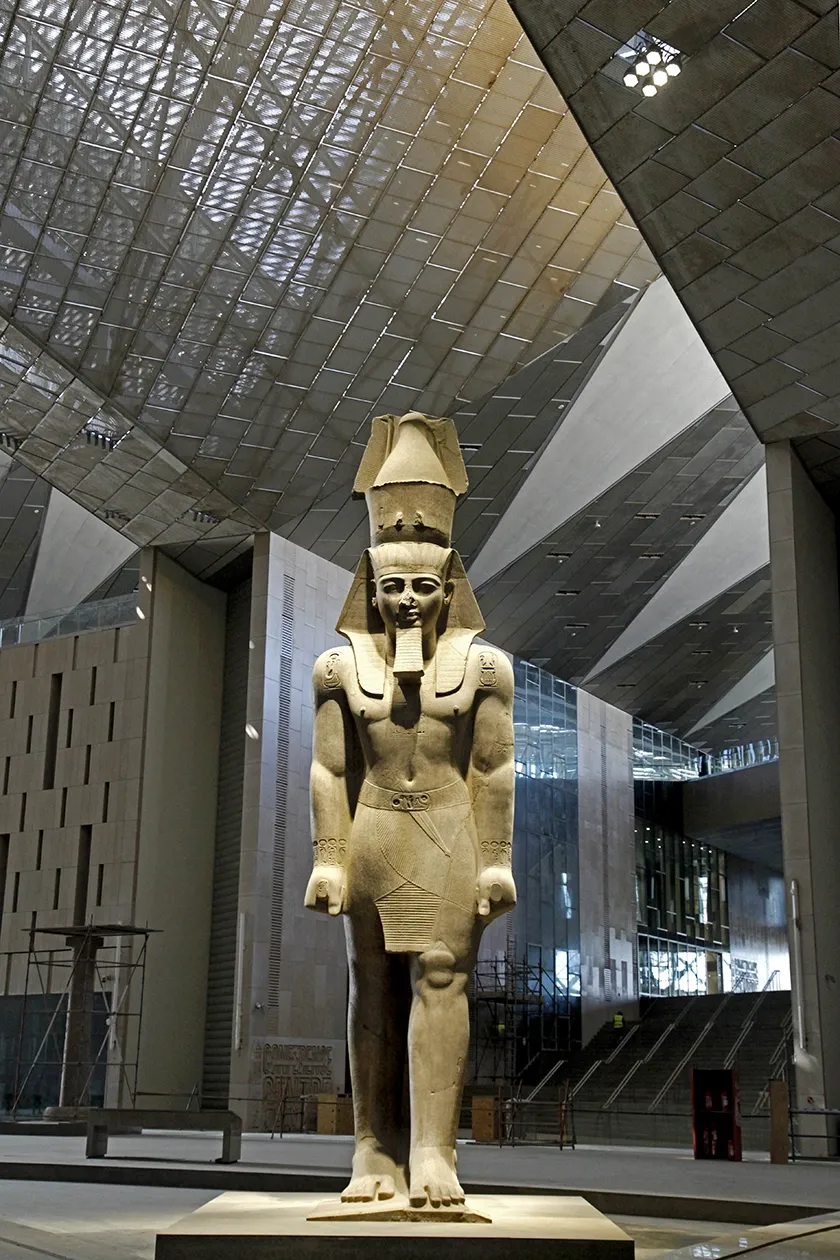
This great hall of the museum holds a unique surprise, as it has been designed to replicate a phenomenon that occurs twice a year, when the sun’s rays shine through the hole in the ceiling to illuminate the face of Ramesses II, as has been the case for over 3,000 years at the temple of Abu Simbel.
To visit the rest of the exhibition areas you have to wait for the opening to the public, a moment that will mark a turning point in our understanding of the magnitude of ancient Egyptian history, thanks to the exhibition of tens of thousands of objects from the fertile Pharaonic era, as well as two galleries reserved exclusively for the complete collection of the tomb of King Tutankhamun.
The complex will also include temporary exhibition halls, a children’s museum, a library, a cinema, an auditorium, a conference centre and various workshops.
In order to arouse collective interest in the significance that the opening of the Great Egyptian Museum will have for universal culture, various events have been held in recent years, such as the Egyptian Mummy Parade and the reopening of the Great Avenue of the Sphinxes in Luxor, an ancient drome or ceremonial road more than two kilometres long that linked the temples of Karnak and Luxor and the scene in the time of the New Empire of Ancient Egypt of the Feast of Opet.
A journey through the scenarios of history
We leave the Great Egyptian Museum behind and begin a journey with the ever-present Nile River as our travelling companion.
The first stop is undoubtedly the pyramids of Giza, the universal symbol of Ancient Egypt. The pyramids and the Sphinx are an astonishing monumental ensemble. The same goes for the first solar boat of Pharaoh Cheops, a vessel of more than forty metres in length that has recently been transferred to the Great Egyptian Museum, so we will have to wait a while to see it again.
The Valley of the Kings is located in the city of Luxor, on the western bank of the river. A colossal necropolis in which sixty-five burial mounds, some beautifully decorated, have been catalogued. Nearby is the most monumental of the funerary temples built in the valley, that of Queen Hatchesput, the first woman to hold the position of pharaoh.
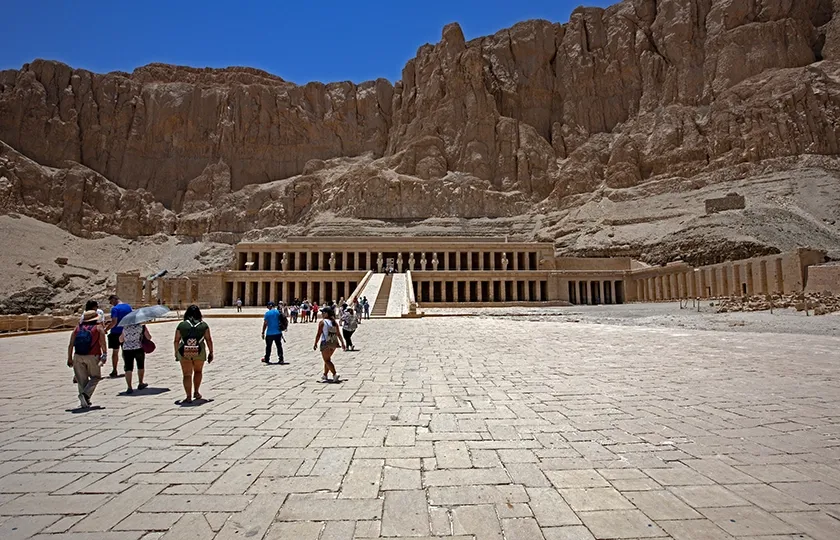
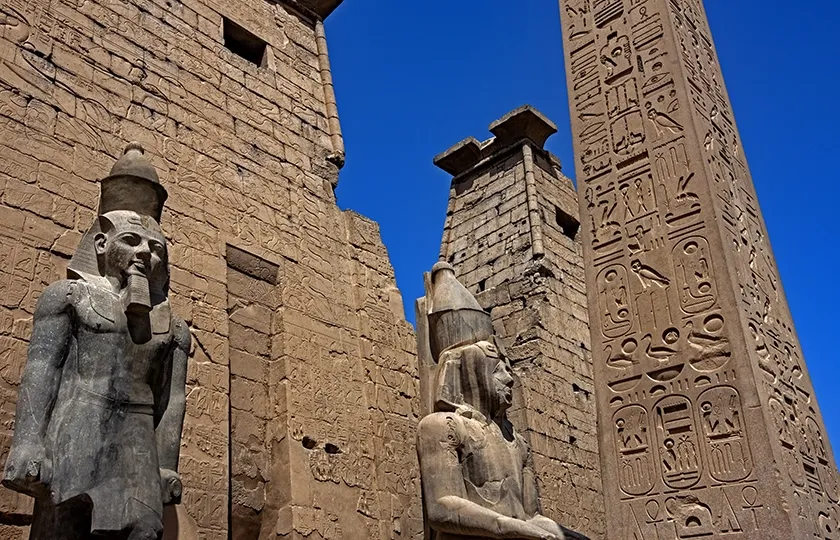
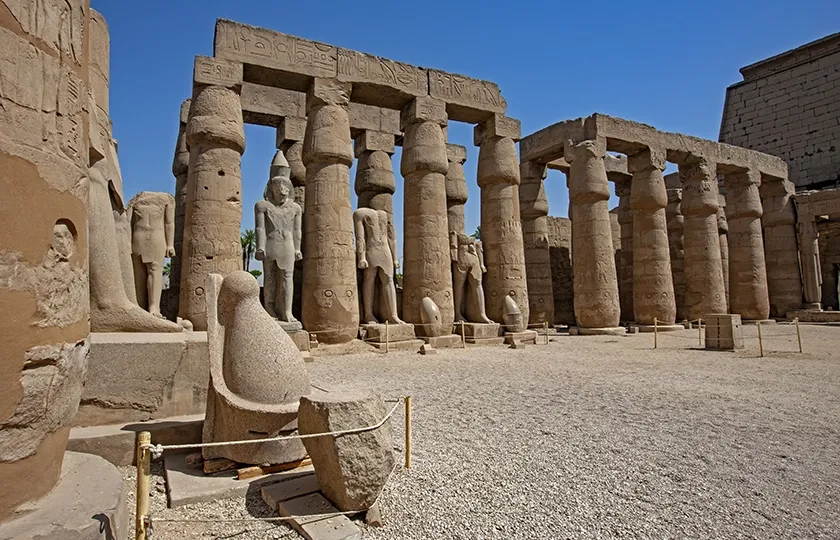
We cross the Nile to go to the temple of Karnak, one of the most spectacular places of worship of antiquity, where the Hypostyle Hall, a forest of stone formed by one hundred and thirty-four columns, is impressive. The temple of Luxor is a fascinating world of the gods to which only the priests and the pharaoh himself had access. The façade, the courtyards and the monumental colonnade that unites them all stand out.
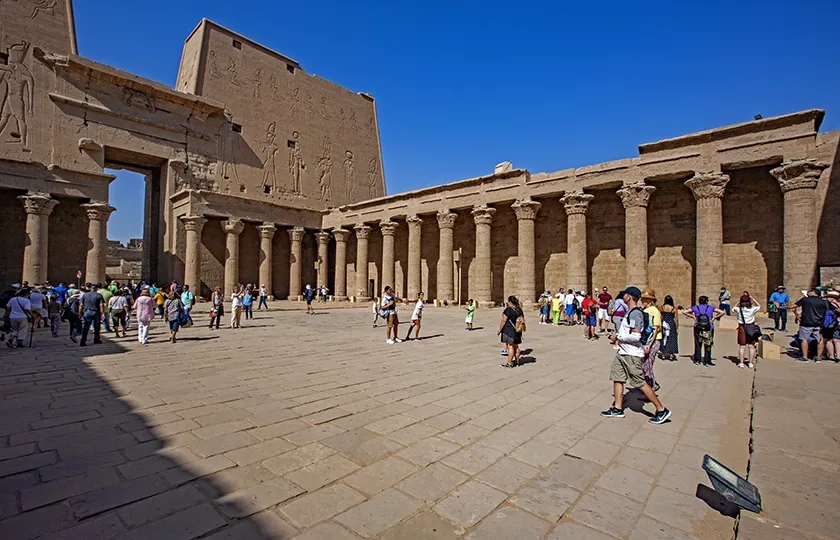
We continue upstream and arrive at the temple of Edfu. Dedicated to Horus, the falcon god, it is the second largest after Karnak and the best preserved. In this temple, which was once a Coptic church, it is surprising to see that some of the faces of the ancient gods have been destroyed, this was the work of the Coptic Christians who considered them to be pagan.
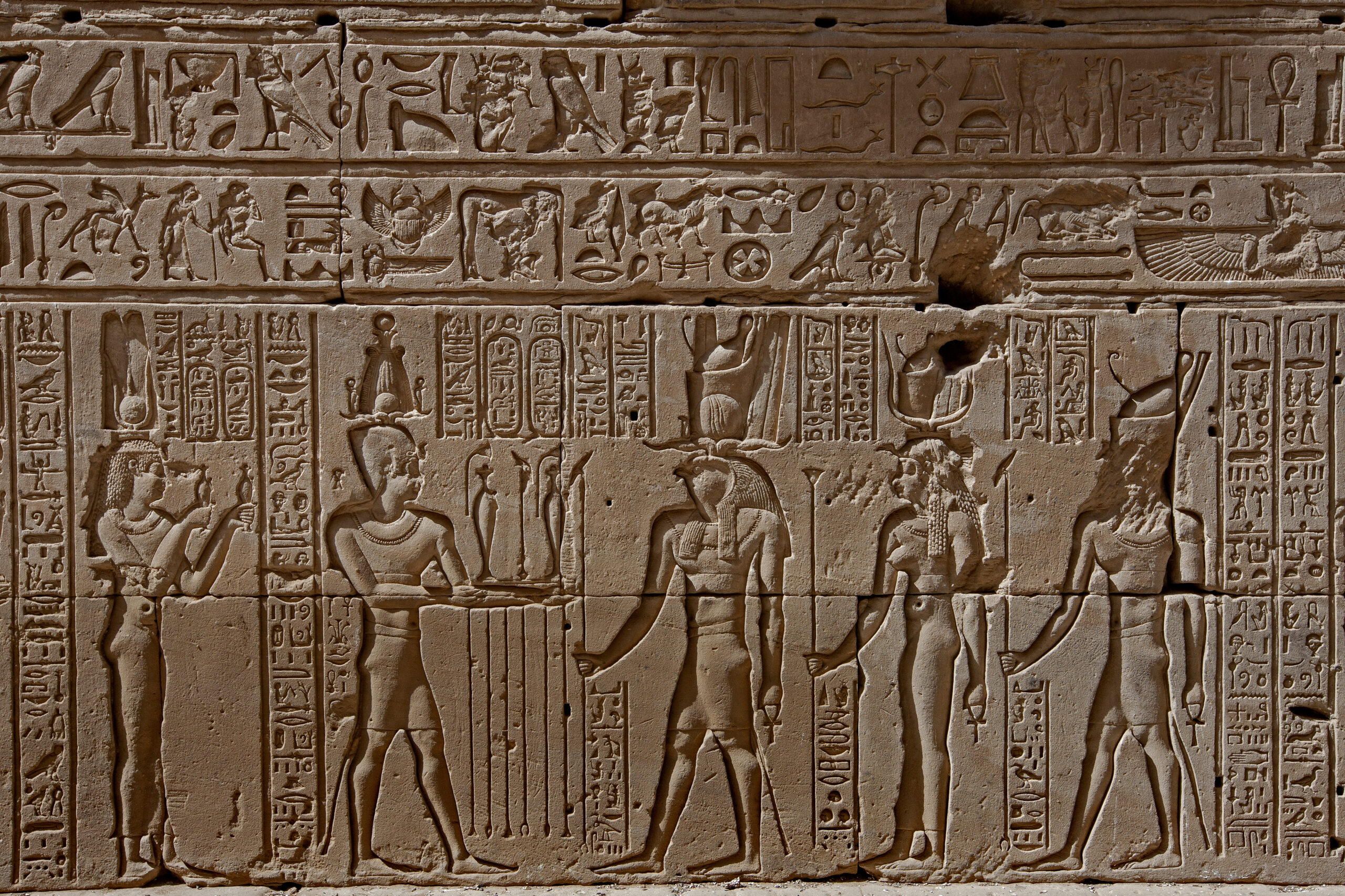
Another temple built in the Hellenistic period, as is the temple of Edfu, is the temple of Kom Ombo. Unusual for being dedicated to two gods, Sobek, the crocodile god, and Haroeris, Huros the Elder, and for being the only temple to feature a relief with surgical instruments. Situated by the Nile, it deserves to be admired at sunset.
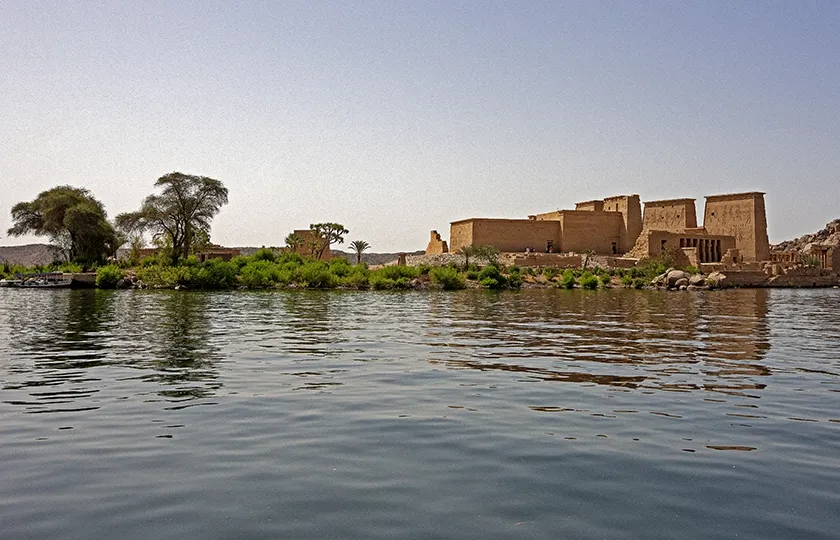
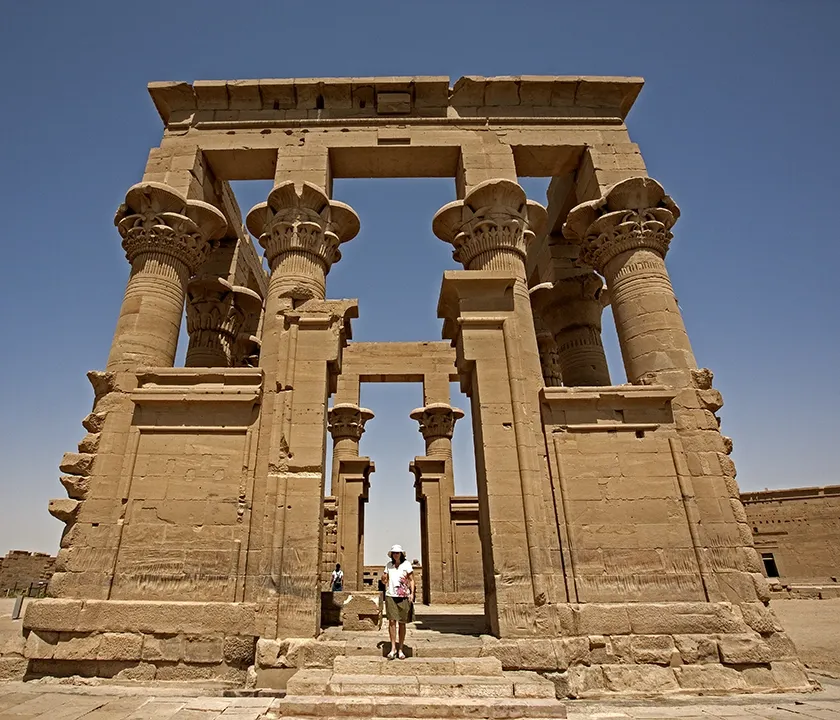
We approach the Aswan Dam but first we will visit the Philae temple. Moved to the island of Agilkia because it was one of those affected by the construction of the dam, it is dedicated to Isis, goddess of love. It is well worth a visit at sunset as it is less crowded and you can enjoy the sound and light show. As a curiosity, this temple represents the end of the pharaonic culture. and the last hieroglyphic the last hieroglyphic text was written here.
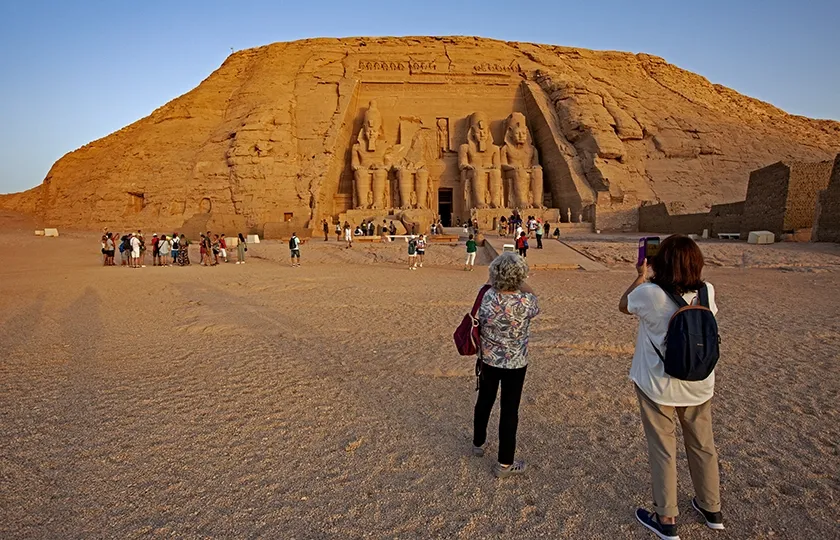
This fascinating journey comes to an end at Abu Simbel, the spectacular complex formed by two temples, that of Ramses II and that of his wife, the beautiful Queen Nefertiti. Also affected by the construction of the dam, UNESCO launched an international campaign to have the two temples dismantled in large blocks and reassembled above the water level. At the Temple of Ramesses we are welcomed by the four gigantic colossi that preside over the entrance and inside we marvel at the Hypostyle Hall with its eight Osirian statues, the reliefs detailing his military victories and the sanctum sanctorum. The Egypt of the pharaohs is an inexhaustible source of surprises, a deep wellspring of knowledge full of labyrinthine lines of work that the more they are studied, the more enigmatic they become. It will take many generations to come to have an approximate idea of the true dimensions of the first great Mediterranean civilisation and one of the most dazzling in human history.