
Círculo Fortuny addresses the new paradigm of luxury and Spain’s opportunities in high-impact tourism due to its combination of cultural wealth, gastronomy, hospitality and security compared to other European destinations.
Tax-free spending by non-EU tourists on high-end goods will grow by 5% in Spain in 2025, exceeding the global and European average.
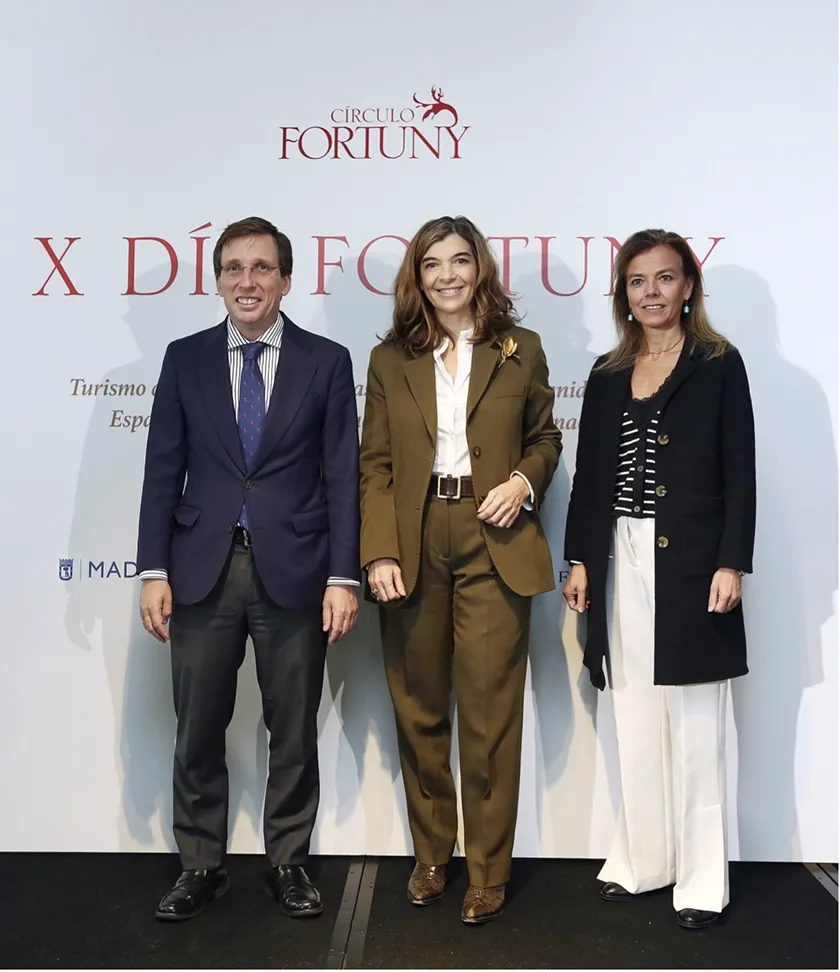
The Mayor of Madrid, José Luis Martínez Almeida, opens the tenth Fortuny Day.
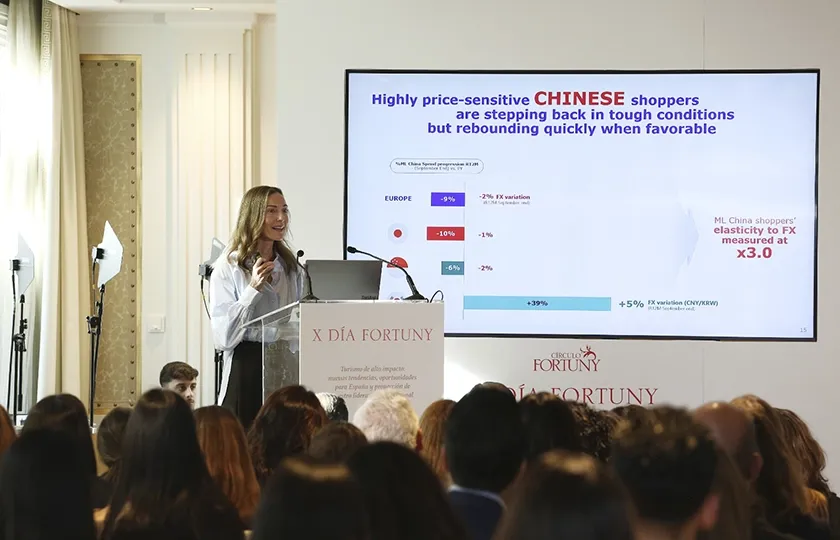
Círculo Fortuny celebrated the tenth edition of Fortuny Day in Madrid today, focusing on how Spain is positioning itself as a destination for high-impact tourists in a context of profound transformation in the luxury sector, which is shifting towards experiences, longevity and wellness, and emotional connection—trends that already define the decisions of high-end travellers—and where Spain has a great opportunity to become an iconic global destination. But it also focused on how our country is accelerating in high-end shopping tourism, as these tourists spend on average up to eight times more in Europe and four times more in Spain, according to the European Creative and Cultural Industries Alliance (ECCIA).
The new paradigm of high-end tourism is opening up an opportunity for Spain, thanks to its unique combination of quality of life, cultural richness, gastronomy, climate, safety and hospitality, which place it in a privileged position compared to other European destinations to lead high-impact tourism.
In the words of Círculo Fortuny president Xandra Falcó, ‘high-end tourism is redefining travellers’ priorities, who today seek wellbeing, authenticity and meaningful experiences. Spain has all the elements needed to lead this new era: a lifestyle admired around the world, an unrivalled cultural offering and a level of excellence that few countries can match. If we are able to align vision, investment and narrative, Spain can position itself not only as an attractive destination, but also as a global benchmark in high-impact tourism.’
Spain's opportunity, according to institutions and brands
To analyse this opportunity, Círculo Fortuny brought together representatives from companies and institutions such as Iberia, Lanserhof Group, Marugal, Nuba and Virtuoso, as well as Madrid City Council, who addressed both the institutional dimension and the vision of brands and companies.
According to Madrid’s mayor, José Luis Martínez-Almeida, in his opening speech, ‘I would like to acknowledge the role of the Círculo Fortuny, because thanks to its vision, we understood years ago the central objective of our tourism model for Madrid, which focuses on high-impact tourism that does not boast about the number of visitors, but rather measures the real impact in economic terms and, most importantly, in terms of coexistence. Based on this idea, we have developed the city’s tourism model, which is now a successful and well-established model, but that does not allow us to relax.’
‘Competition is increasing, and we must constantly reinvent ourselves while strengthening other markets with new air connections to consolidate growth and diversify travel origins and motivations. Our goal is not only to attract tourists, but to encourage them to return. This calls for distinctive, memorable experiences with Madrid character. We are doing this through a public-private partnership, which is undoubtedly one of our greatest strengths,’ concluded the mayor.
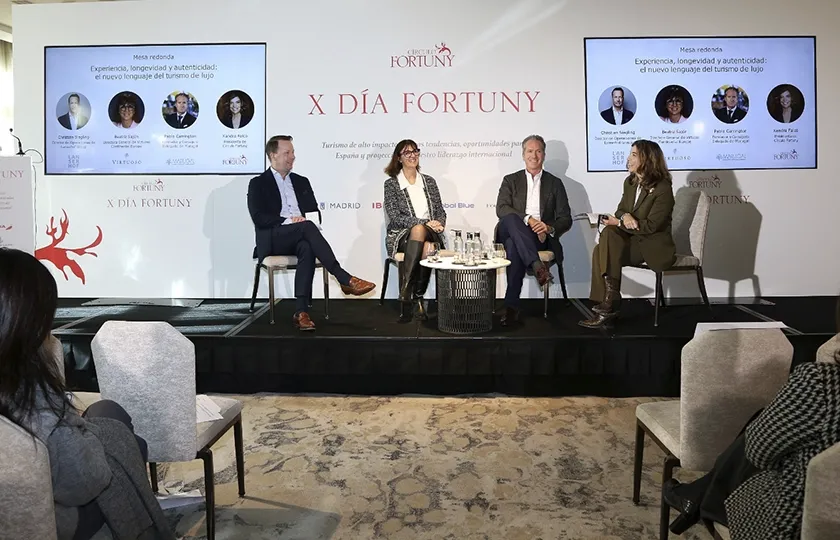
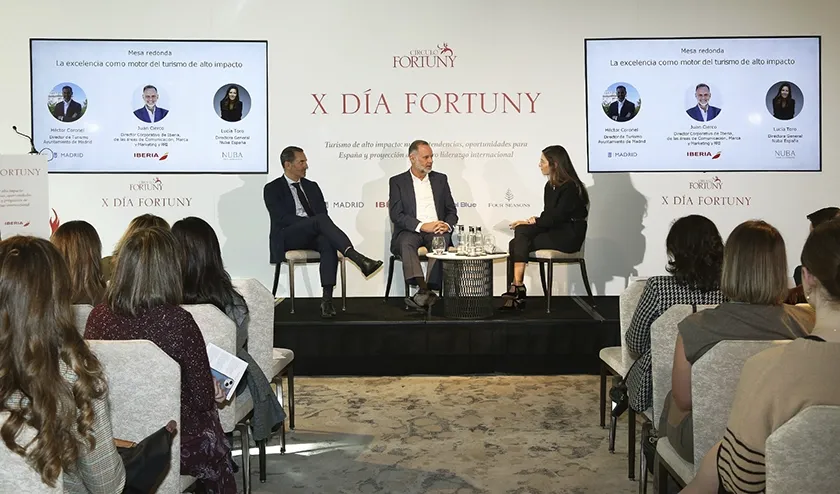
During the conference, discussions focused on excellence as a driver of high-impact tourism, Spain’s international positioning, the need to prioritise quality over quantity, the role of connectivity and Madrid as a global hub, and the importance of building a coherent narrative for the country.
According to Juan Cierco, Iberia’s corporate director of External and Internal Communications, Brand and Marketing, and International Relations, ‘Spain’s leadership in air connectivity and tourism is the result of a national strategy, growing demand, and a privileged geographical position that makes Madrid the gateway from Latin America to Europe.’ Spain is not only a major source and destination market for air traffic, but also a strategic hub for global connectivity.’
According to Pablo Carrington, president and CEO of Grupo Marugal, ‘preserving and promoting what sets us apart from other destinations must be a priority. Authenticity is the best guarantee for sustainable growth in tourism in Spain. Public-private partnerships and the creation of public aid to preserve small businesses that set us apart from other destinations plagued by franchises and brands, help small museums that do not have access to large sources of funding, promote quality craftsmanship, etc. There are many ways to work and collaborate so that Spain can occupy a prominent position as a distinctive destination in an increasingly generic world.’
According to Beatriz Sajon, General Manager of Virtuoso for Continental Europe, ‘Spain has everything that luxury and ultra-luxury travellers demand today and has the potential to continue attracting even more tourists in these segments through an offering that can integrate culture, gastronomy, sustainability and enjoyment of nature. Add to this the warmth of its people and the level of service it offers, and Spain is in a privileged position within the luxury travel market.’
Shopping tourism accelerates in Spain
As part of Fortuny Day, Global Blue also presented its report ‘The evolution of luxury and opportunities with international shoppers’ for Círculo Fortuny, which showed how high-end shopping tourism is accelerating in Spain in line with spending by travellers from outside the EU. At the end of the third quarter of this year, tax-free spending by non-EU travellers grew by 5% year-on-year, compared to 2.5% for the global average and 4% for Europe.
The enlarged photo confirms this trend. Between 2019 and 2024, annual tax-free growth in Spain stood at 12.1%, ahead of the global average (10%) and the EU average (8%). Our country surpassed France (9.4%) and Italy (7.6%), the two major luxury markets in Europe, which are already mature and consolidated.
On the other hand, the evolution of the luxury industry is led by the (U)HNWI and HNWI segments, buyers with large fortunes and high purchasing power who contribute significantly to the growth recorded in Spain (+17% and 16% respectively, between 2019-2024). This segment is not price sensitive and is more resilient to macroeconomic factors. Despite being a select number of buyers (3.1%), they account for 41% of total spending in the sector.
In contrast, the aspirational buyer, a more occasional consumer, has been impacted by the price increase. Specifically, in 2019, 26% of aspirational shoppers made at least one purchase from luxury brands, while in 2025, only 22% of them did so.
The other major lever is generational. Generation Z already accounts for 12% of global spending on luxury goods and contributes twice as much to growth as other groups. In Spain, this segment accounts for 20% of the luxury market share, in line with Europe, and demands personalisation, a sense of community and a consistent physical-digital presence.
About CÍRCULO FORTUNY
Círculo Fortuny is the Spanish association of cultural and creative industries of excellence. Our objective is to promote recognition of the Spanish high-end sector, enhancing the image of the Spain brand and our members. The association comprises 83 members from 13 different sectors of activity. Since 2011, it has been part of ECCIA (European Cultural and Creative Industries Alliance), the leading body promoting and defending high-end products in the EU, which includes the seven main European luxury associations (Círculo Fortuny, Comité Colbert, Fondazione Altagamma, Meisterkreis, Walpole British Luxury, Laurel and Gustaff III Komittee), which together represent more than 750 companies and brands.
More information at www.circulofortuny.com
Source: ION, Image and Communication