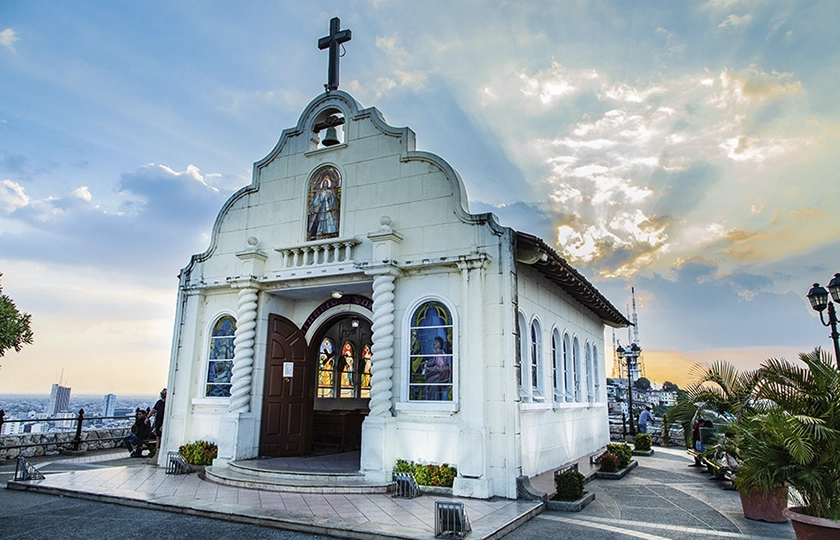
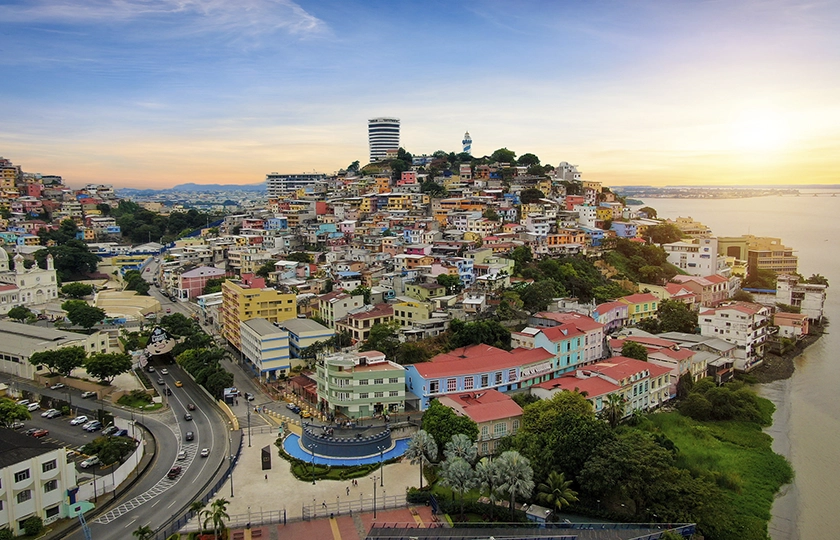
- Warm and mild weather all year round, wonderful people, a promenade with the largest Ferris wheel in South America and a stopover on the way to the paradise Galapagos Islands… but what really makes you fall in love with the Pearl of the Pacific is its cuisine.
- During our visit to Madrid Fusión, we found compelling reasons to organise a trip and immerse ourselves in its culture and cuisine. Encebollado, a fish soup that is part of Ecuador’s Intangible Cultural Heritage and is eaten for breakfast; its incomparable fine aroma cocoa; and coffee are just some of them.
Advances in recent decades have allowed us to “cross borders” without leaving our sofas, to learn precisely how ancient civilisations lived, and to lose our fear of mixing with others and discovering other cultures and their flavours. Italian, Mexican, Spanish and Chinese cuisine are now well known throughout the world, reproduced and adapted with varying degrees of success in every corner of the globe… but it is still difficult, especially in Europe, to illustrate Ecuadorian cuisine with any of its representative dishes. This is not precisely because they lack their own identity, but because the essence of cities such as Guayaquil is well worth discovering in person. During Madrid Fusión, it became clear that its cuisine is a compelling reason to discover it and, above all, to want to return.
Guayaquil is the country’s main port and economic city, historically connected to the world through the export of cocoa, bananas, shrimp, tuna and tropical fruits. This condition, thanks to the sea, the mangroves, the river and the tropics, forms a natural larder that has defined a local cuisine that is direct, tasty and deeply linked to the product for generations. Beyond tradition, Guayaquil is experiencing a particularly interesting moment, with a new generation of chefs reinterpreting coastal recipes based on raw ingredients, technique and a contemporary approach, positioning the city as a new gastronomic hub on the Latin American Pacific coast.
This vibrant, multicultural port, which captivates its visitors through their stomachs, according to surveys, is beginning to open up to the world and seek its rightful place among the best cuisines in America. Tahiz Panus, Director of Tourism, Special Events and Civic Promotion for the Municipality of Guayaquil, explains that their participation in Madrid Fusión responds to a very clear reality: “Tourists who are often passing through on their way to places like the Galapagos or who are travelling on cruise ships always praise the service they receive and the local cuisine. We have gone to Madrid Fusión to bring it to the world, so that people can get to know it and savour it.” Panus also stresses the importance of telling the story behind the product: ‘We want people to know the history of cocoa, which is so important worldwide; of bananas, shrimp, our coffee… We want them to try it and, when they see a product from Guayaquil or Ecuador, say: I want to try it.’
Five reasons to visit Guayaquil
Since the best argument for falling in love with the Pearl of the Pacific is its cuisine, it’s time to present its essentials:
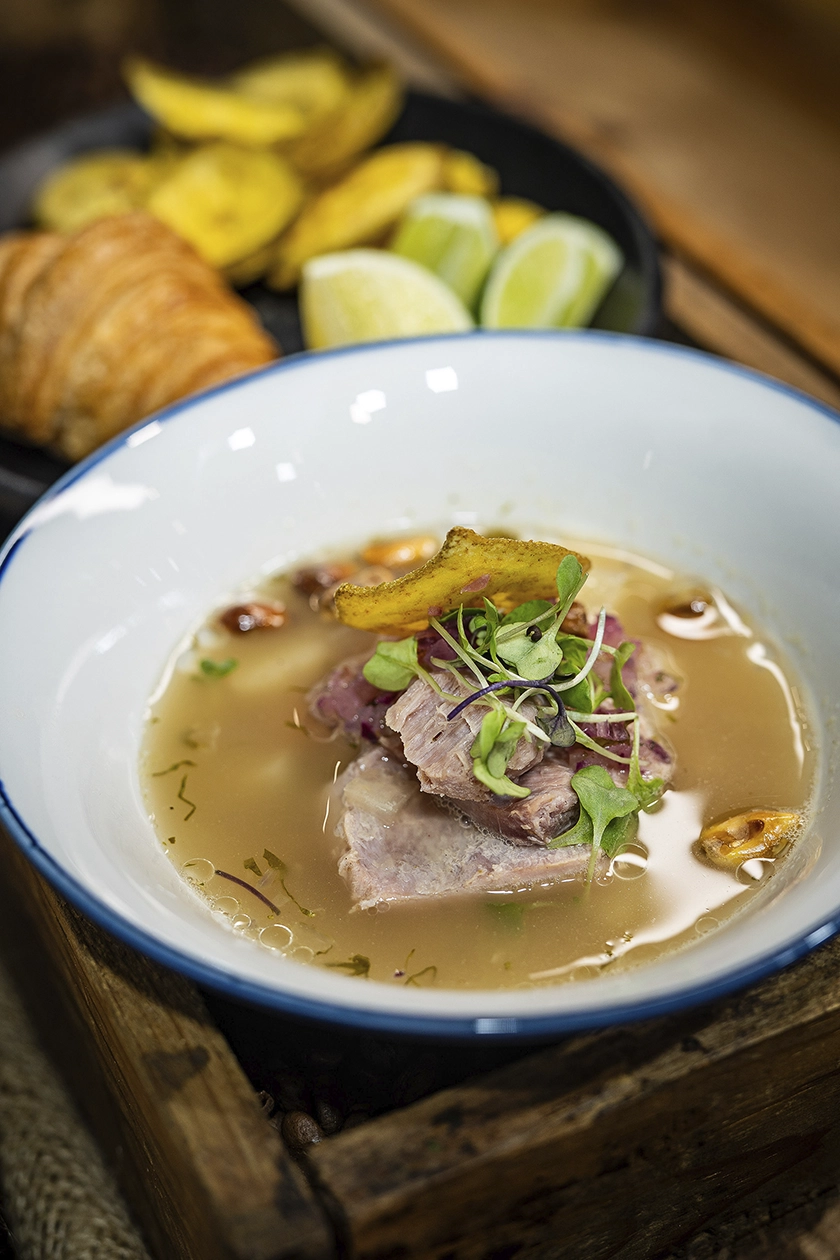
El Encebollado. This is a fish soup (usually made with albacore tuna), yuca and onions pickled in lime and coriander, which is eaten in large quantities for breakfast. Yes, because breakfast in Guayaquil occupies a central place as a cultural and social expression. They are traditionally hearty and nutritious to provide the energy needed for work in the fields, and this delicious soup, which originated in this port, is not only one of many options to start the day, but has also been declared Intangible Cultural Heritage of Ecuador and was named the second best soup in the world in 2023 according to the Taste Atlas list.
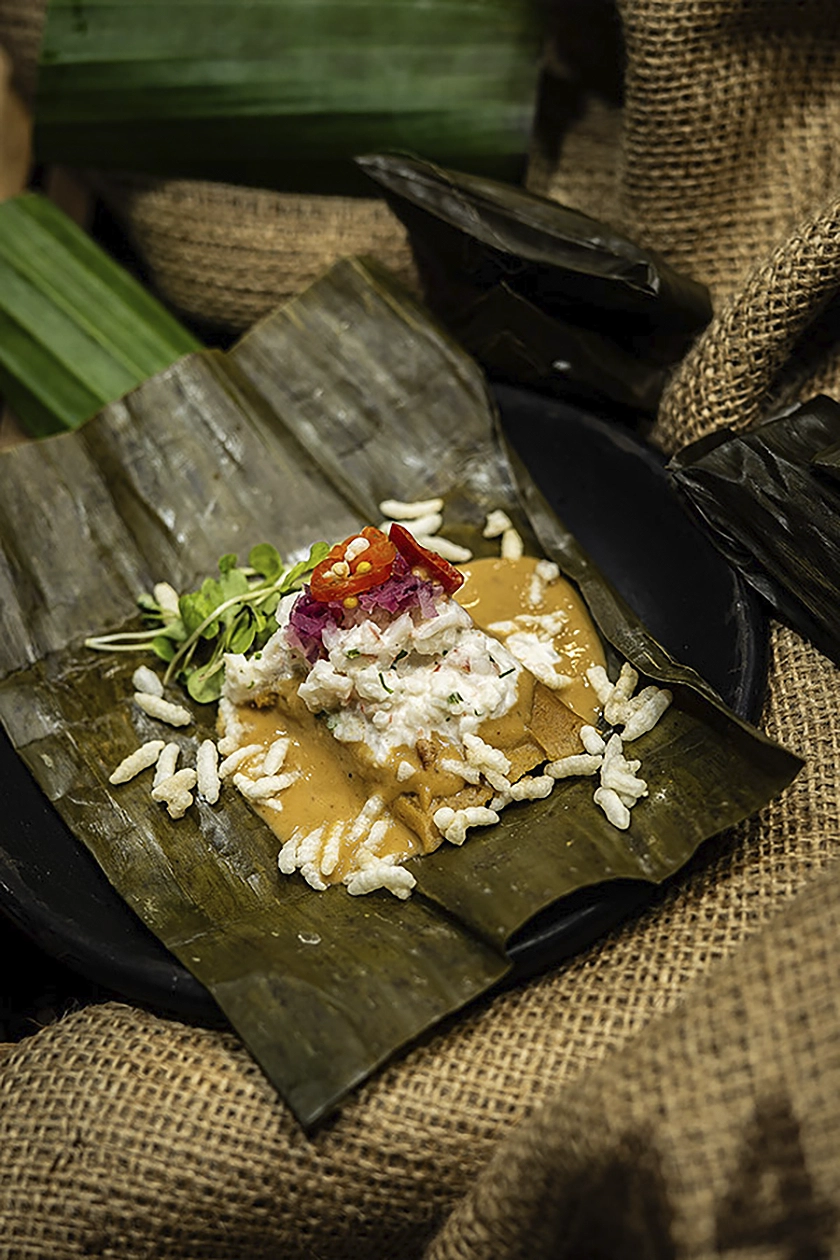
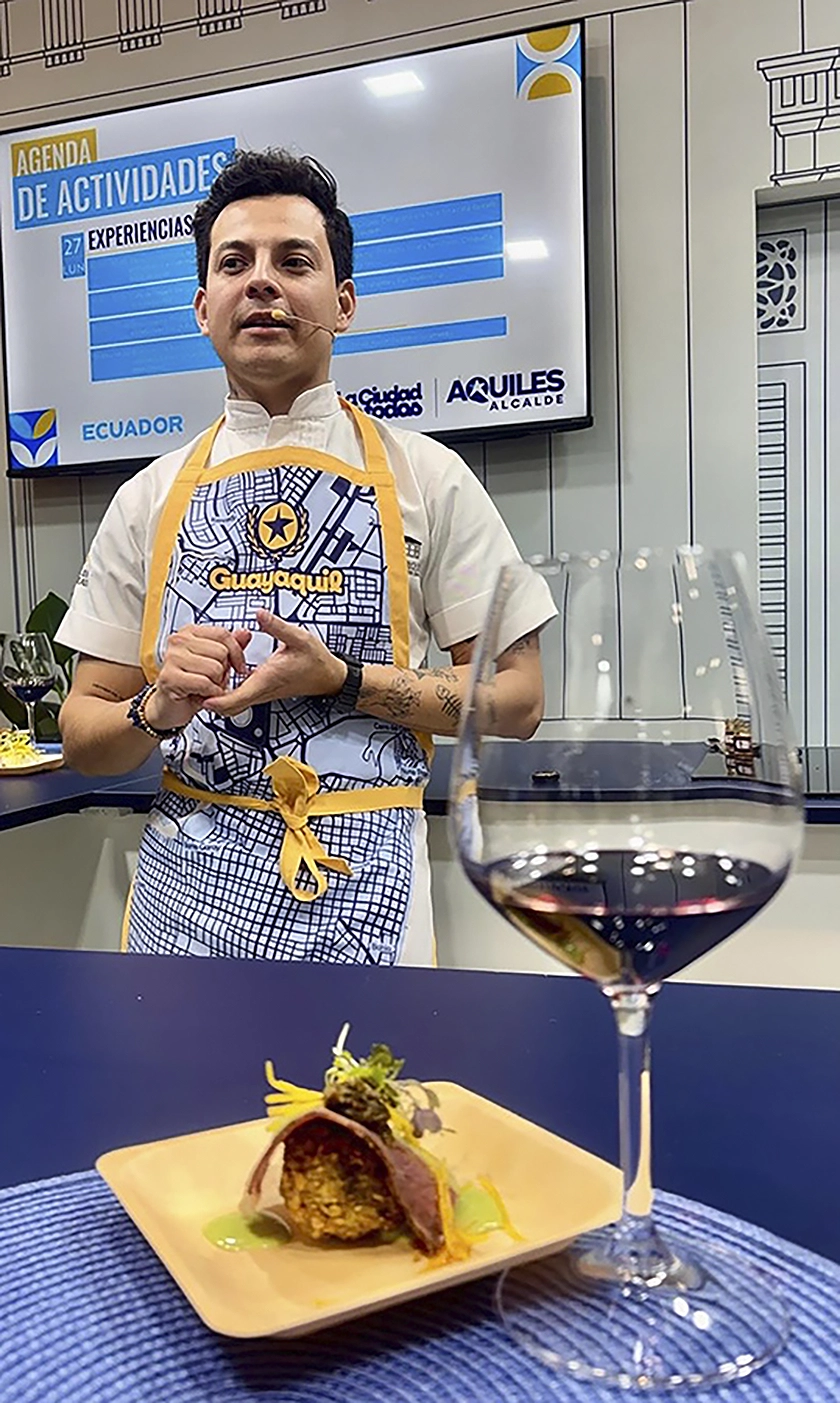
Bolón or bolón de verde is also an icon of the city’s breakfasts. It is a ball—roughly the size of a tennis ball—made from mashed green plantains and fresh cheese or chicharrón (fried pork strips)—almost always served with a fried egg and stewed meat seasoned with coriander and the traditional “refrito”, the basis of all their meals. This dish united all of Ecuador in the competition that Ibai Llanos made viral about the best breakfasts in the world. A well-prepared one, such as the one prepared by the executive chef of the Hotel del Parque Relais & Châteaux (Guayaquil’s first Michelin Star), Santiago Nieto, during his visit to Madrid Fusión representing his city, certainly deserved the prize.
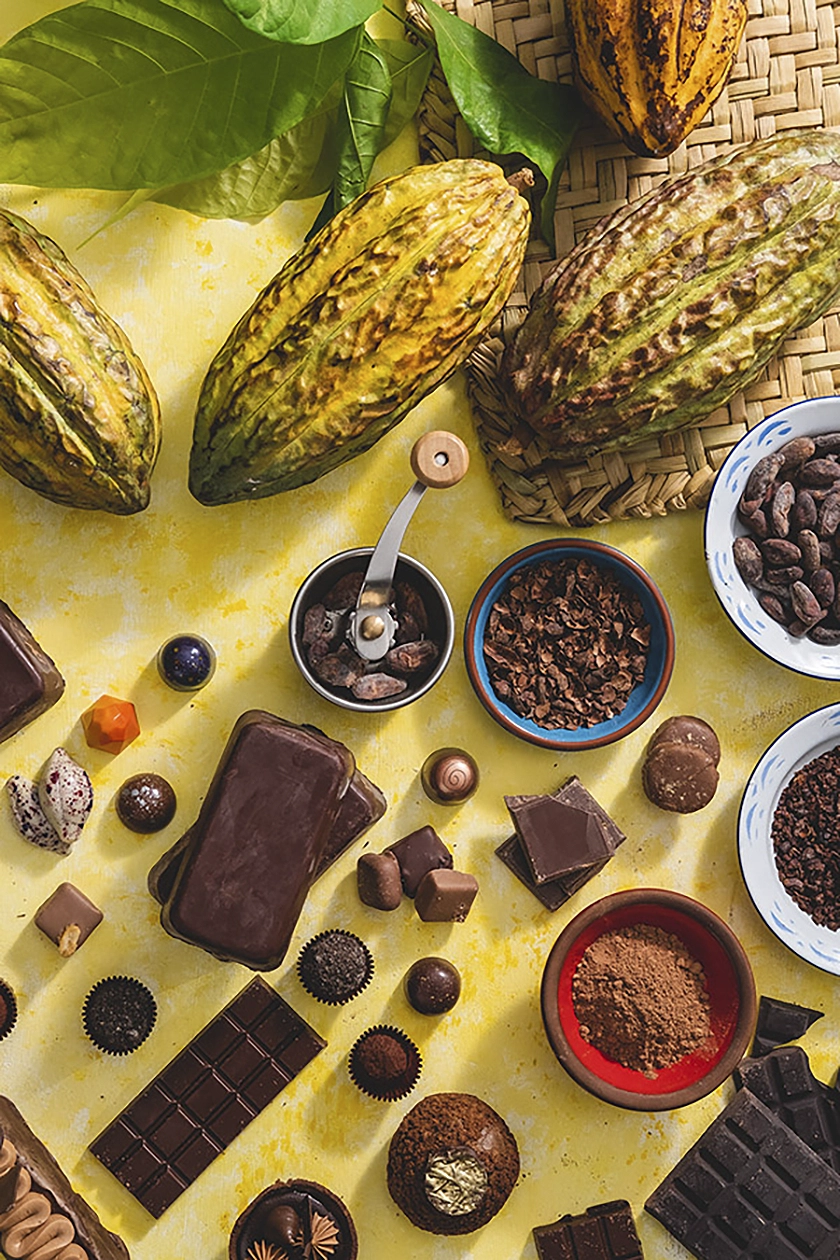
Cocoa, a source of national pride as a historical and contemporary hub. Guayaquil was the financial and commercial logistics centre of the cocoa export boom in the late 19th and early 20th centuries. Ecuador is currently certified as the country of origin of this treasure and, in a gastronomic context, there are people involved and obsessed with ensuring the traceability, origin and producer of each seed. This is the case of chef chocolatier Nathalie Areco, a leading figure in the promotion of fine aroma cocoa, who also attended Madrid Fusión 2026 and won over the audience with her knowledge and skill, painting a picture of her city’s skyline with three chocolates live during the three days of the event.
Coffee. Guayaquil has been a strategic port for the collection and export of this bean, which is key to getting it abroad in optimal conditions, preserving its quality and essence. Varieties such as Arabica and Robusta are the most characteristic, and Loja and Galápagos are two of its production areas.
Its gastronomic potential. Guayaquil is currently experiencing a gastronomic moment unlike that of previous decades. In recent years, a new generation of chefs trained both inside and outside the country has emerged, rethinking local cuisine from the perspective of product, technique and contemporary discourse. This movement is not based on nostalgia or folklore, but on a conscious reinterpretation of the territory. The result is a cuisine that engages with global trends without losing its identity, because the chefs work with local products and producers and research the coastal culinary heritage from a very interesting contemporary perspective.
And seven places to enjoy them...
As proof of this last point, there is another guide that is almost as essential as the previous one, which introduces us to each of these recipes and also to the Tigrillo, the Sánduche de chancho, the Bola de camarón, the Secos de chivo… with recommendations from locals, so you can’t go wrong.
The first recommendation is Casa Julián: refined contemporary signature cuisine with local produce by Santiago Nieto, linked to projects recognised by Latin America’s 50 Best Restaurants. They offer lunch and dinner, with an à la carte menu, tasting menu and Sunday brunch featuring traditional Ecuadorian cuisine. Marrecife is one of the best restaurants in the city for fresh fish and seafood, featured in the 50 Best Discovery thanks to a cuisine that exalts the flavours of the Pacific with the passion and mastery of chef Iván Grain. La Pata Gorda is a place with 15 years of history, more intimate and informal, where you can enjoy crab dishes without restrictions, another of Guayaquil’s most typical lunches, in an area that is very prolific in mangrove crabs. Markets such as Sauces 9, which is the city’s first Tourist Gastronomic Market, offer a variety of breakfasts and all the mangrove’s bounty, mainly black shell ceviches made to order, such as the traditional Gust Conchas: fish, shrimp, red crab and other seafood that arrives fresh every day. La Central is even fresher and more relaxed, with breakfasts and traditional Ecuadorian seasonal sweets.
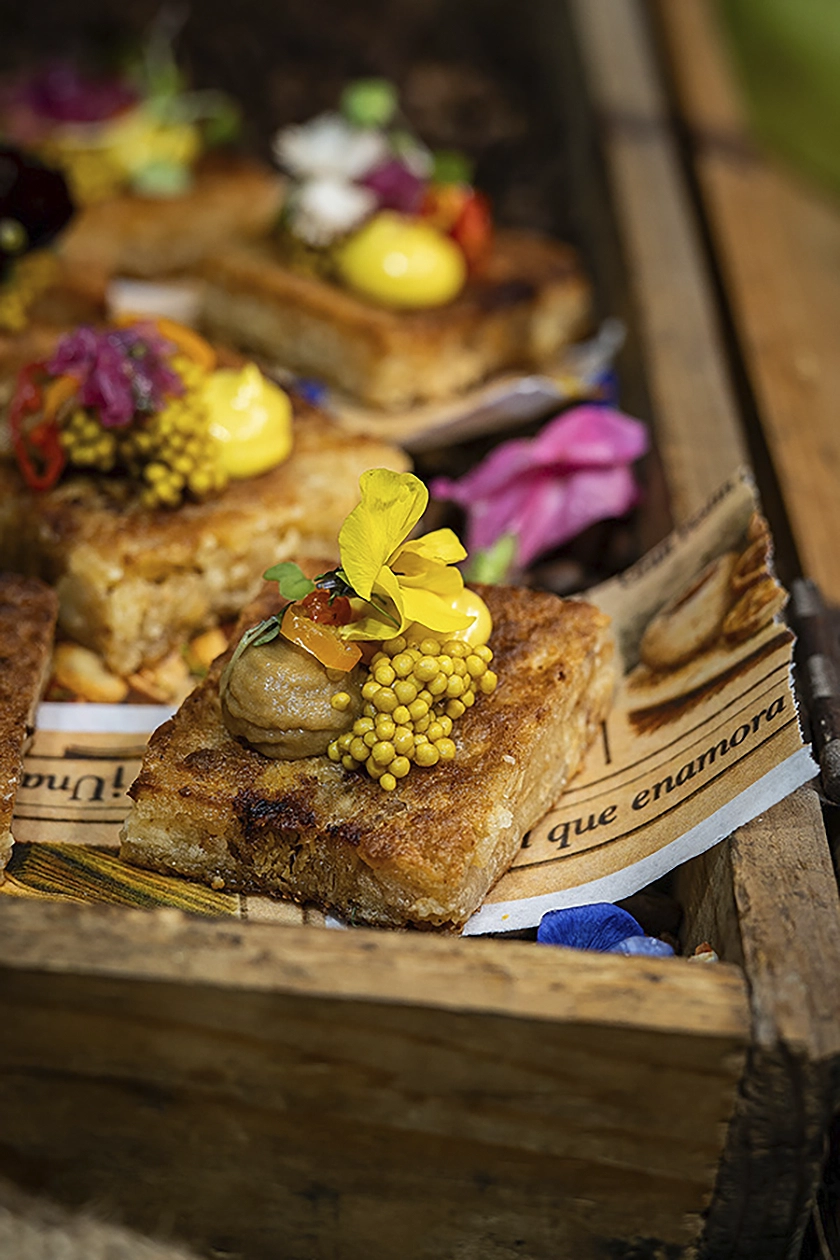
To enjoy some good signature cocktails and local spirits, Nicanor Casa de Bebidas is in the city centre and in the top 10 International Cocktail Bars of the Spirited Awards 2025. Also multi-award-winning in the 50 Best Bars and Tales of the Cocktail is Juliana, a signature cocktail bar serving food made with local produce. As if that weren’t enough, the views from its bar to Cerro Santa Ana, one of Guayaquil’s most iconic landmarks, are spectacular.
Having sampled just a few local dishes and ingredients, there is no doubt that gastronomy is one of the main reasons to travel to Guayaquil and, above all, to want to return. But there are many others, including the warmth of its people, the passion they exude when talking about their land and its flavours, and the friendly, familiar treatment they offer.
What not to miss in its streets
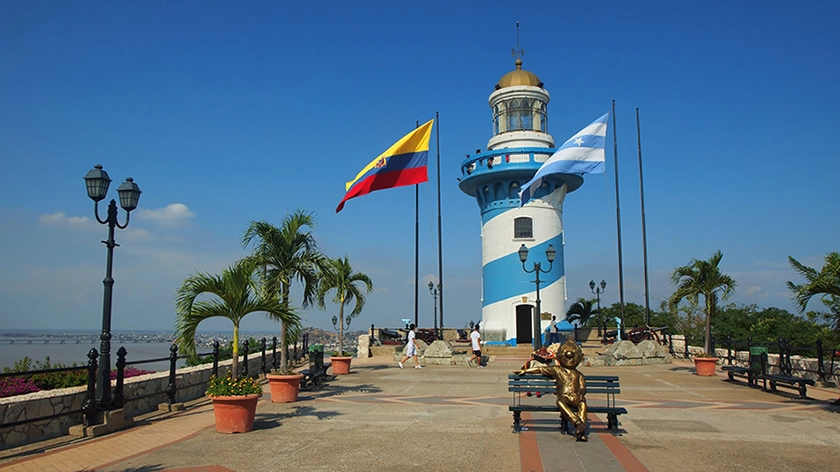
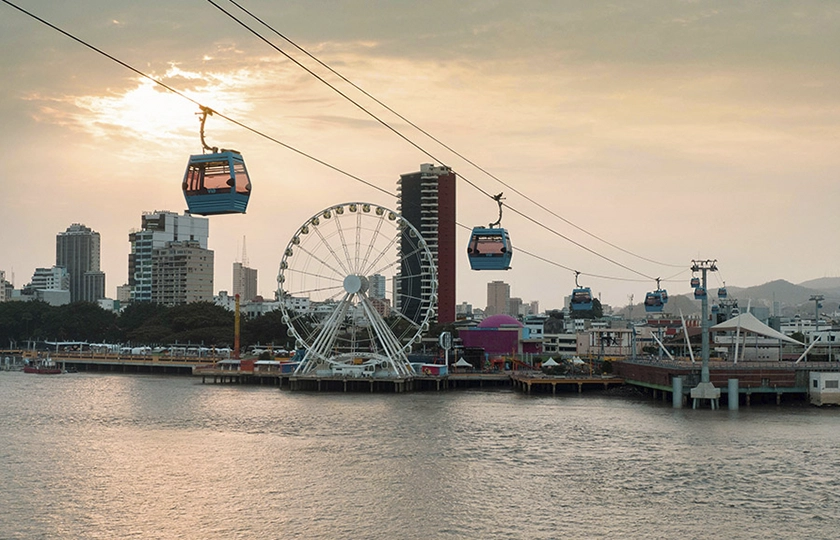
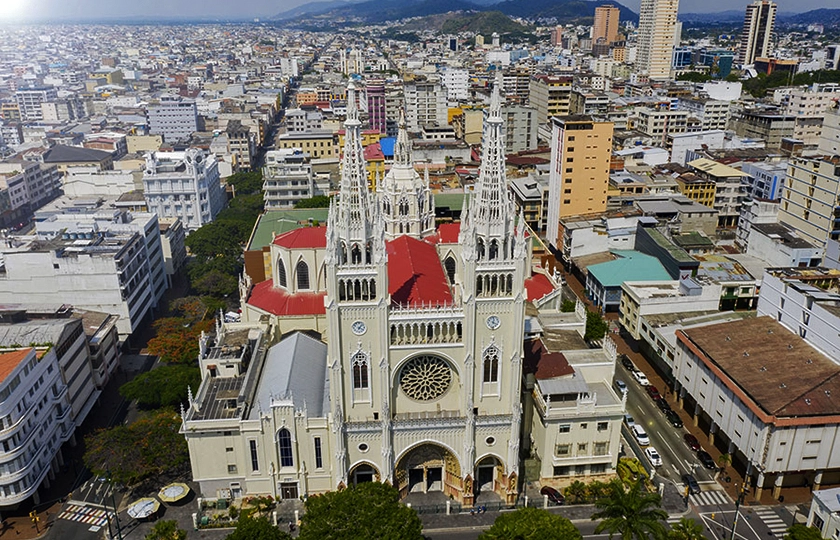
Although the gastronomic journey is in itself a more than appealing destination, between breakfast, lunch and dinner there is time to walk around Guayaquil. Its beautiful Malecón, at the northern end of which is La Perla, the largest Ferris wheel in South America, standing 57 metres tall; Santa Ana Hill; the lighthouse and Vicente Rocafuerte Square… You can’t leave without visiting the Metropolitan Cathedral and, just opposite, Seminario Park, where you can enjoy a stroll and feed and photograph the exotic iguanas. Nearby is Calle Panamá, with a wide range of mixology and varied cuisine, and the Cacao Museum, with the entire history of Ecuador’s most important product.
Ten minutes away is the Urdesa neighbourhood, a traditional residential area of the city where national and international restaurants converge, highlighting the cultural mix that is the result of the dynamics of a port where we find Lebanese, Italian and Latin influences. From Urdesa, you can walk along the boardwalks around the Estero Salado, an impressive natural jewel that is an environmental heritage site, where you can also find a wide range of local food and cultural spaces. The city is a meeting point for business tourism events, which is why the hotels are also of an excellent standard, with chains such as Hilton, Marriot, Sheraton and Hampton Inn.
The mark left by Guayaquil in just three days, its flavours and its people during the 24th edition of Madrid Fusión, thanks to the sponsorship of the Guayaquil Hotel Association (AHOTEGU), its mayor Aquiles Álvarez and its spokesperson on this visit, Tahiz Panus, is indelible. An incentive to go and discover this culture at its source, and to continue discovering it every time they want to bring it closer to us.
Source: AIRES NEWS